
AI marketing implementation: the complete transformation roadmap for B2B teams
Learn how to implement AI across your B2B marketing team, stack, and workflows with a practical roadmap focused on pipeline, scale, and ROI.
.avif)
Content Marketer



.svg)


TL;DR
- Most AI marketing implementations fail because they're solving for tools, not for broken workflows, bad data, and missing visibility across the funnel.
- There's a meaningful difference between AI usage, AI adoption, and AI transformation, and most B2B teams are stuck at stage one while pretending to be at stage three.
- An AI marketing implementation plan that starts with business outcomes (pipeline, conversion, revenue) will outperform one that starts with "let's try ChatGPT for blog posts" every single time.
- The companies building an AI-first marketing stack aren't adding more dashboards. They're connecting fragmented signals across CRM, ads, analytics, and revenue data into a single operating model.
- Scaling content with AI without a human editorial layer doesn't create a competitive moat. It creates noise, and your audience already has *wayyy* too much of that.
- If your AI reporting dashboard ends at "hours saved," you're measuring inputs while your CFO cares about outcomes.
Last quarter, I sat in a leadership meeting where someone said, "We need to be more AI-first." I nodded along, like everyone else. Then someone asked the obvious follow-up: "What does that *actually* mean for us, specifically?" The silence was… eerily extraordinary. Ten WHOLE seconds of it. I'm not entirely sure anyone on that call knew what that sentence meant (including the person who said it).
That moment has become a recurring theme in almost every B2B marketing conversation I've had this year. Teams are buying AI tools, running pilot projects, building prompt libraries, and still struggling to answer the simplest question: *Is any of this making us better?*
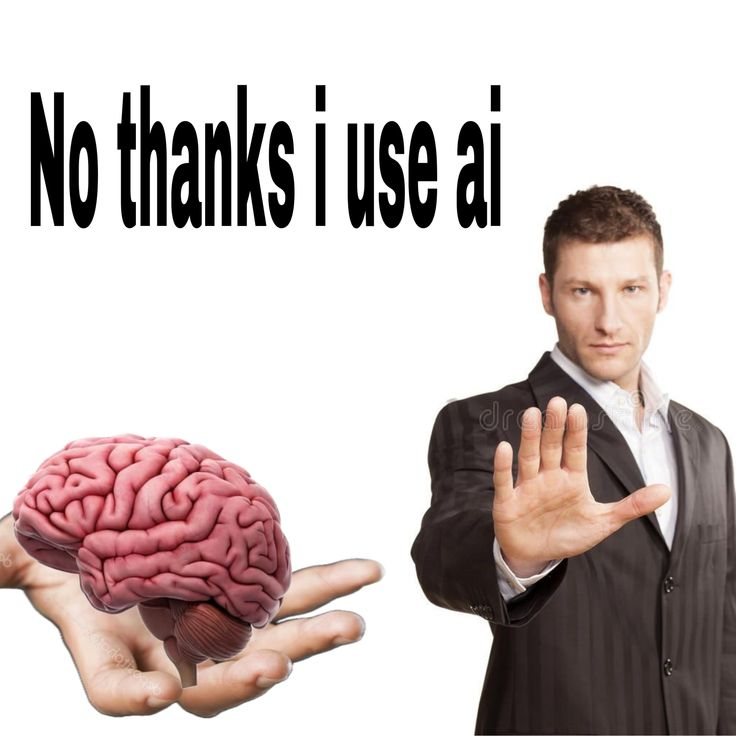
This is a guide to AI marketing implementation that doesn't start with a tool recommendation or a vendor comparison. It starts where I think every AI marketing transformation roadmap should begin: with the system you already have, the outcomes you actually need, and the BIG gap between where you are and where you think you are.
Why are most AI marketing implementations failing?
After working with SaaS companies, startups, growth teams, and enterprise marketers, I’ve noticed that most companies have an operations problem disguised as an AI problem.
For the past two years, marketers have been acquiring tools faster than we were catching Pokemons (yes, we all remember the Pokémon Go phase).
The Content Marketing Institute found that 54% of B2B marketing teams take an ad hoc approach to AI, experimenting without applying it widely.
Only 19% reported that they've integrated AI into their daily processes and workflows.
The result is a stack full of copilots generating outputs but rarely improving business outcomes.
This is what I call "pilot purgatory." A team runs a promising experiment with an AI writing tool or an audience segmentation model. The results look decent. And then nothing happens. The experiment never connects to a repeatable workflow, a measurement framework, or a revenue outcome.
McKinsey's findings illustrate this gap, showing that only 21% of businesses have redesigned some workflows around AI.
Everyone else remains stuck in earlier stages of integration.
The core issue is that 90% of AI discussions focus on tools instead of systems. CMOs keep asking "Which AI tool should we buy?" when they should be asking "Which bottleneck are we removing?" AI simply scales whatever system already exists. If your handoffs, attribution, and reporting are broken, AI just helps you break them faster.
What does AI marketing implementation actually mean?
Using ChatGPT to write LinkedIn posts isn't ✨AI transformation✨. I need to say that clearly because a surprising number of teams genuinely believe it is.
There's a spectrum here, and collapsing the terms together creates confusion. Let me break it down: AI *usage* means individuals on your team are experimenting with tools on their own, often without coordination. AI *adoption* means the organization has started standardizing around specific tools and use cases. AI *implementation* means those tools are connected to workflows, data systems, and measurement. AI *transformation* means the operating model itself has changed: how decisions get made, how teams are structured, and how campaigns move from idea to execution.
Connecting customer data, campaign data, CRM data, intent signals, content workflows, and decision-making systems into a unified operating model is what real AI and marketing integration looks like. That's the difference between having AI in your stack and building an AI-first marketing organization.
The concept of AI-native marketing is gaining traction because it describes organizations where AI isn't layered on top of existing processes; it's woven into how those processes function from the beginning.
The dividing line will be between B2B marketing organizations that are AI-enhanced and those that are truly AI-native, where some teams manage individual tools while others will have autonomous systems generating pipeline around the clock."
The emerging trend of agent-based marketing pushes this even further.
AI agents have advanced from simple automation to becoming a strategic workforce capable of executing high-impact go-to-market strategies, acting as systems that can understand and respond to customer inquiries without human intervention.
AI is increasingly becoming part of buying journeys themselves, not just the marketing side of them.
Before you buy another AI tool: audit your marketing system
Most companies jump straight into AI content generation. Meanwhile, nobody can explain why opportunities are stalling in Stage 2 of the pipeline. That's backwards.
Before you evaluate a single new tool, you need to understand the system those tools would plug into. I break this into three layers, and I'd recommend scoring your team honestly against each one.
Data layer. Can you trust your CRM data? Is your attribution setup actually reflecting buyer journeys, or just the last click? Do you have intent data, and if so, does anyone use it? Are your first-party signals (website behavior, content engagement, product usage) connected to anything downstream?
Execution layer. How long does it take to launch a campaign from brief to live? Where do content workflows break down? Is ad management centralized or scattered across team members? Can you pull a revenue report without spending a full day building it?
Intelligence layer. Do you have any forecasting in place? Is audience segmentation based on real behavioral data, or on assumptions from six months ago? Can marketing and sales agree on what pipeline visibility actually looks like?
The questions to ask before any ai integration in marketing initiative are deceptively simple. Can we trust our data? Do teams work from the same source of truth? Where are the biggest time drains? If you can't answer these confidently, AI isn't going to fix that. It'll just automate the confusion.
The AI marketing maturity framework
I've built a five-stage model for thinking about where your team sits. Honest self-assessment matters more here than aspiration (because marketers *never* lie about how advanced they are).
| Stage | Description | What it looks like |
|---|---|---|
| Stage 1: AI curiosity | Individual experimentation, no governance | People using ChatGPT on their own, sharing prompts in Slack |
| Stage 2: AI assistance | Content generation, research, summaries | Standardized tools for drafting, but disconnected from workflows |
| Stage 3: AI automation | Workflow automation, lead routing, campaign ops | AI embedded in specific processes with clear triggers and outputs |
| Stage 4: AI orchestration | Cross-channel coordination, data-connected decisions | AI tools talking to each other, informing real-time decisions |
| Stage 5: AI-native marketing | AI embedded in operating model, agents supporting execution | Human teams focused on strategy while agents handle execution |
The state of AI in B2B marketing right now is messyyyy. What I mean is… adoption is high, but competence is low 🥀
Most teams I talk to are somewhere between Stage 1 and Stage 2, which is totally fine. The problem isn't being early. It's pretending you're at Stage 4 while operating at Stage 1. That misalignment leads to bad investments and frustrated teams.
If most enterprise marketing teams report confidence in their AI tools, but almost none have centralized intelligence or orchestrated execution, then AI satisfaction and AI maturity are two very different things.
Building your AI marketing implementation plan
An effective AI marketing implementation plan doesn't start with "more AI usage." It starts with business outcomes. What does the business actually need? More pipeline. Faster campaign launches. Better content velocity. Higher conversion rates. If your plan can't connect directly to one of those, it's an experiment, not a strategy.
Step 1: Define business outcomes. Be specific. "Increase marketing-sourced pipeline by 20% in two quarters" is a business outcome. "Use more AI" is a wish.
Step 2: Prioritize use cases. Rank every potential AI use case by three criteria: revenue impact, ease of implementation, and required integrations. The use cases that score high on impact and low on complexity should go first. The ones that require rebuilding your entire data infrastructure can wait.
Step 3: Build governance. This is where most teams skip ahead and pay for it later. Governance means prompt libraries that enforce brand consistency, approval systems for AI-generated content, security protocols for data flowing into third-party models, and clear ownership of who reviews what. Without it, you end up with ten people using ten different prompts to generate inconsistent outputs across every channel.
Step 4: Train teams. AI literacy isn't optional. Your team needs to understand not just how to use the tools, but how to design workflows around them and interpret the data they produce.
Organizations combining AI deployment with clearly defined KPIs and formally redesigned workflows achieve 2.7 times higher ROI than those using AI without structural changes.
Training is the structural change most teams overlook.
Designing an AI-first marketing tech stack
The future stack isn't about adding more dashboards. When I look at ai integrations for marketing tech stack decisions, the teams that get it right organize their stack around four layers, not tool categories.
Customer data layer. Your CRM, product analytics, and CDPs. This is where all account and user data lives. If this layer is fragmented, everything downstream is unreliable.
Intelligence layer. Intent platforms, attribution platforms, and revenue analytics. This layer answers the questions that matter: who's engaging, what influenced pipeline, and what should happen next. Tools like Factors.ai sit here as the connective intelligence layer.
Factors.ai is an AI-powered marketing intelligence and ABM platform that uncovers anonymous buyer intent, tracks the entire customer lifecycle, and connects marketing touchpoints directly to revenue by unifying data from websites, CRM, ad platforms, and intent sources.
- Execution layer. Content tools, email platforms, ad management, and marketing automation. These are the systems that actually *do* things. They create, send, publish, and optimize.
- Agent layer. This is the newest and fastest-growing layer. Research agents, reporting agents, and campaign optimization agents that can operate semi-autonomously once given clear objectives.
When evaluating AI integration options for marketing software, the question is whether it connects to your intelligence layer.
Factors.ai, for example, unifies account intelligence, web analytics, multi-touch attribution, and ad optimization, identifying which companies are engaging with your website and campaigns, mapping their journeys across channels, and helping teams prioritize high-intent accounts.
The AI stack for marketing that wins isn't the one with the most tools. It's the one with the cleanest signal flow.
How are B2B teams using AI across the funnel?
The most useful way to think about AI integration for marketing teams is by mapping AI capabilities to funnel stages, because the problems AI solves look very different at each stage.
- Awareness. AI excels at content ideation, SEO research, and social content generation. Teams use it to analyze competitor positioning, identify content gaps, and generate first drafts at scale. The time savings here are *real*, but this is also where quality risks are highest.
- Consideration. This is where personalization, audience segmentation, and dynamic website experiences come in. Unlike B2C, where personalization often targets a single consumer, B2B personalization must cater to an entire buying committee, and AI excels at analyzing firmographics, technographics, and individual engagement history to deliver personalized experiences for each stakeholder.
- Decision. Account prioritization, intent scoring, and opportunity intelligence are transforming how sales and marketing collaborate at the bottom of the funnel.
Tools like Factors.ai help teams prioritize the right accounts in sales outreach and ad campaigns using predictive scores based on intent, engagement, and fit.
Expansion, customer marketing, renewal prediction, and upsell signal detection. This is the stage most B2B teams forget about entirely, and it's where AI can quietly generate enormous value by identifying expansion opportunities before the customer even thinks to ask.
Scaling content marketing with AI (without creating junk)
The internet doesn't have a content shortage. It has a *relevance* shortage. That's the biggest misconception in marketing right now: that AI helps you publish more. The best marketers are using AI to think deeper, not louder.
When I talk to teams about how to scale content marketing with AI, I always start with what AI should and shouldn't own. AI should help you research faster, repurpose existing content more effectively, and personalize deeper for different audiences and buying stages. Humans should own positioning, original insights, strategic judgment, and the editorial decisions that determine whether content builds trust or erodes it.
AI-generated content can often feel generic, lacking the authentic voice and brand tone that builds trust, with 40% of marketers citing "robotic output" as a key downside. In other words, this is what they said:

Content volume alone is meaningless if every piece reads like it was written by the same interchangeable algorithm. When you scale marketing content with AI without a human editorial layer, you create noise, and the companies you're trying to reach are already drowning in it.
The framework I recommend is simple. Use AI for the first 70% of the work: research aggregation, outline generation, first drafts, metadata, and repurposing. Use humans for the remaining 30%: fact-checking, brand voice editing, strategic angle development, and final approval.
The efficiency gains come from AI handling research, first-draft generation, and metadata, while humans handle quality assurance and strategic decisions. Teams trying to skip the human review stage typically see quality degradation that erodes performance within three to six months.
Connecting AI across CRM, ads, analytics, and revenue data
Most B2B teams run HubSpot, Salesforce, LinkedIn Ads, Google Ads, GA4, and product analytics. But none of them actually talk to each other properly. This is the ‘connecting AI tools for marketing’ challenge that nobody wants to acknowledge because solving it is genuinely hard.
Data unification means stitching account-level engagement across every touchpoint into a single profile. Attribution means understanding which interactions actually influenced pipeline, not just which ones happened to be last. Conversion APIs mean sending real revenue signals back to ad platforms so they can optimize toward outcomes, not just form fills. Audience syncing means your highest-intent accounts are automatically flowing into your ad campaigns without someone manually exporting CSVs every week.
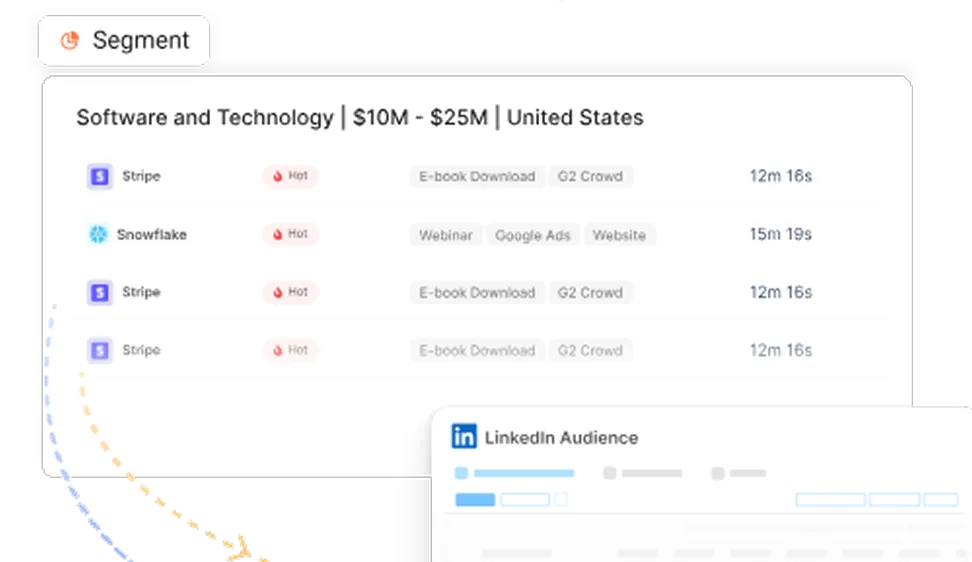
Factors.ai connects to your CRM, ad platforms, marketing automation, and third-party intent providers, de-anonymizing website traffic using IP resolution and identity graph technology, then aggregating all touchpoints into unified account profiles that show which companies are in active buying mode.
AI scoring ranks accounts by intent and conversion probability, automated alerts notify sales when high-intent targets engage, and ad audience sync ensures LinkedIn and Google campaigns automatically target the right accounts.
The future winner isn't the company with the smartest AI. It's the company where signals flow from the first website visit through to closed revenue without getting lost in a spreadsheet somewhere along the way.
The rise of AI-native marketing teams
The organizational chart is changing. Not because AI is replacing marketers (duh), but because the work itself is shifting.
B2B marketing operations roles are evolving from "managing tools" to "designing agent workflows."
Future roles that are already showing up include Marketing AI Strategist, Revenue Intelligence Manager, Prompt Architect, Automation Lead, and AI Operations Manager. The emerging "full-stack marketer" concept isn't really about one person doing everything. It's about individuals who understand how systems connect, how data flows, and how to orchestrate AI and human capabilities together.
Gartner predicts that by 2028, one in five marketing roles or functions will be held by an AI worker, and 65% of marketing teams already have designated AI roles.
The question that’s been long looming over our heads… “Will AI replace marketers?”. It won't. But marketers who understand systems, automation, and AI orchestration will outperform those who only execute tasks. That gap is going to get faaaar wider in the next two years.
AI marketing implementation challenges (and how to avoid them)
After working with dozens of teams on ai transformation for marketing companies, I've seen the same seven challenges show up again and again.
1. Bad data
If your CRM is a mess, your AI outputs will be a mess. Clean your data before you automate anything.
2. Too many disconnected tools
44% of SaaS licenses go unused. Adding more tools without integration creates more silos, not more intelligence. Consolidate before you expand.
3. No governance
Without clear prompt standards, approval workflows, and security protocols, AI outputs become unpredictable and inconsistent across the organization.
4. Team resistance
54% of marketers feel overwhelmed by the prospect of implementing AI tools into their processes. People resist what they don't understand. Training and transparency solve this faster than mandates.
5. Unclear ROI
Only about 29% of organizations say they can measure AI ROI confidently. If you can't prove value… budget disappears.
6. AI hallucinations
Overreliance on AI-generated content happens when teams use AI as a substitute for human judgment, publishing copy with minimal review. Say this with me… human review is NOT optional; it's the quality control layer (and filter) that protects your brand.
7. Leadership expecting instant results
The primary challenge isn't a technology problem, but an organizational one. Culture, governance, workflow design, and data strategy are the main constraints on realizing ROI.
A 90-day AI marketing transformation roadmap
This is the section I want you to bookmark. A practical, phase-by-phase ai marketing transformation roadmap that gives your team a real starting point.
Days 1-30: Audit
| Task | Details |
|---|---|
| System audit | Map every tool in your stack and identify integration gaps |
| Workflow audit | Document how campaigns move from idea to launch, step by step |
| Data audit | Assess CRM quality, attribution accuracy, and first-party signal coverage |
| Maturity assessment | Score your team against the five-stage maturity framework |
| Stakeholder alignment | Get leadership agreement on business outcomes AI should drive |
Days 31-60: Pilot
| Task | Details |
|---|---|
| Content workflows | Deploy AI for research, drafting, and repurposing with human review |
| Reporting automation | Connect campaign data to pipeline data for automated dashboards |
| Audience segmentation | Build intent-based segments using behavioral and firmographic data |
| Governance setup | Create prompt libraries, review processes, and security protocols |
Days 61-90: Scale
| Task | Details |
|---|---|
| Integrations | Connect CRM, ad platforms, intent sources, and analytics into unified account profiles |
| Governance rollout | Standardize AI workflows across the entire marketing team |
| Measurement framework | Define operational, marketing, and revenue KPIs tied to AI initiatives |
| Agent evaluation | Assess where AI agents can handle research, reporting, or campaign optimization |
The sequencing matters because each phase builds on the previous one. You can't scale integrations if you haven't audited your data. You can't measure AI's impact if you haven't defined the outcomes it's supposed to drive. (Wow, never thought I'd say "sequencing matters" in a marketing blog, but here we are.)
How to measure AI marketing success
If your AI reporting dashboard ends at productivity metrics, you're measuring the wrong thing. Executives don't buy AI for faster content. They buy it for faster growth.
I recommend tracking metrics across three tiers.
- Operational metrics
Time saved per campaign, campaign velocity (idea to live), and content production time. These prove efficiency, and they matter, but they're not enough on their own.
- Marketing metrics
MQL efficiency, pipeline influenced by AI-assisted campaigns, and cost per opportunity. These connect AI activity to demand generation outcomes. The most immediate ROI indicators from AI-assisted content are content velocity and cost per content unit, meaning total cost divided by outputs.
- Revenue metrics
Customer acquisition cost, win rate, and revenue generated from marketing-sourced pipeline. These are the numbers that keep your budget alive.
Organizations that align AI deployment with clearly defined performance KPIs report *significantly* better results than those adding AI without structural changes.
The companies that build measurement frameworks early won't just know whether AI is working. They'll know where it's working and where to invest next. That's a structural speed advantage most competitors won't have.
What will ‘AI-first B2B marketing’ look like by 2027?
Here's where I get to speculate, the fun and dangerous part (because marketers never lie about predictions either).
- Agent-assisted buying journeys are coming, where the buyer's AI interacts directly with the seller's AI. Autonomous campaign optimization will move from "AI recommends adjustments" to "AI makes the adjustments and tells you what it did." AI-generated audience models will replace static ICPs with dynamic, behavior-driven segments that update in real time.
- Revenue orchestration agents, AI-first marketing content examples and beyond, and real-time personalization across every touchpoint: all of this is moving from concept to production faster than most teams expect.
The companies that win won't be the ones using the most AI (you know that already, right? RIGHT?).
They'll be the ones that redesign how marketing works around it. Every process, every handoff, every decision point, every measurement loop. That's the difference between AI-enhanced marketing and an AI-first marketing organization. And for what it's worth, I don't think anyone fully knows how to do it yet. But the teams that start building the muscle now will be the ones that figure it out first.
In a nutshell
AI marketing implementation is an operating model shift that touches your data, your workflows, your team structure, and your measurement frameworks simultaneously. The teams stuck in pilot purgatory almost always share the same root cause: they started with tools instead of outcomes. If you take one thing from this piece, let it be the sequencing. Audit your system first. Fix your data layer. Define the business outcomes AI needs to drive. Then, and only then, build your implementation plan around specific use cases ranked by revenue impact.
The 90-day roadmap gives you a practical starting point, but the maturity framework gives you the honest lens to assess where you actually are. Most teams are at Stage 1 or 2. That's fine. What's not fine is staying there while pretending to be somewhere else. Start with the audit, pilot one or two high-impact workflows, connect your AI tools to real revenue data, and measure what actually matters: pipeline influenced, cost per opportunity, and win rate. The marketers who win the next decade won't be the ones who adopt the most AI tools. They'll be the ones who consistently make better decisions with the same signals everyone else has access to.
Frequently asked questions about AI marketing implementation
Q1. What is AI marketing implementation?
AI marketing implementation is the process of integrating AI tools, workflows, and decision-making systems into your marketing operations in a way that connects to measurable business outcomes. It goes beyond simply using AI for content drafts or research. True implementation means AI is embedded in your data layer, execution layer, and intelligence layer, informing how campaigns get built, how accounts get prioritized, and how performance gets measured against pipeline and revenue.
Q2. How do you create an AI marketing implementation plan?
Start with specific business outcomes, not tools. Define what you need AI to improve: pipeline, campaign velocity, conversion rates, or content throughput. Then prioritize use cases by revenue impact, ease of implementation, and required integrations. Build a governance framework covering prompt standards, review processes, and data security. Finally, train your team on both the tools and the workflows those tools connect to.
Q3. What is an AI-first marketing organization?
An AI-first marketing organization has restructured its operating model around AI capabilities rather than layering AI on top of existing manual processes. Decisions, workflows, and team structures are designed with AI as a core component from the start. Human teams focus on strategy, positioning, and creative judgment while AI handles execution, data analysis, and routine optimization tasks.
Q4. What are the biggest AI marketing implementation challenges?
The most common challenges include bad CRM data, disconnected tools that don't share signals, absence of governance frameworks, team resistance driven by lack of training, difficulty measuring ROI, AI-generated content quality issues like hallucinations, and leadership expecting transformation-level results in weeks rather than quarters.
Q5. How do you integrate AI into a marketing tech stack?
Think about your stack in layers: customer data, intelligence, execution, and agents. AI integration for marketing means ensuring that data flows between these layers, that your intelligence tools connect to your CRM and ad platforms, and that AI outputs feed back into decision-making loops rather than sitting in isolated dashboards.
Q6. How can B2B companies scale content marketing with AI?
Use AI for the research-heavy, repetitive portions of content production: topic ideation, first drafts, repurposing, metadata, and distribution optimization. Keep humans in control of positioning, original insights, editorial quality, and strategic judgment. Teams that skip the human review layer consistently see quality erosion within a few months, which undermines the efficiency gains AI was supposed to deliver.
Q7. What tools are needed for an AI-powered marketing technology stack?
An AI-powered marketing technology stack typically includes a CRM like HubSpot or Salesforce, an intelligence platform like Factors.ai for account identification and attribution, content and automation tools, ad platforms with AI optimization capabilities, and increasingly, AI agents for research, reporting, and campaign management. The specific tools matter less than whether they connect to each other and share data across the funnel.
Q8. How long does AI marketing transformation take?
A foundational 90-day sprint can get you through the audit, pilot, and initial scaling phases. But genuine transformation, where AI changes your operating model and team structure, typically takes six to twelve months of sustained effort across multiple functions.
Q9. What KPIs should marketers track after AI implementation?
Track metrics across three tiers. Operational metrics include time saved and campaign velocity. Marketing metrics include MQL efficiency, pipeline influenced, and cost per opportunity. Revenue metrics include customer acquisition cost, win rate, and total revenue generated from marketing-sourced pipeline. If you're only tracking the first tier, you're measuring inputs while your CFO needs to see outcomes.

See how Factors can 2x your ROI
Boost your LinkedIn ROI in no time using data-driven insights


.avif)


See Factors in action.
Schedule a personalized demo or sign up to get started for free
LinkedIn Marketing Partner
GDPR & SOC2 Type II






.svg)



.avif)

