
What is a Customer Profile? How to Build Them and Use Them
Learn how to build, analyze & use a customer profile with examples, segmentation, tools & best practices.
.avif)
Content Marketer

Growth Marketer



.svg)


TL;DR
- Customer profile meansA detailed, data-driven picture of the people or companies most likely to buy from you and stay loyal over time.
- It matters because it’s the foundation for better targeting, higher ROI, stronger retention, and aligned sales and marketing strategies.
- The key elements of a customer profile areemographics, psychographics, behavioral patterns, geographic, and technographic data, all of which combine to form a complete view.
- Use demographic, psychographic, behavioral, geographic, and value-based methods to group customers meaningfully.
- How to build one: Gather and clean data, identify patterns, enrich with external sources, build structured profiles, and refine continuously to build a customer profile.
- CRMs, data enrichment platforms, analytics software, and segmentation engines make customer profiling faster and more accurate.
Most teams think they know their customer.
They have dashboards, CRMs full of contacts, a few personas sitting in a dusty Notion doc, and a vague sense of “this is who usually buys from us.” And yet, campaigns underperform, sales team chases the wrong leads, and retention feels harder than it should.
I’ve been there.
Early on, I assumed knowing your customer meant knowing their job title, company size, and maybe the industry they belonged to. That worked… until it didn’t. Because knowing who someone is on paper doesn’t tell you why they buy, how they decide, or what makes them stay.
That’s where customer profiling actually starts to matter.
A customer profile isn’t a theoretical exercise or a marketing buzzword. It’s a practical, data-backed way to answer a very real question every team asks at some point:
“Who should we actually be spending our time, money, and energy on?”
When done right, customer profiling brings clarity. It sharpens targeting. It aligns sales and marketing. It helps you stop guessing and start making decisions based on patterns you can see and validate.
In this guide, I’m breaking customer profiles down from the ground up. We’ll answer questions like ‘what are customer profiles?’ ‘How are customer profiles different from personas?’, ‘How to build one step-by-step’, and ‘how to actually use it once you have it’.
No jargon, and definitely no theory-for-the-sake-of-theory. Just a clear, practical walkthrough for anyone encountering customer profiling for the first time, or realizing they’ve been doing it a little too loosely.
What is a customer profile?
Every business that grows consistently understands one thing really well: who their customers actually are.
Not just job titles or locations, but what they care about, how they make decisions, and what keeps them coming back.
That’s what a customer profile gives you.
A customer profile is a clear, data-backed picture of the people or companies most likely to buy from you and stay with you. It brings together insights from marketing, sales conversations, product usage, and real customer behavior, and turns all of that into something teams can actually act on.
I think of it as an internal shortcut.
When a new lead shows up, a strong customer profile helps your team answer one simple question quickly: “Is this someone we should be spending time on?”
When teams share a clear customer profile, everything works better. Marketing messages feel more relevant. Sales focuses on leads that convert. Product decisions feel intentional. Leadership plans growth with more confidence because everyone is aligned on who the customer really is.
And once you know who you’re speaking to, the rest gets easier. Targeting sharpens. Conversations improve. Instead of trying to appeal to everyone, you start building for the people who matter most.
Also read: What is an ICP
Customer Profile vs Consumer Profile vs Buyer Persona
This is where a lot of teams quietly get confused.
The terms customer profile, consumer profile, and buyer persona often get used interchangeably in meetings, docs, and strategy decks. On the surface, they sound similar. In practice, they serve different purposes, and mixing them up can lead to fuzzy targeting and mismatched messaging.
Let’s break this down clearly.
A customer profile is grounded in real data. It describes the types of people or companies that consistently become good customers, based on patterns you see in your CRM, analytics, sales conversations, and product usage. It helps you decide who to focus on.
A consumer profile is very similar, but the term is more commonly used in B2C contexts. Instead of companies, the focus is on individual consumers. You’re looking at traits like age, location, lifestyle, preferences, and buying behavior to understand how different customer groups behave.
A buyer persona works a little differently. It’s a fictional representation of a typical buyer, created to help teams empathize and communicate more effectively. Personas are often named, given a role, goals, and challenges, and used to guide messaging and creative direction.
Related read: ICP vs Buyer persona
Here’s how I usually explain the difference internally:
- Customer profiles help you decide who to target
- Consumer profiles help you understand how individuals behave
- Buyer personas help you figure out what to say and how to say it
The table below summarizes this distinction clearly:
| Term | Focus | Best For | Example |
|---|---|---|---|
| Customer Profile | Real data about your ideal customers or companies | Targeting, segmentation, retention | Mid-sized SaaS companies with 200+ employees and strong growth |
| Consumer Profile | Individual-level details about consumers | B2C targeting, advertising, product design | Urban professionals aged 25-35 with active lifestyles |
| Buyer Persona | Fictionalized representation of a typical buyer | Messaging, campaign planning | ‘Marie Claire, Marketing Manager’ focused on ROI and reporting |
In B2B, customer profiles are the foundation. They help sales and marketing align on which accounts are worth pursuing in the first place. Buyer personas then sit on top of that foundation and guide how you speak to different roles within those accounts.
But in B2C, consumer profiles play a bigger role because buying decisions are made by individuals, not committees. But even there, personas are often layered in to bring those profiles to life.
The key takeaway is this: profiles drive decisions, personas drive communication. When teams treat them as the same thing, strategy becomes messy. When they’re used together, each for what it’s meant to do, everything starts to click.
Up next, we’ll look at why customer profiling matters so much for business growth and what actually changes when teams get it right.
{{INLINE_TOFU}}
Why customer profiling matters: Benefits for business growth
Customer profiling takes effort. There’s no way around that. You need data, time, and cross-team input. But when it’s done properly, the impact shows up everywhere, from marketing efficiency to sales velocity to long-term retention.
Here’s why customer profiling deserves a central place in your growth strategy.
1. Sharper targeting
When you have a clear customer profile, you stop trying to appeal to everyone.
Instead of spreading your budget across broad audiences and hoping something sticks, you focus on the people and companies most likely to care about what you’re offering. Ads reach the right audience. Outreach feels more relevant. Content speaks directly to real needs.
This usually means fewer leads, but better ones. And that’s almost always a good trade-off.
2. Better ROI across the funnel
Accurate customer profiles improve performance at every stage of the funnel.
Marketing campaigns convert better because they’re built around real customer behavior, not assumptions. Sales conversations move faster because prospects already fit the profile and understand the value. Retention improves because expectations are aligned from the start.
When teams stop chasing poor-fit leads, effort shifts toward opportunities that actually have a chance of turning into revenue.
3. Deeper customer loyalty
People stay loyal to brands that understand them.
When your customer profile captures motivations, pain points, and priorities, you can design experiences that feel relevant rather than generic. Messaging lands better. Products solve the right problems. Support feels more empathetic.
That sense of being understood is what builds trust, and trust is what keeps customers coming back.
4. Reduced churn and stronger retention
Customer profiling isn’t only about acquisition. It’s just as valuable after the sale.
Strong profiles help you recognize which behaviors signal long-term value and which signal risk. You can spot at-risk segments earlier, understand what causes drop-off, and design retention strategies that actually address those issues.
Over time, this leads to healthier customer relationships and more predictable growth.
5. Better alignment across teams
One of the biggest benefits of customer profiling is internal alignment.
When marketing, sales, product, and support teams all work from the same definition of an ideal customer, decisions become easier. Messaging stays consistent. Sales qualification improves. Product roadmaps reflect real customer needs.
Instead of debating opinions, teams refer back to shared insights.
And the impact isn’t just theoretical. Businesses that invest in data-driven profiling and segmentation consistently see stronger returns. Industry research shows that companies using data-driven strategies often achieve 5 to 8 times higher ROI, with some reporting up to a 20% uplift in sales.
The common thread is clarity. When everyone knows who the customer is, growth stops feeling chaotic and starts feeling intentional.
Next, we’ll break down the core elements of building a strong customer profile and which information actually matters.
Key elements of a customer profile
Once you understand why customer profiling matters, the next question is practical: what actually goes into a good customer profile?
A strong profile isn’t a list of CRM fields. It’s a set of signals that help your team decide who to target, how to communicate, and where to focus effort.
Think of these elements as inputs. Individually, they add context. Together, they explain customer behavior.
1. Demographic data
Demographics form the baseline of a customer profile. They help create broad, sensible segments and quickly rule out poor-fit audiences.
This typically includes:
- Age
- Gender
- Income range
- Education level
- Location
Demographics don’t explain buying decisions on their own, but they prevent obvious mismatches early. If most customers cluster around a specific region or company size, that insight immediately sharpens targeting and qualification.
In a SaaS context, this typically appears as firmographic data. For example, knowing that your strongest customers are B2B SaaS companies with 100–500 employees, based in North America, and led by in-house marketing teams, helps sales prioritize better-fit accounts and marketing tailor messaging to that stage of growth.
2. Psychographic insights
Psychographics add meaning to the profile.
This layer captures attitudes, values, motivations, and priorities, the factors that influence why someone buys, not just who they are.
Common inputs include:
- Professional interests and priorities
- Lifestyle or workstyle preferences
- Core values and beliefs
- Decision-making style
This is where messaging starts to feel natural. When you understand what your audience values, speed, predictability, efficiency, or long-term ROI, your positioning aligns more intuitively with what matters to them.
3. Behavioral patterns
Behavioral data shows how customers actually interact with your brand over time.
This is often the most revealing part of a customer profile because it’s based on actions rather than assumptions.
Key behavioral signals include:
- Purchase or renewal frequency
- Product usage habits
- Engagement with content or campaigns
- Loyalty indicators
In a SaaS setup, this might include how often users log in, which features they use each week, whether they invite teammates, and how they respond to in-app prompts and lifecycle emails. Accounts that activate key features early and show consistent usage patterns are far more likely to convert, renew, and expand.
Behavior shows what customers do when no one is guiding them.
4. Geographic and technographic data
Depending on your business model, these dimensions add important context.
Geographic data covers where customers are located, city, region, country, or market type, and often influences pricing sensitivity, messaging tone, and compliance needs.
Technographic data focuses on the tools and platforms customers already use. In B2B, this matters because integrations, workflows, and existing systems often shape buying decisions.
If your product integrates with specific software, knowing whether your audience already uses those tools can shape targeting, partnerships, and sales conversations.
5. Bringing it together
A complete customer profile combines these inputs into a clear, usable picture of your audience.
When done well, it helps every team answer the same question consistently:
Does this customer fit who we’re trying to serve?
That clarity is what turns raw data into strategy and allows customer profiling to drive real outcomes.
Types of customer profiling & segmentation models
Once you have the right inputs, the next step is deciding how to group customers in ways that support real decisions.
This is where segmentation comes in.
Segmentation doesn’t add new data. It organizes existing customer profile elements into patterns that help teams act. Different models answer different questions, which is why there’s no single “best” approach.
Below are the most common customer profiling and segmentation models, and when each one is useful.
1. Demographic segmentation
Customers are grouped by shared demographic or firmographic traits such as age, income, company size, or industry.
This model works well for broad targeting, market sizing, and early-stage filtering before applying more nuanced segmentation layers.
2. Psychographic segmentation
Groups customers based on shared values, motivations, and priorities.
This approach is particularly useful for positioning and messaging. Brands with strong narratives often rely on psychographic segmentation to communicate relevance more clearly.
3. Behavioral segmentation
Here, customers are grouped based on actions and engagement patterns.
This model is especially powerful for SaaS, subscription, and e-commerce businesses where behavior changes over time. It’s commonly used for lifecycle marketing, retention, and expansion strategies.
4. Geographic segmentation
They’re grouped by location or market.
Geography often influences pricing expectations, regulatory needs, seasonality, and preferred channels, making this model valuable for regional GTM strategies.
5. Value-based (RFM) segmentation
Grouping is done based on business value using:
- Recency: How recently they purchased
- Frequency: How often they buy
- Monetary value: How much they spend
RFM segmentation is commonly used to identify high-value customers, prioritize retention efforts, and design loyalty or upsell programs.
Here’s a quick comparison to visualize how these segmentation approaches show up in SaaS:
| Segmentation Type | Best For | SaaS Example Use Case |
|---|---|---|
| Demographic (Firmographic) | Broad targeting | B2B SaaS targeting companies with 100–500 employees in tech or fintech |
| Psychographic | Messaging & positioning | SaaS product targeting teams that value speed, automation, and data-driven decision-making |
| Behavioral | Retention & expansion | Product targeting users who log in weekly and actively use core features |
| Geographic | Regional GTM strategy | SaaS adjusting pricing, compliance, or messaging by region (US vs EU) |
| Value-Based (RFM) | Upsell & prioritization | SaaS identifying high-LTV accounts for premium plans or add-ons |
Using a mix of these models provides a more comprehensive view of your audience. A SaaS company, for instance, might combine demographic data with behavioral signals to create customer profiles that guide both product design and personalized offers.
How these models work together
In practice, most strong customer profiles use a combination of these models.
For example, a retail brand might use demographic data to define its core audience, behavioral data to identify loyal customers, and value-based segmentation to prioritize retention efforts.
The goal isn’t to over-segment. It’s to create meaningful groups that help your team make better decisions without adding unnecessary complexity.
Next, we’ll walk through a step-by-step process for building a customer profile from scratch, using these models in a practical manner.
Step-by-step: How to create a customer profile
Building a customer profile doesn’t require complex models or perfect data. What it does require is a structured approach and a willingness to refine as you learn more.
Here’s a step-by-step way to create a customer profile that your team can actually use.
Step 1: Gather existing data
Start with what you already have.
Your CRM, website analytics, email campaigns, product usage data, and purchase history all hold valuable information. Even support tickets and sales call notes can reveal patterns around pain points and decision-making.
At this stage, the goal isn’t depth. It’s visibility. You’re collecting inputs that will form the foundation of your profile.
Step 2: Clean and organize the data
Data quality matters more than data volume.
Before analyzing anything, remove duplicates, fix inconsistencies, and standardize fields. Outdated or messy data can easily distort insights and lead to incorrect conclusions.
This step feels operational, but it’s one of the most important. Clean inputs lead to clearer profiles.
Step 3: Identify patterns and clusters
Once your data is organized, look for common traits among your best customers.
Do high-retention customers share similar behaviors? Are there clear differences between one-time buyers and repeat buyers? Are certain segments more responsive to specific campaigns?
This is where customer profiling and segmentation really begin. Patterns start to emerge when you look at customers as groups rather than individuals.
Step 4: Enrich with external data
Your internal data rarely tells the whole story.
Market research, public reports, and third-party data sources can help fill in gaps. External enrichment is especially useful for adding context such as industry trends, company growth signals, or emerging customer needs.
The goal here is accuracy, not excess. Add only what improves understanding.
Step 5: Build the profile
Now bring everything together into a structured customer profile.
Keep it clear and practical. A good profile should help your team quickly assess whether a new prospect or customer fits the type of audience you want to serve.
At a minimum, it should answer:
- Who is this customer?
- What do they care about?
- How do they behave?
- Why are they a good fit?
Step 6: Validate and refine regularly
A customer profile is never finished.
Test your assumptions against real outcomes. Talk to customers. Get feedback from sales and support teams. Update profiles as behaviors and markets change.
The strongest profiles evolve alongside your business, staying relevant as your audience grows and shifts.
Once your profile is in place, it becomes a shared reference point for marketing, sales, and product decisions.
Next, we’ll look at the research and analysis methods that help make customer profiles more accurate and actionable.
Here’s a quick example of how a B2B customer profile might look once it’s complete:
| Attribute | Detail |
|---|---|
| Company size | 100–500 employees |
| Industry | B2B SaaS, Fintech, DevTools |
| Geography | North America & Europe |
| Buying role | Head of Marketing, Demand Gen Lead |
| Tech stack | Salesforce, HubSpot, LinkedIn Ads |
| Behavior | Runs paid campaigns monthly, evaluates tools quarterly |
| Pain points | Poor attribution, low lead quality, unclear ROI |
| Motivation | Pipeline visibility, efficiency, predictable growth |
| Buying trigger | Scaling ad spend or missing revenue targets |
That’s the power of a well-structured customer profile: it gives your team a shared reference point that informs every decision, from messaging and targeting to product development.
For a more detailed walkthrough of building an ICP from scratch, see this step-by-step guide to creating an ideal customer profile.
Customer profile analysis & research methods
Creating a customer profile is one part of the process. Making sure it reflects reality is another. That’s where customer profile analysis and research come in.
This stage is about validating assumptions and uncovering insights you can’t get from surface-level data alone. The goal is simple: understand not just who your customers are, but why they behave the way they do.
Here are the most effective methods businesses use to research and analyze customer profiles.
1. Surveys and questionnaires
Surveys are one of the easiest ways to gather direct input from customers.
The key is asking questions that go beyond basic demographics. Instead of focusing only on age or role, include questions that reveal motivations, preferences, and challenges.
For example, asking what prompted someone to try your product often reveals more than asking how they found you.
2. Customer interviews
Speaking directly with customers adds depth that numbers alone can’t provide.
Even a small number of interviews can surface recurring themes around decision-making, objections, and expectations. These conversations often uncover insights that don’t show up in analytics dashboards.
They’re especially useful for understanding why customers choose you over alternatives.
3. Analytics and behavioral tracking
Behavioral data helps you see how customers interact with your brand in real time.
Website analytics, CRM activity, product usage data, and email engagement all reveal patterns worth paying attention to. For instance, if customers consistently drop off at the same point in a funnel, that behavior is a signal, not an accident.
This kind of analysis helps refine segmentation and identify opportunities for improvement.
📑Also read: Which channels are driving your form submissions?
4. Focus groups
Focus groups allow you to observe how customers discuss your product, compare options, and make decisions.
While more time-intensive, they can be valuable for testing new ideas, understanding perception, and exploring how different segments respond to messaging or features.
Focus groups are particularly useful during major product launches or repositioning efforts.
5. Third-party data enrichment
Third-party tools can strengthen your profiles by filling in gaps you can’t cover with first-party data alone.
Demographic, firmographic, and behavioral enrichment help create a more complete picture of your audience. These inputs are especially helpful in B2B environments where buying signals are spread across multiple systems.
Once you’ve collected this information, analysis becomes the focus.
Segmentation tools, clustering techniques, and visualization platforms help group customers based on shared traits and behaviors. These tools make patterns easier to spot and insights easier to act on.
Strong customer profiling isn’t about collecting more data. It’s about asking better questions and using the right mix of qualitative and quantitative inputs.
Next, we’ll look at how customer profiling works in retail specifically, with examples of common consumer profiles and use cases.
Although more resource-intensive, focus groups allow for deeper qualitative insights. Observing how people discuss your product, their decision-making process, and how they compare you to competitors can shape your customer profiling and segmentation strategy.
Customer profiling tools & software: What to use and why
Customer profiling can be done manually when your customer base is small. But as your data grows, spreadsheets and intuition stop scaling. That’s when tools become essential.
Customer profiling tools help collect data, keep profiles updated, and surface patterns that are hard to spot manually. They don’t replace strategy, but they make execution faster and more reliable.
What to look for in customer profiling tools
Before choosing any tool, it helps to know what actually matters.
- Data integration: The ability to pull information from multiple sources, such as CRMs, analytics platforms, email tools, and ad systems.
- Real-time updates: Customer profiles should evolve as behavior changes, not stay frozen in time.
- Segmentation capabilities: Automated grouping based on defined rules or patterns saves significant manual effort.
- Analytics and reporting: Clear dashboards that highlight trends, not just raw numbers.
The best tools make insights easier to act on, not harder to interpret.
Common types of customer profiling software
Different tools serve different parts of the profiling process. Most teams use a combination rather than relying on a single platform.
| Tool Category | What It Does | Example Use Case |
|---|---|---|
| CRM Platforms | Store and manage customer data | HubSpot, Salesforce |
| Data Enrichment Tools | Add firmographic or behavioral data | Clearbit, ZoomInfo |
| Behavior Analytics | Track user behavior across channels | Mixpanel, Amplitude |
| Segmentation & Targeting Platforms | Automate audience grouping | Segment, Optimove |
Each of these plays a role in turning raw data into usable profiles.
Quick check
Even the best tools won’t build meaningful customer profiles on their own.
They help automate data collection and analysis, but human judgment is still needed to interpret insights and decide how to act. Without clarity on who you’re trying to serve, tools simply make you faster at analyzing the wrong audience.
When paired with a clear strategy, though, customer profiling tools can transform how teams approach targeting, personalization, and growth.
Next, we’ll look at how to use customer profiles in practice for targeting and personalization across marketing and sales.
📑Also Read: Guide on ICP marketing
Using customer profiles for targeting & personalization
A customer profile on its own doesn’t create impact. The value comes from how you use it.
Once profiles are in place, they should guide decisions across marketing, sales, and customer experience. When applied well, they make every interaction feel more relevant and intentional.
Here’s how teams typically put customer profiles to work.
1. Sharpening marketing campaigns
Customer profiles allow you to move beyond broad messaging.
Instead of running one campaign for everyone, you can segment audiences and tailor campaigns to specific needs. High-value repeat customers might see early access or premium messaging, while price-sensitive segments receive offers aligned with what motivates them.
This approach improves engagement because people feel like the message speaks to them, not at them.
2. Personalizing product recommendations
Profiles help predict what customers are likely to want next.
Subscription businesses use it to highlight features based on usage patterns. The more accurate the profile, the more natural these recommendations feel.
Personalization works best when it feels helpful, not forced.
3. Improving email and content strategy
Customer profiling makes segmentation more meaningful.
Instead of sending the same email to your entire list, you can personalize subject lines, content, and timing based on customer behavior and preferences. This often leads to higher open rates, stronger engagement, and fewer unsubscribes.
When content aligns with what a segment actually cares about, performance improves without extra volume.
4. Enhancing sales conversations
Sales teams benefit enormously from clear customer profiles.
When a prospect closely matches your ideal customer profile, sales can tailor conversations around the right pain points from the first interaction. Qualification becomes faster, follow-ups feel more relevant, and conversations shift from selling to problem-solving.
This shortens sales cycles and improves win rates.
5. Creating cross-sell and upsell opportunities
Understanding what different customer segments value makes it easier to introduce additional products or upgrades.
Profiles help identify when a customer is ready for a premium offering or complementary service. Instead of pushing offers randomly, teams can time them based on behavior and engagement signals.
Used thoughtfully, customer profiles turn one-time buyers into long-term customers.
When profiles guide targeting and personalization, marketing becomes more efficient, sales become more focused, and the overall customer experience feels cohesive.
Next, we’ll look at common mistakes teams make when building customer profiles and the best practices that help avoid them.
Common mistakes & best practices in customer profiling
Customer profiling is powerful, but only when it’s done thoughtfully. Many teams invest time and tools into profiling, yet still don’t see results (thanks to a few avoidable mistakes).
Let’s look at what commonly goes wrong and how to fix it.
Common mistakes to watch out for
- Static profiles:
Customer behavior changes. Markets shift. Products evolve. Profiles that aren’t updated regularly become outdated quickly. When teams rely on static profiles, decisions are based on who the customer used to be, not who they are now. - Poor data quality:
Incomplete, duplicated, or inaccurate data leads to misleading profiles. A smaller set of clean, reliable insights is far more valuable than a large volume of noisy data. Bad inputs almost always result in bad decisions. - Over-segmentation:
It’s tempting to keep slicing audiences into smaller and smaller groups. But too many micro-segments make campaigns harder to manage and dilute focus. Segmentation should simplify decisions, not complicate them. - Ignoring privacy and compliance:
Collecting customer data without respecting regulations like GDPR or CCPA can damage trust and create legal risk. Profiling should always be transparent, ethical, and compliant. - Relying on assumptions:
Profiles built on gut feel or internal opinions rarely hold up in reality. Without proper customer profile research, teams risk designing strategies for an audience that doesn’t actually exist.
Best practices to follow
- Update profiles regularly:
Review and refresh customer profiles every few months. Even small adjustments based on recent behavior can keep profiles relevant and useful. - Maintain clean data:
Put processes in place to validate, clean, and standardize data continuously. Good profiling depends on good hygiene. - Align across teams:
Marketing, sales, product, and support should all work from the same customer profiles. Shared definitions reduce friction and improve execution across the board. - Focus on actionability:
A strong customer profile directly informs decisions. If a profile doesn’t change how you target, message, or prioritize, it needs refinement. - Treat profiling as an ongoing process:
Customer profiling isn’t a one-time project. It’s a cycle of learning, testing, and refining as your business and audience evolve.
A helpful way to think about profiling is like maintaining a garden. Without regular attention, things grow in the wrong direction. With consistent care, small adjustments compound into stronger results over time.
Next, we’ll look at where customer profiling is heading and how emerging trends are shaping the future of how businesses understand their customers.
Future trends: Where customer profiling is heading
Customer profiling has always been about understanding buyers. What’s changing is how quickly and how accurately that understanding updates.
Over the next few years, three shifts are likely to redefine how businesses build and use customer profiles.
1. Real-time, continuously updated profiles
Static profiles updated once or twice a year are becoming less useful.
Modern platforms are moving toward profiles that update in real time as customer behavior changes. Website visits, product usage, content engagement, and intent signals are increasingly reflected immediately rather than weeks later.
This shift means teams won’t just know who their customers are, but where they are in their journey right now. That context makes targeting and personalization far more effective.
2. Predictive segmentation
Profiling is moving from reactive to predictive.
Instead of waiting for customers to act, predictive models analyze patterns to anticipate what they are likely to do next. This helps teams prioritize outreach, tailor messaging, and design experiences before a customer explicitly signals intent.
For example, identifying which segments are most likely to upgrade, churn, or re-engage enables businesses to act earlier and more effectively.
For an in-depth look at how account scoring and predictive segmentation work in practice, check out our blog on predictive account scoring.
3. Unified customer journeys
One of the biggest challenges today is fragmentation.
Customer signals live across CRMs, analytics tools, ad platforms, product data, and support systems. When these signals aren’t connected, teams only see pieces of the customer journey.
The future of customer profiling lies in unifying these signals into a single view. When behavior, intent, and engagement data come together, profiles become clearer and more actionable.
This is also where platforms like Factors.ai are evolving the space. By connecting signals across systems and layering intelligence on top, teams can move beyond identifying high-intent accounts to understand the full buyer journey, including the next action to take.
Looking ahead, customer profiling will still start with data. But its real value will come from context.
Understanding what customers care about right now and meeting them there is what will set high-performing teams apart. Businesses that adopt this mindset will see more relevant engagement, more efficient growth, and customer experiences that feel genuinely personal.
Why customer profiling is a long-term growth advantage
Customer profiling sits at the center of how modern businesses grow.
When you understand who your customers are, how they behave, and what they care about, decisions stop feeling reactive. Marketing becomes more focused. Sales conversations become more relevant. Product choices become more intentional.
What’s important to remember is that customer profiling isn’t a one-time exercise. Audiences evolve, markets shift, and priorities change. The most effective teams treat profiles as living references that adapt alongside the business.
Data and tools play a critical role, but profiling is ultimately about people. It’s about using insights to create experiences that feel thoughtful rather than generic. When customers feel understood, trust builds naturally, and long-term relationships follow.
The businesses that succeed over time are the ones that stay curious about their audience. They keep listening, keep refining, and keep adjusting how they engage. With that mindset, customer profiling stops being a task on a checklist and becomes a strategic advantage that compounds with every interaction.
FAQs for Customer Profile
Q. What is a consumer profile vs a customer profile?
A consumer profile typically refers to an individual buyer, while a customer profile can describe either individuals or businesses, depending on the context. The difference is mostly in usage: B2C companies talk about consumers, while B2B companies usually refer to customers. Both serve the same purpose: understanding who your ideal buyers are.
Q. How often should I update customer profiles?
At least once or twice a year, but ideally every quarter. Buyer behavior changes quickly as new tools, shifting priorities, or economic factors can all reshape how people make decisions. Frequent updates ensure your profiles stay accurate and useful.
Q. What size business can benefit from customer profiling?
Every size. Startups use profiling to find their first set of loyal customers. Growing businesses use it to scale marketing efficiently. Enterprises use it to personalize campaigns and refine segmentation. The approach changes, but the value remains consistent.
Q. Which customer profiling tools are best for beginners?
Start with your CRM. Platforms like HubSpot and Pipedrive already offer built-in profiling and segmentation tools. If you need deeper insights, add data enrichment tools like Clearbit or analytics platforms like Mixpanel. As you grow, more advanced solutions can automate clustering, analyze buyer journeys, and support predictive segmentation.
Q. Is retail customer profiling different from B2B profiling?
Yes. Retail profiling often focuses on individual purchase behavior, foot-traffic data, and omnichannel activity. B2B profiling, on the other hand, emphasizes firmographics, buying committees, and intent signals. Both rely on data, but the types of signals and how they’re used vary by model.

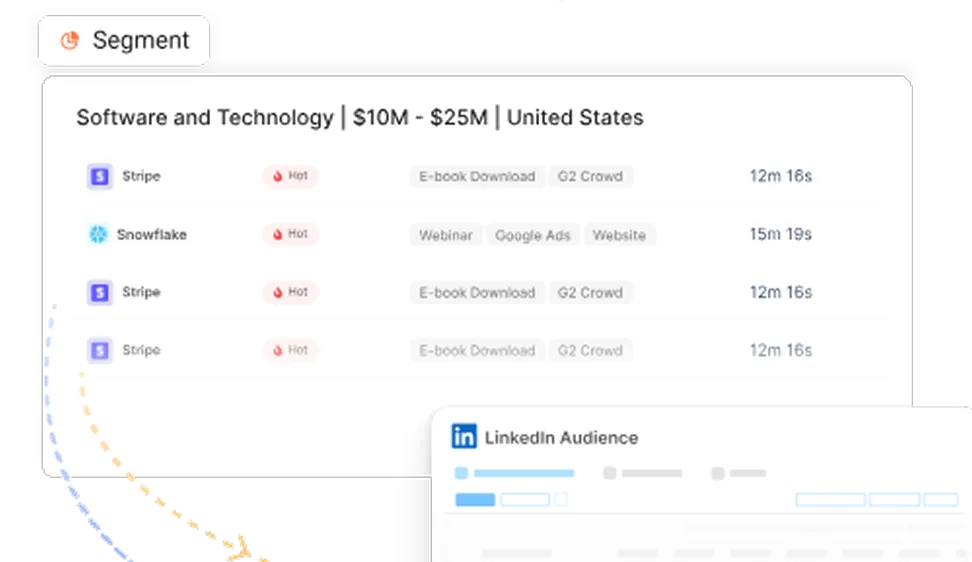
See how Factors can 2x your ROI
Boost your LinkedIn ROI in no time using data-driven insights


.avif)
See Factors in action.
Schedule a personalized demo or sign up to get started for free
LinkedIn Marketing Partner
GDPR & SOC2 Type II

.svg)



.avif)

