
Factors.ai vs Influ2: Which ABM Tool Should You Choose?
Explore Factors.ai as an Influ2 alternative. Compare them across intent data, ABM features, pricing, integrations, ads, and analytics to choose the right ABM tool platform.
.avif)
Content Marketer



.svg)


Finding the ‘right’ demand generation platform usually starts with a demo and ends with a headache.
I’ve seen this play out way too often. Someone on the team says, “We need better intent data.” Another person says, “We just need cleaner attribution.” A third says, “Sales wants visibility into who’s actually engaging.” And suddenly you’re evaluating tools that sound similar on paper but solve very different problems in reality.
That’s exactly where the comparison between Factors.ai and Influ2 sits.
Both platforms help GTM teams move closer to revenue. Both talk about intent, pipeline, and alignment. But they come from fundamentally different starting points. One is built around understanding accounts and orchestrating the entire GTM motion. The other is built around reaching specific people and proving ad influence with precision.
If you’re running modern B2B demand gen, especially across ads, CRM, sales workflows, and revenue reporting, this distinction matters more than most teams realize.
In this guide, I break down how Factors.ai and Influ2 actually work across functionality, pricing, identification, intent, ad activation, analytics, support, and security. The goal is simple. Help you figure out which platform fits how your GTM engine really runs, not how it looks in a slide deck.
Factors vs Influ2: Functionality and Core Capabilities
One question I always ask when evaluating GTM tools is simple: how many tabs do I still need open after I log in?
Some platforms solve one very specific problem extremely well. Others try to act as the connective tissue across marketing, sales, and revenue. Neither approach is wrong. But confusing one for the other is where teams get stuck.
In an ecosystem like the one we’re in today… filled with ad-tech and GTM platforms, the real difference lies in how much of the demand-generation process a tool can handle end-to-end.
Both Factors.ai and Influ2 aim to help marketing and sales teams drive more revenue from intent data and targeted outreach, but the way they approach that goal is very different.
Factors.ai works as a complete GTM orchestration system that connects analytics, automation, and activation.
Influ2, in contrast, focuses on precision advertising at the contact level, showing the right message to the right person across multiple channels.
This section is all about scope. Are you looking for a system that helps you execute a specific motion with precision, or a platform that helps you see, measure, and run your entire GTM strategy in one place?
Functionality and Core Capabilities Comparison
| Aspect | Factors.ai | Influ2 |
|---|---|---|
| Core Focus | Full-funnel GTM orchestration: account identification, journey tracking, campaign activation, and automation. | Contact-level advertising and engagement tracking for CRM-synced audiences. |
| Primary Use Case | Demand generation and revenue growth through unified account insights, automation, and analytics. | Advertising directly to known contacts to prove ad influence on revenue. |
| Platform Scope | Multi-layered: identification, scoring, analytics, ad activation, AI automation, and GTM services. | Focused: ad targeting, engagement analytics, and contact-level reporting. |
| Ideal Users | GTM and revenue teams looking for a connected system that turns insights into action. | Marketing teams running highly targeted ABM or sales-assisted ad programs. |
Factors.ai’s Functionality and Core Capabilities

Factors.ai goes beyond traditional analytics by giving GTM teams an integrated workspace where every part of the demand-generation process connects.
What stands out here is that this setup mirrors how real GTM teams work. Signals do not live in isolation. Website visits, ad clicks, CRM updates, and product usage all influence how accounts move forward. Having these stitched together in one timeline saves hours of manual interpretation and removes a lot of guesswork between marketing and sales.
With platforms like Factors.ai by their side… teams go from reactive follow-ups to proactive outreach simply because everyone is finally looking at the same account story.
Key capabilities:
- Account 360: a unified timeline that brings together website activity, ad engagement, CRM data, and product usage in one view.
- Milestones: funnel analytics that show how accounts move from awareness to revenue.
- AI Agents: tools that analyze data, surface buying signals, and alert sales when an account is ready for outreach.
- Dynamic Ad Activation: automated campaign updates through Google CAPI and LinkedIn AdPilot, ensuring ads reach only active, in-market accounts.
- GTM Engineering Services: optional add-on support that helps teams automate workflows and integrate tools efficiently.
The result is a system that doesn’t just report performance but actively shapes it to help teams identify, engage, and convert high-intent accounts within one connected environment.
Influ2’s Functionality and Core Capabilities
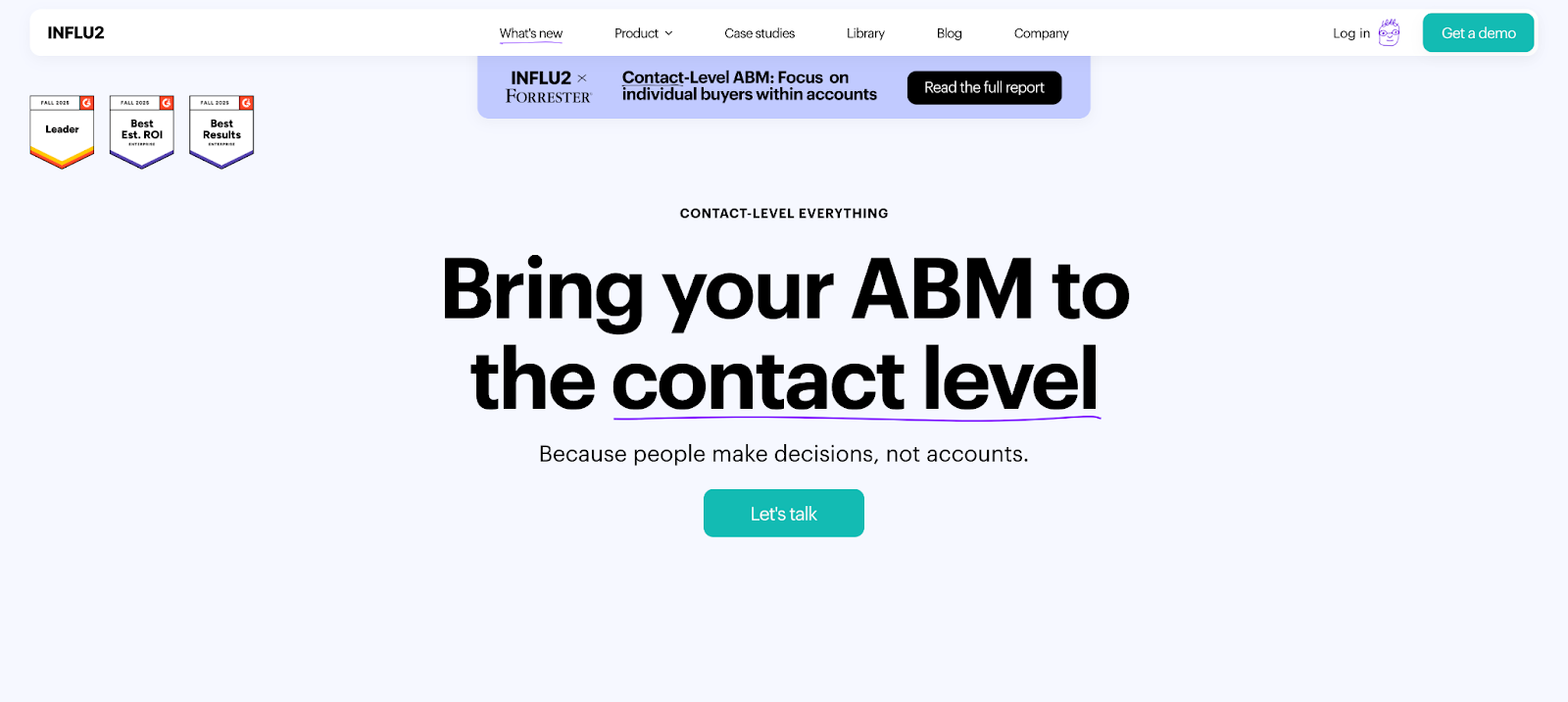
Influ2 takes a more focused route by centering everything around people. Its strength lies in showing ads to named contacts already in your CRM and then tracking their exact interactions with each campaign.
Now, this model works best when your target universe is already defined. You know who the buyers are, you trust your CRM data, and your priority is making sure specific people see specific messages at the right time.
For teams running tight ABM or sales-assisted advertising, this kind of clarity can be useful. Sales conversations also become easier when reps can see exactly which ads a prospect engaged with before a call.
Key capabilities:
- Contact-Level Targeting: sync CRM contacts directly and serve ads only to those specific individuals.
- Ad Engagement Tracking: see who viewed or clicked an ad and how often.
- Journey Mapping for Ads: align ad messaging to buyer stages and personalize creatives accordingly.
- Sales Notifications: alert sales reps when targeted contacts engage with an ad.
- Revenue Attribution: connect ad exposure data with pipeline and closed-won deals to prove ROI.
It’s a precise system that works best when you already know your audience and want to reach them consistently across digital channels.
Factors vs Influ2: Verdict on Functionality and Core Capabilities
Both platforms deliver results but cater to different needs.
Influ2 is a sharp, contact-level tool that gives you visibility into who engaged with your ads and how they moved through the funnel.
Factors.ai is built for teams that need more than visibility and brings together data, automation, and execution to manage the entire GTM process in one place.
In short:
Factors.ai = Full-funnel orchestration for scalable revenue growth.
Influ2 = Targeted advertising for known contacts and ABM programs.
Factors vs Influ2: Pricing and Plans
Some platforms optimize for flexibility and self-serve growth. Others optimize for enterprise deals and bespoke contracts. Neither is inherently better, but it does affect how quickly teams can get started and how confidently they can plan ahead.
While both Factors.ai and Influ2 focus on measurable marketing outcomes, their pricing models work very differently.
Factors.ai follows a clear usage-based structure with multiple tiers designed for growth.
Influ2, on the other hand, doesn’t publish its pricing, requiring a sales call for every quote.
Pricing and Plans Comparison
| Aspect | Factors.ai | Influ2 |
|---|---|---|
| Model Type | Usage- and seat-based model across four tiers (Free, Basic, Growth, Enterprise). | Custom pricing available only through sales consultation. |
| Free Tier | Available and gives up to 200 identified companies per month, basic integrations, and dashboards. | No free tier or public trial listed. |
| Paid Plans | Basic, Growth, and Enterprise tiers scale by company volume, seats, and integrations. | Pricing depends on ad volume, contact lists, and CRM connections. |
| Add-On Services | GTM Engineering Services starting at $4,000 setup + $300/month, offering automation and workflow support. | Campaign guidance and CSM support included with enterprise contracts. |
| Transparency | Pricing model and plan inclusions are published in detail. | Pricing shared only after demo and requirement review. |
| Value Focus | Scales easily for startups and enterprise GTM teams alike. | Suited for mature marketing teams running contact-level ABM campaigns. |
Factors.ai Pricing and Plans

Factors.ai is built to be flexible and upfront.
Its pricing scales based on usage and team size, allowing companies to start small and expand as their GTM activities grow.
What I like about this structure is that teams can actually grow into the platform. You can start with identification and journeys, then layer on scoring, ABM analytics, and ad activation as your GTM motion matures. The optional GTM engineering support also removes a common bottleneck I see, where great tools fail simply because no one has the time to wire everything correctly.
Here’s how it breaks down:
- Free Plan: For small teams exploring account identification and journey tracking.
- Basic Plan: Adds LinkedIn intent signals, GTM workflows, and CRM integrations.
- Growth Plan: Includes ABM analytics, account scoring, and G2 intent signals with a dedicated CSM.
- Enterprise Plan: Offers unlimited company tracking, predictive scoring, and premium integrations like Google and LinkedIn AdPilot.
For teams that want hands-on technical help, GTM Engineering Services can be added at an additional cost.
This gives teams direct engineering support for workflow automation, advanced integrations, and data management which is something most software tools charge separately through agencies or consultants.
Influ2 Pricing and Plans
Influ2 takes a traditional enterprise pricing route.
Its pricing isn’t listed publicly, and quotes are provided only after understanding the client’s campaign goals, ad budget, and audience size.
This approach makes sense for organizations already committed to large ad budgets and defined ABM programs. The trade-off is predictability. Without public pricing, it’s harder for teams to benchmark or plan experiments without going through a full sales cycle.
Factors vs Influ2: Verdict on Pricing and Plans
Factors.ai offers clarity and flexibility which is the kind of pricing structure that allows teams to grow at their own pace.
Its optional GTM Engineering Services add value for companies that need both software and setup guidance without hiring external partners.
Influ2 focuses on custom enterprise contracts tailored to ad spend and CRM scope.
That’s ideal for teams with established budgets but less suited for those wanting straightforward, self-serve onboarding.
In short:
Factors.ai = Transparent, scalable, and supported by optional GTM setup services.
Influ2 = Custom enterprise pricing designed for established ABM programs.
Factors vs Influ2: Account and Contact Identification
You probably already know this but… the strength of any GTM or advertising platform starts with how accurately it can identify who’s engaging with your brand.
For B2B teams, that accuracy can mean the difference between wasted ad spend and real pipeline growth.
Factors.ai and Influ2 both excel in identification, but they approach it from different angles.
Factors.ai focuses on recognizing accounts and mapping every signal tied to them, while Influ2 focuses on contacts, showing ads directly to known individuals synced from your CRM.
Account and Contact Identification Comparison
| Aspect | Factors.ai | Influ2 |
|---|---|---|
| Identification Type | Account-level identification and enrichment using 1st, 2nd, and 3rd party signals. | Contact-level identification synced directly from CRM databases. |
| Data Sources | Website behavior, CRM activity, product data, and ad interactions. | CRM contact lists and engagement data from ad platforms. |
| Scope | Identifies high-intent accounts, maps associated contacts, and connects all activities into Account 360\. | Targets named contacts and maps their ad views, clicks, and engagement history. |
| Signal Strength | Multi-signal enrichment combining firmographic, behavioral, and intent data. | Engagement-based intent from ads viewed or clicked by named contacts. |
| Outcome | Gives a clear view of which accounts are in-market and who within them is active. | Helps sales teams know which individuals interacted with specific ads. |
Factors.ai Account and Contact Identification
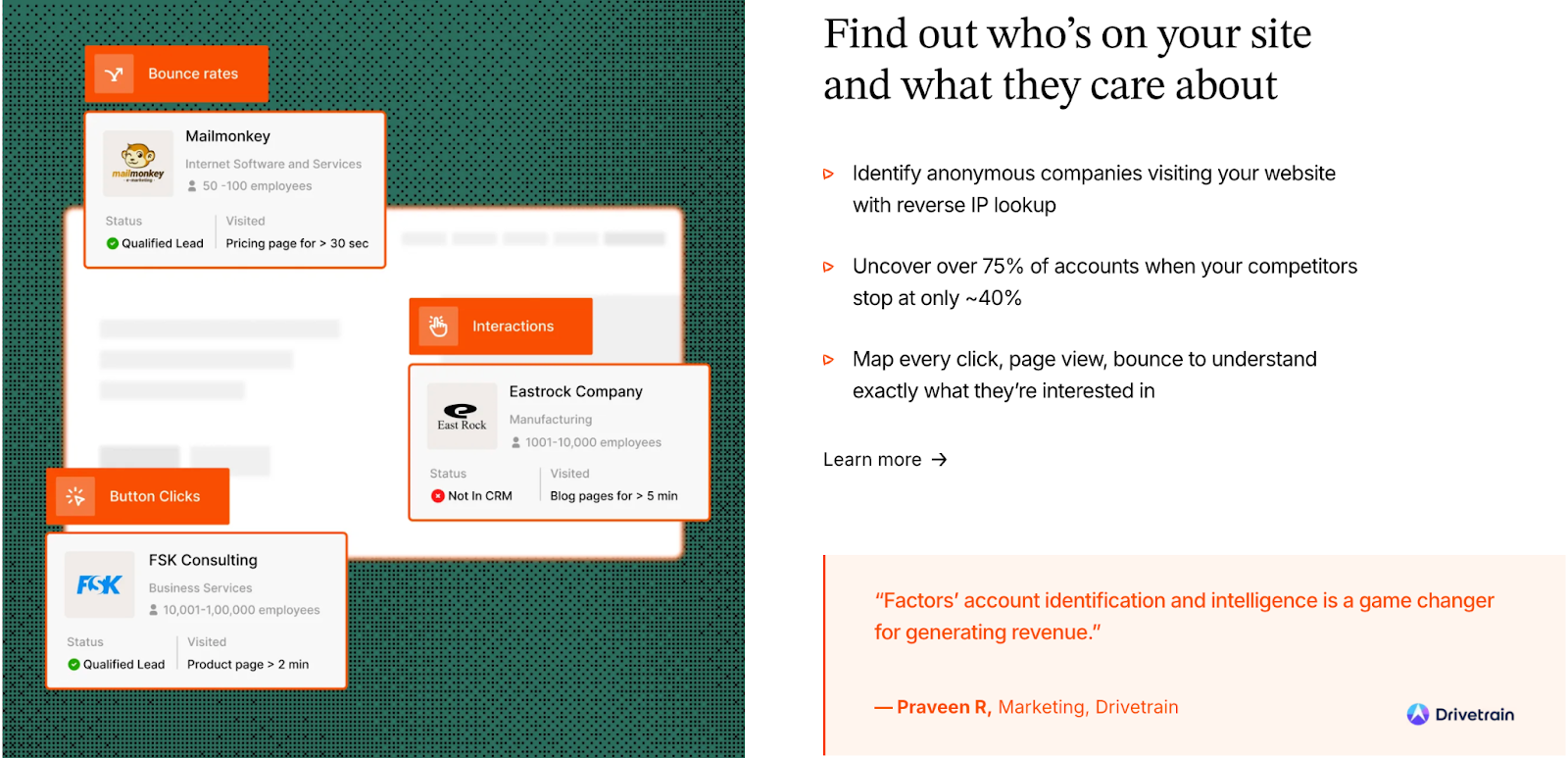
Factors.ai builds identification around the concept of the account journey. Instead of relying on single-source data, it enriches signals across multiple layers like web, CRM, product, and ad performance to build a detailed picture of buying intent.
The strength here is coverage and context. Identification is not treated as a one-time event but as an evolving account journey. Signals accumulate over time, across channels, and across people within the same organization. That’s what allows teams to move beyond “someone from this company visited” to “this account is actively evaluating.”
Key capabilities:
- Sequential Enrichment: uses multiple signals to match anonymous traffic with company data.
- Account 360: creates a unified profile for each account, combining all interactions across touchpoints.
- Multi-Signal Intent Mapping: pulls in first-party (site), second-party (ads, G2), and third-party (uploads) data.
- Contact Insights via AI Agents: surfaces decision-makers, recent actions, and context for outreach.
- Funnel Positioning: helps teams see where each account stands in the buying process.
This approach gives GTM teams visibility into both who is showing intent and how far they’ve moved toward conversion.
Influ2 Account and Contact Identification
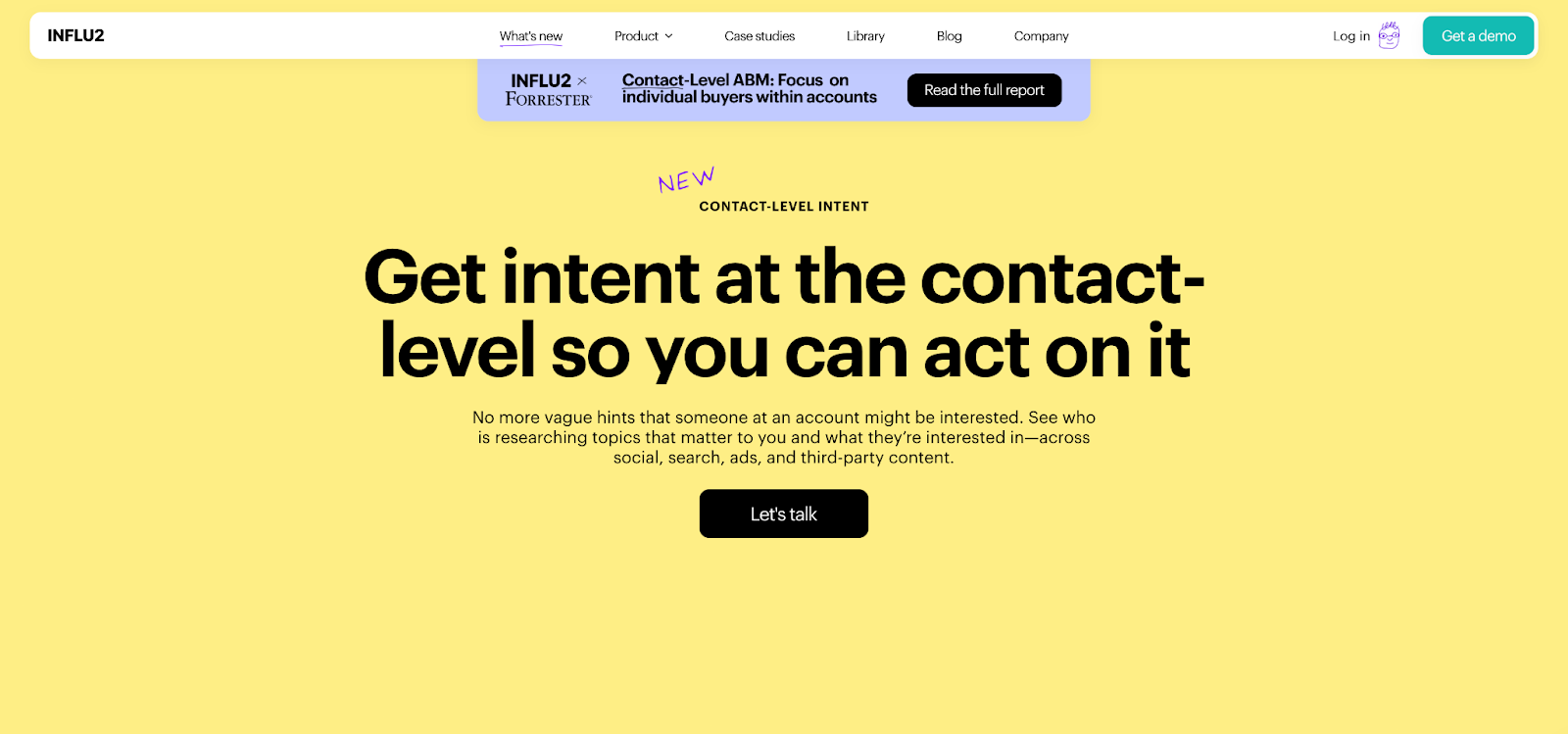
Influ2 works from the opposite direction, starting with named contacts already known to your team. Its strength lies in precision targeting rather than broad discovery.
What I’m saying is… Influ2 does not try to discover new accounts. It assumes discovery has already happened. Its value comes from making sure known contacts are consistently reached and their engagement is fully visible. For focused ABM motions, that clarity can be a huge win.
Key capabilities:
- CRM Sync: imports contacts directly from Salesforce, HubSpot, or other CRMs.
- Person-Level Targeting: delivers ads specifically to those individuals, not just companies or roles.
- Contact-Level Identification: maps ad engagement (views, clicks) to each contact’s profile.
- Sales Notifications: alerts reps when targeted contacts interact with ads.
- Audience Refresh: keeps lists up to date as contacts are added or removed from campaigns.
This makes Influ2 especially effective for ABM programs focused on known accounts and warm prospects. It doesn’t uncover new leads but ensures your message reaches the right people consistently.
Factors vs Influ2: Verdict on Account and Contact Identification
Influ2 delivers precision through contact-level targeting, making it ideal for teams running focused ABM or sales-assisted campaigns.
It gives visibility into who exactly engaged with your ads and when.
Factors.ai, meanwhile, offers a broader view, identifying not only the accounts visiting your site but also mapping all interactions leading to intent.
It connects individual behaviors back to the larger buying group, giving teams both discovery and context.
In short:
Factors.ai = Account-level visibility that connects every signal across the funnel.
Influ2 = Contact-level precision built for targeted advertising programs.
{{INLINE_BOFU}}
Factors vs Influ2: Intent Signals and Buyer Insights
Intent is one of the most overused words in GTM. Everyone claims to have it. Very few platforms explain what they actually do with it.
What matters here is how signals are interpreted and whether they help teams act earlier and with more confidence.
For GTM teams, it’s not enough to know who visited a page as they need to know why, when, and how close that visitor is to taking action.
Both Factors.ai and Influ2 focus on intent, but they do it differently.
Factors.ai gathers intent from multiple layers like website behavior, CRM activity, ads, and product engagement to show the full account picture.
Influ2, on the other hand, tracks intent at the individual level, measuring who among your known contacts is responding to ads and how that maps to revenue.
Intent Signals and Buyer Insights Comparison
| Aspect | Factors.ai | Influ2 |
|---|---|---|
| Intent Source | 1st, 2nd, and 3rd party data including web, CRM, product, and ad engagement. | Contact-level ad engagement data (views, clicks, conversions). |
| Depth of Signals | Multi-signal insights combining account activity, buying-group behavior, and pipeline movement. | Contact-level engagement metrics focused on ad interaction. |
| Buying-Group Mapping | Detects multiple stakeholders within an account and ties their behavior to a single journey. | Focused on individual contact interactions rather than group behavior. |
| Signal Interpretation | Converts signals into account scores using ICP fit, funnel stage, and engagement intensity. | Uses ad engagement data to show interest and potential buying readiness. |
| Outcome | Builds a clear picture of which accounts are active, their buying stage, and priority level. | Helps sales and marketing know which specific contacts are showing interest. |
Factors.ai Intent Signals and Buyer Insights
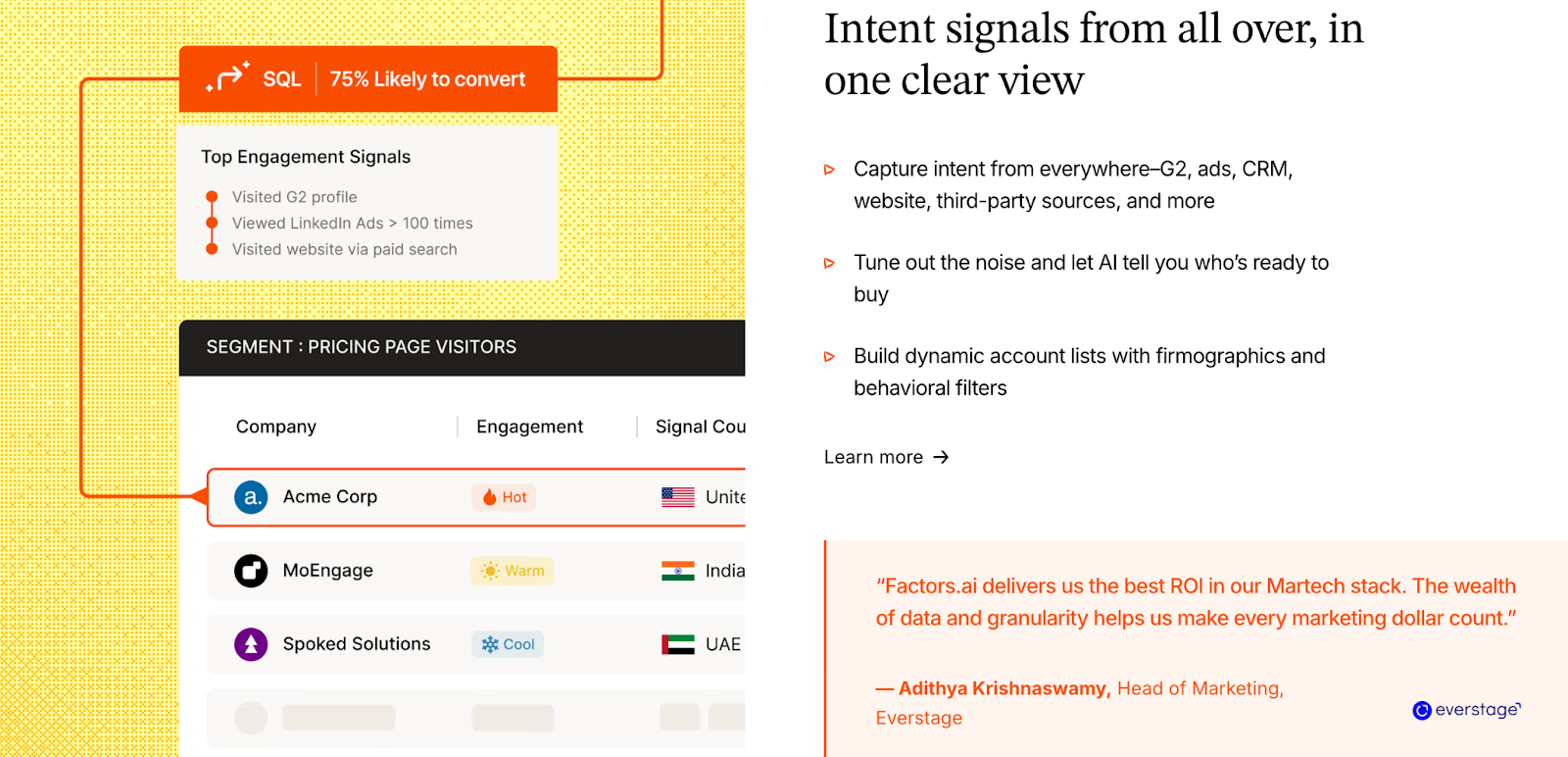
Factors.ai looks at intent as a connected system rather than a single activity. It combines signals from across your tech stack to give both marketing and sales a shared understanding of where each account stands.
AND because intent is pulled from multiple systems, it reflects real buying behavior rather than isolated actions. This helps teams prioritize accounts before they raise their hand, which is often where the biggest revenue opportunities sit.
Key capabilities:
- Multi-Layered Intent Tracking: combines web visits, CRM updates, ad engagement, and product usage.
- Buying-Group Detection: identifies multiple stakeholders interacting with your brand from the same company.
- Intent Scoring: ranks accounts by fit, funnel position, and level of activity.
- Milestones: shows when an account crosses key engagement thresholds, like demo requests or product revisits.
- AI-Powered Insights: surfaces patterns automatically, helping teams prioritize the next best action.
This approach gives GTM teams the clarity to act on intent early, not just react after conversion.
Influ2 Intent Signals and Buyer Insights
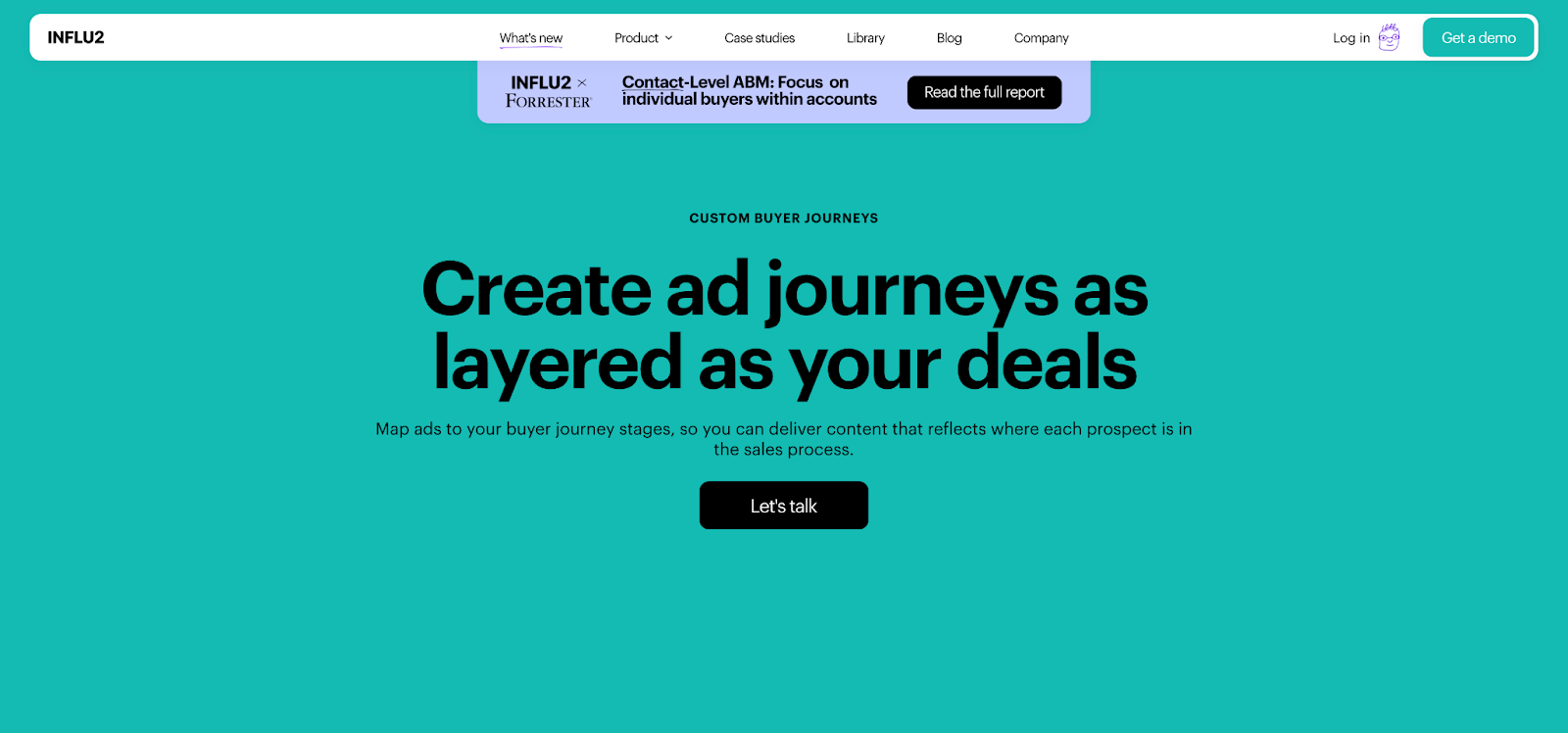
Influ2 focuses on intent that comes directly from advertising engagement. It measures who saw your ads, how often they interacted, and whether that engagement led to any downstream activity.
This model gives clean, defensible signals tied directly to advertising engagement. When your goal is proving ad influence and supporting sales conversations, that level of precision is extremely useful.
Key capabilities:
- Contact-Level Intent Tracking: tracks ad views, clicks, and post-ad engagement for specific individuals.
- Engagement Scoring: highlights contacts most responsive to your campaigns.
- Journey Mapping for Ads: aligns ad messaging with buyer stages to personalize outreach.
- Sales Notifications: alerts sales reps when a contact shows repeated engagement or conversion activity.
- Attribution Visibility: connects ad interactions to CRM data to show impact on pipeline or closed deals.
It gives marketing and sales a strong signal of personal interest which is a useful tool when targeting decision-makers already on your radar.
Factors vs Influ2: Verdict on Intent Signals and Buyer Insights
Influ2 delivers highly specific intent tied to individuals, making it ideal for account-based programs where contact lists are well-defined.
It tells you exactly who engaged with which campaign.
Factors.ai expands the scope to show not just who engaged, but what that engagement means at the account level.
By connecting multiple data sources and mapping collective buying behavior, it gives teams a clearer, actionable view of the full funnel.
In short:
Factors.ai = Multi-signal intent visibility across accounts and buying groups.
Influ2 = Contact-level intent focused on ad engagement accuracy.
Want a playbook? Read how to turn intent into demos in our intent-to-insight guide.
Factors vs Influ2: Ad Activation and Campaign Management
Ad activation is where strategy meets execution like this… 🤝.
(This is also where many teams lose efficiency due to manual audience updates and outdated targeting.)
Automation versus control is the CORE tension here.
The right tool helps you adapt, ensuring ads reach the right audience at the right time with minimal manual effort.
Both Factors.ai and Influ2 are strong in this space, but their focus differs.
Factors.ai drives campaign activation using AI, funnel data, and audience automation, while Influ2 emphasizes direct, contact-level ad delivery for precision targeting.
Ad Activation and Campaign Management Comparison
| Aspect | Factors.ai | Influ2 |
|---|---|---|
| Ad Channels | LinkedIn and Google (native integrations via AdPilot and CAPI). | LinkedIn, Google, Meta, Bing, and Amazon. |
| Activation Logic | Dynamic audience syncs based on intent and funnel stage. | CRM-based audience targeting using named contacts. |
| Automation | Automated campaigns triggered by real-time account behavior and milestones. | Manually controlled campaigns with pre-synced CRM contact lists. |
| Audience Updates | Daily refresh and audience suppression to prevent wasted spend. | Periodic CRM syncs to update audience lists. |
| Optimization Focus | AI-powered optimization for high-intent accounts and stage-based ad delivery. | Engagement-driven optimization based on contact-level ad performance. |
Factors.ai Ad Activation and Campaign Management
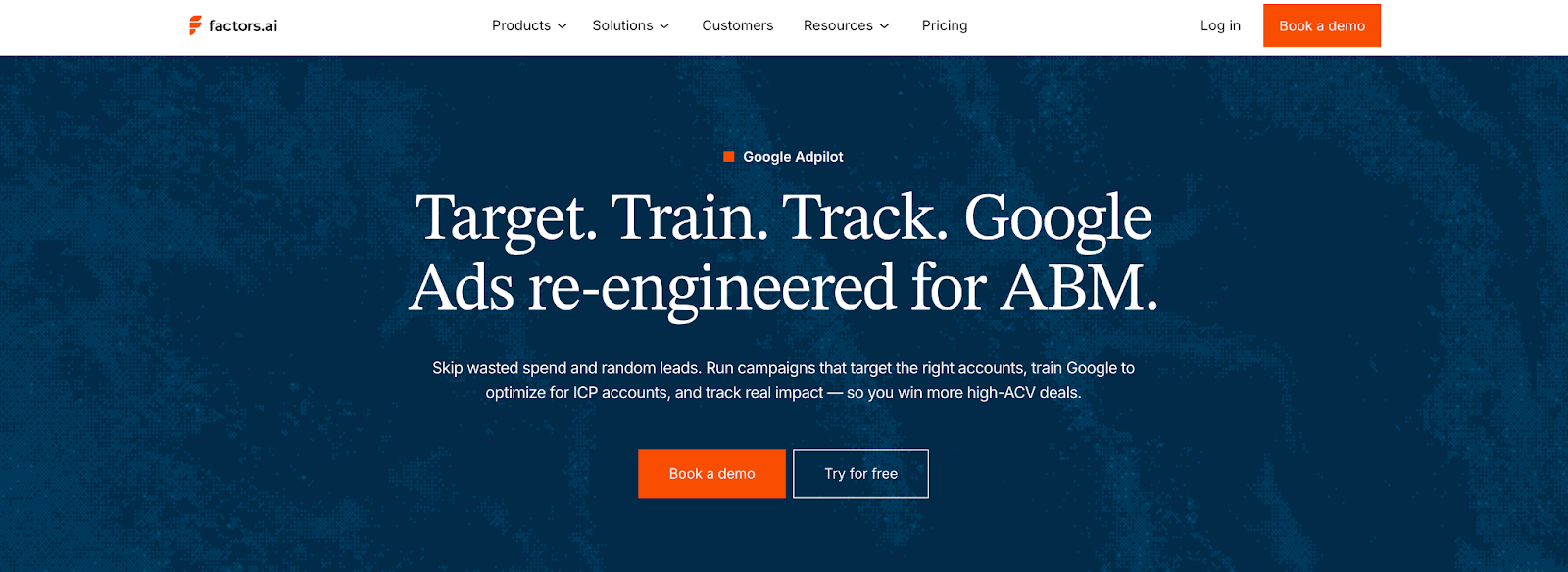
Factors.ai automates activation through intent-driven logic that syncs directly with your ad platforms.
Instead of broad targeting, it creates audiences dynamically based on who’s showing buying intent and where they are in the funnel.
Here, the biggest benefit I’ve seen is reduced waste. When audiences refresh automatically based on real intent and funnel movement, ads stay relevant without daily babysitting.
Key capabilities:
- LinkedIn AdPilot: activates and refreshes LinkedIn campaigns automatically based on account signals.
- Google AdPilot: pushes enhanced conversion signals using Google CAPI to optimize for pipeline-ready accounts.
- Buyer-Stage Campaigns: adapts ad creative and targeting as accounts move through awareness, consideration, and decision stage.
- Audience Suppression: removes inactive or irrelevant accounts to save ad spend.
- Real-Time Data Sync: updates audiences daily to ensure accuracy and freshness.
This setup means your ad campaigns stay relevant without needing constant manual updates.
It’s especially useful for teams running multi-stage GTM campaigns who want to align paid media with real-time intent.
Influ2 Ad Activation and Campaign Management
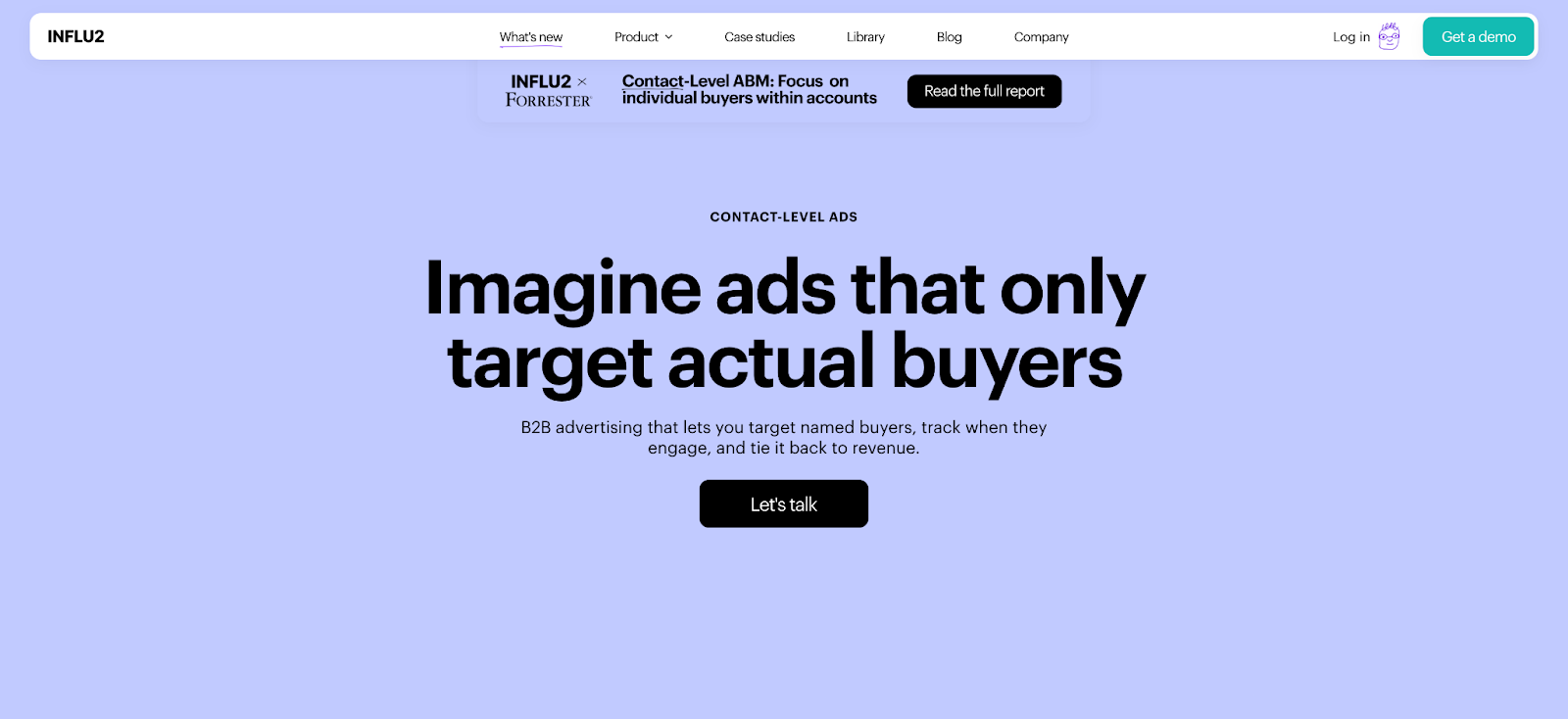
Influ2 treats ad activation at the person level.
It connects directly to your CRM, takes the list of named contacts, and serves ads only to those specific individuals across major ad networks.
This approach offers more direct control and broader channel reach. It works best when teams are comfortable managing defined contact lists and want visibility into every impression served.
Key capabilities:
- CRM-Based Targeting: syncs contacts from Salesforce, HubSpot, or Marketo to build precise audience lists.
- Cross-Channel Reach: runs campaigns across LinkedIn, Google, Meta, Bing, and Amazon.
- Personalized Ads: allows creative variations tailored to roles or funnel stages.
- Engagement Reporting: tracks which contacts viewed or clicked an ad, giving clear attribution.
- Sales Notifications: alerts reps when key contacts interact with campaigns.
This method ensures your ads only reach the people who matter most, helping reduce wasted impressions and improving sales alignment.
However, it requires pre-defined contact lists and doesn’t automate ad refreshes based on live intent signals like Factors.ai does.
Factors vs Influ2: Verdict on Ad Activation & Campaign Management
Influ2 delivers outstanding precision at the individual level, ideal for targeted ABM efforts where your contact list is clearly defined.
It shines in reach and control, especially across multiple ad networks.
Factors.ai, however, takes activation a step further.
By automating campaigns around real-time intent and funnel stages, it helps teams continuously optimize ad spend while keeping audiences current.
In short:
Factors.ai = Intent-based, automated ad orchestration that scales with your GTM funnel.
Influ2 = Contact-level targeting for high-precision, cross-channel advertising.
Factors vs Influ2: Analytics, Reporting and Revenue Attribution
Analytics should answer one question clearly: what actually moved revenue forward?
Clicks and impressions are easy to count. Understanding influence across a long B2B buying cycle is not. And for GTM and marketing teams… collecting data is never the end goal, interpreting it is.
The real impact of analytics comes from how clearly a platform connects engagement, conversion, and revenue.
Both Factors.ai and Influ2 offer strong visibility into performance, but their analytics depth and focus differ.
Factors.ai gives a holistic, full-funnel view linking every touchpoint to revenue, while Influ2 focuses more on tracking how ads influence known contacts and opportunities.
Analytics, Reporting and Revenue Attribution Comparison
| Aspect | Factors.ai | Influ2 |
|---|---|---|
| Analytics Scope | Full-funnel view combining website, CRM, ad, and product data. | Focused on ad performance and contact-level engagement. |
| Revenue Attribution | Funnel milestone analytics, pipeline influence, and closed-won attribution. | Ad influence tracking from contact engagement to revenue impact. |
| Granularity | Account-level journey analytics with multi-touch tracking. | Contact-level analytics centered on ad interactions. |
| Dashboards & Customization | 10–300 custom reports depending on plan tier; supports role-based dashboards. | Campaign and engagement dashboards, limited customization. |
| Cross-Channel Insights | Compares ad, website, and CRM performance together. | Primarily ad-channel performance metrics. |
Factors.ai Analytics, Reporting and Revenue Attribution
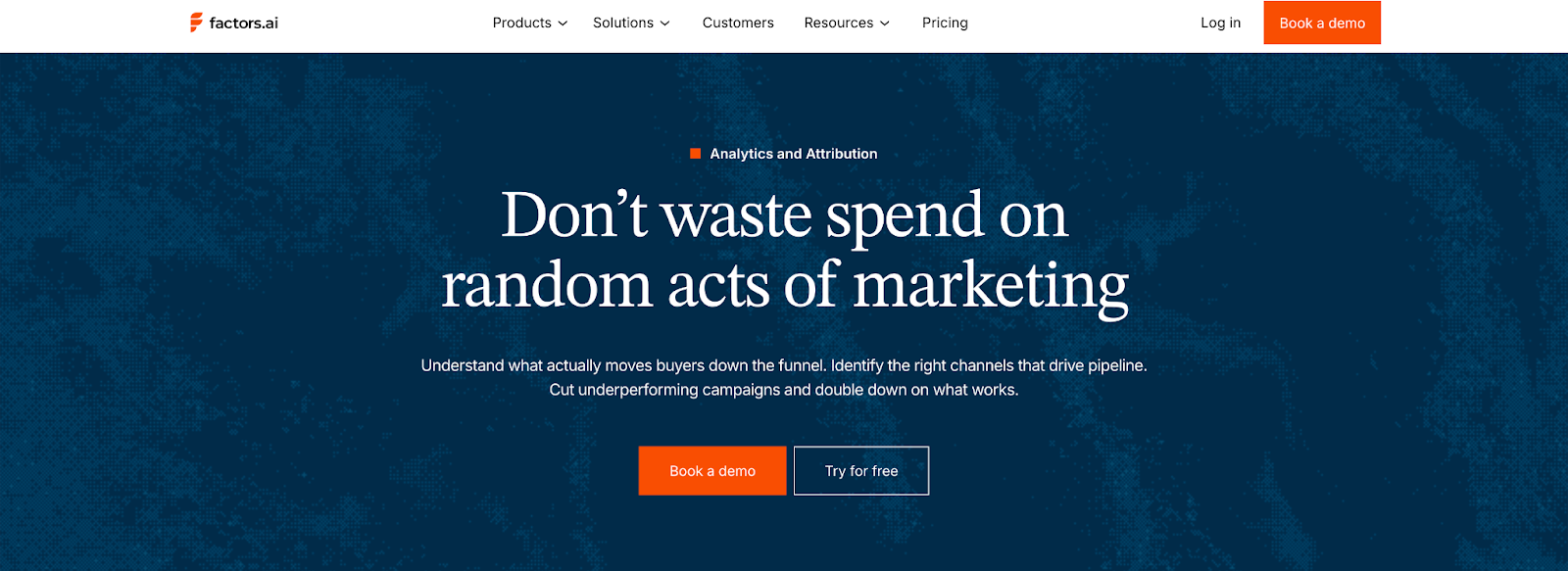
Factors.ai brings structure and visibility to GTM performance by tracking every touchpoint across the customer journey. Having marketing and sales look at the same revenue story changes conversations (and builds friendships that seemed impossible #IYKYK). Attribution stops being defensive and starts becoming strategic.
Factors.ai’s analytics map behavior from first visit to deal closure.
Key capabilities:
- Milestones: tracks key funnel movements such as demo requests, proposal sent, or deal won.
- Attribution Models: identifies which campaigns or channels contributed most to pipeline creation.
- Account 360: consolidates engagement data into a single view that connects marketing and sales outcomes.
- Custom Reporting: allows users to build dashboards that reflect revenue contribution by channel, region, or campaign type.
- Cross-Channel View: integrates website analytics, CRM data, and ad performance to offer a unified perspective.
Together, these features help teams see what’s driving pipeline growth and not just where clicks are coming from.
Influ2 Analytics, Reporting and Revenue Attribution
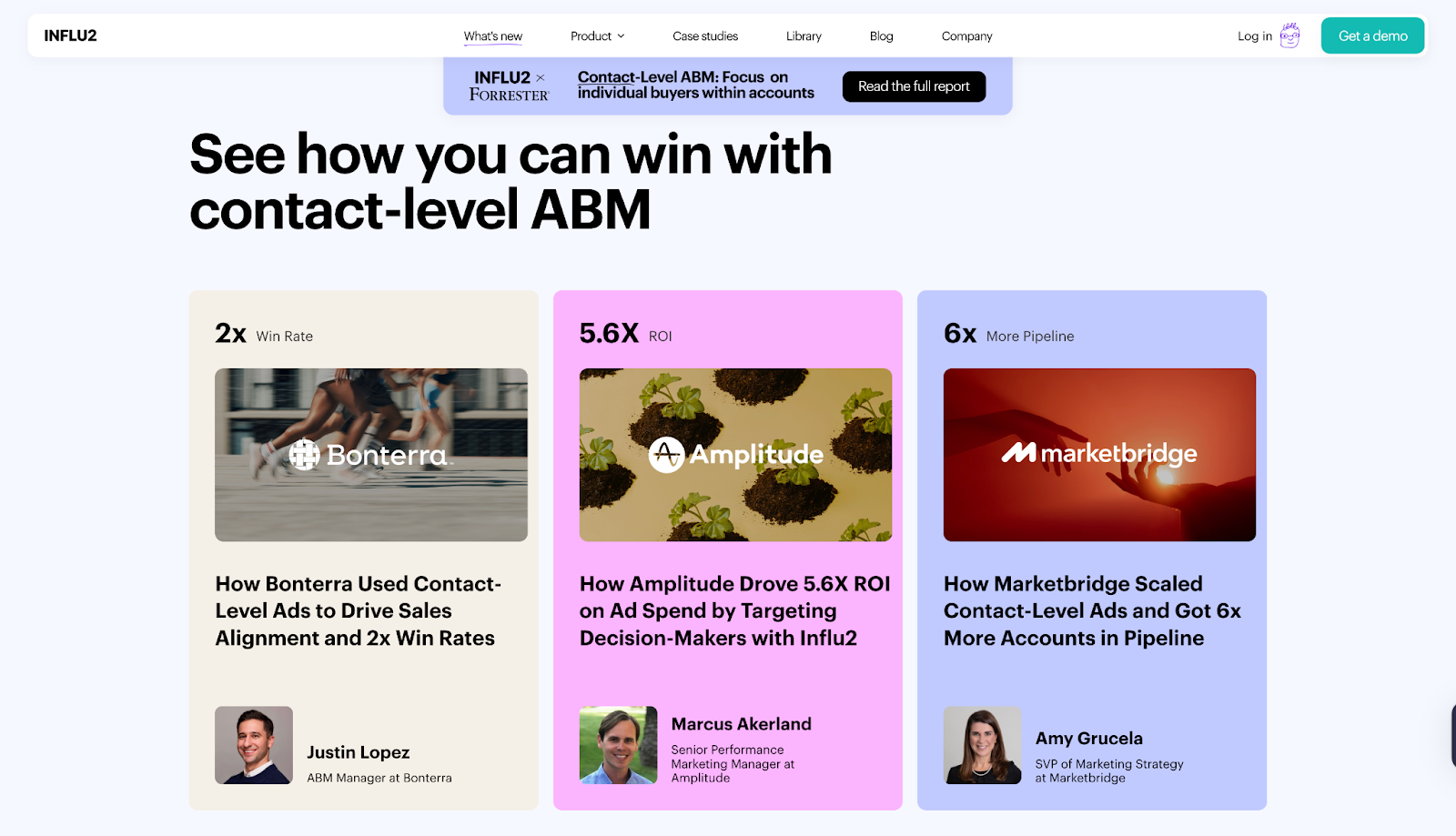
Influ2 delivers analytics designed to prove the influence of advertising on sales outcomes.
It connects ad impressions and clicks with named contacts in the CRM, helping teams validate whether campaigns actually drive engagement and revenue.
This is useful for validating ad spend in ABM programs. Sales teams appreciate seeing tangible proof of engagement before outreach.
Key capabilities:
- Contact-Level Attribution: measures which ads specific contacts viewed or engaged with.
- Campaign Impact Reporting: shows how ad exposure influenced opportunity creation or pipeline velocity.
- Engagement Frequency Tracking: monitors how often contacts interacted with your ads and what stage they were in when they did.
- ROI Metrics: highlights which ad campaigns influenced closed-won deals.
- Sales Insights: provides data sales teams can use for more relevant outreach.
This type of reporting helps prove the real-world value of targeted advertising, especially in ABM setups where direct attribution matters most.
Factors vs Influ2: Verdict on Analytics, Reporting & Revenue Attribution
Influ2 gives clarity at the contact level.
It’s well-suited for organizations that want to measure exactly how advertising engagement influences pipeline and closed-won deals.
Factors.ai takes a broader approach, connecting all signals including web, ads, CRM, and product, into one cohesive revenue picture.
It helps marketing and sales teams understand which channels drive actual business outcomes, not just engagement.
In short:
Factors.ai = Complete, full-funnel analytics linking engagement to revenue.
Influ2 = Contact-level visibility focused on ad influence and ROI validation.
For attribution detail, our types of attribution models guide explains when to use each model.
Factors vs Influ2: Support, Onboarding and Services
Ever seen a building without pillars? Ummm… exactly. The right platform is only as effective as the support behind it (AKA pillars).
Smooth onboarding and reliable assistance can turn complex setups into steady operations.
Both Factors.ai and Influ2 provide customer support, but Factors.ai takes it further by offering hands-on GTM engineering services which is something that most platforms leave entirely to the customer.
Support, Onboarding and Services Comparison
| Aspect | Factors.ai | Influ2 |
|---|---|---|
| Onboarding Process | White-glove onboarding with guided setup for integrations, workflows, and campaigns. | Assisted onboarding through a customer success team during setup. |
| Dedicated Support | Dedicated CSM, weekly GTM review calls, and direct Slack channel for faster response. | CSM support available for campaign guidance and troubleshooting. |
| Technical Assistance | GTM Engineering Services (optional) for workflow automation and advanced setup. | No dedicated engineering support; handled via CSM and email tickets. |
| Knowledge Resources | Documentation library, in-platform walkthroughs, and email support. | Resource center with documentation and case studies. |
| Availability | Priority support for Growth and Enterprise users, email support for others. | Support available via email and CSM communication. |
Factors.ai Support, Onboarding and Services
Factors.ai focuses on long-term partnership rather than simple onboarding. Every plan includes structured setup support, but the experience becomes more personalized as you move up tiers.
The engineering support here closes a reeeeaaaal gap. Many teams don’t want another agency. They want the platform itself to help them operationalize GTM ideas quickly.
Key highlights:
- White-Glove Onboarding: guided setup for integrations, dashboards, and ad automation.
- Dedicated CSM: available for ongoing check-ins, optimization, and progress tracking.
- Slack Channel Access: ensures fast communication and real-time feedback.
- Weekly GTM Reviews: collaborative sessions to align campaign insights and next steps.
- GTM Engineering Services: available as an add-on for deeper operational support, includes workflow automation, data synchronization, and reporting assistance.
For companies that want both software and execution help under one roof, this model provides exceptional value.
Influ2 Support, Onboarding and Services
Influ2 offers a straightforward customer success experience that centers around campaign performance and ad optimization. Most support activities happen through its CSM team, which guides users during setup and continues providing help as campaigns evolve.
This model works well for teams with internal resources or agency partners who already handle execution.
Key highlights:
- CSM-Led Onboarding: includes training, campaign setup guidance, and best practices.
- Strategic Check-Ins: periodic reviews to discuss performance metrics.
- Email & Ticket Support: available for troubleshooting and platform queries.
- Educational Resources: includes case studies, product blogs, and a help center.
The process is reliable and personal, but it lacks the deeper operational support that Factors.ai provides through its engineering services.
Verdict on Support, Onboarding and Services
Influ2 offers dependable customer success support with guidance that keeps campaigns on track.
It’s built for teams that already have internal technical resources or agency partners.
Factors.ai adds more depth to the experience.
With structured onboarding, proactive communication, and optional GTM engineering services, it ensures that every team (technical or not) can get the most from the platform.
In short:
Factors.ai = Strategic onboarding with hands-on GTM and engineering support.
Influ2 = Reliable customer success model focused on campaign guidance.
Factors vs Influ2: Security and Compliance
Security conversations usually surface late in the buying process, but they often decide the final outcome (and that kinda sucks). Especially for enterprise GTM teams handling CRM and ad data.
In B2B software (and in life), trust depends on how safely a platform handles customer data.
Security and compliance defines whether a product can support large-scale, data-driven operations with confidence.
Both Factors.ai and Influ2 maintain strong protection standards, though Factors.ai strengthens its position with wider certifications and enterprise-focused controls.
Security and Compliance Comparison
| Aspect | Factors.ai | Influ2 |
|---|---|---|
| Certifications | ISO 27001, SOC II Type 2, GDPR, and CCPA compliant. | SOC 2 Type II, GDPR, and CCPA compliant. |
| Data Hosting | Hosted on Google Cloud Platform (SOC 1, 2, 3 compliant). | Hosted on secure, compliant infrastructure with standard encryption. |
| Data Encryption | AES-256 encryption at rest and TLS-secured data in transit. | AES-256 encryption for data storage and transfer. |
| Access Controls | Role-based permissions, 2FA, and segregated environments for customer data. | Restricted employee access, internal review processes, and audit logging. |
| Incident Management | Documented incident response plan with 24/7 monitoring. | Internal security monitoring and real-time alerts. |
| Backup & Recovery | Frequent snapshots and geographically distributed backups. | Daily backups and restoration within 24 hours. |
| Privacy Regulations | Full compliance with GDPR and CCPA; privacy terms detailed publicly. | GDPR and CCPA compliance listed in Trust Center. |
Factors.ai Security and Compliance

Factors.ai treats data protection as a fundamental part of its platform architecture.
Its operations follow strict compliance standards designed to meet enterprise security needs.
Key measures include:
- ISO 27001 and SOC II Type 2 certification: ensures data confidentiality, integrity, and operational control.
- Secure Infrastructure: hosted on Google Cloud’s SOC-certified environment with restricted physical and digital access.
- Data Encryption: AES-256 for data at rest and TLS-secured transmission with SHA-2 compliant cipher suites.
- Access Control: limited to authorized personnel through role-based access and 2FA.
- Disaster Recovery: multiple backups stored across locations to ensure business continuity.
For teams handling sensitive CRM and marketing data, these layers provide enterprise-grade reliability and peace of mind.
Influ2’s Security and Compliance

Influ2 maintains strong security standards aligned with modern SaaS best practices.
It focuses on safeguarding user data through encryption, limited access, and compliance with major privacy regulations.
Key measures include:
- SOC 2 Type II Certification: validates internal controls and data management processes.
- GDPR & CCPA Compliance: ensures responsible handling of customer data across regions.
- Data Encryption: AES-256 encryption for stored and transmitted data.
- Access Restriction: internal teams have limited access to customer data with audit logging in place.
- Backup Systems: daily automated backups with recovery protocols to minimize data loss.
While its security framework covers all essential requirements, it doesn’t extend into certifications like ISO 27001 or offer public documentation of advanced data management policies like Factors.ai does.
Factors vs Influ2: Verdict on Security and Compliance
Influ2 provides a strong, compliant security setup suitable for most mid-market and enterprise organizations.
It follows best practices and maintains solid encryption and monitoring standards.
Factors.ai builds on those foundations with additional certifications, advanced infrastructure control, and publicly available compliance documentation.
It’s structured to support enterprise teams that require audited, verifiable data protection standards.
In short:
Factors.ai = Enterprise-grade compliance with ISO and SOC II certifications.
Influ2 = Strong foundational security built on SOC 2 and GDPR compliance.
Factors vs Influ2: Which tool to choose when?
Both Factors.ai and Influ2 help B2B teams reach the same goal: turning engagement into revenue. But the way they get there is very different.
Influ2 is built for precision. It’s ideal for marketers who already know their target contacts and want to reach them with ads that can be directly tied to engagement and revenue.
Its biggest strength lies in visibility and showing how advertising connects to specific people and opportunities.
It fits well with teams that already have mature ABM programs and defined account lists.
Factors.ai is built for scale and connection.
It brings together everything that happens across marketing and sales, from identifying high-intent accounts to activating ads and measuring what drives growth.
Its integrated approach, supported by analytics, automation, and optional GTM services, makes it a stronger choice for teams that want their systems and workflows to work together.
To put it simply:
- Influ2 helps you reach the right people.
- Factors.ai helps you grow pipeline.
FAQs for Factors.ai vs Influ2
Q. What is the main difference between Factors.ai and Influ2?
The biggest difference lies in scope. Factors.ai is designed to connect and run your entire GTM motion, from account identification and intent tracking to ad activation and revenue analytics. Influ2 focuses primarily on contact-level advertising, helping teams show ads to known individuals and track how those ads influence pipeline and revenue.
Q. Is Influ2 an alternative to Factors.ai?
Influ2 can be an alternative if your primary goal is advertising to known contacts within defined ABM programs. If your GTM strategy requires account discovery, multi-signal intent, funnel visibility, and automated activation across stages, Factors.ai is built to support that broader motion rather than just advertising execution.
Q. Which platform is better for account-based marketing?
Both platforms support ABM, but in different ways. Influ2 works well for highly targeted ABM campaigns where contacts are already known and synced from CRM. Factors.ai supports ABM at scale by identifying high-intent accounts, mapping buying-group behavior, and automating campaigns as accounts move through the funnel.
Q. Does Influ2 help identify new accounts or buyers?
No. Influ2 does not focus on discovering new accounts. It operates on CRM-synced contact lists and is designed to engage people you already know. Factors.ai, on the other hand, helps identify in-market accounts using website, ad, CRM, and product signals, even before contacts are fully known.
Q. How do Factors.ai and Influ2 differ in intent data?
Influ2 tracks intent primarily through ad engagement at the individual level, such as views, clicks, and conversions. Factors.ai combines multiple intent sources, including website behavior, CRM activity, ad interactions, and product usage, to build a more complete picture of account-level buying readiness.
Q. Which platform offers better ad automation?
Factors.ai offers deeper automation by dynamically syncing audiences and triggering campaigns based on real-time intent and funnel movement. Influ2 offers precise ad delivery to named contacts but relies more on manually defined CRM lists rather than intent-driven automation.
Q. Is Factors.ai suitable for smaller or growing GTM teams?
Yes. Factors.ai offers a free plan and usage-based tiers that allow teams to start small and scale gradually. Its pricing structure and optional GTM engineering support make it accessible for startups, mid-market teams, and enterprise organizations alike.
Q. Does Influ2 provide revenue attribution?
Yes. Influ2 provides contact-level attribution that shows how ad exposure influenced opportunities and closed-won deals. Factors.ai goes further by offering full-funnel attribution that connects ads, website activity, CRM movement, and revenue across the entire account journey.
Q. Which platform is better for sales alignment?
Both improve sales alignment, but in different ways. Influ2 helps sales teams see which specific contacts engaged with ads. Factors.ai helps sales understand which accounts are in-market, where they sit in the funnel, and which signals suggest outreach is timely.
Q. How should GTM teams choose between Factors.ai and Influ2?
Teams should start by looking at how their GTM engine actually operates. If advertising to known contacts and proving ad influence is the priority, Influ2 is a strong fit. If the goal is to connect intent, activation, analytics, and revenue across the full GTM lifecycle, Factors.ai offers a more comprehensive solution.

See how Factors can 2x your ROI
Boost your LinkedIn ROI in no time using data-driven insights


.avif)

See Factors in action.
Schedule a personalized demo or sign up to get started for free
LinkedIn Marketing Partner
GDPR & SOC2 Type II

.svg)



.avif)

