
The Decline of Gated Content: What the Data Says and What To Replace It With
Gated content is collapsing across B2B marketing. Read about what’s replacing forms, where buyers engage today, and how to rebuild a content engine that converts.

CEO, NeonTrumpet
.avif)
Content Marketer



.svg)


TL;DR
- Gated content performance is collapsing, with major drops in webinar signups, eBook downloads, and report requests.
- Buyers now prefer ungated, native content, using AI tools and social platforms to gather information before ever signaling intent.
- LinkedIn ads and brand campaigns are rising, with marketers prioritizing reach, trust, and mental availability over form fills.
- Retargeting and bottom-funnel content are replacing lead forms as key mechanisms to convert high-intent traffic into pipeline.
Remember the golden days of yesteryear when gating an eBook felt like a secret hack to marketing success? When every webinar registration made your lead gen dashboard light up like a Christmas tree? When downloading a whitepaper in exchange for an email address was just... how things worked?
Those glory days are over.
The Numbers Don't Lie (But Your Dashboard Might)
Let's rip off the rose-tinted band-aid. Our recent analysis of 100+ B2B marketing teams reveals that gated content is in freefall.
Webinar registrations are down 12.7% overall. And before you blame Zoom fatigue, this decline is systemic across the board. The median company saw a 42% drop in webinar registrations, with the bottom quartile experiencing a brutal 70.2% decline.
eBook downloads dropped 5% among companies with established content programs. These aren't companies just testing the waters with their first eBook. We're talking about organizations that had more than 100 downloads in the previous year's comparable quarter. They built the machine, and now it's running out of gas.
Industry reports? Down 26.3% for companies with mature report programs. Again, these are organizations that had proven track records (100+ downloads previously). The content that used to be your ace in the hole is now more like a two of clubs.
This isn't about content quality. Your eBooks didn't suddenly become boring. Your webinars aren't less valuable than they were last year.
The game itself has changed.
Why Buyers Are Breaking Up With Your Lead Forms
The decline of gated content isn't random. Three shifts have converged to make lead forms feel as outdated as a fax machine.
1. The LLM Revolution Changed How Buyers Research
89% of B2B buyers now use generative AI in their purchasing process. Think about what that means. Instead of downloading your "10 Best Practices" PDF, buyers are asking ChatGPT for 50 best practices, comparison tables, implementation frameworks, and ROI calculators. All in about three minutes. No email address required.
Your gated eBook isn't competing with other vendors' eBooks anymore. It's competing with AI that can synthesize information from hundreds of sources instantly. And frankly, the AI is winning on convenience.
2. Buyers Form Preferences Before You Even Know They Exist
According to Forrester, 92% of B2B buyers start their journey with at least one vendor already in mind. And 41% have already selected their preferred vendor before formal evaluation even begins.
By the time buyers are filling out your webinar registration form, the decision is often already made. They're not in "learning mode" anymore. They're in "validation mode" or "building internal consensus mode."
That changes everything about what content needs to do.
3. Digital Fatigue Is Real
Marketing automation and AI-generated content have flooded the market with generic, samey messaging. Buyers can smell a lead gen magnet from a mile away. They know that downloading your eBook means entering a nurture sequence. They know their inbox is about to get lit up by your SDR team. They know the game.
And increasingly, they're opting out.
{{INLINE_TOFU}}
But Wait, There's Good News (Kind Of)
Before you burn down your content calendar and quit marketing forever, here's what's working:
Demo requests are up 9.5% overall. The median company saw a 17.4% increase, and 63% of organizations reported growth in demo requests. The 75th percentile? A whopping 56.1% increase.
This tells us that bottom-of-funnel intent is alive and well. Buyers still want to engage. They're just done with the foreplay.
They don't want your 20-page eBook. They want to see if your product actually does what they need it to do. They don't want to sit through a 45-minute webinar about industry trends. They want a demo with someone who can answer their specific questions.
The data also reveals another fascinating trend: among companies that saw traffic decline, conversion rates actually improved. Companies experiencing a 28% decline in traffic saw conversion rates increase by 18%.
Why? Because the traffic that is coming is higher-intent. As informational research migrates to LLMs and social platforms, website visitors increasingly represent people who have already narrowed their vendor shortlist. They're showing up ready to convert, not browse.
Lower volume, higher intent. That's the new reality.
So What Replaces Gated Content?
If lead forms are dying, what fills the void? The answer isn't to abandon content. It's to fundamentally rethink how and where you distribute it.
1. Build Brand Presence Where Buyers Actually Are
While gated content declined, LinkedIn advertising budgets grew 31.7% year-over-year. That's not a typo. LinkedIn ad spend is growing 5X faster than Google Ads (which grew just 6%).
Why? Because B2B marketers are finally catching on to where the real action is happening.
71.9% of marketers report that leads from LinkedIn Ads align more closely with their ideal customer profile and are more likely to be senior-level decision-makers. When 92% of buyers already have a vendor shortlist before active evaluation, being present and visible where they consume professional content becomes the entire ballgame.
2. Shift From Lead Generation to Brand Awareness
Here's a stat that should make you rethink everything: LinkedIn campaign objectives shifted dramatically in 2025. Brand awareness and engagement campaigns grew from 17.5% to 31.3% of total spend. Meanwhile, lead generation objectives dropped from 53.9% to 39.4%.
The smartest marketers are realizing that preferences form before buyers signal intent. You need to build mental availability well before you enter the market.
That means:
- Executive thought leadership (not just company posts)
- Ungated, valuable content distributed through Thought Leader Ads
- Consistent presence across both paid and organic channels
- Document Ads that let buyers consume content natively on LinkedIn without friction
Document Ads, specifically, saw spend increase from 6.4% to 10.7% of total LinkedIn budgets. Why? Because they enable native content consumption without requiring landing page visits. Buyers can get value without entering a lead form. And paradoxically, this builds more trust and engagement than gating ever did.
3. Make Organic Content Your Lead Engine
The most successful B2B brands aren't gating content anymore. They're amplifying it.
53% of B2B marketers now amplify organic posts with Thought Leader Ads. They're taking genuinely valuable content from executives and founders and putting ad spend behind it to reach the right ICP accounts.
This approach solves for both the 95% who aren't in-market now (building awareness for future demand) and the 5% showing intent today (capturing attention at the moment of consideration).
4. Focus on Bottom-of-Funnel Conversion Assets
Since demo requests are growing while top-of-funnel gated content declines, double down on conversion optimization:
- Make demos easy to book (remove friction, not add it)
- Create interactive product experiences
- Build ROI calculators that work without email capture
- Offer assessments that provide immediate value
Save the "give us your email" ask for when someone is actually ready to talk. Not as a toll booth for basic information.
5. Retarget High-Intent Accounts Intelligently
Here's where the magic happens. While you're building brand awareness and distributing ungated content, you're also identifying accounts showing genuine interest. Accounts visiting your pricing page. Accounts reading competitive comparison content. Accounts from your ICP showing repeated engagement.
These accounts get retargeted on LinkedIn with bottom-of-funnel offers. Not another eBook. Not another webinar registration. A direct path to conversation.
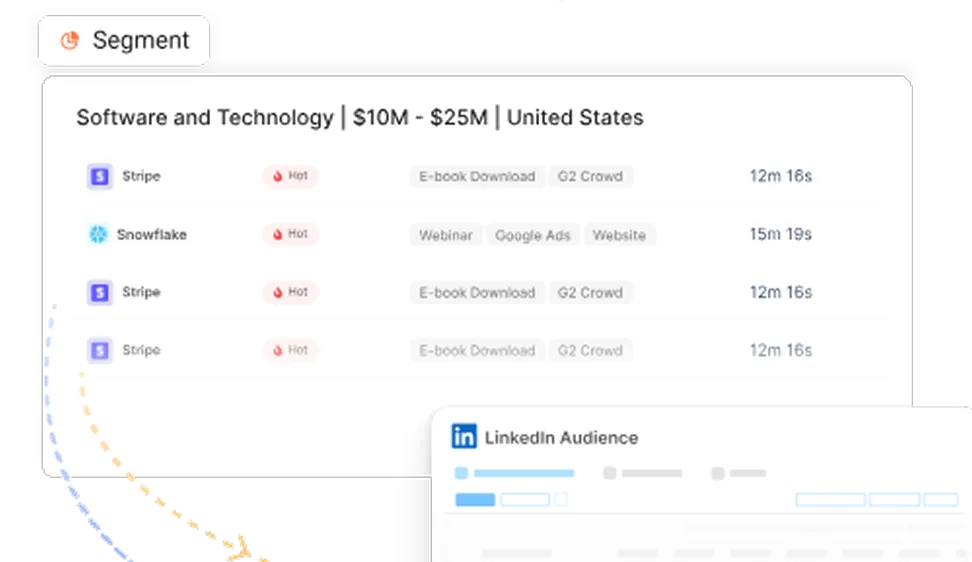
This is where 75% website visitor identification becomes a superpower. When you can identify which accounts are engaging with your content across channels (website, LinkedIn, G2), you can build precise retargeting audiences without ever needing a lead form.
The Content Isn't Dead, The Gate Is
Let me be crystal clear: this isn't about creating less content. Or dumbing down your content. Or giving up on content marketing.
This is about your distribution strategy.
Your eBook is probably still valuable. Your webinar content is probably still insightful. Your industry reports likely still contain proprietary data buyers want.
But the lead form between buyers and that value? That's what's dying.
The companies winning right now are taking the same quality content and:
- Publishing it openly on LinkedIn
- Distributing it through Document Ads
- Turning it into organic thought leadership
- Making it discoverable without friction
- Using engagement as a signal (not a lead form submission)
They're building audiences, not lead lists. They're earning attention, not extracting email addresses. They're playing for mental availability with the 95% who aren't buying today, while staying top-of-mind for the 5% who are.
The Bottom Line
The data is unambiguous. Gated content is in systematic decline. Webinar registrations down 12.7%. eBook downloads down 5%. Industry reports down 26.3%.
Meanwhile, LinkedIn ad budgets are up 31.7%. Brand awareness campaigns nearly doubled their share of spend. Document Ads are growing. Thought Leader Ads are becoming standard practice.
The shift is happening with or without you. The only question is whether you're going to adapt or keep watching your webinar registration numbers slowly thin out until your audience is three people (two of whom are staff).
Your buyers have already voted with their behavior. They want valuable content without the friction. They want to learn on their own terms. They want to control their journey.
Give them what they want. Build presence where they already are. Earn trust through consistent value. And save the "enter your email" ask for when someone is actually ready to have a conversation.
FAQs for why is gated content declining
Q1: Why is gated content no longer effective in B2B marketing?
Gated content is losing effectiveness because buyers now prefer on-demand, ungated access to information. They use AI tools, peer networks, and native content formats to research independently, avoiding lead forms that trigger sales outreach.
Q2: What does the data say about gated content performance?
Recent analysis shows webinar registrations are down 12.7%, eBook downloads dropped 5%, and industry report requests fell 26.3%, even among companies with well-established content programs.
Q3: What’s replacing gated content in 2026?
Marketers are shifting to ungated content distributed via Document Ads, LinkedIn thought leadership, and targeted retargeting. These methods build brand trust and drive conversions without forcing email captures.
Q4: Should B2B companies stop using lead forms entirely?
Lead forms still have a place—but only when intent is clear. Use them for demo bookings or ROI tools where buyers are ready to engage. For earlier touchpoints, focus on value-first content without friction.
Q5: How are top B2B brands adapting their content strategy?
Leading companies are investing in brand visibility across LinkedIn, amplifying organic content with paid distribution, and measuring success by pipeline quality, not MQL volume or form fills.

See how Factors can 2x your ROI
Boost your LinkedIn ROI in no time using data-driven insights


.avif)

See Factors in action.
Schedule a personalized demo or sign up to get started for free
LinkedIn Marketing Partner
GDPR & SOC2 Type II

.svg)



.avif)

