
The Future of Demand Gen: Autonomous Agents and the GEO Revolution
A detailed guide to the latest AI news in marketing, covering GEO, AI-powered search, citation share, ChatGPT ads, Google AI Mode, AI marketing bots, autonomous agents, and what these shifts mean for B2B SaaS marketers.
.avif)
Content Marketer

Growth Marketer



.svg)


TL;DR
- The latest AI news in marketing shows a shift from keyword rankings to AI citation visibility, where brands must appear in AI-generated answers.
- Generative Engine Optimization (GEO) helps companies optimize content so AI assistants reference their expertise across multiple sources.
- AI marketing bots handle automation tasks, while autonomous agents analyze intent signals and make decisions across marketing workflows.
- Platforms such as Factors.ai help identify anonymous website visitors and connect marketing activity directly to account-level pipeline influence.
A few weeks ago, I was talking to a friend who works at a mid-stage SaaS company. Their meeting started the way most marketing meetings do… pipeline numbers were on the screen, dashboards were open, and someone was trying to explain why website traffic looked healthy while demo requests had slowed down.
Then someone said… “Our SEO rankings are still strong, but nobody is clicking anymore.”
That one line really captured the unfortunate truth that’s haunting the SEO community (are we a community now? I don’t know… I think we are). Traffic charts move upward, blog posts still rank, keywords still index properly, yet a growing portion of answers never require a click at all. (it’s okay, wipe your tears…).
The reason lies outside the browser tab… people increasingly ask AI assistants for answers instead of browsing through 10 blue links.
A typical research path now looks something like this:
- A buyer asks ChatGPT to recommend tools in a category
- Google AI Mode summarizes vendors and key features
- Claude compares pricing models or product differences
- Only then does the buyer visit a few shortlisted websites
Search behavior has evolved from exploration (on Google and other search platforms) to direct answers (via LLMs). This shift is one of the most important pieces of AI news in marketing this year. In many situations, the assistant summarizes the answer and cites sources. The user receives the information immediately and never needs to click through.
For marketers who grew up optimizing for keyword rankings, that raises a new question… if fewer people click search results, how does a brand stay visible?
Moving on… from keyword rankings to citation shares
For more than two decades, SEO success meant appearing high on a search results page. The logic was simple:
Rank well ▶️ earn clicks ▶️ convert traffic.
AI assistants change that equation slightly… instead of simply listing pages, large language models synthesize information from many sources and generate a structured answer. When they do this, they often reference the sources that shaped the response.
The brands and publications mentioned in that source list gain credibility even when the reader never opens the page. This creates a new visibility metric that many teams now track.
✨Citation Share✨
Citation share refers to how often a brand appears inside AI-generated answers across assistants such as ChatGPT, Claude, Gemini, or Perplexity.
In practical terms, marketing teams now track two layers of visibility:
Most teams eventually realize that appearing in AI answers requires a broader footprint than traditional SEO. LLMs don’t really rely on a single vendor blog, instead, they synthesize signals from multiple ecosystems such as:
- industry publications
- technical documentation
- LinkedIn discussions
- Reddit threads
- community forums
- conference coverage
- research reports
That means modern visibility depends on ecosystem credibility, not just on a single SEO-optimized article.
But why is the AI boom creating a trust crisis?
If I had a dollar for every time I saw an AI-generated blog or social media post… let’s just say, I’d be chilling in my beachside mansion in the Maldives, as my private chef whips up my vegan, nut-free, gluten-free, everything-free lunch.
What I’m saying is… AI tools have made it extremely easy to generate large volumes of content. Entire blog libraries can be produced in days… landing pages can be written automatically, and newsletters can be assembled in minutes.
Predictably, the internet is filling up with content that looks polished but offers very little original thinking and value… and B2B buyers are not dumb… in fact, no one is dumb enough to let it slide.
During customer interviews, I often hear marketers say they skim vendor blogs but rely on communities or analysts for honest insight. When content production becomes automated, readers look for signals that a human perspective still exists. This is reshaping how AI is used inside marketing teams.
Instead of generating endless content to cover keywords, many organizations are shifting toward AI-assisted precision.
AI handles the heavy analytical work, such as:
- Summarizing research
- Analyzing campaign performance
- Detecting buying signals
- Identifying account intent patterns
Humans still provide interpretation and judgment based on their real-life experiences (yes, I really wrote that).
The difference might sound subtle, but it changes the role AI plays in marketing workflows… AI becomes a thinking assistant rather than a writing factory.
So what does demand generation look like?
Once you start looking closely at the buyer journey, the pattern becomes obvious.
A typical B2B discovery path in 2026 looks like this:
- A buyer asks an AI assistant to explain a problem category
- The assistant summarizes the market and mentions several vendors
- The buyer researches a few shortlisted platforms
- Website visits happen later in the process rather than at the beginning
From a marketing perspective, the first touchpoint is increasingly happening within an AI interface rather than a search results page.
This explains why new concepts are appearing in marketing conversations:
- Generative Engine Optimization (GEO)
- AI discoverability
- Citation share
- AI search visibility
These frameworks attempt to explain how brands remain visible in a world where answers are synthesized rather than simply indexed. BUT traditional SEO still matters because search engines provide the training data for many AI systems. What changes is how authority spreads across the ecosystem.
Instead of optimizing a single article for a keyword, teams now think about how their expertise appears across the wider internet.
Where does AI fit inside the marketing workflow?
Like we saw, AI is evolving beyond content production, earlier AI marketing tools mostly focused on automation tasks such as:
- Generating blog drafts
- Scheduling campaigns
- Writing ad variations
- Personalizing email subject lines
These tools improved efficiency but rarely changed how marketing decisions were made, but the newest generation of tools behaves differently.
Modern AI systems can now:
- Analyze intent signals across thousands of accounts
- Monitor conversations across communities
- Update CRM records automatically
- Surface buying signals to sales teams
- Trigger outreach sequences when intent spikes
These systems behave like operational assistants (less like automation tools) that interpret signals across the digital journey. When this intelligence connects to strong data infrastructure, AI becomes a layer that links insight and action.
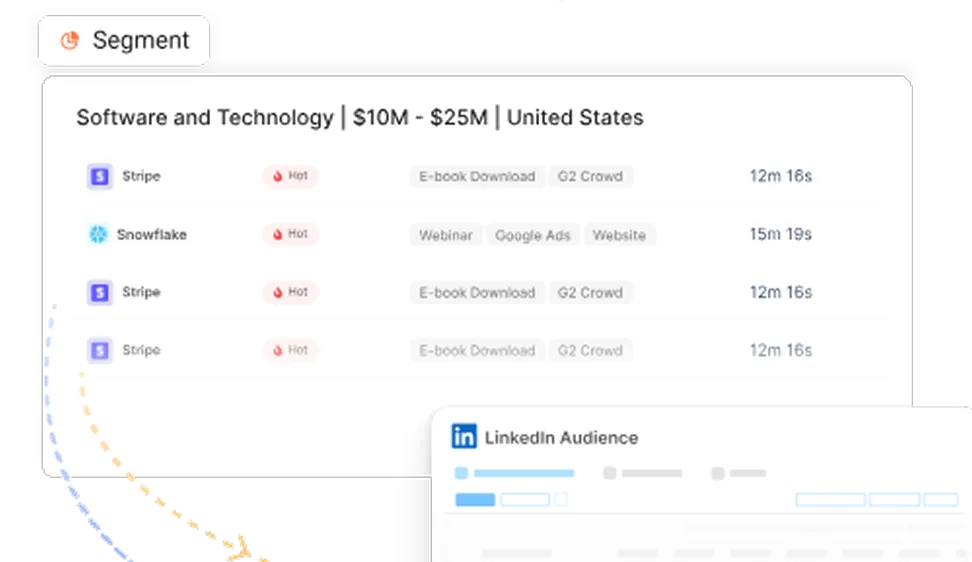
Platforms such as Factors.ai illustrate this shift well. Instead of simply reporting website traffic, they identify which accounts are visiting anonymously, what pages they explore, and which campaigns influenced that activity.
When these signals feed into AI workflows, marketing and sales teams can prioritize outreach toward companies already researching the product category.
In practice, this means AI no longer just generates content, it helps teams understand who is quietly moving through the buying journey. For B2B companies with long sales cycles, this is a real value-add..
Why does 2026 feel like an inflection point?
Taken together, several factors are reshaping demand generation.
- AI assistants are influencing how buyers discover vendors
- Content ecosystems affect whether brands appear in AI answers
- Marketing automation is evolving into agent-based workflows
- Identity resolution is becoming critical as more research is conducted anonymously
Each shift alone might feel manageable, but when you put them together, it changes how marketing visibility works.
For example, teams that once optimized primarily for search rankings now think about how their expertise travels across the web… now, they invest more in credible research, community discussions, and third-party publications because these signals increasingly shape how AI assistants interpret authority.
The next sections explore what this means in practice.
We will look at:
- Why Generative Engine Optimization (GEO) is emerging as a new discipline
- How AI marketing bots are evolving into autonomous agents
- Why solving the identity resolution problem matters for AI-driven demand generation
Because once AI agents begin helping buyers evaluate products, the real question becomes surprisingly simple.
Will your company appear in the answer they receive?
The rise of Generative Engine Optimization (GEO)
We’ll go over Generative Engine Optimization (GEO) is becoming one of the most important topics in the latest AI news in marketing.
Search visibility increasingly depends on whether AI systems reference your expertise when they generate answers.
Why isn’t traditional SEO no longer enough?
Traditional SEO still matters (or does it? I’m kidding… or am I). Search engines remain the foundation on which AI models learn (duh!). Content must still be indexed, structured properly, and written clearly enough for algorithms to understand.
BUT… AI assistants interpret the web differently than search engines. A search engine retrieves pages. A generative engine synthesizes information across multiple sources.
When someone asks an AI assistant a question like this:
Which platforms help B2B companies identify anonymous website visitors?
The system does not simply return a list of links. Instead, it generates a structured answer by combining signals from across the internet.
The assistant might pull insight from several places:
- Product documentation
- Analyst articles
- LinkedIn discussions
- Community forums
- Comparison blogs
- Technical documentation
- Reddit threads
The result is a summarized answer that references several sources simultaneously. From a marketing perspective, this changes the objective.
Instead of only asking Did we rank for the keyword?, teams now ask a different question. Did the AI assistant cite us when it generated the answer?
That is exactly what GEO focuses on.
What does Generative Engine Optimization actually mean?
Generative Engine Optimization (GEO) refers to the practice of optimizing content and brand presence so that AI assistants reference your company when generating answers.
Instead of optimizing purely for keywords, GEO focuses on signals that influence how language models interpret authority.
Those signals usually include:
- Structured expertise
Clear explanations, credible data, and well-organized knowledge help AI models extract accurate insights.
- Cross-platform credibility
When a company appears across multiple trusted sources, AI systems interpret that presence as an indicator of authority.
Examples include:
- Industry publications
- Research reports
- Conference talks
- LinkedIn discussions
- Community threads
- Third-party mentions
Research shows that brands are roughly 6.5 times more likely to appear in AI-generated answers when they are referenced in third-party content rather than only on their own website.
In other words, if your brand appears in analyst reports, community discussions, and independent articles, the probability of AI assistants referencing you increases significantly.
GEO vs traditional SEO
The two are closely related, but their goals differ slightly.
For most companies, GEO does not replace SEO; it expands it. Think of it as moving from page optimization to knowledge distribution.
Which channels do AI models actually crawl?
One of the biggest misconceptions about AI search visibility is that brand blogs alone drive authority. In reality, AI systems learn from a wide range of sources across the open web. Several platforms appear frequently in AI-generated answers because they contain high volumes of authentic discussion.
Common examples include:
- Reddit discussions
- LinkedIn conversations
- Product review sites (eg, G2)
- Industry newsletters
- Open research publications
- Community forums
This explains why some companies with relatively small websites still appear frequently in AI answers… their brand is discussed widely across independent communities.
For marketing teams, the implication is… authority must exist beyond the company blog.
How does Factors.ai help teams identify GEO opportunities?
If AI assistants increasingly rely on third-party conversations and ecosystem mentions, marketing teams need visibility into where their buyers are actually researching.
Platforms like Factors.ai help uncover this layer by analyzing anonymous website behavior and external intent signals.
Instead of relying purely on traffic reports, teams can identify patterns such as:
- Which external sites drive anonymous visitors?
- Which communities influence research journeys?
- Which channels generate high-intent account visits?
- Which campaigns trigger deeper product exploration?
For example, a team might notice that multiple anonymous visitors from SaaS companies arrive on their website shortly after reading discussions on Reddit or LinkedIn. This insight helps marketers prioritize channels where buyers are already learning about the category.
Over time, this data allows companies to focus their GEO efforts on platforms that AI systems frequently reference.
Why is GEO becoming a core marketing discipline?
The rise of AI search doesn’t eliminate traditional marketing fundamentals. Buyers still rely on trusted information, credible research, and thoughtful analysis.
What changes is the distribution layer.
Information no longer flows only through search engines and websites. It flows through conversations, AI summaries, community discussions, and third-party publications.
Generative Engine Optimization simply acknowledges this… instead of optimizing only for algorithms that rank pages, marketers now optimize for systems that synthesize knowledge.
And when those systems generate answers for curious buyers, the brands that consistently appear across the ecosystem are far more likely to be cited.
The next shift takes this idea even further, because the same AI systems that summarize information are now beginning to interact directly with marketing technology.
And that leads us to the next development shaping the latest AI news in marketing: the arrival of AI-native advertising formats and conversational ads.
AI search ads are here: ChatGPT Ads, Google AI Mode, and the new discovery layer
Paid media teams are now confronting one of the most important pieces of the latest AI news in marketing. AI assistants and AI-powered search interfaces are beginning to introduce native ad placements inside generated answers.
- AI-native ads
For years, digital advertising followed a predictable structure.
A user searched for something ▶️ The search engine displayed sponsored links ▶️ The user clicked one of those links
AI search introduces a slightly different experience.
Instead of displaying a list of results immediately, AI systems often generate a structured answer that summarizes the topic. Within this response, certain recommendations or product mentions can be sponsored placements.
Several platforms are already experimenting with this model.
Examples of AI-native advertising formats now emerging include:
- Google AI Mode Ads integrated within AI-generated search summaries
- ChatGPT conversational ads appearing in recommendation responses
- Perplexity sponsored citations embedded within AI answer references
- AI product comparison placements inside generated buying guides
These formats still resemble traditional search ads in spirit, but the environment around them has changed. The user is no longer browsing a list of links; instead, they’re interacting with an answer.
Why do AI ads change buyer behavior?
Traditional search ads relied on interruption… a user scanned several links and chose one that appeared relevant.
But now, AI-generated answers change that flow; the assistant provides a synthesized explanation first. Only after the summary does the user explore recommended tools or vendors.
From a behavioral perspective, this means ads appear later in the cognitive journey. Instead of interrupting curiosity, they appear when the buyer already understands the category.
That subtle shift can influence intent quality. Consider the difference between these two journeys:
In the second scenario, buyers arrive with deeper understanding.
For B2B companies with long sales cycles, this often leads to higher-intent discovery rather than casual browsing.
What does this mean for B2B paid media teams?
Paid acquisition strategies are beginning to adapt to this new environment. Instead of optimizing purely for search keywords, marketing teams now consider how their brand appears inside AI-generated recommendations.
This involves three layers of visibility:
- Keyword-driven visibility
Traditional paid search still captures buyers who type queries directly into search engines.
- AI answer visibility
Brands appear inside AI summaries through structured content, citations, and ecosystem authority.
- Sponsored AI placements
Paid placements appear within AI-generated recommendations or product comparisons.
Together, these layers form the new AI discovery stack.
Marketing leaders increasingly evaluate performance across all three layers rather than treating search as a single channel.
The hidden challenge: Attribution in AI discovery
While AI-native advertising opens new opportunities, it also introduces a familiar challenge… attribution becomes harder.
When a buyer interacts with an AI assistant, reads a summarized response, sees a sponsored recommendation, and later visits a vendor website, the journey becomes difficult to trace.
Many analytics tools still treat this as direct traffic or unattributed discovery. But in reality, the interaction likely began inside an AI interface.
This creates a blind spot for many marketing teams; they know discovery is happening through AI systems, but traditional analytics cannot always reveal which channels triggered the visit.
Why does intent data matter more than ever?
This is where modern intent and attribution platforms become essential.
Tools such as Factors.ai help teams understand which companies are researching their product category, even when those visitors arrive anonymously.
Instead of relying only on form fills or ad clicks, teams can analyze signals such as:
- Which accounts are visiting high-intent pages?
- Which campaigns influenced the visit?
- Which channels triggered the first research interaction?
- Which companies return repeatedly during evaluation?
When AI-assisted discovery sends visitors deeper into the funnel, these signals become extremely valuable.
Marketing and sales teams can identify companies that are already exploring pricing pages, feature comparisons, or documentation, even before a demo request appears.
This insight allows outreach to begin earlier and with better context.
The paid media mini-guide for AI search
B2B teams experimenting with AI discovery are starting to follow a few emerging practices.
1. Treat AI search as a new channel
Rather than folding AI discovery into existing search campaigns, teams monitor AI visibility separately.
2. Focus on educational content
AI systems frequently cite structured knowledge when generating summaries.
3. Align paid search with GEO efforts
Brands that appear in organic AI answers often perform better in sponsored placements because buyers already recognize them.
4. Monitor account-level behavior
Intent platforms such as Factors.ai help identify which companies are researching solutions through AI-influenced discovery.
Over time, these signals help marketers understand which parts of the funnel are shifting toward AI interfaces.
Why does this shift matter for demand generation?
AI search ads represent a small but important step toward a broader change. Search engines once connected users with information, but now, AI assistants increasingly interpret that information and guide users toward decisions. As these systems become more sophisticated, the boundary between discovery, research, and recommendation begins to blur.
Marketing teams that understand this shift early gain an advantage. They learn how to appear inside the conversation rather than waiting for buyers to arrive through traditional search.
And once AI systems begin participating directly in buying workflows, the distinction between a simple marketing bot and a true autonomous agent becomes even more important.
The next section explores that difference and explains why AI marketing bots are rapidly evolving into decision-making agents capable of executing marketing tasks autonomously.
What is an AI marketing bot vs an autonomous AI agent?
During a recent conversation with a RevOps leader, we ended up laughing about something that happens in almost every marketing tech demo. Every product claims to have an AI agent.
That said, most tools marketed as AI agents today are actually automation scripts with slightly smarter interfaces. They can respond to inputs, trigger workflows, and personalize messages. That is useful, but it does not mean they can reason through decisions on their own.
This confusion is one reason the conversation around AI bot marketing and AI marketing bots has become messy over the past year. The terminology is used loosely, and many teams are unsure what actually qualifies as an agent.
Understanding the difference matters because it shapes how marketing teams design their workflows.
What is an AI marketing bot?
An AI marketing bot is typically reactive; it responds to a defined trigger and executes a predefined sequence of actions.
Most marketing automation tools work this way.
For example, a marketing bot might follow rules such as:
- If a visitor downloads a whitepaper, send a follow-up email
- If a prospect opens an email twice, notify the SDR
- If a form is submitted, update the CRM and assign the lead
These workflows rely on If → Then logic.
The system performs tasks efficiently, but it does not independently evaluate the situation or change strategy. It simply follows the sequence programmed by the marketing team. That structure has powered marketing automation for years, and it still works well for many operational tasks.
Typical examples of AI marketing bot use cases include:
- Chatbot responses on websites
- Automated email follow-ups
- Ad bid optimization
- Lead scoring updates
- CRM data enrichment
These tools improve speed and consistency, but the decision-making logic still comes from humans.
What makes an autonomous AI agent different?
An autonomous AI agent behaves differently.
Instead of following a rigid sequence, the system interprets context and decides how to proceed based on available information.
The difference may appear subtle, but it changes how workflows operate.
An AI agent can evaluate a situation like this:
- A company from the fintech sector has visited the pricing page twice
- The same account has interacted with LinkedIn ads earlier in the week
- A senior product leader from that company opened a comparison article
Rather than waiting for a single trigger, the agent evaluates multiple signals and decides on the appropriate action.
Possible actions might include:
- Prioritizing the account for SDR outreach
- Recommending personalized messaging based on industry context
- Enriching the account profile automatically
- Scheduling a follow-up task inside the CRM
Instead of executing a script, the system interprets patterns. And this reasoning capability is what separates AI marketing bots from autonomous agents.
What role does an Agentic Commerce Protocol (ACP) play?
One of the biggest developments in the latest AI news in marketing is the emergence of the Agentic Commerce Protocol (ACP).
ACP allows AI agents to interact directly with digital systems such as:
- Vendor marketplaces
- SaaS purchasing platforms
- Payment systems
- Procurement tools
In simple terms, it allows an AI assistant to move beyond research and actually participate in transactions. Imagine this: a procurement assistant asking an AI agent to shortlist software platforms for a specific use case. The agent evaluates documentation, compares pricing tiers, and even initiates vendor interactions.
For B2B companies, this means that AI agents may soon participate in early buying decisions before a human ever speaks with a sales representative. This development changes how marketing visibility works. If AI agents are involved in vendor research, then brand authority inside AI knowledge systems becomes even more important.
The agent-y workflow: Where agents are already helping marketing teams
Even before full ACP adoption, many companies are experimenting with agents inside their marketing and revenue operations workflows.
Agents often take over tasks that previously consumed hours of manual work.
Common examples include:
- Account research
Agents gather information about target companies, analyze industry signals, and prepare research briefs for SDR teams.
- CRM updates
Agents can monitor data changes across platforms and update CRM fields automatically.
- Campaign monitoring
Agents track campaign performance and highlight anomalies or sudden spikes in intent.
- Lead prioritization
Agents evaluate multiple engagement signals and recommend which accounts deserve immediate outreach.
Many RevOps leaders describe this layer as handling the shadow work of revenue teams. These are important but often repetitive and time-consuming tasks. By automating these processes, agents allow marketers and sales teams to focus on strategy and conversations.
Why do AI Agents need strong data to work well?
An AI agent can only make good decisions if it has access to reliable signals. Without strong data, even sophisticated systems struggle to interpret buyer behavior.
This is where intent platforms become important.
Platforms such as Factors.ai provide the data layer that agents rely on. Instead of analyzing anonymous pageviews in isolation, the platform identifies which companies are visiting a website, what pages they explore, and which campaigns influenced their research.
When these signals feed into an AI workflow, the agent gains context.
Instead of acting blindly, it can evaluate questions such as:
- Which accounts show high purchase intent
- Which campaigns influenced the visit
- Which companies have returned multiple times
- Which industries show rising interest in the product category
In this sense, Factors.ai functions as the fuel for AI-driven marketing workflows.
The agent provides reasoning and automation. The data layer provides the intelligence that guides decisions.
The difference between bots and AI Agents (for marketing teams)
Understanding the difference between bots and agents helps teams design better systems.
Bots excel at executing predictable workflows, while agents excel at interpreting complex signals. And in many modern stacks, both layers coexist.
A simplified architecture might look like this:
When these layers work together, marketing operations become far more responsive.
Teams no longer react only after leads submit forms. Instead, they detect interest while buyers are still researching.
Why does this matter for the future of demand generation?
Autonomous agents represent a natural evolution of marketing automation. The first wave of tools focused on scaling communication. The next wave focuses on interpreting behavior.
For B2B companies, this shift is especially important because buying journeys are long and complex. Multiple stakeholders research solutions quietly before engaging vendors.
Agents help teams detect those signals earlier, and once you begin detecting anonymous research activity, another challenge becomes impossible to ignore.
Most of the buying journey still happens in the shadows, which brings us to the next major topic shaping the latest AI news in marketing: the identity resolution problem and the growing importance of understanding the dark funnel.
FAQs for the future of demand gen: Autonomous agents and the GEO revolution
Q1. What is the most significant AI news in marketing?
One of the most significant developments in the latest AI news in marketing is the emergence of the Agentic Commerce Protocol (ACP). ACP allows AI agents to interact directly with software platforms, marketplaces, and procurement systems to evaluate products and initiate transactions.
In practical terms, this means AI assistants can move beyond answering questions. They can research vendors, compare pricing tiers, analyze documentation, and even initiate purchase workflows.
For B2B SaaS companies, this changes how discovery works. Marketing visibility will increasingly depend on whether AI agents recognize a brand as credible when summarizing solutions for buyers.
Q2. How do I track the ROI of AI marketing bots?
Tracking ROI for AI marketing bots requires moving beyond traditional engagement metrics such as clicks or email opens.
The more reliable approach is to measure pipeline influence.
Instead of asking whether a bot-generated engagement, teams analyze whether AI-driven workflows influenced actual revenue outcomes. This often involves connecting several signals across the funnel:
- campaign engagement
- account-level website activity
- CRM pipeline progression
- closed-won revenue
Platforms such as Factors.ai help provide this visibility through multi-touch attribution. The system connects marketing interactions across channels, allowing teams to see how AI workflows, campaigns, and website activity contributed to pipeline growth.
This approach shifts measurement from activity metrics to revenue impact.
Q3. Is AI bot marketing considered a privacy risk under the 2026 regulations?
Modern AI bot marketing approaches are designed to comply with privacy regulations by focusing on company-level intent signals rather than on individual personal data.
Most modern B2B marketing stacks rely on first-party identity resolution and account-level analytics. Instead of tracking individual users across the web, they identify organizations that are researching a category and analyze aggregated engagement signals.
This approach supports personalization without exposing sensitive personal data. It also aligns with evolving privacy frameworks across the United States and other major markets.
Q4.How do AI marketing bots improve B2B lead generation?
Modern AI marketing bots improve lead generation by identifying and responding to buying signals earlier in the research process.
AI systems can analyze large volumes of engagement data across websites, campaigns, and communities. When these signals suggest that a company is actively researching a solution, the system can trigger timely actions such as:
- Alerting sales teams through Slack
- Prioritizing accounts inside CRM pipelines
- Recommending personalized outreach messaging
- Sharing relevant case studies or resources
When combined with platforms such as Factors.ai, these workflows become more precise because the system can identify companies visiting the website anonymously and connect that activity to campaign interactions.
This allows marketing and sales teams to engage prospects earlier in the buying journey.
Q5. Is traditional SEO dead because of AI search?
Traditional SEO is not disappearing, but it is evolving.
Search engines still index content and provide the infrastructure that AI assistants learn from. However, the way buyers interact with that content is changing.
Many research queries now produce AI-generated summaries that synthesize information across multiple sources. As a result, appearing inside an AI assistant’s source citations is becoming as important as ranking for a keyword.
This shift has led to the rise of Generative Engine Optimization (GEO). GEO focuses on creating structured knowledge, building authority across multiple platforms, and ensuring that AI systems recognize a brand as a credible source when generating answers.
In practice, successful marketing strategies now combine traditional SEO with GEO visibility across communities, industry publications, and research ecosystems.

See how Factors can 2x your ROI
Boost your LinkedIn ROI in no time using data-driven insights


.avif)

See Factors in action.
Schedule a personalized demo or sign up to get started for free
LinkedIn Marketing Partner
GDPR & SOC2 Type II







.svg)



.avif)

