
How to Research Keywords for a Niche (US): A Long-Tail Playbook with Keyword Mapping
A practical US playbook for niche keyword research: PAA mining, long-tail discovery, competitor gaps, and a page-level keyword map template.

.avif)
Content Marketer



.svg)


Broad keywords get you broad results in a larger market. When businesses targeting a niche need every click to matter, the effort to find niche keywords is your leverage point.
Instead of competing for overly competitive terms like "project management software" with companies that have six-figure monthly Google Ads budgets, you can target "construction project management for small crews" and speak directly to potential customers who are genuinely interested in your solution.
This guide walks you through a step-by-step process that produces a prioritized keywords plan mapped to specific pages on your site, not just a list of terms with high search volumes.
What is an SEO Keyword?
An SEO keyword is a term or phrase people type into search engines when looking for information, products, or services. Initial research involves identifying these search terms based on search volume (how often people search), competition levels (how difficult it is to rank), and search intent (the intent behind a given search query).
For example, someone searching "how to fix a leaky faucet" has informational intent, while "emergency plumber near me" signals transactional intent. Understanding this distinction helps you create content that matches what searchers expect to find.
What are Long-Tail Keywords?
Long-tail keywords are multi-word, intent-rich search phrases that typically have lower search volumes but higher conversion rates.
Where "running shoes" might get 100,000 monthly searches, "best trail running shoes for wide feet" gets maybe 500. But those 500 people know exactly what they want. And although such keywords individually don’t bring a lot of search traffic, over 91% of all search queries on Google are long-tail keywords.
Fortunately, they’re also easier to rank for because there is less competition, and the traffic converts better because you're answering specific questions.
What is Keyword Optimization (vs. Research)?
Keyword optimization is the ongoing process of placing the right keywords in high-value elements like titles, headers, URLs, and body copy to match user intent.
Keyword research helps you find keywords. Optimization puts them to work. After identifying "eco-friendly office gifts under $50" as a target keyword, optimization means using it in your page title, H1 tag, first paragraph, and alt text for product images.
Do note that keyword optimization isn't a one-time task but rather a continuous refinement as you track performance and adjust based on what ranks.
{{INLINE_MOFU}}
The 7-Step Niche Keyword Research Workflow (US)
Alright, now that we have the basics out of the way, let’s go over the steps to perform keyword research. The steps here apply to pretty much any target audience that you may want to target.
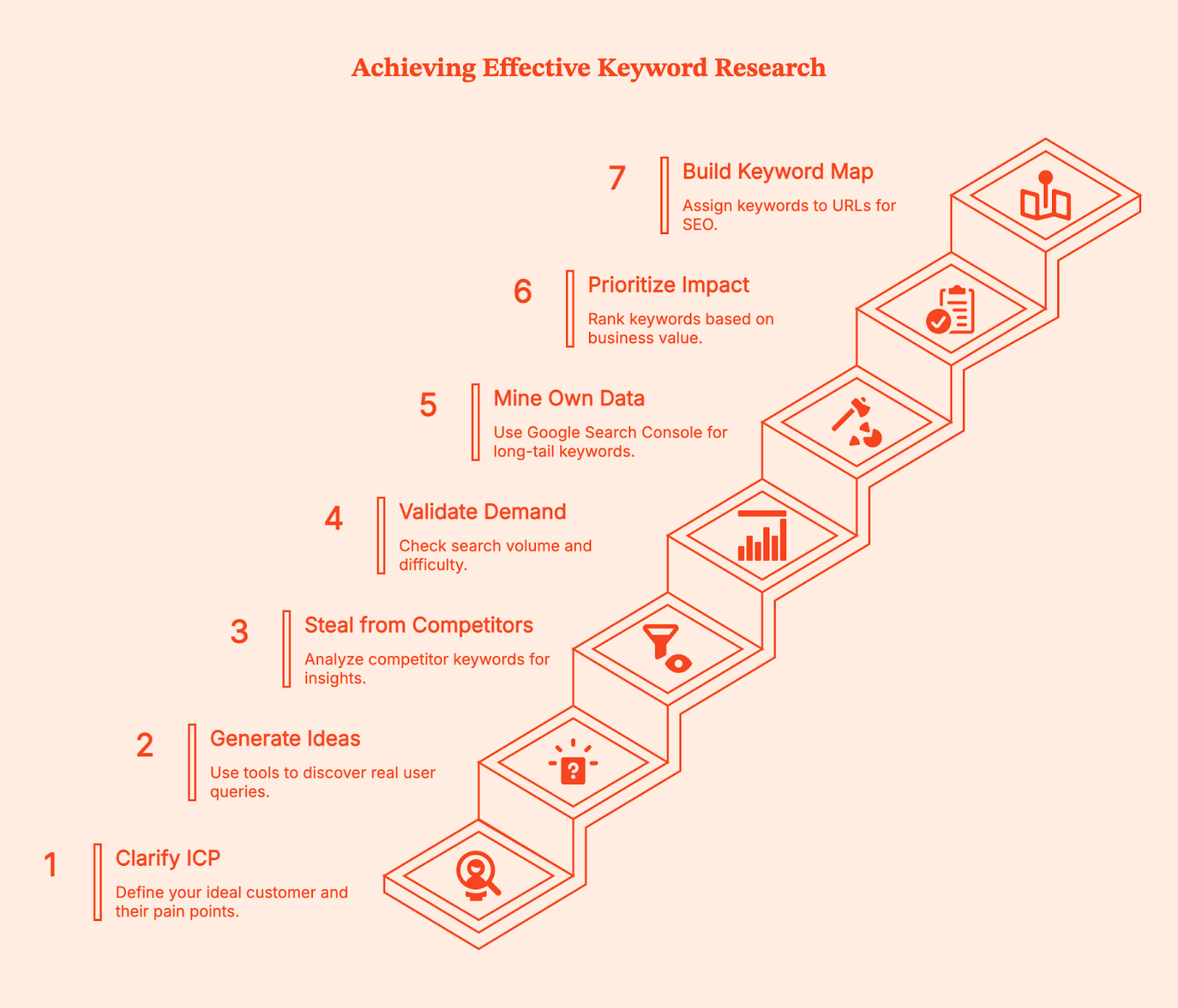
Step 1: Clarify Your ICP and List Seed Keywords
Start by defining the right audience and what specific problems keep them searching at 2 AM.
Your ideal customer profile determines everything downstream. If you run a B2B SaaS tool for accounting firms, your seed keywords might include "audit automation," "tax workflow management," and "client portal software."
Write out 5-7 pain points your customers face, then turn each into phrases related to your niche. Don't overthink this step with formal buyer personas. Just list the actual terms your customers use when describing their problems.
Step 2: Generate Keyword Ideas from Autocomplete and PAA Tools
Feed your seed topics into question mining tools to discover what real people actually ask. Start with a platform like Soovle to aggregate autocomplete suggestions across multiple search engines.
You could also use AlsoAsked, AnswerThePublic, and KeywordsPeopleUse to mine People Also Ask (PAA) questions. For "audit automation," you might discover "can audit automation integrate with QuickBooks" or "what tasks can audit automation handle."
Using your Google Ads account, set your Google Keyword Planner location to the United States to ensure you're getting US-specific volume data. These questions become content angles that align with search intent.
Step 3: Steal from Competitors (Systematically)
Drop 3-5 top competitors into a keyword research tool and harvest content gaps and competitors keywords.
Go to Ahrefs Site Explorer or Semrush's Organic Research tool.
Enter a competitor's domain, then filter their organic keywords by question modifiers (who, what, where, when, why, how). Sort by traffic to find their top ranking pages.
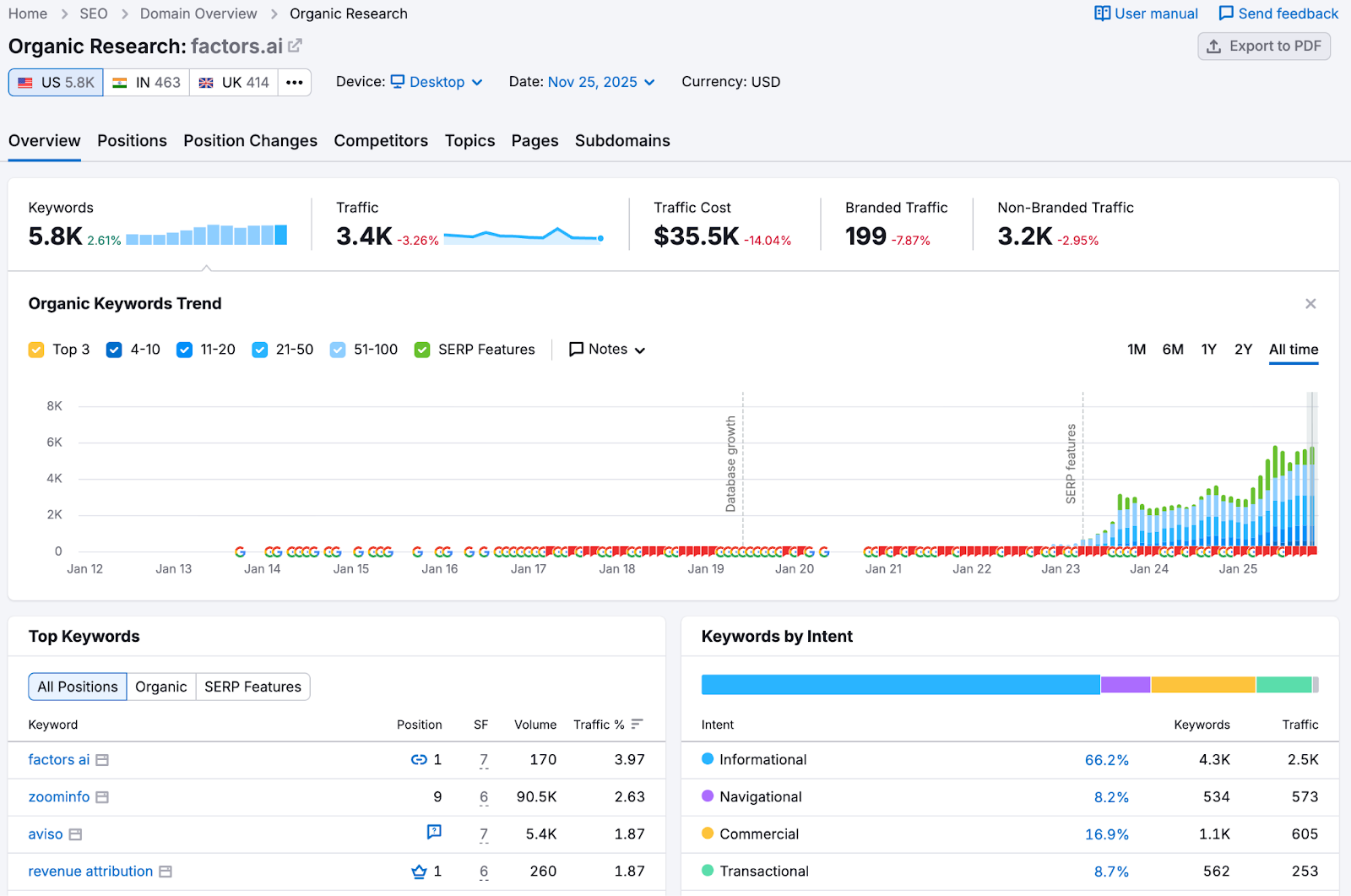
We consistently recommend competitor mining as it reveals proven keywords that already drive organic traffic. You're not copying their content but rather identifying validated search demand.
Redditors on the r/SEO subreddit often mention competitor research as the fastest way to generate keywords.

Step 4: Validate Demand and Difficulty
Check potential keywords for monthly search volume, keyword difficulty (KD), and SERP composition before committing to create content.
Use Ahrefs Keywords Explorer to see if your target keywords actually get searches in the US market. As a general rule, a keyword with 10 monthly searches isn't worth targeting unless it's extremely high-intent.
Look at KD scores (Ahrefs calculates these based on backlinks needed to rank), but more importantly, manually review the SERP. If you see forums, old sites, or thin content ranking in positions 3-7, that's a signal you can compete.
You can also read through Google's SEO Starter Guide which emphasizes matching content type to search intent over chasing vanity metrics.
Step 5: Mine Your Own Data for Long-Tail Gold
Use Google Search Console (GSC) with regex patterns to surface longer queries that already bring you traffic.
Open Search Console, go to Performance > Search Results, click "New" under Queries, then select "Custom (regex)."
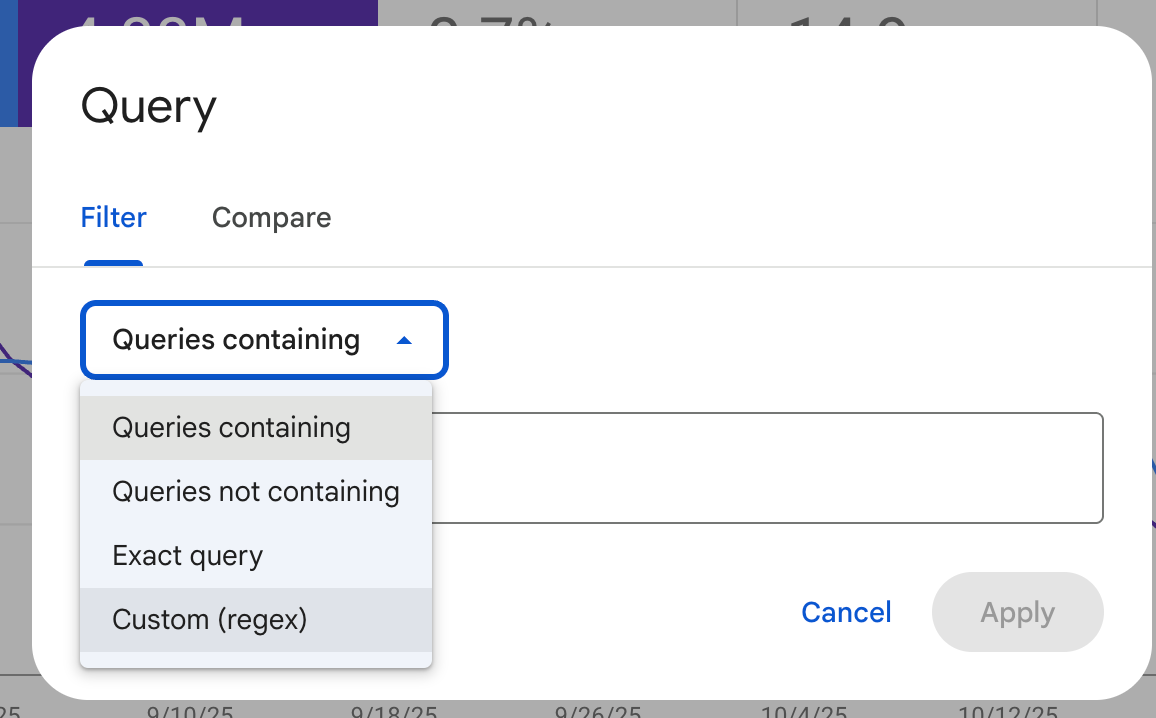
Enter the pattern .{25,} to filter for queries with 25 or more characters. This regex technique reveals the specific phrases people use to find your content.
You might discover "how to automate recurring invoices in accounting software for small businesses" brings 5 clicks per month at position 12. That's an easy optimization win where you can create dedicated content to capture more targeted traffic or optimize existing blog articles to capture that intent.
For B2B companies, layer in behavioral intelligence from your target accounts. If you're running account-based marketing, platforms like Factors show which companies visit your site, what relevant topics they engage with, and where they spend time. This reveals interest in a particular topic that search volume data can't capture.
Step 6: Prioritize for Business Impact
Rank keywords by "pain proximity" (how close they are to your solution), achievable KD, and internal link support you can provide.
Not all new keywords deserve equal effort. Create a simple scoring system: high commercial intent (ready to buy) = 3 points, medium intent (comparing options) = 2 points, low intent (learning) = 1 point. Then factor in whether you can realistically rank.
A KD of 30 with 200 monthly searches beats a KD of 65 with 2,000 searches if you're working with limited domain authority. Consider which existing pages can link to your new content, as strong internal linking from related pages makes ranking easier.
“Internal linking is one of those underrated SEO strategies that quietly does the heavy lifting for your website. It’s about connecting pages, but also about helping search engines and users better understand your site. When done correctly, internal links can enhance crawlability, improve your search engine rankings, and boost your topical authority.” – Edwin Toonen on the Yoast blog
Step 7: Build Your Keyword Map
Assign one primary keyword per URL, cluster related secondary terms around it, and map content types to search intent. Open a spreadsheet and start assigning keywords to pages. Each row represents one URL on your site.
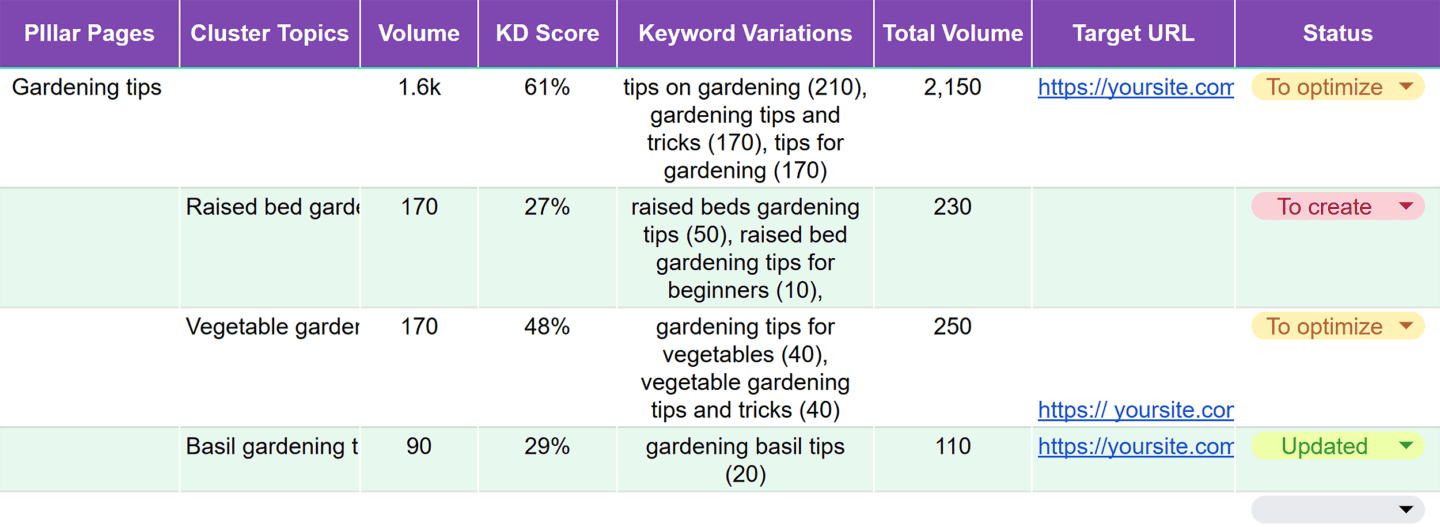
For instance, your homepage might target "construction project management software." A feature page could target "time tracking for construction crews."
You can also use Backlinko's keyword mapping methodology where you group semantically related keywords under one primary term.
If you have "best time tracking apps for contractors," "contractor time tracking software," and "construction crew time management" all ranking for similar results, put them on one page as primary/secondary targets instead of creating three competing pages.
Create Your 'Keywords Plan' Sheet
Your keyword plan should live in a spreadsheet with specific columns that guide initial research and content creation.
Here’s a Google sheet you can duplicate to get started with your tracking.
SEO Tracking Spreadsheet Template
If you prefer setting up manually, here are the 13 columns you need along with the values they can have.
Keyword, Intent (Informational/Commercial/Navigational/Transactional), US Volume (from Keyword Planner), Keyword Difficulty, CPC (to gauge commercial value), Priority (1-3 ranking), Funnel Stage (Awareness/Consideration/Decision), Page Type (Guide/Product/Category/Comparison), Primary or Secondary designation, PAA Questions to Answer, Target URL, Internal Link Opportunities, and Notes.
For example, a row might look like:
- Keyword: "best accounting software for nonprofits"
- Intent: Commercial
- US Volume: 320
- KD: 42
- CPC: $18
- Priority: 1
- Stage: Consideration
- Page Type: Comparison Guide
- Primary/Secondary: Primary
- PAA: "Does QuickBooks work for nonprofits?" / "What accounting software do 501c3s use?"
- Target URL: /accounting-software-nonprofits
- Internal Links: Blog post on nonprofit bookkeeping, Nonprofit resources hub
- Notes: Competitor X ranks with thin content, opportunity to outrank
This format keeps your research organized and makes it simple to hand off to writers who need clear guidance on what to create.
Keyword Best Practices for Marketing Strategy
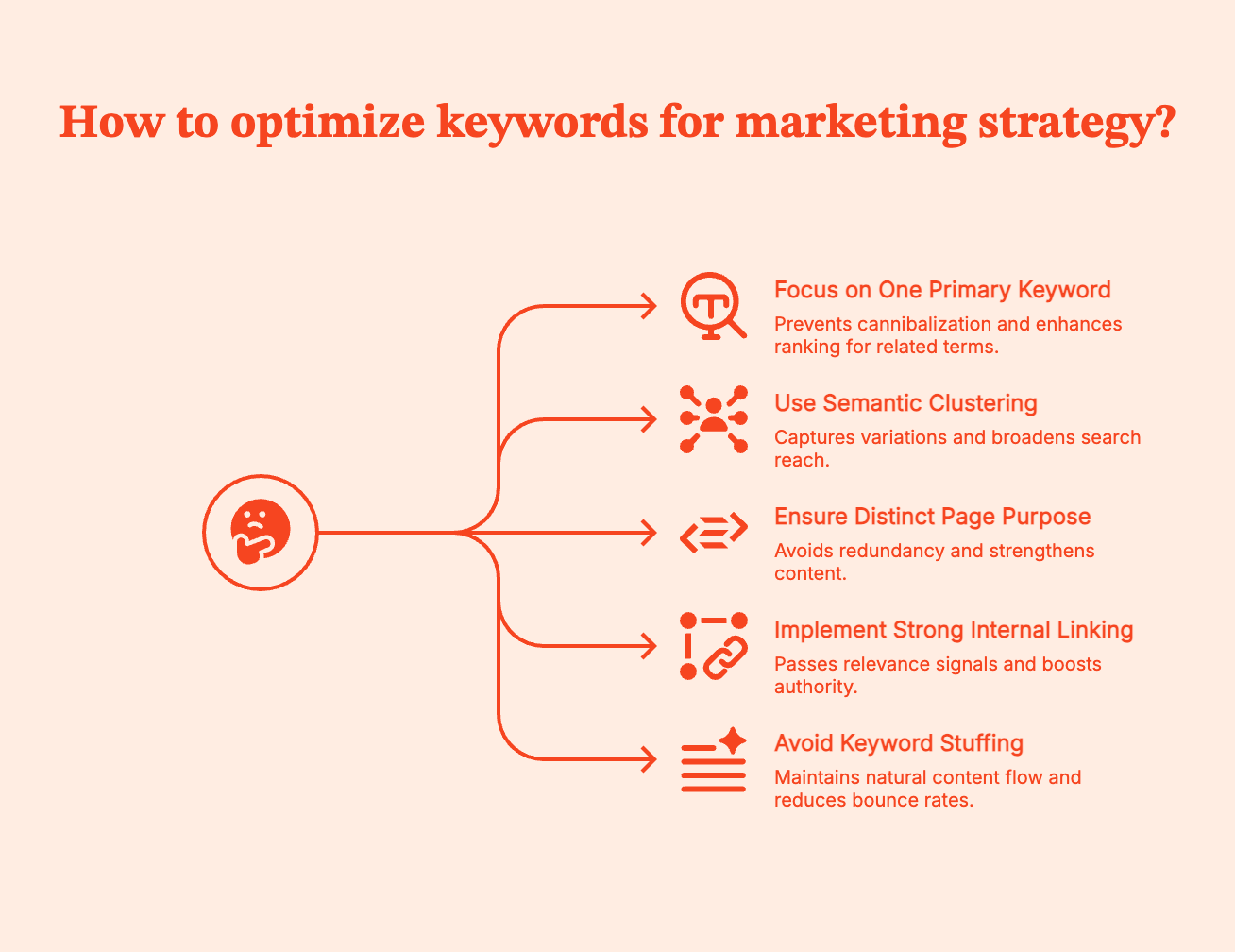
One primary keyword per page prevents cannibalization, while semantic clustering captures related search variations.
According to Ahrefs' research data, pages that rank for their target keyword also rank for an average of 1,000+ related terms. This happens when you build comprehensive content around one primary focus. Your title tag, H1, and URL should all contain your primary keyword naturally. Your H2 and H3 subheadings can target secondary keywords and PAA questions.
Each page needs a distinct purpose. If you have two pages targeting nearly identical keywords, consolidate them to make a stronger piece.
You also need strong internal linking from high-authority pages to newer content using keyword-rich anchor text. For example, when you write "check out our guide to construction project management" and link those words to your target page, you're passing relevance signals.
And no matter how tempting it may seem, avoid the old-school SEO tactics.
- Don't stuff keywords unnaturally into your copy (targeting a 2-3% keyword density is outdated advice).
- Don't hide keywords in white text or behind images. Google's guidelines are clear: write for humans first, optimize for search engines second.
- If your content reads awkwardly because you forced keywords into every sentence, you'll see high bounce rates even if you rank temporarily.
Free and Paid SEO Tools
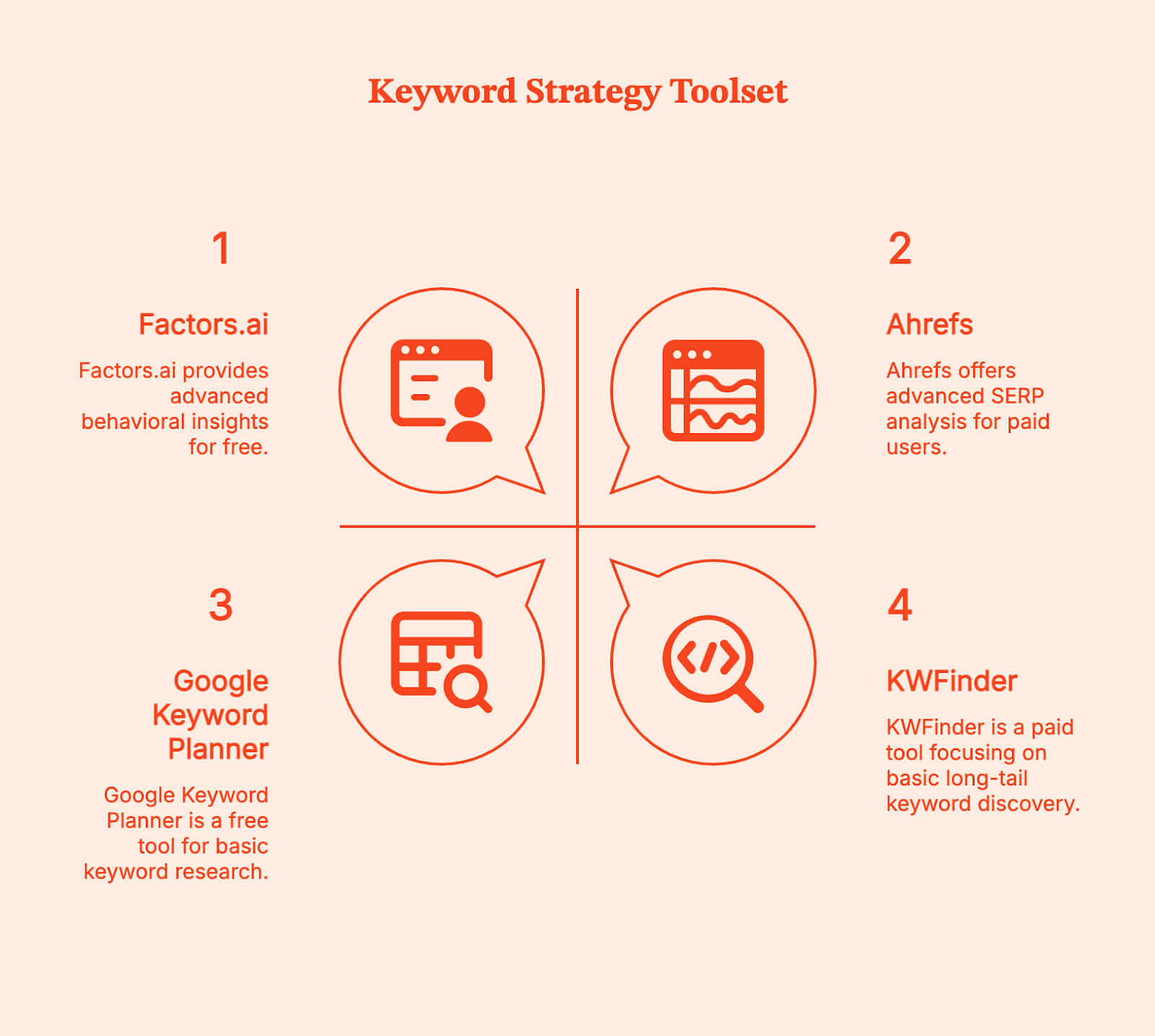
Start with free tools to validate your niche, then invest in paid platforms when you're ready to scale competitor analysis.
Free Tools
- Google Keyword Planner (set location to United States for accurate volumes)
- AnswerThePublic limited free searches
- Answer Socrates for question-based discovery
You can export data from these tools and build your initial keyword list without spending anything.
Paid Tools
- Ahrefs ($129/month) and Semrush ($199/month) provide keyword difficulty scores, SERP analysis, and competitor gap reports.
- KWFinder from Mangools ($43.85/month) focuses specifically on long-tail discovery with an interface built for finding low-competition terms.
These platforms aggregate billions of keywords and show you which ones competitors rank for but you don't, making the investment worthwhile when you're producing content regularly.
Account Intelligence for B2B Keyword Strategy
For B2B companies running account-based strategies, Factors.ai adds a behavioral layer that traditional keyword tools miss. While Ahrefs tells you search volumes, Factors shows which target accounts actually engage with specific content topics on your site. This reveals keyword opportunities based on real buyer behavior rather than just search data.
Factors identifies anonymous website visitors at the company level, tracks their content engagement patterns, and connects this to your CRM and ad platforms.
When you see that multiple high-value accounts repeatedly visit content about "SOC 2 compliance automation" but spend minimal time on "unique features," that's a signal to create more content around the specific compliance angle, even if search volumes look similar.
Common Pitfalls of Keyword Research
Keyword research fails when people optimize for the wrong signals or create overlapping content without a map. Here are some of the most common mistakes:
- Chasing volume over intent is the most common mistake. A keyword with 10,000 monthly searches looks attractive until you realize it's informational ("what is project management") and your product page won't rank because Google shows definitions and guides in those results. Always check the actual SERP before committing.
- Duplicating primary keywords across multiple pages creates keyword cannibalization where your own content competes with itself. Without a keyword map, you might have three blog posts all targeting "best time tracking software" in slightly different ways. Google doesn't know which to rank, so none rank well.
- Ignoring SERP features costs opportunities. If your target keyword triggers a People Also Ask box and a Featured Snippet, you need to structure your content to capture those. Use clear H2 questions and provide direct answers in the following paragraph.
- Not localizing to US search behavior when you're targeting US customers leads to volume miscalculations. Always set your keyword tool location filters appropriately.
- Keyword stuffing and hidden text still happen, usually with AI-generated content that someone didn't edit. Google penalizes these tactics, and they make your content unreadable to actual humans who might convert.
FAQs
Q: What is an SEO keyword?
A: An SEO keyword is a word or phrase people enter into search engines, chosen by website owners based on search volume, competition level, and intent during keyword research to optimize their content.
Q: How do I search for long-tail keywords in a niche?
A: Use PAA mining tools like AlsoAsked, AnswerThePublic, and Soovle for autocomplete suggestions. Run competitor domains through Ahrefs to find keyword ideas they rank for, and use GSC regex (.{25,}) to surface 25+ character queries your site already gets.
Q: What's a good 'low-competition' signal?
A: Check SERP quality first. If you see forums, outdated sites with thin content, or low domain authority pages in positions 3-7, that signals an opportunity. Ahrefs' keyword difficulty under 30 is generally achievable for newer sites, but manual SERP inspection matters more than the number. Look for an intent match where the ranking content type aligns with what you plan to create.
Q: How many primary keywords per page?
A: Typically one primary keyword per URL, supplemented with semantically related secondary terms. This prevents keyword cannibalization, where multiple pages compete for the same rankings. Use a keyword map to track which page owns which primary term.
Q: What is keyword mapping?
A: Keyword mapping assigns specific target keywords to individual pages on your site, reflecting your site structure and preventing overlap. You organize keywords into clusters around primary terms, then map each cluster to one URL with supporting secondary keywords.
Q: What is 'keyword optimization'?
A: Keyword optimization is placing selected keywords strategically in high-value page elements (title tags, H1, H2, body copy, URLs, image alt text) while maintaining natural readability and matching user search intent. It's an ongoing process of refinement based on performance data.
Q: Which free tools should I start with for US data?
A: Google Keyword Planner (set location to United States) for volume estimates, AnswerThePublic for question discovery (3 free searches daily), Answer Socrates for additional PAA questions, and Soovle for autocomplete across multiple search engines.

See how Factors can 2x your ROI
Boost your LinkedIn ROI in no time using data-driven insights


.avif)

See Factors in action.
Schedule a personalized demo or sign up to get started for free
LinkedIn Marketing Partner
GDPR & SOC2 Type II


.svg)



.avif)

