
What is a product-qualified lead? A practical PQL guide for B2B SaaS
Learn what a product qualified lead (PQL) is, how to define one, track signals, and convert more high-intent users into pipeline with Factors.ai.
.avif)
Senior Content Marketing Manager



.svg)


TL;DR
- A product-qualified lead (PQL) is a user or account that has demonstrated real buying intent through meaningful product usage, not just a form fill or sign-up.
- PQLs outperform traditional lead types because they're rooted in behavior, which means lower acquisition costs, faster sales cycles, and better retention.
- Identifying a PQL requires layering three signal types: fit (do they match your ICP?), usage (have they activated core features?), and buying intent (are they showing commercial readiness?).
- A strong PQL scoring model starts with reverse-engineering your best customers, assigning weighted scores to key actions, and iterating quarterly with closed-won data.
- The most common mistake teams make is treating every signup as a PQL, when in reality, most signups never reach the activation threshold that actually predicts conversion.
Every SaaS company has a moment that feels a bit like choosing the wrong contestant on a dating reality show. The flashy one arrives first, says all the right things, gets everyone excited, and by episode three has completely disappeared.
That’s how teams treat leads.
Someone signs up for a free trial. They came through a paid campaign, filled every field in the form, and maybe even selected “Interested in enterprise pricing.” Slack starts buzzing. Sales claims them, marketing celebrates its success, and internal energy rises dramatically for no reason.
Then... nothing.
They log in once, click two tabs, ghost the product, and leave your pipeline like a man leaving Love Island after Casa Amor.
Meanwhile, another account steps in with no drama, zero demo requests, and no chest-thumping intent signals. They invite teammates, connect integrations, build workflows, and start hitting usage limits like they pay rent there, but nobody notices because they're as soft as a hummingbird.
And that is exactly why the product-qualified lead exists.
A PQL is not the lead who shouted the most… but the lead whose behavior inside your product says, “I get the value, I need more, and I’m probably worth talking to now.”
For B2B SaaS teams running free trials, freemium models, or product-led growth motions, this is the difference between chasing theater and spotting real buying intent.
In this blog, we’ll go over what a PQL actually means, how to identify one properly, how to score product behavior without nonsense metrics, and how to stop ignoring the buyers already halfway convinced inside your product.
What is a product-qualified lead?
A product-qualified lead is a user or account that has experienced meaningful value inside your product and shown buying intent through their usage behavior. That's the core of it. This is not someone who downloaded a whitepaper, attended a webinar, or simply created an account and never returned. A PQL has actually used your product in a way that suggests they're getting closer to a purchase decision.
You'll typically see PQLs emerge in freemium models, free trials, sandbox environments, or any product-led growth motion where users can experience the product before talking to a sales rep. The key distinction is that the qualification is based on what they've done inside the product, not what they've told you on a form.
Here's a different (read: non-B2B) way to think about it… A signup is a handshake. A PQL is someone who's already moved in, rearranged the furniture, and is asking about the lease terms. The behavioral evidence is what separates the two.
So, what does that evidence look like?
It varies by product, but some common examples include a user inviting three or more teammates to their workspace. Or someone connecting a CRM integration within their first week. A user who's returned to a specific feature five times in seven days is showing something very different from someone who logged in once and bounced. Hitting a usage cap is another strong signal, because it means the free tier is no longer sufficient for what they're trying to accomplish.
The important thing to remember is that a signup alone doesn't make someone a product-qualified lead. Product activity matters far more than form fills. A user who's deeply engaged with your product but has never spoken to sales is often closer to buying than someone who requested a demo but hasn't touched the trial. That inversion is what makes PQLs so powerful and so often overlooked.
If you need one clean definition to carry with you: a product-qualified lead is a user or account whose in-product behavior signals genuine readiness to buy, based on activation, engagement, and usage patterns that correlate with conversion.
PQL meaning in B2B SaaS
So what does PQL actually mean in the context of B2B SaaS? In practical terms, it means someone is already experiencing value from your product before they've ever had a conversation with your sales team. They've moved past curiosity and into utility. They're not evaluating you in theory. They're evaluating you in practice.
This is a meaningful shift from the traditional B2B motion, where marketing generates awareness, nurtures with content, and eventually passes a lead to sales for a demo. In that model, the first real product experience happens after the sales conversation. The PQL model flips that sequence entirely. The user tries the product first, experiences value, and then engages with sales when they're ready to expand or commit.
Think of it as the difference between convincing someone they need a product and confirming that someone already knows they need it. The first is persuasion… second is timing.
PQLs are especially relevant for certain categories of B2B software. SaaS tools with self-serve onboarding are a natural fit, because users can reach value without human intervention. Martech platforms, collaboration tools, developer tools, and workflow automation products all tend to generate PQLs at scale, because their core value is visible during a trial or free-tier experience. If your product can demonstrate its usefulness before a contract is signed, the PQL model applies.
For B2B teams focused on pipeline quality (which, honestly, should be all of them), this matters because PQLs filter out noise in a way that traditional lead models can't. An MQL who downloaded a guide might be a student researching a paper. A PQL who's built three campaigns and invited their team isn't researching anything. They're working. That's the distinction that separates vanity leads from genuine pipeline.
PQL vs MQL vs SQL: how do they actually compare?
One of the most common questions that comes up around PQLs is how they relate to MQLs and SQLs. It's a fair question, because all three are qualification models, but they measure fundamentally different things. The simplest way to break it down is by looking at what qualifies the lead.
- An MQL (marketing qualified lead) is someone who's engaged with your marketing, such as downloading content, attending a webinar, clicking through email campaigns, or filling out a form. The qualification is based on their interaction with your brand and content, not your product.
- A PQL is someone who's engaged with your product. They've signed up, activated key features, and demonstrated through their behavior that they're getting real value. The qualification is based on what they've done inside your product.
- An SQL (sales qualified lead) is someone that a sales rep has reviewed and confirmed as ready for a deal conversation. It usually involves human judgment layered on top of either MQL or PQL signals.
Here's a table that makes the differences a little clearer:
Here’s an example: someone who downloads your ‘Ultimate Guide to Campaign Analytics’ is an MQL. Someone who signs up for a free trial, activates their workspace, and invites three teammates is a PQL. Someone who then requests a pricing walkthrough and confirms they have budget approval is an SQL.
The nuance that most articles miss is that modern B2B funnels often don’t rely on just one of these models. The strongest teams combine all three. They use MQL signals to capture early awareness, PQL signals to identify product engagement, and SQL criteria to confirm deal readiness. It's not a matter of choosing one over the others. It's about layering them into a coherent qualification framework.
Why do product-qualified leads matter?
PQLs matter because they solve a problem that's plagued B2B sales teams for years: wasted effort on leads that were never going to convert. When your pipeline is full of contacts who showed interest but never experienced your product, you're asking sales reps to do the heavy lifting of both education and persuasion. PQLs remove a large chunk of that burden, because the user has already educated themselves.
The commercial impact is substantial across several dimensions.
- First, PQLs tend to convert at higher rates because the user already knows the product. They've seen the interface, tried the features, and decided it's worth their time. That's a very different starting point than a cold lead who's only seen a landing page and a few emails.
- Second, the sales cycle for PQLs is typically shorter. When someone's already activated their workspace and built real workflows, the sales conversation shifts from "let me show you what we do" to "let me help you get more out of what you're already doing." That's a faster path to close, and it frees up your sales team to focus on expansion rather than discovery.
- Third, retention tends to be better for customers who started as PQLs. Someone who converted because they experienced real value is less likely to churn than someone who converted based on a demo they half-watched. The foundation of the relationship is stronger because it's rooted in actual usage, not a pitch.
There's a buyer psychology angle here that I want to talk about (and no, it’s not only because this was my favorite subject in post-grad). People trust what they've already experienced far more than what they've been told. If you've ever bought software after a free trial, you know the feeling. The decision doesn't feel risky because you've already validated the product yourself. That's the same dynamic PQLs create at scale.
From a finance perspective, PQLs also change the economics of customer acquisition. When your best leads are self-qualifying through product usage, you're spending less on outbound prospecting, fewer sales hours per deal, and more efficiently allocating your marketing budget. The CFO cares about lower customer acquisition cost waste, better sales efficiency, and higher win probability. PQLs deliver on all three.
How do you identify a product-qualified lead?
Identifying a PQL isn't about picking a single metric and declaring victory. It requires a layered approach that accounts for who the user is, what they've done, and whether they're showing signs of commercial readiness. I think of this as a three-layer framework, and the best PQLs sit at the intersection of all three layers.
Layer 1: Fit signals
Before you even look at product usage, you need to know whether the user matches your ideal customer profile. A college student exploring your free tier isn't a PQL, no matter how many features they activate. Fit signals include company size, industry, geography, role or title, and revenue band. If the account doesn't match the profile of companies that actually buy your product, high engagement alone won't make them a qualified lead. It might make them a power user of your free plan, but that's a different conversation.
Layer 2: Usage signals
This is the core of PQL identification. Has the user engaged with the features that correlate with conversion? Not all feature usage is equal, and this is where a lot of teams go wrong. Logging in isn't activation. Clicking around a dashboard isn't engagement. You need to identify the specific actions that your best-converting customers took early in their journey, and then look for those same patterns in new users.
Common usage signals include activating a workspace or project, uploading data or connecting a data source, creating a first campaign or workflow, and connecting integrations with other tools the user already relies on. These actions represent genuine value realisation, not just exploration. They suggest the user has moved from "checking it out" to "building something with it."
Layer 3: Buying signals
The third layer separates active users from active buyers. Buying signals indicate that the user or account is approaching a purchase decision. They might have hit the limits of the free tier and need to upgrade to continue. They might have visited the pricing page multiple times in a short window. Adding teammates often signals that the account is expanding beyond a single evaluator. Requesting security documentation or compliance information is another strong buying signal because it usually indicates procurement involvement.
The best PQLs combine all three layers. They match your ICP, they've activated core features, and they're showing commercial intent. Any two out of three is still valuable, but the trifecta is where your highest-conversion opportunities live. When you can confidently say "this is the right type of company, they're getting real value, and they're signaling readiness to buy," you've got a lead that sales should be prioritizing above almost everything else.
Common PQL signals to track
Once you've got the three-layer framework in place, the next question is: what specific signals should you actually be watching? The answer depends on your product, but there are patterns that show up consistently across B2B SaaS companies. Breaking these into user-level, account-level, and commercial signals makes them easier to operationalize.
- User-level signals
These are the behavioral indicators tied to individual users inside your product. Daily active usage is the most obvious one, but it's more useful when you look at depth rather than just frequency. A user who logs in every day but only views the dashboard is different from a user who logs in three times a week but builds campaigns each time.
Feature depth matters more than session count. Is the user engaging with your core differentiating features, or just poking around settings? Session frequency and repeat logins are helpful contexts, but they should be interpreted alongside what the user actually does during those sessions.
- Account-level signals
This is where things get interesting for B2B, because buying decisions in B2B aren't made by individuals. They're made by teams. When multiple users from the same account are active inside your product, that's a much stronger signal than a single enthusiast. Cross-team invites suggest the product is spreading across departments, which often precedes an enterprise buying conversation.
Admin setup completion is another underrated signal. When someone takes the time to configure SSO, set up teams, or define permissions, they're investing in the long-term use of the product. Enterprise domain detection (recognizing when signups come from large-company email domains) can also help you prioritize accounts with higher contract potential.
- Commercial signals
These are the signals closest to a purchase decision. Pricing page visits are the classic example, especially when there are repeated visits within a short time frame. Demo CTA clicks indicate the user wants human guidance, which usually means they're past the self-serve evaluation stage. Trial expiry proximity is a natural trigger point because it forces a decision, and usage cap warnings mean the user has outgrown the free tier and needs to upgrade to keep working.
The key with all of these signals is that none of them works in isolation. A pricing page visit from someone who signed up yesterday and hasn't activated anything is very different from one from someone who's been building workflows for three weeks. Context is everything, and that context comes from layering signals together rather than reacting to any single data point.
How do you build a PQL scoring model?
Building a PQL scoring model sounds intimidating, but it follows a fairly intuitive logic. You're essentially trying to assign a numerical value to a user's likelihood of becoming a customer, based on the signals they've shown. The trick is grounding that model in real data rather than guessing.
Step 1: Start with historical wins
Pull up your last 50 to 100 converted customers and reverse-engineer their product behavior before they bought. What features did they use? How quickly did they activate? How many teammates did they invite? How many sessions did they log in the first two weeks? You're looking for patterns that reliably separate buyers from window shoppers. This step is the foundation, because it anchors your scoring model in evidence rather than assumption.
Most teams skip this step or do it superficially, and that's usually where scoring models start to break down. If you can't explain why a particular action gets points, you probably shouldn't be assigning them yet.
Step 2: Assign weighted scores
Once you've identified the actions that correlate with conversion, assign each one a point value that reflects its relative importance. The exact numbers will be specific to your product, but here's an example to illustrate the structure:
The weighting should reflect how strongly each action predicted conversion in your historical data. ICP match gets a high score because fit is foundational. Integration connections score high because they represent deep product investment. Pricing page visits are useful but can happen casually, so they get a moderate score on their own.
Step 3: Set thresholds
With scores assigned, you need to decide what total score triggers a particular action. Here's a simple example:
These thresholds should feel like natural inflection points. A user in the 50–69 range is showing interest but hasn't crossed into commercial territory yet. A user above 70 has demonstrated both fit and engagement. And a user above 90 is essentially waving a flag that says, "I'm ready to talk."
Step 4: Keep iterating quarterly
This might be the most important step… and the one that teams are most likely to ignore. Your PQL model isn't a set-and-forget system. Buyer behavior evolves, your product changes, and the signals that predicted conversion six months ago might not be as reliable today. Every quarter, pull your closed-won data and compare it against your scoring model. Ask yourself which scores predicted conversion accurately, which ones were noise, and whether new signals have emerged that you should be tracking.
This is also where a platform like Factors.ai adds a genuine intelligence layer. Instead of manually crunching spreadsheets every quarter, you can use automated scoring that updates as new behavioral patterns surface. But regardless of the tooling, the discipline of revisiting your model regularly is what separates a scoring system that works from one that quietly decays.
How should sales and marketing teams work PQLs?
This section is where most PQL content falls short. Defining what a PQL is and building a scoring model is only half the job. The other half is making sure your go-to-market teams actually handle PQLs differently from traditional leads. If your sales reps treat a PQL the same way they'd treat a cold inbound, you've wasted all the insight your product data is giving you.
What should marketing be doing?
Marketing's role in a PQL motion isn't about generating leads in the traditional sense. It's about creating the conditions for users to reach PQL status faster and more reliably. That means designing onboarding flows that guide users toward activation milestones, not just welcome emails that say "thanks for signing up."
Nurture sequences should be built around product behavior, not just time-based drips. If a user connected an integration but hasn't built their first workflow, the next email should help them do exactly that. Promoting case studies to users who are mid-trial is another effective tactic, because social proof lands differently when someone's already using the product and can see themselves in the story.
Marketing should also be watching for dormant users and running retargeting campaigns to bring them back. A user who was active for a week and then went quiet isn't necessarily lost. Sometimes, a well-timed ad or email showing what they're missing is enough to restart the engagement loop.
What should sales be doing?
Sales reps working PQLs need a fundamentally different playbook than what they'd use for cold outreach. The first rule is to wait until the value is clear before reaching out. Calling someone who signed up yesterday and hasn't done anything yet is the fastest way to burn a potentially great lead. You're interrupting before they've had a chance to see what the product can do.
When the timing is right, the outreach should be personalized based on usage data. This is where PQLs give sales a genuine advantage. Instead of a generic "checking in" email, a rep can reference specific actions the user has taken. Something like, "I noticed your team launched three campaigns this week, and you've been exploring our analytics features. Would it be helpful to walk through how some of our larger customers set up cross-regional reporting?"
That kind of outreach feels like help, not a pitch. It demonstrates that you've been paying attention without being creepy, and it positions the sales conversation around the potential for expansion rather than basic feature education.
Sales should also consider removing blockers rather than just pushing for a close. If a PQL is stuck because they can't figure out an integration, fixing that problem is more valuable than sending a pricing PDF. The sale follows naturally when the product experience is working.
The handoff between teams
The trickiest part of the PQL motion is the handoff. Marketing needs to flag when a user crosses the PQL threshold, and sales needs to act on it quickly without clumsily interrupting the user's workflow. This requires shared definitions, shared visibility into product data, and a clear routing mechanism that ensures the right PQLs reach the right reps at the right time.
Teams that nail this handoff treat PQLs as a shared responsibility rather than a marketing-to-sales relay race. Both teams are watching the same signals, and the conversation about when to engage is ongoing, not a one-time SLA document that nobody reads after the first month.
How can Factors.ai help teams operationalize PQLs?
Everything we've discussed so far requires one thing that's surprisingly hard to achieve: a unified view of your buyer's journey across product usage, website behavior, CRM data, and advertising engagement. Most B2B teams have these data sources living in separate systems that don't talk to each other, which makes it nearly impossible to build a coherent PQL motion without a lot of manual stitching.
This is where Factors.ai fits into the picture. The platform brings together product analytics, website visitor data, CRM records, and ad engagement into a single account-level view. Instead of trying to correlate a user's product activity with their website behavior in separate tabs, you can see the full picture in one place.
- Account-level scoring is a particularly important capability here. In B2B, the buying decision rarely comes from a single user. Factors.ai scores accounts rather than just individuals, so you can spot when an entire team is engaging with your product, not just a lone evaluator. That distinction often separates a promising trial from a genuine pipeline opportunity.
- The platform also helps identify buying committees early. When multiple stakeholders from the same account are visiting your website, engaging with ads, and using the product, Factors.ai surfaces those patterns automatically. Sales teams can then prioritize accounts where momentum is building across multiple contacts.
- Routing high-intent accounts to the right sales reps happens within the same workflow. When an account crosses a PQL threshold, it can be automatically assigned to the rep who owns that territory or segment. No manual CSV exports, or random Slack messages asking "who's handling this one?"
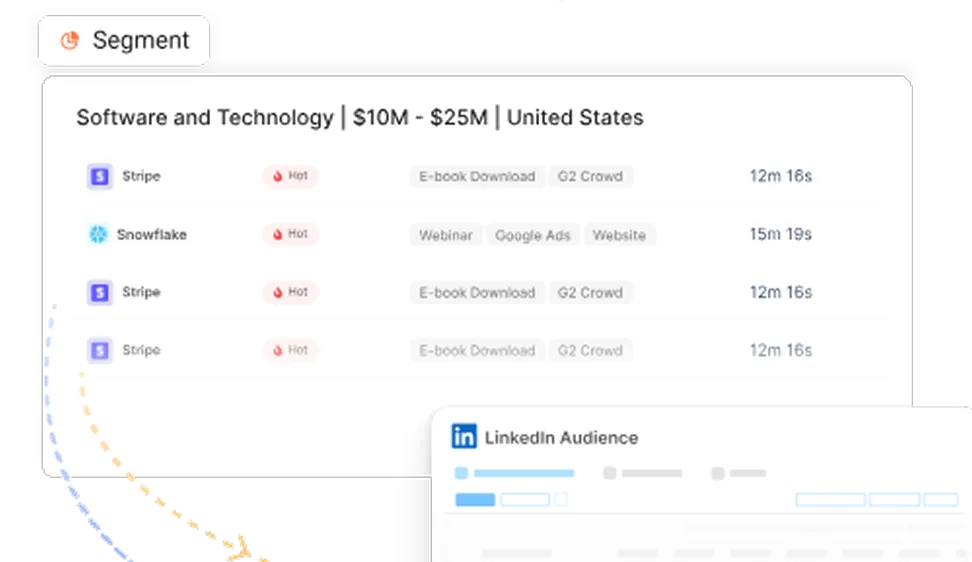
For marketing teams, Factors.ai enables LinkedIn retargeting specifically for warm product users. If someone's been active in your trial but hasn't converted, you can serve them targeted ads that reinforce the value they've already experienced. It's a much more efficient use of ad spend than broad awareness campaigns aimed at cold audiences.
Perhaps most importantly, the platform connects PQL activity to actual pipeline outcomes. You can see which PQL signals actually predicted revenue, which scoring thresholds need adjustment, and where the gaps are in your funnel. That feedback loop between product engagement and closed-won deals is what turns a PQL framework from a theoretical exercise into a revenue engine.
Common PQL mistakes to avoid
Getting the PQL model right takes iteration, and there are a few recurring mistakes that trip up even experienced teams. Knowing what to watch for can save you months of building on a shaky foundation.
Mistake 1: Counting every signup as a PQL
This is the most common one, and it defeats the entire purpose of the PQL concept. If everyone who creates an account is automatically considered a product qualified lead, you haven't qualified anything. You've just renamed your signup list. PQLs require evidence of meaningful product engagement, not just a completed registration form. The noise-to-signal ratio in your pipeline will stay just as bad as it was before you adopted the PQL model.
Mistake 2: Ignoring account-level intent
In B2B, one curious individual exploring your product doesn't mean their company is ready to buy. A single user from a large enterprise signing up for a trial is interesting, but it's not the same as three people from that company actively using the product and discussing it in their internal Slack channels. Focusing only on individual user signals while ignoring what's happening at the account level means you'll miss some of your biggest opportunities and over-prioritize others.
Mistake 3: Sending sales in too early
This one's tempting, especially when you can see a user from a dream account has just signed up. The instinct is to pounce. But reaching out before the user has had a chance to experience value almost always backfires. You're interrupting someone who's still in discovery mode, and the outreach feels pushy rather than helpful. Give users enough time to reach activation milestones before triggering a sales motion. The patience pays for itself in higher response rates and better conversations.
Mistake 4: No feedback loop from revenue data
A PQL scoring model that never gets validated against actual revenue outcomes is just guesswork with a spreadsheet. If you're not regularly checking which PQLs actually converted to paying customers and which ones didn't, your model will drift away from reality over time. The feedback loop between product engagement data and closed-won deals is essential. Without it, you're scoring leads based on assumptions that might have been valid six months ago but aren't anymore.
Mistake 5: Keeping your scoring model static forever
Buyer behavior changes. Your product evolves. New features get shipped, old ones get deprecated, and the competitive landscape shifts. A scoring model that was perfectly calibrated last year might be penalizing users for not engaging with a feature that's been redesigned, or it might be ignoring a new workflow that's become your strongest conversion predictor. Treat your PQL model as a living system that needs regular maintenance, not a document you created during a planning offsite and never touched again.
In a nutshell…
A product-qualified lead is one of the clearest buying signals available in modern B2B SaaS, because it's rooted in observable behavior rather than stated intent. Someone who's activated your product, built real workflows, invited teammates, and hit usage limits is telling you something far more reliable than a form fill or a webinar registration ever could.
The framework for getting PQLs right has a few essential components. You need to layer fit signals, usage signals, and buying signals together, because any one of those on its own tells an incomplete story. You need a scoring model that's grounded in historical win data, not assumptions about what should matter. And you need to iterate on that model quarterly using actual revenue outcomes, because buyer behavior doesn't stay still.
The organizational piece matters just as much as the technical one. Marketing should be designing onboarding experiences that accelerate users toward activation milestones, and sales should be reaching out with personalized, usage-aware outreach when the timing is right. The handoff between the two teams needs shared definitions and shared visibility into product data.
If you're running a product-led motion and still qualifying leads primarily based on marketing engagement, you're probably sitting on a layer of high-intent signal that nobody's using. The product data is there. The conversion patterns are there. The question is whether your team is wired to see them and act on them. That's where product-led growth stops being a buzzword and starts becoming pipeline-led growth.
Frequently asked questions about product-qualified leads
Q1. What is PQL?
PQL stands for product-qualified lead. It's a user or account that's showing buying intent through meaningful product usage, not just content engagement or form submissions. The qualification comes from what the user has actually done inside your product, which makes it a behavior-based signal rather than a demographic or engagement-based one.
Q2. What is a product-qualified lead in SaaS?
In a SaaS context, a product-qualified lead is typically a trial or freemium user who has experienced genuine value and is showing readiness to upgrade to a paid plan. They've gone beyond signing up and exploring. They've activated core features, built workflows, or reached the limits of the free tier. Their product behavior suggests they're closer to a buying decision than someone who's only interacted with your marketing.
Q3. Is a PQL better than an MQL?
Not always, but PQLs often carry stronger intent because they reflect real product behavior rather than content engagement. An MQL who downloaded a whitepaper might be doing casual research. A PQL who's built campaigns and invited teammates is demonstrating active use. That said, the strongest B2B funnels use both signals in combination. MQLs help you capture early-stage awareness, while PQLs help you identify who's actually getting value and moving toward purchase.
Q4. How do you measure PQLs?
You measure PQLs by tracking a combination of activation milestones, feature usage depth, account-level growth, and commercial intent signals. Specific metrics include how quickly a user reaches key activation steps, how many features they engage with, whether they've invited teammates, and whether they've visited pricing pages or hit usage caps. These signals are then combined into a scoring model with thresholds that define when a user crosses into PQL territory.
Q5. Can enterprise companies use PQLs?
Yes, and in many ways, PQLs are even more powerful for enterprise sales when measured at the account level. A single user from a large company exploring a trial is useful information, but the real signal comes when multiple users from that account are active, when admin setup is complete, and when cross-team adoption is visible. Enterprise PQL models need to account for buying committee dynamics rather than focusing exclusively on individual behavior.
Q6. What is the difference between a PQL and an SQL?
A PQL is qualified by product behavior: the user's actions inside the product indicate readiness to buy. An SQL is qualified by human review, usually a sales rep who has confirmed that the lead has budget, authority, timeline, and a genuine need. In practice, a PQL often becomes an SQL once sales engages and validates the opportunity. The PQL is the behavioral signal, and the SQL is the human confirmation that the deal is worth pursuing.

Powered by Bombora
Enter your domain and we'll send you a free list of companies showing buying intent in your vertical.
.avif)
Powered by Bombora
Enter your domain and we'll send you a free list of companies showing buying intent in your vertical.
.avif)

See how Factors can 2x your ROI
Boost your LinkedIn ROI in no time using data-driven insights


.avif)

See Factors in action.
Schedule a personalized demo or sign up to get started for free
LinkedIn Marketing Partner
GDPR & SOC2 Type II

.svg)



.avif)

