.svg)
Heading 2
Multi channel attribution: the B2B marketer's complete guide
Learn how multi channel attribution works in B2B marketing, how to choose the right attribution model, and how to track revenue across complex buyer journeys.
Written by
.avif)
Vrushti Oza
Content Marketer
Summarize this article



TL;DR
- Multi channel attribution assigns conversion credit across every marketing channel a buyer interacts with, giving B2B teams an accurate picture of what's actually driving pipeline and revenue.
- Single-touch models like first-click or last-click ignore the majority of a B2B buyer journey, which typically spans 10-20 touchpoints over months.
- The most common multi channel attribution models (linear, time-decay, position-based, and data-driven) each carry trade-offs, and stronger teams compare insights across several rather than relying on one.
- Implementation requires unified data across your CRM, ad platforms, and analytics tools, plus a clear definition of what "conversion" actually means for your business.
- Attribution is not a to-do for reporting, but a budgeting and strategy lever that tells you where to invest more and where to pull back.
Have you ever played dodgeball? (Just stick with me pls).
You know... when in dodgeball, the person who last touched the ball gets out. That's exactly what happens when your attribution approach boils down to "whoever touched the deal last gets the trophy." In reality, no single channel closed that deal. A prospect saw a LinkedIn ad three months ago, read two blog posts, attended a webinar, clicked a nurture email, and then booked a demo. Multi channel attribution exists precisely because B2B buying journeys are long, messy, and involve more touchpoints than most teams care to track manually.
That said, let’s move back to base… B2B… Imagine this: you're sitting in a quarterly marketing review with a steaming hot black coffee in hand. The paid team claims LinkedIn drove 40% of new pipeline… the content team is convinced their blog series was the real catalyst… sales credits a single cold outreach (of course!).
Everyone has a dashboard... and every dashboard tells a completely different story. The CFO is watching this unfold with the kind of patience usually reserved for delayed flights at O'Hare.
It's... the Rashomon of marketing meetings… same deal, five different narratives, and ZERO consensus.
This blog aims to breaks up how multi channel attribution actually works, which models are worth your time, what makes it uniquely challenging in B2B, and how to implement it without drowning in data. If you've ever struggled to answer "which channels really generate pipeline?", this is the piece to bookmark.
What is multi channel attribution, and why does it matter now?
Let’s go by definition first: Multi channel attribution is a method of assigning credit for a conversion across all the marketing channels that played a role in the buyer's journey. Instead of handing all the credit to the first or last interaction, it distributes that credit across multiple touchpoints so you can see which channels actually contributed.
The simplest way to think about it: single-touch attribution is like thanking only the person who scored the goal while completely ignoring the midfielder who threaded the pass and the defender who won the ball. And as a defender, that’s RUDE. Anyway, multi channel attribution acknowledges the whole team.
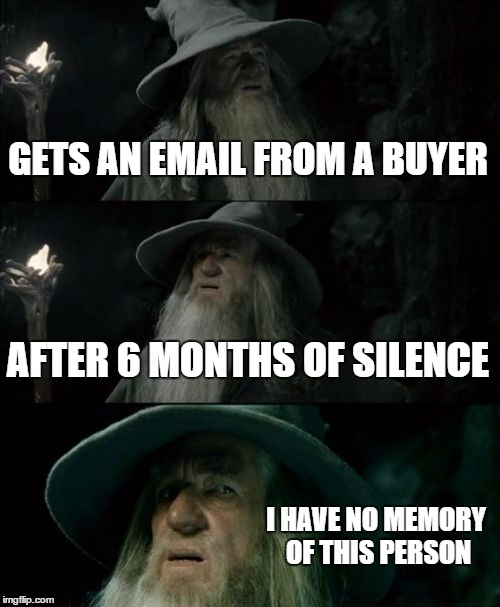
In traditional single-touch models, you'd pick either the first interaction (first-touch) or the last one before conversion (last-touch) and hand it all the credit. That works reasonably well when the buyer journey is short and simple. A consumer sees an ad, clicks, and buys. One channel… one decision… and it’s done. But B2B marketing doesn't work that way… and most B2B marketers figured that out the hard way… over many, many months. On that note, here’s a meme for you…
Why do B2B journeys break single-touch models?
Modern B2B buying journeys span multiple channels and multiple weeks (often months). A prospect might first encounter your brand through organic search, then see a retargeting ad on LinkedIn, read a case study, attend a virtual event, receive an email nurture sequence, visit your pricing page twice, and finally book a demo. That's eight touchpoints across six distinct channels.
If your attribution model only credits the demo booking page, you've just made organic search, LinkedIn ads, content, and email look like they contributed nothing. And when budget season comes around, those "non-contributing" channels are the first to get cut.
Here's a concrete example. A marketing director at a mid-market SaaS company sees your LinkedIn ad while scrolling during lunch. She doesn't click, but she remembers the brand name. Two weeks later, she searches for your product category and lands on a blog post through organic search. The following week, a colleague forwards her your webinar invite. She attends, engages with the Q&A, and signs up for a free trial the same day.
Without multi channel attribution, you'd credit either the LinkedIn ad (first-touch) or the webinar (last-touch). The blog post that built her understanding and trust? Invisible. The average deal involves 10-20 touchpoints before a conversion happens. Single-touch attribution doesn't just give an incomplete picture in these scenarios... it gives a misleading one.
Why does multi channel attribution matter so much in B2B marketing?
If you're marketing a $15 product, last-click attribution is probably fine. But if you're marketing a $50,000 annual contract with a six-month sales cycle, attribution accuracy becomes a budgeting problem, a strategy problem, and eventually a credibility problem.
- The buying committee problem nobody talks about enough
B2B buying cycles are loooooong. Three months is typical, and enterprise deals often stretch to twelve. During that time, multiple stakeholders within the buying organization are consuming content, evaluating options, and having internal conversations… some of which your analytics can't see.
- The budget allocation trap
Without multi channel attribution, marketing teams tend to over-invest in last-click channels like branded search or direct traffic because those are the channels that show up in conversion reports. Upper-funnel activities like brand campaigns, thought leadership content, and event sponsorships appear ineffective because they rarely get the final click.
The result is a slow erosion of the very activities that fill the top of the funnel, followed by a mystifying pipeline decline six months later… you've essentially been pulling weeds while removing your own root system. Ummm… not fun.
Multi channel marketing attribution gives teams visibility into the full pipeline. You can identify which channels drive initial awareness, which accelerate consideration, and which convert intent into action. You can measure the influence of content across the buyer journey and optimize campaigns at every funnel stage, not just the bottom.
- From "Wohoo! We got clicks" to "Wohoo! We drove revenue"
Revenue attribution connects marketing activity to actual revenue outcomes, not just leads or MQLs. It lets you say, "LinkedIn ads influenced $1.2M in pipeline this quarter" rather than "LinkedIn ads generated 340 clicks."
The first statement changes budgets, the second generates a fake smile during a slide deck presentation.
When attribution is working properly, marketing teams can have genuine strategic conversations about where to invest. Instead of debating which dashboard is correct, they can analyze which channels generate qualified pipeline and adjust spend accordingly. That shift from reporting to resource allocation is what makes multi channel attribution a strategic function rather than an analytics exercise.
SO, how does multi channel attribution actually work?
The concept behind multi channel attribution is intuitive: track all the marketing interactions that happen before a conversion and distribute credit across them. The execution, predictably, is where things get complicated. Understanding the data flow helps demystify the process and makes it easier to spot where your own implementation might break down.
Step 1: Track marketing touchpoints
Every attribution system starts with data collection. You need to capture the interactions prospects have with your brand across channels. That includes website visits, ad clicks, email opens and clicks, event attendance, content downloads, and CRM activity like sales calls or demo bookings. The more complete your tracking… the more accurate your attribution will be.
Step 2: Connect identities
A single prospect might visit your website anonymously from a mobile phone, click a LinkedIn ad from their desktop at work, and open an email from a different browser entirely. Attribution systems need to stitch these disparate interactions into a single identity. They use cookies, user IDs, CRM records, and account-matching logic to connect the dots.
In B2B, this often happens at the account level rather than the individual level, because multiple people within one company are part of the buying journey… so it only makes sense to track it on a macro, account level… also, GDPR?!
Step 3: Map the customer journey
Once identities are connected, the system creates a timeline of interactions for each account or individual. This timeline shows every touchpoint in chronological order, from the first moment of awareness to the final conversion event. Think of it as a narrative of the buyer's path, built from data rather than assumptions.
Step 4: Apply an attribution model
This is where the credit distribution happens. The model you choose determines how much weight each touchpoint receives. A linear model splits credit equally. A time-decay model gives more credit to recent interactions. A position-based model emphasizes the first and last touches. The choice of model shapes your understanding of which channels matter most, so it isn't a purely technical decision.
Step 5: Attribute revenue
The final step ties everything together. Once credit has been distributed across touchpoints, the system maps that credit to actual pipeline or revenue. If a deal worth $100,000 closes and your attribution model gives 30% credit to LinkedIn ads, that channel gets $30,000 in attributed revenue. This is the number that actually matters in budget conversations.
When this process works well, marketers can finally answer the question that haunts every QBR: which activities actually drive pipeline and revenue? The answer is almost never a single channel. It's a combination of interactions that, together, moved a prospect from "never heard of you" to "ready to sign."
The catch is that every step introduces potential for error. Incomplete tracking misses touchpoints… boken identity resolution… splits one buyer into two… the wrong model overweights specific channels. Attribution isn't a set-it-and-forget-it system; it requires ongoing calibration and a healthy skepticism about any single data point.
What are the most common multi channel attribution models?
Choosing a multi channel attribution model is a bit like choosing a map projection. Every option distorts something. The question is which distortion you can live with, given your marketing strategy and buying cycle. Here's a breakdown of the six most widely used models.
- First-touch attribution
All credit goes to the very first interaction. If a prospect's journey started with an organic blog visit, organic search gets 100% of the credit for that conversion. This model is useful for understanding top-of-funnel discovery... specifically which channels bring people into your orbit
for the first time. The limitation is obvious: it ignores every nurturing touchpoint that happened between discovery and conversion. For B2B teams with long sales cycles, that's a lot of ignored activity.
- Last-touch attribution
The mirror image of first-touch. All credit goes to the final interaction before the conversion event. If a prospect booked a demo after clicking a retargeting ad, that ad gets full credit. Last-touch is the default in many analytics tools because it's simple and maps neatly to direct-response campaigns. The downside is that it systematically undervalues upper-funnel channels. The LinkedIn campaign that introduced the prospect to your brand three months ago? Gone without a trace.
- Linear attribution
Credit is split equally across every touchpoint in the journey. If there were five interactions before conversion, each gets 20% of the credit. The appeal is simplicity and fairness: no touchpoint is ignored. The problem is that it assumes every interaction had the same influence, which is rarely true. A casual blog skim and a 45-minute product demo don't carry the same weight in a buying decision. Linear attribution pretends they do... and that's its fatal flaw.
- Time-decay attribution
Touchpoints closer to the conversion receive progressively more credit. The logic is that recent interactions are more influential in the final decision. This model works well for long sales cycles where the most recent engagement signals genuine intent. It does, however, undervalue early-stage touchpoints that planted the seed, which can make your awareness campaigns look weaker than they are.
- Position-based (U-shaped) attribution
This model assigns heavier weight to two key moments: the first interaction and the lead-creation event. The remaining credit is distributed across the middle touchpoints. A common split is 40% to the first touch, 40% to the lead-creation touch, and 20% divided among everything in between. It captures both discovery and conversion signals, making it popular for B2B teams. The trade-off is that middle-funnel activities like email nurture and content engagement get compressed into a small slice of credit.
- Data-driven attribution
Instead of following a fixed rule, this model uses algorithms or machine learning to determine how much credit each touchpoint deserves. It analyzes patterns across many conversion paths to calculate the statistical contribution of each channel. The strength is precision; the weakness is that it requires large datasets to work reliably, and it can feel like a black box when you need to explain the results to stakeholders. (Nothing kills stakeholder trust faster than "the algorithm said so.")
Here's how these multi channel attribution models compare side by side:
| Model | Credit distribution | Best for | Key limitation |
| First-touch | 100% to first interaction | Measuring awareness and discovery channels | Ignores all nurturing touchpoints |
| Last-touch | 100% to last interaction | Direct-response campaign measurement | Undervalues upper-funnel channels |
| Linear | Equal across all touchpoints | Balanced, holistic view of journey | Assumes all interactions carry equal weight |
| Time-decay | More credit to recent touches | Long sales cycles with strong intent signals | Undervalues early-stage awareness |
| Position-based | Heavy on first + lead creation | B2B teams tracking discovery and conversion | Compresses middle-funnel contributions |
| Data-driven | Algorithmically calculated | Large datasets, advanced analytics teams | Requires volume; harder to explain |
None of these models are universally correct or wrong. The strongest B2B teams typically run two or three models in parallel and compare the insights. If linear attribution and time-decay both highlight the same channel as a strong performer, that's a signal you can trust. If they disagree sharply, it tells you the channel's contribution is stage-dependent... which is also useful information.
Multi channel attribution vs. multi touch attribution: what's the actual difference?
These two terms get used interchangeably so often that you'd be forgiven for thinking they mean the same thing. They don't, though the overlap is significant enough to cause genuine confusion in planning conversations.
Multi channel attribution focuses on which marketing channels drive conversions. The unit of analysis is the channel itself: LinkedIn ads, organic search, email, paid search, events. The question it answers is "which channels should we invest in?" When your CMO asks where to allocate next quarter's budget, multi channel attribution provides the answer.
Multi touch attribution focuses on the individual interactions within the buyer journey. It looks at every specific action a prospect took: reading a particular blog post, clicking a specific ad, attending a webinar on a certain date, viewing a pricing page. The question it answers is "which specific interactions influence the buying decision?"
Here's a comparison to make the distinction clearer:
| Dimension | Multi channel attribution | Multi touch attribution |
|---|---|---|
| Unit of analysis | Marketing channels | Individual touchpoints |
| Example | LinkedIn ads, email, organic search | Specific blog post, webinar, ad creative |
| Primary question | Where should we allocate budget? | Which interactions influence conversions? |
| Scope | Channel-level performance | Interaction-level influence |
| Typical user | CMOs, marketing leadership | Demand gen, campaign managers |
The line between these two approaches has blurred considerably. Most modern customer journey attribution platforms combine both lenses. They can tell you that LinkedIn as a channel influenced 25% of pipeline (multi channel) and that a specific LinkedIn campaign featuring a customer testimonial drove three times more engagement than a product-feature ad (multi touch). The channel-level view informs strategy. The touchpoint-level view informs execution.
For B2B teams, the ideal setup is one that supports both perspectives. Channel-level data without touchpoint detail tells you where to spend but not how to spend it. Touchpoint data without channel context gives you tactical wins without strategic direction. You need both.
What makes multi channel attribution so challenging?
If multi channel attribution were easy, every marketing team would already have it running perfectly. The reality is that most teams struggle with some combination of data problems,
identity gaps, and organizational friction. Understanding these challenges upfront saves you from building an attribution system that looks impressive on paper but falls apart in practice.
- Fragmented data across tools
This is the most common obstacle, and also the most stubborn. Marketing data typically lives in separate, disconnected systems: ad platforms like Google Ads and LinkedIn, web analytics tools, marketing automation platforms, and CRM systems. Each platform tracks its own version of reality, using its own definitions and its own attribution logic. Getting these systems to share a unified view of the buyer journey requires deliberate integration work, and often dedicated tooling.
- Identity resolution across devices and sessions
A single buyer might interact with your brand from a phone, a laptop, and a work desktop across multiple browsers. Before logging in or filling out a form, they're anonymous. After that first form fill, their earlier anonymous sessions need to be stitched back to their identity.
In B2B, the problem compounds because you're tracking buying committees, not individuals. Three people from the same company might each have their own anonymous sessions that need to be connected to a single account. This identity resolution challenge is technically demanding and rarely solved out of the box.
- The dark funnel and offline interactions
B2B buying includes a significant amount of activity that no analytics tool can see. Prospects discuss solutions in private Slack channels. They ask peers for recommendations on LinkedIn DMs. They read analyst reports, attend industry dinners, and hear about you from colleagues in conversations that never generate a trackable event.
These "dark funnel" interactions influence pipeline more than most marketers want to admit, and they're essentially invisible to attribution systems. Attribution debates sometimes resemble group projects where everyone claims credit for the final result, but the dark funnel is the quiet member who actually did most of the work.
- Attribution bias from model selection
Different multi channel attribution models produce different insights from the same data. Run a first-touch model and your content team looks like heroes. Run a last-touch model and your paid search team gets the trophy. Run a linear model and everything looks equally important, which means nothing stands out.
This variability isn't a bug; it's an inherent feature of modeling. But it does create confusion in cross-functional meetings where different teams prefer whichever model makes their channel look best. Without a clear governance process for how attribution data gets interpreted, the numbers can end up fueling politics rather than informing strategy.
- Long buying cycles that span quarters
When a deal takes six to twelve months to close, the attribution path stretches across multiple campaigns, budget cycles, and even team reorganizations. The touchpoints that mattered in month one may look irrelevant by the time the contract is signed in month nine.
Long buying cycles also mean your attribution data is always lagging. By the time you see that a channel influenced closed revenue, you've already made three months of budget decisions without that insight. It's a bit like driving using only your rearview mirror... technically you're looking at real data, just not the right direction.
These challenges don't mean multi channel attribution is impossible. They mean it's an ongoing practice, not a one-time setup. The teams that get the most value from attribution are the ones who accept its imperfections and use it as a directional guide rather than a source of absolute truth.
How do you implement multi channel attribution in B2B?
Start with clarity about what you're actually trying to measure and why. Most attribution projects fail because the team never agreed on what a "conversion" meant or which data sources mattered. Here's the path forward.
Step 1: Define your conversion goals
Before you wire up any integrations, get alignment on what counts as a conversion for your business. In B2B, this usually isn't a purchase… it might be a demo request, a sales-qualified opportunity, pipeline creation, or closed-won revenue.
Pick the conversion events that map to real business outcomes, and make sure marketing and sales agree on the definitions (good luck with that tho). If marketing counts "MQL created" as a conversion and sales counts "opportunity created," you'll end up with two attribution systems telling different stories. And yesssss, this happens more often than anyone would like to admit.
Step 2: Integrate your marketing and sales data
You need a unified data layer that connects your CRM, ad platforms, web analytics, and marketing automation. This is the infrastructure step, and it's usually the most time-consuming. Some teams build custom integrations using tools like Segment or a CDP. Others use attribution platforms that come with pre-built connectors. The goal is to get all your interaction data flowing into one place where it can be stitched together into coherent buyer journeys.
Step 3: Track all meaningful touchpoints
Just so you know… ‘meaningful’ is the key word here. You don't need to track every pageview, but you do need to capture the interactions that signal intent or engagement. That includes digital touchpoints like ad clicks, content downloads, webinar attendance, and pricing page visits. It also includes sales activities like discovery calls, demos, and proposal reviews.
Missing a major touchpoint category creates blind spots in your attribution, so take time to audit what you're tracking versus what's actually happening in the buying journey.
Step 4: Select your attribution model (or models)
Your choice of model should reflect your funnel complexity, average deal size, and typical buying cycle length. If your sales cycle is short and primarily digital, a time-decay or last-touch model might be a-ok. But if you're selling enterprise contracts with six-month cycles and five-person buying committees, position-based or data-driven models will give you a more useful picture.
Many teams start with a position-based model as a sensible default and then add data-driven modeling once they have enough volume to support it.
Step 5: Monitor attribution reports and act on them
The system is built, the dashboards exist, but nobody changes their behavior based on the data. Schedule regular reviews, ideally monthly, where marketing and sales leadership examine attribution reports together.
Use the insights to optimize budgets, improve targeting, and refine campaign strategy. If your attribution data consistently shows that a certain channel influences enterprise pipeline but doesn't generate many leads, that's a signal to protect its budget even when the MQL report looks a tad disappointing.
How long do all of these multi touch attribution steps take?
The entire implementation process typically takes B2B teams somewhere between four and twelve weeks, depending on the complexity of their tech stack and the quality of their existing data. It isn't a quick win. But the teams that invest in getting it right end up making dramatically better decisions about where to spend their marketing budget.
Which metrics should you measure in multi channel attribution?
Attribution generates a lot of data. The challenge isn't finding numbers; it's knowing which ones deserve attention. Not every metric that shows up in an attribution dashboard is worth tracking, and focusing on the wrong ones can be just as misleading as having no attribution at all.
The metrics that matter most for B2B multi channel attribution connect marketing activity to revenue outcomes, not just engagement.
- Pipeline influenced by channel
This tells you how much open pipeline each marketing channel contributed to. It's the most direct measure of which channels are generating business opportunities. If LinkedIn ads influenced $800K in pipeline last quarter and webinars influenced $1.2M, that shapes how you think about investment across those two channels.
- Revenue attributed by channel
Similar to pipeline influenced, but specifically tied to closed-won revenue. This metric carries the most weight in executive conversations because it connects marketing spend to actual business results. Revenue attribution in B2B is what turns marketing from a cost center perception into a growth function argument.
- Cost per opportunity
Divide your spend on a channel by the number of opportunities it influenced. This helps you compare efficiency across channels. A channel that generates expensive opportunities isn't necessarily bad if those opportunities are high-value, but cost per opportunity surfaces that trade-off clearly.
- Marketing ROI by channel
Revenue attributed to a channel divided by the spend on that channel. This is the metric your CFO cares about most. In cross-channel attribution, marketing ROI lets you benchmark channels against each other on a level playing field, which is the only fair comparison.
- Conversion rate by channel
What percentage of prospects from each channel ultimately convert? High-volume channels with low conversion rates might be filling the top of the funnel with the wrong audience. Low-volume channels with high conversion rates might deserve more investment than they're currently getting.
- Customer acquisition cost
The total cost of acquiring a new customer, broken down by the channels that contributed. In B2B, where acquisition costs can run into thousands of dollars, understanding how each channel impacts CAC helps you spot inefficiencies before they compound.
These metrics work best when reviewed together rather than in isolation. A channel with a high cost per opportunity but strong conversion rates and large deal sizes might still deliver excellent ROI. Viewing metrics in combination prevents premature conclusions about which channels are "working" and which aren't.
What tools and platforms support multi channel attribution?
The attribution tool landscape ranges from general-purpose analytics platforms that include basic attribution features to purpose-built revenue attribution platforms designed specifically for B2B. Where you fall on that spectrum depends on your team's maturity, your data infrastructure, and how seriously you need to track marketing attribution across channels.
- General analytics platforms
Tools like Google Analytics and Adobe Analytics offer built-in multi channel attribution models. Google Analytics lets you compare first-touch, last-touch, linear, time-decay, and position-based models out of the box. These tools work well for tracking digital touchpoint attribution and understanding web-based conversion paths.
The limitation is that they're primarily session-based and don't natively connect to CRM or revenue data. You can see which channels drove website conversions, but tying those conversions to actual pipeline or closed revenue requires additional integration work.
- Marketing automation and CRM platforms
Platforms like HubSpot include built-in attribution reporting that connects marketing touches to CRM contacts and deals. This is useful because it bridges the gap between marketing interactions and sales outcomes within a single platform. The trade-off is that these tools typically track only the interactions that happen within their own ecosystem.
- Customer data platforms
Tools like Segment help unify data from multiple sources into a single customer profile. They're not attribution tools in themselves, but they solve the data integration problem that often undermines attribution accuracy. If you're struggling with fragmented data across ad platforms, your website, and your CRM, a CDP can serve as the connective tissue that makes attribution possible.
- Dedicated B2B attribution platforms
Purpose-built platforms like Dreamdata are built specifically for the complexities of B2B revenue attribution. They typically offer account-level attribution, integration with major CRMs and ad platforms, and the ability to track long, multi-stakeholder buying journeys. These platforms are designed for teams that need to answer "which campaigns generate qualified pipeline?" rather than just "which pages get the most traffic?"
The difference between basic analytics tools and advanced revenue attribution platforms comes down to what you're measuring. Basic tools tell you what happened on your website. Advanced platforms tell you which marketing activities generated revenue. For B2B teams with complex buying journeys, that distinction matters enormously.
How does Factors.ai approach multi channel attribution?
Most of the challenges discussed throughout this guide converge on a single problem: B2B teams can't attribute revenue accurately because they can't see the full buyer journey. Fragmented data, anonymous website visitors, disconnected CRM and marketing signals... these aren't separate issues. They're the same issue wearing different hats.
Factors.ai is built to solve that specific problem.
The platform identifies anonymous website visitors at the account level, meaning you can see which companies are engaging with your content before anyone fills out a form. That early-stage visibility is crucial for attribution because it captures the top-of-funnel interactions that most tools miss entirely.
Factors connects marketing and sales signals into a unified timeline. Ad impressions, website visits, content engagement, CRM updates, and sales activities all appear in a single view of the buyer journey. No manual stitching across platforms required.
Account-level attribution is a core capability. Instead of tracking individual leads in isolation, Factors maps all the interactions from a buying committee back to a single account. This matches how B2B buying actually works, where multiple people influence a single decision.
Pipeline attribution connects marketing activity directly to opportunity creation and revenue. You can see which campaigns influenced specific deals, not just which campaigns generated clicks. Campaign-level and channel-level attribution reports make it straightforward to answer budget allocation questions.
Intent signals add another layer. Factors surfaces which accounts are showing buying intent based on their engagement patterns, helping teams prioritize accounts that are actively in-market rather than distributing effort evenly across the entire pipeline.
These capabilities help marketing teams answer the questions that actually matter. Which campaigns generate qualified pipeline? Which channels influence enterprise deals? Where should budget be increased, and where should it be pulled back? When attribution is built on complete data and account-level tracking, those answers become defensible rather than debatable.
See how Factors can 2x your ROI
Boost your LinkedIn ROI in no time using data-driven insights
Try AdPilot Today


.avif)

See Factors in action.
Schedule a personalized demo or sign up to get started for free
LinkedIn Marketing Partner
GDPR & SOC2 Type II