
Tools for Demand Planning in B2B: A Practical Guide for GTM Teams
Learn how B2B teams approach demand planning, avoid common pitfalls, align with sales capacity, and choose tools that support better decisions.

Writer
.avif)
Content Marketer



.svg)


TL;DR
- Demand planning is about deciding how much pipeline to create, where it should come from, and when to push.
- Demand forecasting looks at historical data to estimate outcomes. Demand planning makes the strategic decisions that shape those outcomes.
- More leads don’t guarantee more revenue. If sales capacity isn’t factored in, extra pipeline can actually hurt win rates and conversion.
- Modern B2B teams plan around early buying signals, instead of just MQL targets and quarterly spreadsheets.
- The best tools for demand planning connect signals, planning decisions, activation, and revenue feedback in one system.
- If your tool only reports what happened, it’s helping you measure demand, not plan it.
Demand planning has two distinct words: demand and planning.
Most B2B teams are good at demand. You run ads, launch campaigns, and generate leads. The ‘creating interest’ part is sorted.
The planning part is where things fall apart. Your team opens a spreadsheet, looks at last quarter's numbers, adds a growth percentage, hits save, and calls it demand planning. They don’t know that that’s forecasting, with extra steps!
Planning and forecasting are often confused a lot in B2B, because your team doesn’t know which questions to ask for effective demand planning. So even if there’s adequate demand, it doesn’t generate ROI.
Until now, teams relied on historical sales data to predict future demand because there was no other way to plan demand. Though it is useful for reporting, it doesn’t always lead to accurate forecasts or better strategic decisions. So, what should you do?
If you are in a similar fix and looking for ways to balance the planning side of the equation, you are in the right place. This article helps you understand the critical distinction between demand planning and forecasting, shows actionable steps for effective demand planning, and lists tools that help you get there.
What is demand planning in B2B marketing?
Demand planning in B2B marketing is the process of deciding how much demand to create, where to create it, and when to push, way before any pipeline or revenue exists.
It’s a set of decisions that helps you achieve the forecasted goal.
So, when your team takes a step back and asks questions like:
- How much pipeline do we actually need to hit our revenue target?
- Which segments or accounts should that pipeline come from?
- How much demand can sales realistically handle at any given time?
- Where should we reduce spending to avoid creating demand that won’t convert?
- Are we generating demand that aligns with our ideal customer profile?
You are in demand planning. Essentially, it’s about choosing where to push more, instead of randomly pushing everywhere.
For example, a SaaS company’s demand planning for the next quarter may look like:
- Deciding to slow down the lead volume in SMB
- Doubling down on mid-market accounts showing buying intent
- Holding off on enterprise campaigns until sales capacity frees up
Such decisions need active monitoring in B2B because B2B sales cycles are long; their revenue lags spend by months, and sales capacity is finite. At the same time, creating more demand doesn’t automatically translate into more revenue; in fact, it may do the opposite because time-sensitive high-intent leads may get lost in the overflowing demand queue.
Why do B2B teams struggle with demand planning?
Because the way buying happens has changed, but the way teams plan hasn't.
A decade ago, the math was clean because the B2B buying cycle was linear. Clients filled out forms, sales called them, and deals were closed with few negotiations. More ads meant more pipeline in this straight setup. That's not how it works anymore.
Today, multiple people from the same company visit your site, read your case studies, compare your pricing, and never fill out a form. Three months later, they show up on a sales call through a warm intro. Your dashboard doesn't even record this account or its activity, and your demand plan missed them completely.
Despite this, most teams are still planning like it's 2015: quarterly MQL targets, channel budget splits, lead volume goals, all locked in before the quarter starts. To make matters worse, teams get quarterly targets from the top, while execution happens at the channel level without a clear plan of action. When pipeline dips, the fix is always the same: more spend, more campaigns, more activity.
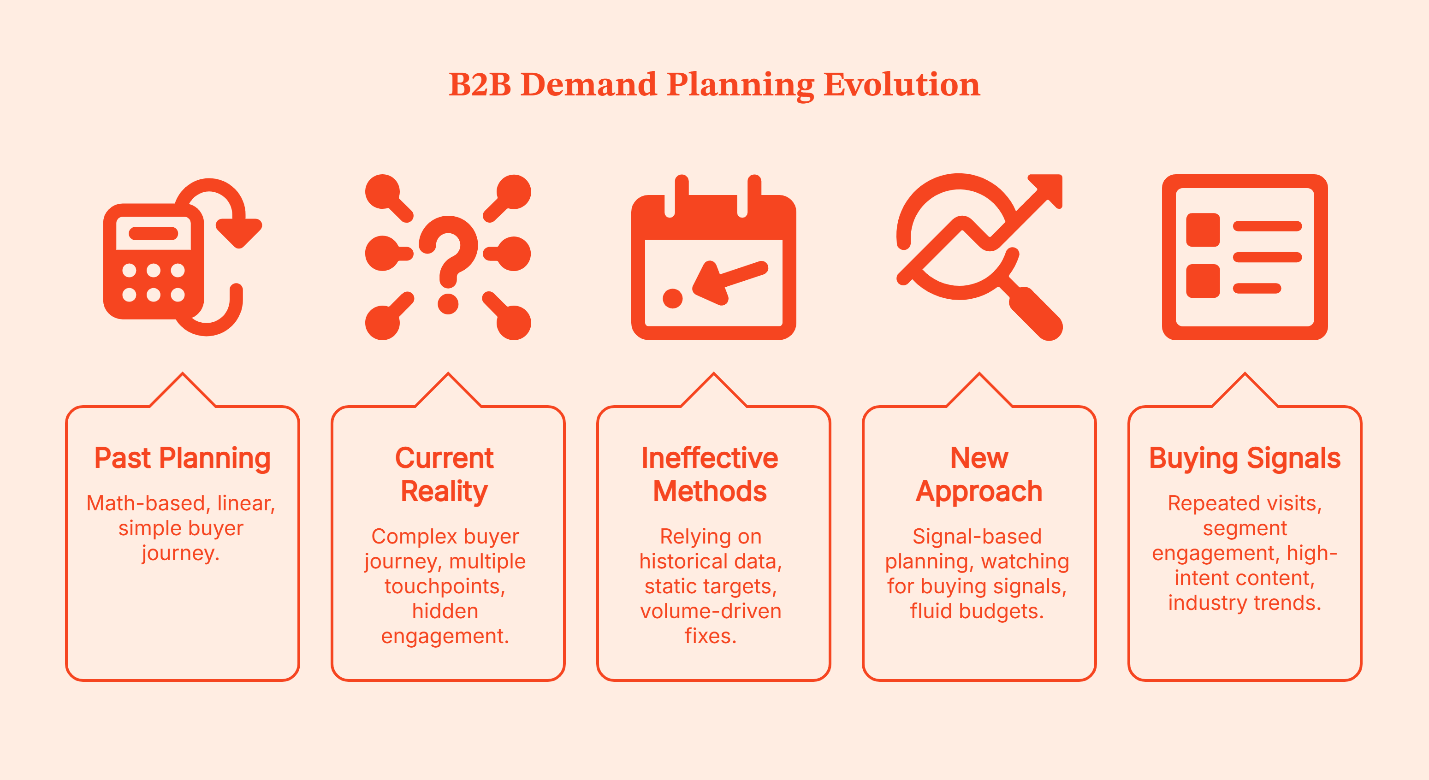
To fix this, B2B teams now need to plan differently.
Instead of waiting for explicit asks, you should watch out for early buying signals like:
- Which accounts are showing up repeatedly?
- Which segments are engaging before sales get involved?
- Which accounts are consuming high-intent content like pricing, comparisons, or case studies?
- Is engagement increasing across specific industries or company sizes?
This ensures that your team remains fluid so that budgets can be moved mid-quarter, if necessary.
This way of planning, from static, spreadsheet-driven planning to signal-based planning, is the new norm.
{{INLINE_MOFU}}
Demand planning vs demand forecasting: What demand planners need to know
Demand planning and demand forecasting are often used interchangeably in B2B marketing. They shouldn’t be.
They solve different problems, happen at different times, and answer different questions.
|
Demand forecasting is about prediction. It asks: What do we think will happen? |
Demand planning is about intention. It asks: What steps are we taking to make it happen? |
Forecasting looks backward. It analyzes historical data and pipeline, conversion rates, and seasonality to estimate future outcomes. It’s useful for projections and reporting, but it mostly works with historical data that already exists.
Planning happens earlier. It’s where teams decide how much pipeline they need, which segments to focus on, how much demand sales teams can handle, and where to invest budget right now.
Forecasting answers:
|
Planning decides:
|
If forecasting tells you what your goal is, planning shows you how to get there.
That’s a critical distinction.
And since the gap between action and outcome is long in B2B, by the time revenue shows up, it's difficult to pinpoint the exact decisions that led to it.
In the opposite scenario, when teams are unable to meet the overarching forecasted figures, they default to old habits: updating the forecasts and revising the targets.
It’s like being on a hamster wheel; your teams either go left or right, on a circular pathway, because the underlying process hasn’t changed.
And then there are B2B teams that separate these two clearly. They plan demand first, using real-world constraints and early signals, and then they forecast outcomes based on those choices.
But even then, a well-structured demand plan can fail if it ignores the most practical constraint in the system: how much demand sales can realistically handle.
💡Ace your demand gen game to drive revenue with the 3-step framework in this guide
The Missing Piece in Most Demand Plans: Sales Capacity
Last week, I went out for what was supposed to be a quick 30-minute grocery run. I filled my cart in under 10 minutes (my personal best) and was on my way to the checkout counter, patting myself on the back for the most efficient grocery run ever, when I saw the long checkout queue.
Turns out, there was only one checkout counter open.
It didn’t matter that I had filled my cart in record time or how organized I was. I still ended up standing in that queue for over an hour.
Clearly, my mistake was thinking that if I could just fill the cart quickly, my grocery run would be shorter. I didn’t consider their processing capacity.
That’s what happens in B2B demand planning, too.
Your marketing team can send you leads left, right, and center; you may end up with a healthy pipeline, but if there are only so many SDRs to follow up and only so many AEs to run discovery calls, the system slows down.
That’s why you need to account for demand conversion by planning for:
- SDR bandwidth
Each SDR can meaningfully work only a limited number of accounts at a time. Once that limit is crossed, response times increase.
- AE deal load
Each AE can actively manage only so many opportunities before attention gets stretched. When pipeline volume rises without adjusting capacity, win rates start slipping.
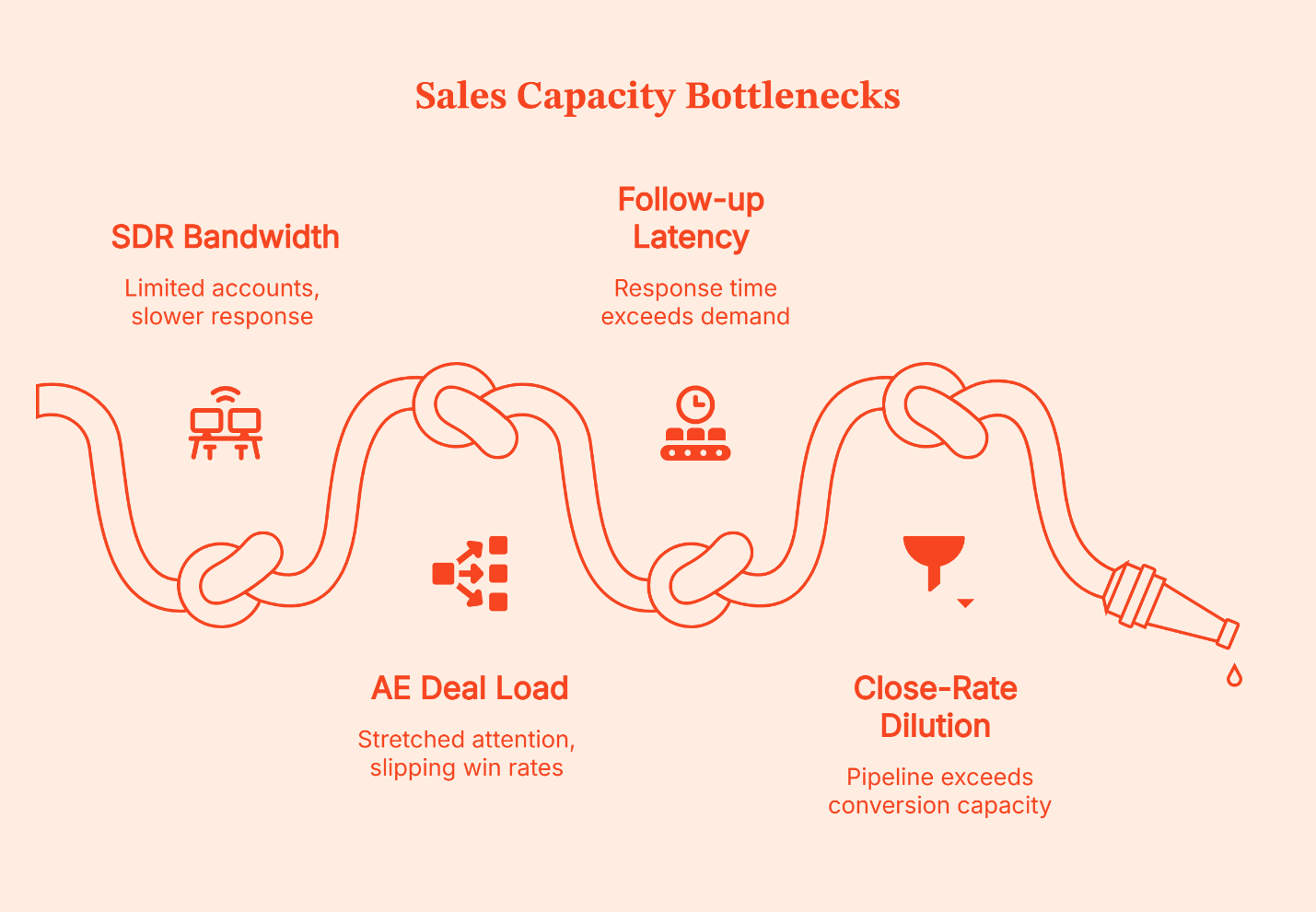
- Follow-up latency
Response time needs to match the demand generated. If response time moves from hours to days, conversion changes.
- Close-rate dilution
More pipeline doesn’t automatically translate into more revenue; it gets pushed to a queue. This means when demand exceeds sales capacity, close rates drop.
Once your demand plan answers this question, the next logical question is: which tools help you plan this way?
Best AI-powered Tools for Demand Planning in B2B (By Category)
When B2B teams evaluate demand planning software, they often end up comparing very different types of software under the same label.
That’s because most tools are built for reporting, forecasting, or campaign execution. Planning is not their primary forte, and it just ends up being an add-on use case.
To understand which tool actually helps with planning, we need to group them into categories.
Category 1: Demand Intelligence & Signal-Based Planning
Demand intelligence tools act as an early-warning system for buying intent. These tools help you spot early buying signals and act on them instead of waiting for leads to show up in the CRM.
Three tools stand out in this category:
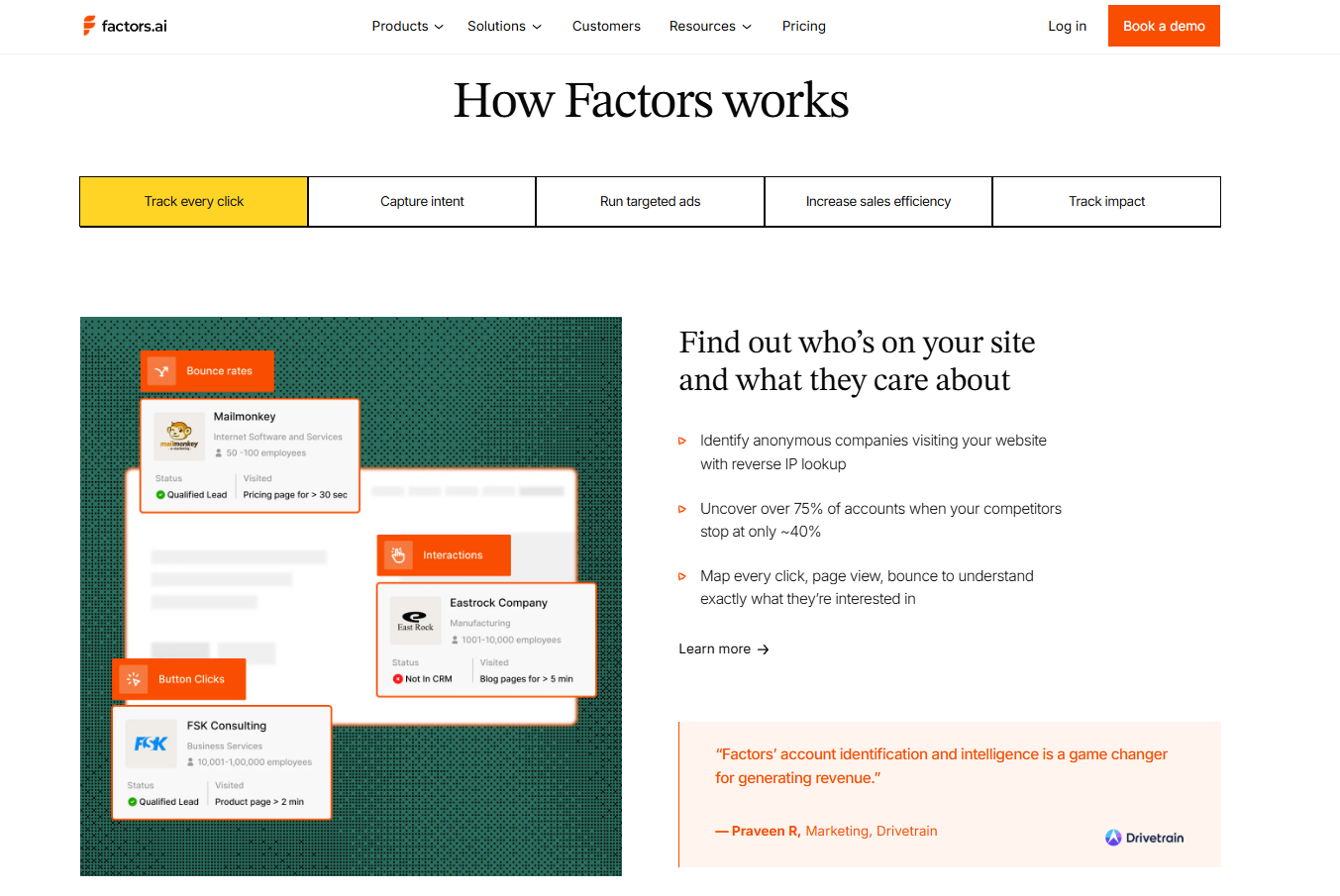
- Factors.ai
Factors.ai is built specifically for B2B revenue teams who need to see what's happening at the account level before it shows up in the CRM. It pulls together signals from your website, ad campaigns, CRM activity, and platforms like G2 to give marketing and sales a shared view of which accounts are engaging and how. The platform also layers multi-touch attribution on top of this, so you can connect your marketing activity to actual pipeline movement. This tool is essential for demand planning because you're not waiting for a lead to raise their hand. You're watching accounts warm up in real time and adjusting focus accordingly.
- 6sense
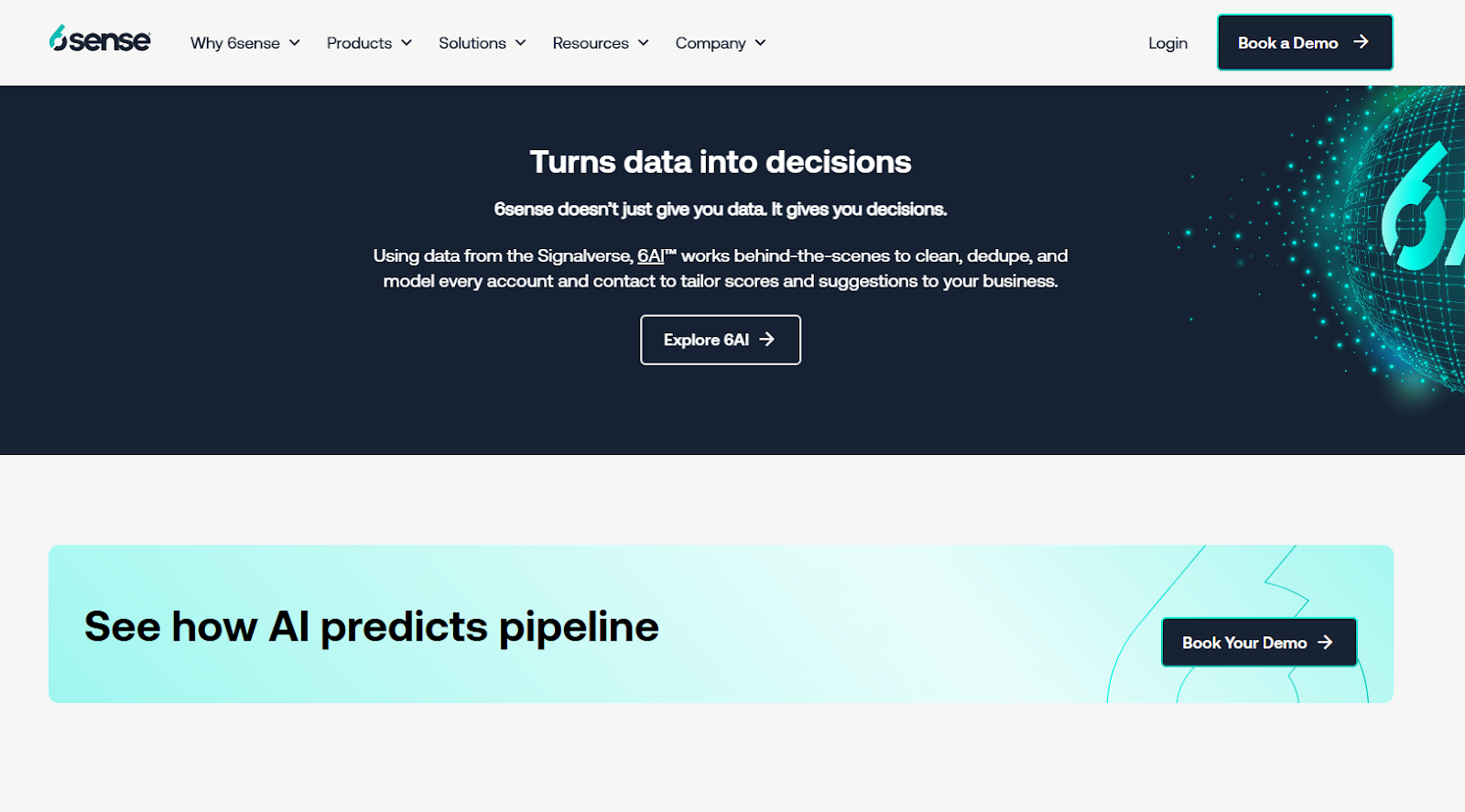
6sense captures buying signals from third-party sources, website behavior, and ad engagement, then uses AI to predict which accounts are actively in a buying cycle. For demand planners, this tool is useful because it goes beyond who's interested and tells you roughly where they are in the decision process. That way, the budget goes toward accounts that are actually in market, not just ones that look vaguely active.
- ZoomInfo
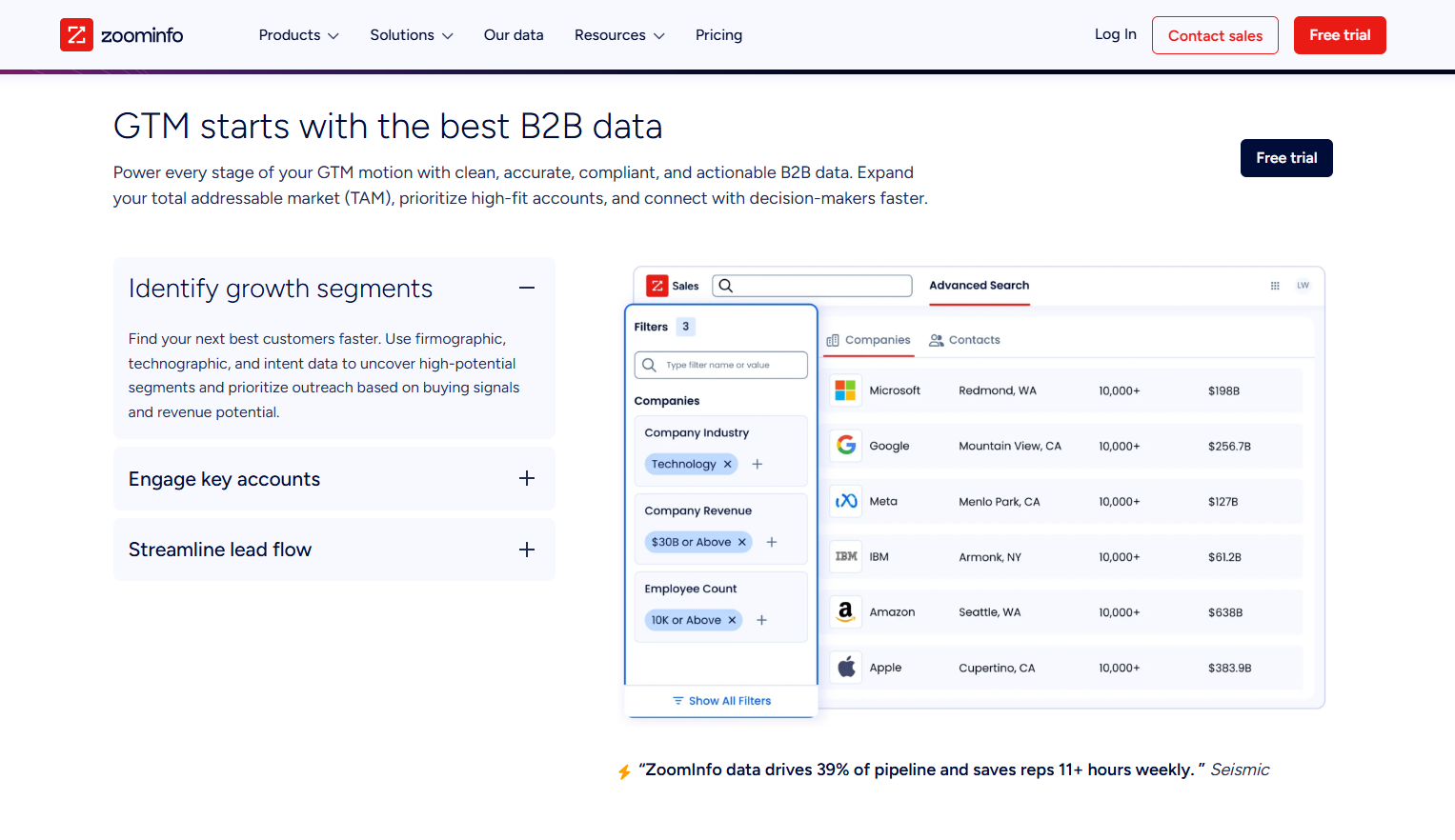
ZoomInfo is a B2B data and intelligence platform that helps teams identify and size the right segments before pushing demand. You can filter by firmographic and technographic data to find accounts that match your ICP, then layer intent signals on top to see who's actively researching. It's more of a "where should we focus" tool than a live planning platform, but that targeting layer is hard to skip.
Strengths:
|
Limitations:
|
💡Explore this breakdown of intent data platforms vs traditional lead generation models in this guide.
Category 2: Demand Forecasting Software & Revenue Planning Tools
These tools are commonly used by RevOps and finance teams to project revenue and inspect pipeline health. They are strong at answering questions like:
- What revenue is likely to close this quarter?
- How does pipeline coverage look?
- Where are conversion rates slipping?
They include revenue forecasting software and business intelligence (BI) platforms that are built for visibility and projection. Demand forecasting software improves demand forecasting accuracy by analyzing large datasets and identifying patterns in past performance. Some advanced tools even use machine learning and predictive analytics to generate more accurate forecasts.
Here’s what these tools do:
- Clari
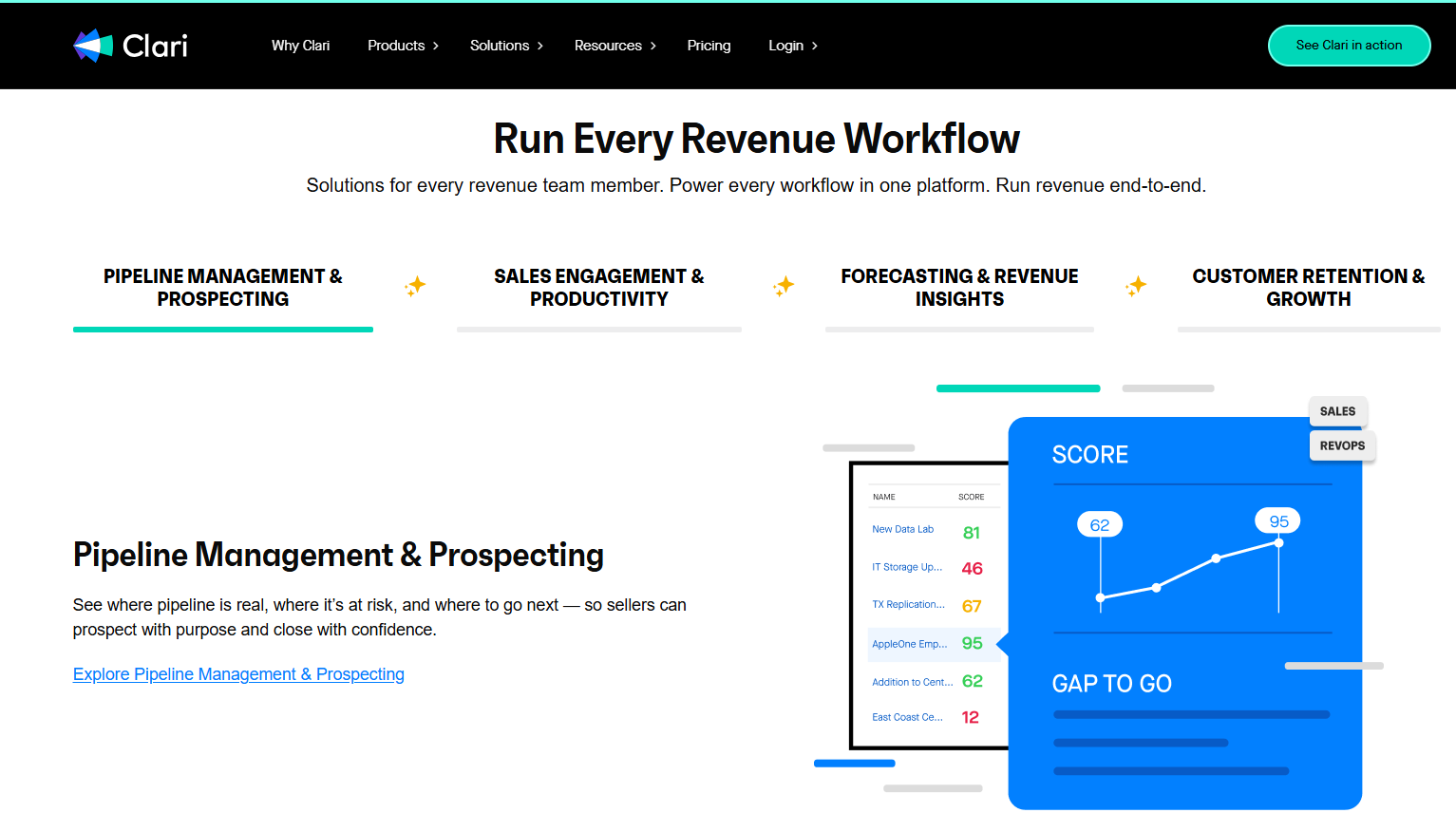
Clari pulls activity from your CRM, email, and calls into one view, then uses AI to flag at-risk deals, surface pipeline gaps, and predict what's likely to close. For demand planning, it's most useful on the downstream side: once demand is created, Clari helps you see whether it's converting and where the pipeline is leaking. It won't tell you where to create demand, but it will tell you if your current demand is healthy.
- Anaplan
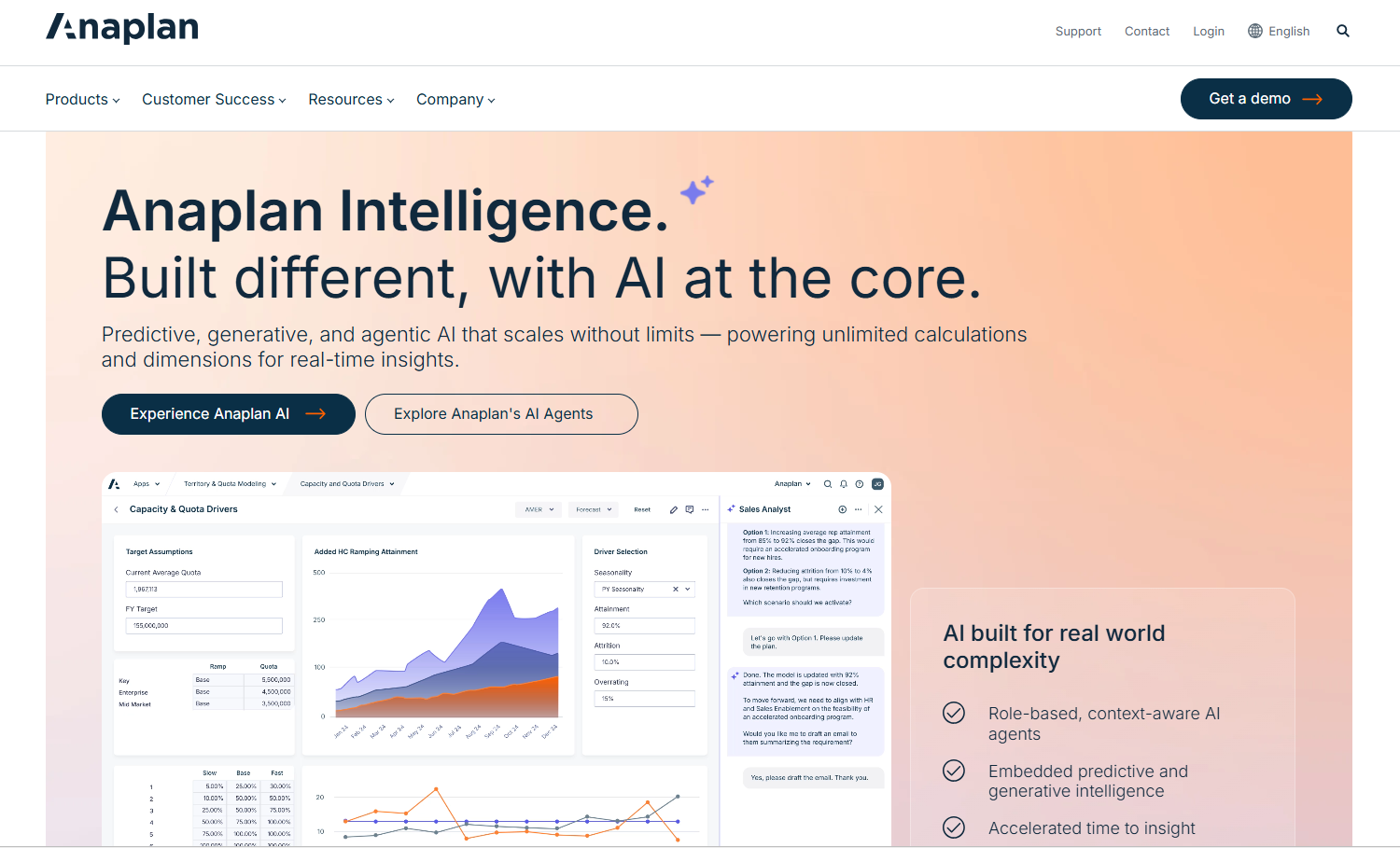
Anaplan is an enterprise planning platform that connects finance, sales, marketing, and operations into one planning environment. It's built for scenario modeling at scale, letting teams test budget allocations, adjust assumptions mid-cycle, and see how changes flow through to revenue. It's a heavier platform, better suited for larger organizations with dedicated RevOps or finance teams managing the models.
- Tableau / Microsoft Power BI
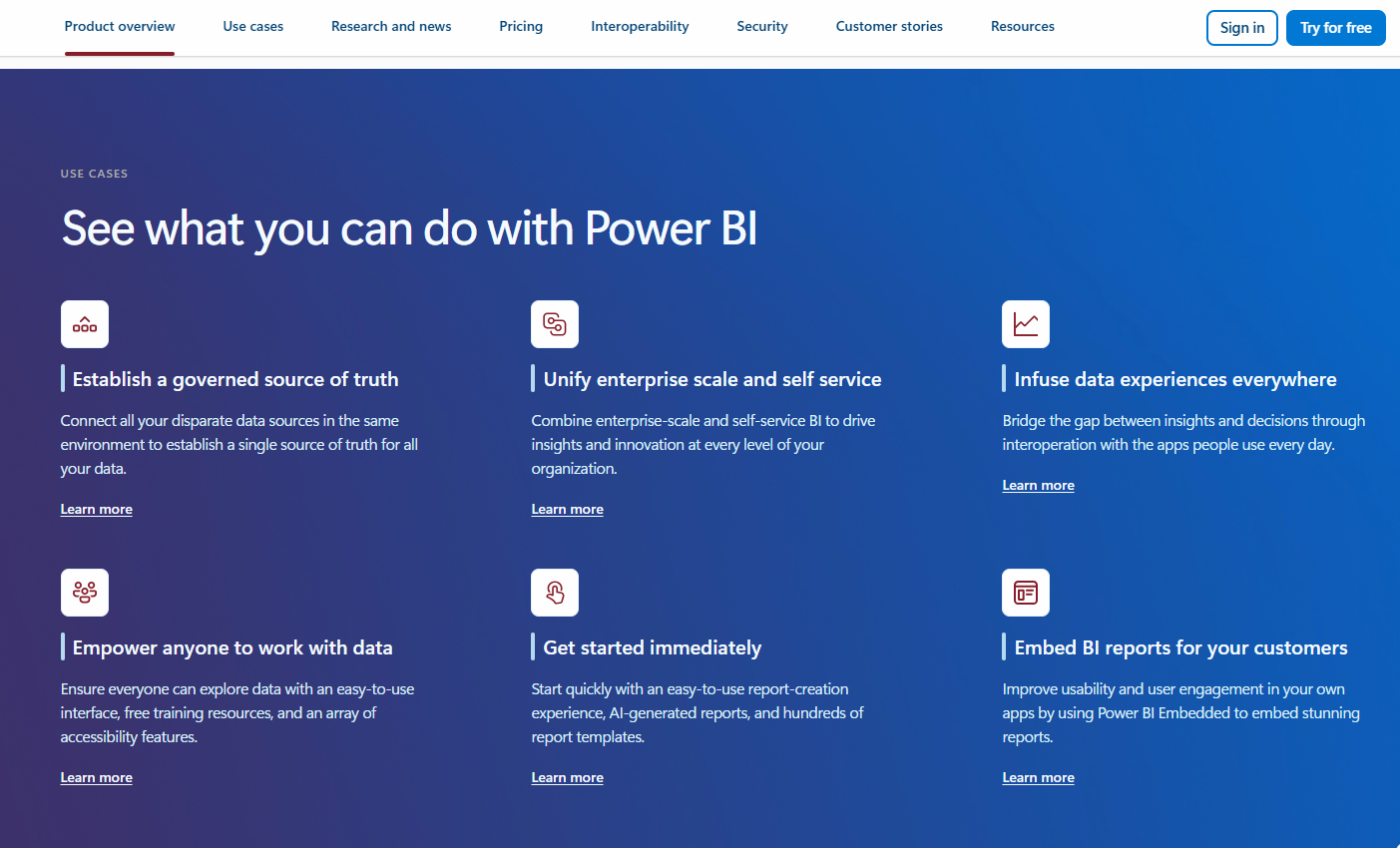
These are BI tools, not demand planning platforms, but they're commonly used to visualize pipeline data, track conversion rates, and monitor forecast performance. They're strong at turning complex datasets into dashboards leadership can take lead from. The limitation is they're backward-looking by design: great for reporting, not for deciding what to do next.
Strengths:
|
Limitations:
|
Category 3: CRM & Marketing Platform-Based Planning
It’s common for teams to use tools like Salesforce and HubSpot for CRM reports and marketing automation dashboards for planning
These tools provide baseline visibility:
- Lead volume
- Campaign performance
- Pipeline by source
- Conversion metrics
They are useful for understanding what has already happened. But they have limited predictive depth. They focus on channel metrics and lead activity, not account-level buying signals. And because they rely on recorded interactions, they are reactive by design.
Let’s look at how these two work:
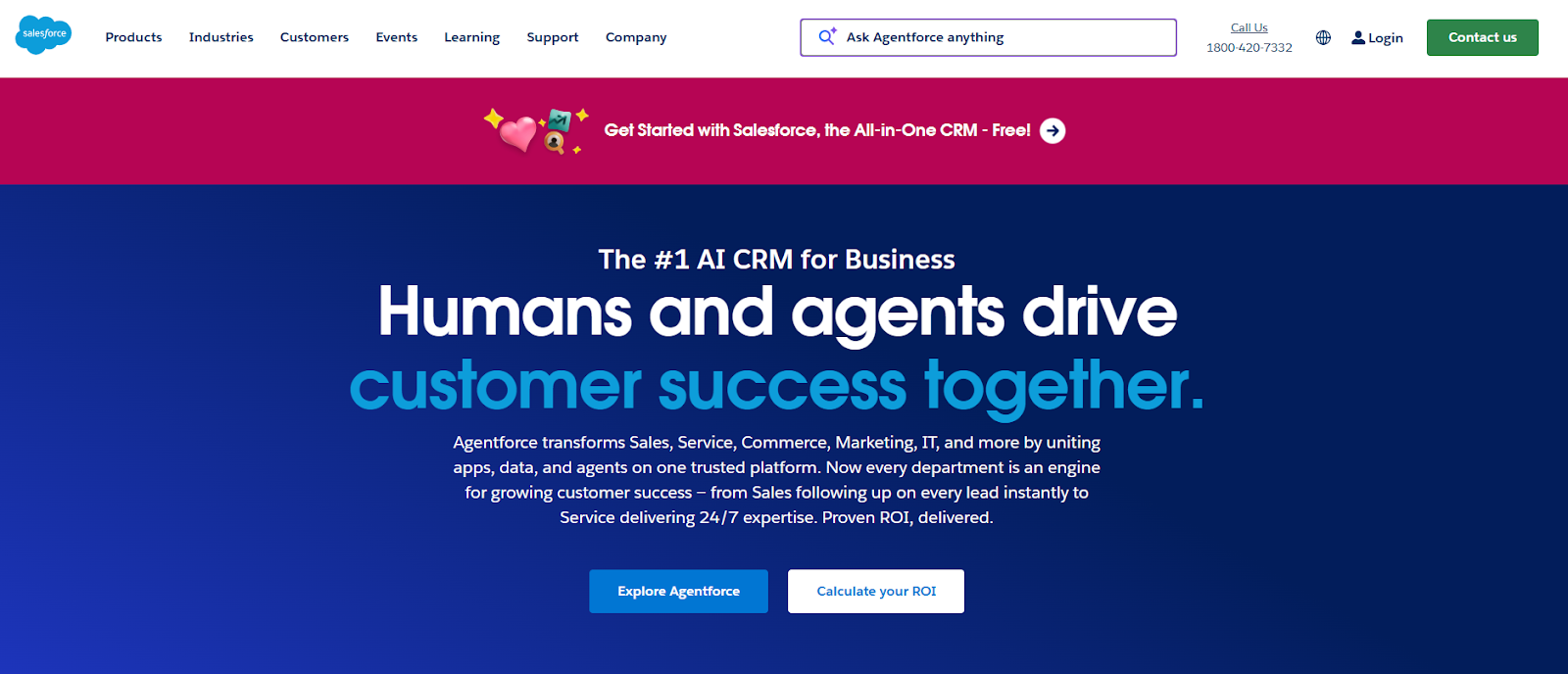
- Salesforce
Salesforce is where most B2B revenue data lives, making it a natural starting point for demand planning. You can track pipeline by source, monitor conversion rates, and see how segments move through the funnel.
- HubSpot
HubSpot combines CRM, marketing automation, and reporting in one platform, giving teams visibility into lead volume, campaign performance, and pipeline by source. It's accessible and easy to work with, but like Salesforce, it's built around activity that's already been recorded. It works well for execution and reporting, with the understanding that deeper account-level planning will need additional tools on top.
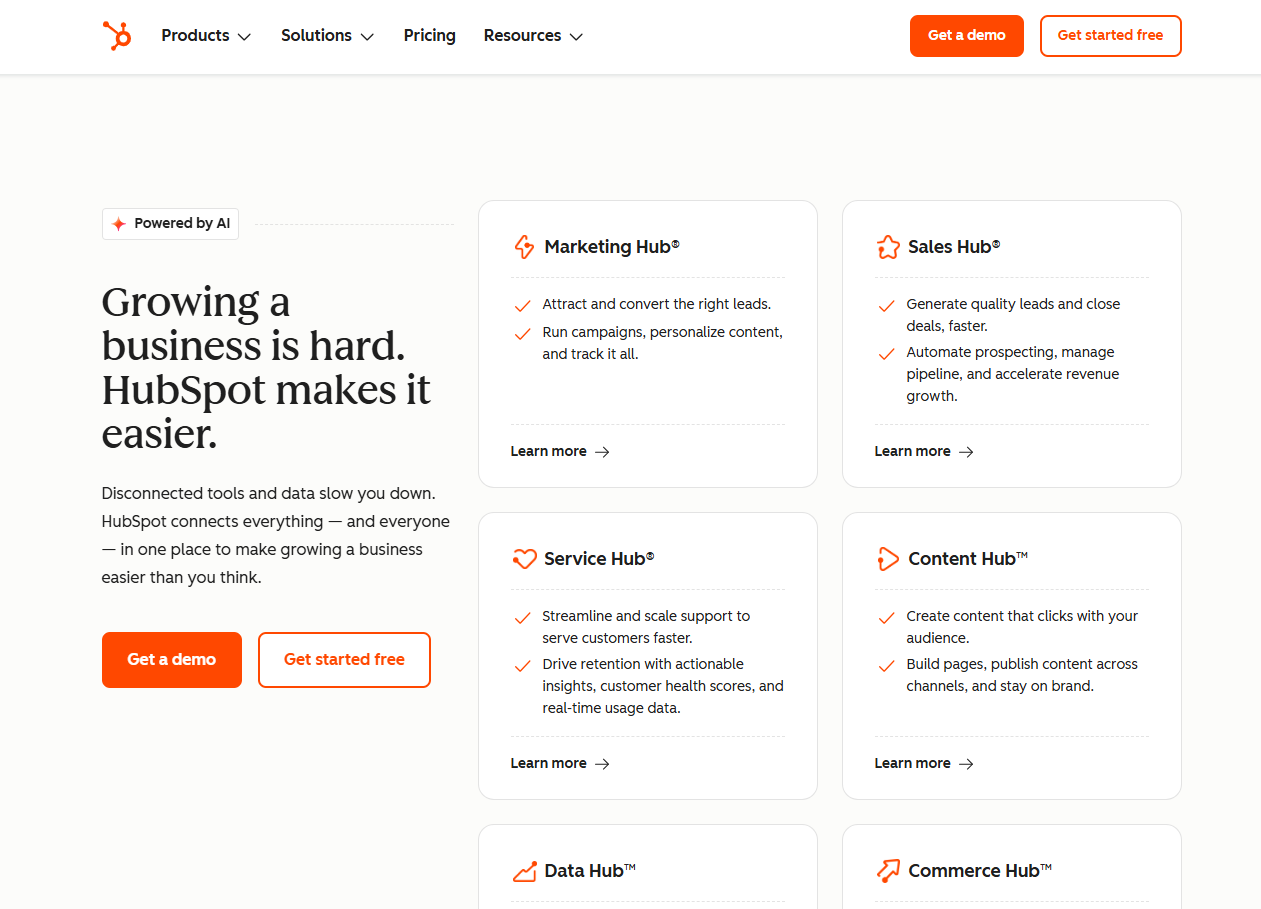
Both these tools reflect what's already happened, so most teams use them as a reporting layer and pair them with signal-based tools for actual planning.
Strengths:
|
Limitations:
|
Comparison: Types of tools for demand planning
| Category | What It Does Well | Where It Falls Short | Best Use Case |
|---|---|---|---|
| Demand Intelligence & Signal-Based Tools (e.g., Factors.ai) | Surfaces early buying intent, supports account-level planning, enables in-flight adjustment | Requires integration and operational discipline | Planning where to create demand and when to shift focus |
| Forecasting & Revenue Planning Tools (e.g., Clari, Anaplan) | Projects revenue outcomes, supports scenario modelling | Reactive, relies on existing pipeline | Financial forecasting and performance tracking |
| CRM & Marketing Platform Reports (e.g., Salesforce, HubSpot) | Tracks leads, campaigns, and pipeline sources | Lagging metrics, limited predictive insight | Operational visibility and reporting |
Why Traditional Demand Planning Tools Fall Short in B2B
Traditional planning approaches share four weaknesses:
- Spreadsheet-driven assumptions
Plans are built once per quarter and rarely adjusted dynamically.
- Channel-first thinking
Budget is allocated by channel, not by account or segment momentum.
- Lagging metrics
Clicks, MQLs, and form fills are treated as indicators of demand quality.
- No closed feedback loop
Sales outcomes don’t continuously reshape the demand plan.
How Demand Planning Software Improves Forecasting Accuracy
Improving demand forecasting accuracy isn’t just about better math; it’s about better inputs.
Modern AI-powered demand planning software platforms use artificial intelligence and machine learning to analyze data from multiple sources, including CRM systems, ad platforms, and external factors that influence customer demand. These AI capabilities help demand planners make data-driven decisions and stay ahead of market trends.
When demand planners adjust budgets and account focus based on these early intent signals, forecasts become more reliable because the underlying demand becomes more accurate.
That's how better planning leads to better forecasting.
💡How is lead generation different from demand generation? Explore in this guide
What Modern Demand Planning Tools Must Do
Here’s a fact: The teams I spoke with for this article inadvertently pointed out the same problem: every planning tool they use turns out to be just a fancy reporting system.
The right tools for demand planning facilitate collaboration across marketing, sales, and operations planning teams. They integrate with existing systems, handle large datasets, and provide valuable insights that support business goals. The best demand planning tool should feel user-friendly for new users, even if there's a steep learning curve for advanced functionality.
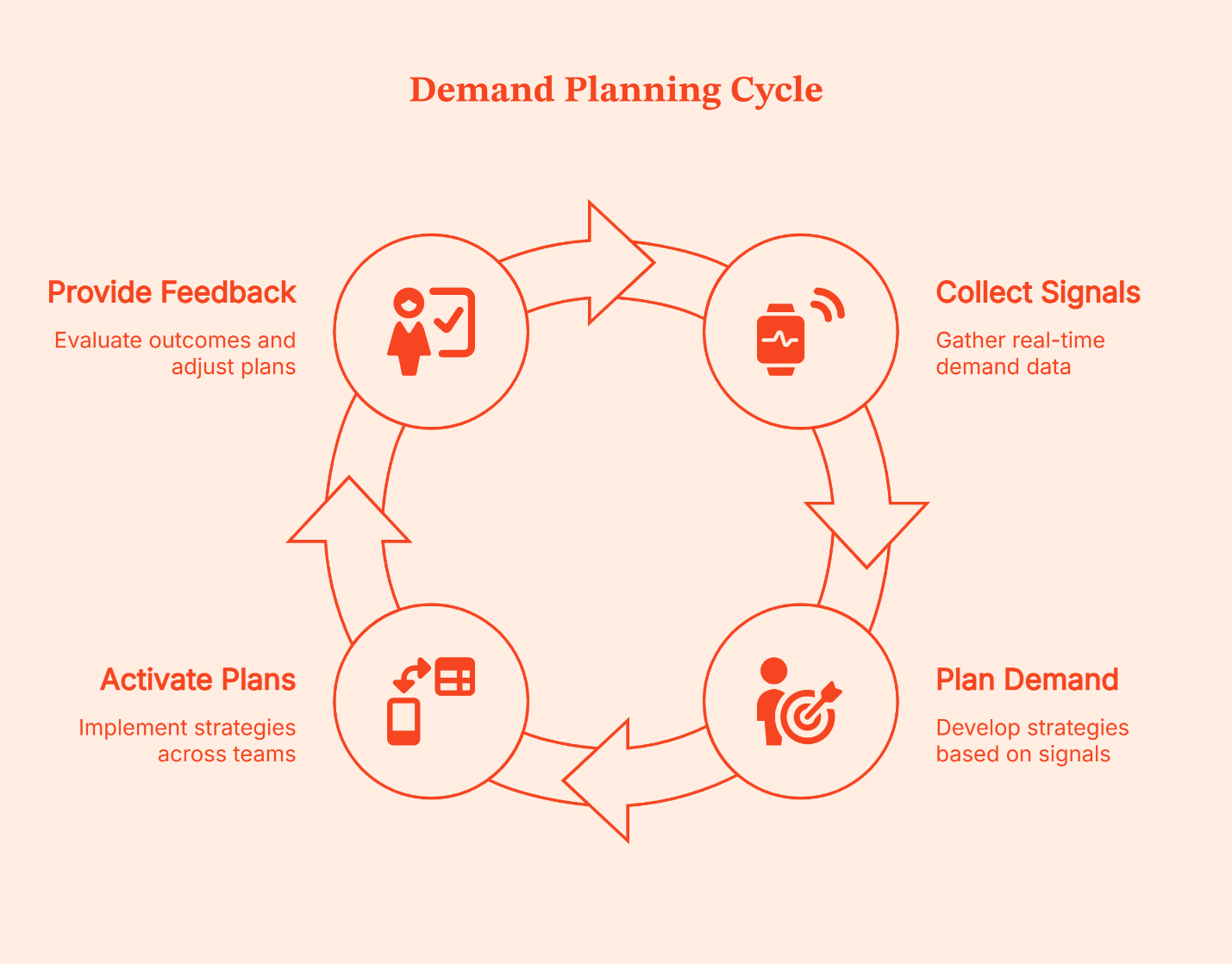
Since real demand planning is live, active, and dynamic, it needs to follow Signals → Planning → Activation → Feedback on repeat, to build a system that adapts, and leads to optimized ROI.
Without this loop, it’s impossible to improve your planning decisions. And if your tool can't support this cycle, it may help you measure demand, but it won't help you plan it.
Metrics That Actually Improve With Good Demand Planning
Good planning steadily improves the metrics that determine revenue quality and efficiency.
Here’s where you’ll see the difference:
- Pipeline coverage ratio
When demand is planned properly, pipeline coverage becomes more stable. You’re not wildly overbuilding pipeline one quarter and scrambling the next.
- Win-rate-adjusted pipeline
Instead of measuring raw pipeline volume, mature teams look at pipeline weighted by historical win rates. Effective planning focuses on segments and accounts that convert, rather than just those that respond. That makes projected revenue more dependable.
- Pipeline quality score
When planning is account-driven and signal-based, the quality of pipeline improves. Fewer low-intent leads, more in-market accounts, and less noise for sales to filter through.
- CAC payback sensitivity
Better planning reduces CAC because the budget is applied where conversion likelihood is higher, and sales teams can actually follow through.
- Sales follow-up efficiency
Aligning demand with sales capacity improves response times. That’s because SDRs work on prioritized accounts while AEs manage focused deal loads rather than juggling excess pipeline.
When these metrics improve together, it’s usually a sign of effective demand planning.
Common demand planning mistakes
Remember: you’re going to make mistakes while planning. That’s part of the process. But some mistakes are predictable – and avoidable. I have listed a few of the common ones here:
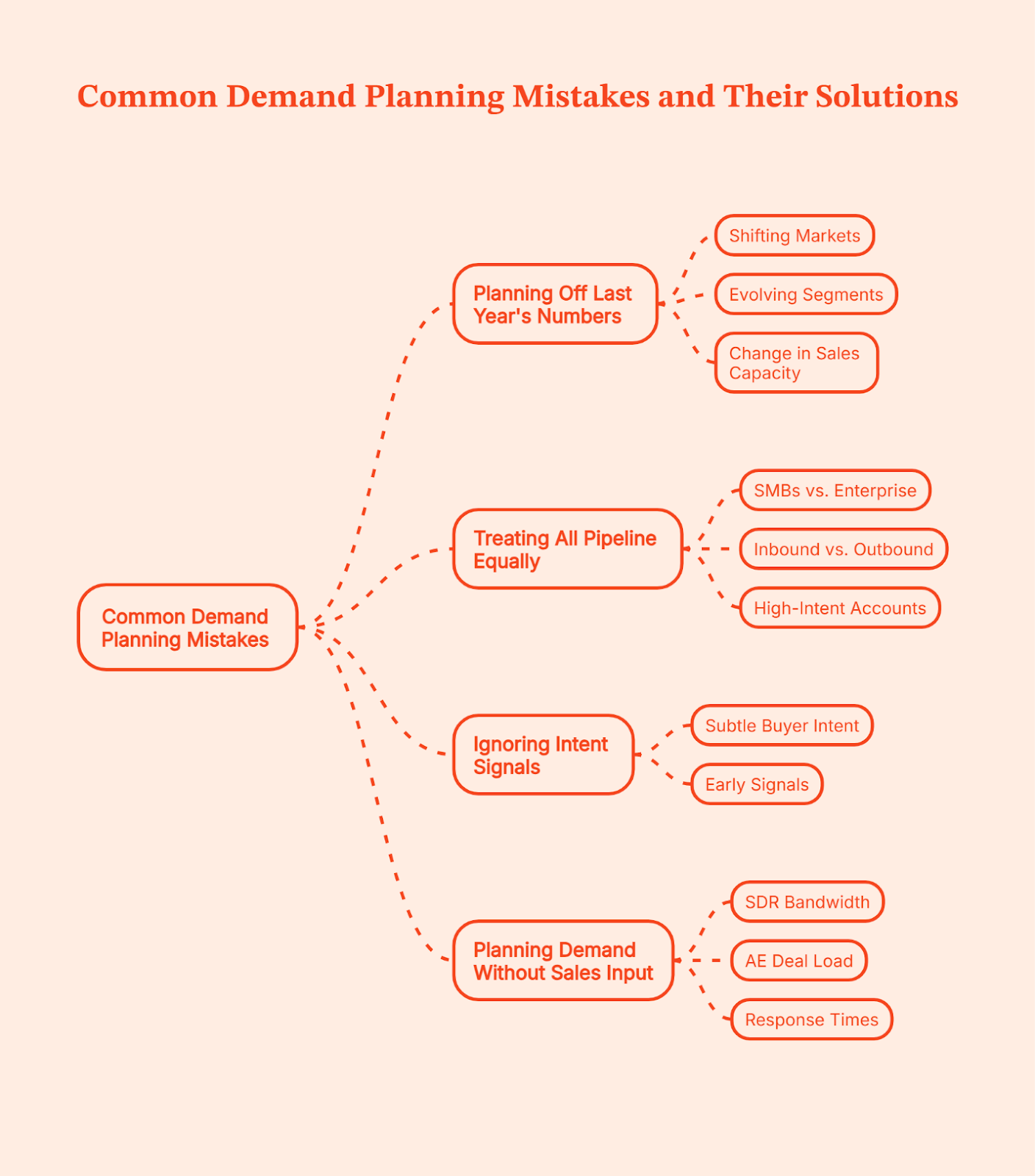
- Planning off last year’s numbers
Planning this year’s pipeline based on last year isn’t a strategy. The dynamics are forever changing, shifting markets, evolving segments, and not to mention changes in sales capacity. Adding n% to an old spreadsheet doesn’t constitute planning.
- Treating All Pipeline Equally
Every pipeline doesn’t behave in the same way. That’s because SMBs don’t work like an enterprise. And inbounds can’t be treated with the same strategy as outbound. Also, high-intent accounts need to be prioritized over casual visitors. When everything is treated equally, forecasts look inflated, and execution gets messy.
- Ignoring Intent Signals
Ignoring early signals means you’re already too late. Buyer intent builds subtly even before the forms are filled.
- Planning Demand Without Sales Input
Marketing cannot plan demand in isolation. If SDR bandwidth, AE deal load, and response times aren’t taken into account, the demand plan will break under pressure.
How to evaluate tools for demand planning (checklist)
Before you invest in a tool, ask these questions to check if it fulfills your team’s planning needs:
- Does it plan at the account level?
Or is it still organised around channels and lead volume?
- Can it adapt mid-quarter?
Or does it plan using static reports and spreadsheets?
- Does it factor in sales capacity?
Can you see how much demand sales can realistically handle?
- Is planning tied to revenue outcomes?
Or are decisions based only on top-of-funnel metrics?
- Can both marketing and sales trust it?
Do both teams see the same signals, priorities, and context?
What should you do next?
Demand planning is less about hitting a number and more about taking the right decisions quite early in the cycle. When those decisions ignore constraints like sales capacity, buying intent, timing, and trade-offs, revenue suffers, even if the plan looks solid on paper.
So here’s a simple next step.
Look at your current demand plan and ask yourself a few honest questions:
- Are you deciding where demand should come from, or just spreading budget across channels?
- Are you planning around real sales capacity, or assuming it will stretch?
- Are you using early signals to guide focus, or waiting for pipeline reports to tell you what already happened?
The answers might feel uncomfortable – that’s fine. But they’ll bring clarity on whether you’re planning deliberately or operating on momentum. And when you decide intentionally, you’ll build a plan that holds for every quarter.
FAQs about tools for Demand planning in B2B
1. What is the difference between demand forecasting and demand planning?
Demand forecasting predicts future sales based on historical data. Demand planning decides how much pipeline to create, where to focus, and how to align resources to hit revenue targets.
2. Can I use Excel for demand planning, or do I need dedicated software?
Excel works for early-stage teams, but it becomes limiting as you scale because it relies on manual updates and lagging data. Dedicated tools like Factors.ai allow for real-time adjustments and signal-based planning.
3. How does AI improve demand planning accuracy?
AI identifies patterns in buyer behavior and engagement signals that humans might miss, helping teams adjust demand plans earlier. It surfaces intent trends before they fully show up in pipeline reports.
4. How do you align Marketing and Sales in the demand planning process?
Alignment happens when both teams plan around the same account-level signals and revenue data. Tools like Factors.ai help create shared visibility into where demand is building.
5. What are the key features to look for in B2B demand planning software?
Look for account-level visibility, real-time signal tracking, CRM integration, and the ability to connect planning decisions directly to revenue outcomes. If it only reports activity, it’s not truly helping you plan demand.

See how Factors can 2x your ROI
Boost your LinkedIn ROI in no time using data-driven insights


.avif)

See Factors in action.
Schedule a personalized demo or sign up to get started for free
LinkedIn Marketing Partner
GDPR & SOC2 Type II


.svg)



.avif)

