
AI automation tools: The B2B marketer's guide
A practical guide to AI automation tools for B2B marketers. Sales workflows, demand planning, workflow AI, and how Factors.ai fits in. No jargon, just clarity.
.avif)
Content Marketer



.svg)


TL;DR
- AI automation tools in B2B marketing move beyond fixed rule-based workflows and instead use real-time signals to decide the next best action.
- The key shift is from reactive execution to predictive decision-making, where systems anticipate buyer intent instead of simply responding to actions.
- This is especially important in B2B because of long sales cycles, multiple stakeholders, and fragmented data across channels.
- AI automation helps solve common problems such as missed sales signals, outdated lead scoring, inefficient ad spend, and unreliable attribution.
- The highest impact comes from connecting signals like intent and engagement directly to actions such as sales alerts, routing, and campaign optimization.
- In simple terms, AI automation does not replace strategy, but it strengthens execution by making marketing and sales systems faster, more consistent, and more accurate.
Every B2B marketer I know has sat through at least one all-hands where someone said the words "we're leveraging AI" and then gestured vaguely at a dashboard… the one that had no actual use case, workflow change… just vibes and a stock photo of a robot.
And then those same teams wonder why their demand gen is still running on a mix of gut feel, overloaded spreadsheets, and one Ops person who hasn't taken PTO in eight months.
AI automation tools are genuinely useful. But only when you know what you're actually automating, why it matters, and which tools aren't just wrapping old logic in a ChatGPT API call and calling it ‘intelligent’, ‘revolutionary’, ‘transformative’, and other such words.
This is a ground-up guide for B2B marketers and demand gen teams who want to understand AI automation tools without the vendor theater. What they are, where they actually help, how they plug into your sales workflow and demand planning process, and what separates real workflow AI from a fancy if/then rule with a fresh coat of paint.
What does ‘AI automation’ mean? (let’s get past the buzzword)
Traditional marketing automation is basically a fancy IF/THEN machine. If someone fills out a form, send email 1. If they click, send email 2. If they don't, wait three days and try again. You're essentially writing a script and hoping buyers follow it.
AI automation tools do something different. Instead of following a fixed script, they interpret signals, learn from patterns, and decide what action makes sense next. They're less like a flowchart and more like a very focused analyst who never sleeps and doesn't need a meeting to share their findings.
The practical difference? Traditional automation reacts. AI automation anticipates.
Some examples: A standard nurture sequence sends email 3 after seven days. An AI-powered system sends an email 3 after seven days only if the account hasn't already visited your pricing page three times this week, in which case it flags the account for immediate sales follow-up instead. This would be a completely different operating model for your demand gen engine.
Why do B2B marketers need this more than anyone else?
B2C marketers work with individual buyers. The journey is usually short, and the feedback loop is fast. B2B marketers are playing a completely different game.
You've got long sales cycles. Multiple decision-makers per account. Channels that don't talk to each other. Campaigns are running across LinkedIn, Google, email, and events simultaneously. And somewhere in all of that, you're supposed to figure out which touchpoints actually influenced pipeline.
Without automation that can think, that's just a lot of manual stitching. I've done it. Pulling CSV exports from three different tools at 6 PM on a Friday to explain why MQLs went down is not a great use of anyone's brain.
AI automation tools handle the stitching automatically. They pull in signals from across your stack, surface the ones that matter, and let you focus on the decisions that actually require a human.
Where the pain usually lives
- Sales workflows that depend on someone manually updating stages and triggering follow-ups (they forget, it's fine, it's also a problem)
- Demand planning that still runs on last quarter's numbers and a spreadsheet someone built in 2021
- Ad spend with no real-time adjustment, so you overpay for audiences that haven't converted in months
- Lead scoring models that were set up once and never touched since
- Attribution that either says "it was organic" or "it was last touch" and offers no middle ground
These aren't niche problems. They're the daily reality for most demand gen teams. And they're exactly where AI automation tools earn their keep.
The use cases that actually move the needle money towards you
- Sales workflow automation
A good AI-powered sales workflow doesn't just route leads. It routes the right leads, at the right time, with context attached.
Think about what that means in practice: an account visits your pricing page twice in three days, downloads a competitor comparison guide, and has a contact who opened your last four emails. That's a warm account. Your workflow AI should recognize that pattern and trigger an immediate sales alert, rather than waiting for a weekly MQL review.
The best workflow automation apps build this kind of logic without requiring a developer to hardcode every rule. You define what "ready" looks like, and the system watches for it.
- Automated lead routing based on firmographic fit and behavioral signals
- Stage updates that fire when actual buyer actions happen, not just form fills
- Sales alerts triggered by real-time intent data across web, ads, and email
- Follow-up sequences that adjust based on how an account responds
- Tools for demand planning
Demand planning in B2B has historically been a guessing game dressed up as a science. You look at the historical pipeline, apply a growth rate, and hope the market cooperates. Spoiler: it usually doesn't.
AI-powered tools for demand planning change this by pulling in real signals. Which accounts are actively in-market right now? Which channels are over-indexed and burning budget? Which content is driving pipeline versus just traffic?
When your demand planning process is connected to live intent and engagement data, your forecasts stop being historical fiction and start being actual guidance. You can allocate budget to the segments most likely to convert in the next 60 days rather than to those that converted six months ago.
- Cross-channel campaign execution
Running campaigns across LinkedIn and Google simultaneously is one of those things that sounds manageable until you're doing it. Different audience logic, different bid structures, different creative formats, and absolutely no shared intelligence between them by default.
Workflow AI bridges this. It lets you build an account-level view across channels so you're not accidentally smothering the same prospect with ads on every platform or, worse, completely ignoring an account that's showing strong intent because no single channel can see the full picture.
- Automated lead scoring
Lead scoring built on job title and company size alone is basically demographic profiling. It tells you who a person is, not whether they're actually interested in buying from you right now.
AI-driven scoring layers in behavior: pages visited, content consumed, ad interactions, email engagement, CRM activity. The model gets smarter over time as it learns which signals actually precede closed-won deals in your pipeline. That's a very different machine from a spreadsheet with five criteria and some manual weights.
How Factors.ai fits into this picture
Most AI automation tools are built for one job. Factors.ai brings everything together with a unified view of account behavior across every touchpoint, so your workflows, campaigns, and decisions stay aligned.
Here's what that means in practice:
- LinkedIn AdPilot and Google AdPilot
Factors.ai's LinkedIn AdPilot and Google AdPilot automates campaign targeting, budget pacing, and audience updates based on real-time account signals. Instead of manually refreshing your audience lists or guessing how to reallocate budget mid-flight, AdPilot adjusts based on what's actually happening in your pipeline.
You define your ICP. The system monitors which accounts are warming up, suppresses those already in conversation with sales, and ensures your ad spend tracks actual buying intent rather than just impressions.
- Controlling ad exposure with LinkedIn AdPilot
I know I’ve already mentioned ‘LinkedIn AdPilot’ above, but ad overexposure is SO real that it deserves a separate point. Showing the same ad to the same decision-maker 40 times in a week is not marketing, it's harassment with a budget line item. Factors.ai's frequency pacing controls ensure your ads show up with enough regularity to stay top-of-mind without crossing the “Why is this following me everywhere" territory.
Together, these capabilities turn Factors.ai into more than an analytics tool. It becomes the intelligence layer that your entire GTM motion runs on.
- Cross-channel attribution
Attribution is the part of B2B marketing that breaks everyone's confidence in their data. Factors.ai connects every touchpoint across paid, organic, and direct interactions to give you a clear view of what influenced pipeline and revenue… actual multi-touch visibility.
This makes demand planning dramatically more honest. You stop doubling down on channels that look good in isolation and start understanding the full journey.
- Account identification
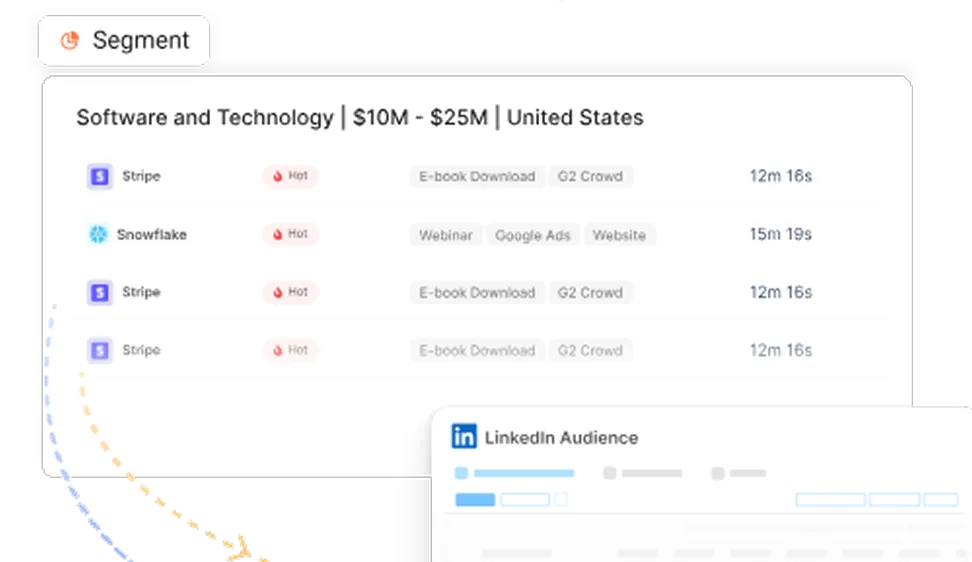
Factors.ai identifies which companies are visiting your website, what they're looking at, and how that maps to your CRM. This is the signal layer that makes your sales workflow actually intelligent. Instead of following up with everyone who filled out a form, reps can prioritize accounts that have researched your product across multiple sessions.
How to pick the right workflow automation app for your team?
There are many tools in this space. Some are genuinely helpful. Some are glorified Zapier workflows with a chatbot on top.
So, here’s how you can think about the decision.
One thing worth saying clearly: the best workflow automation app is the one your team will actually use and trust. A beautifully complex system nobody understands is just expensive… chaos.
Start with your biggest bottleneck, automate that well, and expand from there… work on it layer by layer.
A simple framework for getting started
If you're staring at a list of AI automation tools and feeling that specific kind of overwhelm that only comes from too many good options and not enough clarity, try this:
1. Audit your current bottlenecks. Where does work pile up? Where do leads fall through? Where does data stop being reliable? These are your automation candidates.
2. Map signals to actions. For each bottleneck, identify what signal should trigger what action. This is your automation logic. Get it out of your head and onto paper before touching any tool.
3. Start with one workflow. Pick the highest-impact, most broken process and automate that first. Get it running, measure it, trust it. Then layer in the next one.
4. Connect your data. AI automation is only as smart as the data it has access to. If your CRM, ad platforms, and website analytics aren't talking to each other, fix that before you add more complexity.
5. Review and adjust. AI systems improve with feedback. Check in regularly on whether the automations are doing what you intended. Scoring models drift. Audiences change. Staying close to the logic keeps it honest.
In a nutshell…
AI automation tools aren't going to fix a broken strategy. But they will take a good strategy and give it the kind of execution speed and consistency that a team of humans physically cannot maintain manually.
For B2B marketers specifically, the opportunity is real. Smarter sales workflows. Demand planning that reflects what's actually happening in the market. Ad spend tied to intent rather than intuition. Attribution that tells the truth.
The teams winning right now aren't the ones with the most tools. They're the ones who've figured out which signals matter, automated the response to those signals, and freed their brains up for the work that actually requires judgment.
That's the whole game, and AI helps you play it at scale.
FAQs for AI automation tools for B2B marketers
Q1. What's the difference between AI automation tools and regular marketing automation?
Traditional marketing automation follows fixed rules you define upfront. AI automation tools interpret signals, learn from patterns, and recommend or trigger actions based on what's actually happening across your data, not just a predetermined script. The practical result is automation that adapts to buyer behavior instead of assuming it.
Q2. Which AI automation tools are best for sales workflow?
The best tools for sales workflow connect intent signals to CRM actions in real time. Look for platforms that can identify account-level buying behavior, route leads based on fit and readiness, and trigger follow-ups based on actual engagement, not just form submissions. Factors.ai, HubSpot, and Salesloft are common choices, though the right fit depends on your stack and team size.
Q3. How do AI automation tools help with demand planning?
AI-powered tools for demand planning replace historical guesswork with live signal data. They surface which accounts are actively in-market, which channels are driving pipeline velocity, and where budget reallocation would have the most impact. This makes forecasting significantly more accurate than working backward from last quarter's numbers.
Q4. What should I look for in a workflow automation app?
The most important things to evaluate are how well a workflow automation app integrates with your existing stack, whether it can handle account-level logic (not just contact-level), and how much technical lift is required to maintain it. If your ops team has to babysit it constantly, it's not saving you time.
Q5. How does workflow AI differ from point solutions?
Point solutions automate a single function in isolation. Workflow AI connects multiple functions so data flows intelligently between them. For example, a point solution might automate email sequences. Workflow AI would connect email engagement to CRM stage updates, ad audience suppression, and sales alerts, all in response to the same underlying signal.
Q6. Is AI automation only for large enterprise teams?
Not at all. Smaller demand gen teams often benefit the most because AI automation removes the manual load that would otherwise require two or three additional hires. The key is starting with one high-impact use case and building from there rather than trying to automate everything at once.

See how Factors can 2x your ROI
Boost your LinkedIn ROI in no time using data-driven insights


.avif)

See Factors in action.
Schedule a personalized demo or sign up to get started for free
LinkedIn Marketing Partner
GDPR & SOC2 Type II






.svg)



.avif)

