
B2B SaaS marketing channels: what works, what scales, what wastes budget
Learn the best B2B SaaS marketing channels for pipeline growth, demand gen, and revenue. Smart mix of SEO, paid, product-led, ABM, and more.
.avif)
Content Marketer



.svg)


TL;DR
- The right mix of best B 2 B SaaS marketing channels depends on your ACV, growth stage, sales motion, and how much existing demand your category already has.
- The 10 highest-impact channels span SEO, paid search, LinkedIn, PLG loops, lifecycle email, review sites, partnerships, events, outbound, and founder-led thought leadership. Each serves a different job in your pipeline.
- Channel-market fit matters more than channel popularity. A channel only works when it matches your buyer’s behavior, urgency, price sensitivity, and how your sales team follows up.
- Measure on pipeline and revenue (not clicks or CPL), last-click attribution consistently undervalues the channels quietly influencing deals behind the scenes.
- Al has changed how buyers discover software and how marketers operate channels, but the fundamentals of trust, relevance, and compounding value haven’t shifted.
I’ve noticed something strange about B2B SaaS marketing teams. Ask ten people which channel drives growth, and you’ll get eleven answers delivered with suspicious levels of certainty. The paid team says ads. The content team says SEO. Sales wants outbound. Brand wants community. Product wants referrals. Everyone has data. Everyone has conviction. Everyone is defending their own kingdom.
That’s usually how channel strategy gets made: less like science, more like a family argument with dashboards.
The problem with B2B SaaS marketing channels is that people talk about them as if they work universally. They don’t. LinkedIn can print pipeline for one company and burn cash for another. SEO can become a compounding asset or an expensive hobby. Outbound can open doors or annoy half the market. Context decides everything: your category, deal size, buyer urgency, sales cycle, budget, and how patient your leadership team is feeling this quarter.
So this piece is not another lazy “top 10 marketing channels” list written by someone who has never carried a pipeline target. It’s a practical breakdown of which channels tend to work, when they work, why they fail, and how to build a mix that matches your actual business instead of someone else’s LinkedIn post. Whether you’re early-stage and scrappy or scaling with real spend, this is the grown-up version of the conversation.
What are the best B2B SaaS marketing channels right now?
I wish I could open with a ranked list and call it a day. But the honest answer is that the best marketing channels for SaaS depend on a handful of variables that differ wildly from one company to the next. What works for a self-serve product with a \$ 30 / month price point looks nothing like what works for a six-figure enterprise deal with an eight-month sales cycle.
The variables that shape your ideal channel mix include your average contract value (ACV), sales cycle length, how mature your category is, whether buyers are already searching for your type of product, the complexity of what you sell, and quite frankly, how many people you have to run campaigns. A two-person marketing team at a seed-stage startup can’t execute ABM the same way a team of twenty can.
Here’s a quick way to think about how these variables push you toward different channels:
The smartest SaaS teams stop asking “what’s the best channel?” and start asking “what’s the best channel for this stage, this buyer, and this motion?” That shift in framing changes everything about how you plan, staff, and measure your marketing.
Why do most SaaS companies pick the wrong channels?
Most marketing teams don’t choose channels based on a clear diagnosis of their growth constraints. They choose channels because a competitor is doing well with them, because a podcast guest made a compelling case, or because the CEO saw a LinkedIn post about how “content is king.” The decision is reactive, not strategic. And that’s where the problems start.
I’ve seen this pattern play out in VERY predictable ways… a company with weak brand awareness decides the fix is buying more paid ads, when the real problem is that nobody trusts them yet. A team with no demand-capture motion launches a podcast to build awareness, when they should be capturing the intent that already exists in search. Another team has low win rates on demos and blames lead volume, when the real issue is positioning or sales enablement. And nearly everyone has killed a channel too early because their attribution couldn’t see its influence on pipeline.
These are diagnostic problems… the channel just gets blamed because it’s the most visible thing to cut.
This is why I think about something called ‘channel-market fit’. It’s a simple concept, but it reframes the conversation in a useful way. A channel only works when it matches five things simultaneously: how your buyers actually behave during their research process, how urgent their problem feels, what your price point signals about the buying decision, whether your sales model is self-serve or sales-assisted, and how fast your sales team can follow up on signals.
When even one of those is misaligned, the channel underperforms. LinkedIn ads aimed at SMB buyers with a \$ 500 \mathrm{ACV} will rarely generate positive ROI, not because LinkedIn is broken, but because the economics don’t support the CPL. Outbound to enterprise accounts works brilliantly when triggered by intent signals and followed up within hours, but falls apart when the SDR team takes three days to respond. Channel-market fit explains why the same channel can be transformative at one company and a waste of money at another.
You need to remember this before evaluating any specific channel, otherwise you end up optimizing tactics inside a strategy that was never going to work.
The 10 highest-impact B2B SaaS marketing channels
This is the section most readers came for, so let’s make it count. I’ve organised these roughly by how often they appear in the growth marketing channels of the most successful SaaS companies l’ve studied, worked with, or spoken to. Each one serves a different job. None of them work in isolation.
1. SEO and content marketing
If I had to pick one channel for compounding pipeline over time, it would be this one. SEO-driven content catches buyers who are actively searching for solutions, comparisons, or answers to problems your product solves. The CAC tends to decrease over time as your content library matures, and the intent behind organic search traffic is often much higher than what you get from interruptive channels.
The types of content that consistently drive pipeline in B2B SaaS include comparison pages (your product vs. a competitor), solution pages built around specific use cases, templates and tools that attract mid-funnel researchers, pain-point content that speaks to problems before introducing solutions, and educational pieces that position your brand as the authority in your category. The key is commercial intent. Blog posts that answer curiosity questions get traffic. Blog posts that answer buying questions get pipeline.
Where most teams go wrong with SEO is treating it as a volume game. Publishing fifty articles a quarter doesn’t help if none of them target queries with buying intent. I’d rather have ten pages ranking for terms that map directly to a purchasing decision than a hundred pages ranking for informational keywords that never convert. Quality of intent beats quantity of traffic, every single time.
2. Google search ads
Paid search is the fastest way to capture existing demand. When someone types “best project management tool for agencies” or “CRM for SaaS startups,” they’re already in buying mode. Google Ads lets you show up at the exact moment that intent peaks, which is incredibly powerful for pipeline generation channels.
The strongest use cases include branded search defence (making sure competitors don’t steal your own branded traffic), high-intent keywords tied to specific problems, competitor terms (showing up when someone searches for an alternative), and bottom-funnel queries like “pricing,” “demo,” or “vs.” Those are the queries closest to revenue, and they’re worth paying a premium for.
The warning I always give is about category CPCs. In competitive SaaS verticals, the cost per click can climb to \$ 15, \$ 30, or even \$ 50 for high-intent terms. If your landing page isn’t converting well, or your sales team isn’t following up fast, you’ll burn through budget without enough pipeline to show for it. Paid search rewards speed and precision. Sloppy execution gets expensive quickly.
3. Linkedln paid ads
LinkedIn is the most precise targeting platform for B2B audiences, full stop. You can target by job title, company size, industry, seniority, and even specific account lists. That makes it the go-to platform for enterprise SaaS teams running account-based strategies, pipeline acceleration campaigns, and decision-maker retargeting.
What makes LinkedIn tricky is how it looks in a spreadsheet. The cost per lead is almost always higher than other paid channels, which leads many teams to pull budget away from it prematurely. But when you measure at the pipeline and revenue level, LinkedIn often outperforms channels that looked cheaper on a CPL basis. The leads tend to be more senior, more relevant, and more likely to turn into real opportunities. With proper account-level measurement, LinkedIn often looks expensive on CPL and excellent on revenue.
The mistake most teams make is treating LinkedIn like Meta. Running broad awareness ads with generic messaging to a wide audience doesn’t work the same way here. LinkedIn works best when the targeting is tight, the messaging is specific to the audience segment, and the creative feels like something a human would actually stop scrolling to read. Thought leadership ads and conversation-style formats tend to outperform polished corporate creative, which says a lot about what B2B buyers actually want.
4. Product-led growth channels
For products with a self-serve motion, PLG channels can be the most efficient SaaS acquisition channels available. Free trials, freemium tiers, in-product invites, referral loops, and usage-based expansion all create acquisition and growth from inside the product itself. When the product is genuinely good and the onboarding experience is smooth, the product does a significant portion of the marketing work.
The best PLG motions create viral loops where existing users bring in new ones. Think of how tools like Notion, Slack, or Figma spread through organizations. One person starts using it, invites their team, and suddenly you’ve got a department on the platform. That kind of organic, team-level adoption is incredibly hard to replicate with traditional marketing channels.
PLG isn’t free, though. It requires real investment in product experience, onboarding flows, activation nudges, and conversion paths from free to paid. And it works best when the product delivers value quickly enough that a new user can see the benefit within their first session. If your product requires heavy configuration or onboarding support, a pure PLG motion might not be the right fit, at least not without a sales-assist layer on top.
5. Email and lifecycle automation
Email remains one of the most reliable SaaS lead generation channels, and it’s not even close. The beauty of lifecycle email is that it meets buyers where they already are: their inbox. And unlike paid channels, you’re not paying per impression or per click. You’re working with an audience that already opted in to hear from you.
The highest-impact use cases include demo follow-up sequences (nurturing people who booked but didn’t show, or showed but didn’t convert), trial activation campaigns (guiding new users toward their “aha” moment), long-cycle nurture for buyers who aren’t ready yet, reactivation for dormant leads, and expansion campaigns for existing customers. Each of these addresses a different stage of the buyer journey, and each compounds in value as your list grows.
Where teams fall short is in treating email as a broadcast channel rather than a behavioral one. The best lifecycle programmes trigger based on what people actually do: visiting a pricing page, completing a product milestone, going quiet after initial engagement. When your emails respond to behavior rather than a calendar schedule, they feel less like marketing and more like a helpful nudge at the right moment.
6. Review sites and communities
G2, Capterra, Reddit, niche Slack communities, and industry forums have become serious b2b demand generation channels over the past few years. The reason is simple: buyers trust peers more than they trust landing pages. When someone is evaluating software, they want to hear from people who’ve actually used it, not from the company’s marketing team.
Review sites in particular play a dual role. They capture high-intent traffic (people comparing tools are deep in their buying process), and they build credibility that influences decisions happening elsewhere. A strong G2 profile with recent, positive reviews can tip the scales in a competitive evaluation, even if the buyer never clicks through from G2 directly. That makes it one of those channels that’s chronically under-measured by traditional attribution.
Communities are harder to scale but incredibly valuable for early-stage companies building trust. Participating genuinely in Reddit threads, answering questions in niche Slack groups, and contributing to industry forums creates visibility with exactly the right people. The key word there is “genuinely.” Community members can smell a sales pitch from three paragraphs away, and they’re not shy about calling it out.
7. Partnerships and co-marketing
Partnerships are the channel most SaaS companies acknowledge as valuable and then consistently under-invest in. Agency partnerships, technology integrations, referral agreements, and marketplace listings all generate high-quality pipeline because they come with built-in trust. When a trusted agency recommends your tool, or your product appears inside an ecosystem the buyer already uses, the barrier to consideration drops dramatically.
The challenge is that partnerships are slow to build and hard to measure with standard marketing attribution. A referral partner might influence a deal months before it shows up in your CRM, and the introduction might happen over a coffee or a Slack message that never gets tracked. That’s why most marketing dashboards undervalue partnerships, and why most marketing teams don’t invest enough in them.
Co-marketing campaigns with complementary tools can also expand your reach into audiences you wouldn’t access on your own. Joint webinars, co-authored research, and shared content collaborations work well because both companies bring their audience to the table. The best partnerships feel like a genuine extension of your go-to-market motion, not a logo swap on a landing page.
8. Webinars and events
I’ll be honest: webinars get a bad reputation because so many of them are boring. But for considered purchases with long sales cycles, live and virtual events remain one of the most effective ways to build trust, demonstrate expertise, and create direct engagement with decision-makers. The format forces you to actually say something substantive, which is more than most display ads can claim.
The teams that get the most from webinars treat them as a content engine, not a one-off campaign. A single webinar can be repurposed into blog posts, social clips, email nurture content, podcast episodes, and sales enablement material. That multiplier effect makes the initial investment much more efficient than it appears when you only look at live attendance numbers. Attendance is a vanity metric anyway. Pipeline influence is what matters.
Events, both virtual and in-person, also create relationship density that’s hard to replicate digitally. A twenty-minute conversation at a booth or a five-minute follow-up after a panel can accelerate a deal more than weeks of email nurture. For enterprise SaaS companies in particular, events remain a core part of the growth marketing channels mix.
9. Outbound and warm prospecting
Outbound gets a lot of criticism, and most of it is deserved. The era of mass cold emails with generic templates is dying, and good riddance. But modern outbound, triggered by intent signals rather than random list pulls, is a completely different animal.
When your outbound is informed by who’s actually visiting your website, engaging with your content, or showing buying signals in their tech stack, the conversion rates improve dramatically. The outreach feels relevant instead of intrusive because it’s timed to when the prospect is actually in-market. That’s the difference between warm prospecting and spam.
For enterprise SaaS with high ACVs and long sales cycles, outbound remains essential. The key is to treat it as part of an integrated motion rather than a standalone channel. Outbound works best when marketing has warmed the account first through content, ads, or community engagement, and the SDR team is reaching out to a buyer who already recognises the brand. Cold outbound to a completely unaware prospect rarely works well at scale anymore.
10. Thought leadership and founder content
This one has become increasingly powerful in the era of AI-generated content and dark social. When every company can publish ten blog posts a week, the thing that differentiates is a recognisable human voice with a genuine point of view. Buyers often trust people before they trust brands, which is why founder-led content on Linkedln, podcasts, and industry events can generate pipeline that never shows up in your attribution dashboard.
The best founder content doesn’t promote the product directly. It shares perspectives on the industry, honest reflections on building a company, and opinions that not everyone will agree with. That willingness to take a stance is what makes it memorable. SaaS buyers are drowning in generic content, so the bar for standing out is authenticity and specificity.
Thought leadership also feeds every other channel. A founder’s Linkedln post can drive traffic to a blog, which triggers a retargeting campaign, which leads to a demo request. It’s rarely the last touch, but it’s often the first meaningful impression. And in a world where attribution can’t track a Linkedln scroll turning into a Google search three weeks later, its influence is almost certainly larger than what your data shows.
Best channels by growth stage: from seed to enterprise
One of the biggest mistakes I see is SaaS companies applying enterprise playbooks at seed stage, or seed-stage tactics at scale. The right channels for SaaS growth shift significantly as your company matures, and what worked to get you from zero to a million in ARR probably won’t get you from ten million to fifty million. Here’s how I think about it.
1. Seed stage ($0 to $1M ARR)
At this stage, you’re looking for signs of life. You need a repeatable acquisition motion, and you need to learn what resonates with buyers as fast as possible. The channels that work best here are the ones that don’t require a big team or a big budget, but do require genuine effort and creativity.
Founder-led content is your biggest lever. You know the problem space better than anyone, and buyers at this stage want to hear from the person building the product, not a polished marketing team that doesn’t exist yet. Write on LinkedIn. Participate in communities. Get on podcasts. Share what you’re learning.
Alongside that, outbound to a tightly defined ICP can generate early pipeline if done thoughtfully. Partnerships with agencies or complementary tools give you credibility by association. Niche SEO, targeting long-tail keywords that bigger competitors ignore, can start building an organic foundation. And community participation builds trust with the exact people you’re trying to reach. The common thread is that all of these channels reward expertise and authenticity more than budget.
2. Growth stage ( \$ 1 \mathrm{M} to \$ 10 \mathrm{M} ARR)
Now you’ve got some traction, and the question shifts from “can we generate demand?” to “can we scale it predictably?” This is where you start investing in channels that compound over time and building the measurement infrastructure to understand what’s working.
SEO becomes a major focus as you scale content production and target higher-volume keywords. Paid search enters the mix for demand capture. Linkedln ads allow you to reach your ICP with precision. Lifecycle email automation starts doing heavy lifting in trial activation, nurture, and reactivation. And crucially, this is the stage where attribution setup becomes essential. If you can’t measure channel performance properly, you’ll make the wrong scaling decisions.
The biggest risk at growth stage is spreading budget too thin. It’s tempting to try every channel simultaneously, but that usually means none of them get enough investment to reach the threshold where they start producing meaningful results. Discipline matters more here than creativity.
3. Scale stage ( \$ 10 \mathrm{M}+\mathrm{ARR} )
At this level, you’re not just capturing demand. You’re creating it, owning a category, and orchestrating complex multi-channel motions across large buying committees. The playbook gets more sophisticated because the deals are bigger, the sales cycles are longer, and the competition is fiercer.
ABM becomes a primary strategy for your highest-value accounts. Brand campaigns build the trust and recognition that make every other channel work better. Multi-touch orchestration coordinates messaging across SEO, paid, email, events, and sales outreach into a coherent buyer experience. Partner ecosystems generate high-quality pipeline from trusted sources. And category ownership through thought leadership, research, and industry participation ensures you’re the first name that comes to mind when a buyer starts their search.
The measurement challenge at scale is stitching all of this together. With so many channels and touchpoints, understanding which combination of activities drives revenue requires account-level analytics and a willingness to look beyond last-click attribution.
How do you build a winning channel mix?
Knowing which channels exist isn’t the same as knowing how to combine them. The best SaaS marketing teams don’t just pick channels. They design a portfolio with different roles, different time horizons, and different risk profiles. Here are two frameworks I find genuinely useful for this.
1. The 70/20/10 framework
This one is simple enough to remember and flexible enough to apply at any stage. Allocate roughly 70 \% of your budget and effort to proven channels, the ones that are already generating pipeline and where you have clear evidence of ROI. These are your workhorses, and they deserve the lion’s share of attention.
Put 20 \% toward emerging bets. These are channels you’ve tested enough to see early signal, but haven’t fully scaled yet. Maybe your Linkedln campaigns are showing promising pipeline numbers but you haven’t expanded targeting, or your partnership programme is generating quality leads from just two partners. The 20% gives you room to develop these without betting the farm.
The remaining 10 \% goes to pure experiments. Channels you haven’t tried, formats you’re curious about, or audiences you haven’t reached. Most experiments won’t work, and that’s fine. The point is to keep your channel strategy evolving and avoid the stagnation that happens when teams only invest in what’s comfortable.
2. Demand capture, demand creation, and retention
The second framework is about roles. Every channel in your mix should fit into one of three buckets, and you need all three for a healthy growth engine.
Demand capture channels catch buyers who are already looking for a solution. Search ads, SEO, and review sites all live here. These are the most efficient channels because the buyer has already done most of the work of identifying their problem and deciding to act on it. The limitation is that demand capture is constrained by the size of the existing market. You can only capture what’s out there.
Demand creation channels generate awareness and interest among buyers who aren’t actively searching yet. Content marketing, LinkedIn thought leadership, events, and partnerships all create demand. These take longer to show ROI, but they expand the total pool of potential buyers and build the brand recognition that makes demand capture channels cheaper and more effective over time.
Retention channels keep existing customers engaged, expanded, and loyal. Lifecycle email, customer marketing, in-product engagement, and community all serve this function. In SaaS, where net revenue retention often matters more than new logo acquisition, these channels can be the difference between a company that grows efficiently and one that’s constantly refilling a leaky bucket.
A healthy channel mix has all three working together. If you’re only capturing demand, you’re capped by market size. If you’re only creating demand, you’re burning budget without converting it. If you’re ignoring retention, your growth maths never work because churn eats your gains.
How should you measure channel performance properly?
This is where most SaaS marketing teams get themselves into trouble. The default measurement approach in B2B is last-click attribution: whatever the prospect clicked on most recently before converting gets all the credit. In a world where buyers research for weeks or months across multiple channels before ever filling out a form, that model is fundamentally misleading.
Last-click attribution in B2B is a bit like giving all the credit for a football goal to the player who tapped it in from two yards out, while ignoring the midfielder who played the through ball and the defender who won the ball back in the first place. It tells you something, but it misses the full picture.
The metrics that actually matter for evaluating pipeline generation channels in B2B SaaS go deeper than cost per lead:
- Cost per qualified opportunity. Not all leads are equal. Measure the cost to generate an opportunity that your sales team actually accepts and works, not just a form fill that might never get a callback.
- Influenced pipeline. How much total pipeline did a channel touch at any point in the buyer journey? This gives you a view of channels that assist conversions even if they’re rarely the last touch.
- CAC payback period. How long does it take for a customer acquired through a given channel to generate enough revenue to cover their acquisition cost? Shorter is better, obviously, but some channels with longer payback periods produce higher LTV customers.
- Win rate by source. Do leads from certain channels convert to closed-won deals at higher rates? If your SEO leads close at 25 \% and your paid social leads close at 8 \%, that changes how you think about investment even if both channels produce the same volume.
- Sales cycle length by source. Some channels produce buyers who are further along in their decision process and close faster. That has real implications for pipeline velocity and forecasting.
- Expansion revenue by source. Which channels bring in customers who grow their accounts over time? A channel that looks expensive on initial acquisition might be wildly profitable when you factor in expansion.
If you only measure clicks, you’ll systematically underinvest in the channels quietly influencing deals behind the scenes. And those are often the channels building long-term competitive advantage. Attribution debates sometimes resemble group projects where everyone claims credit for the final result. The solution isn’t perfect attribution (that doesn’t exist), but rather a measurement framework that accounts for influence, not just last touch.
What has AI changed about SaaS channel strategy?
This is the section that’ll age fastest, but I think it’s worth capturing where things stand right now because AI has already shifted several aspects of how B2B SaaS marketing channels operate. The shifts aren’t hypothetical anymore. They’re happening.
Al changed how buyers discover software
The most significant shift is in buyer behavior. Increasingly, B2B buyers ask an AI assistant before they open Google. Questions like “what’s the best CRM for a 50-person SaaS company?” or “compare Factors.ai to competitors” are happening in ChatGPT, Perplexity, and other AI tools. That means your brand needs to show up not just in search results, but across the sources these AI models draw from: review sites, credible editorial mentions, structured content on your website, community discussions, and comparison pages.
If your only visibility is paid ads, AI-driven discovery won’t find you. The brands winning in this new discovery layer are the ones with strong organic footprints across multiple credible sources. That’s search, reviews, communities, and high-authority content all working together.
Al changed how paid channels operate
On the operational side, AI has made paid channel management faster and more sophisticated. Creative testing happens at a speed that wasn’t possible two years ago. Campaign structures are more automated, with machine learning handling bid optimization and audience expansion. Intent scoring models have become sharper, helping teams prioritise the right accounts for paid campaigns.
The practical impact is that teams can do more with fewer people, which is particularly valuable for SaaS companies that have leaned out their marketing teams. But Al-powered automation also means your competitors have access to the same efficiencies. The advantage goes to teams that combine Al -powered operations with sharp strategy and genuine creative quality.
Al changed how content works
This is the one that affects the broadest set of SaaS marketers. Al has made content quantity essentially free. Any company can produce hundreds of blog posts, social updates, or email sequences in a fraction of the time it used to take. That flood of content has paradoxically made trust and differentiation more scarce and more valuable.
The content that performs now is content that carries a genuine perspective, shares proprietary data or experience, and sounds like it was written by someone who actually understands the subject. Generic, AI-generated explainers don’t build trust, don’t earn backlinks, and increasingly don’t rank well in search engines that are getting better at identifying thin content. The future of content marketing in SaaS isn’t about volume. It’s about whether a reader finishes your piece feeling like they learned something they couldn’t have gotten from asking ChatGPT.
Common mistakes that burn budget
After working with and observing SaaS marketing teams at various stages, certain mistakes keep showing up with remarkable consistency. Here are the ones I see most often, along with why they’re so costly.
1. Scaling paid spend before landing page fit
If your landing page doesn’t convert well, increasing ad spend just amplifies the waste. Fix the conversion rate first, then scale the traffic. This sounds obvious, but the urgency to “hit pipeline targets” pushes teams to scale prematurely every quarter.
2. Running SEO without commercial-intent pages
A content programme that only targets informational queries will generate traffic reports that look impressive and pipeline reports that look empty. Your SEO strategy needs comparison pages, solution pages, and bottom-funnel content alongside educational pieces.
3. Treating LinkedIn like Meta
The targeting, creative, and messaging that works on Facebook or Instagram doesn’t translate to LinkedIn. B2B buyers on LinkedIn expect professional, specific, and substantive content. Flashy ads with vague value propositions get scrolled past.
4. No retargeting layers
Most B2B buyers don’t convert on their first visit. If you’re driving traffic to your site without a retargeting programme to bring those visitors back, you’re paying to fill a funnel that leaks from every side. Retargeting is one of the highest-ROI tactics available, and too many teams leave it as an afterthought.
5. No CRM attribution
If your marketing data doesn’t connect to your CRM, you can’t measure what matters. You’ll end up optimizing for clicks and form fills instead of pipeline and revenue. Setting up proper CRM attribution isn’t glamorous, but it’s foundational to making good channel decisions.
6. Measuring MQLs instead of revenue
MQLs are a proxy metric, and a loose one at that. Teams that optimize for MQL volume often end up generating leads that sales doesn’t want and deals that don’t close. Measure as close to revenue as your data allows, and push back on MQL targets that incentivise the wrong behavior.
7. Too many channels too early
A seed-stage company trying to run SEO, paid search, LinkedIn ads, events, outbound, and a podcast simultaneously will do none of them well. Start with two or three channels, get them working, then expand. Mediocrity across six channels is worse than excellence in two.
Each of these mistakes is fixable, but they compound if left unchecked. A team making three of these simultaneously can burn through a quarter’s budget and end up with less pipeline than they started with, which I’ve unfortunately seen happen more than once.
How do successful teams use channels together: the Factors.ai perspective
The thread running through this entire article is that channels don’t work in isolation. The best growth marketing teams think in systems, not silos. Each channel plays a role in a larger motion, and the magic happens in how they connect.
Here’s an example of what that looks like in practice. SEO captures active demand by ranking for high-intent queries that buyers are already searching. LinkedIn warms the target accounts you care most about, building familiarity and trust before the sales conversation starts. Website intent data identifies which companies are actively engaging with your content and product pages, even if no individual has filled out a form yet. Sales uses that intelligence to prioritise hot accounts and personalise outreach. Retargeting re-engages the stakeholders who visited but didn’t convert, keeping your brand present through their decision process. And attribution ties all of this together, proving which combination of channels is actually driving revenue.
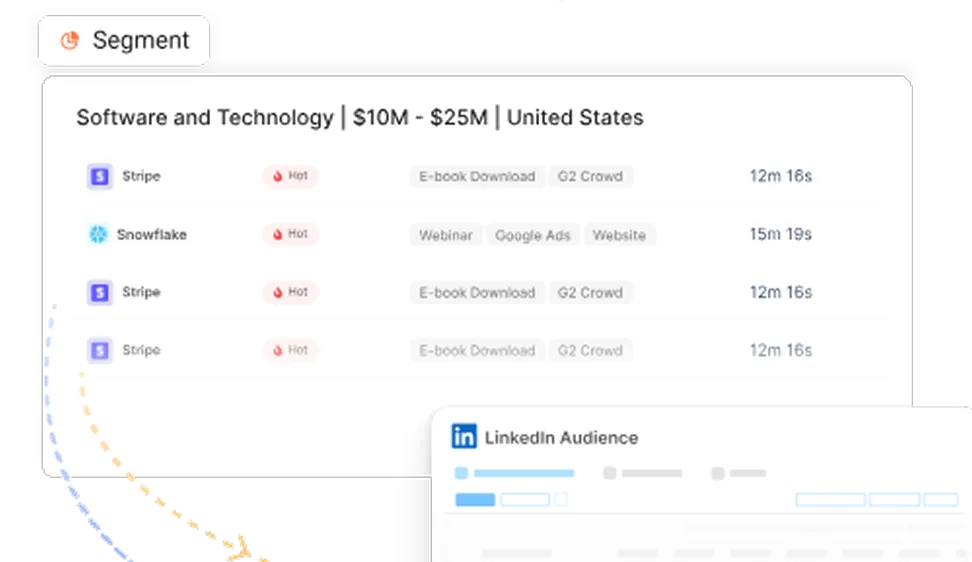
That’s where Factors.ai fits naturally into the picture. The platform connects the dots between anonymous website visitors, ad engagement, and CRM outcomes at the account level. It lets marketing teams see which accounts are showing intent, which channels are influencing pipeline, and where sales should focus their energy. Instead of each channel existing as its own island with its own dashboard, you get an integrated view of how they’re working together.
The practical impact is that you stop making channel decisions based on incomplete data. You can see that a LinkedIn campaign is warming accounts that later convert through direct search. You can identify that a blog post is generating visits from companies that your sales team is already prospecting. You can spot accounts showing buying signals across multiple channels and route them to sales at the right moment.
That kind of visibility changes the conversation from “which channel should we cut?” to “how are our channels reinforcing each other?” And that’s a much better question to be asking.
In a nutshell…
The main takeaway from everything we’ve covered is that there’s no universally “best” B2B SaaS marketing channel. There’s only the best mix for your specific situation, and that mix should be guided by your ACV, your growth stage, your buyer’s behavior, and your team’s capacity to execute well.
The ten channels we walked through, from SEO and paid search to founder-led content and partnerships, each serve a different function in your growth engine. Some capture demand that already exists. Others create demand that wouldn’t be there otherwise. And the retention-focused channels ensure your growth actually compounds instead of getting eaten by churn.
Channel-market fit should be your guiding principle when choosing where to invest. A channel only produces results when it matches how your buyer researches, how urgently they need a solution, what your price point says about the buying process, and how your sales team follows up. Copy a competitor’s channel mix without that diagnosis, and you’ll likely copy their wasted spend too.
Measurement is the other make-or-break factor. Last-click attribution consistently misleads B2B teams by overvaluing the final touchpoint and undervaluing everything that came before it. Measuring cost per qualified opportunity, influenced pipeline, and revenue by source gives you a far more accurate picture of what's actually driving growth.
If you take one thing from this piece, let it be this: build your channel mix intentionally, measure it honestly, and give each channel enough time and investment to prove itself before you judge it. The SaaS teams that win aren't the ones with the most channels. They're the ones with the most coherent system connecting those channels together.
Frequently asked questions about B2B SaaS marketing channels
Q1. What are the best marketing channels for SaaS?
The most consistently effective channels include SEO and content marketing, Google search ads, LinkedIn paid ads, lifecycle email automation, partnerships, product-led growth loops, review sites like G2, and outbound prospecting triggered by intent signals. The right mix depends on your ACV
Q2. How do I choose the right channels for my SaaS stage?
The "best" channel is dictated by your Average Contract Value (ACV) and Sales Motion.
- Seed Stage: Focus on high-signal, low-cost channels like Founder-led content (LinkedIn) and Outbound targeting a narrow ICP.
- Growth Stage: Transition to compounding channels like SEO, Paid Search, and Lifecycle Email to build a predictable pipeline.
- Scale Stage: Layer on ABM, Field Events, and Brand Campaigns to dominate your category.
Q3. Is SEO still worth it for SaaS in the age of AI search?
Yes, but the strategy has shifted from "traffic volume" to "Commercial Intent." While AI assistants (like ChatGPT or Perplexity) may answer basic informational queries, buyers still turn to organic search for:
- Comparison Pages: "Tool A vs. Tool B"
- Solution Pages: "How to solve [specific pain point] with software"
- Proof Content: "Customer case studies for [Industry]" In 2026, SEO is about earning citations in AI answers as much as ranking #1 on Google.
Q4. Why does my LinkedIn Ads ROI look so low compared to Google?
This is a classic Attribution Gap. Google Ads captures existing demand (someone searching for a solution now), leading to higher last-click conversions. LinkedIn creates demand by reaching decision-makers who aren't searching yet.
- The Fix: Measure LinkedIn on Influenced Pipeline and Target Account Engagement rather than CPL (Cost Per Lead). A single LinkedIn touchpoint often silently accelerates a deal that eventually "converts" through a direct search weeks later.
Q5. What are "Product-Led Growth" (PLG) channels?
PLG channels turn your product into its own marketing engine. This includes:
- Viral Loops: In-product invites (e.g., inviting a teammate to a Slack channel).
- Aha! Moments: Using free trials or freemium tiers to deliver value before asking for a credit card.
- Usage-Based Nudges: Automated emails triggered when a user hits a specific milestone in your app.
Q6. How do I balance "Demand Creation" vs. "Demand Capture"?
Think of your channel mix as a 70/20/10 portfolio:
- Demand Capture (70%): Search Ads and SEO—catching people who are already shopping.
- Demand Creation (20%): LinkedIn Thought Leadership and Partnerships—educating people who don't know they have a problem yet.
- Experimental (10%): New platforms or AI-driven tactics. If you only capture demand, you'll eventually hit a growth ceiling. If you only create it, you'll burn budget without seeing immediate revenue.
Q7. What has AI changed about SaaS channel measurement?
AI has made "Dark Social" (private Slack groups, podcasts, and offline conversations) even more influential. Because AI models are trained on these public and semi-public discussions, your channel measurement must look at Account-Based Analytics. Instead of asking "What link did they click?", ask "Which accounts are showing increased activity across our website, LinkedIn, and review sites simultaneously?"

See how Factors can 2x your ROI
Boost your LinkedIn ROI in no time using data-driven insights


.avif)

See Factors in action.
Schedule a personalized demo or sign up to get started for free
LinkedIn Marketing Partner
GDPR & SOC2 Type II







.svg)



.avif)

