
Best AI Prompts for Google Ads to Boost Campaign ROI
Find the best ChatGPT prompts for Google Ads. Write better ad copy, find smarter keywords, and improve ROI with AI-driven precision.
.avif)
Content Marketer

Growth Marketer



.svg)


Running a good Google Ads campaign has always felt like directing a Christopher Nolan movie… half science, half chaos, and a whole lot of fine-tuning. You’re balancing creativity with data, instinct with structure, art with algorithm.
And lately, that balance feels trickier than ever. Competition’s up, search behavior changes faster than TikTok trends, and manually keeping up? Exhausting, with a side of hair-pulling.
That’s where AI tools like ChatGPT and Gemini step in. Think of them as your behind-the-scenes strategist, the one who handles the boring bits so you can focus on the bigger creative swings. From brainstorming ad copy and spotting keyword gaps to testing headlines and tweaking landing pages, AI helps you move from “what should I even test next?” to “oohhh, that worked” in record time.
When used right, AI doesn’t replace intuition; it sharpens it. It brings structure to the madness, clarity to decisions, and speed to execution.
In this guide, I’ll walk you through how to use AI (especially ChatGPT) to make your Google Ads smarter, faster, and a little more human. Plus, there’s a ready-to-use set of AI prompt ideas at the end that you can plug directly into your campaigns.
ChatGPT Prompts For Keyword Research and Effective Keywords
Every great Google Ads campaign begins with keywords, the bridge between your brand and your buyer’s intent. But keyword research can be messy, repetitive, and easy to get wrong. AI helps turn that chaos into clarity.
By using ChatGPT, you can go beyond simple keyword lists. You can ask AI to analyze intent, cluster keywords by themes, identify long-tail opportunities, or even compare your keyword strategy with competitors.
For example, instead of manually brainstorming every possible keyword combination, you can simply ask:
“Generate a list of high-intent keywords for a Google Ads campaign promoting [product/service]. Focus on users ready to buy.”
AI can also help you uncover what your competitors might be missing:
“Analyze the keyword strategy of [competitor name] and identify untapped opportunities for [your brand].”
By running multiple such prompts, you’ll start to see patterns, and more importantly, gaps you can capitalize on. The goal is to find better, more relevant keywords that align perfectly with your audience and campaign goals.
AI Prompts for Ad Copy and Creative Concepts
Ad copy is often where campaigns succeed or fail. It’s the first impression, the hook, the reason someone decides to click, or scroll past. AI can make this process faster and sharper.
Using ChatGPT, you can generate dozens of headline and description variations in seconds. You can specify tone, target audience, or even platform context. The trick lies in how you prompt it.
For example:
“Write 5 Google Ads headlines under 30 characters for [product] targeting [audience]. Focus on urgency and benefit.”
Or, if you want to explore emotional triggers:
“Write 3 Google Ads descriptions that create curiosity and emphasize [unique value proposition].”
AI can also help polish existing ads:
“Rewrite this Google Ad to sound more persuasive and action-driven: [paste ad].”
By running a few variations, you can quickly shortlist options that best match your campaign tone. This not only saves time but also gives you data-backed creative flexibility to test and learn what resonates with your audience.
Prompts For Ad Creatives and A/B Testing
Even the best copy falls flat without engaging visuals. Ad creatives, whether static images, responsive display banners, or short videos, often make or break click-through rates. Here too, AI can play a supporting role.
With prompts, you can ask ChatGPT to generate visual concepts, storyboard ideas, or test hypotheses for different ad creatives.
For instance:
“Suggest 3 ad creative ideas for a Google Display Ad promoting [product]. Include headline, visual theme, and CTA.”
You can also use AI to design your A/B testing plan:
“Plan an A/B test comparing two Google Ads for [product]. Suggest what to test (headlines, CTAs, visuals) and metrics to track.”
You can uncover which messages and visuals perform best before spending significant ad dollars by integrating AI-driven testing into your workflow. Over time, this leads to higher CTRs, lower CPCs, and stronger conversion rates.
{{INLINE_TOFU}}
ChatGPT Prompts For Landing Page Optimization and Conversion Rate
A great ad only gets you halfway there. The real conversion happens on the landing page, and that’s where many campaigns lose momentum.
Landing page optimization with AI goes far beyond changing button colors or CTA placement. With tools like ChatGPT, you can analyze tone, clarity, and persuasion across your page. You can also generate alternate headlines, rework CTAs, or refine messaging for different audiences.
Example prompts:
“Review this landing page copy and suggest ways to improve clarity and conversion: [paste copy].”
“Write 3 alternate headlines that emphasize urgency for this landing page: [paste headline].”
“Suggest improvements to this landing page for users coming from a Google Ad about [topic].”
When your ad and landing page messaging align perfectly, your Quality Score improves, leading to lower CPCs and better overall ROI.
The Ultimate AI Prompt Pack for Google Ads
Here’s where theory meets practice. Here’s a detailed set of ready-to-use AI prompts designed for every stage of your Google Ads process, from keyword research to landing page optimization.
You can use these prompts directly in ChatGPT or adapt them for other AI tools.
Keyword Research and Effective Keywords
Keyword research is the backbone of every Google Ads campaign. It determines how visible your ads are and how efficiently you spend your budget. But manually searching for the right keywords can be time-consuming.
That’s where AI helps. With carefully written prompts, you can instantly get keyword lists, ad group ideas, competitor gaps, and intent-based suggestions.
Use these detailed prompts:
Prompt 1: Comprehensive keyword generation
“Generate a list of 30 Google Ads keywords for a campaign promoting [product/service]. Include a mix of short-tail, long-tail, and high-intent keywords. For each, mention the search intent (informational, transactional, navigational), estimated competition level (low/medium/high), and a short note on why it’s relevant for my campaign.”
Prompt 2: Competitor gap analysis
“Compare [Your Brand] and [Competitor]’s keyword strategies. Suggest 10 high-value keywords that my brand is not targeting but should. Include the rationale for each and categorize them by search intent.”
Prompt 3: Negative keyword identification
“List 15 potential negative keywords for a Google Ads campaign promoting [product/service]. Avoid irrelevant search intents that could waste ad spend, and explain why each keyword should be excluded.”
Prompt 4: Ad group clustering
“Take this list of keywords [paste keywords] and group them into logical ad groups based on user intent and topic relevance. For each group, suggest an ideal ad headline focus.”
Prompt 5: Trend and seasonal keyword discovery
“Suggest trending or seasonal keywords for [industry/product] for the upcoming quarter. Include examples of rising search topics and how they might impact Google Ads campaigns.”
These prompts help you go from “a list of random terms” to a structured, insight-driven keyword strategy in minutes.
Ad Copy and Creative Concepts
Ad copy is where attention meets conversion. The challenge is writing something concise, compelling, and relevant, repeatedly. AI can help you craft message variations, test different tones, and match your copy with user intent.
Use these detailed prompts:
Prompt 1: High-converting headlines
“Write 10 Google Ads headlines under 30 characters for [product/service]. Each headline should highlight a unique benefit or emotional trigger. Label them under categories like urgency-based, curiosity-based, or value-based.”
Prompt 2: Description variations by audience
“Write 5 variations of Google Ads descriptions (90 characters each) for [product/service]. Use different tones for each: one professional, one friendly, one witty, one urgent, and one luxury-oriented.”
Prompt 3: USP-driven messaging
“Generate ad copy that emphasizes [key differentiator]. Include a primary headline, description, and CTA. Focus on conveying credibility and tangible benefits.”
Prompt 4: Pain-point to solution framing
“Write Google Ads copy targeting users who struggle with [pain point]. Start by acknowledging the problem in the headline and resolve it in the description. Suggest 3 strong CTAs.”
Prompt 5: Copy analysis and improvement
“Analyze this Google Ads copy: [paste copy]. Suggest 3 rewritten versions with better clarity, stronger verbs, and improved CTR potential. Explain what changed and why.”
These prompts make ChatGPT your ad copy assistant, helping you brainstorm ideas, refine tone, and continuously test what converts.
Ad Creatives and A/B Testing
Your ad visuals often decide whether a user stops scrolling or keeps going. Testing them efficiently can mean the difference between average and exceptional ROI. AI can help you brainstorm creative ideas, plan your A/B tests, and interpret results more intelligently.
Use these detailed prompts:
Prompt 1: Visual concept generation
“Suggest 5 ad creative ideas for a Google Display or Performance Max campaign promoting [product/service]. For each, describe the visual theme, headline text overlay, and a matching CTA that complements the ad message.”
Prompt 2: Script ideas for video ads
“Write a short, 10-second video ad script for [product/service]. Include voiceover lines, visual cues, and an ending CTA. The goal is to grab attention in the first 3 seconds and drive action.”
Prompt 3: Structured A/B test plan
“Create an A/B testing plan for my Google Ads campaign. Include which elements to test (headlines, images, CTAs), the minimum sample size required, KPIs to track (CTR, CPC, conversions), and the recommended testing duration.”
Prompt 4: Ad performance review
“Analyze this ad’s performance data: CTR = 1.2%, Conversion Rate = 0.8%, CPC = $2.5. Suggest potential causes of underperformance and 3 testable changes to improve results.”
Prompt 5: Repurposing top creatives
“Suggest ways to repurpose high-performing ad creatives for Google Display, YouTube, and Discovery campaigns. Include how to adjust visuals and messaging for each format.”
With these prompts, your AI assistant can act as a creative strategist and analyst in one, ensuring every ad asset works harder and smarter.
Landing Page Optimization and Conversion Rate
A click means nothing if the landing page doesn’t convert. Whether you’re optimizing form design, copy alignment, or overall experience, AI can help you identify what’s broken and how to fix it.
Use these detailed prompts:
Prompt 1: Landing page critique and rewrite
“Review the following landing page copy for clarity and conversion potential: [paste copy]. Suggest specific changes in headline, structure, CTA placement, and tone. Provide an improved version optimized for a Google Ads audience.”
Prompt 2: Benefit-first headline creation
“Generate 5 benefit-driven headlines for a landing page promoting [product/service]. Each should focus on outcomes rather than features and stay under 10 words.”
Prompt 3: Message alignment prompt
“Here’s my Google Ad: [paste ad copy]. Here’s my landing page: [paste landing page copy]. Identify inconsistencies between the two and suggest how to make the tone, promise, and CTA align perfectly.”
Prompt 4: Conversion element testing
“List 5 A/B test ideas to improve landing page conversion rates for [product/service]. For each test, specify the hypothesis, change to be made, and the KPI to track.”
Prompt 5: Persuasive content generation
“Write persuasive landing page content for [offer]. Include a strong headline, subheadline, 3 bullet benefits, social proof, and a single, clear CTA.”
When used regularly, these prompts can help marketers streamline testing cycles, improve ad-to-landing-page consistency, and ultimately boost conversion rates.
So basically…
AI prompts (when used well) can be great creative accelerators. You can generate ideas, test variations, and analyze results far more efficiently than ever before, by pairing your expertise with well-crafted prompts
But the key lies in iteration. The more you refine your prompts based on real campaign data, the more powerful your results become.
So your next steps are simple:
- Try these prompts in your next Google Ads campaign.
- Track which outputs improve CTR, CPC, and conversions.
- Keep updating your prompt list as your audience and market evolve.
Look, we all know that AI won’t replace great marketing, no matter what everyone tells you. But it will make great marketers unstoppable (Alexa, play ‘Unstoppable’ by Sia).
With the right mix of creativity, curiosity, and prompt engineering, you can unleash the full potential of Google Ads, and finally make your campaigns work smarter, not harder.

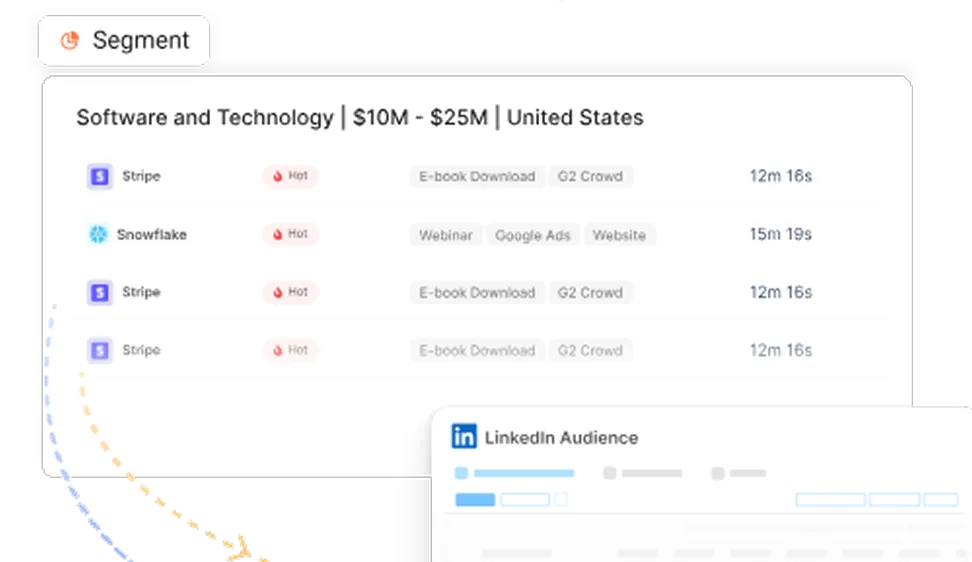
See how Factors can 2x your ROI
Boost your LinkedIn ROI in no time using data-driven insights


.avif)
See Factors in action.
Schedule a personalized demo or sign up to get started for free
LinkedIn Marketing Partner
GDPR & SOC2 Type II

.svg)



.avif)

