
Clay vs ZoomInfo for GTM engineering: Which platform wins?
Compare Clay vs ZoomInfo for GTM engineering: pricing, workflows, enrichment, automation, and best fit for modern B2B revenue teams.
.avif)
Content Marketer



.svg)


TL;DR
- Clay wins for teams that want to build custom enrichment workflows, chain multiple data providers, and move fast with a small, technical GTM crew.
- ZoomInfo wins for organizations that need a massive proprietary contact database, native intent signals, territory planning, and enterprise-grade scale.
- The real dividing line isn't company size. It's whether your GTM motion is systems-first or database-first.
- Pricing comparisons are misleading unless you measure cost per usable opportunity, factoring in ops hours, bounce waste, and enrichment gaps.
- Now, B2B teams are layering signal-driven platforms like Factors.ai on top of their enrichment and database stacks.
At some point, every GTM team hits this oddly humbling realization… the stack looks expensive, the dashboards look busy, but the actual workflow still depends on someone exporting a CSV and “just fixing a few things quickly.” That “quickly” turns into hours… and then a system… and then, somehow, a permanent part of the process.

That’s usually when Clay and ZoomInfo enter the conversation.
Not because they’re interchangeable, but because they show up at the exact moment your team is deciding what kind of machine it wants to build. One gives you structured data, packaged and ready. The other lets you design how data flows, mutates, and actually becomes usable inside your GTM motion.
Most comparisons stop at features and pricing, which is where the confusion starts. Clay vs ZoomInfo isn’t really a tool comparison. It’s a choice between buying completeness and building flexibility.
And honestly, the more useful question now is about what you layer on top once both of them exist in your stack.
Quick answer: Clay vs ZoomInfo for GTM engineering
If your team wants to build custom workflows, enrich data across multiple providers, automate outbound triggers, and iterate quickly, Clay is usually the better fit.
But if your team needs a large proprietary contact database, enterprise buying signals, org charts, territory planning, and traditional SDR scale, ZoomInfo is usually the stronger choice.
The split most people draw is "startups use Clay, enterprises use ZoomInfo." That's too simple, and it leads to bad purchasing decisions. The more accurate way to think about it is systems-first versus database-first GTM. Some enterprise teams run beautifully on Clay because their motion depends on precision workflows. Some early-stage companies choose ZoomInfo because they need volume outbound from day one. The architecture of your go-to-market motion matters more than your headcount.
Here's a quick summary to orient you before we go deeper.
What do GTM engineers actually need right now?
Most Clay vs ZoomInfo comparisons jump straight into feature lists. Before we do that, it's worth pausing on what a GTM engineer's job actually looks like right now, because it's shifted dramatically in the last two years.
A modern GTM engineer doesn't wake up thinking "I need to find leads." They wake up thinking, "I need to reduce manual revenue ops work across the entire pipeline." The job has moved from list building to revenue systems building, and that shift changes which tools matter and why.
Here's what a typical GTM engineering stack needs to handle:
- Data enrichment across multiple sources
No single provider has complete, accurate data. Teams need to layer sources and fill gaps automatically.
- Trigger-based automation
When a target account hits a specific signal (visits your pricing page, gets new funding, hires a relevant role), the system should act without a human clicking buttons.
- CRM sync that actually works
Data needs to flow into Salesforce or HubSpot cleanly, without duplicates, without manual imports, without breaking existing workflows.
- Lead scoring that reflects real buying intent
Not just firmographic fit, but behavioral signals that suggest timing.
- Personalization at scale
Every outbound message should feel tailored, but no human should be writing each one from scratch.
- Routing logic
Leads and accounts should land with the right rep, in the right sequence, based on territory, segment, or engagement level.
- Multi-channel activation
Outbound email, LinkedIn, ads, and direct mail should work as a coordinated system, not separate silos.
- Measurement loops
The system should tell you what's working and what isn't, so you can iterate weekly instead of quarterly.
That's a LOT of jobs. And here's the thing… neither Clay nor ZoomInfo covers all eight on its own. Clay handles some beautifully. ZoomInfo handles others. The teams getting the best results are the ones who understand which tool solves which job and what fills the remaining gaps. Buying a tool to "find leads" is a 2019 mindset. Building a system that turns signals into qualified pipeline is where the leverage actually lives.
Clay overview: Built for workflow-led GTM
Clay is best understood as a flexible orchestration layer for GTM data. If you've ever wished you could connect multiple data providers, run enrichment logic across all of them, and trigger outbound actions based on the results, all without writing custom code, that's the problem Clay was designed to solve.
The interface looks like a spreadsheet, which is both its superpower and its learning curve. You build workflows by adding columns that pull from different data sources, apply logic, filter results, and push enriched records into your CRM or outbound tools. It's closer to building a machine than using a traditional SaaS product, and that distinction matters more than most people realize.
How do Clay enrichment workflows actually work?
Clay's core innovation is waterfall enrichment. Instead of relying on one data provider and accepting whatever coverage and accuracy you get, Clay lets you chain multiple providers in sequence. If Provider A doesn't have an email for a contact, the system automatically tries Provider B, then Provider C. You define the priority order, the fallback logic, and the quality thresholds.
This approach solves one of the oldest problems in B2B data enrichment tools: no single vendor has everything. By aggregating across 50+ providers, Clay gives teams much better coverage than any individual database. The trade-off is that you need to set it up thoughtfully. The waterfall logic, the scoring rules, and the output formatting all require configuration.
What makes Clay popular with technical GTM teams?
There's a reason Clay has become the default tool for lean, technical GTM teams running precision outbound. It rewards people who think in systems. You can build a workflow that identifies companies hiring for a specific role, enriches the hiring manager's contact details, checks whether they've visited your site recently, writes a personalized first line using AI, and pushes the whole thing into your sequencing tool. All of that runs automatically once you've built it.
Many teams use Clay as the control layer connecting their various providers rather than relying on one vendor's database. It sits in the middle of the stack, pulling from multiple sources and pushing to multiple destinations. That "middle layer" positioning is key to understanding what Clay is and isn't. It's less a piece of software you log into daily and more a piece of infrastructure your team builds on top of.
The flip side is that Clay's value scales with your team's technical ability. If you've got a GTM engineer who loves building workflows, Clay compounds beautifully over time. If your team just wants to search for contacts and export a list, Clay will feel like overkill. That's not a criticism. It's a design choice that shapes who Clay works best for.
ZoomInfo overview: Built for database-led GT
ZoomInfo takes a fundamentally different approach. Where Clay asks, "how do you want to build your data workflow?", ZoomInfo asks, "who do you want to reach?" It's a proprietary B2B contact and company database with layers of intelligence built on top: org charts, technographics, company news, and increasingly, intent signals.
What’s the core value of ZoomInfo's database?
ZoomInfo's strength is the breadth and depth of contact data. The platform maintains a massive database of B2B professionals, with verified emails, direct dials, job titles, reporting structures, and company information. For sales teams that need to quickly identify and reach decision-makers at scale, that kind of data coverage is genuinely hard to replicate by chaining together smaller providers.
The database approach means ZoomInfo can answer three questions that matter a lot in enterprise sales motions. Who exists at this company? Who fits our ideal customer profile? And who might be in-market right now? That last question is where ZoomInfo intent data comes in. By tracking research behavior across its network, ZoomInfo identifies companies that appear to be actively evaluating solutions in specific categories. For large sales orgs running territory-based outbound, that combination of contact data, intent signals plus account intelligence is powerful.
Where does ZoomInfo work better than Clay?
ZoomInfo's sweet spot is organizations with structured sales teams, defined territories, and a motion that depends on volume outbound with broad data coverage. If you've got 50 SDRs who each need to prospect into assigned accounts, ZoomInfo gives them a single platform to find contacts, check org charts, see intent signals, and export into their sequencing tool. The workflow is straightforward: search, filter, export, sequence.
Territory planning and account coverage features round out the enterprise value proposition. Sales leaders can see which accounts have been contacted, which ones show intent, and where there are coverage gaps. That kind of visibility matters when you're managing a large team and need operational consistency across regions.
ZoomInfo also integrates natively with most major CRMs and sales engagement platforms. The data flows are well-established, and the implementation path is familiar to most revenue operations teams. For procurement-heavy organisations that need a single vendor contract covering a broad range of GTM data needs, ZoomInfo's all-in-one positioning simplifies the buying decision.
Clay vs ZoomInfo: Head-to-head comparison
Now that you understand what each platform was built to do, let's put them side by side across the dimensions that actually matter for GTM engineering teams. This isn't an exhaustive feature comparison. It's focused on the capabilities that change how your team operates day to day.
The most telling row in that table is the last one about scaling. Clay compounds with internal talent. The more capable your GTM engineer, the more value Clay generates over time as workflows get refined and expanded. ZoomInfo compounds with organizational scale. The more reps you have prospecting, the more value you extract from a single large database subscription.
That's a genuinely important difference, and it explains why the "Clay vs ZoomInfo" question doesn't have a universal answer. The right choice depends on what your team looks like and how your revenue motion works.
One thing worth noting: these tools aren't always mutually exclusive. Plenty of teams use ZoomInfo as one of the data sources inside Clay's waterfall enrichment. In that setup, ZoomInfo provides the raw contact data and Clay orchestrates how it gets enriched, scored, personalized, and routed. We'll come back to that hybrid approach later.
Pricing: Clay pricing vs ZoomInfo
Pricing is the section everyone scrolls to first, so let's address it honestly. Comparing Clay pricing vs ZoomInfo on sticker price alone is misleading, but it's also the most common way teams make this decision. Here's what you actually need to know.
How does Clay pricing work?
Clay uses a usage-based model built around credits. You pay for a base plan that includes a certain number of credits, and each enrichment action, data pull, or AI step within a workflow consumes credits. The more workflows you run and the more records you process, the more credits you use. Tiered plans offer different credit volumes and feature access, and pricing scales as your usage grows.
This model rewards efficiency. A well-built workflow that uses waterfall logic to avoid redundant enrichment calls will cost less per record than a sloppy one that fires every provider on every contact. Teams that invest time in optimizing their Clay workflows see meaningfully lower per-record costs over time.
How does ZoomInfo pricing work?
ZoomInfo uses annual contracts with seat-based pricing and data packages. The total cost depends on how many users need access, which data modules you include (base contacts, intent data, advanced company intelligence), and your negotiated terms. Enterprise pricing is customized, and most mid-market and enterprise deals involve a sales conversation rather than self-serve checkout.
The annual commitment model means ZoomInfo tends to feel like a larger upfront investment, especially for smaller teams. That said, the per-seat cost can be quite reasonable when spread across a large sales org.
Why is sticker price the wrong comparison?
Here's where most pricing comparisons go wrong. They compare monthly or annual fees and declare a winner. That misses the actual question GTM leaders should be asking: what does it cost to create a usable opportunity?
A better formula looks like this:
Cost per usable opportunity = (Tool spend + ops hours + bounce waste + enrichment waste) ÷ qualified opportunities created
Tool spend is obvious… ops hours capture the human time spent cleaning data, fixing integrations, and manually enriching records that the tool missed. Bounce waste accounts for the money spent on contacts whose emails bounce or whose data is stale. Enrichment waste covers credits or budget spent on records that never become relevant opportunities.
When you run that full calculation, the picture often shifts. A cheaper tool with poor data accuracy might cost more per usable opportunity than an expensive tool with clean data. A flexible tool that requires significant ops time to configure might cost more than a turnkey option for a team without a dedicated GTM engineer. This framing matters because it forces you to evaluate tools based on output quality, not just input cost.
For most startups and lean teams, Clay's usage-based model is easier to enter and easier to scale gradually. For larger organizations with established sales teams, ZoomInfo's annual contract often makes sense because the per-seat economics improve with scale and the operational overhead is lower once it's set up.
Best use cases by team type
The "which tool should I pick" question almost always depends on team size, motion type, and internal technical capacity. Rather than pretending there's one right answer, here's how the decision usually shakes out across different team profiles.
- Startups with fewer than 20 GTM employees
Clay tends to win here, and the reasons are practical. Smaller teams need lower financial commitment, the ability to run fast experiments, and custom workflows that adapt as the GTM motion evolves weekly. A startup figuring out its ideal customer profile doesn't want to lock into an annual ZoomInfo contract before it knows which segments convert. Clay lets you test different enrichment approaches, audience definitions, and outbound triggers without a large upfront commitment.
The caveat is that someone on the team needs to enjoy building workflows. Clay's spreadsheet-style builder is powerful but not intuitive for everyone. If your founding team is all enterprise sellers who've never touched a workflow tool, the learning curve might slow you down during the exact phase where speed matters most.
- Mid-market SaaS companies
This is where the decision gets nuanced, because mid-market teams often run a hybrid GTM motion. If your primary growth engine is high-volume outbound with an SDR team doing 200+ emails a day, ZoomInfo's contact database and intent signals become a serious consideration. Your SDRs need quick access to verified contacts at scale, and ZoomInfo delivers that with minimal setup.
If your motion is more precision-oriented, say, account-based marketing with trigger-based outbound to a defined set of accounts, Clay's enrichment workflows and automation capabilities tend to produce better results. The ability to chain together multiple data sources, apply custom scoring logic, and trigger outbound based on specific events gives you a level of targeting that a static database search can't match.
Many mid-market teams end up running both. ZoomInfo provides the broad contact data, and Clay orchestrates how that data gets enriched, personalized, and activated. It's not the cheapest approach, but it captures the best of both philosophies.
- Enterprise organisations
ZoomInfo has a natural advantage in large enterprises for a few specific reasons. Procurement teams prefer dealing with a single established vendor. Territory management and account coverage tools are critical at scale. Large sales orgs need a shared data source that every rep can access without building custom workflows. And the compliance and data governance infrastructure that ZoomInfo provides matters more as your organization grows.
That said, modern demand-gen-led enterprise teams are increasingly building workflow-based systems that outperform static database buying. When you combine Clay-style enrichment workflows with a signal platform like Factors.ai, you can prioritize outbound based on real engagement behavior rather than just firmographic fit. That approach takes more internal capability to set up, but it often produces a higher-quality pipeline than a traditional SDR-plus-database model.
Evaluate based on your internal ops capacity. If you have GTM engineers who can build and maintain workflow systems, Clay (or a Clay-plus-database hybrid) might surprise you. If you need something that works across a 100-person sales team with minimal configuration, ZoomInfo is the safer bet.
Why does this debate miss the bigger problem?
Here's the section where I'm going to say something that might annoy fans of both platforms. The Clay vs ZoomInfo debate, as most people frame it, focuses on the wrong question. It's a tools debate when the real problem is a systems problem.
Most B2B revenue teams are still struggling with the same fundamental issues, regardless of which data tool they use. Leads get generated too early, before there's any real buying intent. SDRs chase stale lists because nobody's sure which accounts are actually warm right now. Paid ads and outbound email run as completely separate motions with no coordination. The CRM is perpetually out of date because updating it requires manual effort that nobody prioritizes.
Swapping one data vendor for another doesn't fix any of those problems. You can build the most elegant Clay workflow in the world, but if it's triggering outbound to accounts that aren't in-market, you're just automating waste. You can have ZoomInfo's entire database at your fingertips, but if your SDRs are working through it alphabetically instead of by intent signals, you're leaving pipeline on the table.
The deeper issue is that most teams lack a signal layer, something that tells them which accounts are actually showing buying behavior right now and then activates the right response across channels. That's a different job than what Clay or ZoomInfo were designed for.
Where does signal-driven GTM fit in?
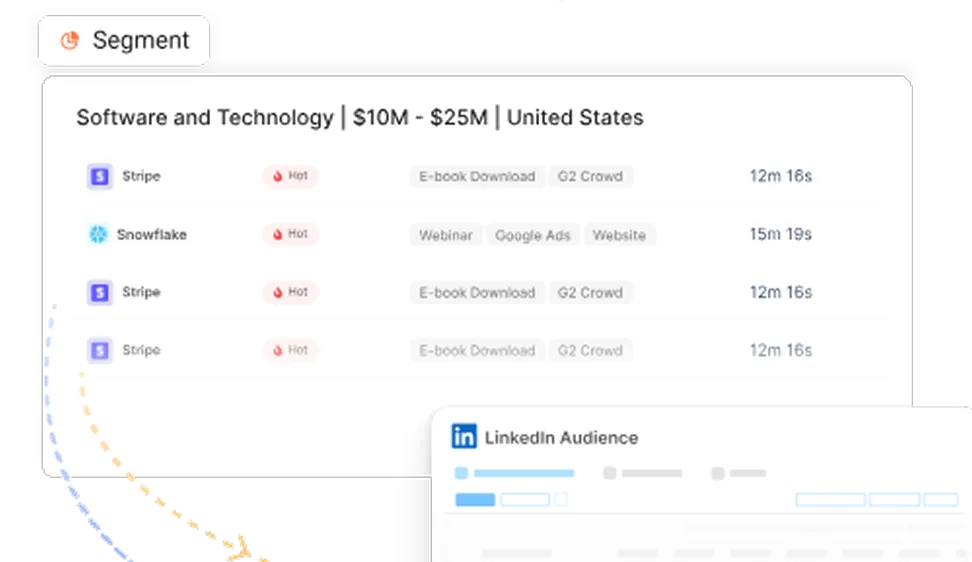
This is where Factors.ai enters the picture, and I want to be clear about why I'm mentioning it here rather than in a product section. Factors.ai solves a problem that sits upstream of both Clay and ZoomInfo. It identifies warm accounts based on first-party intent: website behavior, campaign engagement, content consumption patterns, and other signals that indicate real buying interest. Then it triggers actions across outbound, CRM, and ads based on those signals.
Think of it this way. ZoomInfo tells you who exists and who might fit your ICP. Clay helps you enrich and activate that data through custom workflows. Factors.ai tells you which of those accounts are actually warm right now and coordinates the response. It's the signal layer that makes both data tools more effective.
The strongest GTM teams I've seen aren't really choosing between Clay and ZoomInfo. They're using one or both for data and layering a signal platform on top to prioritize and activate. That's a more strategic approach than simply buying bigger lists or building more elaborate enrichment workflows. When your outbound, ads, and CRM all respond to the same set of intent signals, the entire revenue system gets more efficient.
Clay vs Apollo vs ZoomInfo
This three-way comparison comes up constantly, so let's address it clearly. Apollo occupies a different position from both Clay and ZoomInfo, and understanding where it fits helps clarify the overall landscape of outbound automation software.
Apollo is primarily a sales engagement platform with a built-in contact database. It combines prospecting data with email sequencing, call tracking, and basic workflow automation in a single tool. The database isn't as large as ZoomInfo's, and the workflow capabilities aren't as flexible as Clay's, but the all-in-one packaging at a lower price point makes it attractive for specific use cases.
The way to think about this three-way comparison: Apollo is the "good enough at everything, great at nothing" option. It works well for early-stage teams that need a single platform to start prospecting without a large budget. The built-in sequencing means you don't need a separate tool for sending emails, and the free tier lets you test before committing.
Where Apollo falls short is depth. The contact database is smaller than ZoomInfo's, especially for European and APAC markets. The enrichment capabilities are basic compared to Clay's waterfall approach. And the intent data features are more limited than what ZoomInfo offers natively.
For teams that eventually scale, Apollo often becomes a stepping stone rather than a long-term solution. Many teams start with Apollo, realize they need deeper data or more flexible workflows, and then migrate to a Clay, ZoomInfo, or hybrid setup. That's not a knock on Apollo. It's a reflection of how GTM needs to evolve as teams grow.
If you're evaluating all three, a decision rule is: start with Apollo if budget is your primary constraint and you need everything in one place. Move to ZoomInfo if you need database depth and enterprise-grade intent signals. Move to Clay if you need workflow flexibility and multi-source enrichment. Move to a combination if your GTM motion is sophisticated enough to justify the complexity.
Best Clay alternatives for GTM teams
If you're evaluating Clay alternatives for GTM teams, it's worth understanding that most alternatives aren't trying to be "a better Clay." They solve adjacent jobs in the GTM stack, and your choice depends on which job you're actually hiring for.
Here are the most relevant options and what each one does differently.
- Factors.ai
Factors.ai is the best Clay alternative when your core problem isn't data enrichment or contact discovery, but rather knowing which accounts to prioritize and how to activate across channels. It identifies warm accounts from website behavior, ad engagement, and other first-party signals, then triggers coordinated actions across outbound, CRM, and paid campaigns. For teams that already have enough contact data but struggle with timing and prioritization, Factors.ai fills a gap that neither Clay nor ZoomInfo addresses directly.
- ZoomInfo
You already know the pitch. ZoomInfo is the alternative to Clay when your primary need is a large, reliable contact database with native intelligence features. If your team doesn't have the technical capacity to build Clay-style workflows and just needs to search, filter, and export contacts at scale, ZoomInfo is the most established option. The trade-off is less workflow flexibility and a higher annual commitment.
- Apollo
Apollo is the alternative when you want data and outbound sequencing in a single platform at a lower price point. It's particularly popular with early-stage teams and solo operators who don't want to manage multiple tool subscriptions. The trade-off is a smaller database and less enrichment depth compared to either Clay or ZoomInfo.
- 6sense
6sense is the alternative for enterprise ABM-heavy motions. It combines intent data, predictive analytics, and account-based advertising in a platform designed for large marketing and sales organizations. The investment is significant, and the implementation timeline is longer than Clay's, but for enterprises running coordinated ABM programs across multiple channels, 6sense provides a level of orchestration that other tools don't attempt.
- Common Room
Common Room is the alternative when your GTM signals live in community and product usage data. It aggregates activity from Slack communities, GitHub, Discord, forums, and product analytics to surface accounts and individuals showing engagement. For product-led growth companies where community activity is a meaningful buying signal, Common Room captures information that traditional B2B data enrichment tools miss entirely.
The key insight across all these options: Clay alternatives aren't interchangeable substitutes. Each one solves a different job. The best teams map out their GTM jobs to be done first, and then pick the tool (or tools) that cover the most important gaps. Trying to find a single tool that replaces Clay across every dimension usually leads to compromise in the areas that matter most.
In a nutshell…
This comparison started with a simple question: Clay or ZoomInfo? The answer, as you've probably gathered, depends on how your GTM motion works and what your team is capable of building.
If you want a flexible orchestration layer where a technical GTM engineer can chain together data providers, build waterfall enrichment logic, automate trigger-based outbound, and iterate on workflows weekly, Clay is the stronger choice. It rewards teams that think in systems and invest time in building infrastructure they'll run on for months.
If you need a large, reliable B2B contact database with native org charts, intent signals, territory management, and a familiar interface that works across a large sales organisation with minimal setup, ZoomInfo is the stronger choice. It rewards teams that need operational consistency and broad data coverage without building custom logic.
If budget is the primary constraint and you need data plus sequencing in a single platform, Apollo is the practical starting point for most early-stage teams.
And if the real problem you're trying to solve isn't "which data tool" but "which accounts should we actually be going after right now," the signal layer is where the most leverage sits. Factors.ai fills that role by turning first-party intent into coordinated action across outbound, CRM, and paid campaigns. The best GTM teams are combining a data layer (Clay, ZoomInfo, or both) with a signal layer that tells them when and where to focus.
The memorable version: choose Clay if you want to build a machine. Choose ZoomInfo if you want to buy one. Choose Factors.ai if you want the machine to know when to move.
Your next step is straightforward. Map your GTM motion's biggest bottleneck. If it's data quality and enrichment flexibility, trial Clay. If it's contact coverage and scale, evaluate ZoomInfo. If it's knowing which accounts are actually in-market, start with Factors.ai. Most teams eventually need at least two of these layers working together, so begin with the one that solves your most painful problem today.
Frequently asked questions about Clay vs ZoomInfo for GTM engineering
Q1. Is Clay better than ZoomInfo?
Clay is better for teams that need workflow flexibility, multi-source enrichment, and custom automation logic. If your GTM engineer wants to build and refine systems that chain together data providers and trigger personalized outbound based on specific events, Clay delivers more value per hour invested. ZoomInfo is better for teams that need a massive proprietary contact database, native intent signals, and enterprise-grade features like org charts and territory management. "Better" depends entirely on whether your GTM motion is systems-first or database-first.
Q2. Is ZoomInfo worth it for startups?
For most startups, ZoomInfo's annual contract model and pricing structure make it a difficult fit, especially before the team has locked in its ideal customer profile and outbound motion. The commitment is significant, and if your targeting shifts (which it often does in the first year or two), you're paying for data coverage you might not need. The exception is startups where outbound is the primary growth engine from day one and the budget supports an enterprise data investment. In that case, ZoomInfo's database depth and ease of use can accelerate pipeline quickly.
Q3. Can Clay replace ZoomInfo?
Partially, and in many cases yes. Teams that use Clay's waterfall enrichment across multiple providers can often match or exceed ZoomInfo's contact coverage for their specific target segments. The gap appears in areas where ZoomInfo's proprietary features matter most: org chart data, native intent signals, and territory planning tools. For enterprise teams that rely heavily on those capabilities, Clay alone won't cover everything. For lean teams focused on enrichment and workflow automation, Clay with the right provider mix, can absolutely replace ZoomInfo.
Q4. What is the best GTM engineering tool?
It depends on the specific job you're hiring the tool for. For workflow automation and multi-source enrichment, Clay is the leading option among GTM engineering tools. For database depth and enterprise contact intelligence, ZoomInfo remains the benchmark. For intent-driven account activation across channels, Factors.ai is purpose-built for that job. For low-cost outbound with built-in data and sequencing, Apollo is the most accessible starting point. Most mature GTM teams use a combination rather than relying on a single tool.
Q5. Should I use Clay and ZoomInfo together?
Yes, and many teams do. A common setup uses ZoomInfo as one of the data sources inside Clay's waterfall enrichment, so you get ZoomInfo's contact depth combined with Clay's ability to orchestrate additional enrichment, apply custom logic, and trigger automated workflows. This hybrid approach captures the strengths of both platforms: ZoomInfo's data breadth and Clay's workflow flexibility. The trade-off is cost and complexity, since you're managing two subscriptions and the integration between them. For teams with the budget and a capable GTM engineer, it's often the highest-performing setup.

See how Factors can 2x your ROI
Boost your LinkedIn ROI in no time using data-driven insights


.avif)

See Factors in action.
Schedule a personalized demo or sign up to get started for free
LinkedIn Marketing Partner
GDPR & SOC2 Type II






.svg)



.avif)

