
Factors.ai vs Madison Logic: Which ABM Tool Fits Your B2B Team?
Explore Factors.ai as a Madison Logic alternative. Compare them across intent data, ABM features, pricing, integrations, ads, and analytics to choose the right GTM platform.
.avif)
Content Marketer



.svg)


If you’ve worked in B2B marketing long enough, you’ve probably sat through that meeting.
The one where marketing says, “Traffic is up.”
Sales says, “Cool, but none of these accounts are replying.”
Someone shares a dashboard. Someone else shares another dashboard.
And by the end of it, everyone agrees to “revisit attribution next quarter.”
I’ve been in those rooms… more times than I’d like to admit.
Intent signals are everywhere today. Website visits, LinkedIn clicks, content downloads, review site activity. The problem isn’t access to data anymore. The problem is figuring out which signals actually mean something… and which ones are just noise wearing a KPI costume.
That’s exactly where platforms like Factors.ai and Madison Logic enter the conversation.
On the surface, they both promise smarter account-based marketing. Identify in-market accounts. Activate campaigns. Prove impact. Tie marketing to revenue. The usual wishlist.
But once you get past the feature lists and sales decks, you realize they’re built for very different kinds of GTM teams, with very different definitions of “what good looks like.”
In this comparison, I’m breaking down how Factors.ai and Madison Logic differ across functionality, pricing, integrations, intent intelligence, activation, analytics, and support, not in theory, but in how they actually show up inside real GTM workflows.
If you’re trying to decide which platform fits your team, your maturity, and your tolerance for duct-taped dashboards… this one’s for you.
Factors.ai vs Madison Logic: Functionality and Features
For most B2B marketers, the real difference between ABM platforms comes down to how much they can actually do: how well they connect intent, engagement, and action.
Both Factors.ai and Madison Logic help teams identify in-market accounts and engage them across channels, but the way they deliver those capabilities reflects two very different philosophies.
Let’s compare their core GTM functionalities side by side.
Factors.ai vs Madison Logic: Functionality and Features Comparison Table
| Feature | Factors.ai | Madison Logic |
|---|---|---|
| Account Identification / Deanonymization | Identifies up to 75% of website accounts through sequential enrichment and behavioral data; builds a unified Account360 view combining web, ad, and CRM touchpoints. | Uses ML ABM Web Analytics to identify visiting companies before form-fill; prioritizes them through ML Insights for campaign targeting. |
| Intent Signal Sources | Combines first-party (site, product, CRM), second-party (ad platforms, G2), and third-party (CSV uploads) data, scored by AI to show real buying intent. | ML Insights aggregates three intent categories: historical performance, install base, and B2B research activity (per 2024 materials). |
| Customer Journey Timeline View | Displays every action in order across web visits, ad clicks, CRM updates, and product usage, creating a clear journey map for each account. | Not available. |
| Account Scoring | AI-based scoring ranks accounts based on ICP fit, intent intensity, and funnel-stage progression. | Offers “Journey Acceleration Measurement” for pipeline visibility, but without detailed scoring or journey tracking. |
| Analytics & Reporting | Milestones track funnel progression across campaigns, segments, and revenue impact with customizable dashboards. | ML Measurement provides campaign-level performance and pipeline influence visibility. |
| G2 Buyer Intent | Official G2 partner integration; pulls 10+ buyer signals for account scoring and campaign activation. | Not available. |
| LinkedIn Ads Activation | Dynamic LinkedIn AdPilot syncs audiences in real time for precise ABM targeting and retargeting. | Native ABM Social Advertising integrated with LinkedIn Ads. |
| Google Ads Activation | Google AdPilot sends conversion signals via CAPI, syncs ICP-fit audiences daily, and activates funnel-specific campaigns. | Not available. |
| GTM Engineering | AI Agents assist reps by pulling account research, alerting on high-intent behaviors, mapping buying groups, and automating GTM workflows. | Not available. |
| Slack Alerts | Real-time AI Alerts notify teams about demo revisits, pricing page views, and post-demo browsing activity. | Not available. |
Factors.ai’s Functionality and Features
Factors.ai is designed to function as a single GTM command center.
Its strength lies in how it combines account identification, scoring, analytics, and activation under one workflow. The system captures signals across web, CRM, and product interactions, enriching them with external intent data to create a complete account story.
Key capabilities include:
- Account360 to unify engagement data across every channel.
- AI-powered scoring that identifies high-intent, sales-ready accounts.
- Dynamic ad activation via LinkedIn and Google AdPilot.
- Milestones analytics to connect top-of-funnel engagement with pipeline outcomes.
- Real-time AI alerts that prompt timely follow-ups.
For teams seeking both intelligence and activation within one ecosystem, Factors.ai offers an integrated, AI-led experience built for precision and speed.
Madison Logic’s Functionality and Features
Madison Logic has a long-standing presence in the ABM market and remains best known for its multi-channel activation network. Its ML Insights system provides intent-based targeting data that feeds campaigns across display, LinkedIn, and content syndication.
Key capabilities include:
- Account identification through web analytics tied to ML Insights.
- Multi-source intent data combining historical, install, and research signals.
- Cross-channel activation for display, LinkedIn, and other digital touchpoints.
- Pipeline visibility via ML Measurement for engagement and influence tracking.
Madison Logic’s strength lies in its broad ad reach and established ABM ecosystem, though it focuses more on activation scale than on deep analytics or automation.
Factors.ai vs Madison Logic: Verdict on Functionality and Features
Both platforms deliver strong account-based marketing capabilities, but their focus differs.
Factors.ai emphasizes intelligence, automation, and connected data. It gives GTM teams an integrated platform where AI-driven insights lead directly to measurable actions across LinkedIn, Google, and CRM.
Madison Logic focuses on reach and activation, providing a strong multi-channel foundation for teams running large-scale ABM campaigns. It’s effective for advertising breadth but less advanced in automation and journey analytics.
In short:
Factors.ai = Unified GTM intelligence and automation for modern B2B teams.
Madison Logic = Established ABM activation network for large-scale campaign reach.
Factors.ai vs Madison Logic: Pricing
Pricing often reflects more than just numbers and shows how a platform scales with your team.
Factors.ai and Madison Logic take two very different paths here.
While one builds transparency and flexibility into its plans, the other tailors its pricing entirely around enterprise campaigns.
Factors.ai vs Madison Logic: Pricing Comparison Table
| Aspect | Factors.ai | Madison Logic |
|---|---|---|
| Model Type | Usage- and seat-based subscription with defined tiers. | Custom pricing for enterprise ABM programs. |
| Transparency | Four public tiers with detailed inclusions. | Pricing not disclosed publicly. |
| Free Plan | Available, includes company tracking, dashboards, and Slack integration. | Not offered. |
| Scalability | Grows through usage and seat upgrades. | Scales through managed campaign budgets. |
| Billing Basis | Monthly or annual subscription. | Spend-based or project-based. |
Factors.ai Pricing

Factors.ai follows a structured, usage-based model designed to grow with your GTM maturity.
Its tiered pricing makes it easy for teams to start small, explore key capabilities, and then expand into deeper analytics and automation without migrating platforms.
Here’s a closer look at each tier:
- Free Plan:
Identify up to 200 companies per month, with 3 seats. Includes company tracking, customer journey timelines, and starter dashboards. Integrates with Slack, and basic website tracking. - Basic Plan:
Identifies 3,000 companies per month with up to 5 seats. Adds LinkedIn intent signals, advanced GTM dashboards, GTM workflows, and helpdesk support. Integrates with major ad and CRM platforms like Google Ads, LinkedIn, Facebook, Bing, HubSpot, and Salesforce. - Growth Plan (Most Popular):
Identifies 8,000 companies per month with up to 10 seats. Adds ABM analytics, LinkedIn attribution, account scoring, G2 intent signals, workflow automation, and a dedicated CSM. Integrates with full HubSpot and Salesforce access, Marketo, G2, and Drift. - Enterprise Plan:
Unlimited company identification with up to 25 seats. Adds predictive account scoring, 50 segments, Milestones analytics, Google and LinkedIn AdPilot, white-glove onboarding, and 300 custom reports. Integrations expand to Segment, Rudderstack, and other custom systems.
This tiered framework gives Factors.ai the advantage of clarity and control, teams always know what they’re paying for and can easily align pricing with their growth stage.
Madison Logic Pricing
Madison Logic takes a custom pricing approach tailored for enterprise ABM execution.
Instead of tiered plans, pricing is determined through sales engagement based on factors like campaign size, ad channels, target regions, and audience volume.
Typical pricing characteristics include:
- No public plans or free trial options.
- Spend-based billing tied to ad campaigns or media budgets.
- Custom quotes that include activation, content syndication, and measurement as bundled services.
- Enterprise focus which is designed for companies running global, full-funnel ABM programs across display, LinkedIn, and content networks.
This structure gives Madison Logic’s enterprise clients flexibility to build large, managed campaigns but limits accessibility for smaller or self-serve teams.
Factors.ai vs Madison Logic: Verdict on Pricing
Both platforms approach pricing with different philosophies aligned to their core audiences.
Factors.ai provides clear, structured tiers for companies that want to scale predictably. Its transparent inclusions and usage-based model make it practical for growing GTM teams that value visibility and control.
Madison Logic positions itself as a service-driven enterprise solution. Its pricing flexibility suits large-scale, high-budget ABM initiatives, but the lack of transparency makes early comparison challenging for mid-market teams.
In short:
Factors.ai = Transparent, tiered pricing that scales with your growth.
Madison Logic = Custom, enterprise pricing built around managed ABM campaigns.
Before you pick a plan, this ABM platform pricing guide helps compare tiered vs enterprise pricing models.
Factors.ai vs Madison Logic: CRM and Data Integrations
How well a GTM platform connects with the rest of your marketing and sales stack defines its real value.
Both Factors.ai and Madison Logic integrate with popular CRMs and MAPs, but the depth of those integrations, and what you can actually do with the synced data, varies significantly.
Factors.ai CRM and Data Integration Comparison Table
| Aspect | Factors.ai | Madison Logic |
|---|---|---|
| CRM Integrations | Native integrations with HubSpot, Salesforce, and Marketo (full bi-directional sync). | Connects with Salesforce, Marketo, and HubSpot for CRM and campaign data alignment. |
| MAP / CDP Integrations | Connects with Segment, Rudderstack, Drift, G2, and other enrichment sources. | Integrates with Adobe Experience Cloud, Marketo, and Convertr for campaign activation and measurement. |
| Ad Platform Integrations | Google Ads, LinkedIn Ads, Facebook Ads, Bing Ads, and Google Search Console. | Display, LinkedIn, and CTV integrations for campaign orchestration. |
| Data Flow | Real-time, two-way data sync between CRM, Ad, and Analytics systems. | One-way data flow from CRM to campaign activation tools. |
| Use Case Focus | Centralized data for AI scoring, Milestones analytics, and Account360 reporting. | Data primarily supports campaign targeting and measurement. |
Factors.ai’s CRM and Data Integration

Factors.ai was built to unify the GTM stack, not just connect to it.
Its integrations go beyond basic data sync and enable automation, analytics, and cross-platform orchestration.
With real-time bi-directional syncing, all signals from ads, CRM, and web are aligned into a single view through Account360 and Milestones analytics.
Key integration highlights:
- Deep CRM sync: Full integration with HubSpot, Salesforce, and Marketo for both account and deal-level data.
- Cross-channel connectivity: Ad platforms (LinkedIn, Google, Facebook, Bing) and analytics tools (Search Console, G2, Drift).
- MAP/CDP compatibility: Segment and Rudderstack integrations for data enrichment and custom workflows.
- Real-time sync: Two-way updates between marketing, sales, and analytics pipelines.
- Automation-ready architecture: Enables AI Agents to act on CRM changes instantly, from triggering alerts to updating campaigns.
This ecosystem helps GTM teams keep all data, signals, and workflows connected, ensuring marketing and sales always operate on the same insights.
Madison Logic’s CRM and Data Integration
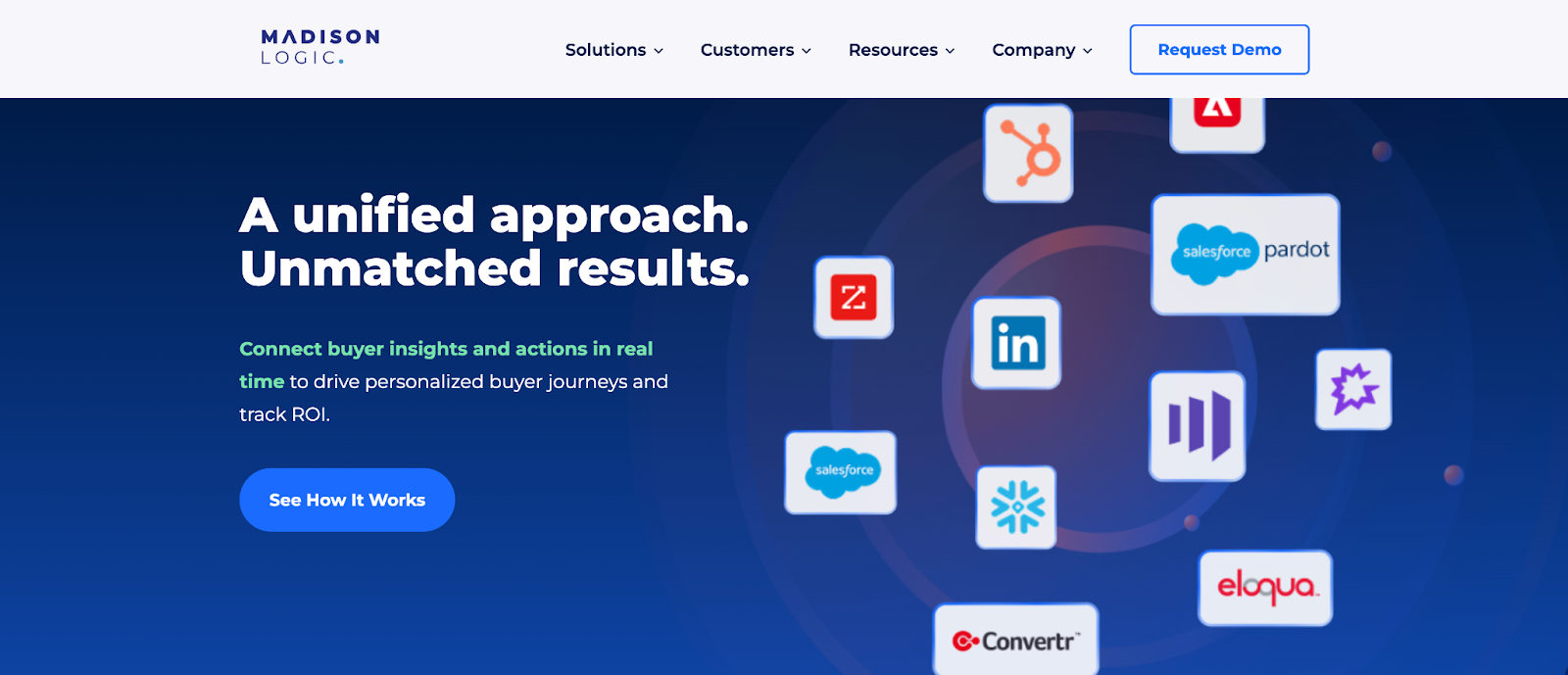
Madison Logic integrates effectively with enterprise-level systems but focuses mainly on campaign alignment and measurement.
Its integrations are designed to connect CRM and marketing data to support its multi-channel activation model rather than unified analytics.
Notable integration traits:
- CRM compatibility: Works with Salesforce, HubSpot, and Marketo to bring in audience and campaign data.
- MAP/Ad alignment: Integrates with platforms like Adobe Experience Cloud and Convertr for activating content syndication and display campaigns.
- Targeting focus: Pulls company data to power ABM lists and custom audiences across display and LinkedIn Ads.
- One-way sync: Data generally moves from CRM or MAP into activation tools for targeting, with limited feedback loops back into the CRM.
While the integrations serve campaign execution well, they lack the analytical and automation depth that GTM teams increasingly expect from unified platforms.
Factors,ai vs Madison Logic: Verdict on CRM and Data Integrations
Both tools integrate with key CRM and marketing platforms, but they serve different operational purposes.
Factors.ai acts as a central data hub, merging inputs from CRM, ads, and analytics to fuel intelligence and automation. Its two-way sync allows teams to use data for both activation and measurement, reducing silos across GTM functions.
Madison Logic connects with similar systems but uses the data primarily for ad targeting and campaign execution, not for dynamic analytics or automation.
In short:
Factors.ai = Deep, bi-directional integrations designed for unified GTM intelligence.
Madison Logic = Practical CRM connectivity built for ABM campaign execution.
{{INLINE_BOFU}}
Factors.ai vs Madison Logic: Intent Data and Account Intelligence
Intent data is the foundation of any modern GTM strategy.
It helps teams understand which accounts are in-market, what they’re researching, and when they’re most likely to convert.
Both Factors.ai and Madison Logic use intent signals to drive engagement, but the way they collect, analyze, and act on this data differs in depth and flexibility.
Factors.ai vs Madison Logic: Intent Data and Account Intelligence Comparison Table
| Aspect | Factors.ai | Madison Logic |
|---|---|---|
| Intent Signal Sources | Combines first-party (website, CRM, product), second-party (ad platforms, G2), and third-party (CSV uploads) data with AI-driven scoring. | ML Insights aggregates three sources: historical performance, install base, and B2B research data. |
| Signal Scoring | Rank accounts by ICP fit, signal strength, and funnel stage. | Prioritizes accounts within ML Insights based on engagement activity. |
| Buying Group Mapping | Identifies buying groups and shared engagement within an account. | Not mentioned or detailed. |
| Actionability | Intent signals trigger real-time alerts, campaign activation, and CRM updates. | Signals inform campaign targeting and content delivery. |
| Data Freshness | Near real-time updates across web, CRM, and ad systems. | Updates depend on aggregated third-party data intervals. |
| Third-Party Signals (G2) | Official G2 partner with 10+ integrated buyer intent signals. | No G2 or external marketplace data listed. |
Factors.ai’s Intent Data and Account Intelligence
Factors.ai approaches intent data as a connected ecosystem rather than a data feed.
It blends behavioral, engagement, and firmographic signals from across the funnel, then enriches them with external data sources for higher accuracy and actionability.
Key strengths in intent intelligence include:
- Multi-source intent capture: Pulls from website, CRM, ads, and review platforms like G2.
- AI scoring: AI Agents continuously assess signal strength and account readiness.
- Buying group identification: Maps multiple stakeholders interacting from the same company.
- Real-time automation: Triggers alerts, audience updates, or SDR notifications instantly when intent crosses a defined threshold.
- Milestones integration: Links intent to funnel movement, showing which actions advance deals.
This gives GTM teams not just visibility into who’s active, but also insight into how close they are to conversion.
Madison Logic’s Intent Data and Account Intelligence
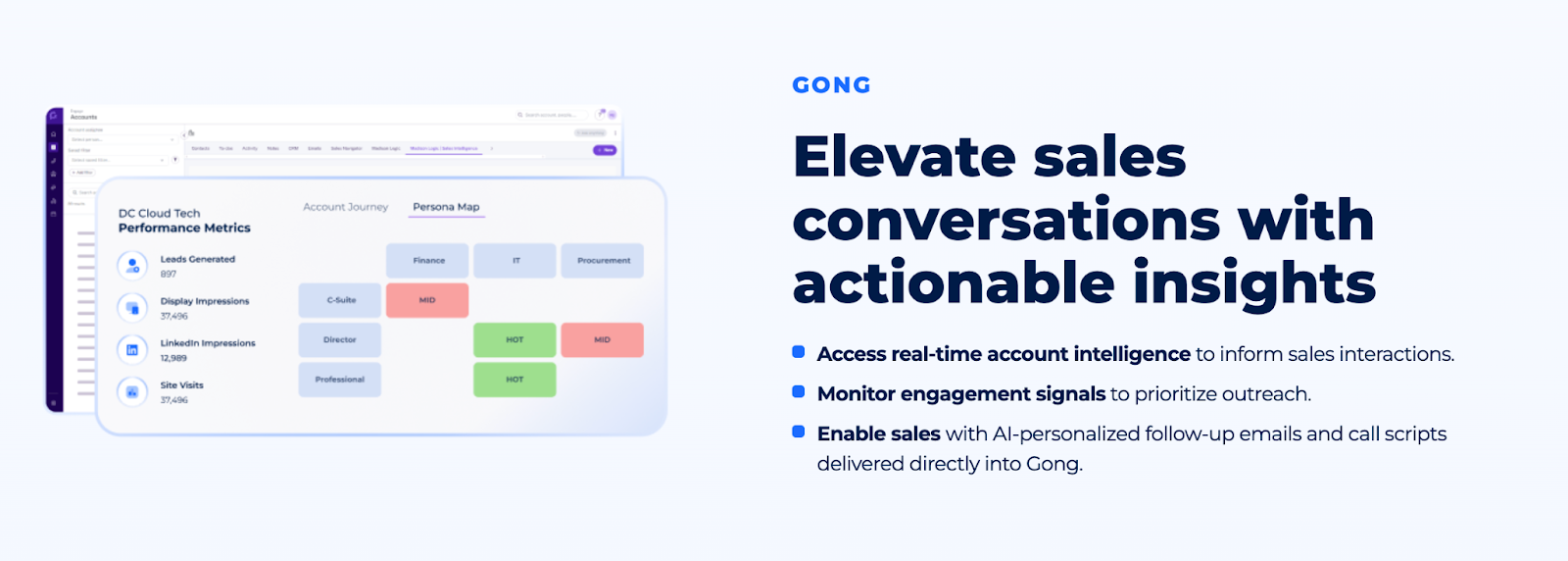
Madison Logic centers its intent capabilities around ML Insights, a proprietary dataset designed to identify in-market accounts and guide ABM targeting.
It combines three data sources including historical performance, install base, and B2B research activity, to determine which accounts are showing relevant buying signals.
Notable features include:
- Historical engagement analysis to find repeat or lookalike accounts.
- Intent-based prioritization for display, LinkedIn, and content syndication campaigns.
- Integration with CRM data for refining audience segments and optimizing campaign targeting.
- ML Measurement for correlating intent data with pipeline influence and deal velocity.
While ML Insights offers broad coverage across industries, it focuses more on reach and campaign readiness than on depth of behavioral intelligence.
Factors.ai vs Madison Logic: Verdict on Intent Data & Account Intelligence
Both platforms give GTM teams the ability to act on buying intent, but they differ in how actionable and dynamic that intelligence is.
Factors.ai provides real-time, AI-driven intent intelligence, combining first-party data with external signals like G2, mapping buying groups, and connecting everything back to pipeline analytics. It turns signals into immediate next steps through alerts and automations.
Madison Logic focuses on aggregated market intent through ML Insights, which works well for large-scale campaigns but offers limited visibility into individual account journeys or multi-contact engagement patterns.
In short:
Factors.ai = Real-time, multi-source intent intelligence designed for activation and analytics.
Madison Logic = Aggregated market intent data optimized for ABM targeting.
If intent is the core of this comparison, you’ll love our post on Buyer Intent for ABM as it shows how to turn signals into sales-ready actions.
Factors.ai vs Madison Logic: Ad Activation and Orchestration
Even the best intent data means little if it doesn’t translate into effective activation.
That’s why the ability to sync audiences, launch contextual ads, and orchestrate campaigns across multiple platforms has become a defining feature of modern GTM stacks.
Both Factors.ai and Madison Logic offer ad activation features, but their depth, automation, and cross-platform coordination vary sharply.
Factors.ai vs Madison Logic: Ad Activation and Orchestration Comparison Table
| Aspect | Factors.ai | Madison Logic |
|---|---|---|
| LinkedIn Ads Activation | LinkedIn AdPilot dynamically syncs audiences based on intent and funnel stage. | Native ABM Social Advertising with LinkedIn Ads integration. |
| Google Ads Activation | Google AdPilot sends enriched conversion data via CAPI and refreshes audiences daily. | Not available. |
| Audience Sync Frequency | Real-time sync with dynamic segmentation and suppression for inactive accounts. | Periodic updates aligned with campaign cycles. |
| Ad Personalization | Buyer-stage campaigns, impression pacing, and automated message sequencing. | Static audience lists and creative rotation based on campaign setup. |
| Orchestration | Combines AI Agents, GTM workflows, and cross-platform triggers for unified execution. | Limited orchestration; primarily campaign-based activation. |
Factors.ai Ad Activation and Orchestration
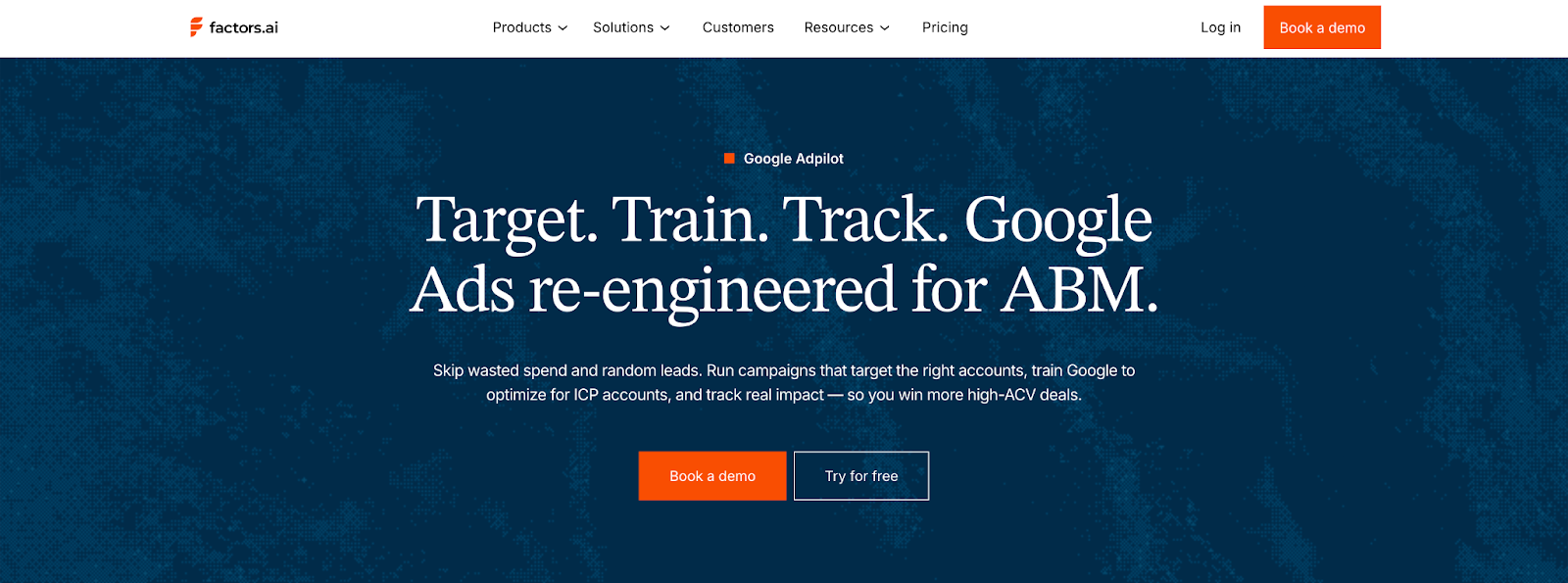
Factors.ai brings intelligence to ad orchestration through its integrated AdPilot suite, built specifically for performance-driven B2B campaigns.
Rather than simply syncing audiences, it uses intent signals and funnel movement to dynamically adjust ad delivery, ensuring that every impression counts.
Core activation strengths include:
- LinkedIn AdPilot: Automatically refreshes audiences using real-time intent data. Ensures only high-intent accounts see active campaigns.
- Google AdPilot: Sends conversion signals through Google CAPI, optimizing bids for ICP-fit accounts and suppressing irrelevant clicks.
- Buyer-stage campaigns: Tailors ad creatives and delivery based on funnel stages across awareness, consideration, or decision.
- Cross-platform orchestration: Triggers ad, CRM, and Slack actions from the same AI workflows, creating a continuous GTM loop.
- Impression pacing control: Prevents ad fatigue by distributing impressions evenly across targeted accounts.
The result is a smarter, leaner ad strategy and reduces waste and converts intent into measurable pipeline growth.
Madison Logic’s Ad Activation and Orchestration
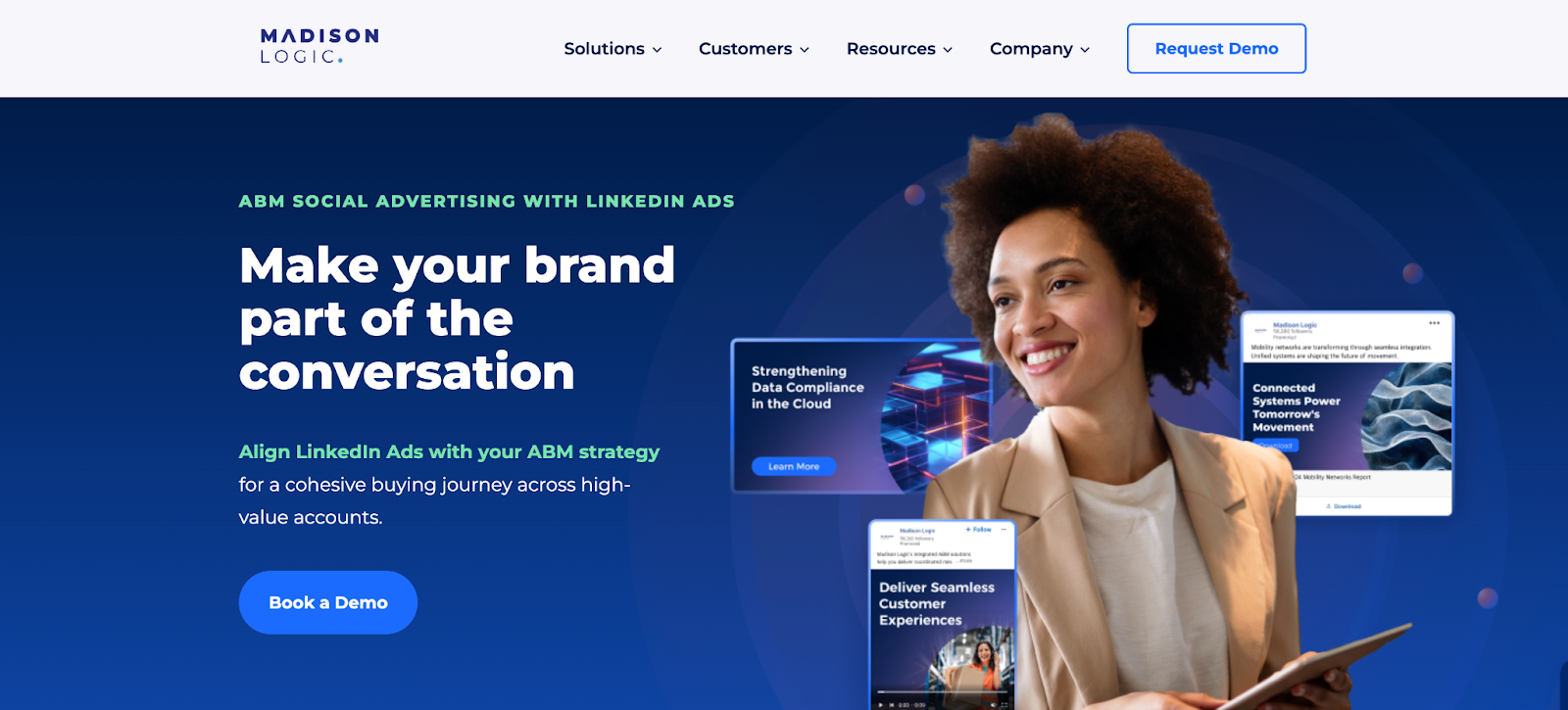
Madison Logic is widely recognized for its multi-channel activation network, covering display, LinkedIn, CTV, audio, and content syndication.
Its platform allows B2B marketers to deliver targeted campaigns at scale, especially for enterprise audiences.
Key ad activation capabilities include:
- Native LinkedIn integration for audience-based ABM campaigns.
- Display and content syndication channels for broader reach and retargeting.
- Campaign-level targeting powered by ML Insights intent data.
- Cross-channel measurement through ML Measurement for engagement and ROI tracking.
- Manual orchestration: Campaign updates and targeting refinements are primarily handled via platform setup rather than automation.
Madison Logic’s model works well for large marketing teams running broad ABM programs, though its orchestration layer remains less dynamic compared to AI-driven systems like Factors.ai.
Factors.ai vs Madison Logic: Verdict on Ad Activation and Orchestration
Both platforms excel in different aspects of ad activation, but their approaches reflect two distinct mindsets.
Factors.ai focuses on precision and automation, activating ads only when intent is high, refreshing audiences in real time, and linking campaign performance directly to revenue. Its AdPilot suite brings measurable efficiency to both LinkedIn and Google Ads.
Madison Logic shines in reach and diversity, offering multi-channel exposure across display, CTV, and content networks. However, its orchestration remains manual, and campaign optimization depends more on scale than on signal-based automation.
In short:
Factors.ai = Dynamic, AI-led ad activation with real-time optimization.
Madison Logic = Multi-channel ABM execution built for enterprise reach.
Running LinkedIn campaigns? Here’s a hands-on guide to LinkedIn ads strategy for B2B SaaS which is great for deciding whether native activation (Madison Logic) or AdPilot-style syncs fit you.
Factors.ai vs Madison Logic: Analytics, Measurement and Reporting
For B2B marketers, understanding what actually drives pipeline is just as important as generating it.
That’s where analytics and reporting make the difference between guessing and scaling.
Both Factors.ai and Madison Logic provide performance insights, but their approaches: one unified and intelligent, the other campaign-focused which reflects the broader philosophy of each platform.
Factors.ai vs Madison Logic: Analytics, Measurement and Reporting Comparison Table
| Aspect | Factors.ai | Madison Logic |
|---|---|---|
| Attribution Type | Multi-touch attribution with funnel progression and channel-level analysis. | Engagement and pipeline influence tracking via ML Measurement. |
| Reporting Scope | End-to-end visibility, from account visits to revenue contribution. | Campaign-level metrics focused on impressions, clicks, and influence. |
| Customization | 100–300 custom reports depending on plan tier. | Standard dashboards with predefined KPIs. |
| Dashboards | Interactive, real-time dashboards showing customer journeys, funnel movement, and ROI. | Campaign-centric dashboards showing engagement and ad performance. |
| Funnel Analytics | Milestones track movement from awareness to conversion. | Provides deal velocity and campaign reach metrics. |
| Data Integration | Combines CRM, ad, and product data for unified pipeline analytics. | Pulls from campaign and CRM data for influence measurement. |
Factors.ai’s Analytics, Measurement and Reporting
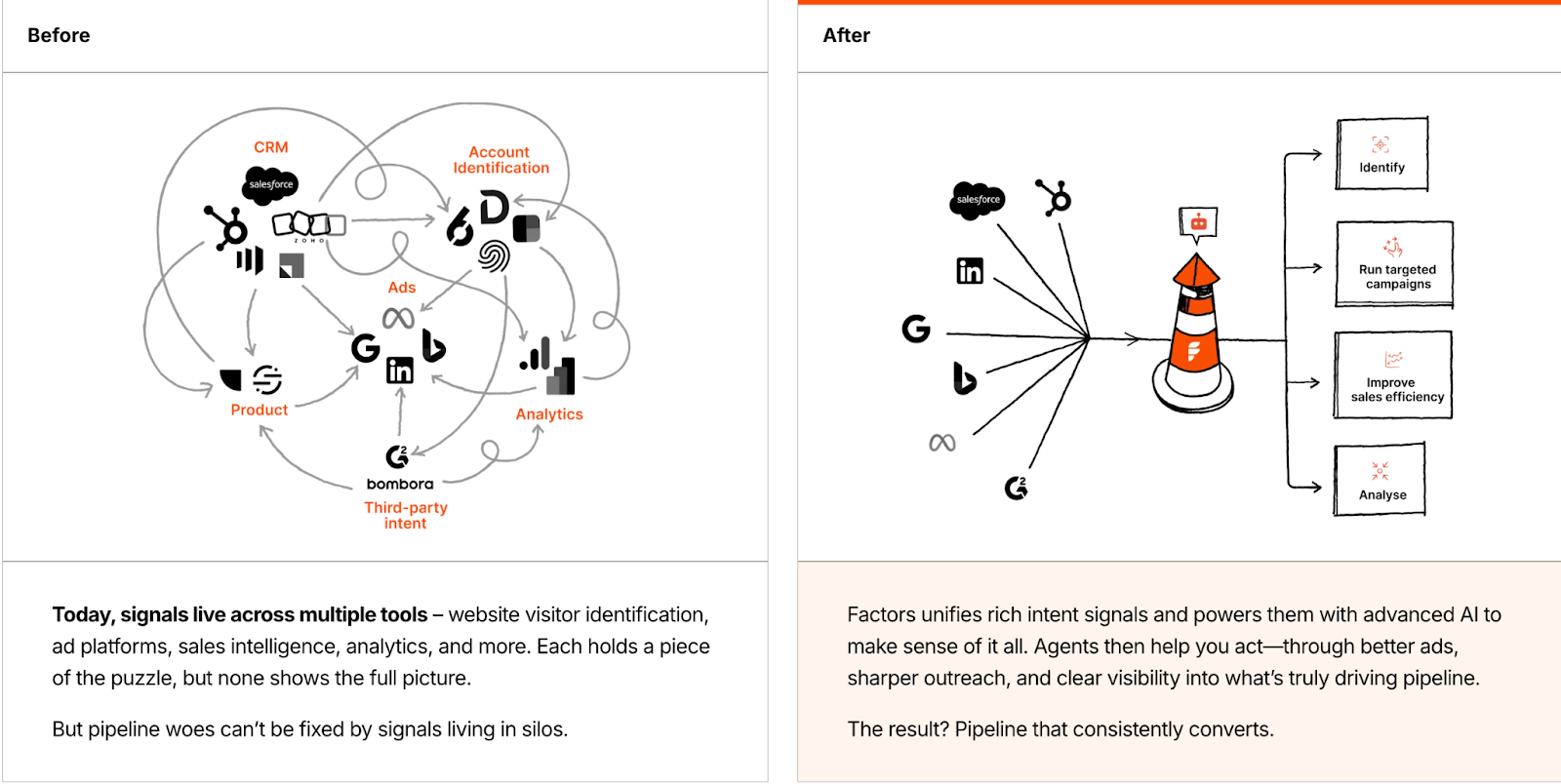
Factors.ai approaches analytics as the core of GTM intelligence, connecting every marketing and sales signal into a single measurement framework.
Its analytics layer isn’t just about visualizing metrics; it’s designed to explain why deals move, where engagement happens, and how campaigns influence revenue.
Key strengths in analytics and measurement:
- Milestones analytics: Tracks how accounts move through different funnel stages and attributes every touchpoint that contributed to progress.
- Multi-touch attribution: Measures ROI across campaigns, ads, and CRM activities to identify high-performing channels.
- Custom dashboards: Offers up to 300 customizable reports, segmented by account type, intent level, or sales stage.
- Account360 visibility: Combines CRM, ad, and web data to show the full customer journey, from first touch to closed deal.
- Revenue linkage: Connects marketing actions directly to pipeline outcomes for clear, defensible ROI.
With Factors.ai, teams move from reporting on activities to proving outcomes, shifting analytics from “what happened” to “what worked.”
Madison Logic’s Analytics, Measurement and Reporting
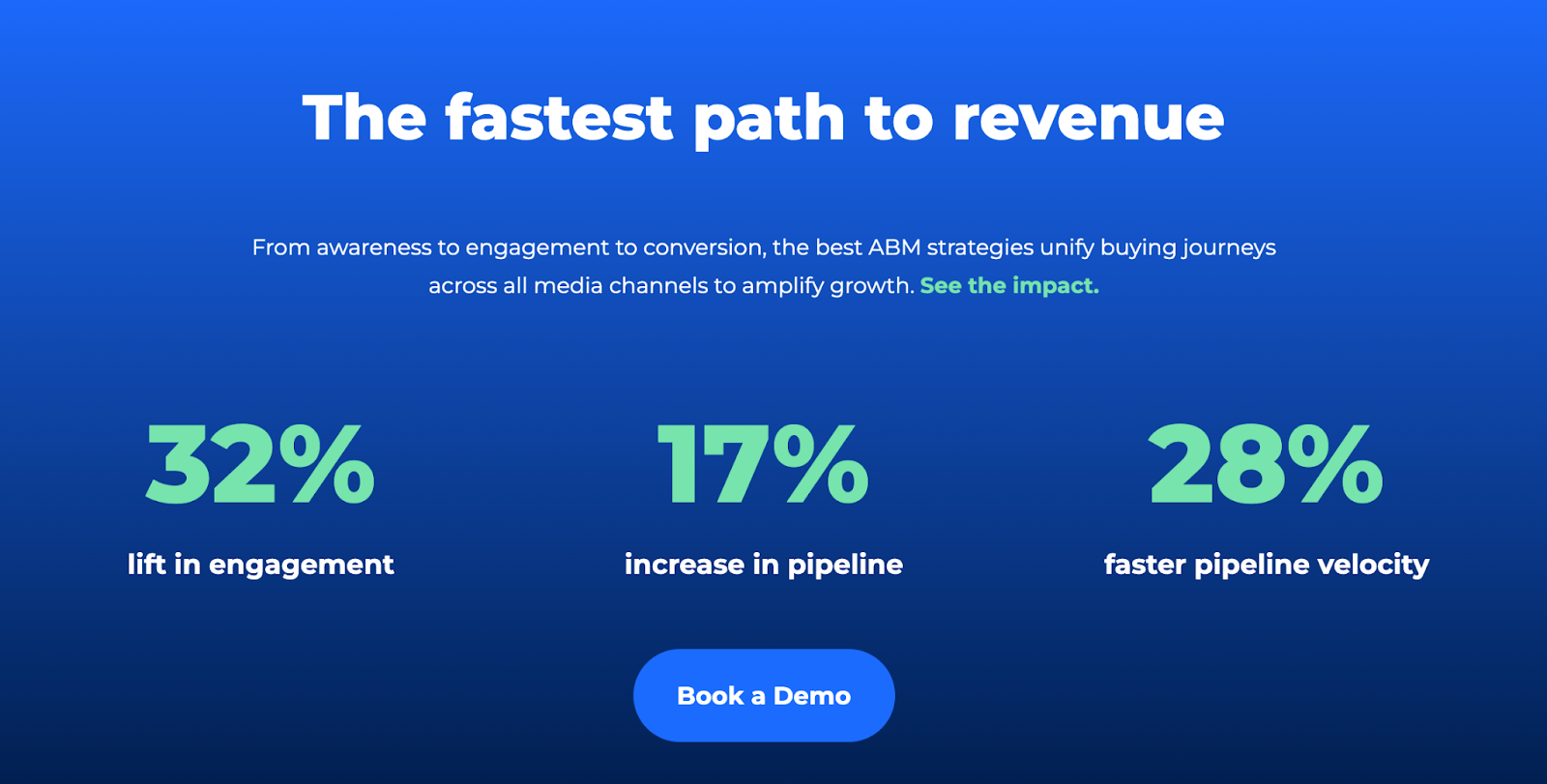
Madison Logic focuses its measurement framework on campaign performance and pipeline influence through its ML Measurement product.
It’s designed for marketers running large, multi-channel ABM campaigns who need visibility into reach, engagement, and deal velocity.
Key analytics capabilities include:
- Campaign performance reporting across display, LinkedIn, and content syndication channels.
- Pipeline influence analysis, showing which campaigns contributed to deal acceleration.
- Engagement scoring for tracking content consumption and ad interaction.
- ROI snapshots comparing media spend to influenced revenue.
- Standard dashboards for evaluating reach, click-throughs, and conversion impact.
While these insights help enterprises gauge overall ABM success, Madison Logic’s analytics lean toward post-campaign summaries rather than real-time performance optimization.
Factors.ai vs Madison Logic: Verdict on Analytics, Measurement, and Reporting
Both platforms aim to quantify marketing impact, but at different levels of sophistication.
Factors.ai delivers a complete measurement ecosystem, connecting every campaign, ad, and CRM touchpoint into one analytical view. Its multi-touch attribution, Milestones framework, and custom reporting make it ideal for teams focused on pipeline accuracy and continuous optimization.
Madison Logic provides solid campaign-level visibility, particularly valuable for enterprise marketers tracking cross-channel engagement and media performance. However, its insights remain top-level which is better for measuring impact than diagnosing it.
In short:
Factors.ai = Full-funnel analytics that link engagement directly to revenue.
Madison Logic = Campaign-level measurement suited for large-scale ABM visibility.
Factors.ai vs Madison Logic: Support, Onboarding and Ease of Setup
A powerful platform is only as good as its implementation.
For marketing and sales teams, smooth onboarding and responsive support determine how fast they can go from setup to measurable results.
Both Factors.ai and Madison Logic support enterprise customers, but their post-sale experiences differ in accessibility, personalization, and speed.
Factors.ai vs Madison Logic: Support, Onboarding and Ease of Setup Comparison Table
| Aspect | Factors.ai | Madison Logic |
|---|---|---|
| Onboarding Type | White-glove onboarding with dedicated setup assistance. | Enterprise onboarding handled through managed services. |
| Support Access | Dedicated Slack channel, CSM, and email/helpdesk support. | Email and customer portal; limited mention of dedicated CSM support. |
| Setup Time | Fast setup with guided integration (usually within days). | Varies by campaign scope and enterprise configuration. |
| Ease of Use | Intuitive dashboard and no-code automation setup. | Complex for small teams due to custom configurations. |
| Ongoing Support | Weekly GTM review calls and proactive campaign optimization. | Reactive support via tickets or account management for enterprise customers. |
Factors.ai’s Approach Support, Onboarding and Ease of Setup
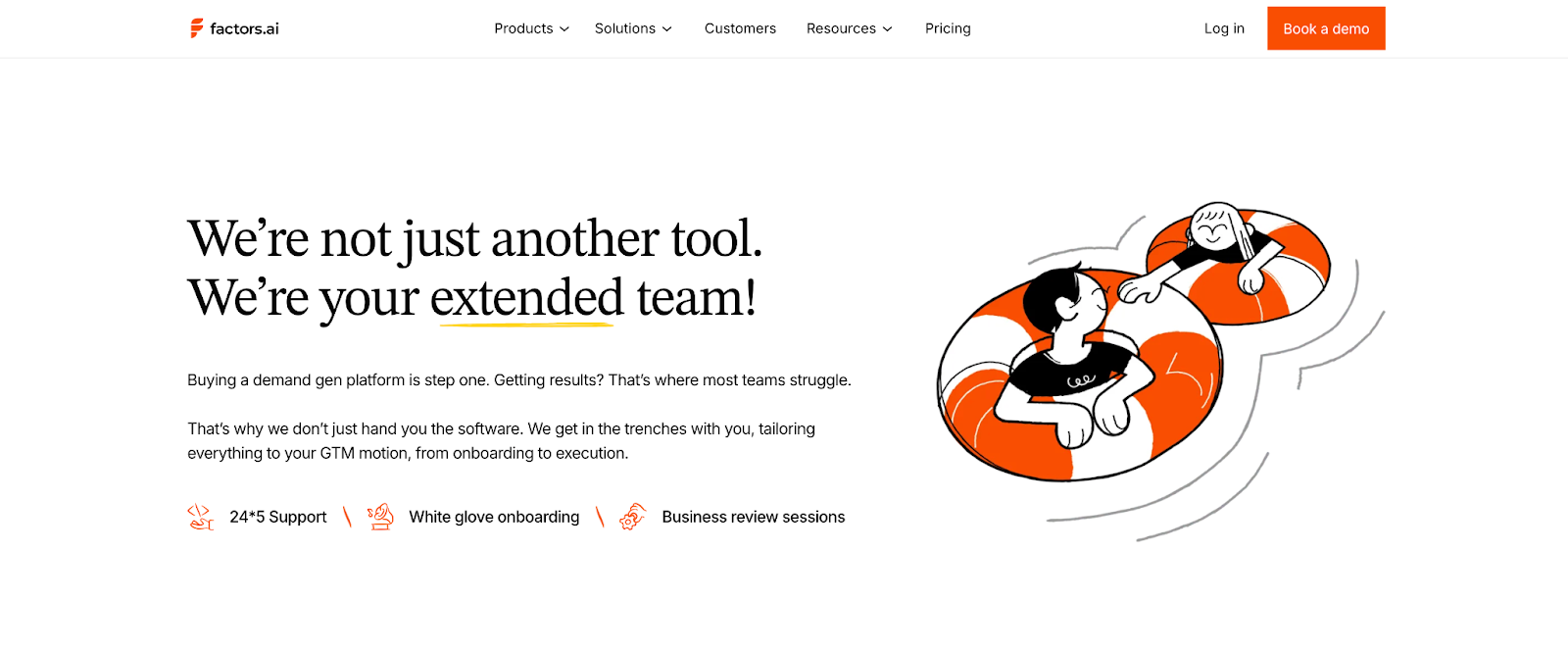
Factors.ai prioritizes accessibility and hand-holding from the very start.
Its onboarding experience is built for speed and confidence, ensuring that teams can see data flowing within days of setup.
Key highlights:
- White-glove onboarding: Dedicated specialists assist with platform setup, integrations, and initial configuration.
- Dedicated CSM: Every account, especially at Growth and Enterprise tiers, gets a customer success manager who ensures goals are met and progress tracked.
- Support channels: Live Slack communication, helpdesk, and email support ensure real-time responses.
- Weekly GTM syncs: Teams receive ongoing performance reviews and recommendations to improve campaign strategy.
- Ease of setup: Most integrations (HubSpot, Salesforce, Google Ads, LinkedIn) are plug-and-play, requiring minimal technical input.
This hands-on approach means even non-technical GTM teams can go live quickly and receive continuous optimization guidance, not just troubleshooting.
Madison Logic’s Support, Onboarding and Ease of Setup
Madison Logic provides onboarding that’s tailored for large enterprise ABM programs.
Its process involves working directly with campaign managers and strategists to configure targeting, creative, and measurement, making it suitable for organizations with defined internal marketing operations.
Notable support characteristics:
- Managed onboarding: The Madison Logic team typically handles campaign setup and alignment rather than a self-service model.
- Enterprise support model: Assistance is often routed through account managers and ticket-based systems.
- Setup complexity: Because campaigns are customized for scale, implementation may take longer and require alignment with multiple departments.
- Performance reviews: Enterprise clients receive periodic reports, but ongoing strategic feedback isn’t always continuous.
While the experience is professional and enterprise-grade, it caters to structured marketing departments with dedicated staff which is less suited for agile teams needing faster self-service setups.
Factors.ai vs Madison Logic: Verdict on Support, Onboarding and Ease of Setup
Both platforms deliver credible enterprise support, but their approaches cater to different customer needs.
Factors.ai provides fast, collaborative onboarding that helps teams start quickly and stay aligned through ongoing reviews. Its human-led yet agile support experience suits both scaling startups and large GTM teams.
Madison Logic, by contrast, offers a traditional enterprise support model focused on managed campaign delivery. It’s reliable for big organizations but less flexible for smaller teams that prefer direct, self-driven access.
In short:
Factors.ai = Fast, guided onboarding and responsive, hands-on support.
Madison Logic = Structured, enterprise-managed onboarding suited for large ABM teams.
Factors.ai vs Madison Logic: Security and Compliance
When handling sensitive customer and campaign data, security is a foundation of trust.
Both Factors.ai and Madison Logic take compliance seriously, offering enterprise-grade safeguards, but their depth and transparency differ in a few important ways.
Factors.ai vs Madison Logic: Security and Compliance Comparison Table
| Aspect | Factors.ai | Madison Logic |
|---|---|---|
| Compliance Standards | ISO 27001, SOC 2 Type II, GDPR, CCPA. | SOC 2 Type II, GDPR, CCPA, CASL. |
| Hosting Infrastructure | Hosted on Google Cloud Platform (GCP), SOC 1, 2, 3 compliant. | Hosted on enterprise-grade data centers (details not publicly listed). |
| Data Encryption | AES-256 encryption for data at rest; TLS and SHA-2 encryption for data in transit. | Encrypted data storage and transmission; limited technical detail available. |
| Access Control | Role-based access via IAM, 2FA authentication, and logged access trails. | Standard user-based access permissions; less transparency around internal controls. |
| Incident Response | Dedicated Data Protection Officer (DPO) and documented recovery policy. | Managed internally with enterprise escalation; no public incident policy. |
| Data Retention | Encrypted backups maintained for one year after service termination. | Not clearly specified. |
Factors.ai’s Security and Compliance

Factors.ai treats data security as an integral part of its infrastructure.
Hosted on Google Cloud Platform (GCP), it inherits GCP’s SOC-certified environment while adding multiple internal security layers to ensure customer data stays private, encrypted, and auditable.
Key security practices include:
- Data encryption: All customer data is encrypted both in transit (TLS, SHA-2) and at rest (AES-256).
- Access controls: Role-based permissions, multi-factor authentication, and IP-based access restrictions.
- Organizational security: Every employee signs confidentiality agreements and undergoes ongoing security training.
- Incident management: A clear policy led by a Data Protection Officer (DPO), with immediate reporting and recovery protocols.
- Backup and disaster recovery: Frequent snapshots stored in multiple geographic locations within the US.
- International data protection: Adheres to EU SCCs with technical and organizational safeguards for cross-border data transfers.
The platform’s transparency is another strength: its public Security Policy outlines all compliance practices and certifications, giving customers full visibility into how their data is protected.
Madison Logic’s Security and Compliance
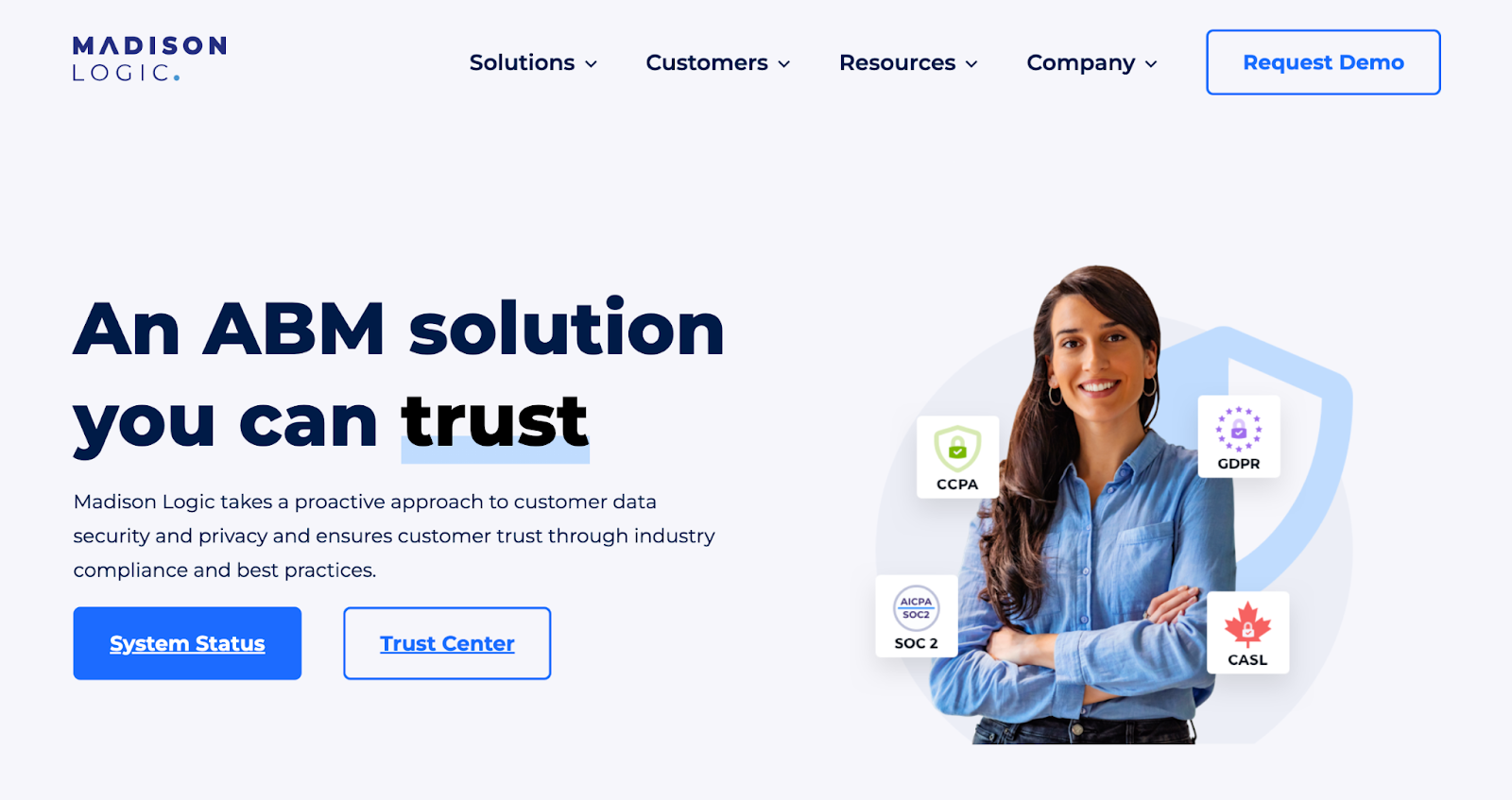
Madison Logic maintains a strong compliance posture, with certifications and privacy adherence built around enterprise advertising standards.
The company is SOC 2 Type II, GDPR, CCPA, and CASL compliant, ensuring that personal and campaign data meets international privacy expectations.
Security framework highlights:
- Data center compliance: Operates on enterprise-grade hosting with SOC and ISO certifications.
- Privacy coverage: Fully aligned with GDPR and CCPA regulations for data processing and opt-out handling.
- Ad data protection: Uses secure protocols to protect audience and campaign data shared across display and LinkedIn networks.
- Access controls: Standard authentication and limited user permissions to safeguard platform use.
- Data processing agreements: Available to customers upon request, detailing data handling and storage practices.
While Madison Logic provides the expected security for an enterprise ABM platform, it offers fewer publicly available details about technical controls or encryption methods compared to Factors.ai’s transparent documentation.
Factors.ai vs Madison Logic: Verdict on Security and Compliance
Both platforms comply with leading global standards, but their approaches to transparency and depth differ.
Factors.ai stands out with its publicly documented, multi-layered security framework, SOC and ISO certifications, and clear data protection processes. Its encryption, backup, and compliance structure make it ideal for teams with strict data governance requirements.
Madison Logic offers robust enterprise compliance, ensuring legal and privacy adherence across campaigns, but keeps its internal processes largely behind closed documentation. It’s reliable for large-scale marketing operations but less open in its technical transparency.
In short:
Factors.ai = Transparent, multi-layered security framework with public compliance visibility.
Madison Logic = Enterprise-grade compliance with limited public technical disclosure.
If privacy and compliance are priorities, this article explores website visitor identification privacy and how to remain compliant while doing ABM.
Factors.ai vs Madison Logic: Overall Verdict and Recommendation
Both Factors.ai and Madison Logic empower B2B marketers to reach and engage their target accounts, but their strengths lie in very different areas.
Where Madison Logic emphasizes large-scale, managed ABM campaigns across multiple ad channels, Factors.ai focuses on intelligent, connected GTM execution, turning every insight into measurable action.
Factors.ai vs Madison Logic: Quick Comparison Recap
| Category | Best Performer | Reason |
|---|---|---|
| Intent & Intelligence | Factors.ai | Multi-source AI scoring and buying group mapping. |
| Ad Activation | Factors.ai | Dynamic audience sync via LinkedIn and Google AdPilot. |
| Analytics & Attribution | Factors.ai | Milestones analytics and full-funnel ROI tracking. |
| Integrations | Factors.ai | Real-time, bi-directional sync with CRM and MAPs. |
| Support & Setup | Factors.ai | Fast onboarding, dedicated CSM, proactive guidance. |
| Reach & Channels | Madison Logic | Broader ABM activation across display and syndication. |
| Enterprise Fit | Madison Logic | Tailored for large-scale managed campaigns. |
- Choose Factors.ai if you want a unified GTM platform that connects intent, analytics, and activation which is perfect for teams that value agility, automation, and transparency.
- Choose Madison Logic if you prioritize ABM reach, managed execution, and multi-channel advertising at enterprise scale.
In the end, Madison Logic helps you reach your market,
but Factors.ai helps you understand it and convert it.
If this comparison helped, you may also like these related deep dives:
- Factors vs ZoomInfo - compare account intelligence approaches.
- Factors vs Dreamdata - deeper look at analytics + attribution differences.
FAQs for Factors.ai vs Madison Logic
Q. What is the main difference between Factors.ai and Madison Logic?
The biggest difference comes down to how intelligence turns into action.
Factors.ai focuses on real-time intent intelligence, automation, and full-funnel analytics that directly trigger ads, alerts, and workflows.
Madison Logic, on the other hand, is built around large-scale ABM activation, helping enterprises reach target accounts across multiple paid channels with managed execution.
Q. Which platform is better for intent-based B2B marketing?
If you want real-time, first-party-led intent data that updates as accounts move through your funnel, Factors.ai is the stronger fit.
If your priority is aggregated market intent to power broad ABM campaigns across display and content networks, Madison Logic is better aligned to that use case.
Q. Does Factors.ai support both LinkedIn Ads and Google Ads?
Yes. Factors.ai supports both LinkedIn and Google Ads through its AdPilot suite.
Audiences sync dynamically based on intent and funnel stage, and Google conversion signals are sent via CAPI to improve bid optimization and reduce wasted spend.
Madison Logic primarily supports LinkedIn Ads along with display, CTV, and content syndication channels, but does not offer Google Ads activation.
Q. Can Madison Logic replace a GTM analytics or attribution tool?
Not entirely. Madison Logic provides campaign-level measurement and pipeline influence tracking, which works well for reporting on ABM performance at scale.
However, it does not offer deep multi-touch attribution, journey timelines, or CRM-linked funnel analytics the way Factors.ai does.
Q. Which platform is better for small or mid-sized B2B teams?
Factors.ai is generally better suited for startups and mid-market teams because of:
- Transparent, tiered pricing
- A free plan to get started
- Faster onboarding and self-serve workflows
Madison Logic is more appropriate for large enterprise teams with established ABM budgets and managed campaign requirements.
Q. Does Factors.ai integrate deeply with CRM systems?
Yes. Factors.ai offers bi-directional integrations with HubSpot, Salesforce, and Marketo.
This means CRM updates, deal stages, and account activity flow both ways, enabling real-time scoring, alerts, and analytics.
Madison Logic integrates with similar CRMs, but data typically flows one way to support campaign targeting rather than closed-loop GTM analytics.
Q. How does each platform handle buying groups and multiple stakeholders?
Factors.ai actively identifies buying groups by mapping multiple contacts engaging from the same account and tracking their shared journey.
Madison Logic focuses more on account-level intent and targeting, with less visibility into individual stakeholders or buying group dynamics.
Q. Is Factors.ai suitable for enterprise teams?
Yes. Factors.ai offers an Enterprise plan with:
- Unlimited account identification
- Predictive scoring
- Advanced Milestones analytics
- White-glove onboarding
- Custom reporting at scale
It’s especially useful for enterprise teams that want automation, attribution clarity, and tighter sales-marketing alignment, not just media execution.
Q. Which platform is easier to implement and go live with?
Factors.ai typically goes live within days, thanks to plug-and-play integrations and guided onboarding.
Madison Logic’s setup timeline varies depending on campaign scope and often involves longer coordination cycles across teams and regions.
Q. Does either platform offer a free trial or free plan?
Factors.ai offers a free plan, allowing teams to track companies, view journeys, and integrate Slack before upgrading.
Madison Logic does not offer a free plan or public trial.
Q. How do Factors.ai and Madison Logic compare on data security and compliance?
Both platforms are enterprise-grade and compliant with major regulations like GDPR and CCPA.
Factors.ai stands out for its publicly documented security practices, ISO 27001 and SOC 2 Type II certifications, and detailed encryption policies.
Madison Logic is SOC 2 Type II compliant but provides fewer publicly available technical details.
Q. Which platform should I choose for my GTM strategy?
Choose Factors.ai if you want:
- Real-time intent intelligence
- Automation across ads, CRM, and workflows
- Clear attribution from engagement to revenue
Choose Madison Logic if you want:
- Broad ABM reach across multiple paid channels
- Managed enterprise campaign execution
- A strong activation network at scale
Both are solid platforms, the right choice depends on whether you value precision and insight or reach and scale.

See how Factors can 2x your ROI
Boost your LinkedIn ROI in no time using data-driven insights


.avif)

See Factors in action.
Schedule a personalized demo or sign up to get started for free
LinkedIn Marketing Partner
GDPR & SOC2 Type II


.svg)



.avif)

