
Google AdWords PPC management services: smarter PPC campaign optimization for B2B
Optimize Google Ads with data-driven PPC management. Improve CPL, pipeline, and ROI with smarter attribution and targeting.
.avif)
Content Marketer



.svg)


TL;DR
- Most Google AdWords PPC management services optimize for clicks, leads, and cost per lead, but in B2B, those metrics rarely correlate with actual pipeline or revenue.
- Great AdWords campaign management services go beyond keyword bidding. They layer audience intelligence, intent signals, and CRM data into every campaign decision.
- Cross-channel attribution is the missing piece. Without it, you're optimizing Google Ads in a vacuum while your buyers interact across five or six other channels before they ever convert.
- The shift from managing campaigns to managing revenue pathways is what separates competent PPC work from work that actually moves the business forward.
- Choosing a PPC partner should come down to one question: do they optimize for pipeline, or just for platform metrics?
There's a specific moment in every B2B marketing team's quarter where someone pulls up a Google Ads dashboard and says, "These campaigns are performing really well."
Cost per click is down… click-through rate is up… and the leads column? That looks healthy as a green juice… everyone smiles and nods in agreement.
THEN someone from sales asks, "So which of these leads actually turned into pipeline?" The room goes… rather quiet.
This un-little gap between ad performance and business performance is where most Google AdWords PPC management shatters into minuscule pieces because nobody's connecting the dots between what Google Ads reports and what the CRM reveals three months later.
I’ve written this piece with the intention of closing that gap and to help us rethink what PPC campaign optimization should actually look like when you're selling to businesses (not consumers)
What is Google AdWords PPC management?
Google AdWords PPC management is when you plan, build, run, and optimize paid search campaigns on Google's advertising platform. The name ‘AdWords’ technically retired in 2018 when Google rebranded to Google Ads, but the term persists everywhere. Clients still search for it, agencies still use it in their service pages, and plenty of marketing teams still say ‘AdWords’ in casual conversation. So when you see both terms being used interchangeably here, it’s because of that.
At its core, managing Google Ads campaigns involves several interconnected pieces. You start with campaign setup, deciding whether to run Search campaigns, Display campaigns, Performance Max, or some combination of all three. From there, you move into keyword research and match type selection, figuring out which queries your ideal buyers are actually typing into Google and how tightly you want to match against them.
Then comes ad creation and testing. You craft headlines and descriptions, construct responsive search ads, and strive to differentiate your message amidst a multitude of competitors vying for the same terms. Bid strategy optimization follows, where you decide how much you're willing to pay per click and whether to let Google's automated bidding algorithms make those decisions for you. Finally, there's conversion tracking, making sure the platform can see what happens after someone clicks.
That was the mechanical side.
The strategic side is where things get more interesting (and more complicated). There's a meaningful difference between managing your own ads with a credit card and a YouTube tutorial, and hiring an agency to provide a full AdWords management service, and relying on Google's own platform recommendations to guide your spending. DIY management works fine when budgets are small and the stakes are low. Agency-led management brings expertise and bandwidth. Platform-led optimization, where you mostly follow Google's automated suggestions, can be efficient but tends to optimize for Google's goals rather than yours.
Why does traditional PPC management fall short in B2B ?
Here's where the usual things start to crack:
Most AdWords campaign management services were built with eCommerce logic at their core. Someone clicks an ad, lands on a product page, and buys something… you can track the full journey in a single session: cost per acquisition and return on ad spend (ROAS) are clear and calculable. The feedback loop is also tight.
B2B doesn't work like that. Your buyer is not just one person making an impulse purchase. It's a committee of about thirteen people evaluating options over weeks or months. The first click might come from a junior analyst doing research. The decision maker might never click an ad at all. The deal might close six months after the initial interaction, long after the campaign that sourced it has been paused or restructured.
When you optimize B2B campaigns for click-through rate, cost per click, or even cost per lead, you're optimizing for proxies that don't necessarily map to revenue. A campaign generating $15 leads might feel like a win until you discover those leads are mostly students downloading a whitepaper and never responding to a sales email. Meanwhile, a campaign generating $120 leads that you nearly paused might be producing the exact accounts your sales team has been trying to reach for months.
The main problem is visibility:
Most PPC management setups can't tell you which companies are clicking your ads. They can't connect a Google Ads lead to a CRM opportunity six weeks later. They don't know whether those 200 conversions last month contributed to $0 in pipeline or $500,000. Everything looks fine at the campaign level, and everything looks disconnected at the business level.
I've seen teams celebrate record-low CPLs in quarterly reviews, only to discover that pipeline from paid search actually declined during the same period. The metrics were improving while the outcomes were getting worse. That's the fundamental tension most B2B PPC management setups never resolve. They optimize for activity, not outcomes, and the two aren't nearly as correlated as people assume.
What do great AdWords management services actually do? (basically, things to look for when you’re choosing a Google Ads PPC Management agency)
If the bar for most PPC management is "keep costs down and leads coming in," the bar for great management is considerably higher. The best Google Ads management service providers build campaigns around five capabilities that most teams don't even think to ask for.
- Intent-driven keyword strategy
This goes beyond picking high-volume terms and hoping for the best. Great managers differentiate between someone searching "what is account-based marketing" (early research, low intent) and someone searching "ABM platform pricing" (late-stage, high intent). They build separate campaigns for each stage and set expectations accordingly. Not every keyword needs to convert directly; some also exist to capture demand early and nurture it forward.
- Audience layering
Keywords tell you what someone's searching for. Audience signals tell you who they are. The best campaigns layer first-party data, customer match lists, in-market audiences, and CRM segments on top of keyword targeting. You're not just bidding on a search term. You're bidding more aggressively when that search term comes from a company that matches your ideal customer profile.
- Creative and landing page alignment
An ad that promises ‘streamline your pipeline reporting’ but drops you on a generic homepage is wasting its own click. Strong PPC management ensures message match between the ad copy, the landing page headline, and the offer itself. This sounds obvious, but I've audited accounts where half the ad groups send traffic to a single landing page that doesn't mention the keyword at all.
- Continuous experimentation
This isn't just A/B testing for the sake of it. It's a structured habit of testing headlines, offers, landing page layouts, and bid strategies with clear hypotheses. The teams that improve quarter over quarter are the ones running experiments methodically, not the ones who set up campaigns and randomly do checks once a month.
- Performance tied to revenue signals
The best management services don't just report on impressions, clicks, and conversions. They connect Google Ads data to pipeline and revenue outcomes. They can tell you which campaigns influenced deals that closed, not just which campaigns generated form fills. That connection transforms PPC from a lead-gen channel into a revenue channel, and it changes every optimization decision you make.
In 2026… ‘optimization’ should mean optimizing for business outcomes with full-funnel data. If your PPC partner still defines it as lowering your cost per click by 10%, the bar is too low.
{{INLINE_TOFU}}
The B2B PPC funnel: why clicks and conversions aren't enough
The standard PPC funnel is simple… impression leads to click, click leads to conversion, conversion leads to celebration. In B2B, the actual buying journey looks nothing like that neat little diagram.. It looks like a plate of messy spaghetti arrabiata… something like this (yes, you could be the toddler):

Moving on to more serious things… a more realistic map has five stages:
- At the top, there's awareness, where a prospect first encounters your brand, possibly through a Display ad or a broad Search campaign.
- Then comes consideration, where they start comparing options, reading reviews, and visiting your site more than once.
- Evaluation follows, where multiple stakeholders from the same company are actively assessing your product against competitors.
- After that comes pipeline, where a real sales conversation begins.
- Finally, revenue, where the deal closes and you can actually measure impact.
Google Ads influences every single one of those stages, but the platform's default reporting only shows you the last interaction before conversion. If someone clicked a Search ad, visited your site three times organically over the next two weeks, attended a webinar, and then booked a demo through a LinkedIn retargeting ad, Google Ads gets zero credit in a last-click model. The Search campaign that started the whole journey looks like it produced nothing.
This is where view-through impact comes in. Plenty of prospects see your Display ads or YouTube pre-rolls without clicking. Those impressions still shape perception and keep your brand present during the evaluation phase. Multi-touch journeys are the norm in B2B , not the exception. A typical closed-won deal might involve eight to twelve touchpoints across four or five channels over the course of several weeks.
Your Google Ads are almost certainly influencing deals long before they get credit for them. The problem isn't that paid search doesn't work in B2B . The problem is that default measurement frameworks can't see the work it's doing. When you can only see the last click, you end up over-investing in bottom-of-funnel campaigns and starving the campaigns that actually create demand in the first place.
Core components of PPC campaign optimization
Let's break down the building blocks of serious PPC campaign optimization. Each of these components deserves deliberate attention, and skipping any one of them creates a weak link in the chain.
- Keyword strategy and search intent mapping
Not all keywords carry the same intent, and treating them identically is one of the most common mistakes in Google Ads. High-intent queries signal that someone is close to a decision. "B2B marketing attribution software" or "Factors.ai pricing" are examples where the searcher knows what they want and is evaluating options. Exploratory queries like "what is marketing attribution" or "how to track campaign performance" signal earlier-stage interest. They're valuable for building awareness, but expecting them to convert at the same rate as high-intent terms sets you up for disappointment.
Branded keywords, terms that include your company name, tend to convert well but represent demand you've already created. Non-branded keywords are where you capture new demand, and they require more careful bid management. A strong keyword strategy segments campaigns by intent stage and allocates budget proportionally, rather than dumping everything into a single campaign and hoping Google's algorithm sorts it out.
- Bidding and budget allocation
The choice between manual and automated bidding is less binary than it used to be. Google's Smart Bidding strategies, like Target CPA and Maximise Conversions, have improved significantly. They work well when you have enough conversion data to feed the algorithm, typically at least 30 to 50 conversions per month per campaign.
When conversion volume is low, which is common in B2B with higher price points and longer cycles, automated bidding can behave erratically. It doesn't have enough signal to learn from, so it over-corrects and under-delivers. In those cases, manual CPC or enhanced CPC gives you more control while you build up the data needed for automation to perform reliably.
Budget distribution across campaigns matters just as much as bid strategy. A common pattern is to over-allocate to the campaign that "performs best" based on last-click conversions, which usually means the branded campaign that was going to convert anyway. Distributing budget across funnel stages and regularly re-balancing based on pipeline data, not just platform metrics, is how the best teams manage spend.
- Ad creative and copy optimization
Google's responsive search ads allow up to fifteen headlines and four descriptions. The platform then tests combinations and serves the best-performing mix. That's genuinely useful, but it works best when you give it meaningfully different headlines to test, not fifteen variations of the same message.
Strong ad copy aligns directly with your ideal customer profile. If you're selling to VP-level marketers at mid-market SaaS companies, your headlines should speak to their specific pain points, not generic marketing buzzwords. Testing different angles, pain-led versus benefit-led versus social-proof-led, reveals what resonates with your actual audience rather than what you assume will work.
- Landing page optimization
The landing page is where your click either converts or bounces, and most of the levers that drive conversion rate live here, not in the ad itself. Message match is the first principle. If your ad promises a specific outcome, your landing page headline should echo that promise immediately. Visitors who feel they've landed in the wrong place will leave within seconds.
Beyond message match, the key conversion rate drivers are clarity of offer, speed of page load, simplicity of form, and social proof placement. Long pages with ten fields and no testimonials don't convert in B2B . Short pages with clear headlines, a brief explanation of value, one or two proof points, and a simple form tend to outperform dramatically.
- Conversion tracking and event setup
Tracking is where everything either comes together or quietly falls apart. GA4's event-based model gives you more flexibility than Universal Analytics did, but it also requires more deliberate setup. You need to define which events actually matter, form submissions, demo requests, chatbot conversations, and make sure they're firing consistently.
The bigger opportunity in B2B is offline conversion tracking. This means sending conversion data back to Google Ads from your CRM, so the platform knows which leads became opportunities and which became revenue. When Google's bidding algorithms can optimize against pipeline rather than just form fills, the quality of traffic improves noticeably. Setting this up takes some work, but it's one of the highest-leverage things a B2B team can do to improve google ads optimization services. It shifts the entire system from optimizing for quantity to optimizing for quality.
Cross-channel attribution: the missing layer in Google AdWords PPC Management
Here's a truth that's really not fun for anyone managing Google Ads in isolation:
Your buyers don't live inside Google, they might discover you through a LinkedIn ad, research you organically, see a Display ad that reinforces your brand, attend a webinar, and then finally click a Search ad and convert. That conversion didn't happen because of the Search ad, it happened because of everything that came before it.
Google Ads, by default, operates in its own silo. It can only see what happens within its ecosystem, clicks on its ads, conversions on its tracked events. It can't see the LinkedIn touchpoints, the organic visits, the direct traffic, or the event attendance that contributed to that buyer's journey. When you optimize campaigns using only Google's data, you're making decisions based on maybe 20% of the picture.
You can fall back on cross-channel attribution models to solve this problem. They attempt to distribute credit across every meaningful touchpoint in the buyer's journey. That said, the right model depends on your sales cycle length, the number of channels you run, and the maturity of your tracking infrastructure. What matters most is choosing something beyond last-click, which is where the vast majority of Google Ads accounts still operate.
Here's how the most common models compare:
Without cross-channel attribution, PPC optimization is essentially guesswork dressed up in impressive-looking dashboards. You're making budget decisions based on incomplete data, and the campaigns that look best in Google Ads reports aren't necessarily the campaigns driving revenue.
How Factors.ai improves Google Ads performance
Factors.ai sits between your ad platforms, your website, and your CRM as an intelligence and optimization layer. It connects the data that normally lives in silos and gives you a view of Google Ads performance that the platform itself can't provide.
The most immediate capability is account-level visibility. Instead of seeing anonymous clicks and leads, you can see which companies are interacting with your campaigns. That's a fundamentally different starting point for optimization. You're no longer asking "did we get 50 leads?" You're asking "did the right companies engage?"
From there, the platform identifies high-intent companies based on their behaviour patterns. Repeat visits, specific page views, engagement across multiple channels. These signals indicate buying intent far more reliably than a single form fill.
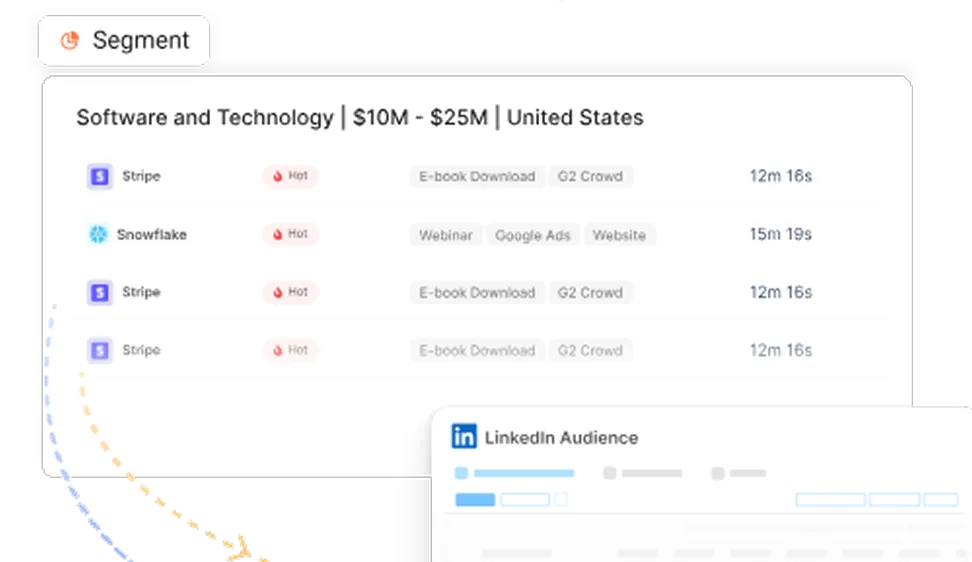
Those intent signals become actionable through audience syncing. Factors.ai pushes high-intent account lists directly into Google Ads. You can bid more aggressively on companies that are already showing buying behaviour and pull back spend on audiences that aren't in-market. Your campaigns start targeting based on pipeline intelligence, not just keyword matching.
The optimization loop ties it all together. Instead of optimizing campaigns based on cost per click or cost per lead, you optimize based on pipeline contribution. Which campaigns are influencing accounts that move through your sales process? Which ad groups drive engagement from companies that eventually close? Those are the questions that should shape budget decisions, and they require data that Google Ads alone can't provide.
A typical workflow looks like this. Factors identifies a cluster of in-market accounts based on engagement signals. Those accounts get pushed into a Google Ads audience. You run targeted campaigns against them with messaging tailored to their stage in the buying process. As those accounts progress through the funnel, you track the influence of each touchpoint. Over time, you learn which campaigns accelerate pipeline and which ones just generate noise. Instead of optimizing campaigns in a vacuum, you're optimizing revenue pathways with real data.
In-house vs agency vs AI-led PPC management
One of the most common questions B2B teams wrestle with is who should actually manage their Google Ads. Each model has genuine trade-offs, and the right answer depends on your budget, your team's skill set, and how mature your tracking infrastructure is.
The truth is, most agencies optimize campaigns… they'll manage your keywords, bids, and ad copy competently. The better ones will push creative strategy and test aggressively. Where most agencies fall short is in connecting campaign performance to revenue, because they typically don't have access to your CRM data or the tooling to stitch it together.
AI-led platforms take a different approach. They optimize the system, not just the campaign. By connecting ad platforms, website analytics, and CRM data, they make it possible to optimize against the metrics that actually matter for B2B . The human team still makes strategic decisions, but those decisions are informed by data that used to require weeks of manual analysis.
Most teams find the best results with a hybrid model. An in-house or agency team handles creative, messaging, and campaign structure, while an AI layer like Factors handles attribution, audience intelligence, and pipeline-based optimization. The combination gives you both the human judgment and the data infrastructure needed to make PPC genuinely effective for B2B .
Pricing models for AdWords management services
Understanding how PPC management is priced helps you evaluate whether you're getting actual value or just paying for someone to make small adjustments to your campaigns each month.
1. Percentage of ad spend
This is the most common model, typically ranging from 10% to 20% of your monthly ad budget. If you're spending $20,000 per month on ads, you'll pay $2,000 to $4,000 in management fees. The appeal is simplicity. The downside is misaligned incentives, because your manager earns more when you spend more, regardless of whether that spend is efficient.
2. Flat retainers
A fixed monthly fee, usually ranging from $1,500 to $10,000 depending on scope. This provides cost predictability and removes the spending incentive problem. The risk is that flat-fee providers sometimes standardise their service and give every client the same playbook, regardless of whether it fits their specific situation.
3. Performance-based pricing
The management fee is tied to outcomes, typically leads or conversions. This sounds ideal in theory, but it introduces its own perverse incentives. A manager paid per lead is incentivised to maximise lead volume, which often means chasing cheaper, lower-quality leads. Unless the performance metric is pipeline or revenue, this model can actually make the quality problem worse.
Beyond the visible pricing, there are hidden costs that teams often overlook. Tooling for proper tracking, analytics, and attribution can add $500 to $2,000 per month. Data gaps from poor integration between Google Ads and your CRM create invisible waste. And bad attribution leads to bad decisions, which is the most expensive hidden cost of all. You might save $1,000 per They spent a month on a cheaper management service and lost $20,000 in misallocated ad spend because no one could see which campaigns actually drove revenue.
Cheap management often becomes expensive through wasted spend. The management fee itself is usually the smallest cost in the equation. What matters far more is whether your PPC partner can actually help you spend your ad budget on the right things.
How do you choose the right PPC management partner?
Rather than listing vague qualities like "experience" and "transparency," here's a practical checklist of questions that separate competent PPC partners from genuinely good ones.
1. Do they optimize for pipeline or just leads?
Ask specifically how they measure success. If the answer is "cost per lead" or "conversion volume" without any mention of pipeline or revenue, they're optimizing for the wrong outcome.
2. Do they integrate CRM and ad platforms?
This is the backbone of smart B2B PPC. If there's no connection between Google Ads data and your CRM, every optimization decision is based on incomplete information. Ask whether they've set up offline conversion tracking before and how they use CRM data in their workflow.
3. Do they offer cross-channel visibility?
Google Ads doesn't operate in isolation for your buyers, so it shouldn't be managed in isolation either. A partner who can show how paid search interacts with organic, LinkedIn, direct traffic, and events gives you a much clearer picture of what's working.
4. Do they understand B2B buying cycles?
This sounds basic, but a surprising number of PPC agencies come from eCommerce backgrounds and apply the same logic to B2B . Ask them to walk you through how they'd handle a six-month sales cycle with multiple stakeholders. The specificity of their answer will tell you everything.
5. Do they provide actionable insights or just reports?
There's a meaningful difference between a monthly PDF that shows click trends and a conversation where someone says, "Campaigns targeting these three accounts drove 40% of your pipeline last quarter, so here's what we're doing next." The report is information. The conversation is a strategy. You want the partner who brings strategy.
Common mistakes in Google Ads campaign management
Even well-run campaigns fall into patterns that quietly erode performance. Here are the mistakes I see most often, and they're not the obvious beginner errors. These show up in accounts managed by experienced teams who've just never questioned certain defaults.
- Over-reliance on last-click attribution
We've covered this already, but it's worth repeating because it's the single most widespread issue. Last-click attribution in B2B doesn't just give you an incomplete picture. It actively misleads you into shifting budget away from the campaigns that create demand and toward the campaigns that happen to capture it at the end. The fix isn't complicated, but it requires choosing a multi-touch model and actually trusting it when making budget decisions.
- Ignoring audience signals
Keywords tell you what someone's looking for. Audience signals tell you whether that someone is worth paying to reach. If you're bidding the same amount on every searcher regardless of whether they're a mid-market SaaS VP or a university student writing a paper, you're wasting money on half your clicks. Layering audiences, whether through customer match, in-market segments, or intent data from tools like Factors, dramatically improves lead quality.
- Poor keyword intent mapping
Running informational and transactional keywords in the same campaign with the same bids and the same landing pages is a recipe for mediocre results everywhere. High-intent keywords deserve higher bids and conversion-focused landing pages. Low-intent keywords deserve lower bids and educational content. Treating them identically dilutes performance across the board.
- Not excluding low-quality traffic
Negative keyword lists need regular attention, and they rarely get it. I've seen accounts spending thousands per month on clicks from job seekers, students, and people searching for free tools, all because nobody reviewed the search terms report in the past quarter. Placement exclusions on Display campaigns are equally important. If your ads are showing on mobile gaming apps, that's probably not where your B2B buyers hang out.
- Optimizing too early without data maturity
Google's algorithms need data to learn. When you make aggressive changes to campaigns that have only been running for a week, you're reacting to statistical noise rather than actual patterns. A campaign that looks expensive in its first seven days might perform beautifully by day thirty once the algorithm has enough conversion data. Patience isn't glamorous, but it's essential in B2B PPC where conversion volumes are naturally lower.
- Treating Google Ads as a silo
This is the strategic version of the attribution problem. When Google Ads is managed independently from LinkedIn, organic content, email, and events, nobody can see how these channels interact. Campaigns get judged solely on their own metrics rather than their contribution to the broader revenue engine. The teams that break this silo, whether through tooling or just through better cross-functional communication, consistently outperform those that don't.
Getting started with smarter PPC optimization
If you've read this far and you're thinking "great, where do I start," here's a practical five-step path that works whether you're running campaigns in-house or working with an agency.
Step 1: Audit your current campaigns
Before building anything new, understand what you have. Review account structure, keyword lists, bid strategies, and conversion actions. Look for the common mistakes listed above. Identify which campaigns have clear ROI data and which are running blind. Most teams discover that 20-30% of their spend is going to campaigns or keywords that haven't produced a meaningful result in months.
Step 2: Fix tracking and attribution
This is the foundation everything else depends on. Make sure GA4 is properly configured with the right events. Set up offline conversion tracking so Google Ads can receive pipeline data from your CRM. Choose an attribution model beyond last-click, even if it's just a linear model to start. You can refine later, but you need multi-touch data flowing before you can make intelligent optimization decisions.
Step 3: Align campaigns to funnel stages
Restructure your account so that campaigns map to stages in the buyer journey. Top-of-funnel campaigns capture early interest with broader keywords and educational content. Mid-funnel campaigns target prospects comparing solutions. Bottom-of-funnel campaigns focus on high-intent terms and direct-response offers. Each stage gets its own budget allocation, bid strategy, and success metrics.
Step 4: Layer in audience intelligence
This is where you move from "smart campaign structure" to "smart targeting." Integrate first-party data from your CRM. Use account-level intent signals from platforms like Factors.ai. Build audience segments that reflect your ideal customer profile and adjust bids accordingly. The goal is to pay more for the clicks that matter and less for the ones that don't.
Step 5: Continuously optimize based on revenue
Don't just check campaign metrics weekly. Build a regular review cycle, ideally monthly, where you look at which campaigns contributed to pipeline and closed revenue. Shift budget toward the campaigns that drive business outcomes and away from the ones that merely look good in Google's interface. This feedback loop is what turns PPC from a cost centre into a growth channel.
If you want to see what account-level intelligence looks like in practice, the fastest path is to run an audit of your current Google Ads setup against actual pipeline data. The gaps between what the platform reports and what your CRM reveals tend to be eye-opening, and they immediately show you where to focus.
In a nutshell…
B2B Google Ads management is fundamentally different from what most AdWords management service providers deliver out of the box. The standard approach, optimizing for clicks, leads, and platform-level cost metrics, misses the entire second half of the story. It can't see which companies are engaging, which campaigns influence real pipeline, or how paid search interacts with the five other channels your buyers touch before they ever convert.
The practical takeaway from everything above is a sequence of priorities. Fix your tracking and attribution first, because every downstream decision depends on accurate data. Then restructure campaigns around funnel stages so you're investing proportionally across awareness, consideration, and conversion. Layer audience intelligence on top of keywords so you're targeting the right companies, not just the right search terms. And connect your Google Ads data to your CRM so you can optimize against pipeline and revenue rather than vanity metrics.
The teams that do this consistently, whether with an internal team, an agency, or an AI-led platform like Factors.ai, end up spending less and producing more. Not because they found a magic campaign structure, but because they made better decisions with better data. If you're spending real budget on Google Ads for a B2B product, the highest-leverage thing you can do today is close the gap between your ad platform and your revenue data. Everything else follows from there.
Frequently asked questions about Google AdWords PPC management
Q1. What is Google AdWords PPC management?
Google AdWords PPC management is the process of planning, building, and optimizing paid search campaigns on Google's advertising platform (now officially called Google Ads). It includes keyword research, campaign setup, ad creation, bid management, and conversion tracking. In a B2B context, effective management also involves connecting campaign performance to CRM data and pipeline outcomes, rather than just optimizing for clicks and leads.
Q2. How much do AdWords management services cost?
Costs vary depending on the pricing model. Percentage-of-spend models typically charge 10-20% of your monthly ad budget. Flat retainers range from roughly $1,500 to $10,000 per month depending on scope and complexity. Performance-based models tie fees to outcomes like leads or conversions. Beyond the management fee itself, you should factor in costs for tracking tools, attribution platforms, and CRM integration, which can add $500 to $2,000 per month but significantly improve the return you get from your ad spend.
Q3. Is it better to hire an agency or manage PPC in-house?
It depends on your team's expertise, budget, and how mature your tracking infrastructure is. In-house teams offer tighter alignment with business goals and faster iteration. Agencies bring broader expertise and dedicated bandwidth. The most effective approach for many B2B teams is a hybrid model, where an in-house or agency team handles campaign strategy and creative, while an AI-led platform manages attribution, audience intelligence, and pipeline-based optimization. That combination gives you both human judgment and data depth.
Q4. What does a PPC management service include?
A comprehensive google ad management service should include keyword research and strategy, campaign structure and setup, ad copywriting and testing, bid management, landing page recommendations, conversion tracking setup, and regular performance reporting. For B2B specifically, you should also expect audience layering, CRM integration, offline conversion tracking, and reporting that connects ad performance to pipeline and revenue metrics, not just platform-level indicators.
Q5. How do I measure ROI from Google Ads in B2B ?
Measuring true ROI in B2B requires connecting Google Ads data to your CRM. Set up offline conversion tracking to feed pipeline and revenue data back into the ad platform. Use a multi-touch attribution model to understand how paid search contributes across the full buyer journey, not just the last click. The key metrics to track are cost per opportunity, pipeline influenced by paid search, and revenue attributed to paid campaigns. Cost per lead alone won't tell you whether your investment is actually generating returns.
Q6. What is the difference between PPC optimization and management?
Management is the operational work of keeping campaigns running. It includes keyword updates, bid adjustments, ad testing, and budget pacing. optimization is the strategic layer on top. It means continuously improving campaign performance against meaningful business goals, like pipeline and revenue, by analysing data, running experiments, and making informed changes. Great PPC campaign optimization incorporates both, but the distinction matters because plenty of providers deliver management without ever truly optimizing for outcomes that affect your bottom line.
Q7. How long does it take to see results from Google Ads?
For initial results like clicks, impressions, and form fills, you'll see data within days of launching campaigns. For meaningful B2B outcomes, expect to wait longer. Google's automated bidding algorithms typically need four to six weeks and at least 30-50 conversions to stabilise. Pipeline and revenue impact often take two to four months to become visible, given the length of most B2B sales cycles. Teams that make aggressive changes in the first few weeks often undermine their own results by not giving the system enough data to learn from.
Q8. What is the best attribution model for PPC campaigns?
There's no single best model. It depends on your sales cycle, channel mix, and tracking maturity. For most B2B teams, a U-shaped or W-shaped model is a strong starting point because it gives meaningful credit to the first interaction, the lead creation moment.

See how Factors can 2x your ROI
Boost your LinkedIn ROI in no time using data-driven insights


.avif)

See Factors in action.
Schedule a personalized demo or sign up to get started for free
LinkedIn Marketing Partner
GDPR & SOC2 Type II





.svg)



.avif)

