LinkedIn Benchmarks for B2B | Insights from 100+ Marketing Teams
Download the report
Home
Blogs
Lead Attribution vs Lead Scoring: What B2B teams need
April 24, 2026
11 min read

Lead Attribution vs Lead Scoring: What B2B teams need

Learn the difference between lead attribution and lead scoring in B2B marketing. Understand when to use each and how they work together to drive pipeline.

Written by
Vrushti Oza

Content Marketer

Summarize this article
Factors Blog

In this Blog

TL;DR

  • Lead attribution tracks which marketing channels, campaigns, and touchpoints influenced a lead's journey toward conversion, while lead scoring ranks prospects based on how likely they are to buy.
  • Attribution answers "what's working?" and scoring answers "who's ready?" B2B revenue teams need both to make smart decisions.
  • Multi-touch attribution is the preferred approach in B2B because buying journeys are long, nonlinear, and involve multiple stakeholders.
  • Traditional lead scoring falls short when it ignores account-level behavior, anonymous traffic, and the marketing context behind a lead's activity.
  • The strongest B2B teams use attribution to optimize marketing spend and scoring to prioritize sales outreach, then connect the two for full-funnel pipeline visibility.

Every quarter, the same meeting plays out in B2B marketing teams around the world. Someone from sales pulls up a dashboard showing pipeline numbers. Someone from marketing opens a slide deck proving campaign performance. And for the next forty-five minutes, both sides talk past each other using completely different definitions of what ‘worked.’

The marketing team points to attribution data showing which campaigns influenced revenue. The sales team points to lead scores showing which prospects were most engaged. Both are technically correct… and both are looking at entirely different slices of the same puzzle. And here’s a fun meme for you.

Meme about sales and marketing alignment.
Source

This disconnect is not a people problem (yes, sales and marketing don’t just hate each other)… it’s a framework problem. Lead attribution and lead scoring serve different purposes, answer different questions, and operate at different stages of the buyer journey. But most B2B teams either conflate them, pick one and ignore the other, or run both in parallel without ever connecting the insights.

If you've ever wondered why your highest-scoring leads don't always come from your best campaigns, or why your best campaigns don't always produce sales-ready prospects, the answer usually lives in the gap between these two systems. Understanding that gap, and knowing how to bridge it, is one of the most practically useful things a B2B marketer can learn.

So let's go over both concepts from scratch, compare them, and figure out how they're supposed to work together.

What is lead attribution, and why does it matter?

Lead attribution is the practice of identifying which marketing channels, campaigns, and touchpoints contributed to bringing a lead into your pipeline. In a B2B context, it's how marketers trace the path from a prospect's first interaction with your brand all the way through to a conversion event, whether that's a demo request, a sign-up, or a closed deal.

The challenge is that B2B buying journeys aren't simple. A prospect might first encounter your brand through a LinkedIn ad. Weeks later, they visit your blog after searching for a related topic. A month after that, they attend a webinar. Then they download a case study, forward it to a colleague, and eventually request a product demo. Lead attribution is the discipline of mapping all of those interactions and understanding which ones actually mattered.

At its core, attribution helps marketers answer three questions that come up constantly. Which campaign generated this lead? Which touchpoints moved them closer to conversion? And which channels contribute the most to pipeline? These sound straightforward, but answering them accurately in a multi-touch, multi-stakeholder B2B environment is genuinely difficult.

This is where customer journey attribution becomes essential. Rather than assigning all the credit to a single action (like the last click before a demo request), journey-level attribution connects multiple interactions across time. It recognizes that a webinar three weeks ago and a case study yesterday might both deserve credit for the deal that's now in your pipeline.

There's also a layer that often gets overlooked: sales attribution. This is where marketing influence gets connected directly to pipeline and revenue outcomes, not just lead creation. When your CFO asks, "what did that campaign actually produce?" sales attribution is what gives you a credible answer. It ties marketing activity to dollars, which is ultimately the language that gets budget conversations moving in the right direction.

What is lead scoring, and how does it work?

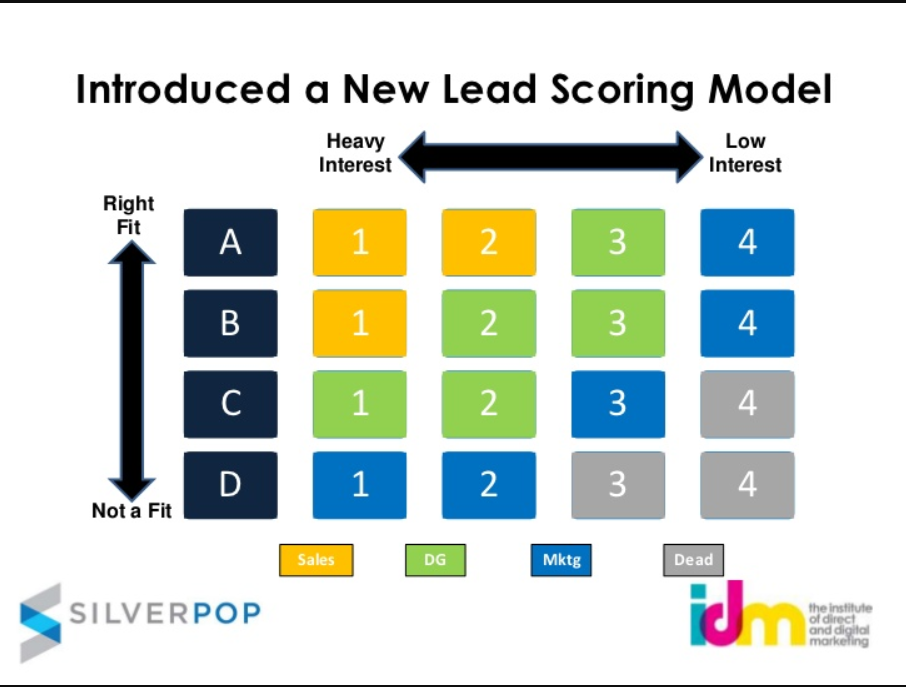
Lead scoring is a prioritization method… it ranks prospects based on how likely they are to convert, so sales teams can focus their time on the leads most worth pursuing. If attribution tells you what's working across your marketing mix, scoring tells you who's ready to have a conversation.

Most lead scoring models use two broad categories of inputs. 

  1. The first is demographic and firmographic data

Things like company size, job title, industry, and geography. A VP of Marketing at a mid-market SaaS company is probably a stronger fit than an intern at a local bakery, and scoring reflects that. 

  1. The second category is behavioral signals

Things like website visits, email opens, content downloads, webinar attendance, and similar engagement indicators.

Each of these signals gets assigned a numerical value, and as a lead accumulates points, their score rises. When it crosses a certain threshold, the lead gets flagged as a Marketing Qualified Lead (MQL) and handed to sales for follow-up. It's a system that's been around for decades, and at its simplest, it works like a checklist with weights attached.

The concept makes intuitive sense. If someone from a target account visits your pricing page three times in a week and downloads your integration guide, they're probably more interested than someone who opened one email six months ago, and scoring captures that difference numerically.

But there are real limitations in modern B2B environments, and they're worth acknowledging upfront. The biggest one is that traditional lead scoring focuses on individual leads, not buying groups. In B2B SaaS, purchase decisions almost never rest with a single person. There's usually a champion, an evaluator, a budget holder, and sometimes a technical reviewer. A lead scoring model that treats each of these people as independent prospects misses the forest for the trees. One person's score might be low, but the collective activity from their account might be screaming "ready to buy."

We'll come back to these limitations later, because they're a big part of why attribution and scoring need to work together rather than independently.

Lead attribution vs lead scoring: what's the core difference?

The simplest way to think about it is this:

Lead attribution answers the question: "which marketing activities influenced this lead?" while lead scoring answers a completely different question: "how likely is this lead to convert?"

The former is diagnostic, and the latter is predictive. Attribution looks backwards at what happened and assigns credit. Scoring looks at the current state of a prospect and estimates future behaviour. They're both useful, but they're doing fundamentally different jobs.

Here's a side-by-side comparison that makes the distinction clearer:

Dimension Lead attribution Lead scoring
Primary question What marketing drove this lead? How ready is this lead to buy?
Focus Marketing channels, campaigns, touchpoints Individual prospect behaviour and fit
Time orientation Retrospective (what happened) Current state (what's happening now)
Used by Marketing teams, revenue ops Sales teams, SDRs, marketing ops
Output Channel/campaign performance insights Numerical score per lead or account
Optimises for Marketing spend and strategy Sales prioritisation and outreach
Key limitation Can be complex to implement accurately Often ignores marketing context

The mistake most teams make is treating these as interchangeable, or assuming one can do the other's job. Attribution won't tell your sales team which lead to call first… and scoring won't tell your marketing team which campaign to double down on. They answer different questions, and trying to force one framework to do both leads to mediocre answers on both fronts, obviously.

Think of it like this: attribution is the film review, analysing what worked and why. Scoring is the casting call, deciding who gets the part. You need both to produce a good show, but confusing the two roles creates problems neither can solve. And you know which one’s a good show? Desperate Housewives. And does it have anything to do with attribution and scoring? No.

Why do B2B teams need both attribution and scoring?

In B2B SaaS, the buyer journey is longer, more fragmented, and involves more people than most scoring or attribution models were originally designed to handle. A typical enterprise deal might take four to nine months, involve six to ten stakeholders, and include dozens of marketing touchpoints across multiple channels. Relying on just one framework to make sense of all that complexity is like trying to navigate a city with only a compass. Technically useful, but you're going to miss a lot of turns.

On the one hand, Attribution reveals which campaigns and channels are actually generating demand. It shows you that your LinkedIn campaign drove initial awareness, your webinar series nurtured interest, and your case studies helped close the deal. Without this, marketing teams end up making budget decisions based on gut feeling or last-click data, which is almost always misleading in long B2B cycles.

Scoring, on the other hand, reveals which prospects are showing buying intent right now. It helps sales teams focus their outreach on leads who are actively engaging, rather than working through a random list of names that marketing passed over.

Here's a practical example that shows why you need both. Imagine a prospect downloads three whitepapers over two weeks and then attends a webinar. Attribution tells you which of those marketing assets played a role in the journey, and which campaigns deserve credit for generating the engagement. Scoring tells your sales team whether that prospect's overall behavior and profile suggest they're worth calling today, or whether they're still in early research mode.

Without attribution, you can't optimize the marketing that created the opportunity. Without scoring, you can't act on it efficiently. Most teams eventually realize that running both in isolation is only marginally better than running neither. The real value shows up when the two systems inform each other.

Where does lead attribution fit in the customer journey?

Attribution doesn't belong to a single stage of the funnel. It stretches across the entire customer journey, and its role shifts depending on where the prospect is in their buying process.

  • In the early stages, attribution helps you understand which awareness channels are working. This is where prospects first discover your brand, often through paid ads, organic search, social media, or content marketing. Attribution at this stage answers a foundational question: where are our best leads coming from in the first place? If your LinkedIn ads are driving high-quality traffic to the blog but your display ads are mostly generating bounces, attribution makes that visible.
  • In the middle stages, the journey gets more complex. Prospects are evaluating options, consuming product guides, reading case studies, attending webinars, and comparing your solution against competitors. Attribution here tracks which nurture assets are actually moving people forward. It's one thing to know that someone attended your webinar and another to know that webinar attendees convert to demos at twice the rate of non-attendees. Mid-funnel attribution connects those dots.
  • In the late stages, attribution tracks high-intent interactions: demo requests, pricing page visits, product comparisons, and sales conversations. This is where pipeline attribution becomes critical, because it connects marketing activity directly to revenue outcomes. If your CEO wants to know which marketing investments contributed to this quarter's pipeline, late-stage attribution data is what answers that question with credibility.

Customer journey attribution maps all of these interactions together into a coherent narrative. Instead of seeing isolated data points (this person clicked an ad, this person attended a webinar), you see a connected story. The ad led to the blog, the blog led to the webinar, the webinar led to the demo, and the demo led to a $60K opportunity. That story is what makes marketing spend defensible and strategy conversations productive.

This is also why multi-touch attribution models are so important in B2B marketing. When buying journeys span months and include dozens of interactions, giving all the credit to one touchpoint is worse than misleading. It actively distorts your understanding of what's working. We'll dig into the specific models shortly, but the key point here is that attribution needs to reflect the full journey, not just the first or last step.

Where does lead scoring fit in the sales funnel?

Lead scoring typically activates when a lead crosses a behaviour threshold that suggests real interest. It's less about understanding the full marketing journey and more about answering a practical, immediate question: should sales reach out to this person right now?

Scoring becomes most useful at the point where marketing hands leads to sales. Without scores, sales teams either cherry-pick leads based on their own judgment (which is inconsistent) or work through a queue in the order leads arrived (which ignores intent signals). Neither approach is efficient.

  1. The behavioural signals that feed scoring models tend to cluster around mid-to-late funnel activity. Examples include visiting the pricing page more than once, requesting a product comparison, downloading a buyer's guide, or multiple sessions from the same company within a short window. These actions suggest that someone has moved past casual browsing and into genuine evaluation.
  1. Firmographic fit also matters. A lead from a company that matches your ideal customer profile (right industry, right size, right geography) should score higher than one from an account that's unlikely to buy, even if both exhibit similar behaviour. Most scoring models weight these two dimensions, fit and activity, separately and then combine them into a composite score.

Here's where the connection to attribution becomes interesting. Sales attribution improves significantly when scoring signals are combined with attribution insights. If a sales rep knows that a high-scoring lead's activity was driven by a specific campaign, they can tailor their outreach accordingly. "I noticed you attended our webinar on pipeline visibility last week" is a much stronger opener than "I saw you visited our website." Scoring tells the rep to call. Attribution tells them what to say.

The best-run revenue teams don't treat scoring as a standalone system. They layer it on top of attribution data to create a fuller picture of both who's ready and why they're ready. That combination is what turns lead handoff from a guessing game into a structured process.

How do the most common attribution models stack up?

There are several marketing attribution models used in B2B, and each one distributes credit differently across the touchpoints in a buyer's journey. Attribution models can be categorized into two main types: single-touch and multi-touch models, with single-touch models assigning credit to one interaction and multi-touch models distributing credit across multiple interactions.

None of them is perfect, and the right choice depends on your sales cycle, your data maturity, and what questions you're actually trying to answer. Here's a breakdown of the five models you'll encounter most often:

  • First-touch attribution

All the credit goes to the first interaction. If a lead originally found you through a Google search, that search gets 100% of the credit for the eventual conversion, regardless of what happened afterwards. This model is simple and useful for understanding which channels drive initial awareness. The downside is obvious: it completely ignores everything that happened between the first touch and the conversion. In a B2B sales cycle that spans six months and thirty touchpoints, crediting only the first one is a significant oversimplification.

  • Last-touch attribution

The mirror image of first-touch. All the credit goes to the final interaction before conversion. If the last thing a lead did before requesting a demo was click an email link, that email gets all the credit.

Last-touch is popular because it's easy to implement and aligns with conversion-focused thinking. But it has the same fundamental problem in reverse: it ignores all the marketing that nurtured the lead up to that point. Your webinar, your blog content, your LinkedIn ads? None of them exist in a last-touch world.

  • Multi-touch attribution

Credit is distributed across meaningful interactions in the journey, often using custom weighting or algorithmic models. Multi-touch attribution doesn't follow a rigid formula. Instead, it tries to reflect the actual influence each touchpoint had, based on data patterns. Multi-touch attribution models, such as linear and time-decay attribution, distribute credit across multiple touchpoints, reflecting the complexity of the customer journey and acknowledging that various interactions contribute to a conversion.

  • Time-decay attribution

Time Decay Attribution gives more credit to touchpoints that occurred closer to the final conversion. The logic is that the closer an interaction is to the conversion, the more influence it likely had. This model makes intuitive sense for B2B cycles where late-stage engagement tends to be more intentional. The trade-off is that it can undervalue the early-stage marketing that created the opportunity in the first place.

  • Linear attribution

Equal credit goes to every touchpoint in the journey. If a lead interacted with five campaigns before converting, each one gets 20% of the credit. Linear attribution is fairer than single-touch models, but it treats all interactions as equally important. A casual blog visit three months ago gets the same weight as a pricing page visit yesterday. That's democratic, but not always accurate.

Here's a comparison of all five models:

Model How credit is assigned Best for Key limitation
First-touch 100% to first interaction Understanding awareness channels Ignores nurture and late-stage activity
Last-touch 100% to final interaction Measuring conversion triggers Ignores awareness and mid-funnel influence
Linear Equal across all touchpoints Simple multi-touch visibility Doesn't reflect varying influence levels
Time-decay Weighted toward recent touches Conversion-focused analysis Undervalues early-stage marketing
Multi-touch Custom/algorithmic distribution Full-funnel B2B analysis More complex to implement and maintain

In B2B SaaS environments, multi-touch attribution is generally preferred because it reflects reality more accurately. Buying journeys are long, involve multiple stakeholders, and include touchpoints that matter to different degrees at different stages. A model that acknowledges that complexity gives you better data for decision-making.

That said, "preferred" does not mean "easy." Multi-touch models require cleaner data, better tracking, and more sophisticated tooling than single-touch models. Many teams start with first-touch or last-touch and graduate to multi-touch as their data infrastructure matures. There's no shame in that progression, as long as you're honest about what your current model can and can't tell you.

No attribution model answers every question perfectly, and anyone who tells you otherwise is probably selling one. The goal is getting close enough to the truth that your marketing decisions are directionally correct.

What’s the problem with traditional lead scoring?

Lead scoring has been a staple of B2B marketing for years, and for good reason. When it works, it saves sales teams enormous amounts of time by surfacing the leads most worth pursuing. But traditional scoring models carry several structural problems that become more visible as your marketing and sales operations mature.

  1. Scoring ignores marketing channel influence

A lead might have a high score because they downloaded three PDFs and visited your site six times. But the score doesn't tell you anything about which campaigns drove those interactions. Without that context, you can't optimize the marketing that created the engagement in the first place. You just know the lead is "hot," but you don't know why.

  1. Most scoring models operate at the individual lead level, not the account level

In B2B, this is a real blind spot. An account might have four people engaging with your content, each with a modest individual score, but collectively their behavior signals strong buying intent. If your scoring model only looks at individuals, that account-level pattern stays invisible.

  1. Handling of anonymous website visitors

A significant portion of your website traffic comes from people who haven't filled out a form or identified themselves in any way. Traditional scoring can't do anything with this traffic because there's no lead record to score. That means you're potentially missing buying signals from accounts that are actively researching your product but haven't raised their hand yet.

There's also a subtler problem… core inflation over time. Leads who've been in your database for a while accumulate points through routine engagement (opening newsletters, clicking the occasional link) without ever developing real purchase intent. Their scores creep upward, and they start showing up alongside genuinely high-intent prospects, which dilutes the signal your sales team relies on.

All of these issues create gaps in understanding which campaigns truly drive pipeline. When scoring operates in isolation from attribution, you end up with a system that tells you who seems ready to buy but can't explain what made them ready or whether the same result could be replicated at scale.

How does attribution improve sales attribution and pipeline visibility?

Attribution's greatest contribution to revenue teams isn't just explaining which campaigns performed well. It's connecting marketing activity to pipeline creation and revenue in a way that everyone, from the CMO to the CFO, can understand and trust.

Sales attribution bridges the gap between marketing effort and business outcomes. When you can trace an opportunity back through the touchpoints that influenced it, you're no longer relying on anecdotal evidence or vanity metrics to justify marketing spend. You have a data trail that connects a LinkedIn campaign to a webinar registration, to a demo request, and to a $120K opportunity in the pipeline. That trail changes the nature of budget conversations entirely.

This level of visibility helps organizations answer several questions that traditionally required guesswork. Which campaigns influence the deals that actually close? Which channels produce the highest-value accounts? And where should next quarter's budget be allocated for maximum impact? These are the questions that determine whether marketing is seen as a cost center or a revenue driver, and attribution data is what gives you credible answers.

Pipeline attribution also helps identify patterns that aren't obvious from surface-level metrics. You might discover that your highest-converting accounts all engaged with a specific sequence of content: a blog post, then a webinar, then a case study. Without attribution data, that pattern stays hidden. With it, you can build campaigns that deliberately recreate the sequence.

There's a strategic dimension here too. When marketing can demonstrate its contribution to pipeline with data, the relationship between marketing and sales shifts. Instead of the quarterly blame game (marketing says leads were good, sales says they weren't), both teams can look at the same attribution data and have a more productive conversation about what's actually driving revenue. Attribution doesn't just improve visibility. It improves organizational alignment.

The teams that get this right tend to make better marketing investment decisions. They can reallocate budget from channels that look busy but don't produce pipeline, and invest more in the campaigns that actually move accounts through the funnel. Over time, that compounds into a meaningful competitive advantage, because every marketing dollar works harder when it's informed by real attribution data rather than assumptions.

PS: For attribution to be effective, it is important to have clean, structured data; poor data quality, missing fields, and disconnected systems can lead to inaccurate attribution results.

How do attribution and scoring work together for revenue growth?

When attribution and scoring operate as an integrated system rather than parallel workstreams, the entire revenue engine becomes more efficient. The workflow isn't complicated conceptually, but it requires both teams to share data and agree on definitions.

Here's what the ideal workflow looks like in practice:

1. Attribution identifies the campaigns generating demand

Marketing reviews attribution data to understand which channels and campaigns are bringing the right accounts into the funnel. This informs where to invest budget and creative effort.interchangeable or

2. Marketing drives high-intent traffic 

Armed with attribution insights, the marketing team focuses on the campaigns and content that have historically produced the strongest pipeline outcomes. This isn't guessing. It's pattern-based optimization.

3. Lead scoring prioritises qualified prospects

As leads engage with content and visit the website, scoring models evaluate their fit and behaviour in real time. Leads that cross the threshold get flagged for sales outreach.

4. Sales engages the right accounts at the right time

Sales reps receive scored leads along with context from attribution data. They know not just that a lead is ready, but which content they engaged with and which campaigns influenced their journey. That context improves outreach quality significantly.

The insight here is that attribution optimizes the top and middle of the funnel, while scoring optimises the handoff to sales. When both feed into the same revenue picture, marketing and sales stop operating on separate scorecards and start working from a shared reality.

Revenue teams that align marketing and sales operations using both systems tend to see improvements across the board. Marketing gets clearer signals about what to produce. Sales gets better-qualified leads with richer context. And leadership gets a pipeline story they can actually trust.

It's also worth noting that this integrated approach makes the feedback loop shorter. If a campaign generates lots of high-scoring leads that don't convert to opportunities, attribution data helps you diagnose why. Maybe the leads are engaged but from the wrong segment. Maybe the scoring model is overweighting certain behaviours. Either way, the combination of both datasets gives you a more complete diagnostic toolkit than either one alone.

Let’s take a B2B example: Attribution vs lead scoring in action

optimizes through a realistic SaaS buyer journey to see how these two systems play out in practice.

Imagine a mid-market SaaS company selling a project management tool to engineering teams. A VP of Engineering at a 300-person company sees a LinkedIn ad about reducing development cycle times. She clicks through, reads the blog post, and leaves. No form fill, no demo request. Just a quick read.

Two weeks later, she Googles "best project management tools for engineering teams" and lands on a comparison page on the same company's website. She reads it, clicks through to the product page, and leaves again.

A week after that, one of her direct reports (a team lead) attends a webinar hosted by the same company about sprint planning best practices. During the webinar, he downloads a case study about a similar-sized engineering team.

Now both people are in the system. The VP has visited twice. The team lead has attended a webinar and downloaded a case study. Let's look at what each framework tells you.

What attribution reveals:

The LinkedIn ad drove initial awareness. The organic search visit to the comparison page built consideration. The webinar and case study moved the account further into evaluation. Attribution maps these touchpoints into a coherent journey and identifies which campaigns deserve credit for advancing the account.

What scoring reveals: 

The team lead's individual score is probably higher because he has two explicit engagement actions (webinar + download). The VP's score might be lower because her visits were anonymous or passive. But a good account-level scoring model would aggregate both signals and recognise that this account is showing serious buying intent.

What the combination reveals:

The marketing team learns that LinkedIn ads into blog content are an effective awareness sequence for engineering personas. The sales team learns that this specific account is heating up and that two stakeholders are involved. The sales rep can reference the webinar in their outreach and tailor the conversation to sprint planning challenges. Everyone has better information than they would with either system alone.

This is a simplified example, of course… B2B journeys are wayyy messier, with more stakeholders, more touchpoints, and longer timelines. But the principle holds: attribution gives you the marketing story, scoring gives you the sales signal, and together they give you a complete picture.

How does account-based attribution change the game?

One of the biggest shifts in B2B marketing over the past few years has been the move from lead-level thinking to account-level thinking. Traditional lead attribution and scoring both started as lead-centric frameworks, designed to track and evaluate individual people. But in B2B, the buying unit is almost always a group of people within an account, not a single person.

Account-based attribution reframes the question to this: Which touchpoints influenced this account's journey toward becoming a customer?

When you aggregate touchpoints at the account level, patterns emerge that are invisible at the individual level. You might see that a specific account has had fifteen interactions across four people in the past month, none of whom would individually score high enough to trigger a sales alert. Account-level attribution catches that signal. Individual-level attribution misses it entirely.

This is especially important for enterprise sales cycles, where the person who first discovers your product is rarely the person who signs the contract. The champion might read your blog. The evaluator might attend your webinar. The budget holder might visit your pricing page once, briefly, and never return. If your attribution model treats each of these as separate, unrelated journeys, you're missing the coordinated buying behavior that actually matters.

If your attribution and scoring systems can't roll up to the account level, you're making decisions based on an incomplete picture. Most modern B2B attribution platforms now support account-level views precisely because of this limitation in older, lead-centric approaches.

Three attribution mistakes B2B teams should not be making

Even teams that invest in attribution often undermine their own efforts with a few recurring mistakes. These aren't obscure edge cases. They're patterns I've seen across dozens of B2B organisations at different stages of growth.

1. Relying only on last-touch attribution

It's the default in most CRMs and analytics tools, so teams use it without questioning the logic. But in a B2B cycle that spans months, crediting only the last interaction before conversion tells you almost nothing about what actually drove the deal. Your entire awareness and nurture strategy becomes invisible.

The fix isn't necessarily jumping to a complex algorithmic model. Even switching to a linear model gives you a more honest picture of how your marketing mix is performing. The important thing is recognizing that last-touch is a starting point, not an answer.

2. Ignoring anonymous website traffic

A significant chunk of your website visitors never fill out a form. They browse your product pages, read your blog, check your pricing, and leave without identifying themselves. If your attribution model only tracks known leads, you're working with a fraction of the data.

This is particularly damaging for top-of-funnel attribution. The channels driving anonymous research traffic might be your most effective awareness tools, but you'd never know because those visitors don't show up in your CRM until they convert.

3. Disconnecting marketing data from sales data

Attribution data lives in one system. CRM data lives in another. Sales activity data lives in a third. When these systems don't share information, you end up with a fragmented view of the buyer journey. Marketing sees its piece, sales sees its piece, and nobody sees the whole thing.

This isn't just a technology problem. It's a process and governance problem. Someone needs to own the integration, define the data model, and ensure that touchpoints from marketing systems flow into the same record as sales interactions. Without that connective tissue, attribution data stays interesting but not actionable.

How Factors.ai helps B2B teams understand lead attribution

The problems we've discussed throughout this article (fragmented data, anonymous traffic, lead-level blind spots, disconnected marketing and sales insights) are exactly the challenges that modern attribution platforms are designed to solve. Factors.ai is one of those platforms, built specifically for B2B teams that need deeper visibility into how their marketing drives pipeline.

Here's what it does in practical terms:

  • Tracks anonymous website visitors

Factors identifies the companies visiting your website even when individuals haven't filled out a form. This fills the gap that traditional scoring models can't address.

  • Identifies accounts showing buying intent

By aggregating signals across multiple visitors from the same company, it surfaces account-level engagement patterns that individual lead tracking misses.

  • Connects marketing activity to pipeline

Touchpoints from ads, content, webinars, and other channels are mapped to CRM opportunities. This makes sales attribution and pipeline attribution tangible rather than theoretical.

  • Maps multi-touch journeys across channels

Rather than relying on a single-touch snapshot, Factors stitches together the full sequence of interactions an account has with your brand. That gives marketing teams a real customer journey attribution view.

For teams that have outgrown basic lead scoring and want to understand the full story behind their pipeline, platforms like Factors represent a significant step forward. They don't replace scoring. They complement it by adding the attribution context that scoring alone can't provide.

The practical outcome is that revenue teams can move from asking "which leads should we call?" to asking "which leads should we call, and which marketing investments made them ready?" That second question is where sustainable, repeatable growth comes from.

In a nutshell

Lead attribution and lead scoring answer different questions, and B2B teams need both to build a reliable revenue engine. Attribution tells you which marketing channels, campaigns, and touchpoints are driving pipeline. Scoring tells you which prospects are ready for a sales conversation right now. One optimizes your marketing strategy, the other optimizes your sales prioritization.

The most common mistakes happen when teams treat these as interchangeable, or run them in isolation without connecting the insights. Attribution without scoring means you know what's working but can't act on it efficiently. Scoring without attribution means you're prioritizing leads without understanding what created them.

For most B2B SaaS teams, the right approach is to start with multi-touch attribution to understand the full buyer journey, layer account-level scoring on top to prioritize outreach, and then connect both systems so marketing and sales work from a shared picture of pipeline reality. If you're currently relying on last-touch attribution in your CRM and a basic scoring model that hasn't been updated in a year, even incremental improvements to either system will produce noticeably better decisions.

The teams that pull ahead aren't the ones with the fanciest tools. They're the ones that ask the right questions, "what's driving our pipeline?" and "who's ready to buy?", and use the right framework for each.

Frequently asked questions about lead attribution vs lead scoring

Q1. What is lead attribution in marketing?

Lead attribution identifies which marketing channels, campaigns, and touchpoints influenced a lead's journey toward conversion. In B2B contexts, this means tracing interactions across ads, content, webinars, email, and product pages to understand what drove a lead into the pipeline. It's a diagnostic framework that helps marketing teams measure the impact of their efforts and allocate budget more effectively.

Q2. How is lead attribution different from lead scoring?

Lead attribution analyses the marketing touchpoints that influenced a lead's journey, asking "what worked?" Lead scoring evaluates how likely a prospect is to convert, asking "who's ready?" Attribution is retrospective and channel-focused. Scoring is predictive and prospect-focused. They serve different functions and are used by different teams, but produce the best results when connected.

Q3. What is sales attribution?

Sales attribution connects marketing interactions to pipeline creation and revenue outcomes. It goes beyond tracking which campaigns generated leads and measures which marketing activities influenced the deals that actually closed. This gives revenue teams a shared, data-backed view of how marketing contributes to sales results, which improves both budget allocation and sales and marketing alignment. 

Q4. Why is customer journey attribution important in B2B marketing?

B2B buying journeys typically involve multiple stakeholders, span several months, and include dozens of touchpoints across different channels. Customer journey attribution maps all of those interactions into a connected narrative, showing how different touchpoints influenced the account's path toward becoming a customer. Without it, marketing teams only see isolated data points rather than the complete story behind a deal.

Q5. Can lead attribution and lead scoring work together?

Absolutely. Attribution identifies the demand sources and campaigns that are driving the strongest pipeline results. Scoring helps sales teams prioritise which of those prospects to engage with first. When both systems share data, sales reps get leads that are both high-quality (validated by attribution) and high-intent (validated by scoring). That combination leads to better outreach, shorter sales cycles, and more efficient revenue growth. Sales and marketing alignment is also enhanced when both teams utilize shared attribution data to reduce friction.

Factors Blog

See Factors in 
action today.

No Credit Card required

GDPR & SOC2 Type II

30-min Onboarding

Book a Demo Now
Book a Demo Now
Factors Blog

See Factors in action

No Credit Card required

GDPR & SOC2 Type II

30-min Onboarding

Book a Demo
Book a Demo
Factors Blog

See how Factors can 2x your ROI

Boost your LinkedIn ROI in no time using data-driven insights
Try AdPilot Today
Try AdPilot Today

See Factors in action.

Schedule a personalized demo or sign up to get started for free

Book a Demo Now
Book a Demo Now
Try for free
Try for free

LinkedIn Marketing Partner

GDPR & SOC2 Type II

Factors Blog