
Predictive Sales AI: A Practical Guide to Forecasting, Scoring, and Execution
A practical guide to Predictive Sales AI. Compare tools, understand account scoring, and learn how RevOps teams improve forecast accuracy.

Writer
.avif)
Content Marketer



.svg)


TL;DR
- Most revenue misses happen because teams focus on the wrong accounts or have bad timing.
- AI-powered demand forecasting predicts how much revenue you’ll close and when, using historical trends, pipeline behavior, and live market signals.
- Predictive Sales AI focuses on where effort should go, by identifying which accounts and deals are most likely to convert right now.
- Predictive account scoring is the foundation. It standardizes fit, intent, and engagement signals into a single readiness score across accounts.
- Execution layers then use those scores to decide which accounts to act on first and how.
- High-performing RevOps teams use multiple tools by function: scoring, forecasting, revenue intelligence, and planning.
- AI works best when paired with clean data, human judgment, and a shared score that aligns sales and marketing.
- Used correctly, Predictive Sales AI reduces wasted rep time, improves forecast confidence, and helps teams spot risk before the quarter slips.
Imagine you’re driving from New York City to Los Angeles for a cross-country road trip. You don’t have a map, GPS, or traffic updates - just instinct and vibes guiding your every turn.
Do you eventually get there? Maybe. But you’ll miss exits, take long detours, and have no real sense of whether you’re ahead of schedule or already late.
That’s how revenue teams ran forecasting and prioritization for years. Your sales reps chased what felt promising, managers committed numbers based on confidence, and RevOps assembled opinions into forecasts that looked well-structured but changed every week.
Now, imagine the same trip with a GPS. You still drive; you still make the decisions, but you finally know which route is fastest, where traffic is bad, and when you need to course-correct.
Predictive Sales AI plays that role for revenue. It shows you which accounts are actually worth attention, which deals are drifting before they stall, and how confident you should be in the number you’re about to commit.
That’s why AI is no longer optional for B2B teams. They are using AI-first with humans-in-the-loop systems to help them focus their efforts on accounts that are most likely to convert, spot risks early on, and run revenue with fewer surprises.
This guide helps you understand how to implement the system practically. What powers this ‘GPS’, how forecasting and scoring fit together, and how to build a Predictive Sales AI stack that makes revenue more predictable instead of more complicated.
What are AI-Powered Demand Forecasting Tools?
AI-powered demand forecasting tools predict how much revenue you're likely to generate over a specific period (i.e., next month, next quarter, next year). They help leadership plan on hiring staff, adjusting budgets, setting realistic targets, and avoiding surprises when the board asks, "What revenue will we actually bring in, and when?”
Now, traditionally, you would’ve tackled this with spreadsheets, stage-based assumptions, and manual judgment. And then you’d reach a polished version of your opinion as your forecast.
However, closing B2B deals doesn't depend on opinions anymore. It demands evidence, or at least a trail that leads to the forecasted numbers. That's where AI-powered demand forecasting tools help you. They use machine learning to predict future revenue by learning from patterns in your data, then updating those predictions as new signals come in.
Let’s see how it does this.
How AI-powered demand forecasting tools work
AI-powered demand forecasting tools pull data from multiple sources and run it through AI models that spot patterns humans would miss. Here's what they take as input:
- CRM data: Pipeline stages, deal values, close dates, win rates by rep or segment, sales cycle length.
- Historical trends: Seasonality, past performance by quarter, how deals moved (or didn't) in similar conditions.
- External market signals: Economic indicators, industry growth rates, competitor moves, even things like hiring trends at target accounts or changes in ad spend.

The model analyzes and weighs this data. It finds insights like Q4 always spikes for you, or deals from inbound leads close 40% faster than outbound, or when a prospect visits your pricing page multiple times in a week, your conversion jumps.
Then it runs thousands of simulations to forecast a range of outcomes, such as:
- Revenue range with confidence levels: "70% chance we land between $4.8M and $5.3M"
- Best-case scenario: "$5.5M if top 10 deals all close on time."
- Worst-case scenario: "$4.2M if three enterprise deals slip to next quarter."
- Key drivers: "Conversion rate from demo to close is the biggest variable right now."
AI forecasting is also continuous. The model updates in real time as new data flows in. Deals move, meetings happen, emails get sent – it adjusts throughout the day, sometimes hourly.
{{INLINE_TOFU}}
Here’s how traditional forecasting vs. AI forecasting looks:
Why This Matters for Revenue Teams
It’s simple: You can't manage what you can't predict.
When your forecast is accurate, you make better calls, like hiring at the right time, adjusting pricing or giving discounts before it's too late, and reallocating resources to the segments that are actually converting.
When it's off, you're either scrambling to fill gaps or explaining to the board why you missed.
With AI-powered forecasting, you get a much clearer picture of your destination and the ETA. But on a cross-country drive, that’s not enough. You still need a GPS telling you which turn to take next. That’s where Predictive Sales AI comes in.
💡Related Read: Learn how revenue intelligence is changing B2B marketing in this guide
What is predictive sales AI?
Predictive Sales AI analyzes your sales data, such as your CRM records, email activity, web behavior, product usage, and whatever else you're tracking, and uses machine learning to answer questions such as:
- Which leads are most likely to become customers?
- Which deals in your pipeline are actually going to close?
- Which accounts should your reps prioritize this week?
- Where is a deal about to stall or slip?
Predictive Sales AI works as the GPS here, giving you a clear roadmap to your destination by answering these questions.
It finds patterns in thousands of past deals and applies those patterns to what's happening right now. The model learns what ‘good’ looks like based on your wins, and what ‘bad’ looks like based on your losses.
This tells you where to focus next:
- Out of several conversion-ready accounts, which of these accounts should you focus on?
- Which deals need some steering?
- Where can intervention still change the outcome?
Just like the GPS shows you which route is best out of three similar routes, if you want to avoid traffic and roadblocks.
To do this well, you first need a consistent way to tell which accounts are really ready to buy. That’s what predictive account scoring does. We talk about this in the predictive account scoring section below.
Critical signals analyzed by Predictive Sales AI
Predictive Sales AI works because it looks at combinations of signals. One pricing page visit means very little on its own, but the same visit from the right kind of company, combined with the right engagement pattern, tells a very different story.
These combination signals are put into three broad buckets.
1. Firmographics and technographics
This is the “fit” layer. Company size, industry, region, revenue band, and growth signals tell you whether an account even belongs in your ICP.
Technographics add another dimension by showing the tools a company already uses, how modern their stack is, and whether they’re likely to switch or add software.
Predictive sales AI models use this data to filter out accounts that might look active but were never a good fit to begin with.
2. Intent signals
Intent is about timing. These signals show whether a company is in research or buying mode. It looks at signals like:
- Are they comparing your product with competitors on platforms like G2?
- Are they reading reviews?
- Are decision-makers from the same company engaging with your content on LinkedIn?
- Visiting your LinkedIn company page?
- Checking out your employees' profiles?
- Are there repeat visits to high-intent webpages like pricing, integrations, or case studies?
When multiple people from the same account show interest, that’s classified as intent. Predictive Sales AI uses signal clustering to analyze frequency, recency, and patterns across teams to decide when intent is real.
💡Discover how predictive lead scoring, powered by AI, is revolutionizing sales and marketing in this guide
3. Engagement history
This is where internal activity meets external behavior. This data is already in your CRM, but your marketing and sales teams can’t connect the dots like an AI can.
It looks at CRM touchpoints such as calls, meetings, demos, emails sent and received. It also looks at the response time, meeting duration, who attended, whether they rescheduled, or didn’t show.
It can also narrow the evaluation for email interactions by analyzing open rates, click-throughs, follow-up, and reply sentiment, such as:
- Did they respond in 10 minutes or 10 days?
- Did they forward your email internally?
- Did they ask a pricing question?

Why combining these signals matters:
You know this very well by now: no single signal by itself is definitive; the key idea is to correlate. Predictive AI weighs all the signals together and finds patterns that correlate with actual outcomes. It learns (and tells you) that when firmographics + intent + engagement align in a certain way, conversion probability jumps exponentially.
Predictive Sales AI vs AI Forecasting Tools
It is easy to get confused between the two. But a simple way to tell them apart is by understanding their roles.
An AI forecasting tool works like a scoreboard. It tells leadership how the game is going and what the final score is likely to be. In the B2B world, it answers questions like:
- How much revenue will we close?
- When will it land?
- How risky is this quarter?
Whereas, Predictive Sales AI is the coach on the field. It helps sales and marketing teams decide:
- What to do next?
- Which account to focus on?
- Which deal needs attention?
- Where effort will actually change the outcome?

The key difference lies in how they behave:
AI forecasting tools react to how deals behave over time and adjust revenue predictions, protecting leadership from bad surprises.
Predictive Sales AI is proactive. It uses fit and intent signals to decide which accounts deserve attention before deals stall or even before they exist in the sales pipeline. They help avoid bad surprises in the first place.
That’s why mature RevOps stacks usually utilize both for their uniquely distinct uses.
Predictive account scoring: The heart of B2B sales intelligence
Predictive account scoring is the scoring layer that standardizes all signals (such as website visits, G2 activity, email replies, firmographic fit, growth indicators) and gives a consistent score that answers one question: how ready is this account to buy compared to every other account?
This is what factors.ai does best.
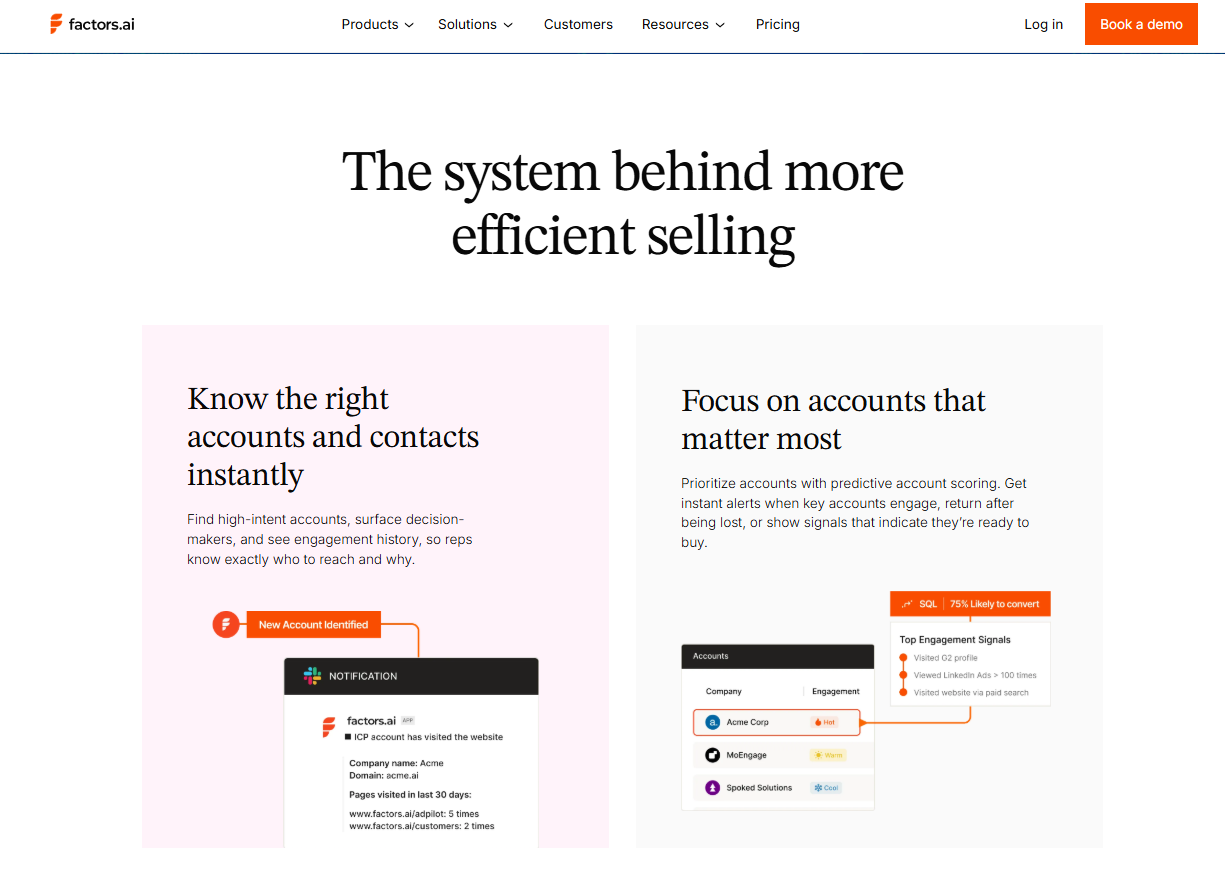
Factors.ai is built around account-level scoring. It learns from historical wins and losses, applies that learning to live signals, and produces a standardized readiness score that sales, marketing, and RevOps can trust.
The value is immediate:
- Human bias is removed because every account is measured the same way
- Sales and marketing align around a shared definition of priority
- Anonymous buying activity is captured at the account-level instead of getting lost in the funnel
Once the scoring is done, you may end up having four accounts that score at roughly the same readiness level. That’s expected. Scoring creates a short list to narrow the field.
This short list is then handed over to Predictive Sales AI – the execution layer.
Predictive Sales AI uses the scores and adds execution context like deal stage, recent momentum, revenue impact, and risk signals to decide which of those four accounts should be acted on first and how. (We discussed this in detail in the Predictive Sales AI section above)
Predictive sales AI stack: Top tools by revenue function
There’s no single tool that does everything in a modern Predictive Sales AI stack, and that’s by design. Forecasting accuracy, account prioritization, deal inspection, and scenario planning are different jobs, solved at different layers of the revenue engine.
The platforms listed below represent the strongest players at each layer of the Predictive Sales AI stack. Understanding where each one fits is key to using them well.
1. Factors.ai – Specialist in predictive account scoring & buyer journey intelligence
Overview
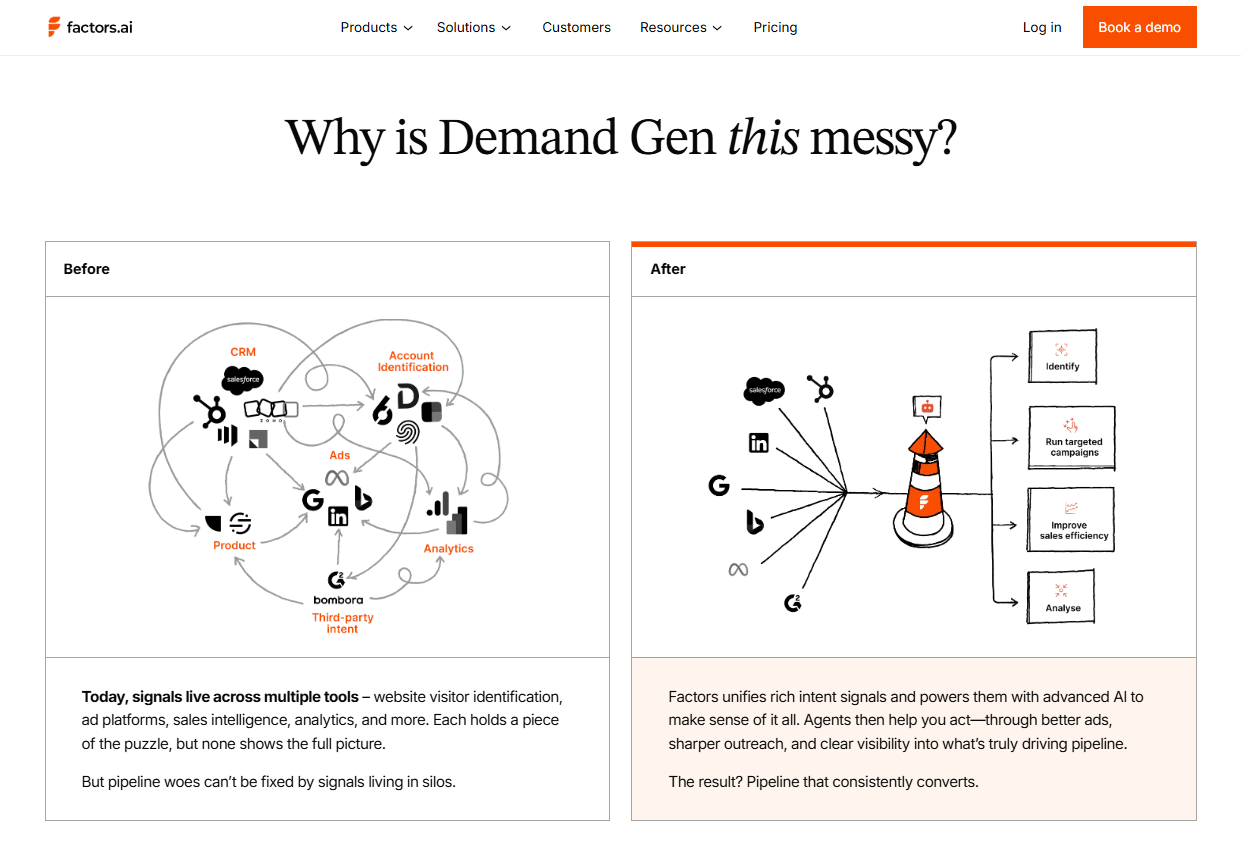
Factors.ai unifies anonymous intent signals with CRM and interaction data to identify, score, and prioritize accounts showing real buying interest. It helps teams move beyond basic intent capture by de-anonymizing web traffic, ranking accounts by likelihood to convert, and turning raw signals into actionable scores that feed downstream forecasting and execution workflows.
Key Features
• Unified intent capture from website, CRM, LinkedIn, and G2 signals.
• Predictive account scoring with engagement tracking and prioritization.
Pros
• Excellent at converting dark funnel activity into prioritized accounts.
• Removes bias and aligns RevOps, sales, and marketing around one score.
• Integrates ad signals and intent for optimized targeting.
Cons
• Not a full-fledged forecasting suite on its own (needs to feed into forecasting layers).
• Detailed pricing isn’t fully public beyond plan tiers.
Pricing
• Free trial available.
• Plans: Basic, Growth, Enterprise with increasing predictive scoring and ad audience sync.

2. Salesforce Einstein forecasting – Native CRM forecasting & AI insights
Overview
Einstein Forecasting is Salesforce’s AI-driven forecasting capability embedded in Sales Cloud. It leverages historical pipeline behavior and machine learning to predict revenue outcomes and improve forecast accuracy, while surfacing insights and trends directly inside the CRM.
Key Features
• AI-powered predictive forecasts based on sales history and pipeline trends.
• Integrated within Salesforce for live, CRM-centric forecasts.

Pros
• Seamless native integration with Salesforce CRM.
• Improves forecast confidence with data science and machine learning.
Cons
• Forecasting is tied to being fully in the Salesforce ecosystem.
• Not a standalone tool; requires Salesforce licenses.
Pricing
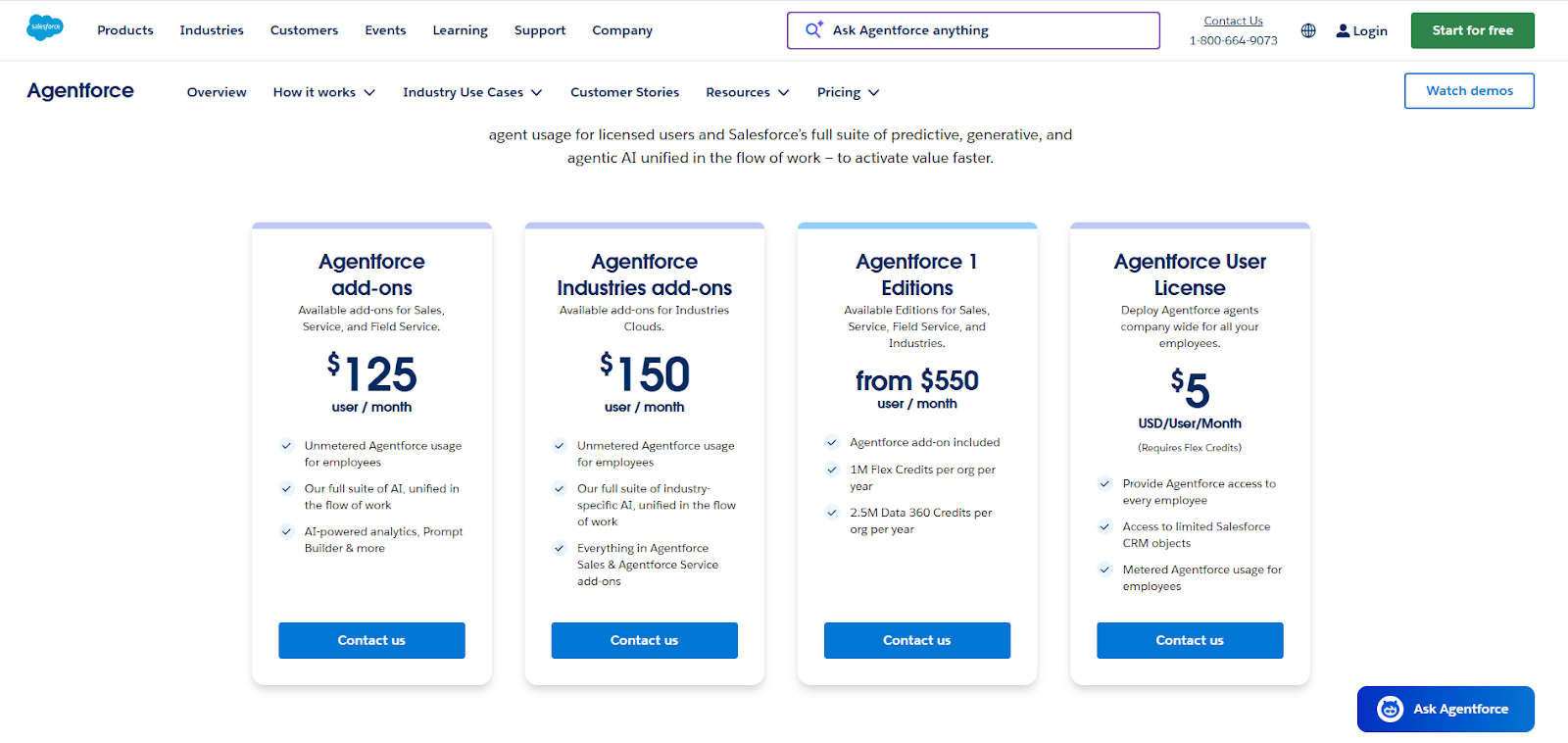
• Pricing bundled into Salesforce Sales Cloud/Einstein licenses (varies by edition and contract).
3. Clari (Revenue intelligence + Forecasting)
Overview
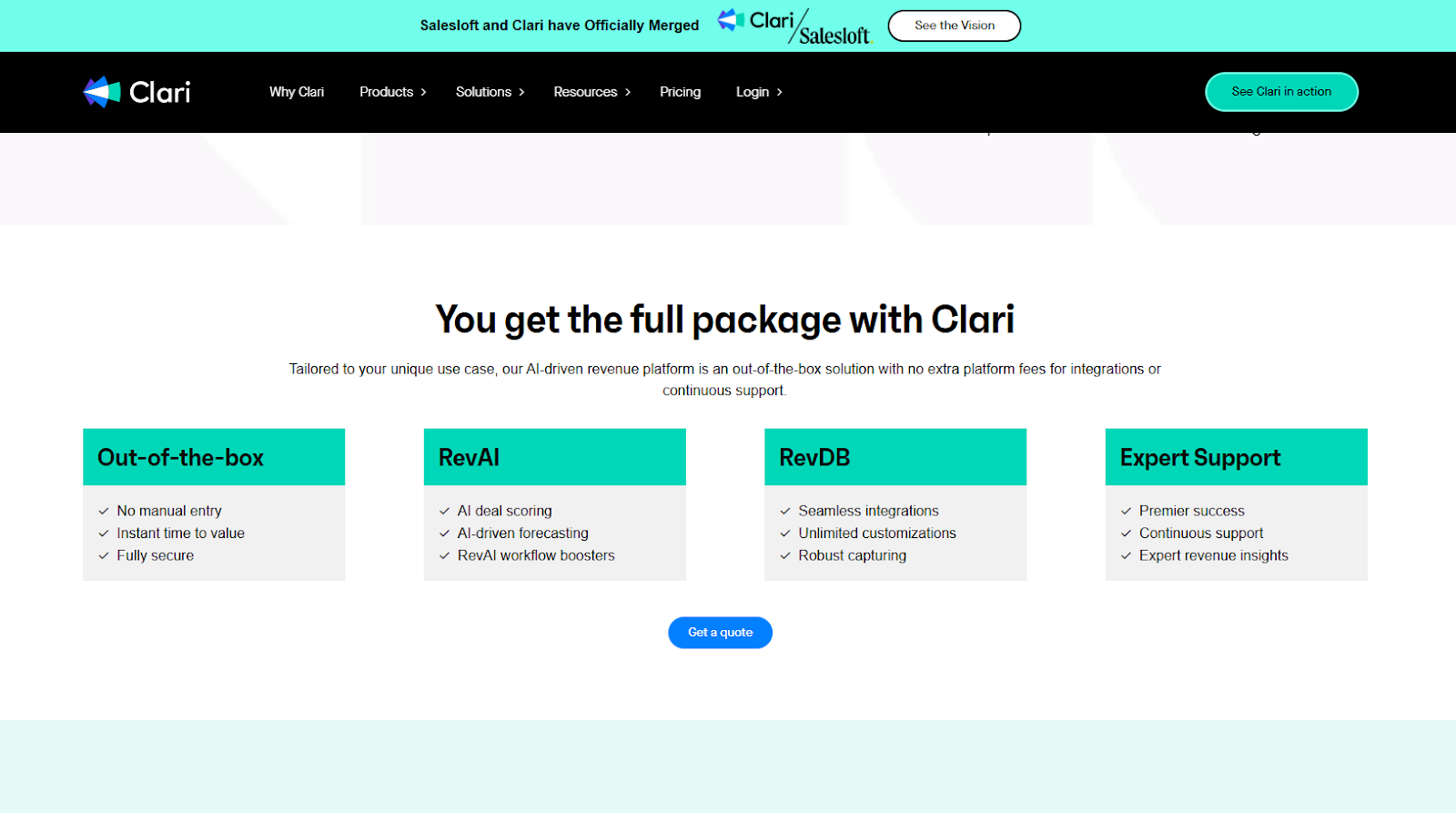
Clari is a revenue operations and forecasting platform that helps teams manage pipeline health and revenue predictability. It uses AI to generate forecast roll-ups, flag deal risks, and give leadership a real-time view of how forecast outcomes are shaping up.
Key Features
• Automated forecast roll-ups and scenario analysis.
• AI-powered pipeline risk scoring and deal inspection.

Pros
• Trusted enterprise-grade forecasting and revenue intelligence.
• Reduces manual forecast collection and error.
Cons
• Requires integration and change management for full value.
• Typically higher cost for enterprise deployments.
Pricing
• Not fully public; tiered enterprise-oriented pricing with scale considerations.
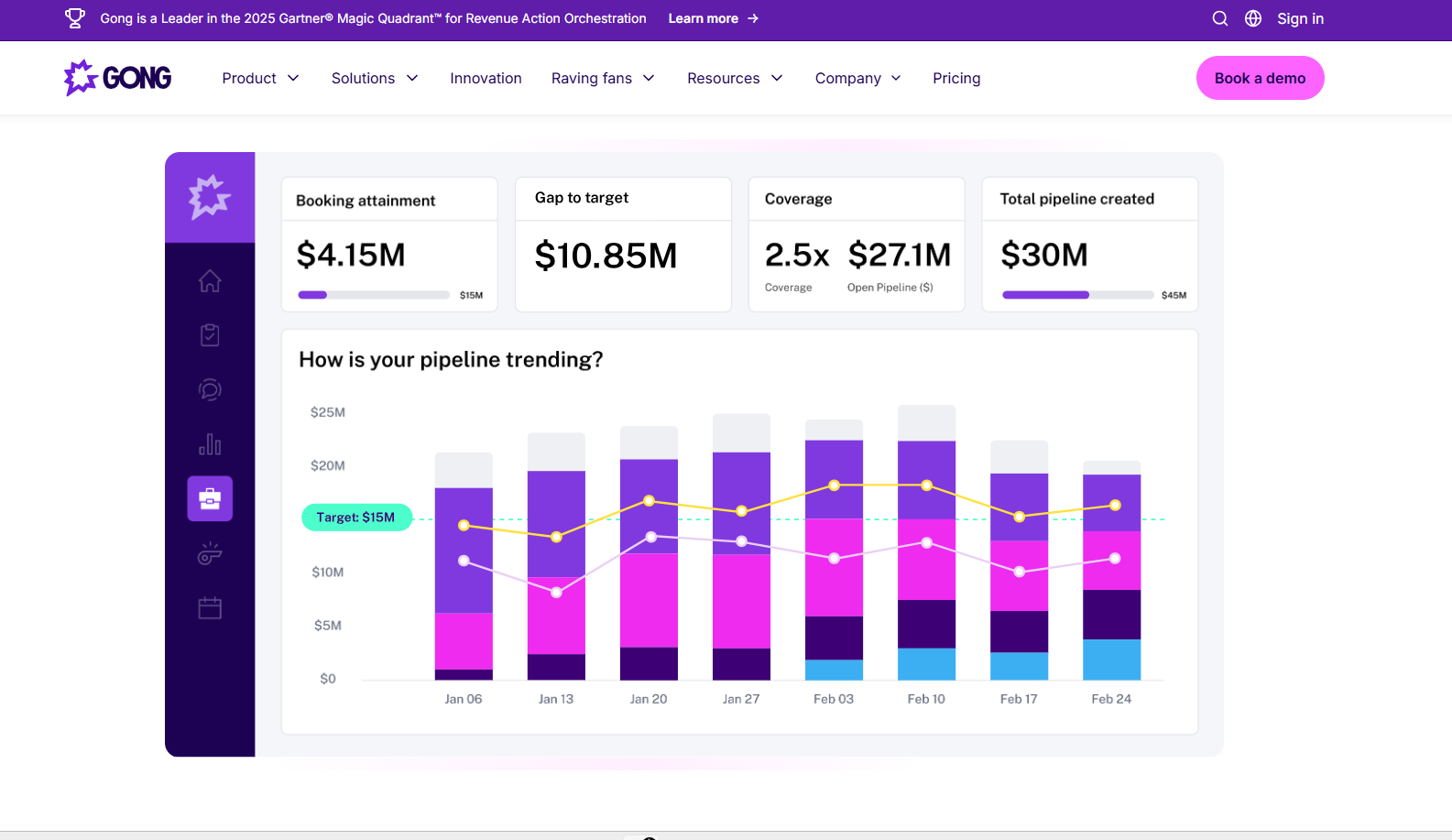
4. Gong Revenue AI (Forecast + Revenue intelligence)
Overview
Gong unifies revenue intelligence with forecasting through deep analysis of sales conversations and engagement behavior. It captures deal signals from calls, emails, and meetings, applies AI to identify trends and risks, and helps teams improve forecast predictions and pipeline health.
Key Features
• AI-driven forecasting signal analysis (Gong Forecast).
• Conversation and engagement analytics to inform pipeline quality.
Pros
• Excellent revenue intelligence from real sales interactions.
• Improves coaching and sales execution readiness.
Cons
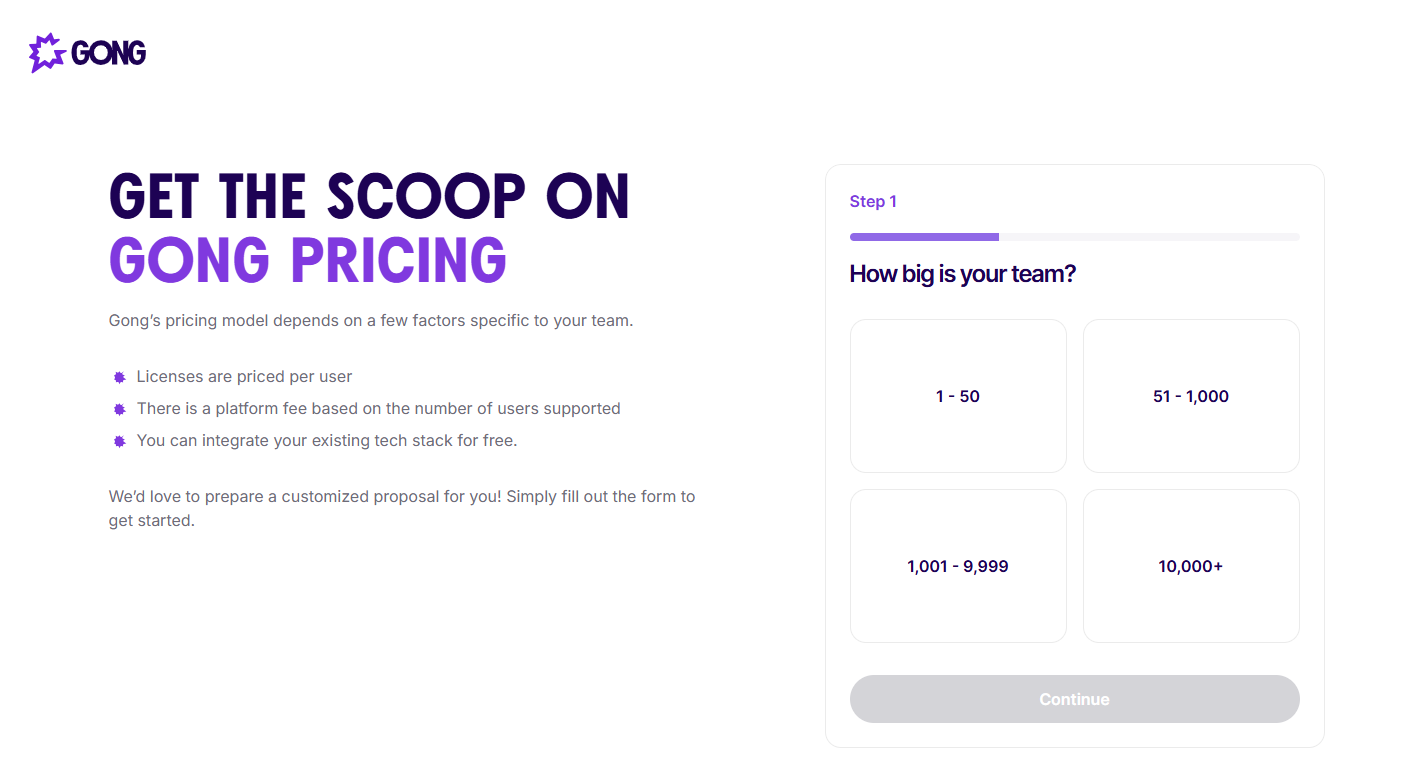
• Pricing is modular and complex; exact numbers vary widely.
• Not focused purely on forecasting (broader revenue intelligence).
Pricing
• Modular pricing with platform fees and add-ons (Gong Forecast, Gong Engage).
5. Anaplan – Enterprise scenario planning & forecasting
Overview
Anaplan is an enterprise forecasting and planning platform that helps organizations connect sales forecasts with broader financial and operational planning. It supports real-time forecasting, scenario modeling, and cross-team alignment for GTM and finance functions.
Key Features
• AI-driven scenario planning and real-time forecast updates.
• Unified forecasting across sales, finance, and operations.

Pros
• Extremely strong for complex planning and what-if scenarios.
• Integrates broad business models beyond the sales process alone.
Cons
• Enterprise focus means a steep learning curve and implementation.
• Significantly more expensive than tools built for revenue ops alone.
Pricing
• Custom enterprise pricing; requires sales engagement.

Predictive sales AI stack: Top tools by revenue function table
Best practices for implementing AI sales intelligence
The sales pitch for AI tools always promises the best outcomes. And their promises of better forecasts, higher win rates, reps focusing on the right accounts usually come through, if used properly.
Usually, the gap between what the demo showed and what your team actually experiences can be fixed with a few practices that don't get talked about enough in vendor presentations, like:
- Clean your data before you trust the output
If your data is messy, predictive AI tools won’t give you accurate predictions. Clean up duplicate accounts, stale stages, missing close dates, and inconsistent field usage in your CRM.
- Use AI to guide focus, not to replace judgment
Let AI surface priorities and risk signals, but keep humans in charge of messaging, timing, and tone. Buyers can tell when outreach is automated without a personal touch. AI should narrow choices to help you make better decisions.
- Give sales and marketing the same score to work from
When both teams prioritize accounts using a single predictive signal, handoffs are cleaner and need less effort. Tools like factors.ai make this possible by creating one shared view of account readiness.
Once this is in place, the next obvious question to ask is: where does Predictive Sales AI fall short, and what should you be careful about?
Limitations of predictive AI for sales strategy
Predictive Sales AI is a powerful tool for your sales strategy. But like everything else, it has a set of limitations that are worth calling out upfront:
- Bad data leads to bad predictions
AI works on the data you feed. If your CRM is full of outdated stages, missing fields, or optimistic close dates, the model will learn the wrong patterns and repeat them at scale.
- AI can’t fix a broken GTM motion
If your ICP is not clear, handoffs are messy, or reps don't work on closing deals consistently, AI won’t clean that up for you. It will simply reflect the chaos more clearly.
- Predictions still need human context
AI can spot patterns, but it doesn’t know why a deal is delayed because of procurement, or why an account is waiting for budget approval. Here, it relies on human judgment.
- Over-reliance on scores can backfire
Scores are guides, not orders. When teams chase a number without understanding the signals behind it, they risk ignoring nuance and missing real opportunities.
How to evaluate predictive sales AI tools
Selecting a tool based on a bunch of demos is difficult because they all sound good. Here's a checklist that helps you decide which one will contribute to your revenue once the trial period ends:
FAQs for predictive sales AI
Q: What is the difference between lead scoring and predictive account scoring?
Lead scoring tracks individual actions, like one person clicking an email. Predictive account scoring, like the approach used by Factors.ai, looks at the combined behavior of the entire buying committee to estimate company-level purchase likelihood.
Q: Can AI-powered demand forecasting tools really predict “Black Swan” events for sales teams?
No tool can predict the unexpected perfectly, but modern AI forecasting tools can spot early warning signals like hiring freezes or pricing changes, letting teams adjust forecasts faster.
Q: Why is my predictive AI model giving me false positives?
This usually happens when the model only sees partial data. If it lacks anonymous web behavior or third-party intent, it overestimates interest based on incomplete signals.
Q: Is predictive sales AI compliant with US privacy laws in 2026?
Yes, when built correctly. Most leading tools focus on account-level identification instead of tracking personal data, aligning with evolving US and state privacy regulations.
Q: How long does it take to see ROI from predictive account scoring?
Many teams start seeing improvements within a few months, mainly because reps stop chasing low-intent accounts and focus their time on those most likely to convert.

See how Factors can 2x your ROI
Boost your LinkedIn ROI in no time using data-driven insights


.avif)

See Factors in action.
Schedule a personalized demo or sign up to get started for free
LinkedIn Marketing Partner
GDPR & SOC2 Type II

.svg)



.avif)

