
ZoomInfo vs 6Sense: Which platform fits your GTM Strategy?
Compare ZoomInfo vs 6sense across data, intent, activation, automation, analytics and pricing. Find the right GTM platform for your team.
.avif)
Senior Content Marketing Manager

Growth Marketer



.svg)


Let’s be honest for a hot minute (because GTM teams definitely aren’t when they argue about tools.)
Every team has that internal debate.

One person swears by ‘better data.’
Another insists ‘timing is everything.’
Meanwhile, you’re just trying to generate pipeline without losing your will to live. (and they all look like different versions of the kid in the above picture).
And sitting riiiight in the center of this GTM tug-of-war are two giants: ZoomInfo and 6sense.
Both are popular and powerful. And both will absolutely show up in your procurement deck, whether you ask for them or not.
But… they’re built for completely different things in your GTM journey.
ZoomInfo is your “I need people to talk to today” friend… the one with a never-ending docket, creepy-good memory, and a habit of delivering verified information, AKA contacts.
6sense is your “I know what they’re thinking before they think it” friend… a little psychic, a little scary, and very serious about buyer journeys and timing every move for you.
One tells you who to talk to… the other tells you when to act (and sometimes, how loudly).
I know that’s not enough information, so I’ll walk through how these two actually stack up across data, intent, audience activation, analytics, and real GTM movement… the stuff that makes or breaks pipeline.
Alright… grab your coffee (or water… cause hydration!).
And let’s get into it, or as our dear GenZ friends would say, “LFG”.
Also, read 6sense pricing and costs in 2026
ZoomInfo vs 6Sense: Functionality & Core Capabilities
B2B teams need clarity as much as they need their double espresso. Whether you’re chasing better data or smarter execution, the platform you choose can shape how efficiently your go-to-market motion runs. ZoomInfo and 6sense both claim market leadership, but they’ve built their “intelligence” on different philosophies.
Before you decide which one works for your team, this section breaks down what each platform does at its core and how each delivers value.
ZoomInfo Functionalities and Core Capabilities
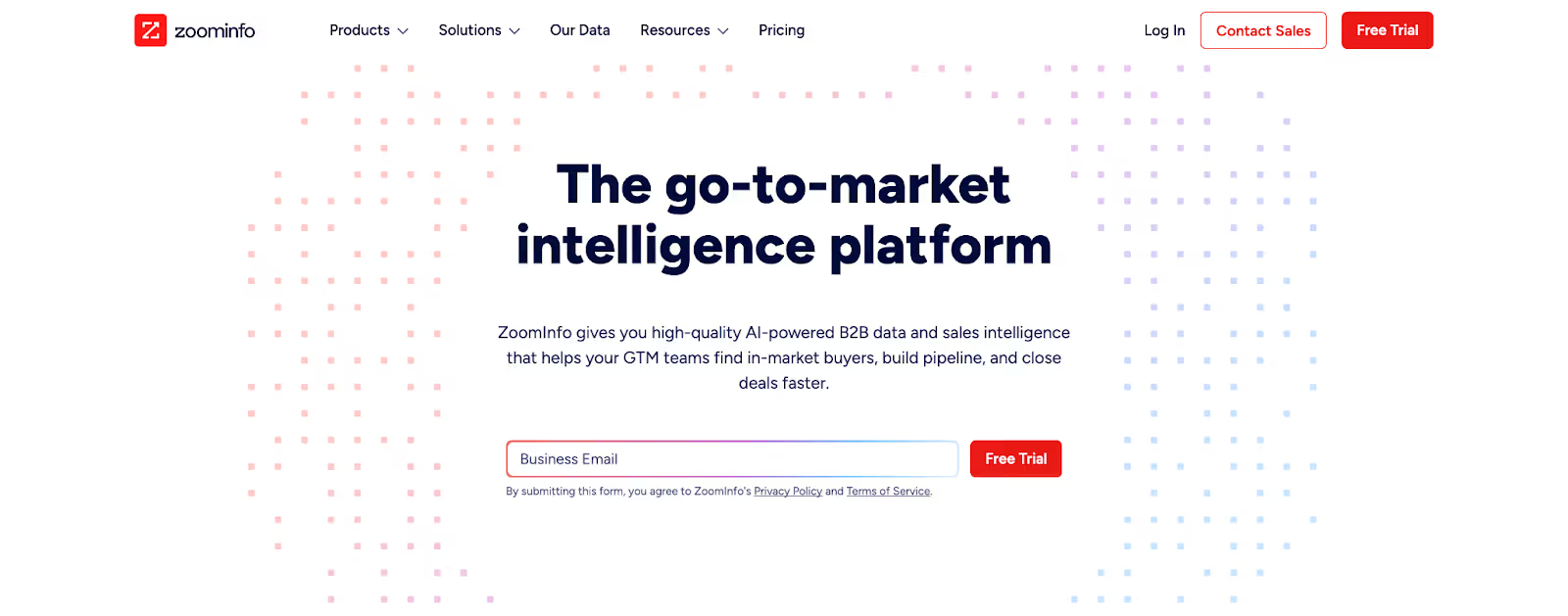
ZoomInfo positions itself as the spine of B2B data and a treasure trove of accurate contact, firmographic, technographic, and intent insight. Most go-to-market teams start here when they need:
- A steady source of verified leads and accounts
- Contact enrichment that keeps CRM records up to date
- Firmographic filtering, technographic signals, and job-change alerts
- Integrations that move intelligence smoothly into Salesforce, HubSpot, or Outreach
- Workflow accelerators that let reps spend less time researching and more time selling
ZoomInfo’s strength lies in its breadth and depth of data. For teams who know who they want to reach and just need that information in one place, ZoomInfo delivers.
6sense Functionalities and Core Capabilities
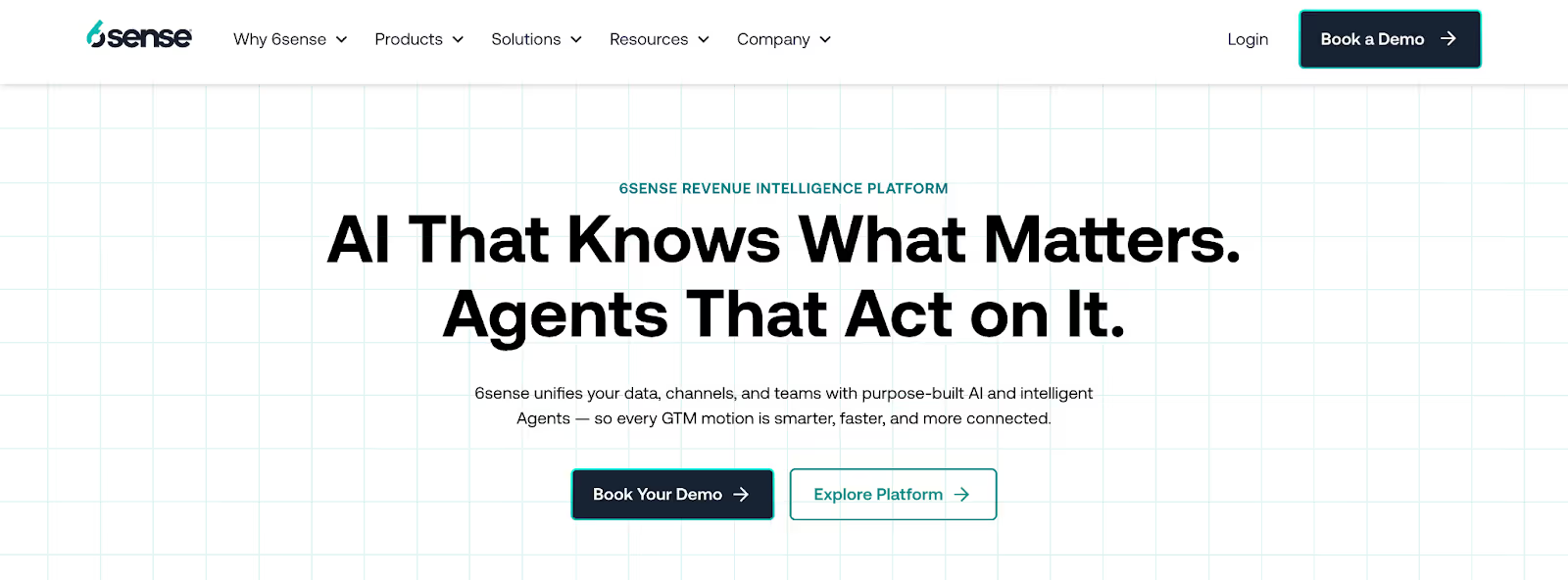
Instead of just gathering signals, 6sense brings structure to how teams act:
- AI-powered predictions tell you which accounts are ready and when
- Buying group insights highlight who’s involved in the decision
- Audiences adjust automatically across ads, emails, and events based on behavior
- Revenue intelligence shows what’s moving pipeline and where the gaps are
- Orchestration layers help teams create, launch, and optimize their outreach
For teams trying to align marketing and sales around high-intent, multi-threaded accounts, 6sense finally makes that alignment practical and measurable. It’s like going to a spa to ‘align your chakras’ and actually walking out ✨aligned✨.
ZoomInfo vs 6Sense: Core capabilities in a snapshot
ZoomInfo is the foundation that helps teams gain clarity on who they’re targeting and gives sales the data to personalize their approach.
6sense focuses on flow, from identification to engagement to conversion. For teams that want their outreach and activation to move with the buyer, it pulls the moving pieces together.
Both platforms are great in their capabilities. But your choice depends on what feels more urgent today:
Do you need better data, OR better movement across your revenue engine?
If you’re thinking “I want both data and orchestration,” you might like our take on Factors vs ZoomInfo, it shows when to pick a data-first tool vs a full GTM system.
ZoomInfo vs 6Sense: Data Coverage & Intent Signals
Data is the backbone of every modern GTM motion. Whether you’re trying to find the right companies to target or understand what they care about, the platform you choose should do more than just store records. It should help you act on them.
Let's look at how ZoomInfo and 6sense build, manage, and activate intent signals.
ZoomInfo Data Coverage and Intent Signals

ZoomInfo gives companies what they’ve always needed: clear, reliable data (the latter being the KEY-word).
- Strong database of verified contacts and companies
- Firmographic filters and industry-level insights
- Basic intent signals that point toward which companies are showing interest
- Enrichment that updates your CRM automatically so reps don’t have to chase missing information
It’s a solid fit for teams that rely on outbound prospecting and want a trustworthy, updated list to work from.
6sense Data Coverage and Intent Signals

6sense focuses more on interpreting where buyers are, rather than just showing who they are. It combines behavioral signals, account history, and predictive scoring to show:
- Which accounts are researching your solutions
- What stage of the buying process are they in
- How likely they are to move toward pipeline
- Patterns that help sales and marketing work in sync
This approach benefits teams that want data AND correct timing.
ZoomInfo vs 6Sense: Data Coverage and Intent Signals in a snapshot
ZoomInfo matches your target companies with verified contacts, ensuring your outreach is grounded in real, reachable people.
6sense gives teams context, while showing who’s active, why they matter now, and how far along they are in the buying process.
Again, both have a place. The better choice depends on whether your team needs clear records to support selling, or real-time intent signals to guide multi-channel GTM plays.
Curious about how intent sources compare? This short guide on Top Intent Data Platforms gives a handy market view.
ZoomInfo vs 6Sense: Account & Buying Group Intelligence
Account intelligence is no longer just about identifying a company… GTM teams now need to understand who is involved, what each person cares about, and how their behavior connects to the buying process. (long sentence… but that’s really all the things they need)
Here’s how ZoomInfo and 6sense compare when it comes to identifying accounts and understanding buying groups:
ZoomInfo Account & Buying Group Intelligence

ZoomInfo gives teams a clear view of who to talk to. Its intelligence points you toward the right contacts by job role, industry, and profile. It helps sales teams find the decision-maker faster and personalize outreach with verified details.
Here’s what it delivers well:
- Lists of stakeholders connected to the company
- Job role and seniority filters for narrowing outreach
- Quick ways to add and enrich contacts in your CRM
- Easy exporting and syncing for sales engagement tools
(And yes, fewer moments where you want to pull your hair out)
This works well when your primary goal is to book meetings and identify the right decision-makers within each account.
6sense Account & Buying Group Intelligence
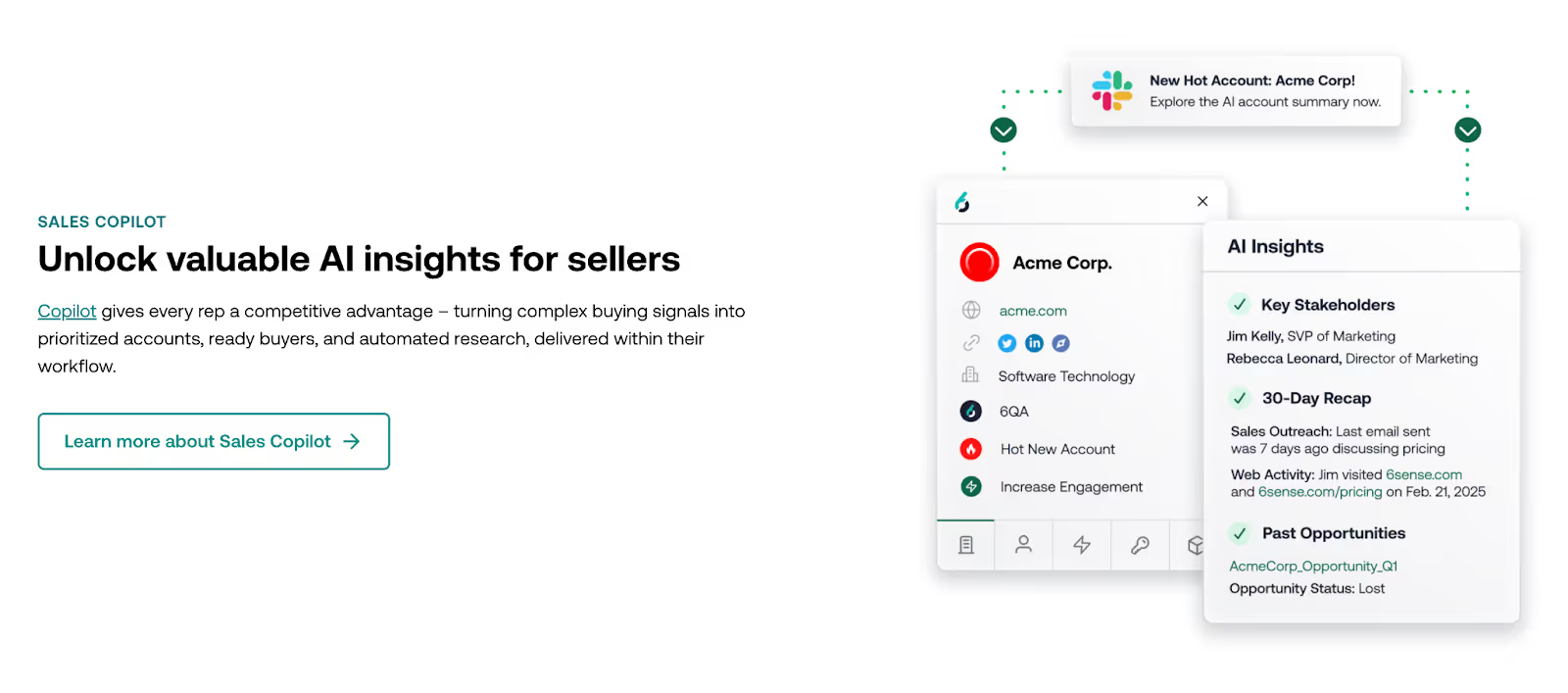
6sense goes deeper into what’s happening inside the account. Instead of just telling you who the decision-maker is. It shows how different stakeholders interact with your brand and content over time. This makes it easier to understand patterns of influence and track progress.
It does this by:
- Tracking behavior from multiple decision-makers together
- Seeing where each stakeholder fits into the buying process
- Predicting when an account is close to becoming an opportunity
- Highlighting individual and account-level actions that signal readiness
This is helpful for teams investing in account-based motions where engagement across the buying group matters more than a single contact click.
ZoomInfo vs 6Sense: Account & Buying Group Intelligence
ZoomInfo helps you quickly access the right people. You know who the decision-makers are and can act on the information directly.
6sense supports you with context and collaboration. You can see which accounts are moving, why they’re moving, and how to tailor your outreach based on where they are in the journey.
But now… the difference is whether your team is focused on direct outreach to known contacts or broader alignment between marketing and sales against a moving buying unit.
ZoomInfo vs 6Sense: Workflow Automation & Activation
Good data becomes great only when teams can act on it.
Automation and activation are where platforms show how well they serve real-world GTM needs, whether that’s running campaigns, organizing outreach, or helping revenue teams work together.
Both ZoomInfo and 6sense offer automation features, but they’re designed keeping different priorities in mind.
ZoomInfo: Workflow Automation & Activation
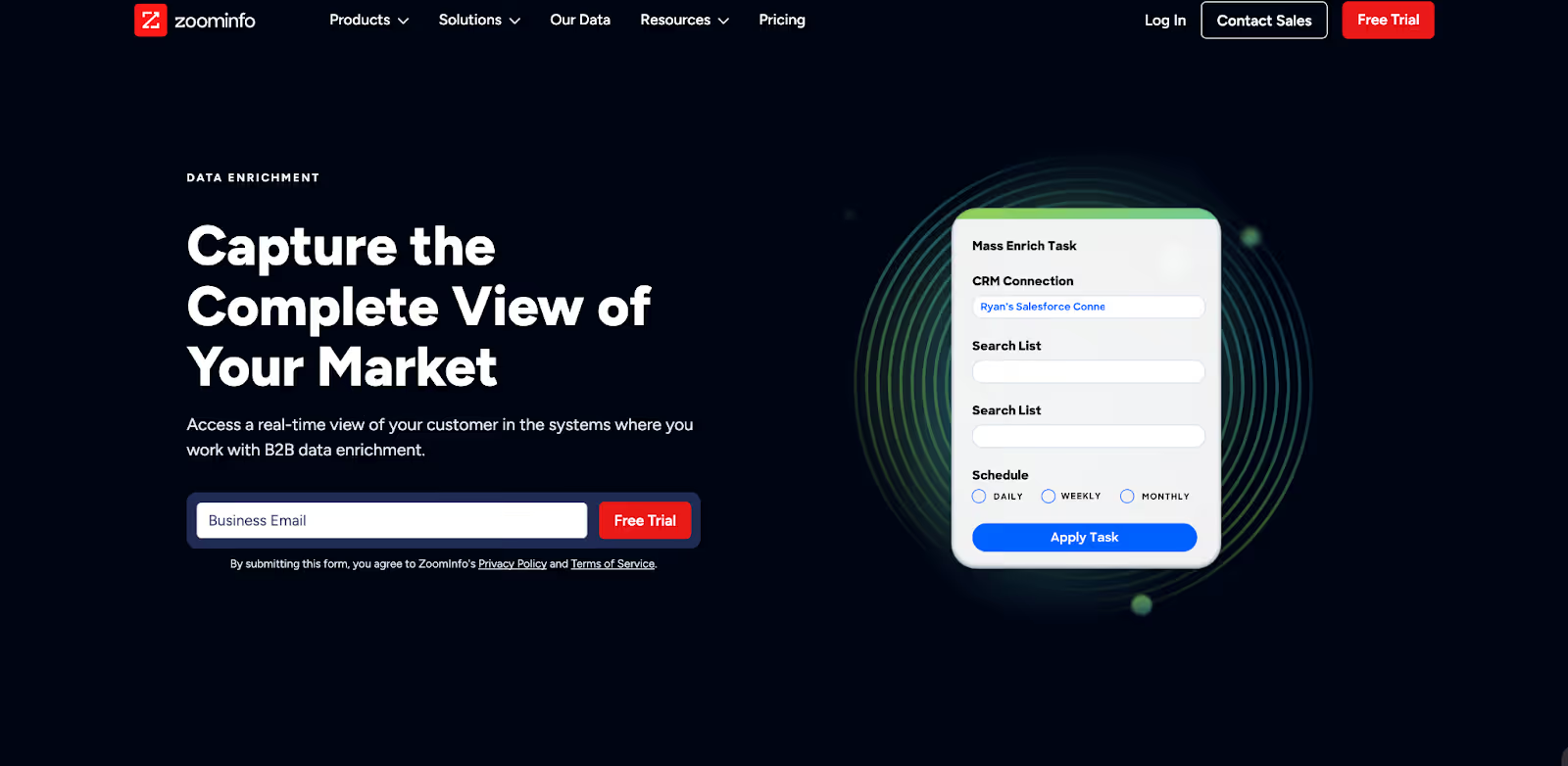
ZoomInfo 🌟 shines🌟 where structured sales flow requires reliable data.
It lets you:
- Clean and enrich CRM records automatically
- Build segmented lists based on filters like intent keywords, technologies, and job roles
- Push those lists into sequences or campaigns via integrations with CRMs and outreach tools
- Reduce manual work for sales teams by automating research and data entry
(Become your sales teams’ favourite person, and that’s really THE thing btw)
This fits outbound workflows very well. Teams using outreach platforms like Salesloft or Outreach.io can plug in ZoomInfo and make their plays more precise with less effort.
6sense: Workflow Automation & Activation

6sense is built to guide entire GTM motions. It connects what the platform knows to what marketing and sales should do next.
Some of what it enables:
- Automated campaigns based on buying stage
- Cross-channel activation (ads, email, chat) based on intent signals
- Internal workflows that notify sales when accounts enter the “ready” stage
- Unified scoring and journey progression that help teams time their effort
- Shared visibility between marketing and sales on what messages are working
Where ZoomInfo supports data-backed action, 6sense offers signal-backed automation across channels.
ZoomInfo vs 6Sense: Workflow Automation & Activation
ZoomInfo helps sellers move faster by giving accurate data and syncing that data into the tools they already use.
6sense helps teams coordinate how they engage accounts at every stage, from anonymous awareness to opportunity creation.
Think of ZoomInfo as the engine that supports outbound… while 6sense as the engine that supports multi-channel GTM journeys.
If automation is your team’s jam (not the strawberry jam you put on bread), here’s a practical resource: CRM Workflow Automation to Boost Efficiency.
ZoomInfo vs 6Sense: Analytics & GTM Measurement
It’s one thing to activate outreach and campaigns. It’s another to understand what’s working and where to improve.
This section looks at how both platforms support reporting and funnel measurement, and what each offers to GTM teams, aiming to move the revenue needle with confidence.
ZoomInfo: Analytics & GTM Measurement
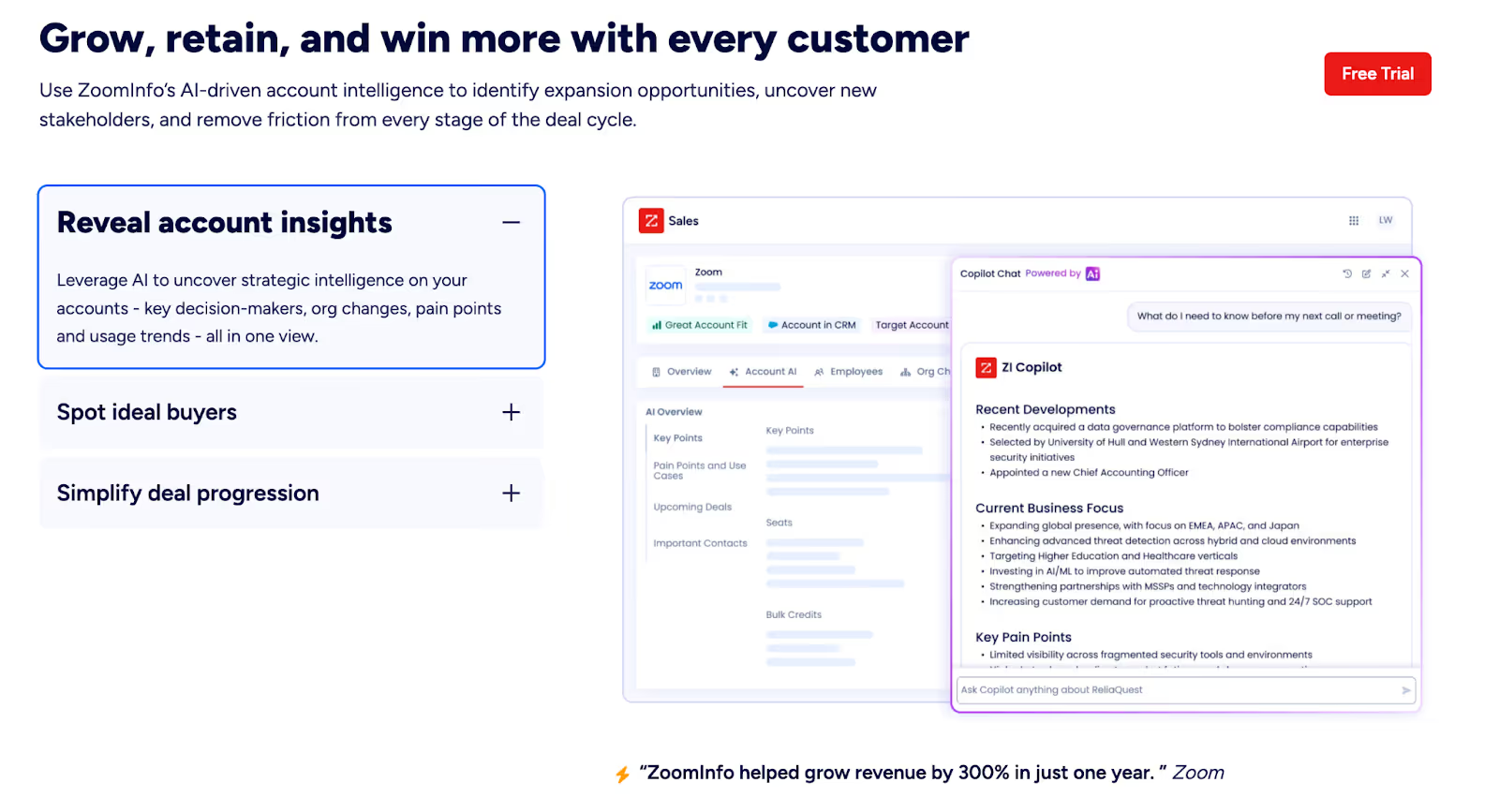
ZoomInfo also helps organizations make better decisions by improving the foundation of their reporting. With cleaner data and enriched profiles, analytics become more reliable and actionable.
It’s especially useful for:
- Tracking changes in contact and account data over time
- Visualizing how enriched outreach drives opportunities
- Measuring outreach performance by intent level or persona match
- Saving time on manual data cleanup to boost sales productivity
ZoomInfo enables teams to keep their dashboards relevant and accurate without getting overwhelmed by complexity.
6sense: Analytics & GTM Measurement
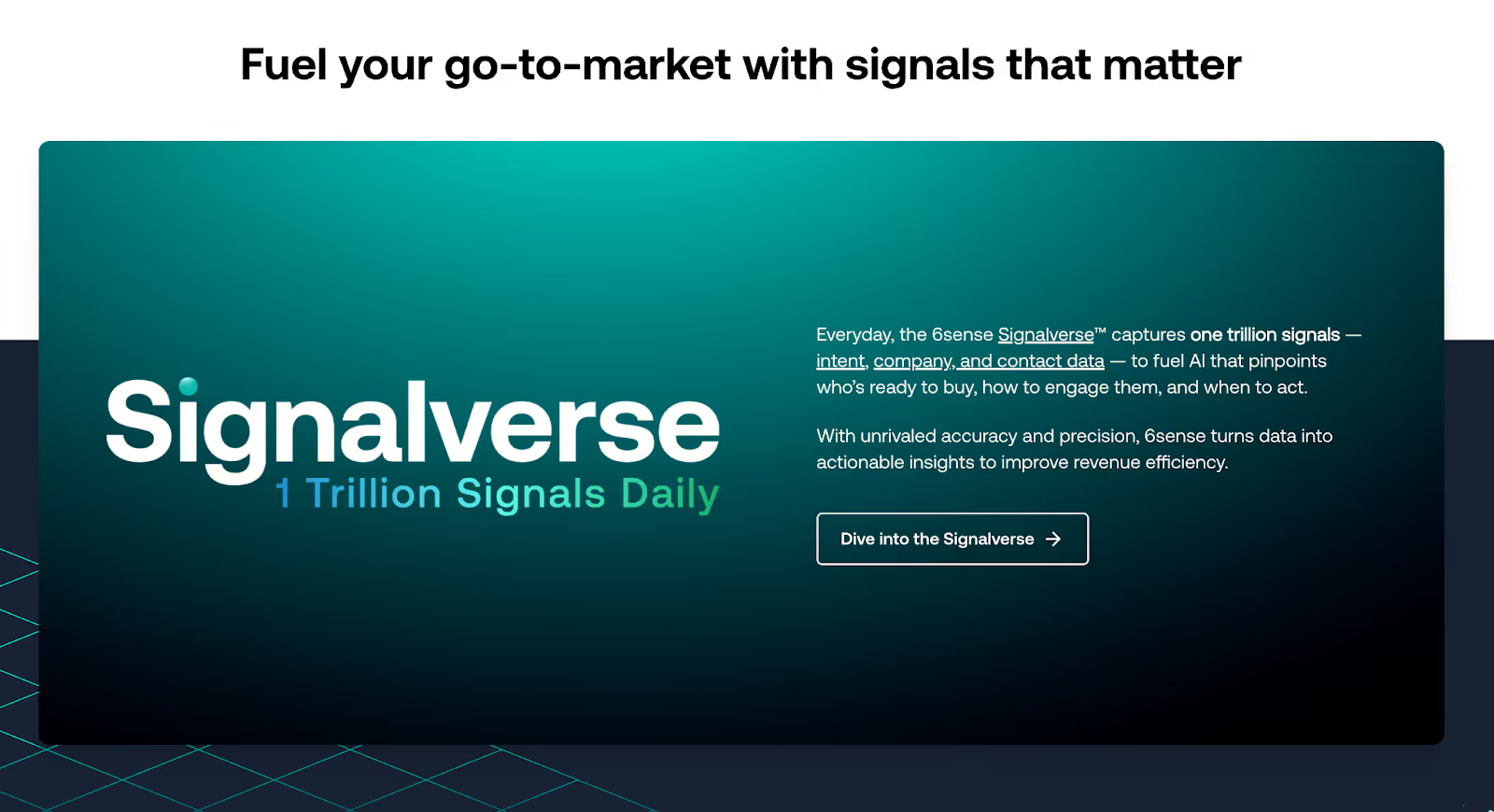
6sense takes a broader view of insights. The platform shows whether a campaign worked and how buyer behavior is likely to move over time, what channel influenced that movement, and what actions should follow.
Some highlights include:
- Journey stage views across all active and target accounts
- Funnel tracking that ties outreach to revenue movements
- Predictive models that show which accounts will move next
- Deep analytics that connect marketing activity to pipeline progression
This is especially helpful for teams running account-based marketing and wanting proof that their campaigns are shifting buying behaviors.
ZoomInfo vs 6Sense: Analytics & GTM Measurement
ZoomInfo strengthens analytics by ensuring that CRM data and targeting parameters are clean and up-to-date. This gives sales and marketing teams a better place to build reports and act with confidence.
6sense helps teams go beyond reporting. It puts behavior and revenue movement in one frame, giving strategy a more predictive support.
For teams looking to measure top of funnel efforts and outbound performance, ZoomInfo does the job well. For teams driving sophisticated cross-channel GTM motions, 6sense gives a clearer narrative of what’s working and why.
{{INLINE_BOFU}}
ZoomInfo vs 6Sense: Support, Pricing, and Market Presence
Both ZoomInfo and 6sense power thousands of GTM teams worldwide (random and unrelated, but ‘worldwide’ only reminds me of Pitbull #IYKYK).
But how they support customers, price their platforms, and show up in the market gives more context on who they’re really built for, and which use case benefits more from which platform.
ZoomInfo: Support, Pricing, and Market Presence
ZoomInfo has been a staple for sales and growth teams alike. Its data and intelligence offerings have made it a popular choice for organizations that want to move into a data-rich rhythm without complex setup.
Some key observations:
- Strong reputation across B2B sales intelligence categories
- Long list of integrations for sales, marketing, and ops workflows
- Support and onboarding tailored to data enrichment and outreach use cases
- Known for helping teams simplify dirty data and close gaps in CRM
The platform fits well into stack setups where outbound remains a dominant channel and accuracy matters most.
6sense: Support, Pricing, and Market Presence
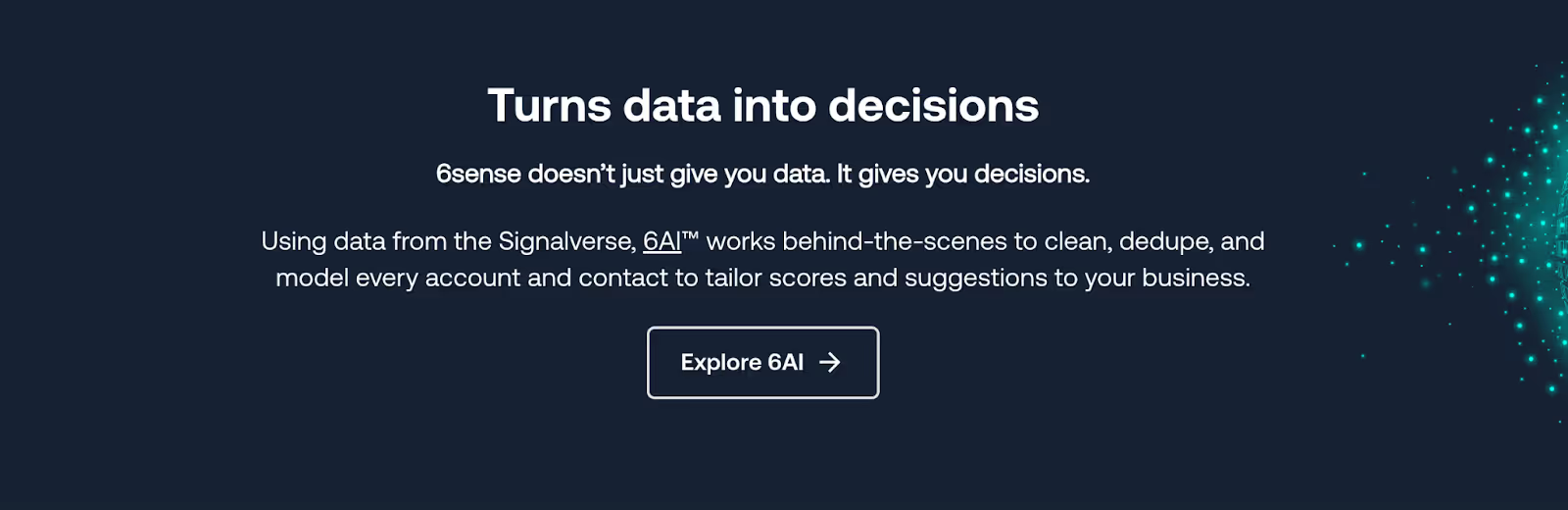
6sense caters to teams ready to invest in alignment and orchestration. It is popular among enterprises and fast-scaling SaaS companies because of:
- Full buying-journey visibility and orchestration support
- Focused onboarding and success enablement for ABM motions
- Multi-threading and sales-marketing alignment guidance included
- Hands-on help with intelligent workflows, predictive plays, and measurement
You see 6sense in stacks where marketing runs multi-channel plays and GTM leaders want transparency across funnel movements.
ZoomInfo vs 6Sense: Support, Pricing, and Market Fit
ZoomInfo gives teams scalable access to reliable data and intent enrichment, and it’s structured to accommodate budget-conscious teams as well as large enterprises.
6sense goes beyond data availability, offering deeper support for strategy teams running ABM plays and intelligently synced outreach. But it comes at a premium with consultative pricing and onboarding.
Both platforms have earned their place in the market. ZoomInfo is a strong ‘data first’ partner. 6sense is a strong ‘orchestration first’ partner.
The difference comes down to what level of GTM maturity you’re currently supporting, and what you are preparing your team to work toward.
ZoomInfo vs 6Sense: Ad & Audience Activation
Most teams don’t struggle with intent data… they struggle with what comes after
The difference between these platforms is not whether you can activate audiences, but how much manual effort is required to keep those audiences updated and relevant.
Here is a structured breakdown of how both platforms handle activation in practice:
ZoomInfo: Ad & Audience Activation

ZoomInfo gives teams what they need to build reliable audiences, but the work of running campaigns still sits outside the product.
Teams typically:
- Build filtered account or contact lists inside ZoomInfo
- Export or sync them to LinkedIn, Google, Meta or MAPs
- Manage targeting logic, suppression and refresh cadence manually
This works well if teams already have a marketing ops function and want to improve segmentation without changing their entire workflow.
ZoomInfo supports activation, BUT does not automate it.
6sense: Ad & Audience Activation

6sense treats activation as an integral part of the buyer journey. Once the platform detects movement, segments and audiences adjust automatically.
Teams can:
- Run multi-channel account campaigns without exporting lists
- Serve different messaging based on buying stage
- Stop wasting impressions on accounts that have gone cold
- Trigger plays across ads, email, SDR outreach, and chat from the same signal source
This removes a major operational burden from marketing teams and helps keep targeting relevant throughout the buying cycle.
ZoomInfo vs 6Sense: Ad & Audience Activation in a snapshot
ZoomInfo gives you accurate audiences to target, and 6sense gives you moving audiences that keep themselves active.
My point is… one improves your execution, while the other removes a large part of the execution workload entirely.
ZoomInfo vs 6Sense: Analytics, Funnel Insights & GTM Orchestration
Analytics is the difference between believing and actually knowing whether the GTM engine is actually working.
A platform may collect intelligence, but if it cannot convert that intelligence into clear movement patterns and investment decisions, its impact stays limited.
Here is how the platforms differ in what they help teams see and act on:
ZoomInfo: Analytics, Funnel Insights & GTM Orchestration
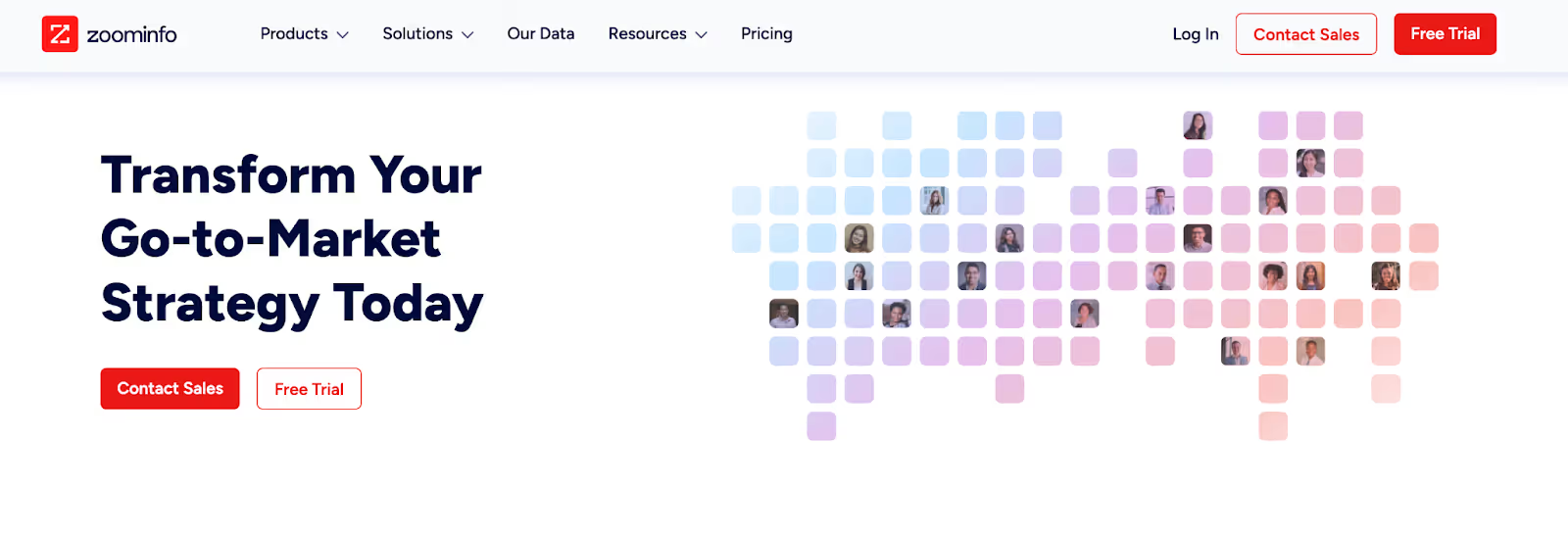
ZoomInfo’s analytics layer supports operational decisions. It helps teams understand:
- Which segments convert better
- How intent-based outreach influences meeting booking
- How much manual data cleanup has been eliminated
- Whether rep activity correlates with opportunity creation
These insights help revenue teams manage efficiency. It gives structure to outbound and supports cleaner pipeline reporting.
6sense:Analytics, Funnel Insights & GTM Orchestration

6sense positions analytics around forward motion.
The platform shows:
- Which accounts are heating up
- What triggered the movement
- Which messages and channels played a role
- Where deals slow down and why
All of this gives teams a way to connect their work to revenue rather than activity volume.
ZoomInfo vs 6Sense: Analytics, Funnel Insights & GTM Orchestration in a snapshot
ZoomInfo improves execution by making activity measurable and clean, but 6sense improves strategy by revealing which actions actually changed the pipeline.
ZoomInfo vs 6Sense: What to choose when?
If your immediate priority is:
- Finding the right people to target
- Keeping CRM records clean
- Improving outbound performance
- Giving sales a reliable data engine
Then ZoomInfo fits that need well. It gives teams verified data, contact enrichment, and enough intent signals to help prospecting run with less guesswork. Companies that are still pipeline-first rather than journey-first tend to see value quickly.
If your priorities include:
- Running coordinated ABM programs
- Aligning sales and marketing around account movement
- Activating intent signals without manual list work
- Understanding why accounts progress or stall
Then 6sense is the stronger fit. It turns intent and behavioral data into timing, activation, and pipeline insight. Teams that want to operationalize buying-group journeys and measure full-funnel performance will use more of what 6sense offers.
The choice depends on how your GTM engine runs today.
ZoomInfo is a data foundation. 6sense is a revenue operating layer.
Neither is ‘better’ in isolation. The better platform is the one that matches how your teams build pipeline today and how you plan to scale it tomorrow.
Looking for the capabilities of ZoomInfo and 6Sense in one platform?
Some teams want the precision of ZoomInfo and the orchestration power of 6sense, without managing two systems or stitching workflows together.
That’s where Factors.ai fits in *cue to the Superman theme song*
It combines:
- Account identification
- AI-powered intent signals
- Buying group insights
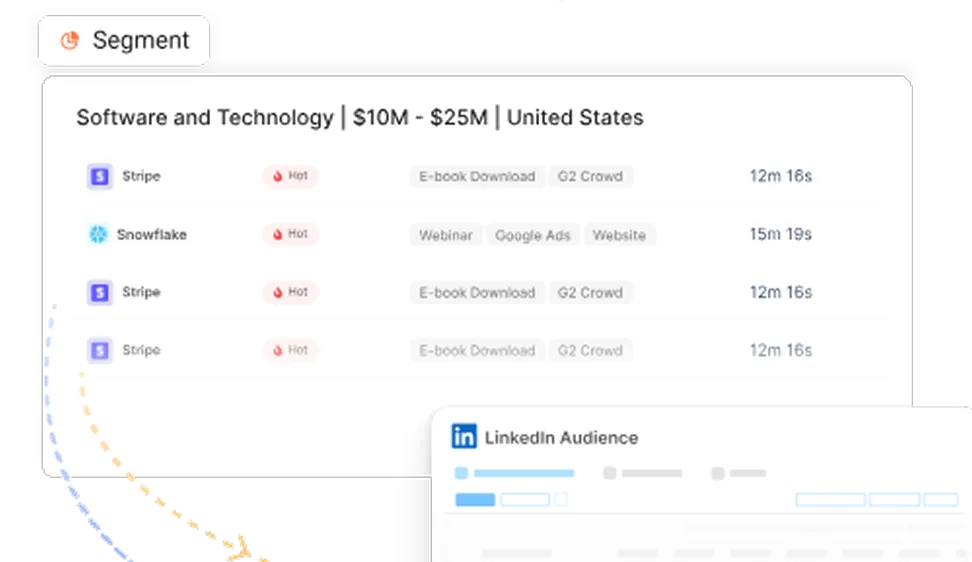
- Dynamic audience activation for LinkedIn and Google
- Real-time sales alerts
- Funnel analytics and revenue reporting
- GTM engineering services to set everything up
Instead of choosing between better data or smarter motion, you get both in one stack.
If that sounds like what your team needs, now is the right time to take a look.
📑Also Read: Apollo vs ZoomInfo
In a Nutshell…
ZoomInfo and 6sense both serve high-performing revenue teams, but they solve different problems across the pipeline. ZoomInfo is built for data-first execution: verified contacts, firmographic depth, and CRM-ready enrichment that fuels efficient outbound workflows. If your team relies on precision outreach and structured sales processes, ZoomInfo provides the tools to streamline prospecting and boost productivity.
On the other hand, 6sense operates as a revenue orchestration layer. It doesn’t just surface data; it interprets behavior across buying groups, triggering cross-channel plays, refining targeting automatically, and highlighting signals that help teams act with timing and intent. For organizations invested in full-funnel ABM, coordinated GTM motions, and marketing-sales alignment, 6sense helps turn complex journeys into scalable systems.
This detailed comparison breaks down how each platform performs across data coverage, activation, analytics, automation, and more, helping you align your technology choice with how your team actually drives revenue today and where you’re aiming next. Whether your priority is pipeline creation or pipeline velocity, the right choice hinges on where your GTM motion is strongest, and where it needs support.
FAQs for ZoomInfo vs 6Sense
Q. What is the main difference between ZoomInfo and 6sense?
ZoomInfo focuses on B2B data intelligence, contact enrichment, and sales efficiency, while 6sense is built for revenue orchestration, predictive engagement, and account-based strategy.
Q. Which platform is better for account-based marketing (ABM)?
6sense is better suited for ABM, offering automated audience updates, buying group insights, and cross-channel activation aligned with the buyer’s journey.
Q. Is ZoomInfo or 6sense better for sales prospecting?
ZoomInfo is a stronger fit for prospecting, providing verified contacts, CRM sync, and outreach-ready segmentation to support outbound sales teams.
Q. Can these platforms be used together?
Yes, many teams use ZoomInfo for data enrichment and 6sense for orchestration. However, managing both requires integration planning and workflow alignment.
Q. Is there an alternative that combines both ZoomInfo and 6sense capabilities?
Yes. Platforms like Factors.ai offer both contact-level intelligence and journey-based orchestration, providing a unified GTM experience without managing separate tools.

Powered by Bombora
Enter your domain and we'll send you a free list of companies showing buying intent in your vertical.
.avif)
Powered by Bombora
Enter your domain and we'll send you a free list of companies showing buying intent in your vertical.
.avif)

See how Factors can 2x your ROI
Boost your LinkedIn ROI in no time using data-driven insights


.avif)
See Factors in action.
Schedule a personalized demo or sign up to get started for free
LinkedIn Marketing Partner
GDPR & SOC2 Type II


.svg)



.avif)

