
What is a Lead in Marketing?
Learn what a lead in marketing is, how to define MQLs and SQLs, and why lead generation, scoring, and qualification are critical to driving B2B sales.
.avif)
Content Marketer

Growth Marketer



.svg)


Picture this.
Someone reads your blog, downloads your checklist, signs up for your webinar, and finally gives you their email.
You, meanwhile, do a polite corporate twerk because your pipeline just moved from “send help” to “okay, maybe it’s not thaaat bad, we’re fine.”
Now… the person who caused this little wiggle is a ‘lead’.
Come… let’s get into it.
Sooo, what really is a lead in marketing?
A lead in marketing is a person or organization that has shown interest in your product or service by interacting with your marketing efforts and, crucially, providing contact information.
Basically, leads are just strangers who’ve inched close enough to say, “Okay, fiiiine, tell me more,” which in B2B is basically a love confession. And since 45% of marketers are still wrestling with lead gen like it's an HIIT workout from Chloe Ting, getting this right matters (A LOT).
Here's what makes someone a lead:
- They've moved beyond being anonymous website traffic
- They've engaged with your brand in some meaningful way
- You have a way to reach them (email, phone number, LinkedIn profile)
- They're not yet an active sales opportunity
Think of leads as the bridge between awareness and conversion. They know you exist, they've shown interest, but they haven't committed to buying yet.
A few quick examples:
- Someone downloads your ebook after filling out a form
- A visitor signs up for your weekly newsletter
- A potential customer requests a product demo
- Someone attends your webinar and leaves their email
- A prospect fills out a ‘contact us’ form asking for more information
The key difference between a lead and random website traffic is the level of intentionality and identifiability (is that a word?!).
When someone becomes a lead, they've deliberately chosen to engage with you and share their information, and I think that’s beautiful.
Why do leads matter?
To make it more obvious than it is… marketing exists to turn attention into revenue. Leads enable that transformation.
According to recent research, 85% of marketers say lead generation was their top measure in 2024, and for good reason. Without a steady flow of qualified leads, your sales team has nothing to work with. Your CRM sits empty. Your revenue forecasts become guesswork.
Here's where leads fit in a basic funnel:
Visitor -> Lead -> MQL -> SQL -> Opportunity -> Customer
Also read: 10 Best Cognism Alternatives And Competitors
- Visitor: Someone browsing your website, reading your blog, or seeing your ad. Anonymous.
- Lead: They've shown interest and given you their contact info. Identified.
- Marketing Qualified Lead (MQL): Marketing has vetted them as a good fit worth nurturing.
- Sales Qualified Lead (SQL): Sales has confirmed they're ready for a direct conversation.
- Opportunity: An active deal in your pipeline with a potential revenue value.
- Customer: They've signed the contract and made a purchase.
Different CRMs and organizations might label these stages differently. HubSpot calls them lifecycle stages. Salesforce uses lead status fields. But the concept remains consistent: leads are the top of your revenue engine, and everything downstream depends on the quality and volume of leads flowing through.
Not every lead will become a customer, and that's fine. Understanding how leads fit into your customer journey helps you set realistic expectations. The goal is to generate enough high-quality leads that your sales team can focus their time where it counts.
Types of leads
Not all leads are the same… some are barely interested, while others are sitting with signed blank cheques (okay, that’s a bit much, but you get it). But knowing the difference between the two helps you prioritize your time and resources effectively.
- Cold or unqualified leads
These are leads with very minimal demonstrated intent. Maybe they downloaded a top-of-funnel resource, subscribed to your blog, or were added to your database through a list purchase. They know your name, but they're not actively looking to buy.
Cold leads need education and nurturing before they're ready for sales outreach. Pushing them too hard too soon can backfire.
- Information-qualified or engaged leads
These people have interacted with your brand multiple times. They've opened several emails, visited key pages on your website, maybe even attended a webinar or two. They're showing interest but haven't crossed the threshold into serious buying intent yet.
This is where your nurture campaigns come in. Keep them warm with valuable content, case studies, and social proof until they're ready to take the next step.
- Marketing Qualified Leads (MQLs)
An MQL is a lead that marketing has identified as having enough interest and fit to potentially become a customer. They've met certain criteria based on their behavior and profile, things like pages visited, content downloaded, company size, industry, and job title.
Lead generation is the third most important metric used when measuring the effectiveness of content marketing strategies, and MQLs represent the output of those efforts.
For example, your MQL criteria might be:
- Works at a company with 50+ employees
- Downloaded two or more resources
- Visited your pricing page
- Opened at least three nurture emails in the past month
Again, the specific definition will vary by company, but the goal is the same: separate leads who are worth sales' time from those who aren't ready yet.
If you want to understand the full distinction between MQLs and SQLs, check out our detailed guide on MQL vs SQL.
- Sales Qualified Leads (SQLs)
An SQL is a lead that sales has vetted and confirmed as ready for direct outreach. They've shown strong purchase intent through actions like requesting a demo, asking for pricing, or directly reaching out to your sales team.
SQLs are hot. They're actively evaluating solutions, comparing vendors, and making buying decisions. This is when your sales team needs to move fast, because your competitors are probably in their inbox too.
Also read: Generative AI marketing use cases: what actually works for B2B teams
Other lead types worth knowing
- Product Qualified Leads (PQLs): Common in SaaS, these are leads whose behavior in a free trial or freemium product indicates they're likely to convert to paid. For example, someone using key features regularly or hitting usage limits.
- Service Qualified Leads: Leads who've indicated to your customer service team that they're interested in becoming a paying customer, perhaps during a support interaction or consultation.
Basically… you can call the stages whatever you want, just ensure everyone knows what they actually mean and when a lead should go to the next one.
{{INLINE_TOFU}}
Marketing Leads vs Sales Leads vs Prospects vs Contacts (so, everything vs everything)
Here's where things get confusing. Teams use these terms interchangeably, but they actually mean different things, and mixing them up leads to miscommunication and missed opportunities.
Let's clarify:
- Contact: Any person in your database. They might be a lead, a customer, a partner, or just someone who signed up for your newsletter three years ago and never engaged again. Contact is the broadest category.
- Lead (marketing lead): A contact who has shown some level of interest in your product or service. They've engaged with your marketing, given you their information, and are being tracked as a potential customer.
- Prospect: A lead that fits your ideal customer profile and is being actively worked by sales. They're qualified enough that someone is spending time trying to move them toward a deal. Not all leads become prospects.
- Sales lead / SQL: A lead that sales has qualified as ready for direct sales engagement. They've shown strong intent and meet the criteria for a sales conversation.
The progression typically looks like this:
Contact → Lead → Prospect → Sales Lead / SQL → Opportunity → Customer
Different organizations define these stages differently. Some use ‘prospect’ and ‘sales lead’ interchangeably. Others have entirely different naming conventions. But what matters most is that your marketing and sales teams agree on the definitions and use them consistently.
Segmented email campaigns drive 30% more opens and 50% higher click rates than non-targeted batches, which is why proper lead categorization matters so much for effective nurturing and outreach.
How marketing generates leads (and what 'lead marketing' means)
Lead generation, sometimes called lead marketing, is the set of strategies and tactics used to attract and capture leads. The basic exchange is simple: you offer something valuable (content, tools, insights), and in return, people give you their contact information and permission to follow up.
Here are the most common ways marketing teams generate leads:
- Content & SEO: Publishing blogs, guides, whitepapers, and case studies that attract organic traffic. When visitors find value in your content, they're more likely to subscribe or download gated resources.
- Paid ads and landing pages: Running targeted ads on Google, LinkedIn, Facebook, or other platforms that drive traffic to dedicated landing pages with clear calls-to-action.
- Social media & webinars: Building an audience through social content and hosting events where attendees register with their contact information. Multi-channel marketing campaigns achieve a 31% lower average cost per lead than single-channel outreach.
- Email marketing & nurturing flows: Once someone becomes a lead, email sequences help keep them engaged and move them toward a purchase decision.
- Lead magnets: Downloadable resources, like ebooks, templates, checklists, or tools, that require an email address to access.
The quality of leads matters more than ‘raw’ volume. You can generate thousands of leads through aggressive tactics, but if they're the wrong fit or have low intent, your sales team will waste time chasing people who'll never buy.
Read more on building targeted strategies in our guide on how to build your ideal customer profile.
This is where lead scoring comes in.
Lead quality, lead scoring, and the handoff to sales
Not all leads are worth the same amount of effort. Lead scoring helps you prioritize by assigning points based on fit (do they match your ICP?) and behavior (are they showing buying intent?).
A basic lead scoring model might look like this:
Fit criteria (who they are):
Also read: AI Marketing Software: The Best Platforms for Modern B2B Marketing Teams
- Company size matches ICP: +20 points
- Job title is decision-maker: +15 points
- Industry matches target: +10 points
Behavior criteria (what they've done):
- Visited pricing page: +20 points
- Downloaded case study: +10 points
- Attended webinar: +15 points
- Opened 3+ emails: +5 points
When a lead hits a certain threshold, say 60 points, they become an MQL and enter a nurturing track. If they cross 80 points, they become an SQL and get routed directly to sales.
Marketing and sales need to agree on:
- What qualifies as an MQL
- What qualifies as an SQL
- When and how the handoff happens
- SLAs around follow-up time (e.g., sales must contact SQLs within 24 hours)
Without clear definitions and processes, leads fall through the cracks. Marketing thinks they're sending quality leads, sales thinks they're getting garbage, and nobody's happy. If your teams need better alignment, our post on B2B sales and marketing alignment can help.
This is why internal documentation matters. Write down your lead stages, scoring criteria, and handoff processes. Share them with everyone. Update them regularly based on what's working.
'The lead market': Buying and selling leads (yes, that’s a thing)
When people talk about ‘the lead market,’ they're usually referring to the industry built around generating, buying, and selling leads.
Here's how it works: specialized companies generate large volumes of leads through content, ads, or other tactics, then sell those leads to businesses. You might pay per lead, per qualified lead, or through a subscription model.
The appeal is obvious: instant access to a list of potential customers without doing the work yourself.
But there are big downsides to that:
- Lower quality: Purchased leads often have weak intent or poor fit
- Consent issues: Many leads don't remember signing up or didn't agree to hear from your company specifically
- Competition: The same lead might be sold to multiple companies simultaneously
- Wasted budget: Low conversion rates mean expensive cost-per-acquisition
Most of us prefer permission-based, inbound lead generation. When someone comes to you organically, learns about your solution, and voluntarily gives you their information, they're much more likely to convert than someone whose email address was scraped from a list.
But but but… there are exceptions.
I’ll take the liberty of taking a non-B2B example here. In some industries (insurance, home services, financial services), lead buying is still common and can work if you have a strong follow-up process. But for most B2B SaaS and professional services companies, building your own lead generation engine delivers better long-term results.
Common misconceptions (straight from real marketers like you and me)
If you've ever scrolled through marketing forums or Slack communities, you'll see the same confusions pop up again (and again.)
- Myth: Any email address = a lead
Reality: An email address alone doesn't make someone a lead. If they haven't shown interest in your specific product or given you permission to contact them about it, you're just spamming. A real lead has context, they know who you are and why you're reaching out.
- Myth: Marketing leads and sales leads are the same thing everywhere
Reality: Every company defines these stages differently. What HubSpot calls an MQL might be what Salesforce calls a qualified lead. What matters is that your organization has clear, documented definitions that everyone uses consistently.
- Myth: Buying a list is the same as generating leads
Reality: Purchasing a list gives you contacts, not leads. Without prior engagement or expressed interest, those people haven't raised their hand for your specific solution. Conversion rates from purchased lists are typically far lower than from organically generated leads.
Also read: Factors.ai vs Cognism: The GTM Platform Breakdown
In a nutshell
A lead in marketing is someone who has shown interest in your product or service and provided contact information. They're not customers yet, but they're not strangers either. They sit at the critical inflection point where marketing hands off to sales, where awareness transforms into action.
Understanding the different types of leads (cold, warm, MQL, SQL) helps you prioritize resources and personalize your approach. Building a clear lead qualification process, complete with scoring criteria and agreed-upon definitions, ensures marketing and sales work together instead of against each other.
Only 18% of marketers felt that their outbound lead generation efforts provided valuable leads, which means the future belongs to teams who can attract, qualify, and convert leads through inbound strategies, not interruptive tactics.
Your next step? Write down your team's definition of a lead, MQL, and SQL. Share it with marketing and sales. Make sure everyone's speaking the same language. Because when your teams are aligned on what a lead actually is, everything else, nurturing, scoring, handoffs, revenue gets a whole lot easier.
For more on turning your lead generation process into a predictable revenue engine, explore our content on lead scoring models and how Factors helps identify website visitors.
PS: 'Marketing Lead' (person) vs 'Marketing Lead' (job title)
Quick note on terminology: when people search for ‘marketing lead,’ they might mean two completely different things.
- Marketing lead (person): A potential customer who has shown interest in your product. This is what we've been talking about throughout this article.
- Marketing Lead (job title): A manager or senior role that oversees marketing campaigns and teams responsible for generating and converting leads. Think Marketing Lead, Product Marketing Lead, or Demand Generation Lead.
Throughout this article, when we say ‘marketing lead,’ we're talking about the potential customer, not the job title. Just wanted to clear that up before anyone gets confused.
Also read: AI for small business marketing: a practical guide for growing without a bigger team
FAQs for what is a lead in marketing?
Q. What is a lead in marketing?
A lead in marketing is a person or organisation that has shown interest in your product or service, usually by interacting with your marketing and providing some contact information (for example, filling out a form or signing up for a newsletter).
Q. What is a marketing lead vs a sales lead?
A marketing lead is someone who has engaged with marketing activities and is being nurtured, while a sales lead (or SQL) has shown stronger intent and has been qualified by sales as ready for a direct sales conversation.
Q. What is a marketing qualified lead (MQL)?
A marketing qualified lead is a lead that meets agreed criteria (fit + behaviour) suggesting they're more likely than others to become a customer, so marketing passes them to sales for follow-up.
Q. What is the difference between a lead, contact, prospect, and opportunity?
A contact is anyone in your database; a lead is a contact who has shown interest; a prospect is a lead that fits your ideal customer profile and is being actively worked on; an opportunity is a qualified deal in progress with potential revenue.
Q. How do marketers generate leads?
Common lead generation tactics include content and SEO, paid ads to landing pages, webinars, events, email campaigns, and lead magnets (like ebooks or templates) offered in exchange for contact details.
Q. When does a lead become a customer?
A lead becomes a customer when they've agreed to purchase, and a transaction is completed; in many CRMs, this is when an opportunity is marked 'closed-won,' and the contact moves into a customer lifecycle stage.
Q. What is 'the lead market'?
'The lead market' usually refers to the ecosystem of companies and platforms that specialise in generating, buying, and selling leads (e.g., lead-gen agencies or affiliate networks), rather than the leads themselves.

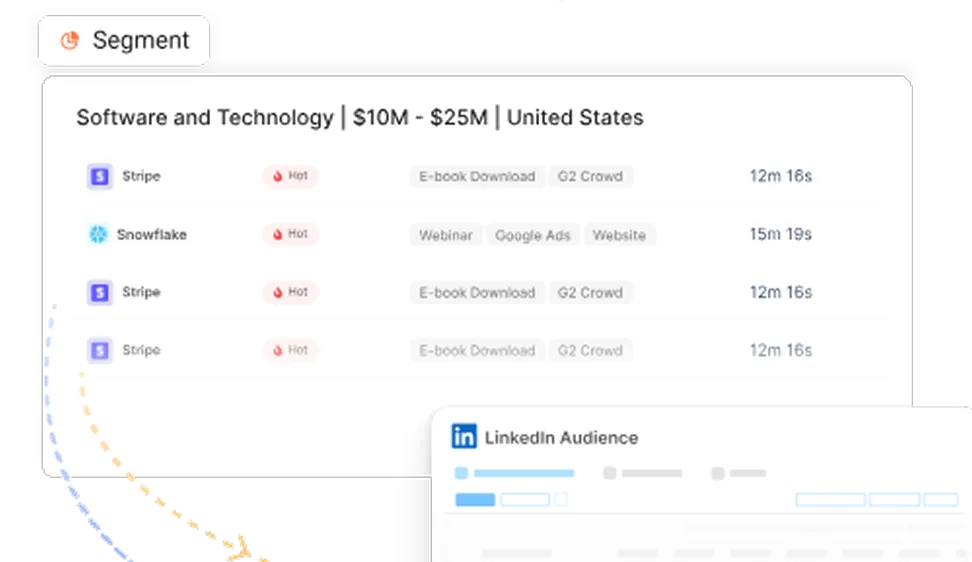
See how Factors can 2x your ROI
Boost your LinkedIn ROI in no time using data-driven insights


.avif)
See Factors in action.
Schedule a personalized demo or sign up to get started for free
LinkedIn Marketing Partner
GDPR & SOC2 Type II







.svg)



.avif)

