
AI content creation platforms: what actually separates a tool from a system in 2026
A no-fluff comparison of AI content creation platforms for B2B teams. What each one actually does, who it's for, and where most stacks go wrong.
.avif)
Content Marketer



.svg)


TL;DR
● AI content creation platforms are operational systems that connect research, drafting, optimization, and distribution, and the platforms that skip any one of those steps are limiting you.
● Most B2B teams have a workflow problem, and no amount of AI fixes a process nobody's actually mapped out.
● The best AI content marketing tools change completely depending on team size, not because vendors want you to think that, but because a three-person team and a forty-person org are solving different problems entirely.
● Content volume was never the bottleneck. Knowing which piece of content actually nudged a deal forward is, and most teams still can't answer that with a straight face.
● The platforms worth paying for are the ones that make your team faster without making your reporting dumber, and that combination is rarer than the marketing pages suggest.
Every kitchen drawer has that one gadget. The spiralizer, the sous vide wand, the bread maker that made two loaves, and then became a very expensive shelf ornament. It gets bought with real enthusiasm, used twice, and then forgotten while the same three pans keep doing all the actual cooking.
I think about that drawer every time I sit through a demo for a new AI content tool… weird, I know. But stay with me.
B2B marketing teams are stocking up on AI gadgets right now. A writing assistant here, a video generator there, an SEO scorer bolted on top. Each one looks brilliant in isolation. Ask them to work together as an actual content operation, though, and most of them just sit in the drawer next to last quarter's "revolutionary" tool. Half used, fully forgotten. The conversation everyone's having is "can this thing write a decent paragraph." The conversation that actually matters is whether your content function runs like a kitchen or like a drawer full of expensive, disconnected gadgets.
That's the lens I want to use for this one, because I think it's the only honest way to compare AI content creation platforms right now.
What’s an "AI content creation platform"?
There's a real difference between an AI assistant and an AI content platform, and I don't think enough people slow down to notice it. An assistant like ChatGPT or Claude is a generalist. Feed it a prompt, get back text. Genuinely useful, but on its own, it's an ingredient, not a meal.
A platform wraps that same generative engine inside something built for how marketing teams actually operate. Research, planning, drafting, optimization, distribution, measurement, treated as one connected process instead of five separate errands you run between tabs.
The shift here matters more than it sounds. Back in 2024, most of the AI content conversation was about generation, getting a first draft out faster than a human could type it. By 2026, the better teams have moved past that entirely. They're building repeatable systems that can carry a piece of content from "we should write about this" all the way to "here's what it did for pipeline." No person manually stitching each handoff together.
ChatGPT by itself isn't a content strategy, for the same reason a really good knife isn't a restaurant. You still need a menu, ingredients, someone plating the dish, and a system for knowing which dishes people actually order twice. The strongest AI content marketing software in 2026 supports that whole arc, not just the chopping.
After spending most of my career inside content teams, here's the pattern I keep seeing: marketers judge these tools almost entirely on output quality. Does the paragraph sound good. That's the wrong first question. The right one is whether the tool helps your team produce consistently good work at scale, without turning your Tuesday into a game of tab-whack-a-mole.
Where most teams get this wrong before they even open a tool
The most expensive mistake isn't picking the wrong platform. It's treating AI like a writer instead of like a strategist. Hand a team an AI tool and watch output triple almost overnight, and what you've actually done is triple your distribution problem. More content without a plan for where it goes is just noise wearing a content calendar as a costume.
I've watched this exact pattern play out across more B2B SaaS teams than I can count. Produce more instead of producing better. Chase the newest tool instead of fixing the workflow underneath it. Publish two dozen posts a month and never manage to trace a single one back to an actual opportunity in the CRM. Attribution meetings in these teams start to feel like group projects where everyone wants credit for the final grade and nobody remembers who actually wrote the essay.
The real issue sits underneath all of it. Most teams run their content tools, their CRM, and their analytics as three separate countries with no shared border. You can tell someone an article pulled four thousand pageviews. You genuinely cannot tell them which accounts read it, whether it nudged anyone toward a demo, or what topic actually created buying intent. Once your data lives in silos like that, reconstructing the buyer's journey becomes its own side project.
Here's the uncomfortable part. Teams running the flashiest AI content stacks in 2025 and 2026 sometimes have less content intelligence than teams that were tracking everything manually in spreadsheets five years ago. They've added speed. They haven't added signal.
The five kinds of AI content platforms, and why the category matters
The AI content platform market isn't one market. It's at least five, and knowing which one you actually need saves you from a lot of buyer's remorse.
- AI writing platforms
These are your generalists. ChatGPT, Claude, and Jasper all live here, though each has drifted in its own direction. General-purpose tools like ChatGPT and Claude give you maximum flexibility and zero built-in workflow, which works fine for a marketer who already knows exactly what they need. Jasper leans into brand voice consistency and has been layering in agentic workflows for campaign production. Copy.ai has repositioned itself toward go-to-market automation, more on that shortly.
- SEO content platforms
These don't just write, they optimize while you write. Semrush's ContentShake pairs real keyword and competitor data with AI drafting, so what you produce is grounded in something more than a guess. Clearscope has been in this category longer than most and, by 2026, has grown well past keyword grading into something closer to a content intelligence platform. Surfer SEO sits alongside both, offering live optimization scoring as you type, which is honestly the closest thing to having an editor looking over your shoulder without the awkward silence.
- Video content platforms
HeyGen turns a script into a talking-head video with a photorealistic avatar. Paste the script, pick a face, pick a voice, and it hands you back something with synced lip movement and gestures that don't look like a puppet show (mostly). Synthesia leans corporate, built for training content at scale. Lumen5 does one thing well: turning existing blog posts into shareable video, which is a genuinely underrated repurposing move.
- Design and visual platforms
Canva's Magic Studio has earned its spot as a real content creation platform, not just a design tool, especially for teams that don't have a dedicated designer on payroll. Adobe Firefly handles the heavier creative lift for teams already living inside the Adobe ecosystem.
- Content operations platforms
This is the category that's actually interesting right now. AirOps was built specifically to help marketing and SEO teams understand how they show up in AI search, prioritize what to fix, and automate the workflow around it. HubSpot Content Hub earns its place less through raw AI writing quality and more through how deeply it plugs into everything else you're already running. If your CRM, email, and sales automation all live in HubSpot, Content Hub removes an entire layer of friction. Notion AI rounds this category out for smaller teams that need lightweight coordination without the enterprise price tag.
The bigger shift underneath all five categories is this: teams don't actually want a tool that writes well anymore. They want a system that connects writing to results. That single change in expectation is the biggest thing separating how teams evaluated AI content tools in 2024 from how they're evaluating them now.
How the major platforms actually compare
I'm not going to rank these top to bottom, because a ranking without context is basically astrology. Here's the comparison across the dimensions that actually decide whether a platform earns its subscription.
Now, the part that table can't capture on its own.
Jasper is a mature writing platform with genuinely deep brand voice controls and a wide library of B2B templates. It's been around long enough to build the features larger teams actually need. Role-based access, collaborative editing, and a Brand Voice system that keeps output consistent even when five different people are drafting. It's the strongest pick for enterprise teams that need governance, not just generation.
Copy.ai has become something else entirely. It's not just generating isolated pieces of copy anymore, it's orchestrating workflows across the whole go-to-market org. If your bottleneck is sales and marketing not speaking the same language, Copy.ai's workflow architecture is genuinely hard to beat.
AirOps runs the full arc: research, creation, optimization, publishing, and performance measurement, inside one connected platform. Standalone writing tools give you a piece of content. AirOps gives you a pipeline for producing them.
Instead of crowning one winner, here's what I'd actually tell a friend:
● Small team? ChatGPT or Claude paired with Semrush covers most of what a lean team needs.
● B2B SaaS? Jasper for production, Clearscope for optimization.
● Enterprise? Jasper if brand governance is the priority, AirOps if operational scale is.
● Content-led growth? AirOps, built for scaling programs systematically rather than one post at a time.
● AI search visibility? AirOps or Semrush, both of which now track how you show up inside AI answer engines.
Matching the platform to the actual job
- Blog and long-form writing
Claude tends to produce the most natural-sounding long-form writing among the general-purpose models (genuinely didn't expect to say that about a chatbot, but here we are). ChatGPT edges ahead on flexibility, plugins, and browsing. Jasper adds brand voice consistency on top of raw generation. The right pick usually comes down to whether you're optimizing for writing quality or operational control.
- SEO content production
Semrush, Clearscope, and Surfer each take their own angle here. Clearscope stays narrow on purpose, every feature exists to help your content rank, nothing more. Surfer pushes more aggressive optimization scoring. Semrush bundles content tools into a broader SEO suite that also covers keyword research and competitive tracking.
- LinkedIn and social content
ChatGPT still holds up surprisingly well for LinkedIn posts when you feed it real context instead of a vague prompt. FeedHive and Buffer AI add scheduling and analytics on top. The actual differentiator for social content was never the writing tool. It's whether you have a point of view worth sharing, and no platform, however clever, can automate that for you.
- Video content
Teams use HeyGen for product demos, explainers, and social clips without booking a studio or hiring a presenter. Its BrandKit stores logos, fonts, and colors so every video stays on-brand without someone re-checking each export. Synthesia holds its ground in regulated industries where compliance actually matters. Lumen5 remains the fastest route from existing text to a shareable video.
- Email marketing
HubSpot AI ties email generation directly to CRM data, so personalization happens at the contact level instead of the template level. Jasper handles email copy with the same brand voice controls it applies everywhere else. Realistically, the choice comes down to which CRM you're already running.
- Account-based marketing content
This is where things get genuinely different. The best-performing content today isn't necessarily the best-written content, it's the content shown to the right account at the right moment. Personalized messaging by segment, intent-based content, dynamic campaign copy, all of it depends on knowing which accounts are actually in-market right now. HubSpot leans on CRM data (lifecycle stage, past interactions, firmographic details) to personalize content at the page level, which matters a lot for teams running ABM programs.
Building an actual AI content stack, by team size
- The lean team (1 to 3 marketers)
Start with ChatGPT or Claude for drafting, Canva for visuals, and Semrush for SEO. This runs under $300 a month and covers the fundamentals without drowning anyone in tools. The part that actually matters is using this stack inside a consistent workflow, not bouncing between tools whenever the mood strikes.
- The scaling SaaS team
Claude for long-form, Semrush for SEO strategy, HeyGen for video, HubSpot tying distribution and CRM together. This is where the stack starts to compound. Each tool owns one job well, and HubSpot is the connective tissue holding them together instead of five disconnected workflows running in parallel.
- The enterprise content engine
Jasper for governed production, AirOps for content operations and AI search visibility, Adobe Firefly for brand-consistent visuals, and a proper DAM for asset management. Most teams get further by combining two or three tools thoughtfully than by forcing one platform to do every job badly. Enterprise teams are increasingly building integrated ecosystems instead of single-purpose tools, and the architecture of the stack matters more than any one tool inside it.
What the actual content workflow looks like now
The old workflow was research, write, publish, hope. The new one has nine steps, and AI touches most of them.
● Market research. Use AI to synthesize competitor content, spot gaps, and surface what's trending in your category before you write a word.
● Topic discovery. Combine keyword data with AI-generated topic clusters to find the opportunities actually worth chasing.
● Brief creation. Generate structured briefs with target keywords, audience intent, competitive benchmarks, and an outline to start from.
● First draft. Let AI handle the blank page. The draft isn't the finished product, it's the raw material.
● Human review. Non-negotiable. Every draft needs a subject matter expert checking it for accuracy, nuance, and whether it actually sounds like your brand.
● SEO optimization. Run it through Clearscope, Surfer, or Semrush to cover the topic properly without turning it into a keyword pileup.
● Multi-channel repurposing. Turn one long-form piece into LinkedIn posts, email snippets, a video script, and a couple of social graphics.
● Distribution. Publish across channels with the right formatting for each. This is where most teams lose momentum.
● Performance measurement. Track engagement by account, content-influenced pipeline, and revenue, not just traffic.
The biggest myth going around is that AI replaces content marketers. What it actually replaces is the part of the job nobody enjoyed in the first place. Staring at a blank document for 45 minutes, or manually reformatting the same post for six different channels.
What actually makes an AI content platform worth paying for
Not every platform earns a spot in your stack tho. Here's the framework I'd run any new tool through before it gets a seat at the table:
● Content quality. Does it read like a competent marketer wrote it, or like a robot summarizing a Wikipedia page?
● Brand voice control. Can you actually train it on your tone, your terminology, your positioning?
● Workflow automation. Does it connect to what you're already running, or does it just create a new silo?
● SEO capability. Can it optimize for traditional search and for AI answer engines?
● Integrations. Does it plug into your CMS, your CRM, your analytics?
● Team collaboration. Can several people work inside it without stepping on each other's drafts?
● Governance. Is there an approval layer, an audit trail, actual access controls?
● Analytics. Does it measure anything past vanity metrics?
● AI search visibility. Does it help your content get cited inside AI-generated answers?
● Security. Is your proprietary data actually protected, or just "protected" in the marketing copy?
Marketing leaders now have to decide how they'll govern AI, where it slots into existing workflows, and what framework they'll use to measure whether any of it moved the business. That's become as important a buying criterion as the writing quality itself, and it's the part most comparison articles skip entirely.
AI-powered workflows versus the old way of doing things
The nuance that gets lost in that table is that AI amplifies expertise, it doesn't replace it. Human judgment is still what carries strategy, differentiation, and the kind of insight that only comes from actually understanding what your buyer is struggling with. Real differentiation still needs someone who knows the market well enough to say something nobody else is saying. That tracks with how the sharpest marketers I talk to describe AI adoption these days: a capability multiplier, not a replacement for headcount.
The mistakes I keep watching teams make
The list here is faaaar longer than most buyers expect going in.
- Buying based on hype is the most expensive one by a wide margin. A tool trending on your LinkedIn feed this week isn't automatically the right fit for your actual workflow. Buying too many tools creates integration overhead that eats the time savings you were chasing in the first place. Ignoring workflow fit means the tool gets used enthusiastically for two weeks and then sits untouched.
- Skipping brand voice training is the sneakier mistake. If nobody spends the time configuring the tool to sound like your brand, every single output needs a manual rewrite, which defeats the entire point of buying it. No governance process means junior team members can publish AI output with zero review, which is a brand risk most companies don't think about until something embarrassing actually goes live.
- The real content problem was never creation, it's attribution. Anyone can generate unlimited content today. The hard part is knowing which content influenced which opportunity, which accounts actually engaged, and which channel accelerated a deal that was already moving. Skip the measurement framework and you're producing content with no feedback loop at all. No attribution model answers every question perfectly, and anyone telling you otherwise is probably selling one.
How to actually measure ROI on these platforms
Most comparison articles skip this section entirely, which tells you a lot about the state of content marketing advice right now. Here's what actually matters, grouped by what each metric is really measuring.
- Efficiency metrics tell you whether AI is saving your team time. Hours saved per article, total output per marketer, time from brief to published piece. These are the easiest numbers to pull and, on their own, the least meaningful.
- SEO metrics tell you whether anyone's finding the content at all. Keyword rankings, appearances in AI Overviews, organic traffic growth. AI models have become a real discovery channel for B2B buyers, who increasingly use ChatGPT and Perplexity to research vendors and shortlist providers before a human ever gets involved. Tracking where you show up inside those answers is becoming just as important as tracking a Google ranking.
- Revenue metrics are the ones that actually get an executive's attention. MQLs generated, pipeline influenced, opportunities created, revenue attributed. All of these require connecting your content data to your CRM, which is exactly the step most teams skip.
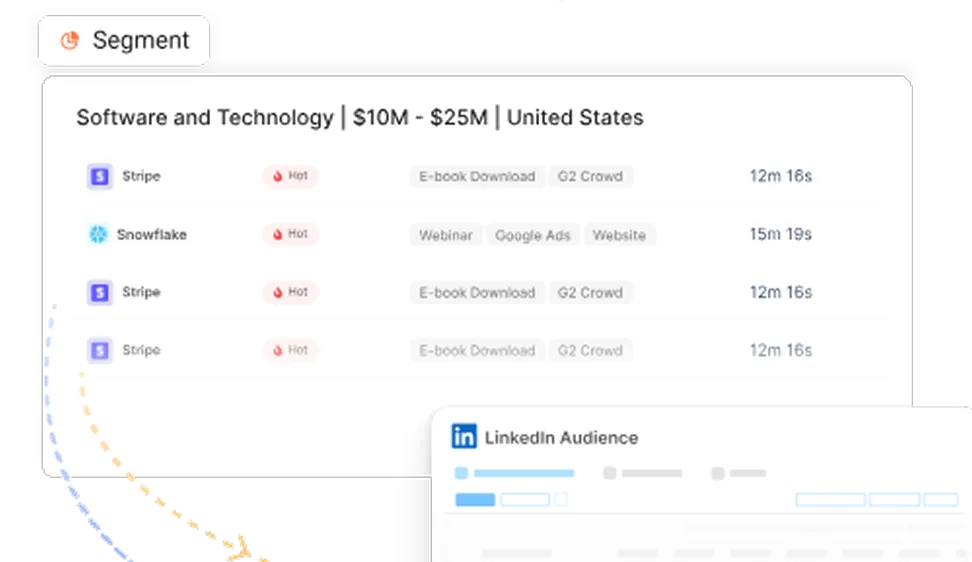
This is the piece where a platform like Factors.ai actually earns its place in the conversation. It's the layer that tells you what your content stack is doing once the content goes live, long after the writing tool's job is done. Factors.ai connects account-level engagement to pipeline. Instead of guessing which article "probably" influenced a deal, you can see which accounts actually touched it on their way to a closed opportunity. Content creation platforms help you make more. Something like Factors.ai is what tells you whether "more" was ever the right goal.
Also read: How to use AI for marketing: the practical B2B marketer's playbook
Where to, next?
A few trends are converging that will reshape how B2B teams think about content over the next 18 months.
- AI agents are replacing point solutions. Jasper has already introduced Jasper Agents, autonomous mini-bots that can research, optimize for SEO, and schedule content on their own. Instead of buying ten separate tools, teams will increasingly deploy agents that handle a whole workflow end-to-end inside a single platform.
- Content workflows are getting more autonomous. More than half of marketers say they're planning to focus specifically on scaling content production and operations over the next year. The direction is clear. Systems that spot a content gap, build a brief, draft it, route it for review, and publish it with barely any manual intervention.
- AI search optimization is becoming its own discipline. AirOps positions itself squarely around this, tracking visibility across ChatGPT, Perplexity, Gemini, and Google, and shipping content built to actually get cited. Optimizing for AI-generated answers is fast becoming as important as optimizing for a search results page ever was.
- Personalization at the account level keeps climbing the priority list. ABM-driven personalization, AI and traditional search optimization, and localization are all showing up as top priorities for next year's planning.
- Revenue-aware content engines win. The platforms that last will be the ones connecting content directly to pipeline, so ROI stops being a faith-based argument in a QBR deck.
- Human-AI co-creation keeps deepening. The direction of travel points toward AI becoming a genuine collaborative partner in strategy, not just a generator sitting at the end of a prompt box.
The teams that come out ahead won't be the ones using the most AI tools. They'll be the ones who built the best system around the tools they chose. The future isn't AI-first marketing. It's signal-first marketing that happens to be powered by AI.
In a nutshell
AI content creation platforms have gone from "interesting experiment" to core infrastructure for most B2B marketing teams, and there's no putting that back in the box. Which tools you pick matters less than how you connect them into something that actually ties content to business outcomes. Start by mapping where your workflow breaks, not by shopping a feature list. Build a stack that fits your team's actual size, whether that's ChatGPT plus Semrush for a lean team or Jasper plus AirOps for enterprise operations. Invest in attribution before you invest in more volume. And remember that the platforms worth paying for in 2026 are the ones that can answer the one question every executive eventually asks: which of these actually influenced a deal?
FAQs for AI content creation platforms
Q1. What are AI content creation platforms?
AI content creation platforms are software systems that use AI to support some or all of the content lifecycle, including research, planning, writing, optimization, distribution, and measurement. They range from general-purpose assistants like ChatGPT to full operations platforms like AirOps that manage workflows at scale. What separates a platform from a plain tool is whether it connects multiple content functions into one repeatable system.
Q2. What's the best AI content creation platform for B2B marketing?
There isn't a single best answer, because it depends on your team size, your existing stack, and what you're actually trying to fix. Jasper suits enterprise teams that need brand governance. Copy.ai is strongest for GTM workflow automation. Semrush is the better starting point for SEO-driven content. Most B2B teams end up combining two or three platforms rather than expecting one tool to do it all.
Q3. Which AI content tools work best for SEO?
Semrush ContentShake, Clearscope, and Surfer SEO are the three leading options right now. Clearscope offers the most precise content grading for on-page optimization. Semrush bundles content optimization into a broader SEO suite with keyword research and competitive tracking. Surfer gives real-time scoring with more aggressive recommendations. Most teams pair one of these with a general-purpose writing tool for the actual drafting.
Q4. Are AI content platforms actually worth the investment?
For teams publishing regularly, yes. The efficiency gain alone, cutting first-draft time from hours to minutes, usually pays for itself within the first month. The bigger payoff comes from connecting content to revenue through attribution. Teams that track content's influence on pipeline consistently report returns that justify the spend several times over.
Q5. Can AI content platforms replace content writers?
No, and teams that try tend to notice the drop in quality fast. AI handles the operational and repetitive parts of content well, research synthesis, first drafts, repurposing, optimization scoring. Strategy, original insight, brand voice, and subject matter expertise still need a human. The best results come from treating AI as a multiplier for skilled writers, not a substitute.
Q6. What's the actual difference between ChatGPT and an AI content platform?
ChatGPT is a general-purpose assistant that generates text from a prompt. A platform like Jasper or AirOps wraps that same generative capability inside workflow tools built for marketing teams: brand voice controls, SEO optimization, collaboration features, approval workflows, publishing integrations. ChatGPT hands you a draft. A platform hands you a system.
Q7. Which AI content tools are best for enterprise teams?
Jasper and AirOps lead this segment for different reasons. Jasper offers strong brand governance, role-based access, and campaign orchestration. AirOps focuses on operations at scale, with AI search visibility tracking and governed workflow automation built in. Enterprise teams also lean on HubSpot Content Hub when they need content tied directly to CRM data. The right choice depends on whether brand consistency or operational scale is the bigger headache.
Q8. How do these platforms actually improve ROI?
They improve it across three angles. Efficiency gains lower the cost per piece by automating research, drafting, and optimization. Quality improvements lift organic visibility and engagement. Revenue attribution connects content consumption to pipeline and closed deals, which is what lets you prove business impact instead of leaning on pageviews as a proxy.
Q9. How should marketing teams actually evaluate AI content platforms in 2026?
Start with your workflow, not the feature list. Map where your current content process breaks down, then find platforms that address those specific gaps. Weigh brand voice control, workflow automation, integration depth, governance, and analytics. Test on a real project before committing to anything. And prioritize platforms that connect to your CRM and analytics stack, because measuring content's revenue impact is the capability that actually justifies the budget line.

See how Factors can 2x your ROI
Boost your LinkedIn ROI in no time using data-driven insights


.avif)

See Factors in action.
Schedule a personalized demo or sign up to get started for free
LinkedIn Marketing Partner
GDPR & SOC2 Type II

.svg)



.avif)

