
AI content creation for B2B teams: what the good production systems actually look like
AI content creation is a system, not a shortcut. Here's how B2B marketing teams actually build one, with the roles, workflows, and metrics that hold up.
.avif)
Content Marketer



.svg)


TL;DR
● AI content creation only pays off when it's built as a system with clear ownership at every stage, not a tool you bolt onto an existing process and hope for the best.
● Most teams measure the wrong thing. Publishing volume goes up, pipeline influence stays flat, and everyone keeps celebrating the wrong number.
● The highest-leverage input for AI content ideation isn't a keyword tool. It's the actual language your sales team hears on calls, in objections, and in demo Q&A.
● Content multiplication, turning one source asset into six or seven formats, is the single biggest efficiency win available right now, and most teams are only doing it halfway.
● AI visibility in tools like ChatGPT and Perplexity is starting to matter, but if your foundational content strategy is still weak, chasing AI citations is solving the wrong problem first.
● Publishing a raw AI draft is often slower than writing from scratch once you count the editing required to make it sound like someone with an actual opinion wrote it.
● The teams pulling ahead aren't the ones using AI the most. They're the ones who built a system where a human is still the last person to touch anything before it goes out.
A few months ago I pulled the last six months of blog output from a marketing team I was helping and lined it up next to their pipeline reports. Content volume had nearly tripled. Pipeline influenced by that content had moved by, generously, four percent. Sooo not exactly the headline anyone wanted. Everyone on the team's Slack channel was celebrating the publishing calendar. Nobody had checked whether any of it mattered.
I've seen a version of that story on repeat since AI writing tools became genuinely usable. A team gets excited, output jumps, and somewhere around month three someone finally asks the question that should have come first: is any of this connected to revenue? Usually the honest answer is "we're not sure," which is its own answer.
This isn't a piece about whether to use AI for content. That debate is over, and I say that as someone who was skeptical enough to sit out the first wave of "AI writes your blog" tools entirely. This is about what actually separates the teams getting real output from the ones quietly drowning in mediocre content nobody asked for.
What does "AI content creation" actually mean?
Two years ago, this phrase meant typing a prompt into a chatbot and copying whatever came back. That era is mostly over, and I don't miss it. What it means now is much broader. It covers research, ideation, outlining, drafting, repurposing, personalization, and distribution. Increasingly, it also covers tracking whether your content shows up when someone asks an AI engine a question in your category.
The writing itself, the part everyone fixates on, is honestly the smallest piece of the system. The real value shows up in speed. How fast can you move from a raw insight, say, something your AE mentioned after a call, to a piece of content that speaks to that exact thing?
I'll admit the shift happened faster than I expected it to. Nobody on a content team asks "should we use AI" anymore. The live question is how you use it without sounding like everyone else in your category. That question deserves a better answer than most teams are giving it right now.
Why has this turned into a production problem, not a writing problem?
The math changed for B2B marketing teams before most org charts caught up. Content demands went up. Buyers now discover vendors through AI search answers, LinkedIn feeds, podcasts, and peer Slack communities, not just a Google search box. Content teams, meanwhile, mostly didn't double in headcount. They're expected to cover more ground with the same people.
AI closes part of that gap, but only if you treat it as infrastructure rather than a faster typist. Teams using it well are seeing shorter production timelines and lower cost per finished asset, and they're running more experiments with messaging because testing got cheap. Twelve ad variations in an afternoon instead of three in a week changes what you're willing to try. That compounds.
The advantage isn't only about speed, though. It's about reach. You can tailor messaging to different buyer personas and adjust tone across channels. You can turn one webinar into six separate assets without burning out the two people who used to do all of it by hand.
The teams doing this well aren't producing more noise. They're producing sharper content, and they're learning what works faster because the iteration cycle got so much shorter than it used to be.
The myth that's wasting the most budget…
Here's the assumption I run into constantly: "AI content creation means letting AI create the content." It sounds correct on the surface. It's also backwards. The teams producing genuinely good ai driven marketing content are automating everything around the writing. Research, structuring, formatting, repurposing, distribution, all of it. Strategy, positioning, and point of view stay firmly in human hands.
I've edited enough AI-generated drafts to say this with confidence: publishing raw output is frequently slower than writing from scratch. Not because the sentences are broken. Because the thinking is missing (not exactly a shock once you've read enough of it). Good B2B content isn't hard due to the writing. It's hard because it requires connecting a product capability to a buyer's actual, specific pain point in a way that sounds like someone who's lived it. AI can't do that part yet. It can get you there faster, but only once you supply the substance yourself.
Take a SaaS company selling to enterprise procurement teams. An AI draft will happily produce a well-structured post on "streamlining procurement workflows." A writer who sat through three sales calls that week knows better. The real objection is data security during vendor onboarding, not workflow efficiency. That gap, between the generic version and the specific one, is the difference between content that ranks and content that closes.
Where AI actually earns its place across the content lifecycle…
The most useful mental shift is to stop treating AI as a tool for one stage. Start treating it as a layer across the whole operation, with a named owner at each handoff.
The pattern holds across every row: AI handles the labor-intensive, repeatable part. Humans handle judgment. Skip the human half at any single stage and you end up with content that's technically fine and strategically useless, which is a worse outcome than not publishing at all.
Format-by-format: what's actually working right now
This is where most guides get vague. Here's where I've seen ai content creation for marketing teams deliver real output, broken down by format.
- Blog content
AI is genuinely good for first drafts and outlines once you feed it a brief and your existing style guidelines. The operative word is shape. I use it to get past a blank page, not to skip editing. If your published draft and your AI draft read identically, something in your review process broke.
- LinkedIn content
Two strong uses here. First, repurposing longer assets (webinars, podcast transcripts, internal memos) into LinkedIn-native posts. Second, helping founders and execs who have strong opinions but no time to write them down. An AI content generator for marketing can turn a rushed voice note into a structured draft. Someone still needs to check whether it actually sounds like that person.
- Email marketing
Subject line testing, sequence drafting, and personalization at scale are where ai content generation marketing genuinely shines. Testing twelve subject lines instead of three moves your open rates faster than any single "clever" line ever will. Referencing a prospect's specific industry or use case at scale, without a dedicated copywriter per segment, is now realistic.
- Paid advertising
Ad copy is one of AI's better use cases. Generating variations for creative testing, adjusting tone for different audiences, and producing platform-specific copy all benefit from ai content creation automation. The feedback loop is tight too, since you can measure performance within days and feed the results straight back into the next batch.
- Video and sales enablement
Script generation for short-form video and turning a long webinar into a dozen clips with captions are increasingly standard workflows. AI won't replace a good on-camera presence. It does collapse the gap between "we have a recording" and "we have fifteen usable clips." The same logic applies to case studies, battlecards, and one-pagers. They're tedious to write manually. AI can draft them from existing content and CRM notes, so your sales team gets ammunition without your content team writing every asset from a blank page.
Finding topics your buyers actually care about
Content ideation is a bigger bottleneck than content production, and I'll defend that claim. Most teams can write fast enough now. They struggle to figure out what's worth writing about.
Keyword-first content starts with search volume and works backward into a topic. Buyer-signal-first content starts with what your prospects are asking your sales team, what objections keep coming up on calls, and what patterns show up in pipeline reviews. In my experience, the best-performing pieces rarely come from an SEO tool. They come from sales objections, customer conversations, and the questions that keep resurfacing in demo Q&A.
AI helps by processing those inputs at scale that a person doing it manually never could. Feed it transcripts from twenty sales calls and ask it to surface the five most common concerns. Cross-reference intent signals with the gaps already sitting in your blog archive. The work shifts from brainstorming in a conference room to systematically mining the intelligence your team already has sitting in a CRM somewhere, mostly unused.
Turning one asset into many, without losing the plot
One of the clearest wins from AI content creation is multiplication: turning a single source asset into several formats without multiplying your team's workload. A forty-five-minute webinar, handled well, becomes a long-form post, four or five LinkedIn posts, a newsletter edition, a handful of short clips, and a sales one-pager. Two years ago that repurposing job ate a content team's whole week. With a decent AI-assisted workflow, it's a day, maybe two.
The mechanics are simple. Source content feeds an AI transformation step, which produces multi-channel drafts, which humans then review before anything ships. AI handles reformatting a transcript into a blog structure or pulling quotable lines for social. Humans handle whether the LinkedIn post actually sounds like your CEO wrote it. They also handle whether the email sequence reads like a person instead of a template with a name swapped in.
This is where "multiplier" stops being a buzzword and starts being a real number on a spreadsheet. You're not manufacturing content from nothing. You're extracting more value from work you already paid for once. Teams doing this consistently end up with a noticeably more cohesive presence across channels, because everything traces back to the same core idea instead of six unrelated ones.
That's the shift worth paying attention to. Not more content. Content that earns its distribution.
A quick note on AI visibility (keep this in perspective)
Traditional SEO still matters, but it's no longer the only way buyers find you. A growing share of research now happens inside ChatGPT, Gemini, and Perplexity, where an AI system synthesizes an answer from several sources instead of handing back ten blue links. Whether your content gets cited in that answer is becoming its own signal worth tracking, separate from your rank on page one.
I'm not going to turn this piece into a full generative engine optimization breakdown (that's its own deep dive, and I don't want to shortchange it here). The short version: clear definitions, structured content, and genuine topical authority help. Chasing AI citations before your foundational content strategy is solid is solving the wrong problem first.
Also read: How to use AI for marketing: the practical B2B marketer's playbook
Measuring whether any of this is actually working
The worst way to measure AI content ROI is counting articles published or words generated. I've sat through more than one review where a team proudly reported producing forty percent more content that quarter, with zero connection to whether it influenced a single deal. Volume metrics look good in a slide. They tell you nothing about business impact.
The formulas matter less than the mindset shift. Once you measure AI content creation by pipeline contribution instead of publishing cadence, you start making different calls about what to produce. Fewer "me too" posts, more pieces built around a specific objection at a specific stage of the buyer journey. Attribution in B2B is never perfectly clean (anyone promising a model that answers every question is usually selling one), but directional data is enough to steer smarter investment.
Mistakes that quietly wreck AI content programs (we've all made at least one)
A running list of what I've seen go wrong, pulled from actual reviews, not hypotheticals.
● Publishing without a real edit. Raw AI output reads generic because it is generic. It's missing your company's specific point of view and the language your actual customers use. Every draft needs a human pass, no exceptions.
● Prompting with no context. "Write a blog post about demand generation" invites the blandest possible version of that topic. A prompt needs the audience, their specific pain point, your company's angle, and what you want the reader to do next.
● Stripping out the brand's opinion to save time. AI doesn't have opinions. Your brand should. Remove the editorial perspective and you get content that could have come from any company in your category, which is the opposite of what content is supposed to do.
● Asking AI to make strategic calls. It can execute a task well. It can't tell you which segment to prioritize or which positioning will land with enterprise buyers versus mid-market ones. That's still a human call, always.
● Chasing volume over depth. Twenty mediocre posts a month don't beat five genuinely useful ones. Search engines reward depth. Readers reward relevance. They can both tell the difference, even when it's not obvious to whoever's tracking the publishing calendar.
● Skipping validation from actual buyers. If every topic comes from a keyword tool with zero input from sales conversations, you're writing for search engines, not the people who sign the contract.
Choosing tools without getting talked into the wrong stack
I'm deliberately not turning this into a fifty-tool listicle (the landscape shifts too fast for that to age well). Here's how to think about AI content generation marketing tools by what you actually need them to do.
Tool categories matter more than specific brand names, because the system shifts every few months and today's favorite is next year's footnote. The principle that doesn't change: pick tools that fit a workflow you've already mapped, not a workflow you're hoping a new platform will invent for you.
Where signal-driven content fits into the bigger picture
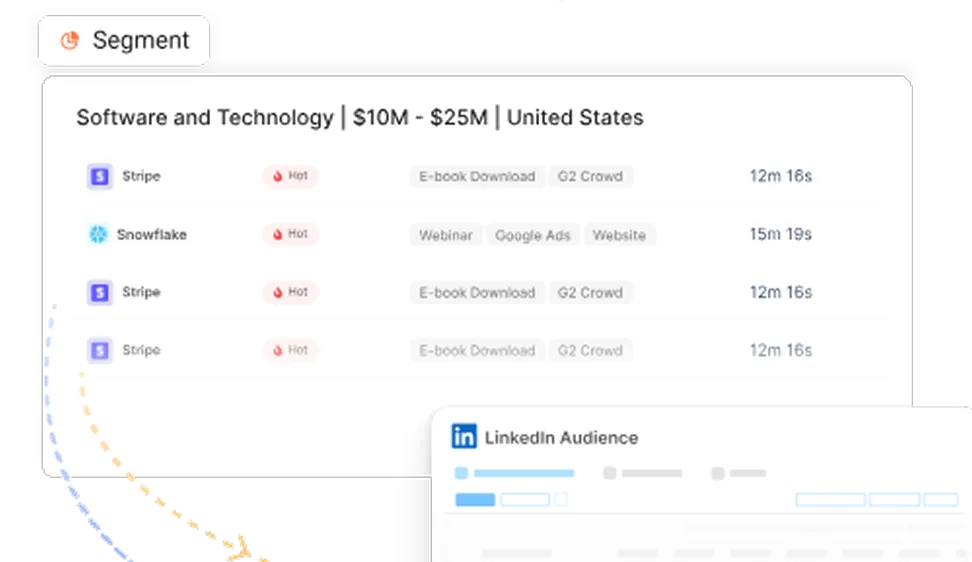
Everything in this piece points to one operational truth: the content that performs is the content built on real signal, not guesswork. That's the same problem Factors.ai was built to solve on the revenue side. It surfaces which accounts are actually showing buying intent, what they're engaging with, and where the gaps in your funnel sit.
The connection to content is direct. When your team can see which accounts are researching specific topics or showing intent around a particular pain point, that becomes real input for AI content ideation. It's grounded in reality instead of a keyword spreadsheet. Content built from that kind of signal doesn't need to be forced into ranking. It's already answering a question someone in your pipeline is actively asking.
Getting started without overhauling everything at once…
If you're wondering where to begin, here's a plan that doesn't require a new budget line or a six-month rollout.
1. Audit your current workflow. Map every step from idea to published piece. Find where time actually goes and where quality tends to slip. You can't fix a system you haven't written down.
2. Flag the repetitive work. Look for tasks that eat time but don't require deep judgment: research compilation, first-draft generation, format conversion, scheduling.
3. Introduce AI at two or three of those points. Start small, track the time saved, and note any quality difference honestly. Don't try to automate the entire pipeline in one sprint.
4. Check the results against pipeline, not just output. Compare speed and quality before and after, and be honest about which changes are worth keeping.
The better question isn't "how can AI create our content." It's "how can AI clear out everything standing between us and the content actually worth publishing." That distinction matters. It keeps human judgment where it belongs and treats AI as infrastructure, not a shortcut.
The teams building this muscle now won't just publish more. They'll build a compounding edge in quality, speed, and relevance that gets genuinely hard for competitors to copy, and none of that edge comes from the AI itself. It comes from the people who learned to run it as a system instead of leaning on it as a crutch.
FAQs for AI content creation
Q1. What is AI content creation?
AI content creation means using AI tools across the full content lifecycle: research, ideation, drafting, repurposing, personalization, distribution, and performance tracking. It's moved well past typing a prompt into a chatbot. For B2B teams specifically, it covers everything from identifying what's worth writing about to tracking how that content performs in both traditional search and AI-generated answers.
Q2. How does AI content creation actually work?
It works by feeding AI tools specific inputs, prompts, data, existing content, and generating outputs like drafts, outlines, or copy variations. The implementations that actually work give AI real context: brand guidelines, buyer personas, sales call data, strategic briefs. Human review stays essential at every step, not just the final one.
Q3. What are the benefits of AI content creation for B2B marketing?
Faster production, lower cost per asset, easier repurposing across channels, and more room to experiment with messaging without burning your team out. For B2B specifically, it enables personalization at scale, faster response to what's happening in the market, and a consistent publishing cadence without proportionally growing headcount every quarter.
Q4. Can AI create good content without a human editing it?
Not for B2B, where credibility and specificity are the whole game. AI drafts consistently lack domain expertise, a real editorial perspective, and buyer-specific nuance. Every piece needs human review for accuracy, tone, and originality. Skip that step and you get content that's technically correct and strategically forgettable.
Q5. What are the best AI content generation tools for marketing teams?
It depends on the specific gap in your workflow. Worth evaluating: research tools that aggregate competitor content, ideation platforms that plug into CRM and intent data, and writing tools with real tone control. Add AI visibility trackers alongside your traditional SEO tools, plus repurposing tools for multi-format output. Pick tools that match a process you've already mapped, not the other way around.
Q6. How does AI content creation affect SEO?
Two ways. It speeds up production of content optimized for traditional search. It's also starting to require new habits around generative engine optimization, structuring content so AI engines like ChatGPT and Perplexity can cite it directly. Teams now need to think about both Google rankings and visibility inside AI-generated answers.
Q7. What's the difference between AI content creation and AI content marketing?
Content creation is the production side: research, drafting, repurposing. Content marketing is the bigger picture: how AI shapes strategy, audience targeting, distribution, and measurement. Creation sits inside marketing as one piece of a larger system, not the whole thing.
Q8. How should marketing teams use AI for content ideation?
Feed ideation tools buyer signals instead of relying only on keyword data. That means CRM insights, sales call transcripts, intent data, and real community conversations, not just search volume. AI then processes those inputs to surface patterns and content gaps that connect to actual pipeline opportunities, not just search traffic.

See how Factors can 2x your ROI
Boost your LinkedIn ROI in no time using data-driven insights


.avif)


See Factors in action.
Schedule a personalized demo or sign up to get started for free
LinkedIn Marketing Partner
GDPR & SOC2 Type II


.svg)



.avif)

