
AI content optimization: how B2B teams get found by search and by AI
AI content optimization now spans search engines, AI answer engines, and buyer research tools. Here's how B2B teams actually structure content to win at both.
.avif)
Content Marketer



.svg)


TL;DR
- AI content optimization isn't feeding a blog into ChatGPT and asking it to "make this rank." It's a structural discipline spanning search engines, AI answer engines, and the third-party sites your buyers trust more than your own homepage.
- Only 12% of AI citations overlap with Google's top 10 results. Your ranking strategy and your AI visibility strategy have quietly become two different jobs with two different scorecards.
- Most content teams still optimize for search intent and call it done. The teams actually showing up in pipeline reports are optimizing across seven distinct layers, from citation design to distribution to the conversion path after someone reads the thing.
- A page can pull 500 visits and generate 20 real opportunities, and that's not a fluke. It's what happens when you stop treating traffic as the only proof of a piece working.
- Content refreshed inside the last 30 days earns roughly 3x more AI citations than content nobody's touched. That makes your "old blog" pile a bigger opportunity than your content calendar.
- AI referred visitors convert at multiples of standard organic traffic. By the time someone clicks through from an AI answer, the AI has usually already done the shortlisting for them.
Imagine spending months preparing for a marathon, only to discover halfway through that the finish line has moved.
That's what content marketing has felt like over the past year.
Most teams are still training for Google's race while buyers have quietly started asking AI tools to do the running for them. The destination hasn't changed; people still need answers before they buy. The route has.
Which means optimizing content today isn't just about getting found. It's about giving AI enough confidence to recommend you in the first place.
What is AI content optimization, actually
Let's clear the fog first. AI content optimization is not asking a language model to sprinkle keywords into a finished draft and calling it a strategy. That's content generation cosplaying as optimization, and the output tends to look exactly like what it is.
Old-school content optimization had a rhythm to it. Research your keywords, place them where the algorithm expects to find them, tidy up your meta tags, build a few internal links. Then wait for Google to notice you did your homework. It worked because search engines ran on rules that changed slowly enough for a marketer to keep up.
AI content optimization asks for something wider, and it keeps getting wider by the quarter. It means shaping content so it holds up across multiple discovery surfaces at once. That's Google's organic results, sure, but also AI Overviews, ChatGPT, Perplexity, Claude, Gemini, and a growing shelf of industry-specific AI agents. Buyers are already trusting those agents with real vendor research. Forrester puts the number of B2B buyers using tools like these at 94%, which tells you this stopped being a fringe behavior a while ago.
There are three ideas that get mashed together constantly, and pulling them apart helps. AI content generation is about producing a draft. AI content optimization is about making that draft perform, improving its structure, depth, and discoverability across both traditional and AI-native surfaces. AI visibility optimization is a step further still, focused on whether your brand actually gets named when an AI system synthesizes an answer for your buyer.
Most marketers I talk to treat these as one blob. It's the equivalent of joining a gym and expecting a six-pack by Thursday. Real optimization happens before a word gets written, continues while it's being drafted, and never really stops once it's live.
Why this stopped being a nice-to-have
Search fractured faster than most content teams planned for, and the numbers back that up in a way that is hard to argue with.
A study covering 21.9 million searches found AI Overviews showing up on 25.11% of Google queries, and that share continues to climb. ChatGPT alone handles more than a billion searches a week now, while Perplexity crosses a billion queries a month. These are no longer digital curiosities; they are structural shifts.
The traffic model upon which B2B content marketing was built is starting to creak. For a decade, the playbook was clean: find a keyword, write for it, rank for it, get the click, and turn that click into a lead. That whole chain assumed the click was the exact moment influence happened. Increasingly, it isn't.
The new sequence looks more like this: a buyer asks a question, an AI engine synthesizes an answer, and your brand either gets a mention or it doesn't. That mention, or its absence, shapes trust before anyone has even opened a tab to your site. On the upside, visitors who do arrive via an explicit AI referral convert at roughly 4.4x the rate of standard organic traffic. This is primarily because they show up pre-qualified, highly informed, and significantly further along than a typical cold visitor.
However, the drop-off data is sobering. Organic click-through rates fell 61% on queries where an AI Overview appeared, according to a seminal Seer Interactive search study. Broadly speaking, roughly 60% of traditional Google searches now end without a click at all. Inside Google's interactive AI Mode specifically, that zero-click rate hits a staggering 93%. This directly fulfills a long-standing Gartner forecast predicting traditional search volume dropping 25% as conversational AI chatbots absorb query share.
For most of the last decade, content marketing was a traffic acquisition game, plain and simple. It is rapidly becoming a visibility and influence game instead. The strongest piece you write might never earn a single click and still entirely shape the purchase, which means treating this as tomorrow's problem means you are already a year or two behind.
SEO and AI search optimization aren't the same job anymore
Traditional SEO rewarded a fairly narrow set of behaviors. Target keywords, build backlinks, run technical audits, climb the results page. It was legible. You could point at a rankings report and say, plainly, "we're winning here."
AI search optimization rewards something different. Modern AI systems map entities, relationships, and context to decide what belongs in an answer. They read people, products, and ideas as connected nodes. The clearer you make those relationships, the easier it is for an engine to pull an accurate, quotable fact out of your page.
The shift is subtle on paper and enormous in practice. Traditional SEO's job was to get you discovered. AI search optimization's job is to get you selected, the specific source an engine reaches for when it's assembling an answer. One study found only 12% of ChatGPT citations matched a URL sitting on Google's first page for the same query. Ranking well on Google buys you nothing automatically in an AI answer.
You'll see a handful of terms thrown around here: Generative Engine Optimization (GEO), AI Optimization (AIO), Answer Engine Optimization (AEO). As of early 2026 there's still no agreed-upon academic line between them, and in practice people use them interchangeably. The label matters less than the principle underneath it: optimize to be cited, not just indexed.
The seven layers most guides skip past
Most articles about AI content optimization software stop at content scoring and call it a wrap. That covers roughly one and a half of the seven layers that actually decide whether a piece performs. The other five sit outside the corner Surfer or Clearscope can even see.
1. Search intent optimization
Every piece needs to sit at a specific point in buyer awareness. Problem-aware, solution-aware, or buyer-aware. That answer changes the angle, the depth, and what you put at the bottom as a next step. Most teams default to problem-aware content because it pulls the most search volume, then wonder later why it never converts.
2. Topic cluster optimization
Single-page SEO is basically a relic at this point. AI systems weigh context and relationships between concepts, so surface-level coverage carries less weight than it used to. Building semantic depth across a cluster, pillar content supported by entity-rich subtopics, signals real expertise to both Google and AI engines. Scattered posts don't.
3. AI readability optimization
LLMs don't read the way humans do. They extract clean, structured, skimmable chunks. Getting cited inside Google AI Overviews, ChatGPT, or Perplexity means your content needs question-based H2s followed by tight, extractable summaries. FAQ sections, comparison tables, and clear definitions all raise your odds of getting pulled into a generated answer.
4. Citation optimization
This is where the game actually changes. A Princeton and Georgia Tech study presented at KDD 2024 found that adding expert quotes lifted visibility by 41%, statistics by 32%, and authoritative source citations by 30%. If your content skips original data, expert commentary, or properly sourced research, an AI engine has no reason to reach for it over a competitor's.
5. Entity optimization
AI engines don't judge your content in a vacuum. They weigh whether your brand, product, and people exist as recognized entities across the wider web. Research has found AI search leans noticeably toward earned media over brand-owned content. If you're not showing up on Reddit, G2, Capterra, or trusted trade publications, an engine has little external corroboration to cite you confidently.
Companies like HubSpot and Salesforce sit on years of entity graph depth. For a growing brand like Factors.ai, building that same presence across reviews, communities, and editorial mentions is a deliberate, ongoing investment, not a one-time checkbox.
6. Conversion optimization
Getting cited but never converting is expensive thought leadership. Every piece still needs a clear next step, aligned to where the reader actually is in their journey, not a generic "book a demo" bolted on at the bottom. The strongest content earns the citation and the click.
7. Distribution optimization
Publishing and praying was never a strategy, even though a surprising number of content calendars still treat it like one. LinkedIn, newsletters, communities, podcasts, and cross-promotion all widen the surface area where an AI engine might actually encounter your brand in the first place.
Most teams stop at layer one and then wonder why growth stalls. The ones actually compounding are working all seven at once, and the difference in output is far larger than any single layer would suggest on its own.
How B2B teams are actually using AI for content strategy
The conversation around AI for content strategy gets interesting the moment you stop treating AI as a drafting tool and start treating it as an intelligence layer instead.
Smart teams run intent signals, search trends, and real customer conversations through AI for topic discovery. That surfaces the questions buyers are asking before those questions turn into competitive keywords everyone's chasing. Planning shifts from a content calendar built on gut feel to one built on gap analysis and editorial plans tied to specific pipeline stages.
Competitive intelligence is where these tools genuinely earn their subscription cost. Tracking share of voice inside AI-generated answers, watching which competitors get cited for your queries, spotting content gaps that represent real opportunity. None of that scales through manual research alone anymore.
Refreshing old content is the unglamorous part that separates a decent content program from a genuinely good one. Content updated inside the last 30 days pulls roughly 3.2x more AI citations than content nobody's touched. And it's not just swapping in a newer statistic. Stale posts often need structural rework, not just a date change, to become citable again.
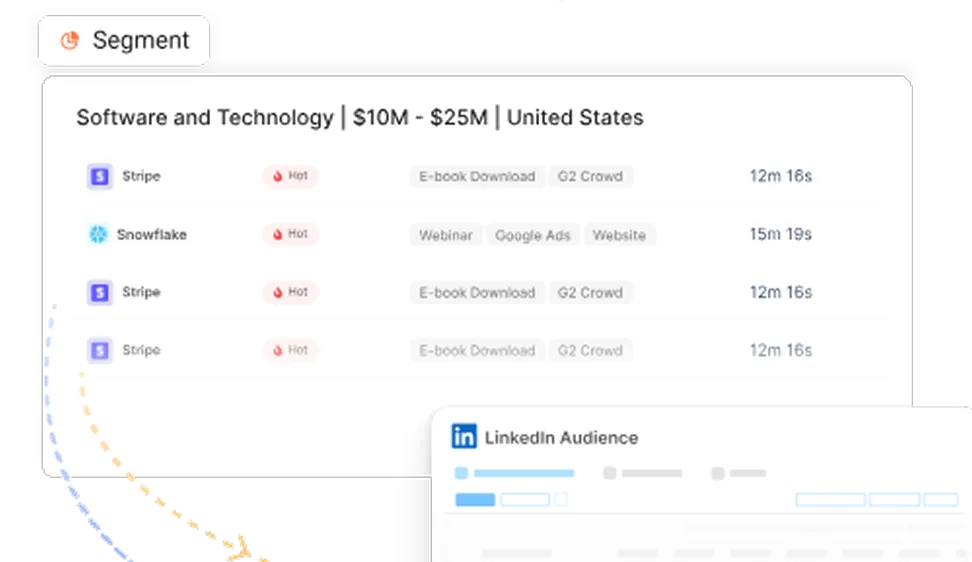
This is where a platform like Factors.ai earns its place in the picture. Connecting intent data to account intelligence means a team can see what prospects are actively researching. It shows which topics correlate with real pipeline movement, and which content assets are actually influencing revenue. That beats collecting pageviews that look nice in a slide, and it's the difference between guessing and knowing.
Sorting through the AI content optimization tools out there
The AI content optimization tools landscape has gotten crowded enough that grouping by function matters more than another feature-by-feature list.
- Content optimization tools. Platforms like Surfer, Clearscope, Frase, and MarketMuse focus on scoring, semantic analysis, and on-page suggestions. They're genuinely good at that specific job, helping writers hit search-optimized targets. Most were built for traditional SEO first and are still catching up on AI visibility.
- AI search visibility tools. Semrush's AI Visibility Toolkit, Ahrefs' AI Content Helper, and OtterlyAI track how (and whether) your brand shows up inside AI-generated answers. It's a newer category, and it's moving fast as AI search behavior becomes something you can actually measure instead of guess at.
- Content intelligence platforms. Factors.ai, HubSpot, and Semrush sit at the intersection of content performance and business intelligence, connecting content data to pipeline data. This is where AI content optimization marketing platforms start pulling ahead of tools built purely for SEO scoring.
The mistake isn't picking the wrong tool from that table. It's expecting any tool to compensate for a content strategy that was weak to begin with. I've watched teams stack three AI content optimization platforms at once and still produce content nobody reads, cites, or converts from, because the tools were never the bottleneck.
A framework for building an AI-ready content engine
Frameworks earn their keep when they're actually usable, so here's a seven-step process that ties AI content optimization back to something a CFO would recognize as a business outcome.
1. Map content to revenue stages. Every piece should connect to a specific pipeline stage, from awareness through evaluation to decision. If you can't say out loud how a piece ties to revenue, it probably shouldn't be on the calendar.
2. Build topic clusters, not one-off posts. Group related content around core topics instead of isolated keywords. Each cluster needs a pillar page and supporting articles that cover the angles a buyer will actually explore.
3. Use AI for research acceleration, not the writing itself. Let it handle competitive scans, trend spotting, and first-pass research. Save the human time for interpretation, original thinking, and framing that actually differentiates.
4. Add proprietary insight AI can't fake. Original data, internal benchmarks, customer stories, and lived expertise are exactly what a generic model can't replicate from public sources. AI rewards what it can't easily synthesize elsewhere.
5. Structure for citation from the start. Clear definitions, statistics, tables, and concise answers near the top of each section. Treat every H2 as a potential extraction point for an AI engine skimming your page.
6. Distribute like it matters, because it does. LinkedIn, newsletters, Slack communities, podcasts, syndication, all of it adds touchpoints where AI systems can encounter and index what you've built.
7. Measure influence, not just traffic. Track citations, brand mentions inside AI answers, assisted pipeline, and influenced revenue right alongside your traditional metrics.
Before anything ships, I run it against a short list:
● Does topic coverage across the cluster feel genuinely comprehensive?
● Is there at least one expert opinion or original data point in here?
● Are statistics cited with a real source and date?
● Does the FAQ section answer what buyers are actually asking?
● Is schema markup applied correctly?
● Do internal links connect to related cluster content?
● Is there at least one clear conversion path?
Where Factors.ai fits into all of this
If your content generated 20 qualified opportunities off just 500 visits, did it fail? Most B2B marketers still answer that wrong, and honestly, it's not really their fault. It's a measurement problem the whole industry inherited from a decade of treating traffic as the finish line.
Traditional metrics, traffic, rankings, click-through rate, still matter. They're just not sufficient on their own anymore. The metrics separating sophisticated content programs from everyone else include AI citation frequency, AI visibility share relative to competitors, brand mentions across AI platforms, assisted pipeline, and influenced opportunities.
That last part is where AI for content marketing ROI turns into a real strategic conversation instead of a quarterly reporting chore. Attribution debates have a habit of feeling like group projects where everyone wants credit for the final grade (my sincere condolences to anyone who's sat through one of those meetings). Multi-touch attribution tooling has matured enough now to give teams something genuinely useful to work with.
Factors.ai approaches this by connecting content engagement data with pipeline and revenue data directly. Instead of guessing which blog post "caused" a deal, a team can see which content assets actually showed up in the journey of accounts that went on to close. It's pipeline attribution, revenue attribution, and content influence reporting rolled into one workflow. That's something a content team can actually use during planning, not just during the quarterly scramble to justify the calendar.
The mistakes that quietly tank AI content performance
- Publishing AI-generated content with no expertise behind it. The internet doesn't need another rearranged "10 best CRM tools" post. It needs original thinking. Content with no subject-matter depth reads like a slightly reshuffled Wikipedia entry, and both readers and AI engines are getting sharper at spotting it. Google's AI Overviews specifically reward expert-led, well-sourced content, and authority plus transparency are what drive inclusion there.
- Over-optimizing for a content score. A 95 on your optimization tool of choice doesn't mean the content is good. It means the right semantic terms showed up at the right density. Those are related ideas, not the same idea, and confusing them produces content that technically scores well while reading like it was assembled by committee.
- Ignoring AI visibility tracking entirely. If you don't know whether ChatGPT mentions your brand when someone asks about your category, you're flying blind. That's a genuinely important discovery channel to be guessing about. New research from Position Digital found only 12% of URLs cited across ChatGPT, Perplexity, and Microsoft Copilot rank in Google's top 10. Your Google rankings and your AI visibility are, plainly, two different scoreboards.
- Creating content nobody actually needed. Volume-driven strategies fill a calendar without filling a pipeline. Before writing anything, ask honestly whether a real buyer in your ICP would spend ten minutes reading it. If the answer's no, the fix isn't a better draft. It's not writing it.
- Optimizing for traffic instead of revenue. Traffic is a leading indicator, not a business outcome on its own. The strategy that actually produces results ties every content investment back to pipeline influence, even when that path isn't a straight line from post to closed deal.
- Treating AI as a writer instead of a strategist. AI is sooo much more useful as a research accelerator and analysis partner than as a ghostwriter. Teams using it to think better consistently outproduce the teams just using it to type faster.
Where AI content optimization is headed next…
AI agents are quietly becoming search intermediaries. Buyers are increasingly asking one something like "which platform handles account intelligence best for a mid-market team." That agent pulls its answer from sources your SEO dashboard might never surface.
Generative engines don't run on a ranking system the way traditional search does, so there isn't really a "position" to fight for anymore. The whole focus shifts to getting cited or mentioned at all. That's reshaping what "winning" even means. Brand authority is starting to outweigh keyword authority. First-party data is becoming a genuine competitive edge in content creation. Revenue-tied content optimization is replacing traffic-tied optimization as the standard sophisticated teams hold themselves to.
Emerging research around Generative Engine Optimization suggests the disruption that started reshaping content marketing back in 2024 was really just the opening act. AI-referred visitors convert at an average of 14.2%, against 2.8% for standard Google organic traffic. Buyers arriving via an AI answer often already have a shortlist and a rough budget in mind. The channel is smaller. It's also considerably more qualified, and it's growing quickly.
I don't think SEO is dying, whatever the panic-headlines say. I think content is finally being held accountable to actual business outcomes again, though it took a genuinely disruptive shift in how people search to get us there.
In a nutshell…
AI content optimization spans search intent, topic architecture, readability for machines, citation design, entity presence, conversion paths, and distribution, all at once, not sequentially. The teams generating measurable pipeline from content are the ones working all seven layers together, not the ones with the prettiest traffic dashboard in the quarterly deck.
The old model, publish a keyword-targeted post and wait for Google to hand you conversions, is giving way to one where AI engines mediate discovery. Your brand either earns a mention or gets skipped entirely. Only 12% of AI citations overlap with Google's top 10. Treating search optimization and AI visibility as the same problem is a mistake that shows up as missed pipeline six months later.
If you're leading content for a B2B team, start here. Audit your top 20 assets for AI readability, structure, statistics, expert quotes, real FAQs. Set up AI visibility tracking across ChatGPT and Perplexity, then connect content performance to pipeline through something like Factors.ai. The marketers who come out ahead over the next few years won't be the ones producing the most content. They'll be the ones producing content genuinely worth citing, distributing it relentlessly, and measuring it closer to revenue than everyone else in their category bothers to.
FAQs for AI content optimization
Q1. What is AI content optimization?
AI content optimization is the practice of structuring, improving, and distributing content so it performs well across search engines and AI-powered discovery platforms. Think ChatGPT, Perplexity, Google AI Overviews, and Claude. It goes beyond keyword placement to include citation design, entity recognition, structured formatting, and AI readability. The goal is content that's both discoverable by search engines and citable by AI systems synthesizing an answer.
Q2. How is AI content optimization different from regular SEO?
Traditional SEO focuses on ranking inside search engine results pages through keywords, backlinks, and technical fixes. AI content optimization includes all of that but adds a separate dimension: getting included in AI-generated answers. That requires structured content, original data, expert perspective, and entity-level authority an AI engine can extract and cite. Ranking on Google no longer guarantees any visibility inside an AI-generated answer.
Q3. What are the best AI content optimization tools right now?
It depends on what you're solving for. For on-page optimization, Surfer, Clearscope, Frase, and MarketMuse are the established names. For AI search visibility tracking specifically, Semrush's AI Visibility Toolkit and OtterlyAI are emerging as leaders. For connecting content performance to actual pipeline and revenue, Factors.ai provides the content intelligence layer that ties engagement to business outcomes. Most strong programs end up using a combination across these categories rather than one tool that does everything.
Q4. Can AI genuinely improve content marketing ROI?
Yes, when it's used as a research accelerator, competitive intelligence layer, and planning tool rather than a replacement for strategic thinking. It helps teams identify higher-impact topics, refresh existing content for better citation odds, and scale distribution without scaling headcount. The teams seeing the biggest ROI gains are using AI to make smarter content decisions, not just to produce more content faster.
Q5. How do I optimize content specifically for ChatGPT and other AI search engines?
Focus on clear definitions, concise answers placed near the top of each section, properly cited statistics, expert quotes, real FAQ sections, and comparison tables. Build your brand's entity presence across third-party platforms like G2, Reddit, and relevant industry publications too. AI engines lean toward content that's corroborated externally, not just written well on your own domain.
Q6. What is Generative Engine Optimization, and how is it different from AEO?
Generative Engine Optimization, or GEO, is the practice of structuring content and managing your broader online presence to improve visibility inside AI-generated responses. It overlaps heavily with Answer Engine Optimization (AEO) and AI Optimization (AIO), and as of now there's no firm academic consensus separating the three terms. In practice, they all point at the same goal: getting cited, mentioned, or recommended when an AI engine synthesizes an answer to a user's question.
Q7. Is AI search going to replace SEO entirely?
Not replace, expand. Traditional SEO still matters for organic visibility, but it's no longer sufficient by itself. B2B teams increasingly need to optimize for traditional search and AI-powered discovery simultaneously, which means the skill set content teams need is growing, not disappearing.
Q8. How should a B2B company get started with AI content optimization?
Start by auditing existing content for AI readability and citation potential. From there, build topic clusters that demonstrate real depth and add proprietary data and expert perspective where you can. Set up AI visibility tracking, then connect content performance to pipeline through an attribution tool. The underlying goal is making content strategy accountable to revenue, not just to a traffic dashboard.
Q9. What's the best way to measure AI content performance?
Keep traffic, rankings, and click-through rate, but pair them with AI-specific metrics. Track citation frequency across AI platforms, AI visibility share relative to competitors, brand mention tracking inside AI-generated answers, and pipeline attribution connecting content engagement to actual revenue influence. Tools like Factors.ai help bridge the gap between what content is doing and what it's actually worth.

Powered by Bombora
Enter your domain and we'll send you a free list of companies showing buying intent in your vertical.
.avif)
Powered by Bombora
Enter your domain and we'll send you a free list of companies showing buying intent in your vertical.
.avif)

See how Factors can 2x your ROI
Boost your LinkedIn ROI in no time using data-driven insights


.avif)

See Factors in action.
Schedule a personalized demo or sign up to get started for free
LinkedIn Marketing Partner
GDPR & SOC2 Type II

.svg)



.avif)

