
Anonymous Website Visitor Identification: 2026 Complete Guide
98% of website visitors stay anonymous. Learn 6 proven, privacy-safe ways to identify them — with person-level (5–40%) and company-level (30–65%) match rates. GDPR/CCPA compliant.

Growth Marketer



.svg)


TL;DR
- 97–98% of website traffic stays anonymous — form-fill conversion alone leaves the vast majority of intent invisible.
- Company-level identification matches 30–65% of B2B visitors via IP intelligence and reverse IP lookup, surfacing target accounts even without forms.
- Person-level identification matches 5–40% of visitors (realistic 5–20%) via identity graphs and pixel-based tracking — names, emails, and titles delivered to your CRM.
- Six privacy-safe methods exist: IP resolution, first-party behavioral analytics, identity resolution platforms, CDPs, pixel-based intent, and AI-powered enrichment.
- GDPR/CCPA-compliant when paired with consent, opt-out, and company-level focus — fines reach €20M or 4% of global revenue if not.
Understanding Anonymous Website Visitors
97–98% of B2B website visitors leave without filling out a form. That's not a funnel problem — it's a visibility problem. Modern visitor identification turns that anonymous traffic into named accounts (30–65% match rate) and named contacts (5–20% match rate) without violating GDPR or CCPA. This guide covers the six methods that actually work in 2026, how they compare on accuracy and cost, and how to pick the right approach for your stack.
Anonymous website visitors are those who visit your site without giving any details like their name, email, or company. They might spend time on your site, read blog posts, or check prices, but decide not to fill out forms or use chat options. This anonymity makes it tough to understand potential customers and their buying path.
The main reason visitors stay anonymous is their concern about privacy and data security. A study by Pew Research shows that 79% of Americans worry about how companies use their personal data. Also, privacy-focused browsers, VPNs, and cookie blockers make tracking harder.
This anonymity affects business growth by:
- Losing sales from interested visitors
- Making it hard to personalize content
- Making it tough to measure marketing success
- Reducing the ability to retarget interested visitors
- Limiting understanding of the customer journey
Modern technology can help identify these website visitors while respecting privacy rules. With advanced tracking and data tools, businesses can learn more about their visitors, like company information and buying intent. This helps in better marketing and allows sales teams to focus on promising prospects.
Tracking vs Identification: What's the Difference?
These two terms get used interchangeably but mean different things.
Visitor tracking records what happened on your site — pages viewed, time on page, scroll depth, button clicks. It's behavior data, attached to anonymous session IDs. Google Analytics, Hotjar, and most analytics tools do this.
Visitor identification answers who is doing it — the company name (account-level) or person (contact-level) behind that anonymous session. This requires identity resolution, IP intelligence, or pixel-based matching against external databases.
You need both: tracking tells you what's interesting, identification tells you who to call.
Person-Level vs Account-Level Identification
Not all visitor identification is the same. The two dominant approaches in 2026 differ on what they reveal, how they match, and what they cost.
Account-level (company) identification matches a visitor's IP address to a B2B company in a firmographic database. You learn that Acme Corp visited your pricing page — not who at Acme. Match rates run 30–65%, GDPR/CCPA compliance is straightforward, and tools like Leadfeeder, Dealfront, Albacross, and Clearbit Reveal lead this category.
Person-level (contact) identification uses identity graphs — large databases linking devices, IPs, hashed emails, and behavior — to surface a visitor's name, work email, title, and LinkedIn. Match rates are realistically 5–20% (vendors often advertise 40–70%). Tools like RB2B, Bullseye, Warmly, and Visitor InSites lead, mostly US-only because EU/UK identity-graph data is restricted.
Bottom line: start with account-level if you sell to mid-market or enterprise B2B and want broad coverage; layer in person-level for the top 10–20% of accounts where you need named decision-makers.
Methods to Identify Anonymous Website Visitors
Businesses can use several methods to identify and track anonymous website visitors. Each method has its own strengths and works best when combined with others for a complete view of visitors.
1. IP-based identification looks at visitor IP addresses to find their company and location. This is useful for B2B companies, as it shows which organizations are interested in your products or services. It may not work well with remote workers or shared networks.
2. Browser fingerprinting creates unique IDs based on browser settings, plugins, screen resolution, and other details. This method works even if cookies are off, making it more reliable than traditional tracking. Studies show it can identify returning visitors with up to 90% accuracy.
3. Cookie tracking, despite privacy concerns, helps understand visitor behavior over time. First-party cookies are more privacy-friendly than third-party ones and help track user preferences and session data.
Behavioral analytics looks at how visitors use your site, such as:
- Pages viewed
- Time spent on each page
- Navigation patterns
- Download activities
- Form interactions
Reverse IP lookup enhances IP-based identification by linking IP addresses to detailed company information, including:
- Company name and size
- Industry and revenue
- Location and contact details
- Technology stack
- Social media profiles
Together, these methods create a strong system for identifying and understanding anonymous visitors while staying privacy compliant.
Read our guide on how does website visitor identification technology work to know more around this technology.
Advanced Identification Technologies
Modern visitor identification has advanced beyond basic tracking, using smart technologies that give deeper insights while respecting privacy.
AI-powered visitor tracking uses machine learning to study visitor behavior and predict their intent. These systems can spot high-value prospects by comparing current behavior with past successful conversions. Studies show AI systems can improve lead qualification accuracy by up to 85%.
Learn more about this in our Intent Capture section.
Data enrichment tools add detailed company and contact information to basic visitor data. For example, when a company visitor is identified, the system can provide:
- Company revenue and employee count
- Technology stack details
- Recent company news
- Key decision-makers
- Social media presence
Real-time identification systems alert sales teams when high-value prospects visit your website. These tools can:
- Send instant notifications
- Track visitor engagement
- Identify return visitors
- Monitor specific page visits
- Flag urgent sales opportunities
CRM integration ensures visitor data flows smoothly into your current sales and marketing systems. Modern platforms can:
- Automatically update contact records
- Sync visitor activity history
- Score leads based on engagement
- Trigger workflows
- Enable personalized follow-ups
These advanced technologies create a complete visitor identification system that balances effectiveness with privacy, helping businesses make informed decisions while respecting user privacy.
Read our how to Implement Website Visitor Identification guide to understand more about the process and best practices.
Cookieless and First-Party Identification
Google's third-party cookie phaseout (now broadly rolled out across Chrome) and Apple's ITP have made cookie-based identification unreliable. The 2026 stack is cookieless:
- First-party pixels fire on your domain only — unaffected by browser blocking.
- Server-side tracking moves identification logic out of the browser entirely, bypassing ad-blockers.
- Identity graphs stitch sessions across devices using hashed, consented identifiers — not third-party cookies.
- Pixel-based intent tracking (Bombora-style) uses opt-in publisher networks instead of browser cookies.
If a vendor still depends on third-party cookies in 2026, your identification rate is going to drop month over month — ask about their cookieless roadmap before signing.
Legal and Privacy Considerations
Privacy rules matter when tracking website visitors. Here's how to stay on the right side of the law and protect your business.
GDPR Compliance:
- Get clear consent before collecting personal data. Tell users exactly what data you're collecting and why, in plain language.
- Explain how you collect data. Write clear privacy statements that show your specific tracking methods.
- Let users opt out of tracking. Make it simple for visitors to stop tracking with easy-to-find settings.
- Store data securely in the EU or approved places. Keep sensitive information in safe, legal data storage locations.
- Keep detailed records of data activities. Document every step of your data collection and storage.
CCPA Requirements:
- Tell California residents about data collection. Clearly explain what data you gather and how you use it.
- Offer ways to opt out of data sales. Give California residents a straightforward way to stop their data from being sold.
- Answer data access requests in 45 days. Set up a system to quickly handle data requests within the legal timeframe.
- Delete data when requested. Have a process ready to completely remove individual data when asked.
- Keep privacy policies updated. Review and refresh your policies to match current laws.
Data Protection Best Practices:
- Use encryption for stored data. Protect visitor data with strong security that prevents unauthorized access.
- Conduct regular security checks. Test your data collection and storage systems often.
- Train staff on data protection. Keep your team up to date on privacy rules and best practices.
- Document data handling steps. Create a clear record of how you handle visitor information.
- Update security measures regularly. Stay ahead of new threats and technological changes.
Ethical Considerations:
- Be open about tracking methods. Explain your visitor tracking clearly and honestly.
- Avoid collecting unnecessary information. Gather only the data you truly need for your business.
- Focus on company-level data for B2B. Prioritize insights that protect individual privacy.
- Respect user privacy choices. Create a system that truly listens to and follows user preferences.
- Use data responsibly for business. Balance your business needs with people's privacy rights.
Non-compliance can lead to fines up to €20 million or 4% of global revenue under GDPR.
Implementing Visitor Identification
Building an effective visitor identification system requires strategic planning and smart technology choices.
Choosing the Right Tools:
- Pick tools that fit your business and budget. Don't get trapped by expensive solutions. Find platforms that match your company's size, goals, and financial constraints.
- Find solutions that offer real-time identification. Speed matters. Select tools that provide instant visitor insights to help your team act quickly.
- Make sure they work with your current systems. Avoid tech headaches by choosing platforms that seamlessly integrate with your existing marketing and sales software.
- Check for strong data security. Prioritize tools with robust encryption, access controls, and compliance certifications.
- Ensure they comply with privacy laws. Your tracking solution must meet GDPR, CCPA, and other regional data protection requirements.
Setting Up Tracking Systems:
- Add tracking code to your website. Install lightweight, efficient tracking scripts that don't slow down site performance.
- Set up IP tracking. Configure IP identification to capture company-level visitor information.
- Enable reverse IP lookup. Transform numeric IP addresses into actionable company insights.
- Use browser fingerprinting if needed. Implement additional tracking methods to improve identification accuracy.
- Test tracking accuracy on all pages. Verify that your tracking works consistently across your entire website.
Data Collection and Analysis:
- Decide what data to collect. Focus on meaningful signals that indicate genuine buying intent.
- Set up data filters. Create smart filters to separate high-value prospects from casual browsers.
- Create visitor groups. Develop segmentation strategies that help prioritize and score potential accounts.
- Plan how to store data. Design a secure, compliant data storage strategy that protects visitor information.
- Set up automated reports. Build dashboards that deliver actionable insights directly to your team.
Integration with Existing Systems:
- Connect to your CRM, such as Salesforce or HubSpot. Ensure seamless data transfer between your visitor identification tool and customer relationship management platform.
- Sync with marketing tools. Link your tracking system with email marketing, advertising, and campaign management software.
- Link to sales software. Give your sales team instant access to visitor data and engagement signals.
- Ensure data flows between systems. Create a unified data ecosystem that breaks down departmental silos.
- Create unified reports. Develop comprehensive dashboards that show the full customer journey across all platforms.
Your visitor identification strategy should be a precision instrument: powerful, flexible, and focused on driving meaningful business insights.
Start with a pilot program on key pages before full rollout. Check system performance often and adjust as needed. Train your team on using the tools and understanding the data.
Document all steps and create standard procedures for ongoing management. Regular audits will keep the system effective and compliant with privacy laws.
At Factors, we suggest starting with basic tracking features and expanding as needed.
High-Impact Use Cases (Sales, Marketing, CS)
1. Sales — Real-time alerts on target accounts. Sales reps get a Slack ping the moment an account in their territory hits the pricing page. First-touch outreach within 5 minutes converts 8× better than 24-hour follow-up.
2. Marketing — ABM activation. Identified visitors trigger paid retargeting on LinkedIn or display, lifting account-level reach 3–5× vs cold ABM lists.
3. Marketing — Anonymous visitor personalization. Swap CTAs, hero copy, and case studies by industry or company size based on identified firmographics. Lifts on-site conversion 15–40%.
4. RevOps — Pipeline attribution. Tie identified visits back to multi-touch journeys, surfacing which campaigns drive sourced and influenced revenue.
5. Customer Success — Churn signals. Existing accounts viewing competitor comparison or pricing pages — a known churn precursor — trigger CSM playbooks.
Maximizing Identified Visitor Data
Once you know who your visitors are, use that information to gain insights. Here's how to get the most from your identified visitor data:
Lead Scoring and Qualification:
- Score visitors based on their actions, like page views and time spent.
- Give higher scores to those who show interest in buying.
- Flag top prospects for quick follow-up.
- Keep track of return visits to update scores.
Personalized Marketing Strategies:
- Group visitors by industry, company size, and behavior.
- Create specific content for each group.
- Tailor landing pages to match visitor profiles.
- Craft personalized emails for each company.
Sales Outreach Optimization:
- Focus outreach on the most engaged visitors.
- Equip sales teams with detailed visitor information.
- Time your contact efforts based on visitor activity.
- Use data to tailor sales pitches.
Converting Visitors to Customers:
- Offer deals based on what visitors like.
- Set up automatic actions for visitors who show strong interest.
- Create custom paths to nurture different visitor types.
- Use retargeting based on visitor data.
Regularly review and update your strategies based on their performance. Balance between quick follow-ups and respectful engagement. At Factors, we see the best results with well-timed, personalized outreach based on behavior.
By using visitor data effectively, you can boost conversion rates, shorten the sales cycle, and build stronger relationships with potential customers.
Measuring Success
Tracking the right website visitor id metrics helps your visitor identification efforts deliver real business value. Here's how to measure and improve your success:
Key Performance Indicators (KPIs):
- Visitor identification rate (percent of total visitors identified)
- Lead quality score (based on visitor engagement and company fit)
- Time to first contact after identification
- Engagement rates with personalized content
- Conversion rates from identified visitors vs. anonymous
Conversion Tracking:
- Follow the journey from first identification to sale
- Track which content leads to the most conversions
- Measure response rates to personalized outreach
- Calculate the cost per identified lead
- Analyze conversion patterns by industry and company size
ROI Analysis:
- Compare investment in identification tools against revenue generated
- Calculate customer acquisition costs for identified visitors
- Measure sales cycle length for identified vs. anonymous leads
- Track the lifetime value of customers acquired through identification
- Assess resource allocation efficiency
Optimization Strategies:
- Test different identification methods
- Refine lead scoring models based on conversion data
- Adjust outreach timing based on response patterns
- Optimize content strategy using visitor behavior data
- Improve integration with sales and marketing tools
We recommend reviewing these metrics monthly and making data-driven changes to your strategy. Focus on metrics that directly impact revenue and customer acquisition. Regular optimization ensures your visitor identification program continues to deliver increasing value over time. For more insights on optimizing your marketing efforts, visit our Marketing ROI page.
How to Identify Anonymous Website Visitors in 2026
In an era when nearly 97% of website traffic vanishes without engagement, understanding who's visiting, without forcing form fills, is crucial for modern B2B marketing. This guide lays out practical, privacy-aware methods for identifying and activating anonymous visitors to transform passive interest into pipeline-ready opportunities.
Anonymous visitors, largely driven by data privacy concerns, often explore content, pricing, and services yet never self-identify. However, today's technologies make it possible to decode intent signals and company-level identifiers without crossing privacy boundaries. From IP-based discovery and reverse lookups to AI-driven behavior analysis, businesses now have smarter ways to detect high-fit accounts in real time.
The article explores actionable identification strategies—from browser fingerprinting and first-party cookie tracking to CRM integration and real-time sales alerts—showing how each layer adds value. It also emphasizes data stewardship through GDPR and CCPA compliance, outlining how to implement, integrate, and optimize these systems for legal, ethical, and financial gain. Finally, readers learn how to turn collected data into lead scores, tailored outreach, and measurable ROI.
Frequently Asked Questions on website visitor identification
Is website visitor tracking illegal?
No — visitor tracking and identification are legal in every major jurisdiction when you follow the rules. The rules differ by region:
- GDPR (EU/UK): requires lawful basis (consent or legitimate interest), a clear privacy notice, and an opt-out path. Person-level identification of EU residents typically requires explicit consent; company-level identification via business IP is generally treated as B2B and falls under legitimate interest.
- CCPA/CPRA (California): requires disclosure, a 'Do Not Sell or Share' link, and 45-day response to data requests.
- Most other US states: tracking is permissible with disclosure.
What is illegal: collecting personal data without notice, ignoring opt-outs, or selling identified visitor data without an explicit notice. Pick a vendor that's SOC 2 plus GDPR/CCPA compliant and you're covered.
Can someone tell who visits their website?
With the right tools, yes — but the answer depends on the visitor.
- B2B visitors on a corporate network: the website owner can match the IP to a company name in 30–65% of cases.
- B2B visitors with an identity-graph match: name, email, and title can be revealed in 5–20% of cases (US-only for most tools).
- B2C visitors on home/mobile networks: identification is much harder and increasingly restricted by privacy law.
- Visitors on VPNs or privacy browsers (Brave, Tor): generally cannot be identified.
No tool achieves 100% identification — that's a vendor red flag, not a feature.
Is identifying anonymous website visitors legal?
Yes, when done correctly. You must follow privacy laws like GDPR and CCPA, obtain proper consent, provide clear opt-out mechanisms, and focus on company-level data rather than individual personal information.
How accurate are anonymous visitor identification methods?
Accuracy varies by method. IP-based identification can be 70-80% accurate for B2B companies, while browser fingerprinting can identify returning visitors with up to 90% accuracy. Combining multiple methods increases overall reliability.
What types of data can I collect about anonymous visitors?
For B2B tracking, you can typically collect:
- Company name and industry
- Company size and location
- Pages visited
- Time spent on site
- Interaction patterns
- Potential buying signals
How much does visitor identification technology cost?
Prices range from $50 to $1,000 per month, depending on:
- Number of tracked visitors
- Features needed
- Size of your business
- Complexity of integration
Can small businesses benefit from visitor identification?
Absolutely. Even with limited budgets, small businesses can use basic tracking tools to:
- Understand website traffic
- Identify potential leads
- Improve marketing targeting
- Optimize content strategy
How do I protect visitor privacy while tracking?
Key privacy protection strategies include:
- Getting clear consent
- Using anonymized data
- Providing opt-out options
- Securing data with encryption
- Following regional privacy regulations
- Focusing on company-level insights
Which industries benefit most from visitor identification?
B2B industries see the highest value, including:
- Technology
- SaaS companies
- Professional services
- Enterprise software
- Consulting
- Marketing and advertising
How does Factors compare to RB2B, Warmly, and Leadfeeder?
- vs. RB2B: RB2B is US-only and person-level. Factors covers account-level globally and adds person-level for US visitors, plus full ABM, journey analytics, and CRM attribution.
- vs. Warmly: Warmly is signal-driven and person-level. Factors layers identification on top of multi-touch attribution and account journey analytics, so identified visits roll up to pipeline impact.
- vs. Leadfeeder/Dealfront: Leadfeeder is account-only. Factors gives both account and person identification plus the analytics layer Leadfeeder lacks.
The practical difference: most identification tools stop at 'who visited.' Factors connects 'who visited' to 'which campaigns drove them' and 'how much pipeline they generated.'
How quickly can I see results from visitor identification?
Most businesses start seeing actionable insights within:
- 30-60 days of initial implementation
- 3-6 months for comprehensive data patterns
- Continuous improvement over time
What's the difference between first-party and third-party tracking?
- First-party tracking: Data collected directly on your website
- Third-party tracking: Data collected by external platforms. First-party tracking is more privacy-friendly and increasingly preferred by regulations.
Can visitor identification help improve my marketing return on investment (ROI)?
Yes. By providing:
- More precise targeting
- Better lead qualification
- Personalized marketing strategies
- Insights into customer behavior
- Improved sales and marketing alignment
- Businesses typically see 2- 3x improvement in marketing efficiency and lead conversion rates.

See how Factors can 2x your ROI
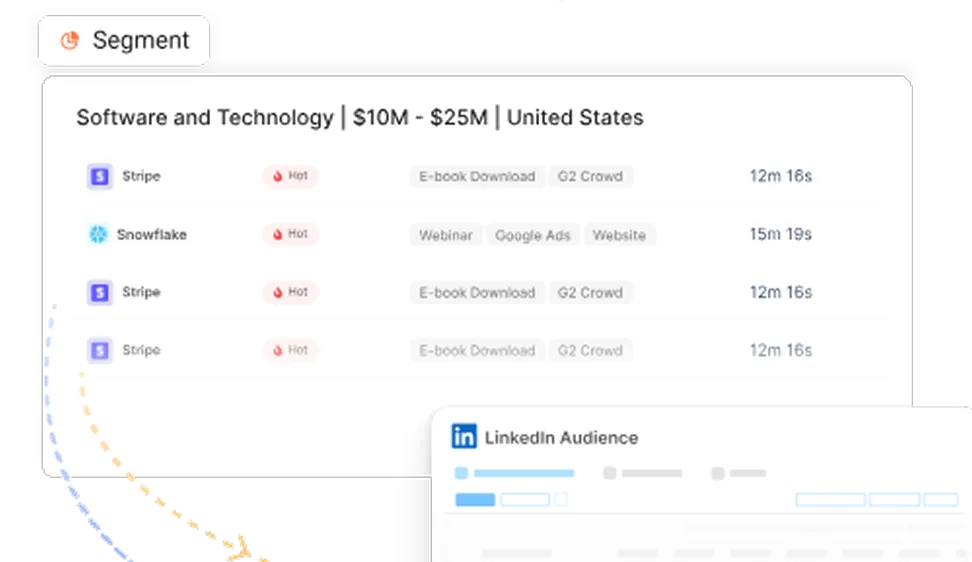
Boost your LinkedIn ROI in no time using data-driven insights


.avif)

.avif)
See Factors in action.
Schedule a personalized demo or sign up to get started for free
LinkedIn Marketing Partner
GDPR & SOC2 Type II






.svg)



.avif)

