.svg)


Translucent Touchpoints: How to go about attributing your Audio/Video content
Podcasts are bigger than ever. The number of series worldwide have shot up from an already sizeable 500,000 in 2018 to a whopping 2 million in 2021. Unsurprisingly, podcast consumption has also been rising steadily over the past 15 years. In fact, nearly 60% of all American adults report that they’ve listened to at least one episode this year.
And Videos? They're bigger still. A third of all online sessions are spent consuming videos — everything from sleep talking cats to educational/explainer videos. To sit down and watch every single one published over the past month alone would require approximately 5 million years. And the best part? Nearly all of this is available on the internet for free. As a result, audio/visual content is more accessible, and hence, more popular than ever before.
The opportunistic folk that we are, B2B marketers have taken little time to capitalize on this wave. I can’t remember the last time I scrolled through my Linkedin feed without stumbling across a post for a friend’s friend’s colleague’s boss’s brand new B2B SaaS RevOps podcast. In fact, upwards of 85% of businesses today produce audio/video content as part of their marketing efforts. They are by far the fastest growing marketing channels out there.
And why not?
Just like any other marketing channel, podcasts and videos can be effective mediums to communicate a specific message to a specific set of people. They are relatively easy to ideate, produce, and distribute. They require little investment from either the supplier or the consumer. And they’re far more palatable than a 20-page white paper.
Yet, while audio/video content can be valuable assets, marketers face one glaring issue when it comes to identifying and measuring their ROI in terms of conversions — trackability. As is the case with any marketing activity, marketers are keen to understand how their content is performing. However, since anyone can listen to a podcast, or watch a YouTube video anonymously through any device, it becomes nearly impossible to accurately track how your content is contributing to pipeline and revenue.
How then must a marketer go about gauging their content's performance?
While there is no perfect solution to this quandary yet, here are a few tips to indirectly optimize your attribution process:
1. Unique URLs
Create a unique URL for every podcast/video you produce. Drive all your marketing efforts (social media posts, emails, etc) towards that URL. And use that URL as a proxy to track detailed information on who’s landing on your page. Once this data is consolidated, it can be stitched onto the remainder of your customer journey (ads, website, CRM, etc) using Factors.AI. Ultimately, this will indirectly provide insights into your content's pipeline contribution.
2. Distinct promo codes
Along similar lines as the previous point, it might be worth employing distinct promo codes for each piece of content you release. The logic behind this is that when a prospect enters a specific code, it provides an immediate signal as to where they’re coming from. This information can then be accounted for in your CRM for further analyses. That being said, a few issues may occur if listeners/viewers refer the promo codes to their networks. As there’s no automated method to verify the same, one may run the risk of corrupting their datasets and insights.
3. Don’t forget your Guests
Speaking of recording contact data into your CRM, always ensure you do the same with your guests as well. More often than not, guests are invited to marketing podcasts for two of two reasons — one; they’re experienced professionals with vast knowledge on the topic of discussion. And two; they themselves fit the Ideal Client Profile (ICP) that the host company is going after. Inviting a guest onto a podcast is often simply a wind-about route to securing a demo call. With this in mind, it’s important to account for your guests. This way, if they do eventually close a deal with you, the podcast is present as a definite touchpoint.
4. Just ask!
Audio/Visual content attribution is a real challenge. There are only so many behind-the-scenes steps you can take to optimize for an accurate customer journey. That being said, one sure shot approach to tackling this evasive phenomenon is to simply ask your customer about their journey to purchase. Maybe a friend told them about it, maybe they read a positive review on ProductHunt, or maybe, just maybe; they loved that one demo video you released last week! Either way, it doesn’t hurt to ask.
And there we have it!
Though they’re far from perfect, we’ve covered a few simple tricks to track customers who become customers as a result of a degree of influence by your AV content. Listen/View counts and geographical metrics are decent metrics to gauge content performance. But drilling down into who is sliding down the funnel as a result of your content is pivotal. Using unique URLs and Promo codes, and making a habit of accounting for your guests are great ways to grasp a high-level understanding of your content's contribution to revenue and pipeline. And if it comes down to it, just asking your customer about their journey will also be fruitful .

A Step-by-Step Guide to Implementing a Conversational ABM Strategy
Human beings are social animals. Over thousands of years, we’ve developed gestures, languages, and tools to express ourselves to those around us. Our exceptional ability for communication has empowered us to exchange ideas like no other species on the planet. Given that this dialogue is at the heart of the human experience, it’s of little surprise that Conversational ABM is becoming an increasingly effective engagement technique for the modern-day marketer.
TL;DR:
- Conversational ABM is a marketing strategy that uses chatbots or live chats to actively engage with target accounts.
- It is crucial to identify and segment your prospects since the demography of each prospect could vary.
- Set proper boundaries when assigning SDRs and ensure that the visitors are routed to appropriate SDRs.
- Ensure you’re running personalized ads to each prospect and provide relevant and consistent messaging throughout.
- One of the best platforms to converse with your prospects is LinkedIn.
- Be ready for your prospect at any time by using AI-powered chatbots.
What is conversational ABM?
Conversational ABM is a marketing strategy that uses chatbots or live chat to engage actively with target accounts.
With real-time conversations, businesses can build strong relationships with their target audience and address specific needs. In addition, it creates a more human connection with prospects, leading to a higher likelihood of closing a deal.
And because 90% of prospects identify live messaging as their most favored channel of business communication, conversational ABM is a strategy worth considering.
How to implement a Conversational ABM strategy?
1. Identify your target accounts
As is the case with any ABM strategy, your first step should be to align marketing and sales through a collaborative identification of accounts.
The target list is usually determined by a few specific firmographic characteristics such as industry, revenue, and geography. Once generated, this list will dictate the tone and language of your messaging, content, and campaigns. So getting it right is pretty important.
2. Identifying and segmenting prospects
Once you’ve created a fresh list of target accounts, the next step is to identify individual users at these target accounts to reach out to within this list. Maybe you want to target CXOs, or maybe managers, or maybe engineers, or maybe a combination of a variety of such roles.

Regardless, the optimal approach for each demographic will undoubtedly vary. Hence, it would make sense to segment this list of prospects further by customer life cycle, sales stage, pain points, and, most importantly, intent. Then the person in charge allocates this segmented list among Sales Development Representatives, who can work out distinct marketing strategies for their targets.
3. Building boundaries
In an ABM approach, it is important to assign individual Sales Development Representatives to build a strong relationship with each prospect.
When assigning SDRs, always keep in mind to set strict ownership boundaries. It helps route the visitors to appropriate SDRs and eliminate any engagement overlaps.
4. Personalizing ads
Okay, now you know whom you’re contacting and why. Now it’s time to think about the approach for each prospect. This stage involves an intricate balancing act between personalization and scale.
Of course, every individual in every role across every company you’re targeting has their own unique preferences — but personalizing ads at that level isn’t feasible. Instead, customizing ads on a higher level — say, by role or industry, is the way to go. This entails running campaigns based on prospect-specific pain points, and value adds.
A CMO may care about marketing’s influence on revenue, while a marketing manager may be interested in improving workflow and automation. Your campaigns should resonate appropriately with all such use cases.
5. Sentry Surveillance
Your target list is ready, and your personalized ads are running. Now, the second a prospect from your list is on your website, your marketing + sales teams need to be conversation-ready.
The first step here is to make sure everyone has access to all the information they’ll need. It means all your CRM data, marketing automation data, and intent data should be consolidated, organized, and easily accessible. Once equipped with all relevant information about the visitor and their company, your SDR team is all set to engage with the prospect.
6. Complete consistency
Personalization is the most important aspect of conversational ABM when a prospect is currently on your website.
Assuming your prospects love your ads and visit your website, they should be landing on a homepage that’s relevant to them. Any decent content management system (CMS) will be able to identify a contact when they land on your homepage and cater to the web flow in a manner that ensures a personalized experience.
7. Chit-Chat
A relevant landing page will definitely help direct prospects toward your product. But a lot of the time, this won’t be sufficient.
A target will stay on your website only for a few precious minutes, and it’s important to make the most of it. Sure, you could wait until they make their way to the demo form and submit their details — but Conversational ABM encourages marketers and SDRs to proactively reach out through a relevant live-chat message.
References to the contact’s role, the company’s signals, or a prominent pain point are all great ways to get the conversation going. This is the meat and potatoes of the Conversational ABM process. SDRs utilize target data to provide a genuine, relevant, and personal dialogue with their prospects to confirm a demo and push accounts through the funnel
8. Conversational ABM - Around the clock
Conversational ABM involves interacting and connecting with prospects around the clock. While thorough research and proactive interactions are valuable tactics, you may want to employ AI-powered bots to render the process air-tight. So when you do happen to get that one inbound demo at 4 in the morning, you can trust that your chatbots will be up to schedule that demo for you.
Oh, and another thing — conversational ABM doesn’t top conversations on your website. Linkedin is your friend when it comes to interacting with your target’s content posts. Feel free to leave likes, comments, and, if appropriate, connection requests with prospects.
Conclusion
And there we have it. When executed well, conversational ABM can be a valuable strategy to bolster your marketing efforts and improve conversions. Though it’s definitely a lot more effort than traditional marketing techniques, conversational ABM pays its dividends in the long run. Prospects form stronger associations with the product and are almost certainly more likely to convert from a distant target to a tight-knit customer.
Factors.ai enables easy integration with CRM platforms like HubSpot and Salesforce. This can help you generate a more effective ABM campaign. Signup for free or book a demo to start your Conversational ABM campaign today.

9 SaaS Marketing Metrics You Should Be Tracking
Not all SaaS marketing metrics are made equal
Between traffic, conversion rates, MQLs, CAC, churn, and more, there’s no shortage of key marketing metrics for SaaS companies to track.
Each of these metrics allows teams to capture the pulse of marketing health, which in turn helps make iterative improvements to marketing performance and ROI.
No doubt, SaaS marketing metrics are important.
But it can also be overwhelming for teams to know which metrics matter more than others. Given that monitoring marketing metrics can be an investment in and of itself, it’s vital to prioritize a few key ones to begin with.
This blog explores 9 of the most important SaaS metrics that every marketing team should regularly keep tabs on. But first, let’s briefly discuss what marketing metrics are and why they’re important.
Related reading: 9 ABM metrics to track campaign success
What are SaaS marketing metrics?
SaaS marketing metrics are standards of measurement used to monitor the efficacy of SaaS marketing campaigns and assets.
These metrics provide a frame of reference to compare past and present performance in order to continue to make iterative improvements to desired objectives.
For instance, observing that the signups have dramatically increased by 40% after a landing page design overhaul is clear evidence of improvement in performance. At a deeper level, SaaS marketing metrics like return on investment helps marketers prove the impact of their campaigns on pipeline.
In summary, marketing metrics help SaaS companies track performance, improve ROI, and quantify bottom line impact.
9 key marketing metrics for SaaS companies
1. Website traffic
Definition: Website traffic refers to the total number of web sessions or website visitors over a certain period of time.

Especially in SaaS, the website is at the heart of business. It acts as a hub for prospects to learn more about your work and reach out for a demo call or free trial. Needless to say, not all traffic is from high-intent prospects. In fact, only a fraction of traffic is likely to be relevant to your business. That being said, when used in tandem with other metrics, website traffic can help SaaS companies asses how the number of visitors interested in your brand and product.
Several tools including Google Analytics and Factors.ai measure website traffic. It’s a helpful metric to understand high-level website health as well as the immediate impact of marketing campaigns and content. While traffic in and of itself may not provide granular insights, growing traffic is generally a positive sign as it means more visitors are likely to eventually convert to paying customers.
2. Conversion rate
Definition: Conversion rate measures the proportion of users who complete a certain event or action.
Conversion rate % = total conversions ÷ total visitors x 100
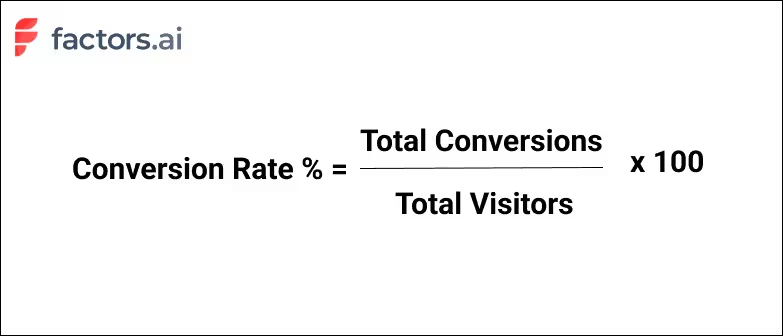
Conversion rate is a broad SaaS marketing metric that can apply to a wide range of scenarios such as webinar registrations, demo form submissions, or trial sign-ups.
One of the most common uses of conversion rate is in landing pages.
For example, say 50 people click on a search ad and arrive at a landing page with a demo form. 2 people actually submit the demo form and schedule time to speak with a sales rep. In this case, the conversion rate is 2/50 x 100 = 4%. Maybe improving headline relevancy and page design could increase conversions even further.
The average benchmark landing page conversion rate is 9.7%

3. Bounce rate
Bounce rate is defined as the percentage of website visitors who click away from a website without viewing or interacting with any other page apart from the one they initially landed on.
As much fun as it sounds, bounce rate is a serious marketing metric that reflects the quality of your web pages. A high bounce rate indicates that your web page design/content does not resonate with the visitor, causing them to leave without exploring any further.
Bounce rate = total one-page visits ÷ total visitors x 100

Note that a landing page with a high-bounce rate isn’t necessarily a cause for concern given that the purpose of the landing page is almost always to bring in a visitor, have them submit a form, and leave.
Instead, bounce rate is more relevant for the homepage, feature page, pricing page, or blogs. High bounce rates in such pages indicate that the content or design isn’t relevant or captivating enough for the visitor to continue exploring the website.
Bounce rate benchmarks:
- 0-40% bounce rate: excellent performance
- 40-55% bounce rate: decent performance
- 55% - 70%: mediocre performance
- 70%+ bounce rate: poor performance
Average bounce rates by channel:
- Display ads: 56%
- Social: 54%
- Direct: 49%
- Paid search: 44%
- Organic: 43%

In addition to tracking traditional bounce rates, Factors.ai shows granular insight into exit and engagement rates as well. This provides complete insight into where visitors are dropping off and what content resonates most with the audience.
4. Marketing Qualified Leads (MQLs)
It’s all well and good to improve website traffic but real marketing impact involves driving qualified visitors who show explicit potential to eventually become paying customers. Marketing qualified leads is a metric that captures the number of leads early along the customer journey — but nonetheless on the path to becoming customers.
Marketing qualified lead (MQL) measures the number of top-of-the-funnel leads that exhibit explicit interest in what a company has to offer based on their interactions across paid campaigns, social media, website, and other touchpoints.

For example, a visitor downloading an eBook on “customer journey mapping” is likely interested in addressing this use-case and is at the very least open to learning more about Factors. Generally speaking, this lead can be considered an MQL.
Factors.ai connects the dots between campaigns, website, and CRM to showcase which marketing efforts and assets are contributing to MQLs, SQLs, deals, and other lifecycle stages.

5. Sales velocity
Sales velocity is defined as the rate at which leads and prospects move through the sales funnel and generate pipeline.
Sales velocity = (opportunities x deal value x % win rate) ÷ length of sales cycles

Sales velocity indicates the health and performance of sales and marketing teams to herd buyers towards becoming paying customers.
Go-to-market teams can improve sales velocity by:
- Increasing number of opportunities by scaling marketing initiatives and sales outreach
- Increasing deal values by targeting larger customers
- Increasing % win rate by improving sales pitches and enablement material
- Decreasing the length of the sales cycle with incentives like free trials or limited time deals

Funnel analytics on Factors.ai allows users to calibrate custom sales cycles to identify the velocity between one stage to the next. With this, users can understand how long it takes for visitors to progress from ad campaigns to web sessions to button submissions to deal won. In turn, this helps identify points of weaknesses or friction to eliminate across the journey.
6. Customer Acquisition Cost
Most marketing teams invest significant resources in paid campaigns, social, SEO, and offline events with the hopes that these initiatives attract further customers to cover their costs several times over.
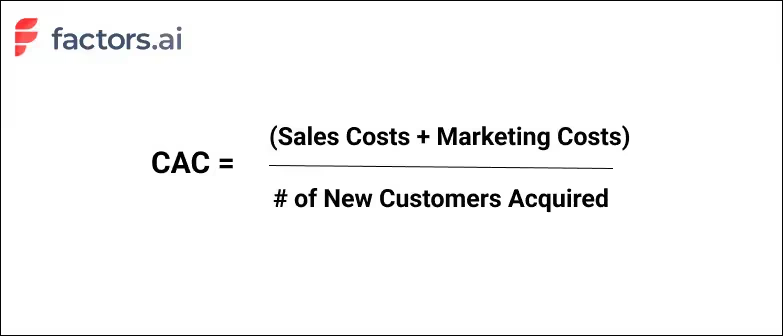
Customer acquisition cost (CAC) or cost per acquisition (CPA) is a metric that measures the amount of money spent to acquire a single new customer.
In theory, this includes employee compensation, overheads, and, of course, marketing expenses. In practice, most teams only consider the latter.
For example, if a marketing team spends $70 on ads and $30 a website redesign to acquire 20 new customers, the CAC works out to be: ($70 + $30) ÷ 20 = $5 per customer.
7. Customer lifetime value
Customer lifetime value (CLV) is the total expected revenue from a customer during the entire relationship with a business.
For instance, long-term, enterprise customers with large contract values are bound to have greater CLV than mid-market customers with short-term contracts.
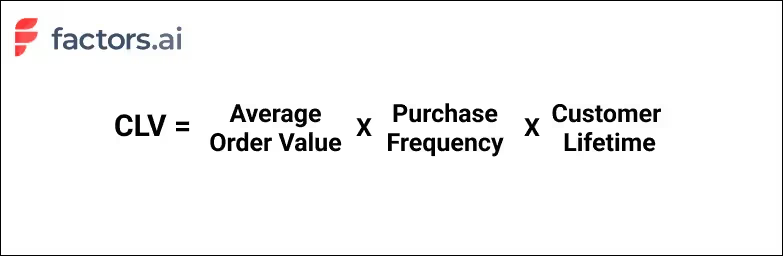
While it certainly helps to know the cost of acquiring a single customer, it’s crucial to measure the lifetime value of each of these customers to truly understand if acquisition initiatives are worth it.
For example, if it costs $300 to acquire a single customer with a customer lifetime value of $250, it’s actually a loss of $50 to the business. Alternatively, if CAC is $500 but CLV is $5000, the customer pays back the CAC several times over. Hence, it’s important to look at CAC and CLV in conjunction.
8. Return on marketing investment (RoMI)
Now more than ever, SaaS marketing teams are urged to prove their impact on bottom line metrics like pipeline and revenue. This is where RoMI comes in.
Return on marketing investment (RoMI) measures the revenue won from marketing campaigns against the cost of that campaign.
RoMI = revenue earned from campaign ÷ cost of campaign x 100

In theory, the RoMI is a straightforward concept. But in practice, calculating RoMI without the right multi-touch attribution tools can be an unintuitive, time-consuming chore. Given that SaaS sales cycles involve several touch-points across several campaigns and stakeholders, it’s hard to pin-point exactly which campaign contributed to revenue.

Factors.ai solves for this challenge with a wide range of powerful revenue attribution models to quantify marketing ROI. In turn, this helps allocate budgets towards campaigns that drive results and prove marketing’s impact on revenue.
9. Retention & Churn
We’ve combined retention & churn together as they’re two sides of the same coin.
Customer retention measures the number of customers that a business retains over time through repeated purchases or contract renewals.
Customer retention is an important SaaS metric as retaining existing customers works out to 5-10 times cheaper than acquiring new ones. Hence, businesses should always look to improve retention rates.
On the flip side, Churn refers to the number of customers who discontinue their relationships as buyers with a business.
A high rate of churn indicates that customers are not receiving the value or service they expect from the business. It’s a strong signal of dissatisfaction. Hence, businesses should always look to limit churn rates.
And there you have it. While there are several other important SaaS marketing metrics out there, the 9 metrics we’ve covered in this blog should give any SaaS marketing team an idea of their top and bottom line performance.
Want to learn more about how Factors.ai can help ll the metrics that matter to you under one roof? Request a personalized demo today!

Identify Your Website Traffic With Factors.ai
Website Account Identification with Factors.ai
Table of Contents:
- Introduction
- How does website account identification work on Factors?
- How can website account identification help?
- Why Factors?
Your B2B website is a goldmine. Here’s how you can make the most of it.
Now more than ever, B2B marketers & sales folk are being asked to do more with less. Teams are constantly on their toes trying to make limited resources stretch a long way. What’s more? As buyers become increasingly adept at spotting campaign & sales pitches from a mile away, it becomes that much harder to build new relationships from scratch.
The solution? Making the most of what you already have — like the goldmine of acccount data buried away in your website.
Your website is arguably the most voluminous, high-traffic touch-point for B2B buyers. That being said, only about 1-5% of this traffic actually converts. So what happens to the remaining 95% of accounts you’ve worked tirelessly to drive to your site? We can’t just let all that potential pipeline slip-away, can we?
The following blog highlights how you can identify anonymous companies already visiting your site using cutting-edge account deanonymization and website tracking technology.

Factors.ai’s account identification tool identifies who your B2B audience is and how they engage with your brand — so you can reach out with the right message at the right time. But how does account identification work? And what makes Factors.ai the best account identification solution for B2B teams? Let’s find out.
How does Factors work?
Account identification like Factors use reverse DNS lookup to discover companies visiting your site based on their IP addresses. In short, reverse DNS identifies the host name of a particular IP address to provide company location information.
Factors ai matches IP data with an extensive database to identify which company visited your site as well as other firmographic features like revenue, employee headcount, industry, etc. Note that Factors is a privacy-compliant intelligence platform that does not identify, collect, or distribute anonymous user-level data.
How can account identification help?
For sales:
1. Find ready-to-buy accounts: Accounts that visit your website are aware of your brand. And accounts that are aware of your brand are far more likely to convert as compared to those that are yet to hear of you. With account identification, sales can reach out to otherwise anonymous prospects, capitalize on an untapped pool of buyers, and prevent low hanging revenue from slipping away.
2. Close better deals, faster: The early bird gets the worm and the early salesperson closes the deal. It’s no secret that time is off the essence when it comes to B2B sales. With Factors, sales teams can reach out to high-intent prospects before they have a chance to interact with competitors.
3. Create better sales pitches: Sales can see exactly what content — features, blogs, case-studies, use-cases etc — prospects are engaging to anticipate their needs and personalize sales interactions accordingly.
For marketers:
1. Delight your sales team: Make your sales team happy with a list of high-intent, high-quality prospects for your sales team to engage with. And the best part? These are leads generated with zero additional ad spend as they’re simply companies who already visit your site.
2. Understand traffic sources: Learn which channels and traffic source high-quality accounts come from. Scale the right campaigns and close the gap between impressions and revenue. This benefit is all the more pronounced when account identification is used in unison with Factors’ end-to-end attribution and journey mapping.
3. Improve website engagement: See how companies engage with content on your website and understand what topics and themes resonate most with buyers. Gauge what’s helping and hurting website conversions and optimize performance accordingly.
4. Optimize retargeting: Once you understand which accounts are visiting your site and what they’re looking for, it becomes that much easier to retarget the right audience. Don’t waste your ad budget retargeting everyone who visits your site — just the select few who show real buyer intent.
Why Factors?
Well, because Factors.ai is the most accurate, cost-effective, and well-integrated account identification software for B2B companies:
1. Data accuracy
Factors.ai delivers the most accurate IP-matching in the industry. In a case wherein customers provided 22,000 unique IPs (where the answers were known), different vendors were asked to match IPs with companies and provide firmographic information. Factors.ai’s cutting-edge IP-technology delivered a whopping 64% match rate and nearly 30% more matches than the nearest competitor. Factors provide a matchrate that’s 10-15% better than alternatives like Clearbit, Kickfire, and Demandbase.
2. Cost-efficiency
Factors.ai is one of, if not the most cost-effective de-anonymization solution in the industry. Learn more about our pricing here: factors.ai/pricing
3. Unified account analytics
Another benefit with Factors is the wide range of complementary features it has to offer along with account identification. End-to-end marketing analytics, revenue attribution, journey mapping and more — all of which provide a layer of depth and direction once you identify which accounts are visiting your site. Answer questions like:
- What campaigns are driving the most traffic to my website?
- What channels should I scale to improve demo conversions on my website?
- What content resonates most with my target audience?
- How do our customers progress from impressions to revenue?
- How does marketing performance vary by buyer persona and firmographic features?
4. Website behavior and account timelines
Along with knowing which company is visiting your site, Factors light-weight script will also shed light onto what accounts are engaging with on your site. Understand website activity — including page views, button clicks, time spent, scroll depth and more. All of this data is collected using only first-party cookies — so there’s no impact on third-party restrictions.
What's more? Factors provides intuitive account timelines and user journeys to visualize, in real-time, how accounts are progressive from awareness to intent. This is a valuable feature for B2B marketers to identify buyer intent and strike with marketing material, targeted campaigns, or a simple email while the iron's still hot.


Identify Sales-Ready Account With Hubspot & Webhooks
Target the right accounts, at the right time with intent-based outreach
B2B sales teams spend a lot of time and effort reaching out to cold prospects only to achieve disappointing results. In fact, even successful benchmarks tag the average cold-call response rate at just 2%.
And honestly, It’s not difficult to see why.
While it’s simple enough to find lists of companies and contacts that fit your ideal client profile, it’s a monumental challenge to convince prospects to consider your solution when they’re not in the market for one.
So what’s the alternative to reaching out to the right accounts at the wrong time?
Reaching out to the right accounts at the right time of course! Or more specifically, it’s intent-based outreach based on the goldmine of anonymous, sales-ready companies already visiting your website.
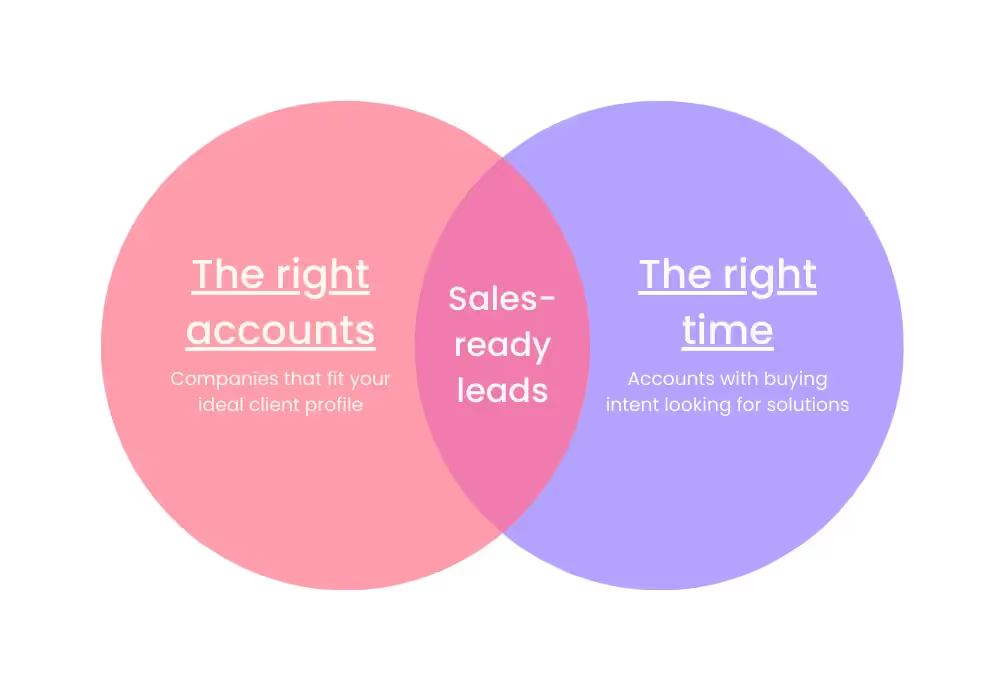
The following guide explores how to identify and target sales-ready accounts with the combined powers of Factors’ account identification and HubSpot webhooks. We first discuss how this integration works, before delving into a handful of use-cases.
How It Works: Pushing data back into HubSpot
Factors taps into industry-leading IP-lookup technology to identify up to 64% of anonymous companies visiting your website. This includes company names as well as firmographics such as geography, industry, employee headcount, revenue range and more.
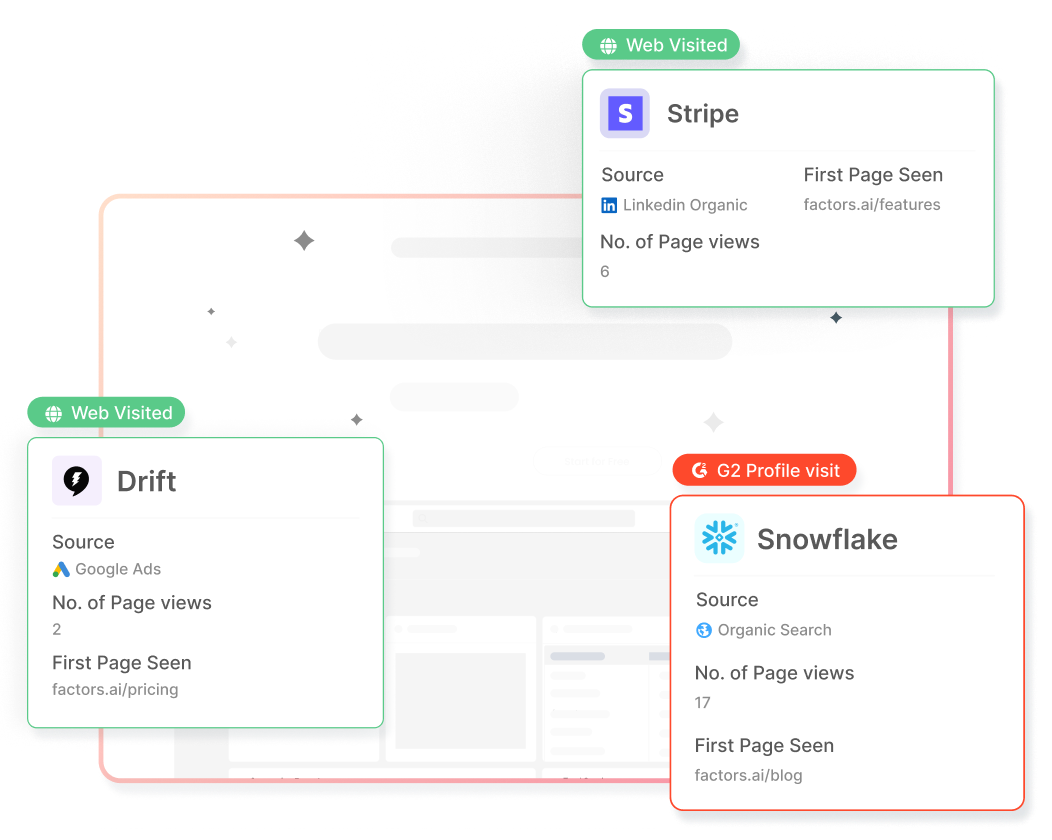
In addition, Factors auto-tracks website activity and engagement with advanced analytics. This includes page views, button clicks, scroll-depth, account timelines, funnels and more.
With this information, users can filter the total set of anonymous traffic down to ICP accounts that have expressed buying intent:
- ICP criteria: Filter down traffic based on firmographics such as industry, headcount and revenue-range to identify accounts that fit your ideal client profile.
- Intent criteria: Filter down traffic based on intent signals such as high-intent page views such as pricing, time-spent on page, and percentage scroll-depth to identify sales-ready buyers.
In short, access a list of high-intent ICP accounts that are already visiting your website but are yet to convert.
Now, with webhooks and Zapier, it’s easier than ever to automatically push all this data from Factors into any other tool your team uses. This includes ad platforms, marketing automation platforms, and, in this case, HubSpot CRM.
How will this help? Rather than going after cold prospects with negligible chances of conversion, sales reps can view, segment, and target sales-ready accounts inside HubSpot. As we’ll see in the next section, this dramatically simplifies and improves targeted sales outreach.
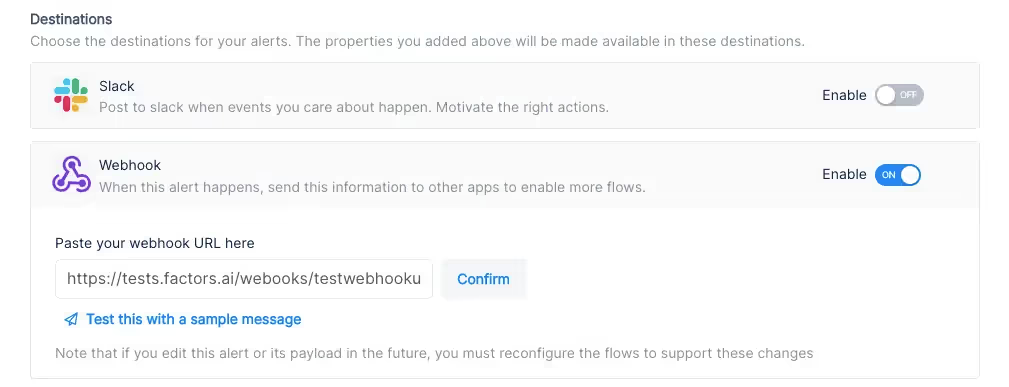
Implementing Webhooks on Factors is easy as pie. See how here.
Use-cases: Making the most of your website traffic
1. Identify new business opportunities
Factors surfaces anonymous, high-intent companies visiting your website. As previously discussed, this data can be filtered down to high-fit, high-intent accounts.
Using webhooks, this data can be pushed from Factors into HubSpot. In other words, you can automatically create companies inside HubSpot for visiting companies that match your ICP and intent criteria.
For example, webhooks can be configured to create a new company when a visitor from a US-based software company with at least 250 employees is live on your website.
Here are a few more examples of what you can see inside your CRM with Factors:
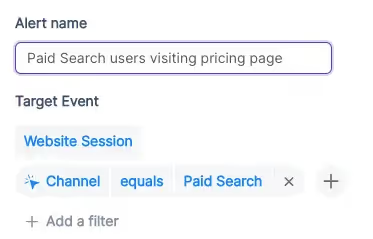
- Accounts that visit a landing page through a search ad but fail to submit a form
- Software companies with at least 500 employees visiting high-intent pages like pricing
- US-based companies that have read through at least half a product comparison blog
Rather than relying on the 5% of website traffic that submits a form, teams can identify and target a deep new pool of potential pipeline — all within HubSpot. What’s more? Alerts can be relayed to sales reps in real-time through Slack or MS teams so they can immediately reach out to live prospects.
2. Stay on top of existing target accounts
In addition to recording new accounts visiting your website, Factors can be used to monitor and update data for target accounts that already exist within HubSpot.
For example, say an accounts clicks on a search ad, submits a demo form, but never schedules time on your calendar. While account's data is available in HubSpot, it can be tedious to track and update their actions post the demo form submission.
To solve for this, Factors can automatically update CRM properties based on trigger criterias when accounts return to your website. Let’s say that the same account is back reading a product alternatives blog or visiting the pricing page after a couple of weeks. This event can be updated within HubSpot, including their last active time.
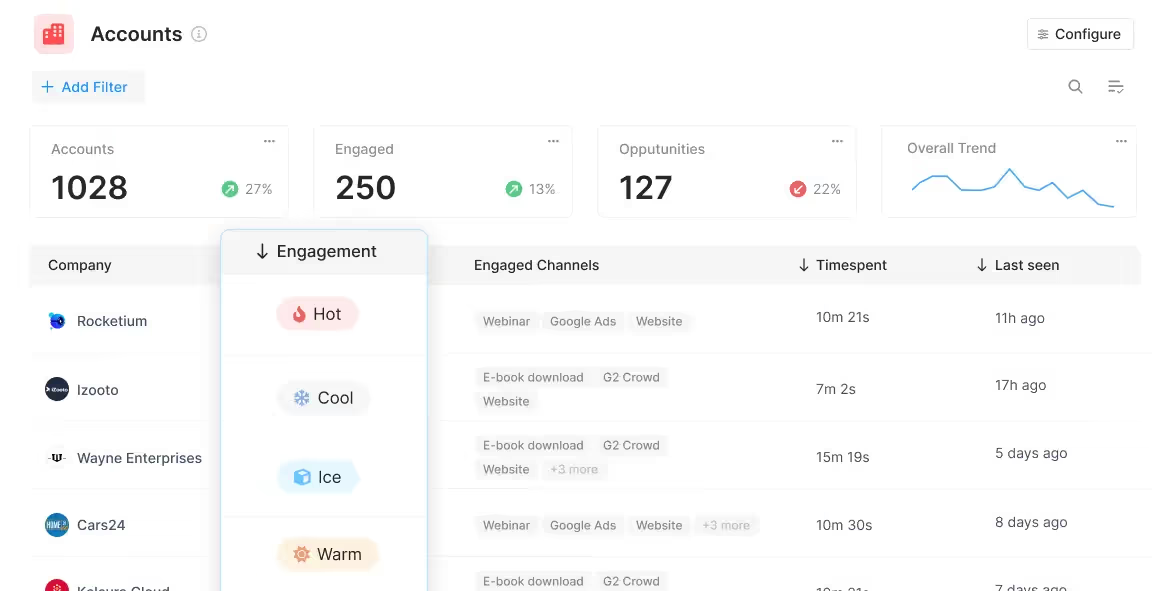
Sales reps can be notified with real-time when high-intent events take place so as to be able to immediately reach out to accounts and improve the odds of conversion.
3. Accelerate deals with behavioral data
Certain marketing material may or may not be relevant depending on the audience in question. For example, an enterprise-level account may be especially interested in security compliance related content. An early-stage start-up, on the other hand, may find content around cost-effective pricing more appealing.
Factors can track how various types of companies are interacting with your website to understand what target accounts care about most. This data can be pushed back into HubSpot so sales reps can easily assess a prospect’s interactions, priorities and pain-points before jumping into a sales call.
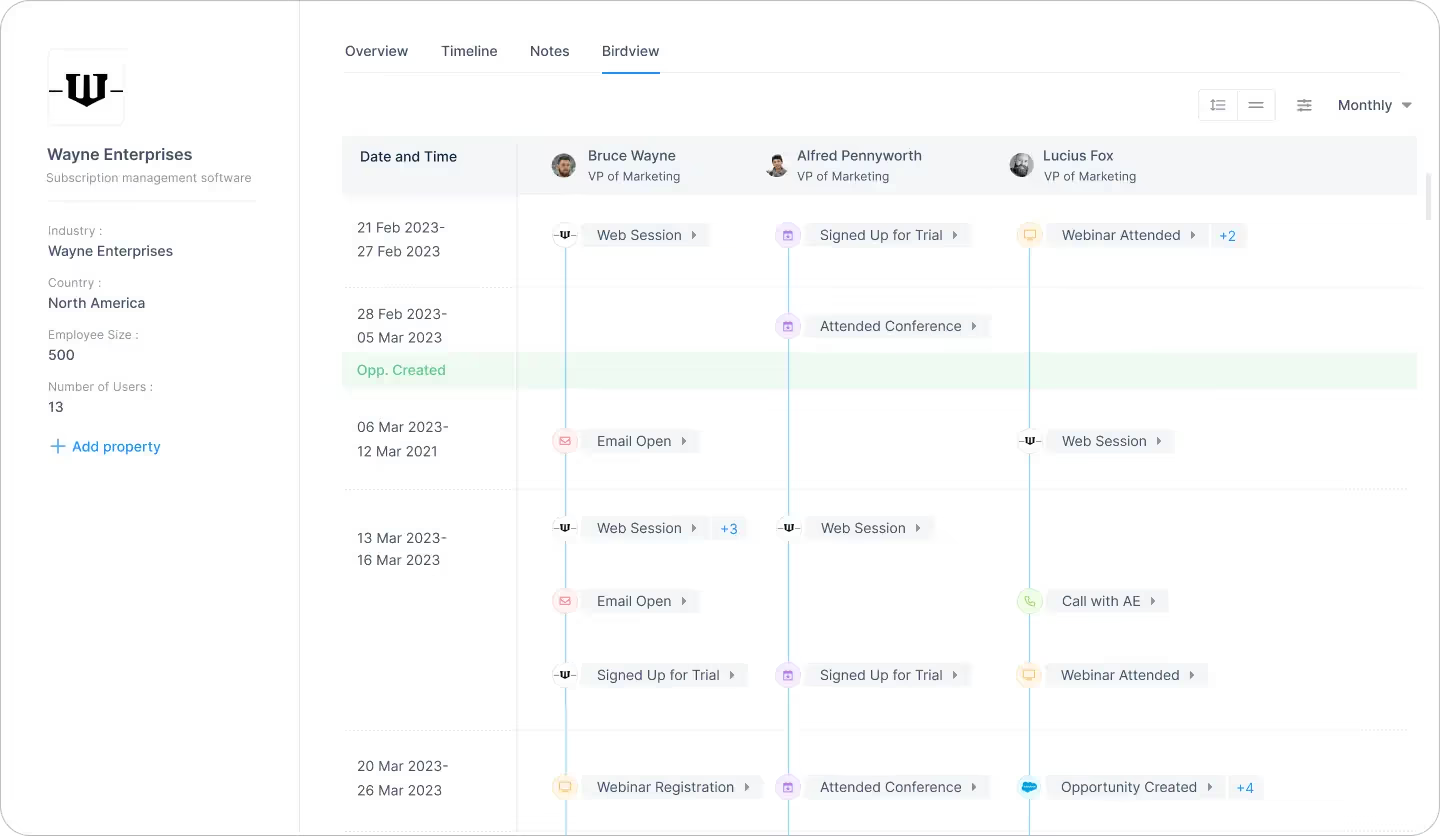
For one, sales reps can accelerate deals by personalizing the customer experience. For another, marketing teams can gauge what resonates best with the target audience and finetune content efforts accordingly.
4. Rekindle lost opportunities
Use Factors to track how prospects who have dropped off the funnel or former customers are returning to engage with your website. For instance, maybe an account that churned a couple of quarters ago is back interacting with a page that highlights a new feature release.
This may be an intent-signal that the account is reconsidering your product. It might be a good idea for sales reps to reach out and share some relevant information on what’s new. Of course, this doesn’t necessarily guarantee a conversion. But it’s far more effective than reaching out to an ice cold prospects.
This guide has covered a handful of ways in which pushing account data back into HubSpot can be helpful. Ultimately, the goal is to align account data with relevant stakeholders and technologies in order to:
- Drive intent-based sales outreach
- Refine ABM efforts and spends
- Optimize retargeting campaigns
There are countless other use-cases with account identification working in conjunction with CRMs, MAPs, and more. With webhooks, Factors can push valuable account data to nearly any platform on the planet. How you make the most of that data is really up to you — the possibilities are endless.

Convert High-Intent Accounts With Salesforce & Webhooks
Target the right accounts, at the right time with intent-based outreach
B2B sales teams invest significant time and resources into reaching out to prospects who are yet to show any intention of buying. However, this cold outreach almost always yields disappointing results. Even the most comprehensive benchmarks indicate that the average response to cold-calls is only 2%.
And honestly, It’s not difficult to see why.
While it’s easy enough to find lists of companies and leads that fit your ideal client profile, it’s extremely challenging to convince prospects to consider your solution when they’re not yet ready to buy.
So what’s the alternative to reaching out to the right accounts at the wrong time?
Reaching out to the right accounts at the right time of course! Or more specifically, it’s intent-based outreach based on the pot of gold that is the anonymous, sales-ready companies already visiting your website.
The following guide explores how to identify and convert high-intent accounts with the combined powers of Factors’ accounts identification and Salesforce webhooks. We first discuss how this integration works, before delving into a handful of use-cases.
How It Works: Pushing website data back into Salesforce
Factors taps into industry-leading IP-lookup technology to identify up to 64% of anonymous companies visiting your website — without the need for form submissions. This includes company names as well as firmographics such as geography, industry, employee headcount, revenue range and more.
In addition, Factors auto-tracks website activity and engagement at an accounts level with advanced analytics. This includes page views, button clicks, scroll-depth, account timelines, funnels and more.
With this information, users can filter the total set of anonymous traffic down to ICP accounts that have expressed buying intent:
- ICP criteria: Filter down traffic based on firmographics such as industry, headcount and revenue-range to identify accounts that fit your ideal client profile.
- Intent criteria: Filter down traffic based on intent signals such as high-intent page views such as pricing, time-spent on page, and percentage scroll-depth to identify sales-ready buyers.
In short, access a list of high-intent ICP accounts that are already visiting your website but are yet to submit a form or sign-up.
Now, with webhooks and Zapier, it’s easier than ever to automatically push all this account data from Factors into any other tool your team uses. This includes ad platforms, marketing automation platforms, and, in this case, Salesforce CRM.
How will this help? Rather than going after cold leads with negligible chances of conversion, sales reps can view, segment, and target sales-ready accounts inside Salesforce. As we’ll see in the next section, this dramatically simplifies and improves targeted sales outreach.
Implementing Webhooks on Factors is easy as pie. See how here.
Use-cases: Making the most of your website traffic
1. Identify new business opportunities
Factors surfaces anonymous, high-intent companies visiting your website. As previously discussed, this data can be filtered down to high-fit, high-intent accounts.
Using webhooks, this data can be pushed from Factors into Salesforce. In other words, you can automatically create accounts inside Salesforce for companies that match your ICP and intent criteria.
For example, webhooks can be configured to create a new account when a visitor from a US-based software company with at least 250 employees is live on your website.
Here are a few more examples of what you can see inside your CRM with Factors:
- Accounts that visit a landing page through a search ad but fail to submit a form
- Software companies with at least 500 employees visiting high-intent pages like pricing
- US-based companies that have read through at least half a product comparison blog
Rather than relying on the 5% of website traffic that submits a form, teams can identify and target a deep new pool of potential pipeline — all within Salesforce. What’s more? Alerts can be relayed to sales reps in real-time through Slack or MS teams so they can immediately reach out to live prospects.
2. Stay on top of existing target accounts
In addition to recording new accounts visiting your website, Factors can be used to monitor and update data for target accounts that already exist within Salesforce.
For example, say an account clicks on a search ad, submits a demo form, but never schedules time on your calendar. While the account's data is available in Salesforce, it can be tedious to track and update their actions post the demo form submission.
To solve for this, Factors can automatically update CRM properties based on trigger criteria when leads return to your website. Let’s say that the same account is back reading a product alternatives blog or visiting the pricing page after a couple of weeks. This event can be updated within Salesforce, including their last active time.
Sales reps can be notified with real-time when high-intent events take place so as to be able to immediately reach out to leads and improve the odds of conversion.
3. Accelerate deals with behavioral data
Certain marketing material may or may not be relevant depending on the audience in question. For example, an enterprise-level account may be especially interested in security compliance related content. An early-stage start-up, on the other hand, may find content around cost-effective pricing more appealing.
Factors can track how various types of companies are interacting with your website to understand what visitors care about most. This data can be pushed back into Salesforce so sales reps can easily assess a prospect’s interactions, priorities and pain-points before jumping into a sales call.
For one, sales reps can accelerate deals by personalizing the customer experience. For another, marketing teams can gauge what resonates best with the target audience and fine-tune content efforts accordingly.
4. Rekindle lost opportunities
Use Factors to track how accounts that have dropped off the funnel or former customers are returning to engage with your website. For instance, maybe an account that churned a couple of quarters ago is back interacting with a page that highlights a new feature release.
This may be an intent-signal that the lead is reconsidering your product. It might be a good idea for sales reps to reach out and share some relevant information on what’s new. Of course, this doesn’t necessarily guarantee a conversion. But it’s far more effective than reaching out to an ice cold lead.
This guide has covered a handful of ways in which pushing account data back into Salesforce can be helpful. Ultimately, the goal is to align visitor data with relevant stakeholders and technologies in order to:
- Drive intent-based sales outreach
- Refine ABM efforts and spends
- Optimize retargeting campaigns
There are countless other use-cases with account identification working in conjunction with CRMs, MAPs, and more. With webhooks, Factors can push valuable account data to nearly any platform on the planet. How you make the most of that data is really up to you — the possibilities are endless.