.svg)


Factors vs Warmly: Which B2B GTM Platform Fits Your Playbook?
If you’ve been exploring AI tools for GTM automation, you’ve probably crossed paths with Factors and Warmly. On the surface, they look like twins, both promise real-time intent, AI agents, and faster pipelines. But dig deeper, and you’ll see one’s a finely built ship, the other’s just spotting ripples on the surface.
Factors.ai is built to tame the Kraken; it brings your website, ads, CRM, and analytics into one coordinated crew. Every signal, every campaign, every touchpoint sails in sync. Warmly’s the lookout in the crow’s nest, fast to spot intent, quick to shout ‘Hey, there’s movement!’ before rowing to the next account.
Both useful, just different missions. One helps you chart a course. The other helps you chase waves.
In this guide, we’ll compare how each handles functionality, pricing, analytics, ad activation, support, and compliance, so you can decide which ship actually gets your GTM where it’s meant to go.
Factors.ai vs Warmly: Functionality & Features
When you look at Factors and Warmly, both seem to help GTM teams spot intent and automate engagement with AI. But under the surface, their focus and depth are quite different.
Let’s start with a quick overview.
Factors.ai Features and Functionality
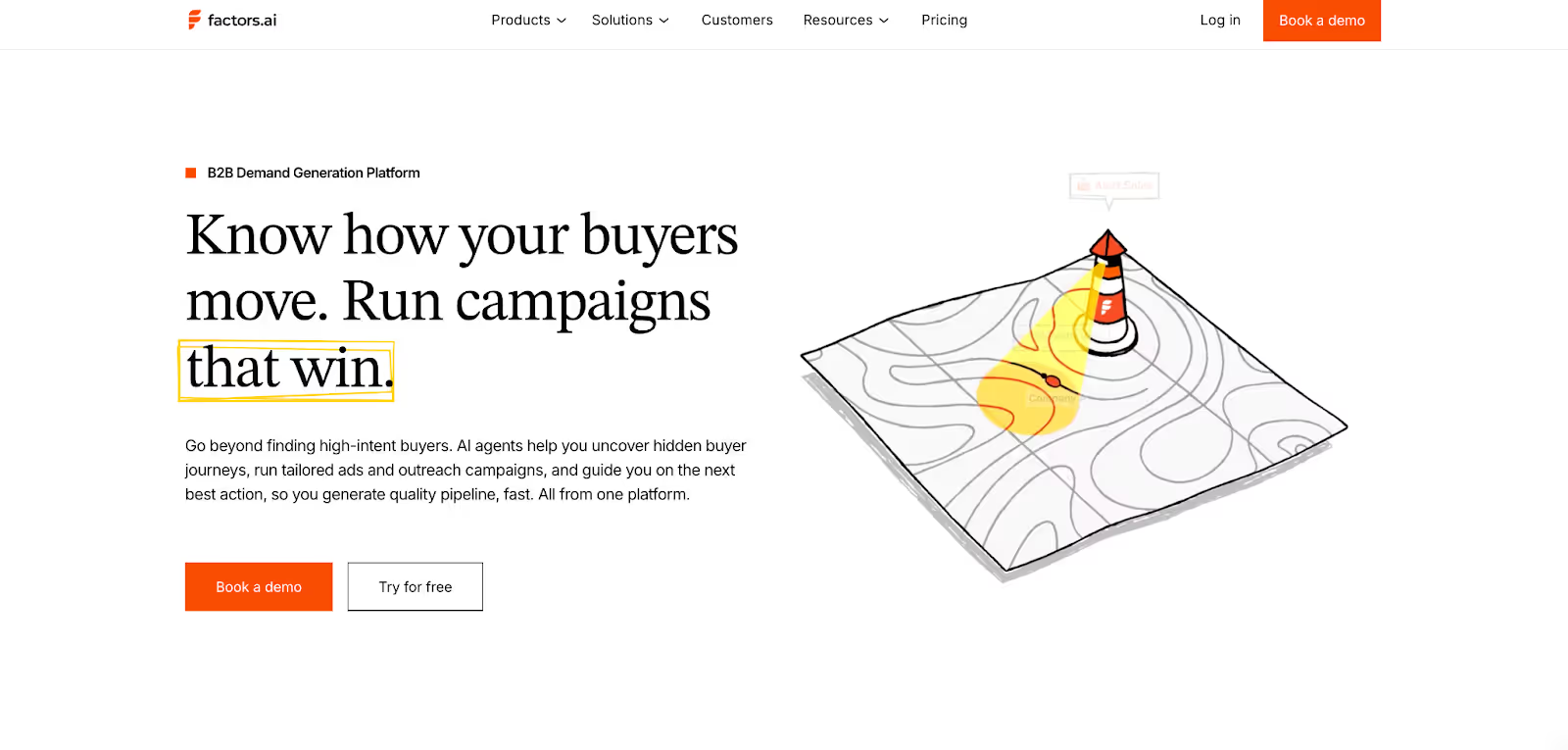
Factors goes beyond showing who’s interested and helps your team understand why and what to do next.
Key capabilities include:
- Unified View of Every Account (Account 360)
- Connects website, ad, CRM, and product data into one sortable view of every account.
- Tracks every touchpoint, from first visit to closed deal, ensuring no high-intent account slips through the cracks.
- Aligns marketing, sales, and RevOps with a single source of truth for all GTM activity.
- High Coverage Identification
- Identifies 75%+ of anonymous visitors through waterfall enrichment across Snitcher, 6sense, Demandbase, and Clearbit.
- Tracks intent signals across stages and syncs them directly with CRMs and ad platforms.
- AI Agents That Do the Work
- Handle account research, buying group mapping, post-meeting tracking, and closed-lost reactivation automatically.
- Send real-time Slack or Teams alerts for key actions like form-fill drop-offs or demo revisits.
- Surface the right contacts within each account and provide personalized outreach insights, so reps always know who to engage and when.
- Cross-Platform Activation with AdPilot
- Integrates seamlessly with HubSpot, Salesforce, LinkedIn Ads, Google Ads, and G2.
- AdPilot automates retargeting and audience syncs, optimizing campaigns using CRM and engagement data.
- Includes Google CAPI and Audience Sync for high-precision targeting, budget efficiency, and buyer-stage-specific campaigns.
- Keeps audiences fresh with daily automated updates, ensuring your ads always reach in-market accounts.
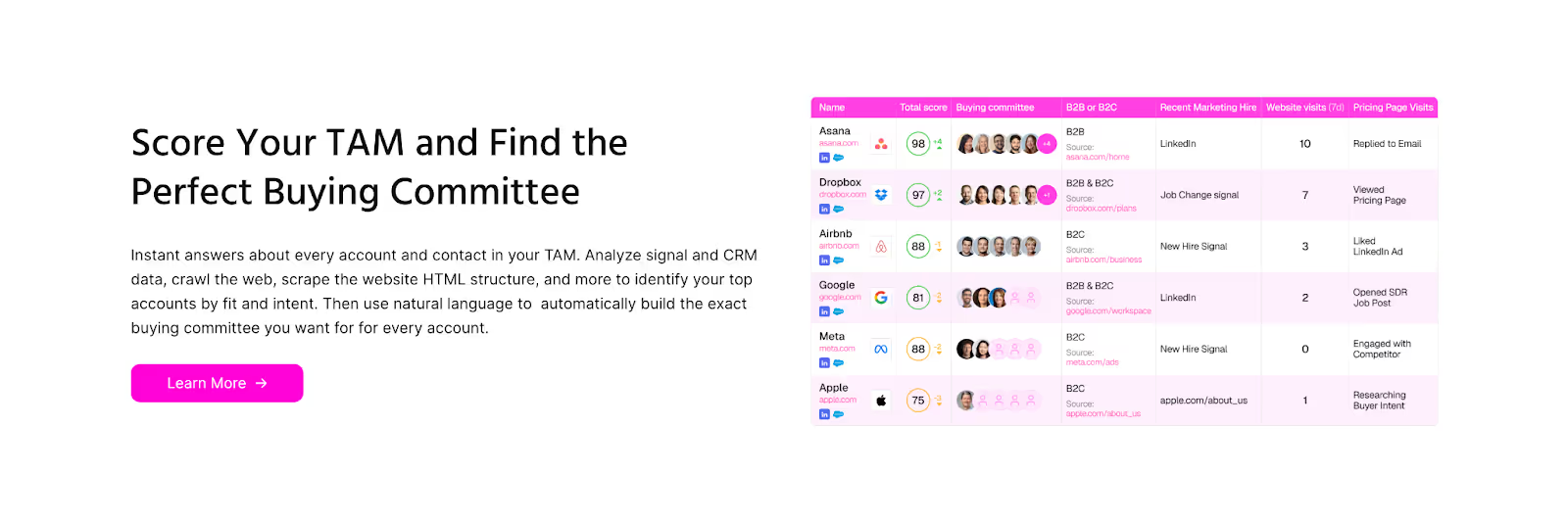
- Advanced Account & Contact Scoring
- AI prioritizes outreach by scoring accounts and contacts based on ICP fit, funnel stage, and engagement intensity.
- Helps GTM teams focus on high-potential opportunities instead of low-value leads.
Together, these capabilities turn intent data into coordinated action, helping GTM teams build pipeline more efficiently.
Warmly Features and Functionality
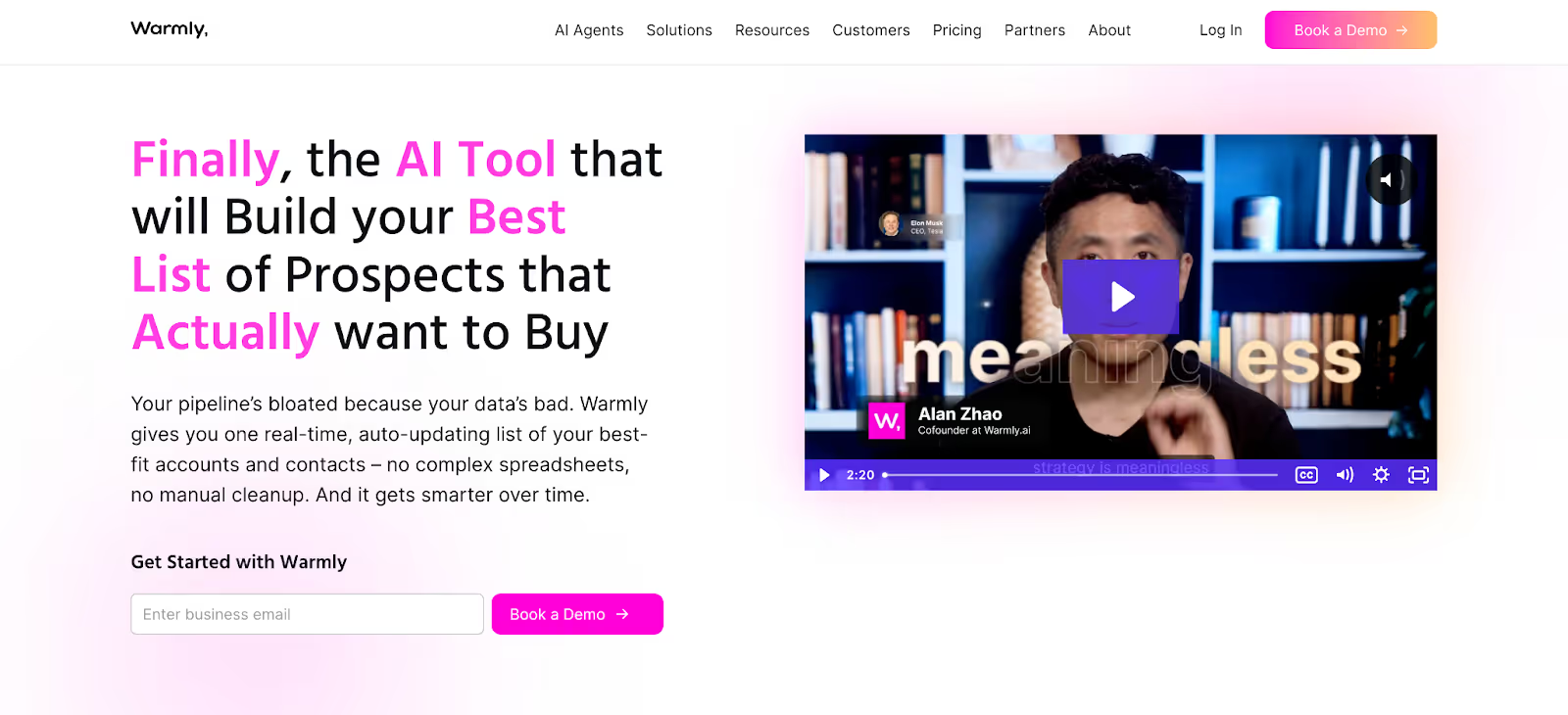
Warmly focuses on helping reps connect with buyers while they’re still active. It’s built around real-time engagement and person-level signals.
- Multi-Layered Intent System
- First-party data from website behavior and visits.
- Second-party data from LinkedIn (funding, job changes).
- Third-party data from competitor or keyword-based interactions.
- Warmly AI Chat
- Engages visitors automatically.
- Qualifies, shares resources, and can book meetings instantly.
- AI Agents Across the Funnel
- Marketing Ops for targeting and routing.
- Demand Gen for campaigns.
- SDR and Co-Pilot agents for automated lead engagement.
- Integrated Workflow
- Connects with HubSpot, Salesforce, Slack, LinkedIn Ads, and Google Ads.
- Keeps reps informed with real-time Slack updates.
Warmly helps teams stay quick and responsive when new interest appears, keeping outreach personal and timely.
Factors.ai vs Warmly: Who wins on the feature front?
Warmly does a great job for teams that rely on instant engagement. The person-level data and AI Chat make it ideal for fast outbound and SDR-heavy setups.
Factors.ai, on the other hand, offers a deeper system for GTM teams that want to connect the dots across their entire funnel. It not only spots intent but also structures how your team acts on it.
In short:
- Warmly helps you respond faster, but with a partial view.
- Factors helps you scale smarter and see the full picture.
Factors.ai vs Warmly: Pricing Comparison
Both platforms take very different routes when it comes to pricing. Factors focuses on scalability across tiers, while Warmly builds its model around AI Agents designed for specific GTM goals.
Let’s look at them side by side.
Factors.ai Pricing
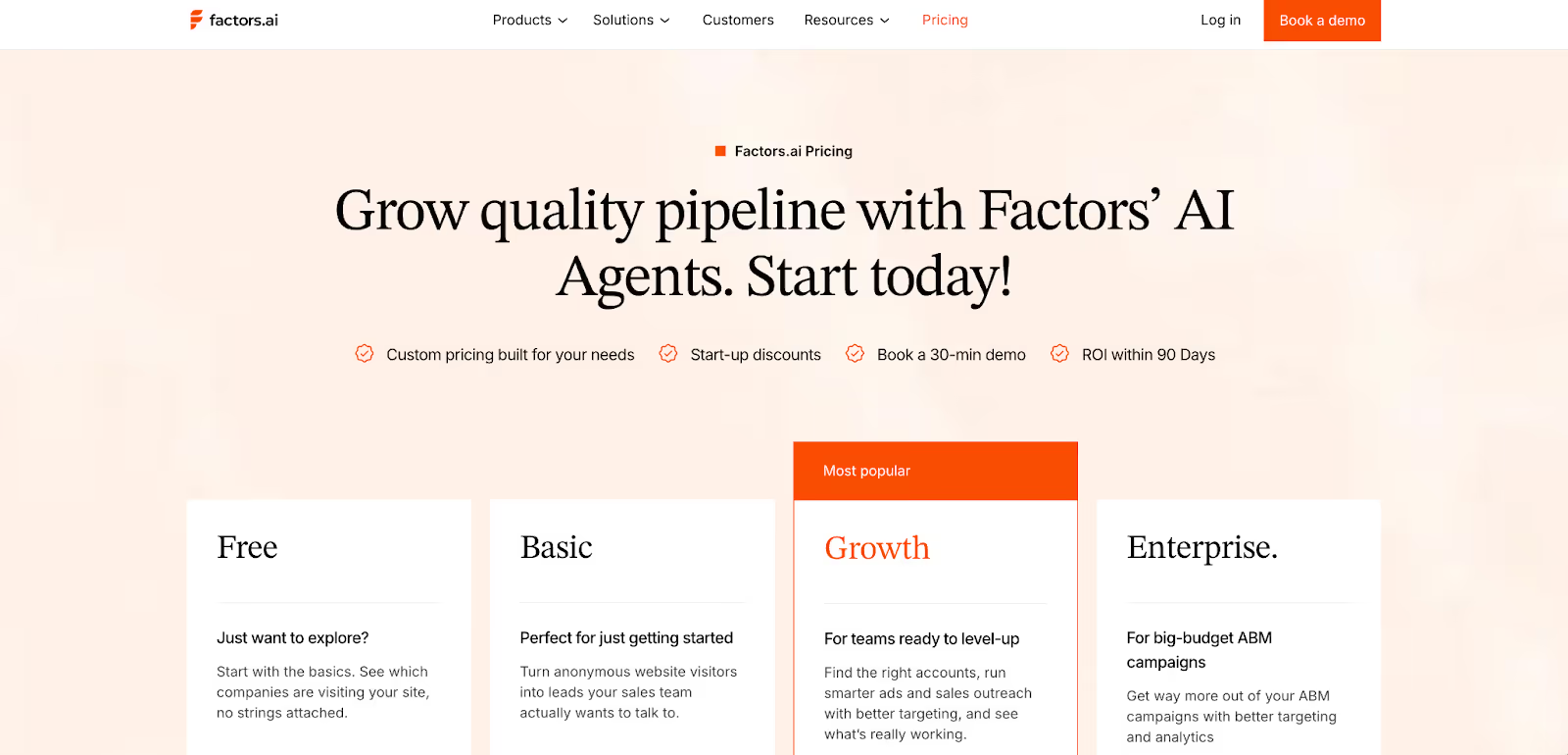
Factors follows a structured plan that grows with your GTM needs. It doesn’t limit value to one function but expands across the funnel as your operations scale.
Here’s how it’s set up:
- Free Plan
- Identify up to 200 companies/month
- Includes dashboards, visitor tracking, Slack integration
- Basic Plan
- 3,000 companies/month
- Adds LinkedIn intent signals, GTM dashboards, and ad integrations
- Connects to HubSpot, Salesforce, and Google Search Console
- Growth Plan (Most Popular)
- 8,000 companies/month
- Includes ABM analytics, account scoring, G2 intent data, workflow automation, and a dedicated CSM
- Enterprise Plan
- Unlimited companies and up to 25 seats
- Predictive scoring, AdPilot for Google and LinkedIn, advanced segmentation, and white-glove onboarding
What makes it valuable
- Consolidates multiple tools (visitor ID, attribution, enrichment, ad activation) into one.
- Expands naturally as the team scales and no need to stack point tools.
- GTM Engineering Services can design and automate your entire RevOps setup.
Warmly Pricing
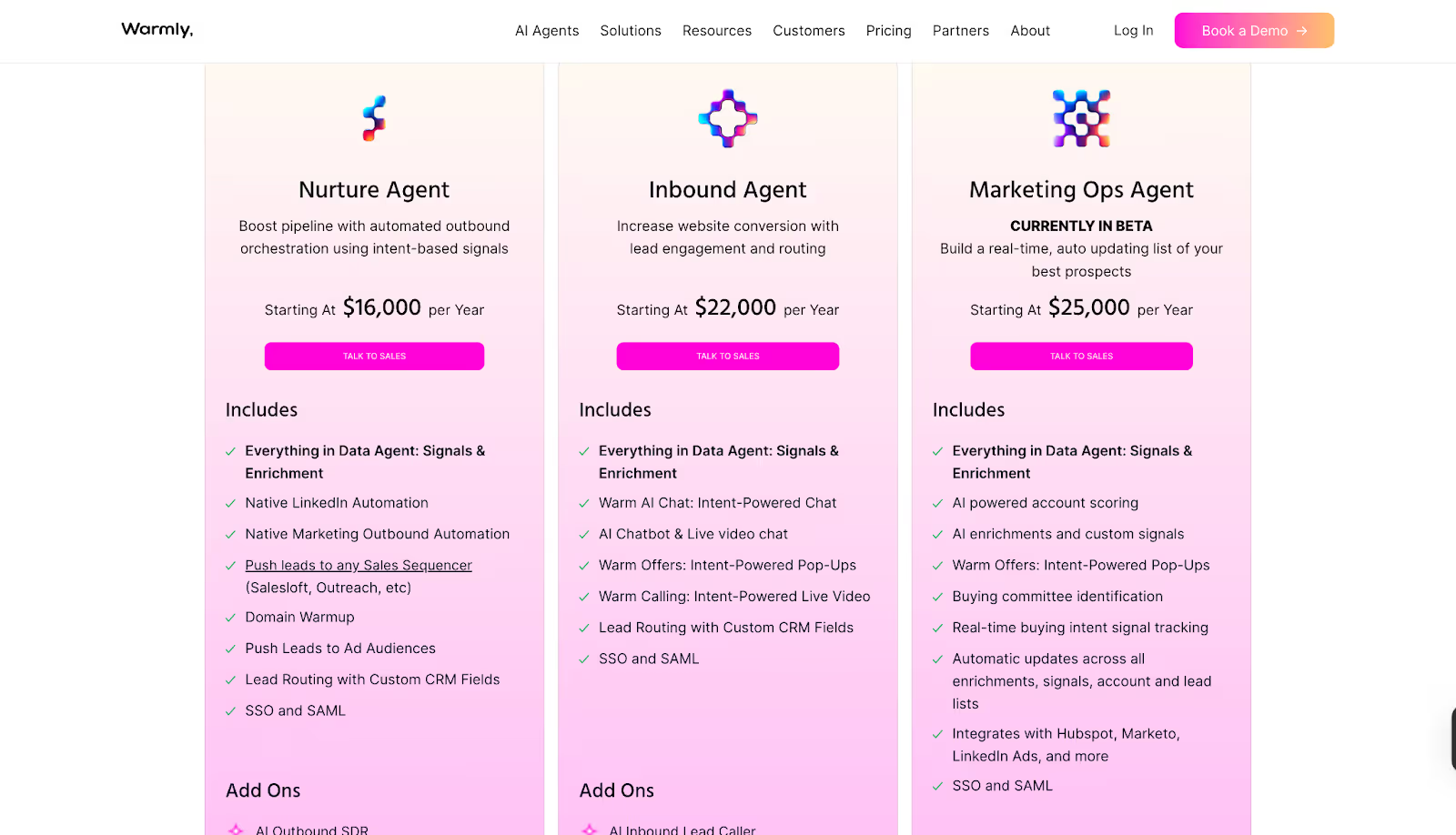
Warmly’s pricing revolves around AI Agents, each designed for a specific motion like outbound, inbound, or marketing operations.
Available Agents:
- Nurture Agent – $16,000/year
- Built for outbound orchestration using intent-based signals
- Includes:
- Native LinkedIn and marketing automation
- Domain warmup
- Lead routing with custom CRM fields
- Push leads to ad audiences or sales sequencers
- SSO and SAML
- Add-on: AI Outbound SDR
- Inbound Agent – $22,000/year
- Designed to increase conversion through engagement and routing
- Includes:
- Warm AI Chat for intent-based conversations
- AI chatbot and live video chat
- Intent-powered pop-ups and calls
- Lead routing with CRM sync
- SSO and SAML
- Add-on: AI Inbound Lead Caller
- Marketing Ops Agent – $25,000/year (Beta)
- Focused on enrichment, scoring, and real-time signal tracking
- Includes:
- AI-powered account scoring and custom signals
- Buying committee identification
- Real-time updates across all signals
- Integrations with HubSpot, Marketo, and LinkedIn Ads
- SSO and SAML
Warmly’s model gives you flexibility to pick only what you need, but it can get expensive as your team grows across multiple functions.
Factors.ai vs Warmly: Who wins on the pricing front?
Warmly offers clear options for teams that want AI Agents focused on specific goals. The annual structure makes sense for dedicated use cases like inbound engagement or outbound automation.
Factors, on the other hand, gives you an all-in-one foundation that grows with your GTM system. Its tiered pricing covers a broader set of needs like analytics, orchestration, and automation without having to buy separate modules.
In short:
- Warmly works well if you want targeted AI Agents for one motion at a time.
- Factors makes more sense if you want one scalable platform to power your full GTM stack.
Factors.ai vs Warmly: Analytics and Attribution
Spotting interest is one thing. Knowing which actions actually turn into revenue is another.
That’s where analytics and attribution become the real test of how strong your GTM platform actually is.
Here’s how Factors and Warmly stack up.
Factors.ai Analytics and Attribution
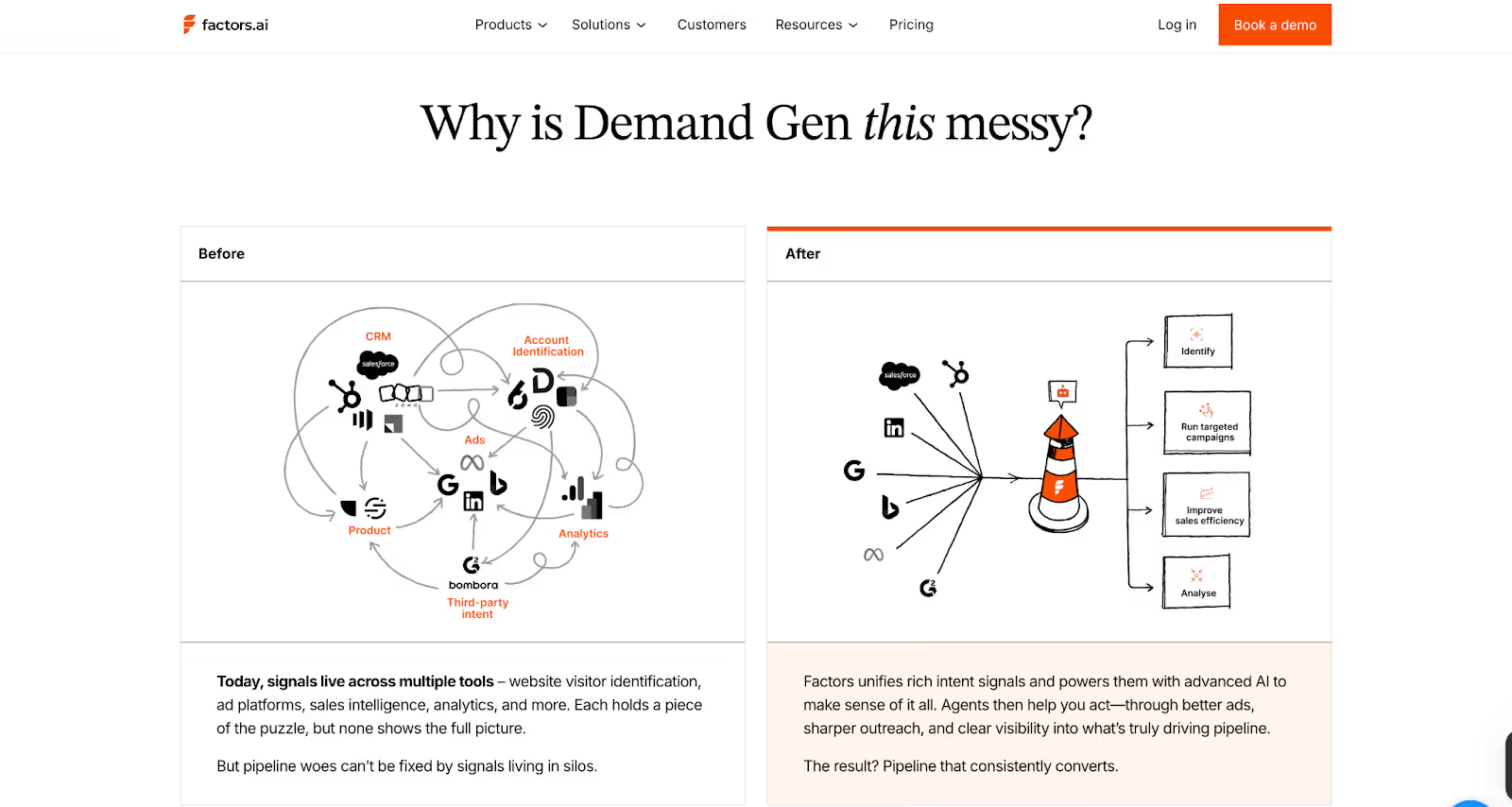
Factors gives your team a complete view of how marketing and sales activity turns into revenue. Every ad click, website visit, or CRM update gets connected in one continuous line, from awareness to closed deal.
Key analytics capabilities include:
- Multi-touch Attribution
- Tracks influence from first touch to final conversion.
- Answers questions like “Which campaign actually created pipeline?”
- Funnel Stage Analytics
- Visualizes the full path from MQL to Closed Won.
- Highlights which campaigns push deals forward and where drop-offs happen.
- Customer Journey Timelines
- Combines web, CRM, ad, and product data into one chronological view.
- Helps GTM teams see the full story behind every opportunity.
- Segmented Dashboards
- Filter by geography, persona, or product line.
- Compare how different audiences move through the funnel.
- Drop-off & Bottleneck Detection
- Automatically flags friction points.
- Helps RevOps and GTM leaders refine campaigns faster.
Together, these features make analytics actionable. You don’t just see activity; you can measure what’s really driving revenue.
If you want to understand the different ways attribution works and which model fits your stack, we also explain multi-touch approaches in our guide to understanding multi-touch attribution models.
Warmly Analytics and Attribution
Warmly focuses on engagement visibility rather than deep attribution. It highlights how prospects interact with your content and website but doesn’t connect those signals back to the entire sales funnel.
What it offers:
- Engagement Reports
- Track visitor activity, entry and exit stats, and referrer data.
- Intent Insights
- Show which visitors are most active and which campaigns are attracting them.
- Signal Highlights
- Identify high-value interactions such as LinkedIn clicks or return visits.
These analytics give sales teams a quick pulse on engagement but lack the full context needed to trace ROI across campaigns or channels.
Verdict on Analytics & Attribution
Warmly gives a surface-level view of visitor activity. It’s helpful for understanding which prospects are active right now, especially when combined with its real-time chat and AI engagement.
Factors gives the complete story. It connects every signal, from anonymous visits to deal closure, and helps GTM teams tie activity back to revenue. The insights go deeper, helping you understand what’s working and what needs improvement.
In short:
- Warmly gives visibility.
- Factors gives clarity and accountability.
Factors.ai vs Warmly: Ad Activation & Retargeting
Intent signals are only useful if your team can act on them fast.
Both Factors and Warmly help you activate audiences, but the depth of automation and targeting accuracy makes a big difference in how your GTM motion performs.
Here’s how they compare.
Factors.ai Ad Activation and Retargeting
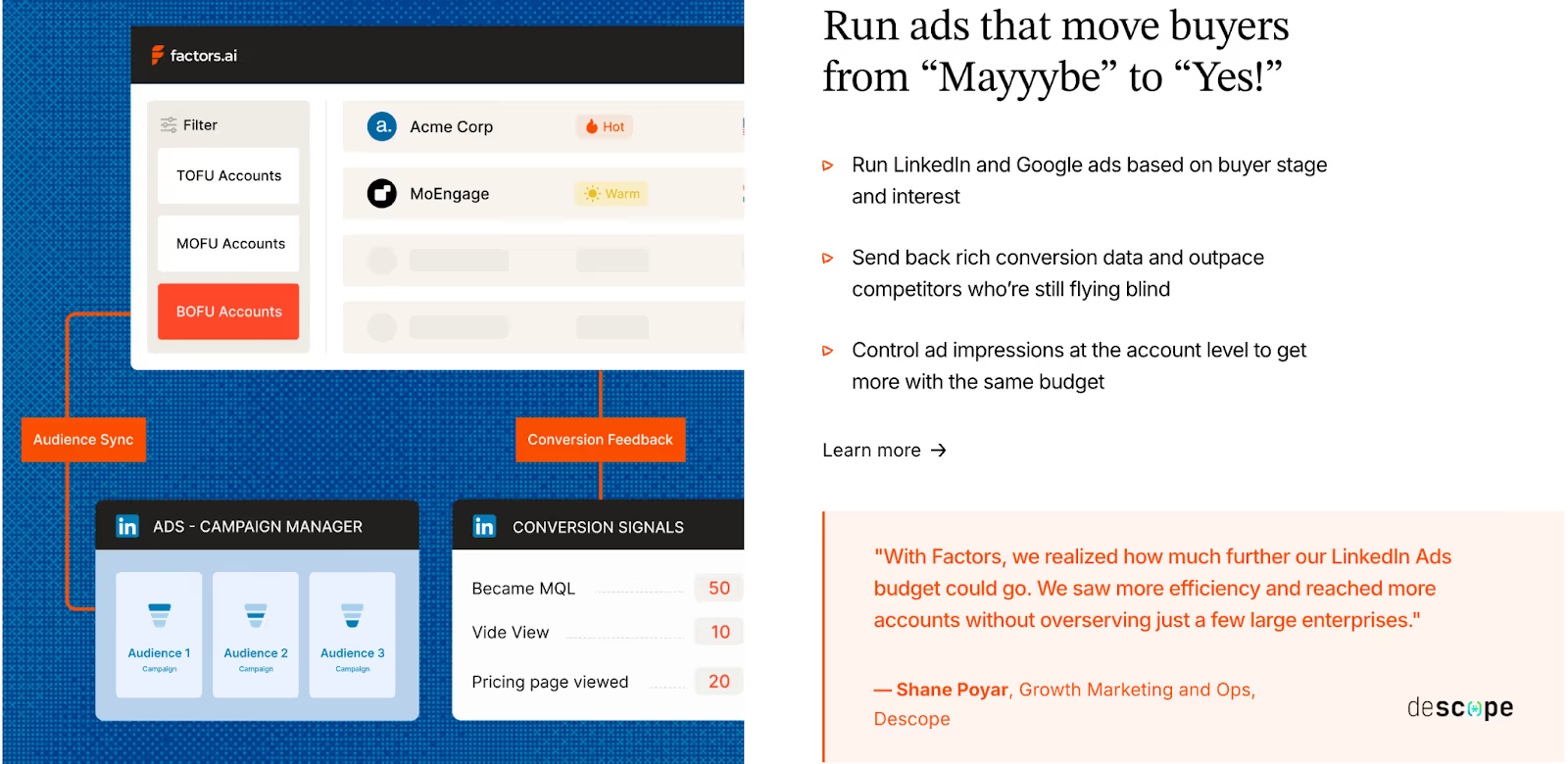
Factors approaches advertising as part of the GTM cycle, not a separate activity. The goal is to help your team reach the right accounts the moment intent appears.
Key ad capabilities include:
- Dynamic Audience Syncs
- Automatically build and refresh audiences on LinkedIn and Google based on buying intent, ICP match, or funnel stage.
- Automatically build and refresh audiences on LinkedIn and Google based on buying intent, ICP match, or funnel stage.
- Smart Retargeting
- Target accounts showing signals from multiple sources such as G2, website activity, CRM updates, or product usage.
- Ensures your ads reach the right companies at the right time.
- Conversion Feedback Loops
- When an SDR marks a lead as qualified, that data feeds back into ad platforms.
- Helps ad algorithms optimize toward accounts that actually convert.
- Google CAPI Integration
- Sends richer conversion data to Google for smarter bidding and lower wasted spend.
- Budget & Frequency Controls
- Manage impressions at the account level to avoid overserving ads to the same group.
With these features, Factors closes the gap between marketing and sales activation. It helps you spend smarter, retarget better, and turn intent into impact faster.
Warmly Ad Activation and Retargeting
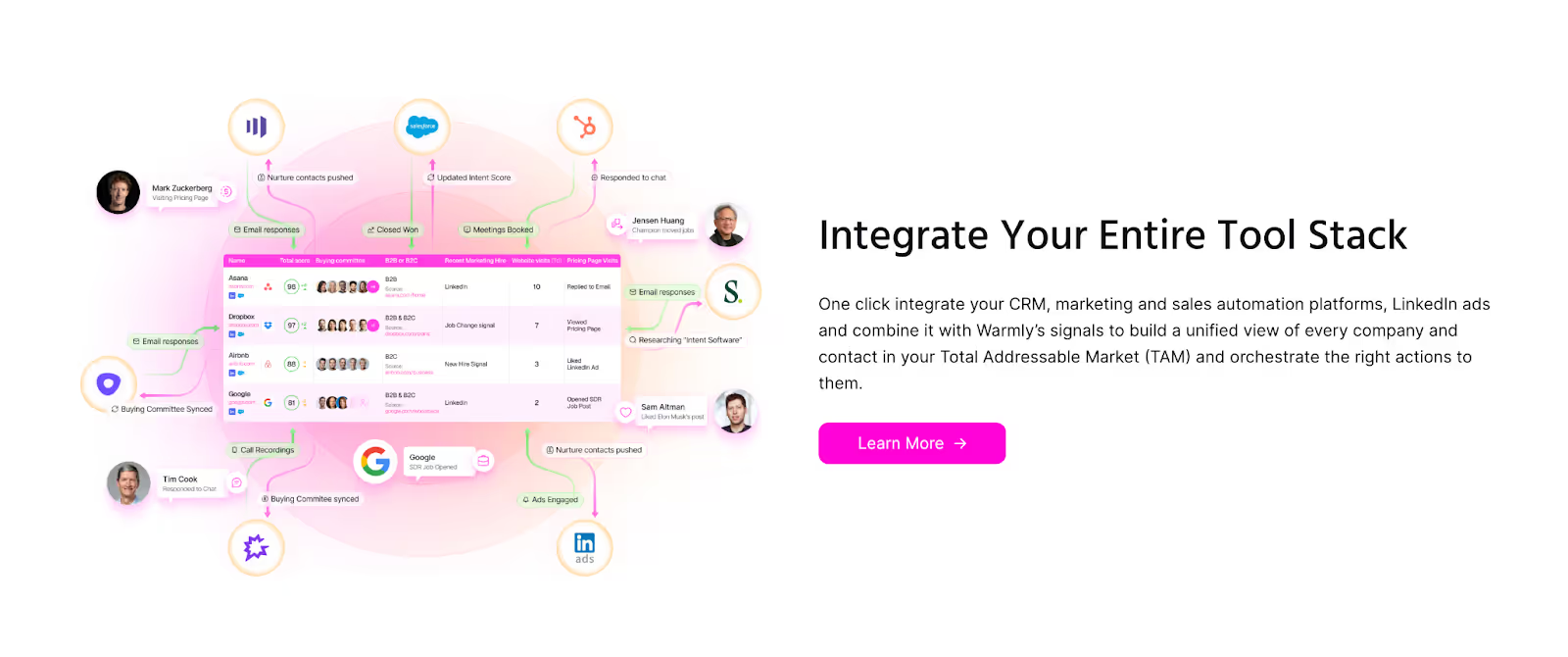
Warmly includes ad integrations but focuses mainly on real-time rep engagement rather than automated ad orchestration.
Capabilities include:
- LinkedIn Ads Integration
- Allows sales reps to see which ads visitors interacted with and engage those prospects directly.
- Keeps outreach more contextual for SDRs.
- Google Ads Integration
- Listed under marketing integrations, but there are no public details on how it handles audience updates or optimization.
Warmly’s ad setup works best for teams that want visibility into ad-driven visitors but prefer manual control over ad campaigns.
Verdict on Ad Activation & Retargeting
Warmly connects sales teams closer to ad-driven visitors, helping reps act quickly when someone engages. It’s effective for teams that prioritize immediate outreach.
Factors connects ad engagement with your full GTM motion. It automates audience syncs, optimizes spend through conversion feedback, and ensures ads reach only active, in-market accounts.
In short:
- Warmly helps you react faster.
- Factors helps you orchestrate smarter.
Factors.ai vs Warmly: Onboarding & Support
The quality of onboarding decides how quickly the system becomes useful for the team. Both Factors and Warmly help new users get started, but their styles and level of involvement are quite different.
Factors.ai Onboarding and Support
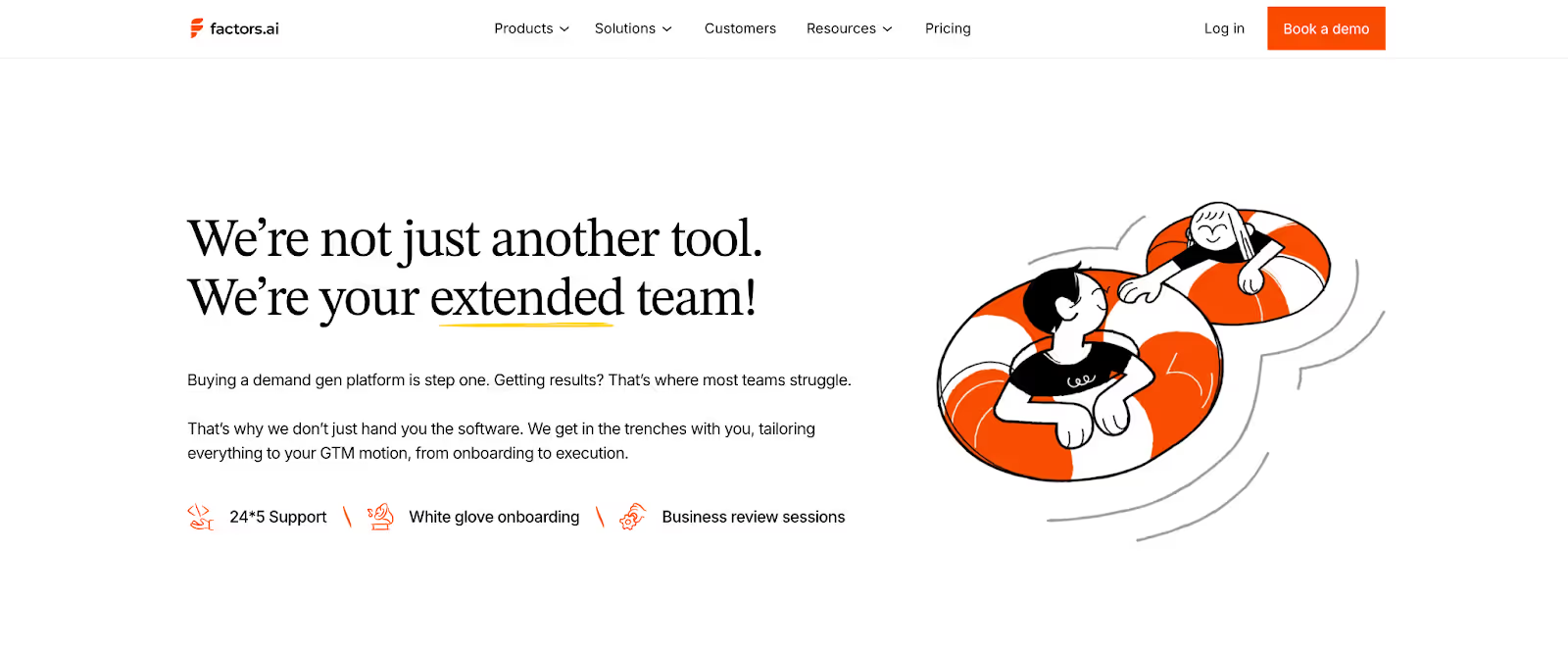
Factors builds its onboarding around your existing GTM motion. The process is detailed but smooth, designed to fit your team’s structure rather than forcing you into a predefined setup.
Here’s what it includes:
- Personalized Configuration
The onboarding starts with your ICP, funnel stages, and current processes. Each workflow, signal, and alert is mapped to how your team already operates. - Dedicated Slack Channel
A direct line connects you with your customer success manager and GTM engineers. It’s continuous support like quick answers, shared feedback, and real collaboration. - Weekly Reviews
Regular check-ins help align usage with results. These sessions track adoption, troubleshoot bottlenecks, and refine how the team uses the platform week by week. - Optional GTM Engineering Services
For teams that don’t have in-house RevOps, Factors provides an add-on service layer.
This includes:- Custom ICP modeling and GTM playbook design.
- Setup of enrichment, alert, and ad activation workflows.
- SDR enablement through post-meeting alerts, closed-lost reactivation, and buying group mapping.
- Ongoing reviews, optimization, and documentation of the GTM process.
Together, these services make onboarding feel more like partnership. The goal is to help teams set up a system that continues to perform smoothly over time.
Warmly Onboarding and Support
Warmly takes a simpler route. It aims to minimize friction and help teams start using the platform right away.
What it offers:
- Fast Setup
Connects with Slack, CRMs, and ad platforms in a few minutes. The system begins showing visitor activity immediately. - Real-Time Support
Help is available through Slack for integration or feature-related questions. - Smooth Experience
The process feels intuitive and doesn’t require training sessions or structured onboarding. It’s ideal for smaller teams or those comfortable learning by doing.
Verdict
Warmly prioritizes speed and ease. Teams can start using it almost instantly without waiting for setup cycles.
Factors provides a deeper onboarding process that’s hands-on and strategic. The white-glove support and optional GTM services turn the setup period into a foundation-building phase for the whole GTM motion.
Factors.ai vs Warmly: Compliance and Security
When GTM platforms deal with buyer data, privacy and compliance become just as important as performance. Most mid-market and enterprise teams look closely at how tools handle security certifications and data governance before moving forward with a deal.
Both Factors and Warmly maintain strong data protection frameworks, but their scope and documentation vary.
Factors Compliance and Security

Factors has built its platform to meet enterprise-level data and privacy requirements. Its certifications and practices are designed to clear procurement checks quickly and keep data handling transparent.
Key measures include:
- Global Standards
Fully compliant with GDPR and CCPA, meeting both EU and US privacy laws. - Certifications
Holds ISO 27001 and SOC 2 Type II, ensuring secure management of customer data and system operations. - Privacy-First Enrichment
Uses firmographic and behavioral signals responsibly, avoiding invasive identification methods. - Data Agreements
Provides signed Data Processing Agreements (DPAs) for customers who require documented data handling assurance.
These layers of certification and clarity make Factors suitable for teams working with enterprise clients or regulated industries where compliance is a deciding factor.
Warmly Compliance and Security
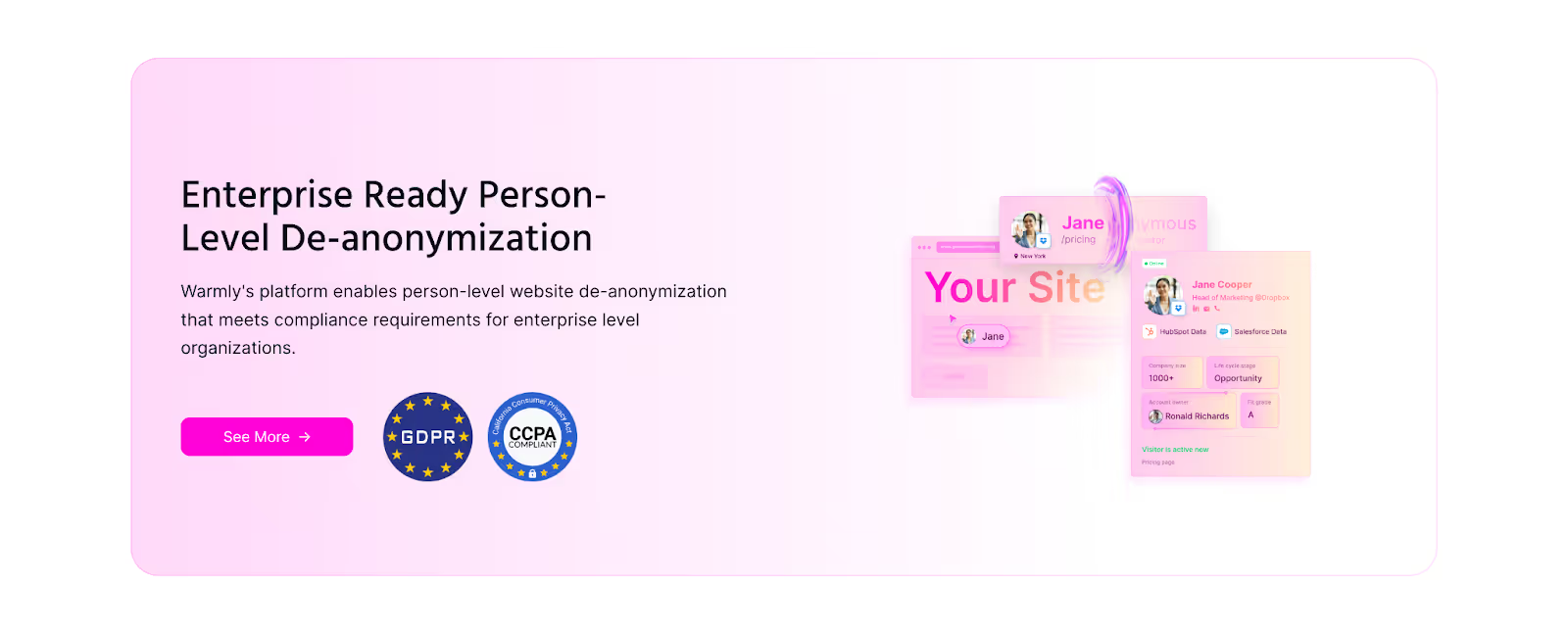
Warmly also follows recognized data protection standards and keeps its compliance aligned with major frameworks.
Key measures include:
- Privacy Coverage
Adheres to GDPR, CCPA, and the EU Data Act, giving users control over their information. - SOC 2 Certification
Audited for security and data management standards. - Data Transparency
Provides general visibility into how intent data is enriched but does not publish a dedicated DPA or detailed enrichment policy.
Warmly’s compliance setup fits well for modern SaaS teams that handle sales and marketing data responsibly, though it offers fewer public details on the structure of its data governance.
Verdict
Both platforms meet key privacy standards and are safe for use in regulated environments.
Factors’s wider certification coverage and published data agreements make it stronger for companies that undergo detailed vendor reviews. Warmly covers the essentials and aligns with major regulations, which is suitable for teams that want privacy assurance without complex legal layers.
Factors.ai vs Warmly: Which tool to choose when?
Both Factors and Warmly help GTM teams move faster with AI. They make it easier to identify intent, automate workflows, and connect marketing with sales. But as we’ve seen across the chapters, the two platforms are designed with different priorities in mind.
Here’s a short recap before we wrap up.
When Factors Makes Sense
Factors fits teams that want their entire GTM motion connected. It brings together website, CRM, ad, and product data, then uses AI to help sales and marketing work from the same source of truth.
It’s especially suited for:
- B2B SaaS and enterprise teams managing complex funnels.
- RevOps leaders who need visibility across multiple channels.
- Marketing teams running ABM campaigns across LinkedIn and Google who need better targeting and ROI visibility.
- Companies that rely on multi-touch attribution to prove ROI.
- Teams that want guided onboarding and long-term support.
- Businesses that must meet strict compliance requirements before procurement.
Factors works best when the goal is scale, not just more leads, but a cleaner and more predictable pipeline.
When Warmly Makes Sense
Warmly focuses on person-level intent and immediate engagement. It’s fast to deploy and built around AI Agents that automate outreach, nurture inbound visitors, and help SDRs personalize their approach.
It’s well suited for:
- Small to mid-sized B2B teams that want instant activity visibility.
- Startups that need to automate early-stage prospecting.
- Teams running heavy outbound campaigns through LinkedIn and email.
- Companies that prefer plug-and-play onboarding without customization.
Warmly works well when the priority is quick activation and real-time connection with prospects.
Factors.ai and Warmly cater to different GTM strategies. Factors.ai, priced from $399/month, integrates marketing and sales with features like buyer journey analytics, multi-touch attribution, and ad platform integrations (LinkedIn, Google, Facebook, Bing). It’s ideal for teams seeking a comprehensive approach with account scoring, segmentation, and workflow automation. In contrast, Warmly focuses on sales automation with real-time engagement tools like AI-powered chatbots and intent data enrichment. Starting at $700/month, it excels in on-site lead engagement but lacks deep marketing analytics. If you prioritize sales outreach, Warmly is the choice, while Factors.ai offers a more integrated marketing-sales solution.
In a nutshell…
Both platforms help GTM teams make smarter use of intent, but they serve different operating styles.
Warmly delivers speed and immediate visibility for sales-led teams.
Factors brings long-term clarity, automation, and structure for data-driven GTM functions that want to scale reliably.
If your team needs a full-funnel system that tracks, analyzes, and activates every signal, Factors aligns better with that journey.
If you want to keep things lightweight and focus on faster prospecting, Warmly fits that direction.
And if you’d like to explore other options beyond Warmly, check out this in-depth comparison of top Warmly-AI alternatives.

10 Best Leadlander Alternatives and Competitors for 2025
LeadLander serves as a dedicated website visitor analytics and reporting solution tailored for Business-to-Business (B2B) companies. Its primary focus is on the identification of anonymous website visitors, offering essential sales intelligence. By furnishing specific details about each visitor, including verified contact profiles, LeadLander transforms these anonymous interactions into actionable leads. The platform aims to expedite the sales process by showcasing the origin of valuable customers and showcasing customer journeys through website navigation.
So, why look for a Leadlander alternative?
Scenario: Some users perceive Leadlander as relatively expensive, especially for businesses with limited budgets.
Consideration: Evaluate alternative solutions with pricing models that align more closely with your budget constraints while ensuring they meet your specific requirements.
- Integration Challenges:
Scenario: Users have reported difficulties integrating Leadlander with specific platforms, limiting the utility of collected data.
Consideration: Prioritize alternatives that offer seamless integration with your existing tech stack to maximize the efficiency of data utilization.
- Data Accuracy Concerns:
Scenario: While providing accurate tracking data, users express concerns about the precision of metrics, such as the count of unique visitors.
Consideration: Look for alternatives with a strong reputation for data accuracy and quality, ensuring reliable insights for informed decision-making.
- User Interface Usability:
Scenario: The user interface of Leadlander is criticized for its appearance, and some users, especially those with limited technical experience, find it challenging to navigate.
Consideration: Explore alternatives with intuitive and user-friendly interfaces to enhance the overall user experience and facilitate independent navigation.
- Support Responsiveness:
Scenario: Timely support may pose challenges, with extended waiting times and instances where support tickets remain unanswered.
Consideration: Prioritize alternatives with dedicated and responsive support services to ensure efficient problem resolution and maximize the return on investment.
- Feature Enhancement and User Feedback Integration:
Scenario: Users have expressed the need for ongoing improvements in Leadlander's features and user interface.
Consideration: Consider alternatives that actively integrate user feedback for enhancements and demonstrate a commitment to refining features over time.
- Specific Feature Requirements:
Scenario: Your business may have specific feature requirements not fully met by Leadlander.
Consideration: Identify alternatives that offer the specific features crucial for your business goals and tailor your decision based on feature alignment.
{{INLINE_CTA_A}}
Here are some tools we’ll compare today
- LeadMagic
- Factors.AI
- Warmly
- Albacross
- CANDDi
- Clearbit
- Lead Forensics
- Demand
- ZoomInfo
- Dealfront
Factors to consider in the alternative
- Pricing Structure:
Evaluate the pricing plans of alternative solutions to ensure they align with your budgetary constraints. Look for transparent pricing models that cater to your business needs without compromising essential features.
- User Interface Usability:
Prioritize platforms with user-friendly interfaces, especially if your team includes members with varying technical expertise. A visually intuitive and easily navigable interface contributes to a smoother user experience.
- Performance and Stability:
Assess the performance track record of alternative platforms to ensure stable operations and minimal disruptions. A reliable platform contributes to consistent and uninterrupted usage, enhancing overall efficiency.
- Integration Capabilities:
Check the integration capabilities of alternative solutions, especially with the platforms your business relies on. A solution that seamlessly integrates with a variety of tools ensures a cohesive workflow and maximizes data utility.
- Data Accuracy and Precision:
Prioritize alternatives that prioritize data accuracy and provide precise metrics. Reliable tracking data is crucial for making informed decisions, and a platform that delivers accurate insights enhances the value of collected data.
- Support Services:
Assess the responsiveness and quality of support services offered by alternative platforms. A solution with dedicated and effective support mechanisms ensures timely assistance and efficient problem resolution.
- Alignment with Business Size:
Ensure that the pricing plans of alternative solutions align with the size and budget constraints of your business. Look for scalable solutions that cater to the specific needs of enterprises similar in size to yours.
- Feature Set and Functionality:
Compare the features and functionalities of alternative platforms to ensure they meet your business requirements. Look for solutions that offer a comprehensive set of tools and capabilities relevant to your goals.
- Trial Period and Flexibility:
Explore platforms that offer trial periods or free plans to allow for hands-on experience. This ensures that the chosen alternative meets your expectations and offers the flexibility needed for successful implementation.
- User Feedback and Reviews:
Research user reviews and feedback for alternative solutions to gain insights into the experiences of other businesses. Real-world experiences can provide valuable information on the platform's strengths and potential shortcomings.
{{INLINE_CTA_A}}
Before we start off, here’s a little about Leadlander

Leadlander Features
- B2B Website Traffic Identification:
Leadlander focuses on the identification of corporate-based website traffic, providing valuable insights into the companies exploring business websites.
- Verified Contact Profiles:
The platform offers verified contact profiles, encompassing details such as name, email, title, and other critical data points for employees at companies exploring your website. This facilitates actionable connections and informed engagement.
- Analytics and Detailed Reporting:
Leadlander delivers specific details about each website visitor, transforming anonymous visits into actionable contacts. The platform provides insights into customer journeys, connections to conversions, and valuable intent data.
- Sales Platform Integration:
Seamlessly integrating with widely used platforms like Salesforce, Mailchimp, HubSpot, and Slack, Leadlander streamlines the sales process for optimal effectiveness.
- Responsive Support Services:
Leadlander offers dedicated and responsive service and support to maximize the return on investment for users, ensuring efficient utilization of the platform.
- User-Friendly Interface:
Facilitating real-time delivery of actionable data through customized reports, alerts, and online access, Leadlander provides an easy-to-use interface for convenient utilization.
- Intent and Corporate Data Access:
The platform supplies intent data to unveil individual prospects and their details, along with access to key contacts at prospect companies.
Leadlander Pricing
Leadlander offers two distinct pricing plans to cater to varying business needs. The Small Business Plan, priced at $900 annually or $89 per month, is tailored for enterprises with moderate requirements. It includes features such as up to 100 leads per month, tracking for one domain, access to the contact network, unlimited user accounts, and 12 months of data storage.
Leadlander Limitations
- Integration Challenges:
Some users encounter difficulties integrating Leadlander with specific platforms, restricting the utility of collected data.
- Data Accuracy Concerns:
While providing accurate tracking data, some users express concerns about the precision of metrics, such as the count of unique visitors.
- User Interface Usability:
Users, especially those with limited technical experience, find the interface of Leadlander challenging to navigate and comprehend.
- Technical Support Quality:
Issues with the quality and availability of technical support have been reported, making it challenging to receive assistance when needed.
- Affordability Concerns:
While considered cost-effective, some users perceive Leadlander as expensive, particularly for businesses with limited budgets.

1. LeadMagic

LeadMagic Features
- Visitor Identification for Timely Sales and Marketing Communication:
LeadMagic excels in identifying noteworthy accounts visiting a website, ensuring timely communication to both sales and marketing teams.
- Intelligent Lead Scoring for Targeted Approaches:
The platform intelligently assesses and prioritizes leads based on engagement levels. This intelligent lead scoring system promotes a targeted approach to the most promising prospects, improving overall lead management.
- Streamlined Lead Nurturing Campaigns Through Automation:
LeadMagic streamlines lead nurturing campaigns through its automation capabilities, facilitating the automated nurturing of leads. This contributes to building relationships with potential clients more efficiently and systematically.
- Customized Lead Generation Strategies Covering SEO, Social Media, and PPC:
Businesses benefit from LeadMagic's customized lead generation strategies, encompassing SEO, social media marketing, and PPC advertising. This ensures optimal visibility and engagement for the brand across diverse digital channels.
- Comprehensive Digital Marketing Solutions for Optimal Brand Visibility:
LeadMagic provides comprehensive digital marketing solutions that cover various aspects, including search engine optimization (SEO), social media engagement, and pay-per-click (PPC) advertising. This approach ensures optimal brand visibility and engagement in the digital landscape.
LeadMagic Pricing
LeadMagic's pricing is determined by the monthly identification of companies, starting at an upfront annual fee of $139.


LeadMagic Limitations
- Currency Limitation and Future Billing Considerations:
Currently, LeadMagic accepts payments exclusively in USD, posing a limitation for users who prefer other currencies. However, there are indications of potential future considerations for billing in AUD, offering prospects for expanded payment options.

- Interface Improvement and Active User Feedback Integration:
LeadMagic acknowledges the need for interface improvement and actively integrates user feedback for enhancements. This commitment to refining the user interface ensures a more user-friendly experience based on ongoing user input.

- Challenges in the Onboarding Process with Cleanliness Concerns:
Users have reported challenges during the onboarding process with concerns about data cleanliness. Addressing these issues is crucial for users in the initial stages of adopting the platform, emphasizing the importance of a smooth onboarding experience.
2. Factors.AI

Factors.AI Features
- Advanced Account Identification:
Factors.AI, in collaboration with 6sense, leverages enterprise-grade IP data to identify up to 64% of anonymous companies. This includes firmographics like employee headcount, industry, and location, coupled with website activity metrics such as page visits and scroll-depth. Real-time Slack alerts are configured based on firmographic features and website behavior, keeping teams informed of high-intent visitors.
- Holistic Account Timelines:
Integration with campaigns, websites, and CRM data allows Factors.AI to furnish end-to-end account-level timelines across the customer journey. Users gain insights into touchpoints influencing accounts from initial visitors to paying customers.
- Comprehensive Analytics Features:
ABM Analytics:
Unifying reporting across ad platforms, CRMs, and CDPs to support campaign and website analytics at an account level.
Path Analysis:
Enabling the viewing of aggregate user behavior and identifying conversion and drop-off points.
Multi-Touch Attribution:
Connecting go-to-market initiatives to the pipeline, optimizing resource allocations, and proving marketing ROI.
Factors.AI Pricing
Factors.AI has a free plan, and no credit card is required, the basic plan starts at $149 per month (billed annually). Learn more about Factors pricing here: factors.ai/pricing
Factors.AI Limitations
- Documentation and Educational Resources:
Although there are existing materials available, insights from user reviews highlight the demand for more comprehensive guides. Providing clear and instructive documentation is crucial to empower users in fully utilizing the features of Factors.AI, fostering a more user-friendly environment.

- User Interface Enhancement:
User feedback suggests an opportunity to enhance the user interface by improving intuitiveness, navigation clarity, and the inclusion of visual cues. A more user-friendly experience is essential, especially for new users, contributing to a smoother onboarding process and heightened overall satisfaction.

{{INLINE_CTA_A}}
3. Warmly

Warmly Features
- Comprehensive Access to Enrichment and Intent Data:
Warmly provides users with extensive access to both enrichment and intent data. This encompasses a rich source of information regarding potential leads, allowing businesses to gain a deeper understanding of visitor profiles and tailor engagements accordingly.
- Unified Buyer Experience Integrating Intent Insights for Effective Engagement:
The platform focuses on creating a unified buyer experience by seamlessly integrating intent insights into the engagement process. By aligning the understanding of visitor intent with immediate actions, Warmly enhances the effectiveness of engagements with decision-makers.
- Autonomous Sales Orchestration Bridging the Gap Between Intent Signals and Outreach:
Warmly facilitates autonomous sales orchestration by bridging the gap between intent signals and outreach efforts. This feature ensures that sales teams can efficiently leverage identified intent signals to engage with prospects, optimizing competitiveness in the market.
- Effortless Integration with Existing Tools, Converting High-Intent Visitors into Leads:
Warmly prioritizes user convenience through effortless integration with existing tools. This functionality is designed to convert high-intent website visitors into leads seamlessly, ensuring a smooth transition from identification to engagement.
- Orchestrated Workflows Triggered by Site Activity for Automated Prospecting Campaigns:
The platform enables orchestrated workflows that are triggered by site activity. This automation feature allows for the seamless execution of prospecting campaigns based on real-time actions, ensuring a proactive and timely approach to lead generation.
Warmly Pricing
Warmly offers a free account with access to 500 leads per month. The Business plan, starting at $805 per month, provides users with access to 25,000 leads monthly.

Warmly Limitations
- Recognition Challenges with Distinguishing Valuable Leads from Bot Traffic:
The platform acknowledges challenges in accurately distinguishing valuable leads from bot traffic. This aspect highlights the importance of refining recognition mechanisms to ensure a more precise identification process.

- Limitations in User Identification, Suggesting Potential Improvements in Code Additions:
Users have reported limitations in identifying every user, indicating the need for potential improvements. Suggestions, such as code additions to marketing emails, have been proposed to enhance user identification and provide a more comprehensive view.

- Difficulty in Filters, Displaying Existing Customers as Leads:
Users have encountered occasional difficulty in filters, with instances of existing customers being displayed as leads. This points to the need for refining filter functionalities to ensure accurate and reliable differentiation between existing customers and new leads.

- Ongoing Development Expected in Reporting Features for Enhanced CRM Integration:
Anticipated ongoing development in reporting features suggests a commitment to enhancing CRM integration. Users can expect improvements in the platform's reporting capabilities, contributing to more informed decision-making processes and seamless integration with CRM systems.

4. Albacross

Albacross Features
- Identification and Insights:
With its base in Sweden, Albacross, a leading company specializing in visitor identification and intent data, collaborates with a vast network of over 10,000 companies. Albacross stands out in its ability to pinpoint anonymous accounts, providing comprehensive firmographic details and a deep understanding of visitor intent.
- Customization Capabilities:
Albacross seamlessly integrates with popular personalization tools such as Optimizely and VWO. This unique capability empowers businesses to tailor website content dynamically based on individual visitor profiles, enhancing the overall user experience.
- Strategic Display Advertising:
Albacross introduces a distinctive feature by enabling the creation and monitoring of display ads directly within its platform. Forming partnerships with reputable publications like The New York Times and Daily Mail, Albacross facilitates the strategic deployment of account-level targeted ads, expanding the reach and impact of advertising efforts.
Albacross Pricing
Albacross also has a free 14-day trial plan. The Self-Service Package, available at a monthly rate of €79, presents a variety of features aimed at elevating your user experience. Under this plan, you gain the ability to identify a maximum of 100 companies, monitor visitor activities, and leverage advanced segmenting and filtering functionalities.

Albacross Limitations
- Limited Interface Customization:
Certain users express a limitation in the app's interface, highlighting that downloadable CSV reports provide more in-depth insights than the app's native interface. The ability to customize the interface would be advantageous, allowing users to choose and display specific columns in alignment with their preferences.

- Concerns with Integrations:
Feedback from users indicates potential challenges with integrations, particularly with CRMs like Salesforce. Despite available workarounds such as Zapier, this poses a potential concern for B2B teams aiming for streamlined workflows and seamless connectivity.

{{INLINE_CTA_A}}
5. CANDDi

CANDDi Features
- Individualized Account Identification Capabilities
CANDDi goes beyond identifying companies, extending its capability to recognize individual visitors to your website. This unique feature empowers personalized follow-ups and enables tailored pitches, fostering a more targeted and effective engagement strategy with potential prospects.
- Helps Convert Warm Leads
Leveraging CANDDi's advanced visitor tracking solution sheds light on the 98% of website visitors who may not initially inquire. This facilitates the conversion of warm, qualified leads directly into your sales team’s inbox and CRM, amplifying your lead generation and sales initiatives.
- Real-Time Alert Mechanism
CANDDi operates in real-time, merging IP tracking with cookie tracking to ensure no sales opportunities go unnoticed. Whether prospects are browsing from their office or home, you receive immediate alerts the moment crucial activities unfold on your website.
- Precision in Attribution Measurement
It offers detailed insights into visitor attribution, showcasing the specific origin of each visitor, including the marketing channel and campaign. This granular information empowers you with the knowledge of what drives conversions, facilitating more informed decision-making for your marketing endeavors.
CANDDi Pricing
Currently, CANDDi does not offer a free plan. However, users can sign up for trial plans for each of their plans. The Starter Plan starts at $249 per month + VAT.

CANDDi Limitations
- Compatibility with Apple Macs:
Currently, there's a limitation in functionality on Apple Macs. While it's anticipated that improvements are in progress, users on Mac devices may encounter constraints in accessing certain features.

- Interface Intuitiveness:
The platform's interface lacks intuitiveness, making it challenging for users to navigate independently. Users often find themselves relying on assistance from their account manager for guidance, which may impact the user experience.

- Form Tracking Code Application:
Applying the form tracking code is a complex process, requiring substantial effort and collaboration with a web developer. Users have reported spending significant time, approximately four hours, to integrate the tracking code, indicating a potential area for improvement in user-friendliness.
- Guided Platform Usage:
Enhancements in the platform could include prompts or guides to assist users in understanding and maximizing the utility of certain features. This would contribute to a more user-friendly experience, particularly for those exploring the platform independently.

6. Clearbit

Clearbit Features
- Clearbit's Business Targets:
Clearbit's Business Targets feature allows businesses to explore every B2B company on the internet. Going beyond basic target account lists, it enables the creation of a comprehensive audience comprising all potential purchasing companies. The Business Targets tool is instrumental in understanding the genuine B2B target market.
- Intent Identification and Conversion Pipeline:
Clearbit's solution aids in identifying anonymous website visitors, revealing buying intent from high-fit companies. This capability facilitates prompt action to convert intent into a pipeline, effectively transforming website visitors into potential leads and customers.
- Access to Validated B2B Contact Repository:
The platform grants access to a global B2B contact repository housing over 30 million validated contacts. With extensive coverage across the US, APAC, and EMEA, businesses can reach a broad audience of potential prospects. The contacts' deliverability is assured, providing accurate B2B contact data to support the conversion of intent into a pipeline.
- Smooth Integration with Salesforce:
Clearbit seamlessly integrates with Salesforce, allowing effortless data export to the Salesforce Customer Platform. This integration ensures immediate deduplication of data, making it campaign-ready and offering a streamlined prospecting experience.
Clearbit Limitations
- Affordability Concerns:
Some users express concerns about the pricing, deeming it relatively high, especially for early to mid-stage startups. Beyond the cost aspect, users note that credits are often quickly depleted, necessitating additional purchases for more detailed information. This limitation may impede users seeking thorough exploration of the available features and data.


- Intermittent Performance Challenges:
A notable drawback includes occasional lag or unexpected closures without prior notification in specific situations. These unpredictable performance issues may cause interruptions and inconvenience, affecting the overall reliability and user experience of the application.

- Feature Comparison with LinkedIn Sales Navigator:
Some reviews highlight a potential drawback in the form of missing features, such as the ability to InMail prospects and receive real-time notifications for critical decision-making updates within companies. This absence may be viewed as a limitation when compared to similar platforms.
- Limited Customization Options:
The inability to customize the dashboard restricts the capacity to tailor the user interface according to individual preferences. This indicates potential room for improvement in aligning with industry standards.

{{INLINE_CTA_A}}
7. Lead Forensics

Lead Forensics Features
- Visitor Activity Tracking:
Efficiently monitor and document the actions of both companies and individual visitors engaging with a website.
- Contact Details Disclosure:
Reveal pertinent contact details of website visitors, enabling timely and informed outreach initiatives.
- Advanced Lead Scoring:
Implement a robust lead scoring system based on the behavior of website visitors, ensuring an effective prioritization mechanism for sales and marketing teams.
- CRM and Marketing Integration:
Seamlessly integrate with CRM systems and marketing automation tools, fostering a cohesive and streamlined workflow for enhanced efficiency.
- Real-Time Engagement Notifications:
Offer real-time notifications to facilitate immediate engagement with high-potential leads, ensuring timely and personalized interactions.
- Comprehensive Analytics and Reporting:
Provide detailed analytics and comprehensive reporting, offering valuable insights into visitor patterns and behavior for informed decision-making.
Lead Forensics Pricing:
Specific pricing details are not available, but Lead Forensics offers Essential and Automate plans.

Lead Forensics Limitations:
- User Interface Critique:
Users have voiced criticism regarding the unintuitive nature of the user interface, particularly in areas such as analysis, dashboards, and filters. This may pose challenges in terms of user experience.

- Navigation Challenges Across Domains:
Reports of navigation difficulties across multiple domains have been noted, impacting the overall user experience. Users have encountered challenges when moving between different domains within the platform.

- Cost Concerns for Small Businesses:
Smaller businesses have expressed concerns about the costs associated with the platform, suggesting potential misalignment with budget constraints. The pricing model may pose challenges for businesses operating within limited financial parameters.

8. Demand

Demand Features:
- Anonymous Account Identification:
Demand excels in identifying and engaging with B2B website traffic identification, providing a robust foundation for lead nurturing. The platform's capabilities extend beyond mere identification, fostering strategic interactions to nurture potential leads effectively.
- LinkedIn Automation for Personalized Outreach:
A standout feature of Demand is its advanced LinkedIn automation, empowering users with tools for personalized outreach and streamlined demo bookings. The platform facilitates seamless communication on LinkedIn, ensuring tailored engagement that resonates with target audiences.
- Technology Signals Analysis:
Demand offers sophisticated technology signals analysis, enabling businesses to tailor their engagement strategies based on the technology usage patterns of their prospects. This feature enhances targeted engagement, ensuring that interactions align with the technological preferences of the target audience.
- Automated Sentiment Analysis and CRM Sync:
Efficient lead management is a cornerstone of Demand's features. The platform incorporates automated sentiment analysis, providing insights into prospect sentiments. Additionally, seamless CRM sync ensures that these insights contribute to a well-informed and streamlined lead management process.
- AI-Powered Sales Assistant:
Demand's AI-powered sales assistant stands out as a valuable tool for personalized outreach and improved acceptance rates. Leveraging artificial intelligence, this feature augments the effectiveness of outreach efforts, contributing to higher acceptance rates and enhanced overall engagement.
Demand Pricing
Demand offers three plans, starting from $59/user/month, with a free 7-day trial.

Demand Limitations:
- Support Responsiveness:
Timely support may pose challenges, with extended waiting times and instances where support tickets remain unanswered for prolonged periods.
- Effectiveness of Support:
Support responses, when received, may not always offer immediate solutions, often requiring extensive back-and-forth communication for effective problem resolution. Instances of non-responsive support when faced with queries lacking a straightforward answer have been reported.
- Enhancement of Knowledge Base:
User feedback highlights the demand for a more comprehensive knowledge base, aiming to facilitate self-help and ultimately improve the overall user experience by providing in-depth resources.
- User Interface and Performance:
Criticism is directed at the UI's aesthetics, and occasional sluggishness could impact the user experience, despite overall positive feedback on functionality. Suggestions for refining the UI for a more visually appealing and responsive interface are noted.

- Streamlining Manual Tracking:
Users observe a manual process for excluding personal emails from CRM tracking, indicating an opportunity for improvement in automation to streamline this aspect of the user experience.

9. ZoomInfo

ZoomInfo Features
- Sales Prospecting Software:
ZoomInfo provides B2B sales prospecting software to help businesses identify and reach their next best customer. It uses data-driven insights and buying signals to reveal ready-to-buy companies, ultimately empowering sales teams to define markets and discover potential buyers effectively.
- Contact and Company Data:
With access to the largest B2B contact database of 70M+ direct dial phone numbers and 174M+ verified email addresses, ZoomInfo's contact and company data feature allows businesses to build an account universe based on their Ideal Customer Profiles. This enables them to reach decision-makers and key contacts more efficiently.
- Buyer Intent:
ZoomInfo's buyer intent service helps businesses identify and reach prospects at the beginning of their buyer's journey by tracking companies researching solutions like theirs across the web. This feature provides valuable insights for early engagement and lead generation.
- B2B Website Traffic Identification:
By allowing businesses to discover and connect with decision-makers from companies exploring their business website, ZoomInfo's website visitor tracking feature enhances the ability to engage with potential leads.
- Conversation Intelligence:
The platform offers conversation intelligence tools to analyze customer calls, meetings, and emails. This analysis helps drive process changes that impact the bottom line, making every interaction count.
- Engagement:
ZoomInfo helps generate and analyze interactions across communication channels, including sales calls, email and phone outreach, and business website engagements, to create more conversations that convert customers.
- Email & Phone Automation:
Through its native phone dialer and email tool, ZoomInfo enables businesses to build and execute multi-touch sales cadences, streamlining the outreach process.
- Website Chat for Sales:
ZoomInfo Chat is an easy-to-use, data-driven chatbot tool designed to shorten the sales cycle. Businesses can set real-time lead alerts to engage best-fit buyers or automate lead-qualifying interactions to free up their internal team.
- Contact Tracking:
Businesses can easily track their account champions and key contacts using ZoomInfo's contact tracking feature, allowing them to stay informed of their best relationships and potential new opportunities.
- Integrations:
ZoomInfo's comprehensive data and innovative technology can be integrated with existing tools, maximizing sales productivity and automating manual processes based on relevant external and internal activities.
- Workflows:
The platform allows businesses to act faster on critical market signals by automating outreach and sales activities, from buyer intent to funding updates and technology installations.
- Lead Enrichment:
With ZoomInfo Enrich, businesses can clean and standardize their data while capturing and appending fresh, precise information into their database, ensuring high-quality data on new and existing records.
{{INLINE_CTA_A}}
ZoomInfo Pricing
While specific pricing is not available, ZoomInfo has three plans.

ZoomInfo Limitations
- User Interface Limitations:
ZoomInfo's user interface is noted for areas that could be improved, including the ability to change and move columns, as well as export data to Excel. Some updates require intervention from the organization's Salesforce, IT, or ZoomInfo Admin, limiting individual users' autonomy. While recognizing the importance of Role-Based Permissions, users express a desire for Sales Reps to have a mechanism to "suggest changes" for their Admin.

- Contact Data Accuracy Challenges:
Identifying outdated or incorrectly updated contacts has been a challenge for some users, especially when those contacts are not utilizing LinkedIn effectively or maintain a limited online presence. This difficulty can impact the effectiveness of outreach efforts.

- Chrome Extension Stability:
Users report occasional issues with the stability of the ZoomInfo Chrome extension, noting instances of random sign-outs. While this has also been experienced on the website, users mention that it hasn't been as prevalent recently. Such interruptions may impact the seamless use of the platform.

10. Dealfront (Formerly Echobot and Leadfeeder)

Dealfront Features
- Advanced Website Visitor Tracking:
The platform offers robust capabilities for tracking website visitors, providing comprehensive insights into their behavior. Users can gain a detailed understanding of how visitors interact with the website, helping to tailor engagement strategies.
- Lead Scoring and Qualification Tools:
Equipped with tools for lead scoring and qualification, the system enables users to prioritize leads based on their behavior. This feature facilitates efficient lead management by focusing on high-potential prospects.
- Seamless Integration with CRM and Marketing Automation:
The platform seamlessly integrates with CRM and marketing automation platforms, streamlining processes and ensuring a cohesive approach to customer relationship management. This integration enhances workflow efficiency and data consistency.
- Real-Time Notifications for Strategic Follow-Ups:
Users benefit from real-time notifications, enabling prompt and strategic follow-ups with target leads. This feature ensures timely engagement, increasing the chances of converting leads into customers.
- Comprehensive Visitor Information:
The platform provides detailed information about website visitors, contributing to enhanced prospect identification. Users can access a wealth of data to tailor their outreach efforts and create personalized interactions.
- Custom Feeds and Filtering Options:
To further assist users in analyzing visitor data, the platform offers custom feeds and filtering options. This functionality allows for the segmentation of visitor data, providing a more granular understanding of different audience segments and their behaviors.
Dealfront Pricing:
They offer a free plan with no time limit, and the paid plan starts at € 198 per month, paid annually.

Dealfront Limitations:
- Limitation in Tracking LinkedIn Ad Visits:
Users have reported an inability to effectively track companies visiting the website from LinkedIn ads, particularly on mobile devices. This limitation hinders comprehensive visibility into the impact of LinkedIn advertising efforts.

- Persistent Integration Errors with Microsoft CRM:
The platform has faced ongoing integration errors with Microsoft CRM for approximately a year, affecting usability for users relying on this specific CRM system. The persistence of integration issues raises concerns about the platform's compatibility with Microsoft CRM.
- Incorrect Assignment of Dealfront Visits in CRM:
Users have experienced issues with the correct assignment of Dealfront visits in CRM, rendering this feature unusable. This inaccuracy in data assignment poses challenges for users who depend on precise tracking and attribution.
- Service and Error Resolution Concerns:
Concerns have been raised regarding the service and resolution of errors within the platform. Users have reported challenges in error resolution, prompting some to explore alternative solutions to address these issues. The perceived issues in service and error handling contribute to uncertainties about the platform's reliability.

- Manual Processes and Interface Absence:
Users have expressed dissatisfaction with Dealfront Target, citing manual steps as a significant drawback. The absence of an interface with the CRM necessitates manual intervention, leading to time-consuming processes that could be streamlined with a more integrated solution.
- Challenges in Data Timeliness and Quality:
Dealfront Target faces challenges related to data timeliness and overall data quality, which may fall short of user expectations. Users have reported instances where contact data did not meet the desired standards, highlighting potential areas for improvement in maintaining accurate and up-to-date information.

As businesses scout for Leadlander alternatives, their decision would depend on their specific needs but may include budget considerations, and preferences of businesses. Thoroughly evaluating the features, limitations, and user feedback for each alternative is crucial in making an informed decision that aligns with the goals of the organization.
{{INLINE_CTA_A}}
If you're seeking alternatives to LeadLander for website visitor tracking and lead generation, here are several robust platforms to consider:
1. Lead Forensics
A B2B tool that identifies anonymous website visitors, providing detailed company and contact info. It integrates with CRM systems and offers real-time alerts, making it ideal for converting website traffic into leads.
2. Factors.ai
Combining website visitor tracking with advanced analytics and account-based marketing, Factors.ai captures cross-channel intent signals and automates workflows, enhancing sales and marketing efficiency.
3. Clearbit
Clearbit enriches visitor data with real-time company insights. It integrates with marketing platforms for personalized outreach and lead scoring, boosting targeted marketing efforts.
4. Visitor Queue
Visitor Queue identifies companies visiting your website and provides key contact info. Its user-friendly interface and affordable pricing make it a great choice for small to mid-sized businesses.
5. Albacross
Albacross offers lead generation and ABM solutions by converting anonymous visitors into actionable leads. It provides visitor behavior insights and integrates with major CRM systems for efficient lead management.
When selecting an alternative to LeadLander, consider factors like integration capabilities, data accuracy, interface, support, and pricing to find the best fit for your business.

Factors vs. Lead Forensics: Which Lead Generation Tool is Best for Your Business?
When choosing the right lead generation and visitor tracking platform, businesses often compare popular tools like Lead Forensics and Factors.ai. Both platforms aim to help companies identify and track website visitors to convert them into leads, but their approaches differ significantly.
In this blog, we will compare Lead Forensics vs. Factors and highlight why Factors.ai stands out as the superior, more comprehensive alternative, and provide a detailed feature comparison to help you choose the best solution for your entire GTM team.
TL;DR
- Both Factors and Lead Forensics are valuable tools for B2B marketing, but they cater to different aspects of the GTM strategy.
- While Lead Forensics is primarily focused on visitor identification and basic lead generation, Factors goes far beyond with a holistic approach, offering advanced analytics, intent signals, attribution tracking, and features that support the entire GTM team.
- Factors not only provides more accurate data but also integrates seamlessly with platforms like LinkedIn, G2, and more, delivering greater value through its broad functionality and flexible pricing.
- For businesses seeking a comprehensive, data-driven solution that empowers all functions of the GTM team, Factors is the superior choice, offering far more than just visitor identification.
Compare: Lead Forensics vs. Factors
Overview of Lead Forensics

Lead Forensics is a widely used B2B lead generation platform that helps businesses identify anonymous website visitors and provides actionable insights. By tracking website visitors and associating them with company details, Lead Forensics allows businesses to reach out to potential customers more efficiently.
Key Features of Lead Forensics:

- Website Visitor Identification: Identifies companies visiting your website and provides detailed data, including company size and revenue.
- Real-Time Notifications: Sends instant alerts when a high-value prospect visits your site, enabling sales teams to act quickly.
- Detailed Analytics: Offers insights into visitor behavior, which helps sales and marketing teams tailor their outreach efforts.
- CRM Integration: Seamlessly integrates with popular CRMs like Salesforce to manage and track leads effectively.
- Lead Scoring: Allows businesses to rank leads based on the likelihood of conversion, prioritizing efforts for high-potential prospects.
Overview of Factors

Factors is a marketing analytics platform designed to help businesses understand customer behavior, generate qualified leads, and optimize their marketing strategies. Unlike Lead Forensics, which focuses mainly on visitor identification, Factors provides deeper insights into the entire customer journey by using behavioral analytics and machine learning.
Key Features of Factors:

- Sales Intelligence (SI): Delivers actionable insights by identifying high-intent prospects, enabling GTM teams to focus on the most promising leads.
- LinkedIn Ads Integration: Seamlessly integrates with LinkedIn Ads, allowing businesses to optimize their ABM campaigns and reach the right audience with precision targeting.
- Account-Based Marketing (ABM): Empowers GTM teams to execute highly effective ABM strategies by providing detailed account-level insights and engagement tracking.
- Web De-anonymization: Uncovers anonymous website visitors, giving marketing and sales teams the ability to identify and engage potential customers early in the buying journey.
- Scalability: Built to support your business as it grows, providing flexible, scalable solutions that cater to companies of all sizes.
Detailed Feature Comparison
1. Visitor Identification and Tracking
Lead Forensics excels at identifying companies behind website traffic by matching IP addresses to businesses. This feature is handy for B2B companies focused on targeting specific industries or companies. It allows businesses to know which companies are visiting their site but may raise privacy concerns as it uses IP-based tracking.
Factors, by contrast, focuses on behavioral analytics. It provides anonymized insights into user behavior across multiple touchpoints, enabling businesses to understand how customers engage with their websites, emails, or social media content. Factors' use of anonymized data complies with stringent privacy regulations like GDPR, making it more suitable for businesses that prioritize data protection.
2. Data Privacy and Compliance
Data privacy is increasingly becoming crucial when choosing a lead generation platform. Lead Forensics operates by identifying companies using IP addresses, which could raise issues in regions with strict data protection laws, such as Europe under GDPR.
In contrast, Factors focuses on privacy-conscious data collection. Using anonymized behavioral data ensures compliance with strict privacy regulations like GDPR and CCPA, making it a safer choice for businesses that operate globally or in heavily regulated industries.
3. Customization and Personalization
Lead Forensics allows customization, such as setting up lead scoring and CRM integration. Still, its core focus remains on identifying website visitors and providing data to sales teams for outreach.

On the other hand, Factors goes beyond visitor identification by offering AI-powered personalization. It enables businesses to customize their marketing strategies based on in-depth behavioral data, making Factors a better fit for companies looking to deliver personalized marketing experiences and improve engagement with potential customers.
4. Ease of Use and Implementation
While Lead Forensics is highly practical, its setup process can be more complex. Some users find it challenging to configure visitor tracking correctly, and the interface is often considered less intuitive.
Factors offers a more user-friendly experience with a simple interface and easy-to-implement features. It also provides excellent onboarding and support services, ensuring businesses can quickly get up and running without extensive technical expertise.
5. Pricing and Scalability
Both platforms offer custom pricing based on the specific needs of the business. However, Lead Forensics is generally considered more expensive, especially for smaller companies or startups, while Factors is regarded as a more affordable and scalable solution. Its flexible pricing structure makes it an attractive choice for companies of all sizes, from small startups to large enterprises.

Why Factors Is the Best Lead Forensics Alternative
While Lead Forensics has been a popular choice for B2B lead generation, Factors offers a more modern, scalable, and privacy-conscious solution that aligns with today’s businesses' needs.

Here are a few reasons why Factors stands out as the best alternative to Lead Forensics:
1. Account-Based Marketing
Unlike Lead Forensics, which primarily identifies website visitors, Factors offers in-depth insights tailored for Account-Based Marketing (ABM). It tracks the entire account journey across multiple touchpoints, enabling businesses to understand how key accounts engage with their brand, which content resonates with decision-makers, and where ABM strategies can be optimized. This holistic view empowers GTM teams to drive more targeted and personalized outreach.
2. Data Privacy and Compliance
Data privacy is critical in today’s regulatory landscape. Factors' focus on GDPR-compliant, anonymized data ensures that businesses can continue to gain valuable insights while complying with data protection laws. This makes Factors a safer and more sustainable choice for businesses operating in regions with stringent privacy regulations.
3. Account Scoring
One of Factors’ key differentiators is using AI and machine learning to provide predictive insights. This allows businesses to identify high-potential leads, forecast customer behavior, and optimize marketing strategies based on real-time data. Lead Forensics lacks this advanced AI-driven capability.
4. Cost-Effective and Scalable
Factorsi offers more flexibility for businesses looking for an affordable, scalable solution. While Lead Forensics can be prohibitively expensive for small and medium-sized businesses, Factorsi provides a pricing structure that scales as the business grows, making it a more accessible solution for companies of all sizes.
5. Customer-Centric Support
Factors has a reputation for providing excellent customer support, with dedicated success teams that help businesses get the most out of the platform. This ensures a smoother onboarding process and ongoing support, which Lead Forensics users have sometimes found lacking.
This comparison highlights the differences between Factors.ai and Lead Forensics. While Lead Forensics specializes in identifying website visitors, Factors.ai provides a comprehensive suite with behavioral analytics, AI-powered insights, and strong ABM capabilities. Factors.ai's holistic approach supports both marketing and sales teams, enabling better collaboration and more effective go-to-market strategies.
In a Nutshell
When comparing Lead Forensics and Factors, both platforms offer valuable lead generation and visitor tracking features. Lead Forensics is a robust tool for identifying website visitors, particularly for B2B companies focusing on outbound sales. However, it comes with potential privacy concerns and higher costs and lacks the advanced AI-driven insights offered by Factors.
Factors, on the other hand, provides a more comprehensive solution by focusing on behavioral analytics, AI-powered insights, and data privacy. Its scalable, cost-effective pricing structure and strong focus on compliance and personalized marketing make it the best alternative to Lead Forensics.
Ultimately, if you are looking for a lead generation tool that combines deep behavioral insights, AI-driven analytics, and a privacy-conscious approach, Factors is the superior choice for your business.

Leadfeeder vs. Lead Forensics
With the digital marketing environment being what it is, gaining insights into your website visitors is crucial for optimizing lead generation and boosting conversion rates. Tools like Leadfeeder and Lead Forensics have become indispensable solutions for businesses looking to identify and analyze their online traffic. These platforms can significantly strengthen your sales strategy by transforming anonymous visitors into actionable leads.
This blog comprehensively analyzes each software program, exploring its features, benefits, pricing, user experiences, pros and cons, and concluding with a side-by-side comparison.
TL;DR
- Leadfeeder and Lead Forensics are leading lead generation tools, each catering to different business needs.
- Leadfeeder integrates seamlessly with Google Analytics, offering a user-friendly interface, effective lead scoring, customizable reports, and timely alerts to prioritize sales efforts. However, its free version is limited, and costs can escalate for larger teams.
- In contrast, Lead Forensics provides in-depth visitor tracking, real-time data on visiting companies, comprehensive company profiles, and robust reporting features that enhance lead qualification. It also integrates with popular CRM systems for efficient lead management. However, its complex interface can pose a learning curve, and higher pricing may deter smaller businesses. Customer support response times vary.
- Ultimately, Leadfeeder is ideal for small to medium-sized businesses seeking ease of use, while Lead Forensics suits larger organizations needing detailed insights and real-time tracking. Evaluating specific requirements and budgets will help you choose the right solution.
Before we look at Leadfeeder and Lead Forensics in-depth, let’s compare their key features side-by-side
Leadfeeder

Leadfeeder is a web analytics tool that integrates seamlessly with Google Analytics, allowing businesses to identify the companies visiting their websites. By tracking visitor behavior and engagement levels, Leadfeeder helps organizations prioritize leads effectively. Its straightforward interface lets users set up and track leads quickly without extensive training.
Key Features

- Integration with Google Analytics: Leadfeeder connects directly with Google Analytics to pull data on visitor activity. This integration allows businesses to see which companies are visiting their sites, which pages they view, and how long they stay.
- Company Identification: The tool identifies company names and provides valuable information such as industry, location, and size. This information is crucial for targeting and qualifying leads.
- Lead Scoring: Leadfeeder enables users to score leads based on engagement metrics, helping prioritize follow-ups on high-potential leads. Custom scoring criteria can be set according to specific business needs.
- Customizable Reports: Users can create tailored reports and dashboards to track key performance indicators (KPIs) and visualize visitor data effectively. Custom reports facilitate a deeper understanding of trends and marketing effectiveness.
- User-Friendly Interface: Leadfeeder's intuitive design ensures that even non-technical users can navigate the platform easily. The setup process is straightforward, allowing for quick lead identification.
- Alerts and Notifications: Leadfeeder offers alert systems that notify users of significant changes or actions taken by tracked companies, such as when they revisit the site or engage with specific content.
Pros
- Easy Integration with Google Analytics: Seamlessly connects with Google Analytics, allowing businesses to leverage existing traffic data with minimal setup.
- User-Friendly Interface: Designed for ease of use, enabling both technical and non-technical users to navigate the platform quickly.
- Lead Scoring Feature: Effectively prioritizes leads based on engagement metrics, helping sales teams focus on high-potential opportunities.
- Customizable Reporting: Offers tailored reports and dashboards to meet specific business needs, enhancing data-driven decision-making.
- Alerts and Notifications: Provides timely notifications for significant visitor actions, allowing for proactive engagement with leads.

Cons
- Limited Free Version: The free plan needs to include essential features like lead scoring, which may limit smaller businesses' effectiveness.
- Pricing for Larger Teams: Costs can escalate with increased visitor tracking, potentially straining budgets for larger organizations.
Pricing
Leadfeeder offers several pricing tiers:
- Free Plan: Limited features suitable for small businesses exploring the platform.
- Premium Plan: This plan provides essential features and insights and starts at approximately $55/month for up to 1,000 tracked visitors.
- Custom Plans: These are available for larger enterprises needing advanced functionalities, with pricing tailored to specific requirements.
Lead Forensics

Lead Forensics is robust visitor tracking software that enables businesses to identify website visitors in real time and gain in-depth insights into their behavior. The platform aims to convert anonymous traffic into actionable leads by providing detailed company profiles and facilitating effective lead nurturing.
Key Features

- Real-Time Visitor Tracking: Lead Forensics offers real-time tracking of website visitors, allowing businesses to see who is visiting their site as it happens. This immediate feedback enables quicker follow-up actions.
- Comprehensive Company Profiles: The platform provides detailed profiles for each identified visitor company, including industry information, contact details, and employee counts, which aids in qualifying leads.
- Lead Scoring and Prioritization: Lead Forensics includes lead scoring features that prioritize leads based on engagement and company information, helping sales teams focus on the most promising prospects.
- Integration with CRM Systems: The platform integrates with various CRM systems, including Salesforce and HubSpot, facilitating seamless lead management and follow-up processes.
- Advanced Reporting and Analytics: Lead Forensics offers comprehensive reporting features that provide insights into visitor behavior, lead conversion rates, and campaign effectiveness. Users can customize reports to focus on specific metrics.
- GDPR Compliance: Lead Forensics adheres to GDPR, ensuring that user data is handled appropriately and legally, which is crucial for businesses operating in Europe.
Pros
- In-Depth Visitor Tracking: Offers detailed insights into visitor behavior, including pages viewed and duration of visits, which aids in lead qualification.
- Real-Time Visitor Data: Provides immediate access to which companies are visiting, allowing for quick follow-up and engagement.
- Comprehensive Company Profiles: Delivers rich data on identified companies, facilitating targeted outreach and tailored sales strategies.
- Robust Reporting Features: This feature enables advanced reporting options, allowing users to analyze visitor behavior and campaign performance in depth.
- CRM Integration: Integrates with popular CRM systems for seamless lead management and enhanced collaboration between marketing and sales teams.

Cons
- Complex Interface: The user interface can overwhelm new users, leading to a steeper learning curve.
- Higher Pricing: Starting prices can be prohibitive for smaller businesses, and there is no free tier to test the software.
- Customer Support Concerns: Some users report variable response times from customer support, which can hinder timely problem resolution.
Pricing

Custom Quotes: These are available for larger enterprises or those needing advanced features, and pricing is based on specific needs and visitor traffic.
Why Choose Leadfeeder?
- Seamless Integration with Google Analytics: Leadfeeder effortlessly integrates with Google Analytics, allowing users to leverage existing traffic data without additional setups. This integration makes it easier to track visitor behavior alongside other marketing metrics.
- User-Friendly Interface: The platform is designed for ease of use, enabling technical and non-technical users to navigate it with minimal training. This accessibility makes it ideal for small to medium-sized businesses without dedicated technical staff.
- Effective Lead Scoring: Leadfeeder’s lead scoring feature allows businesses to prioritize their leads based on engagement metrics, ensuring that sales teams focus on high-potential opportunities that are more likely to convert.
- Customizable Reporting: The platform offers tailored reports and dashboards, allowing users to create custom data views to suit specific business needs. This flexibility enhances data-driven decision-making.
- Alerts for Visitor Activity: Leadfeeder provides timely notifications for significant visitor actions, allowing businesses to engage proactively with leads and capitalize on opportunities in real-time.
Why Choose Lead Forensics?
- In-Depth Visitor Tracking: Lead Forensics excels at providing detailed insights into visitor behavior, including the pages viewed and the duration of visits. This level of detail aids in lead qualification and helps businesses better understand their audience.
- Real-Time Visitor Data: With Lead Forensics, businesses gain immediate access to information about which companies are visiting their site. This facilitates quick follow-up and engagement to enhance lead conversion.
- Comprehensive Company Profiles: The platform offers rich data on identified companies, helping sales teams craft targeted outreach strategies based on specific insights about potential clients.
- Robust Reporting Features: Lead Forensics enables advanced reporting options, allowing users to analyze visitor behavior and campaign performance in depth, which is crucial for optimizing marketing strategies.
- CRM Integration: Integrating with popular CRM systems allows for seamless lead management and enhanced collaboration between marketing and sales teams, streamlining workflows and improving efficiency.
Leadfeeder and Lead Forensics are tools that help identify and track website visitors for B2B lead generation.
Leadfeeder is known for its user-friendly interface, making it ideal for small to mid-sized businesses. It integrates well with platforms like Google Analytics and CRM systems, offers a free plan, and has paid plans starting at €139/month. It also supports integrations with HubSpot, Salesforce, and Mailchimp.
Lead Forensics offers more advanced features, including detailed visitor data and a built-in CRM, ideal for larger enterprises. However, its pricing starts at approximately $593/month and is customized based on traffic and lead volume. It integrates with Salesforce, Microsoft Dynamics, and HubSpot, but fewer tools than Leadfeeder.
In a Nutshell
Leadfeeder and Lead Forensics are powerful tools designed to help businesses enhance their lead-generation strategies by identifying and tracking website visitors. Leadfeeder integrates with Google Analytics and has a user-friendly interface, making it suitable for businesses that prioritize ease of use and integration. With its real-time tracking and detailed company profiles, Lead Forensics is ideal for organizations seeking in-depth visitor analysis and comprehensive reporting capabilities.
Ultimately, the decision between Leadfeeder and Lead Forensics should be based on your business needs, budget constraints, and the level of detail you require in visitor analytics. By evaluating the features, pricing, and user experiences outlined in this blog, you can make an informed choice that aligns with your lead generation goals.
FAQs
- What are the key differences between Leadfeeder and Lead Forensics?
Leadfeeder is a user-friendly tool that integrates with Google Analytics. It provides lead scoring, company identification, and customizable reporting, ideal for small—to medium-sized businesses. Lead Forensics offers real-time visitor tracking, detailed company profiles, and in-depth reporting features, making it better suited for larger organizations.
- Can Leadfeeder integrate with my existing CRM system?
Yes, Leadfeeder integrates with various CRM tools, including popular ones like Salesforce and HubSpot. This allows you to manage leads seamlessly and optimize your sales process.
- Is there a free version of Lead Forensics?
Lead Forensics does not offer a free version. It provides custom pricing based on your business's specific needs and traffic levels, which may be more suitable for larger enterprises.
- How does Leadfeeder help prioritize leads?
Leadfeeder uses lead scoring to help businesses prioritize leads based on visitor behavior, such as pages viewed, time spent, and engagement. This allows sales teams to focus on high-potential leads and improve conversion rates.
.webp)
Lead Generation vs Demand Generation: Definitions, Goals & Differences
Approximately 95% of the addressable market remains dormant, not actively seeking to purchase a product or service at any given time. This percentage of the market can be tapped with the help of demand-generation tactics. As for the remaining 5%, that can be tackled with lead generation.
Mastering the art of demand generation is critical to the success of any product or service. This systematic process not only raises awareness but also piques customer interest in the product, presenting your product as an irresistible solution tailored to meet the unique needs of potential customers. By identifying the target audience early on in the marketing funnel, businesses can effectively tailor their offerings to meet customer needs and preferences, ensuring continuous improvements in subsequent iterations.
Moving on to demand generation, as we saw above, it focuses on actively engaging with the 5% of potential customers who express interest in finding a solution. By using more direct language and communication methods, lead generation helps businesses capture and interact with these active consumers.
However, generating leads, especially high-quality ones, is no piece of cake. As customer journeys lengthen, advertising costs rise, and alternative channels for customer interactions emerge, marketers must carefully prioritize their efforts to succeed in lead generation.
To put it succinctly, demand generation targets passive customers, whereas lead generation focuses on actively engaging with potential consumers. By employing both strategies harmoniously, businesses can create a robust and successful marketing approach, driving growth and gaining a competitive edge in their industry.


TL;DR
- Demand generation educates, creates awareness, and tailors solutions, while lead generation showcases product benefits.
- Quality leads are vital, and marketers must prioritize efforts as customer journeys lengthen and costs rise.
- Harmonizing demand and lead generation strategies create a robust marketing approach for growth.
- Demand generation sparks interest, while lead generation engages prospects, aiming to convert them.
- A successful demand gen campaign ensures qualified leads, while lead gen nurtures and converts prospects.
- Combining both strategies offers a seamless approach to customer acquisition and business growth.
- In an established market, prioritize lead generation; in a new category, focus on demand generation.
- Understanding lead types (MQLs, SQLs, PQLs) enables effective nurturing and conversions.
- Demand gen educates, and lead gen converts; their synergy drives modern marketing success.
Lead Gen vs Demand Gen: Laying the groundwork
What is lead generation?
Lead generation is focused on finding and attracting potential customers (or leads) for your business. The primary goal here is to procure vital contact information from interested individuals who have expressed an interest in your offerings. So, before immediately contacting eligible leads through sales calls, organizations may educate and nurture prospective consumers through dynamic channels such as landing pages, opt-in email lists, or even insightful content pieces. With these channels, organizations can effectively attract valuable prospects, and pave the way for converting them into paying customers.
An example of a lead generation strategy could be to offer a ‘free’ e-book in exchange for visitors' email addresses. By providing valuable content, your company captivates potential customers and establishes direct contact for further engagement with the customer.

Key Aspects of Lead Generation
- Targeted Engagement: With precision targeting, lead generation zeroes in on individuals who have already exhibited interest, increasing the likelihood of conversion.
- Conversion Optimization: The ultimate aim is to convert these prospects into leads by capturing their contact details, such as email addresses and phone numbers.
- Data-Driven Strategies: Employ advanced data analytics and tracking methods to measure campaign success and identify high-yield channels and tactics.
How does lead generation work?
It involves two key steps: initiating interactions with interested leads (potential prospects) and subsequently converting them into leads by obtaining their contact information.
To draw potential customers to your website, identify a winning strategy tailored to your business objectives and financial constraints. Some effective methods include:
- Search Engine Marketing (SEM)
- Search Engine Optimization (SEO)
- Social Media
- Display Ads
- Offline Events
Once visitors arrive on your website, the next step is to convert them into leads using various lead generation techniques. These methods aim to capture consumers' interest in your product or service, encouraging them to provide their contact details, often through the use of incentives known as "lead magnets."
Once a lead expresses interest in your offerings, it becomes a Marketing Qualified Lead (MQL). The digital marketing team then initiates nurturing campaigns, often leveraging marketing automation to send targeted emails and engaging content. Here, the goal is to educate and persuade prospects to transition into sales leads. This can happen through an inbound purchase on the company's website or by reaching out to a salesperson. In corporate sales, the sales team may directly contact potential customers to finalise the deal.
Also, read: Lead Enrichment
What is demand generation?
The systematic process of generating interest in a product or a service is known as demand creation. This process involves increasing product awareness and encouraging customers to explore the product or service as a potential solution to their needs. It also helps identify the target market and serves as the first step in the marketing funnel. What’s more, working on demand generation also helps businesses in understanding customer preferences that may be included in the product throughout subsequent revisions.
Let’s look at an illustrative example of Zendek Corp, a leading provider of industrial solutions, and see how demand generation can help even unconventional sectors. When launching its cutting-edge machinery for precision manufacturing, Zendek faced the challenge of reaching a niche audience in a highly specialized field. Unlike conventional consumer products, their solutions targeted a specific set of manufacturers requiring intricate equipment.
To address this, they strategically employed content marketing and industry partnerships to engage potential buyers. By creating informative whitepapers and hosting webinars that tackled the complexities of precision manufacturing, they positioned themselves as experts and thought leaders. This approach proved transformative, as it not only attracted over 10,000 industry professionals but also nurtured strong connections.
The campaign’s success wasn’t just measured in numbers; it led to partnerships and collaborations that further solidified Zendek’s position as an indispensable partner for manufacturers.
So, how are lead generation and demand generation different?
Demand generation primarily operates at the top of the funnel, focusing on raising awareness of your company and generating interest in your offerings.
On the other hand, lead generation comes into play at the middle and bottom of the funnel, nurturing qualified prospects and guiding them towards becoming customers.
Let’s look at the channels for lead generation
Lead generation channels are focused on capturing and converting interested prospects into concrete leads.
To understand this better, let’s assume you're a B2B software company specializing in project management solutions. You're eager to capture the attention of decision-makers in the engineering sector. To achieve this, you craft an in-depth eBook titled 'Streamlining Engineering Projects: A Comprehensive Guide to Efficient Project Management.' This resource delves into the challenges engineers face and presents effective solutions using your software.
Upon landing on your website, visitors are greeted with a well-designed web pop-up offering them this free eBook in exchange for their email addresses. This lead magnet not only promises valuable insights but also addresses a pain point specific to your target audience.
As prospects engage with your content, you leverage lead scoring to identify those displaying a high level of interest. This, in turn, triggers personalized follow-up emails offering case studies showcasing real-world success stories of engineering firms that benefited from your software.
Additionally, you employ retargeting techniques, displaying tailored ads across platforms to keep your solution top-of-mind. Now, social proof takes centre stage as you highlight testimonials from engineering companies praising the effectiveness of your software.
With CRM software in place, your sales team can seamlessly manage and nurture leads, ensuring no prospect falls through the cracks. A/B testing of email subject lines and content helps fine-tune your messaging for optimal engagement.
With this holistic approach, every tactic – from the initial lead magnet (eBook) to the nurturing emails – works in harmony to guide prospects towards a buying decision. The result? An engaged and well-informed audience that's not just interested in your product, but also trusts its ability to solve their challenges.
When it comes to lead generation, a few metrics that need to be kept in mind are:
- Lead quality
- Conversion rate
- Click-through rate (CTR)
- Total lead value
- Cost of acquisition (CAC)
- Cost per lead (CPL)
Channels for demand generation
Effective demand generation involves a mix of strategic channels and tactics to spark interest and raise awareness about your offering. Here's a quick breakdown of the channels where these strategies can be applied:
- Content that resonates with your audience: Craft insightful blog posts, eBooks, and videos that address your audience's pain points.
- Social media amplification: Leverage platforms like LinkedIn, Twitter, and Instagram to engage, educate, and initiate conversations.
- Engaging email campaigns: Reach out directly with personalized email content, nurturing leads through informative sequences.
- Search Engine Optimization (SEO): Optimize your content for search engines, ensuring your solution is discoverable when prospects seek answers.
- Webinars and interactive sessions: Host webinars to showcase your expertise and encourage real-time interactions.
- In-Person and virtual events: Participate in industry events and host virtual gatherings to connect with prospects.
- Influencer partnerships: Collaborate with industry influencers to expand your reach and credibility.
- Referral programs: Encourage satisfied customers to refer others, tapping into the power of word-of-mouth.
- Interactive content: Offer quizzes, calculators, and assessments to engage and provide value.
- Conversion-driven landing pages: Design landing pages that resonate and drive action.
- Free trials and demos: Offer hands-on experience with your product or service through free trials or demos, allowing potential customers to understand the value firsthand.
With these channels in your demand generation arsenal, you can seamlessly attract and engage potential customers, guiding them towards exploring your solution further.
A few metrics to remember concerning demand generation are:
- Brand lift
- Visibility
- Competitive analysis
- Brand awareness
- Sentiment analysis
- Content performance
While demand generation focuses on website traffic, brand awareness, social engagement, and content performance; lead generation focuses on landing pages, CTA, paid channels, as well as organic channels.
A successful demand generation campaign ensures that the leads generated are not only qualified but also genuinely interested in what your business has to offer. Meanwhile, by implementing lead generation techniques, you can effectively nurture and convert prospective customers into loyal, paying customers. So, naturally, the symbiotic relationship between demand generation and lead generation strengthens your overall marketing efforts and contributes to your business's success.
You may now be wondering, “Which tactic will help me achieve my company objectives the most effectively?”. Well, the answer is: Both! And that’s because you can't nurture quality leads and turn them into customers without first drawing them to your business. That is to say, demand generation directly aids lead generation.
But we’ll get into that right after we look at some important points of difference between lead generation and demand generation with regard to:

The symbiosis of lead generation and demand generation: Why should businesses focus on both?
As you’ve probably noticed, it’s not lead gen vs demand gen – both are equally valuable. While focusing solely on demand generation may hinder your ability to close sales when your audience is actively seeking your product or service as a solution, working only on demand generation can bring in short-term cash but may not be best for long-term brand recognition, potentially impacting revenue in the long term.
The key to success lies in recognising that demand generation and lead generation are interconnected, and prioritising one over the other is irrelevant (and a disaster for business growth). Instead, businesses must focus on how these two approaches can be used in tandem to create a seamless customer acquisition plan – one that generates demand and nurtures prospective customers to turn them into paying customers.
The most effective approach to optimize marketing efforts is by combining strategies. For instance, offering free educational blogs can generate interest among consumers, prompting them to seek gated content in exchange for information such as email IDs. This way, you can engage and capture potential customers, building a valuable database for future marketing activities.
That said, businesses must seek to test and refine their strategies to achieve optimal results in the buyer's journey and inbound sales.
Does the market context matter?
In choosing the implementation strategy, it's of utmost importance to consider the context of the market. In an established market, if your competitive advantage is pricing, prioritize lead generation since the market demand already exists for the solution your business provides. This existing knowledge of the solution allows you to tap into potential customers who are actively seeking solutions. However, if you're pioneering a new category, focus on demand generation to create awareness and then generate leads.
When selecting your implementation strategy, the market context plays a pivotal role. In an established market, where your competitive advantage lies in pricing, prioritizing lead generation can be effective as the market already exhibits demand for the product. However, if you're breaking new ground in a nascent category, concentrating on demand generation becomes paramount. This approach ensures that awareness is first created, paving the way for subsequent lead generation.
Here’s an example to help you understand this better:
Meet InnovaSys: Elevating Industrial Automation
InnovaSys, a B2B industrial automation solutions provider, is aiming to make its mark in a competitive landscape. With cutting-edge solutions that enhance manufacturing efficiency, InnovaSys is venturing into a space where its technology is novel.
Recognizing the need to first generate awareness and establish thought leadership, InnovaSys embraces demand generation tactics. They host webinars, publish in-depth industry reports, and collaborate with influential trade associations to spotlight the advantages of their automation solutions. With this, InnovaSys aims to position itself as a trusted guide, driving curiosity and inquiry from potential clients.
Meet EngiTech: Transforming Data Analytics
On the other side of the spectrum, EngiTech, a B2B data analytics startup, is entering a market brimming with established players. Their unique selling proposition lies in an upgraded and revolutionary data aggregation and visualization tool that significantly streamlines decision-making for businesses.
In this scenario, where the demand for their tool is evident, EngiTech directs its efforts towards lead generation. They harness the power of targeted LinkedIn outreach, engaging with decision-makers who are actively seeking solutions to their data challenges. Additionally, EngiTech partners with industry influencers to amplify their reach among relevant circles.
In the case of both InnovaSys and EngiTech, the chosen strategy aligns with their respective market contexts. InnovaSys embarks on demand generation to pave the way for recognition and interest in their novel automation solutions. Meanwhile, EngiTech capitalizes on existing demand by focusing on lead generation to directly connect with businesses in need of their specialized data analytics tool
Types of Leads & Their Relevance
Understanding the nuances of different types of leads enables companies to implement targeted lead nurturing strategies, ensuring the right message reaches the right audience at the right stage of the buyer's journey. This empowers businesses to maximize their conversion rates, optimize marketing ROI, and ultimately, achieve long-term success. As you may agree, not all leads are created equal, and each type represents a different level of engagement and readiness to make a purchasing decision. By distinguishing between SQLs, MQLs, and PQLs, businesses can effectively prioritize their efforts, customize their approach, and allocate resources wisely.
Understanding SQLs, MQLs, and PQLs: Nurturing Leads for Successful Conversions
- Marketing qualified lead (MQL):
- MQLs are leads that have been identified as potential customers based on their engagement and interest in the company's offerings.
- They have shown interest in the company's products or services, but they may not be fully ready for direct sales outreach.
- Lead nurturing plays a critical role in converting MQLs into SQLs, as it involves providing them with valuable and relevant content, and guiding them through the decision-making process.
- Sales-qualified lead (SQL):
- SQLs are leads that have been contacted, evaluated and deemed ready by the sales team.
- They have shown a strong intent to purchase and are likely to be in the later stages of the buyer's journey.
- The sales team can focus on converting SQLs into customers by understanding their specific needs and providing personalized solutions.
- Product-qualified lead (PQL):
- PQLs are leads that have experienced the product or service through free trials, demos, or other product interactions.
- These leads have already demonstrated an interest in the product's value and are more likely to be ready for sales engagement.
- PQLs can be a valuable source for SQLs since their experience with the product sets them apart from traditional MQLs.
As you can tell, these strategies are not mere buzzwords but indespensible instruments that shape how your business engages with its audiences.
Summing it up, demand generation becomes the guiding light, casting awareness and curiosity over a broad spectrum. It's about educating, sparking conversations, and carving a space for your brand to thrive. While lead generation showcases your product's strengths, resonates with a specific audience, and cultivates relationships that turn into loyal partnerships. The intertwined relationship between these strategies defines the success trajectory of modern businesses, drawing potential clients closer and transforming them into valued patrons.
As modern marketers, the true power lies not just in understanding the nuances of these two strategies, but in recognizing their synergy. It's a mix of education and distinction that fuels the marketing engine.
Ready to enhance your lead gen or demand gen strategy for optimal tracking and performance? Discover how Factors can streamline implementation and drive results. Get in touch and let’s get started today.
Demand generation focuses on building awareness and interest among passive prospects, while lead generation captures and nurtures active buyers who are ready to engage. Demand gen works at the top of the funnel, using educational content to establish trust and increase brand visibility. On the other hand, lead gen is geared toward converting that interest into qualified leads through targeted outreach and gated assets.
Combining both strategies ensures a balanced pipeline—demand gen fuels long-term growth, while lead gen drives immediate conversions. Factors.ai enhances this synergy by offering tools that capture cross-channel intent signals, automate workflows, and optimize campaign performance, empowering businesses to leverage both strategies effectively.
FAQs
1. What is a B2B demand generation strategy?
A B2B demand generation strategy is a comprehensive plan and set of actions implemented by a business to create and stimulate interest and demand for their products or services among other businesses or organizations. This strategy involves a series of marketing and sales tactics aimed at attracting and engaging potential buyers throughout the buyer's journey, ultimately leading them to express interest, make inquiries, or request further information. The goal of a B2B demand generation strategy is to generate high-quality leads and drive business growth by converting those leads into customers.
2. What is B2B lead generation?
B2B lead generation is the process of identifying and attracting potential business customers (other businesses or organizations) who have expressed interest in the products or services offered by a company. This process involves targeted marketing and sales strategies designed to generate high-quality leads that can eventually be converted into profitable business relationships.
3. What are the three stages of lead generation?
It's essential to organize your marketing funnels around the three lead-generation phases:
Awareness: This stage involves creating awareness about a product, service, or brand among the target audience through various marketing efforts.
Interest: In this stage, potential leads express interest by engaging with the provided content or showing intent to learn more about the offering.
Conversion: The final stage focuses on converting interested prospects into actual leads by encouraging them to take a specific action, such as purchasing or providing contact information for further follow-up.

Leveraging Factors and Tapistro for Data-Driven Growth
Ever find yourself scratching your head, wondering how you can use data to up your sales and marketing game? Well, destiny has led you to just the right answer (read: article): Factors and Tapistro. These two platforms work like a duo to help your business reach new heights. Instead of treating them like separate tools, imagine them as collaborators that turn data into actionable insights, streamline your workflows, and optimize your customer targeting.
In this blog, we’ll explore the individual features of Factors and Tapistro, show you how they complement each other perfectly, and provide some real-life use cases of how they help businesses win big when used together.
Buckle up and get ready to see how this power combo can transform your marketing and sales approach!
TL;DR
- Businesses can leverage Factors and Tapistro to boost growth by combining real-time data insights with automated, multi-channel marketing.
- Factors enrich account data and track behavioral signals, while Tapistro automates personalized campaigns across email, social media, and other platforms.
- Together, they streamline marketing workflows, improve targeting, and foster collaboration between sales and marketing teams.
- This integration ensures a data-driven approach to engaging leads at the right time through channels, optimizing overall business efficiency and customer conversion rates.
Overview of Factors and Tapistro
Both Factors and Tapistro are AI-driven tools that target the needs of marketing, sales, and customer success teams. They share a common goal: to provide businesses with real-time, data-enriched insights while automating and optimizing various aspects of customer engagement. However, their approaches and features differ slightly, making them more powerful.
Factors: Intent-Driven Optimization
Factors is a B2B intelligence platform that empowers businesses by enriching their customer and prospect data with real-time insights. It integrates seamlessly with multiple data sources such as CRMs, marketing automation platforms, and social channels like LinkedIn. By collecting data from these various touchpoints, Factors helps marketing and sales teams build a unified view of their target accounts.
- Real-time Account Enrichment: One of Factors’ core functionalities is the ability to enrich account data in real-time. Using data from first-party and third-party sources helps businesses understand their prospects better. This enables marketing teams to create highly personalized and relevant campaigns.
- LinkedIn Ads optimization: This data also integrates with LinkedIn intent data, helping sales teams identify key decision-makers actively engaging with relevant content or topics on the platform.
- Using G2 Intent Data for LinkedIn campaigns: Our partnership with G2 helps you integrate G2 buyer intent signals seamlessly with your existing first—and third-party intent data. This unlocks more accurate targeting, personalized outreach, and real-time campaign activation.
- Behavioral and Intent Data: Factors use behavioral data to track customer journeys, intent signals, and engagement patterns, allowing teams to identify and target high-quality leads. It captures both LinkedIn and G2 intent data separately, offering a unique perspective on how prospects engage across these platforms. LinkedIn intent data focuses on social engagement and content consumption, while G2 data highlights product research and evaluation patterns. Additionally, Factors provides segment-specific insights, enabling more granular targeting of different market sectors or customer segments based on behavior and intent. This insight enables sales and marketing teams to make informed decisions and tailor their outreach strategies.
- Advanced Reporting: With comprehensive analytics and reporting capabilities, Factors allows businesses to measure the performance of their campaigns. By analyzing key metrics, teams can continuously optimize their strategies for better engagement and conversions. This includes in-depth reporting on how different segments respond to specific campaigns, enabling businesses to refine their approach for maximum effectiveness.
Tapistro: Orchestrate Multi-Channel Campaigns
Tapistro excels in automating and orchestrating real-time multi-channel marketing and sales campaigns. The platform enables businesses to engage with customers through personalized email, social media ads, and paid media channels like LinkedIn and Google. Tapistro is equipped with AI-powered workflows, which streamline repetitive tasks and allow teams to focus on more strategic initiatives.
- AI-Powered Workflow Automation: One of the standout features of Tapistro is its ability to automate marketing and sales workflows using AI. The platform uses machine learning to predict customer behavior, automate outreach, and create highly personalized content. For example, once a lead is identified and enriched by Factors, Tapistro can take over to automate email campaigns and paid ads and even set up alerts for the sales team to take action.
- Cross-Platform Integration: Tapistro integrates with popular platforms like Salesforce, HubSpot, and Google Workspace, allowing businesses to orchestrate their marketing efforts seamlessly. It enables multi-channel engagement, so when Factors identifies a high-intent prospect, Tapistro can launch targeted campaigns across various channels, ensuring consistent communication with potential clients.
- Real-Time Personalization: Personalization is critical in today’s marketing landscape, and Tapistro delivers hyper-personalized campaigns in real-time. Whether crafting personalized emails or tailoring LinkedIn ads based on behavioral insights from Factors, Tapistro ensures that prospects receive relevant content at the right time.
How Factors and Tapistro Complement Each Other
When combined, Factors and Tapistro offer a comprehensive, end-to-end solution for marketing, sales, and customer success teams. Instead of working in silos, these platforms complement each other, creating a powerful synergy that improves targeting, personalization, and overall efficiency. Let’s dive deeper into how they work together:
Data Enrichment and Personalization
One of Factors' key strengths is its ability to provide real-time data enrichment and behavioral insights. This data is then fed into Tapistro, which uses it to create personalized outreach campaigns. For example, Factors can identify a prospect’s role, company size, and purchasing intent, while Tapistro uses this information to craft a hyper-personalized email or social media ad. This combination of real-time data and AI-driven personalization increases engagement rates and helps businesses convert more leads into customers.
Tapistro's automated workflows also ensure that the right message is sent to the right person at the right time. As soon as Factors enriches an account with new information, Tapistro can trigger a workflow that sends personalized content through the appropriate channels, such as email, LinkedIn, or paid ads.
Multi-Channel Orchestration and Automation
In the modern marketing environment, a multi-channel approach is essential. Prospects engage with brands across various platforms, and businesses must maintain a consistent presence. Factors help companies to identify the most effective channels for each prospect by analyzing engagement and intent data. Once this information is gathered, Tapistro orchestrates multi-channel campaigns, ensuring each prospect is engaged through their preferred platform.

For example, Factors may identify that a prospect is highly engaged with your company’s LinkedIn content. Tapistro can automate a LinkedIn ad campaign targeting that prospect alongside an email nurturing sequence using this insight.
This real-time orchestration across multiple platforms ensures businesses can maintain consistent engagement with prospects, which is crucial for converting leads into customers.
Enhanced Collaboration Between Teams
Factors and Tapistro foster greater collaboration between marketing, sales, and customer success teams. With Factors providing real-time insights into account activity and Tapistro automating outreach, teams can work from the same data, align their strategies, and ensure that no prospect falls through the cracks.
For example, when a lead shows high intent based on Factors' insights, the sales team can be notified via Tapistro, which can automatically assign the lead to a sales rep. Meanwhile, the marketing team can launch a nurturing campaign to engage the lead further. This level of collaboration improves efficiency and ensures that teams are working toward the same goal: converting prospects into loyal customers.
Real-World Use Cases of Factors and Tapistro
To fully understand the power of Factors and Tapistro, let’s explore some real-world use cases where businesses have leveraged both platforms to drive growth and improve efficiency.
1. Account-Based Marketing (ABM)

Account-based marketing is a strategy that requires highly personalized engagement with target accounts. Factors provide the insights needed to identify and prioritize high-value accounts, while Tapistro automates customized outreach. For example, Factors can identify an account showing high intent based on its engagement with your website, social media, and emails. Tapistro then automates a personalized email campaign targeting decision-makers at that account, followed by a LinkedIn ad campaign to further engage them. This seamless integration helps businesses increase their chances of converting high-value accounts.
2. Lead Generation and Nurturing
The combination of Factors and Tapistro provides a powerful solution for businesses focused on lead generation. Factors identify potential leads by analyzing their behavior on your website and social media channels. Once these leads are identified, Tapistro automates a nurturing sequence, sending personalized content to the leads via email, social media, or paid ads.
This automated process ensures that no lead is left behind and that each prospect is engaged with relevant content at every stage of the buyer’s journey.

3. Sales Enablement
In many organizations, sales teams need help accessing real-time insights about their prospects. With Factors, sales teams can receive real-time updates about account activity, including which pages prospects have visited, what content they’ve downloaded, and how engaged they are with the brand. Tapistro then helps sales teams follow up with personalized emails and alerts, ensuring timely and relevant outreach.
For example, suppose Factors identifies that a prospect has spent significant time on a pricing page. Tapistro can automatically alert the sales team in that case, prompting them to reach out with a personalized offer.
By combining Factors.ai and Tapistro, B2B teams can unlock data-driven growth through seamless integration of real-time account intelligence and automated outreach.
- Factors.ai enhances account data, capturing crucial behavioral signals from platforms like CRM and LinkedIn.
- Tapistro takes it further by automating personalized multi-channel campaigns—email, social media, and more.
This dynamic duo streamlines workflows, sharpens targeting, and aligns sales and marketing teams for maximum impact. The result? Better engagement and higher conversion rates.
In a Nutshell
In a world where data drives business success, leveraging the combined strengths of Factors and Tapistro can give companies a competitive edge. Businesses can increase engagement, improve efficiency, and ultimately drive growth by using Factors to enrich account data and provide real-time insights and Tapistro to orchestrate personalized, multi-channel campaigns.
Rather than viewing these platforms as separate tools, businesses should focus on how they complement each other to create a holistic, data-driven approach to marketing and sales. Factors and Tapistro empower teams to make better decisions, collaborate more effectively, and engage with prospects meaningfully.
For more information, you can visit Factors and Tapistro to explore their capabilities in more detail.