
Account Based Marketing (ABM) vs Demand Generation: Differences, Commonalities & Use-cases
Compare ABM vs. demand generation by audience, goals, sales alignment, and metrics. See how B2B teams can use both without treating them as rivals.




.svg)


TL;DR
- Account-based marketing targets a small number of named, high-value accounts with personalized campaigns. Demand generation goes wider, building broad awareness across the market to generate a larger volume of leads.
- The core difference is scope, not quality. ABM optimizes for depth with a few accounts. Demand generation optimizes for reach across many.
- Key metrics differ by strategy: ABM: Engagement Score, Pipeline Contribution, Conversion Rate; Demand generation: Number of Leads, Cost per Lead, Sales Cycle Length
- Most mature B2B teams run both together, sometimes called blended ABM. Demand generation fills the funnel broadly, then ABM layers on top once specific accounts start showing buying signals.
- Factors.ai is built as a B2B ABM and marketing attribution platform, unifying account-level targeting data with broader demand generation performance measurement in one place.
Account Based Marketing (ABM) and Demand Generation often go head-to-head as top marketing strategies. But which one is right for you?
The choice isn’t quite simple. You need to understand what makes each strategy unique, how they work together, and what impact they can have on your returns.
In this guide, we’re discussing ABM and demand gen to understand their differences, similarities, and potential benefits. We’ll also look at how analytics tools help understand the performance of each for better execution. Let’s get started.
What is Account-Based Marketing?
Account-based marketing or ABM is a targeted strategy where marketers prioritize one or a few businesses(accounts) instead of trying to attract their total addressable market. ABM focuses on targeting specific high-value accounts with personalized content, aligning sales and marketing for a cohesive approach.
All the marketing resources are allocated to converting just one or a few accounts at a time. This is in stark contrast to regular marketing where campaigns are created for mass appeal. With ABM, you look at visitors as part of an account and create personalized campaigns tailored to their unique needs. Answer questions like:
- What’s the visitor’s industry?
- What business are they associated with?
- What are the pages people within this business/industry have shown interest in?
Let’s take an example:
Say you want to onboard a SaaS startup as a new customer. You decide to use ABM. With a marketing analytics and account intelligence tool like Factors, you identify the industry and businesses your visitors are associated with.
As you segment accounts, patterns show that your target accounts repeatedly visit a specific feature page. With this information, you can now retarget the accounts via emails, content, and ads highlighting this feature further.
So, instead of focusing on the entire industry or a persona, your efforts are targeted, and more importantly — backed by data. You can even attribute revenue to your ABM campaigns to maximize the results.
Demand generation, on the other hand, takes a different approach.
What is Demand Generation?
Demand generation is a strategy for creating awareness and interest in your products or services. Rather than collecting leads or targeting accounts, demand gen uses tactics to nurture potential customers through the buyer journey.
It isn't just about attracting leads. It's about mapping out a strategic path to turn interest into action from potential customers from initial awareness all the way to conversion.
Let’s take an example:
Say a B2B SaaS company launches a new software feature. They could use Demand Gen to promote it. They might start with blog posts, webinars, and social media content explaining the feature's benefits. As interest grows, targeted emails and personalized follow-ups help guide prospects toward buying.
The goal of demand generation is building steady demand for a product. By aligning marketing and sales, you create a smooth journey for potential customers. This keeps your brand top of mind when they're looking for a solution.
Account Based Marketing vs. Demand Generation: Key Differences
Before we jump into the details, let’s take a quick glance at the differences between account-based marketing and demand-generation.
ABM vs Demand Gen - Approach
Account-Based Marketing (ABM) and Demand Generation are two strategic approaches in the B2B marketing space. Although they both aim to generate revenue, their methodologies and goals vary significantly.
Account Based Marketing (ABM) targets specific, high-value accounts with personalized messaging across different channels. With ABM, you are targeting accounts that are already looking for a solution. These are generally near the bottom of the funnel. So, you do not need high-level content. Simply segment your targets by common factors, then craft experiences tailored to each segment.
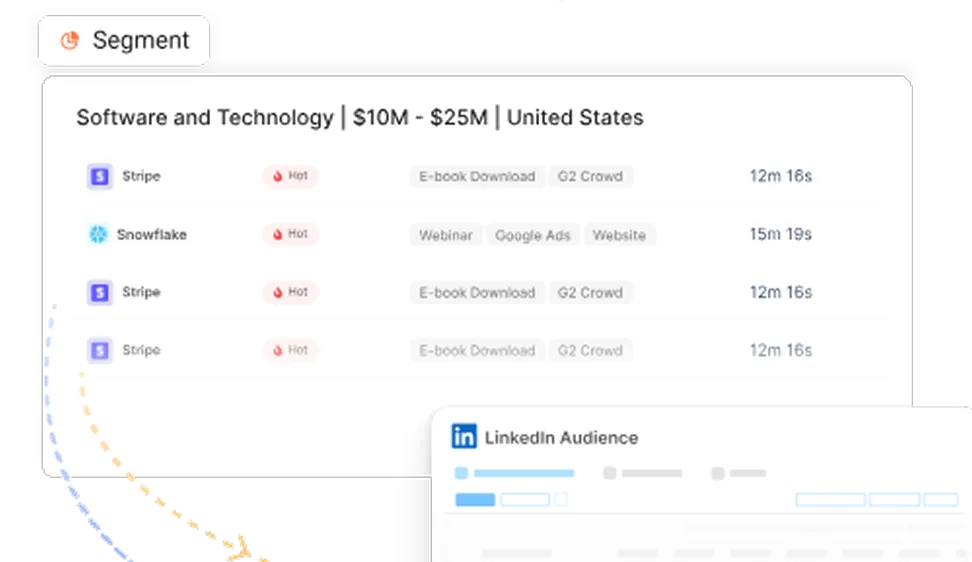
For example, a CRM SaaS company wants to bring on big healthcare providers. Using a tool like Factors, they can de-anonymize and segment accounts based on the pages and features each account engages with. Then, they can create hyper-personalized content that speaks directly to those accounts.
Demand generation casts a wider net where the goal is driving awareness and interest from a broad audience, not just targeting select accounts. You want your customers to remember your brand when they begin to actively look for solutions.
If that same CRM SaaS company used demand gen, they'd create content and initiatives aimed at a buyer persona instead of a specific business/account. With the persona in mind, they could host webinars, write blog posts about CRM benefits in general, or launch broad ad campaigns. This attracts a wide range of potential customers.
Sales and Marketing Alignment
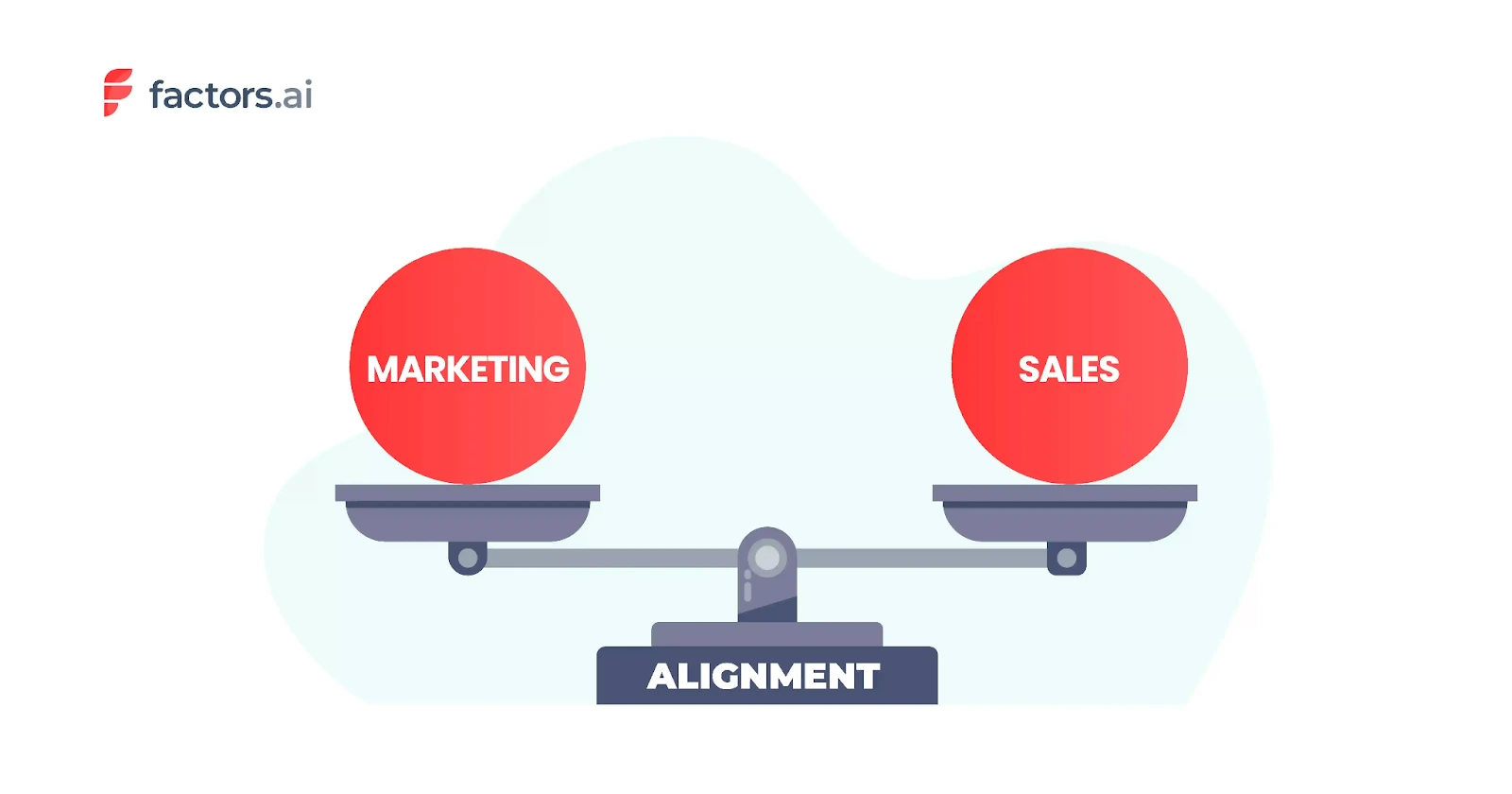
The partnership between sales and marketing teams is super important for both Account-Based Marketing (ABM) and Demand Generation. But the way they work together is really different.
With ABM, sales and marketing collaborate closely to find, target, and connect with the right accounts. They join forces to create customized plans, messaging, and content that speaks to each account's specific needs and challenges.
Imagine a B2B software company selling a banking solution to financial companies. The ABM approach would have the sales and marketing teams analyze the finance industry, identify key companies that could benefit from the solution, and develop targeted campaigns. Here, the sales team provides insights into a company's unique needs and marketing creates custom content to ensure a strategy that directly speaks to the target audience.
Demand Generation has a more linear relationship between sales and marketing. Marketing is in charge of building general awareness and interest. Once leads are created, the sales team takes over to go after those opportunities.
If that same software company uses demand generation, marketing might run broad campaigns about all features or a general benefit of the tool. The content is then catered to everyone that fits their persona and their pain points. When interest is sparked, the sales team steps in to qualify and nurture those leads towards conversion.
Content Strategy
Content strategy plays a central role in marketing, but how it's applied differs quite a bit between account-based marketing (ABM) and demand generation.
As part of ABM, the content is personalized, like a tailored suit stitched to fit an individual client. It zeroes in on the specific needs, pain points, goals, and decision-making processes of each target account.
Suppose a B2B cybersecurity firm wants to land major banks as customers. Their ABM content would be custom products — whitepapers, banking incident reports, interviews with top bankers, etc. — laser-focused on the unique security challenges and regulations faced by the financial industry. This tailored approach helps the content resonate more deeply, demonstrating an intricate understanding of that particular audience's needs.
Demand generation creates content with broad appeal, touting general benefits rather than customized solutions. Here the focus is on establishing the brand as a thought leader and go-to industry resource.
If running a demand-gen campaign, our hypothetical cybersecurity firm would publish ebooks, blogs, and podcasts about cybersecurity trends, best practices, and insights useful to businesses across industries. This positions them as trusted experts, laying the groundwork for future engagement with various audiences across industries.
Metrics for Account Based Marketing vs Demand Generation
Tracking the right metrics gives you real insights into what's working and what needs tweaking. ABM and demand generation measure totally different things since they have different strategies.
What ABM Metrics Should You Be Tracking?
While there are many ABM metrics that you need to keep an eye out for, here are some of the important ones.
Engagement Score — This tracks how much your target accounts interact with your content across channels. Are they spending time on your site, clicking links, or engaging on social media? Having access to this kind of information is very helpful for seeing what content resonates so you can personalize more.
With Factors, you have the ability to bring together data from across different platforms on a single dashboard.
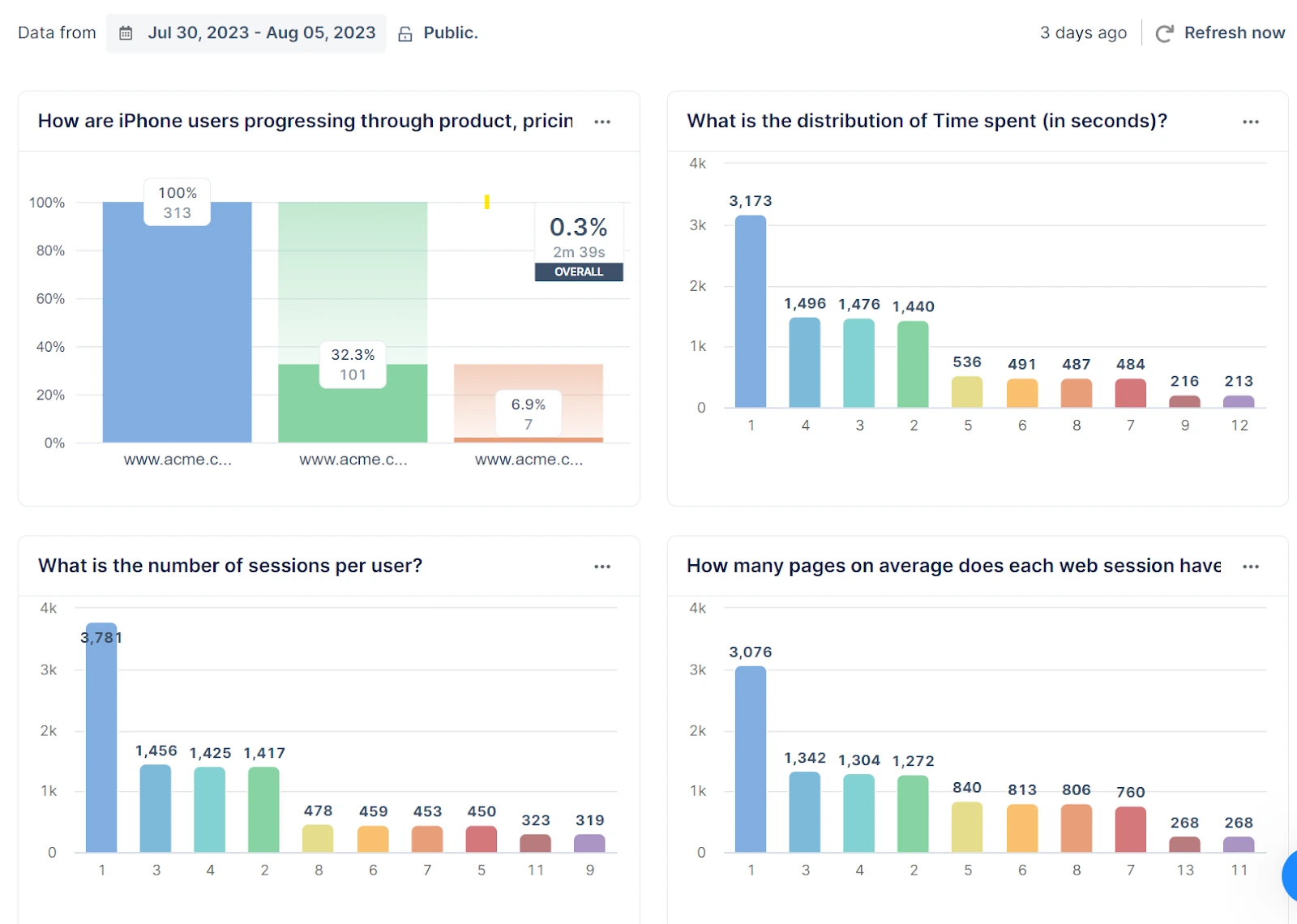
The customizable dashboards and reports on Factors can help you understand:
- if your ABM campaigns are reaching the right people
- If they’re conveying the message well enough so your target accounts interact with the content
Pipeline Contribution — What percentage of sales opportunities come from account-based efforts? This directly connects marketing to revenue. You can see specific deals influenced by account-based campaigns. It's great for understanding ROI and aligning with sales.
Through Factors, you can track specific opportunities that originated or were influenced by ABM campaigns.
Suppose you have multiple ongoing ABM campaigns including email, paid ads, and social media.
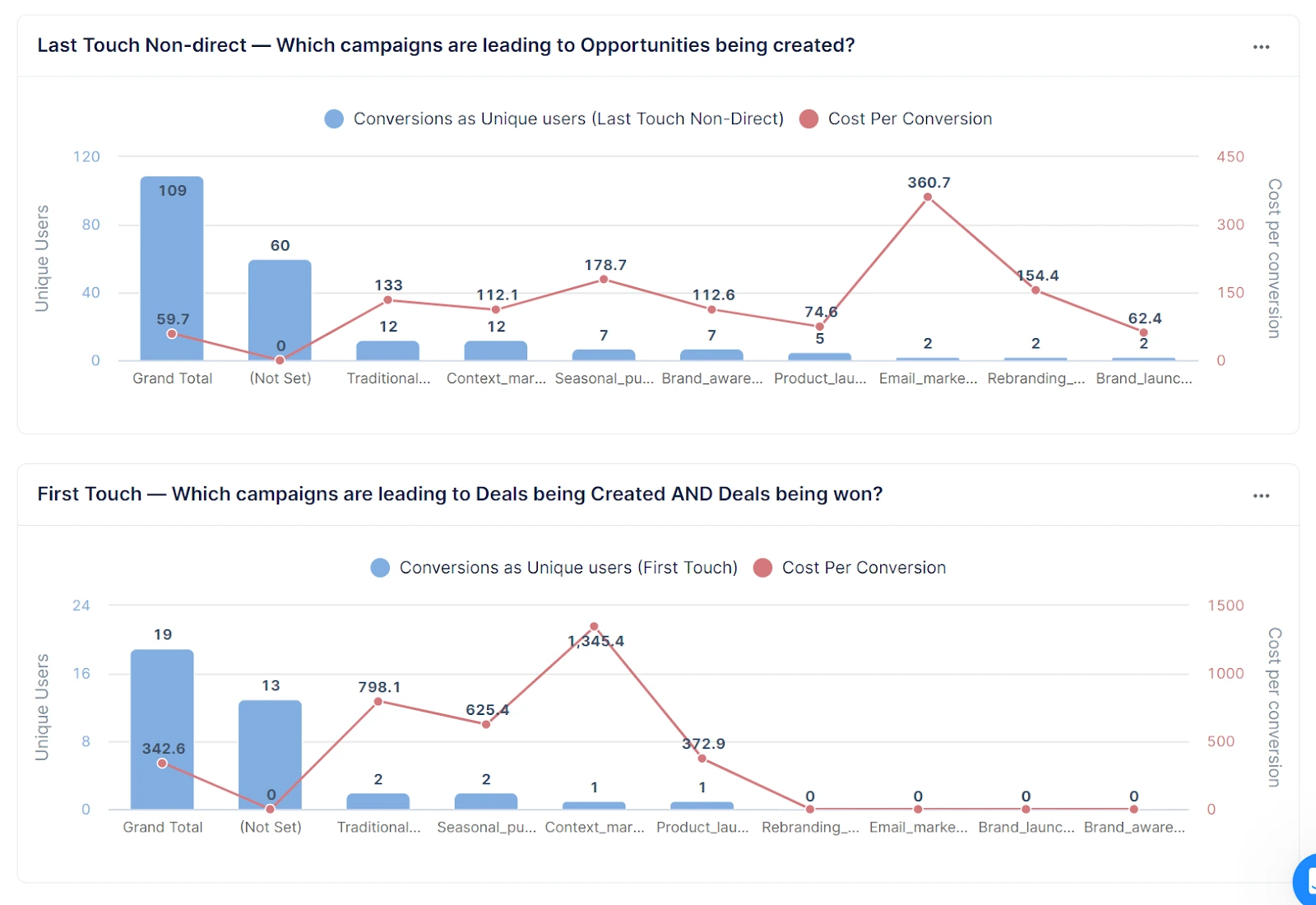
Factors tracks and provides data give you a full view of your ABM performance and helps in understanding the ROI of ABM and aligning marketing with sales goals.
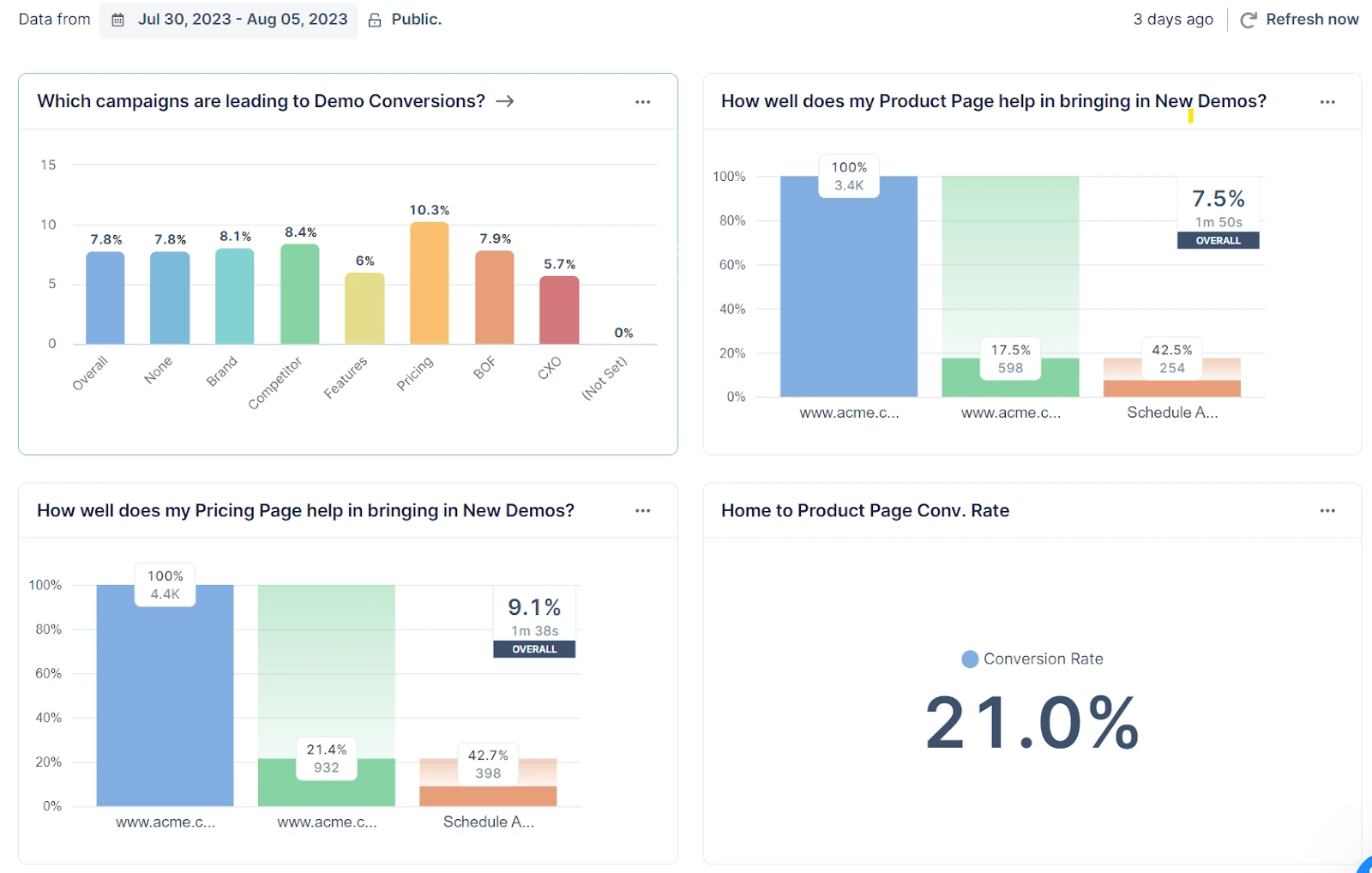
Conversion Rate — What percentage of targeted accounts move to the next stage towards becoming customers? Are your accounts going from leads to qualified leads? This shows how well your targeted content prompts the actions you want. Critical for evaluating personalization.
With custom reporting features on Factors, you can create a full conversion funnel, identify all the campaigns bringing in leads, and more.
What Demand Generation Metrics Should You Track?
Let’s now look at the set of metrics that you need to track for demand generation campaigns.
- Number of Leads — How many new leads are you generating through marketing? Quantity indicates if demand efforts are working initially. Starts you on lead nurturing and qualification.
- Cost Per Lead — What's the average cost to acquire each lead? Total spend divided by lead volume. Helps weigh marketing efficiency and guide budget.
- Sales Cycle Length — How long does it take on average for a lead to become a customer? From initial interest to closed deal. Shows how smoothly leads move through the sales process. Reflects both marketing and sales effectiveness.
With Factors, you can create unified views of your sales and marketing data.It helps you easily track key demand generation metrics like leads, cost per lead, and sales cycle length.
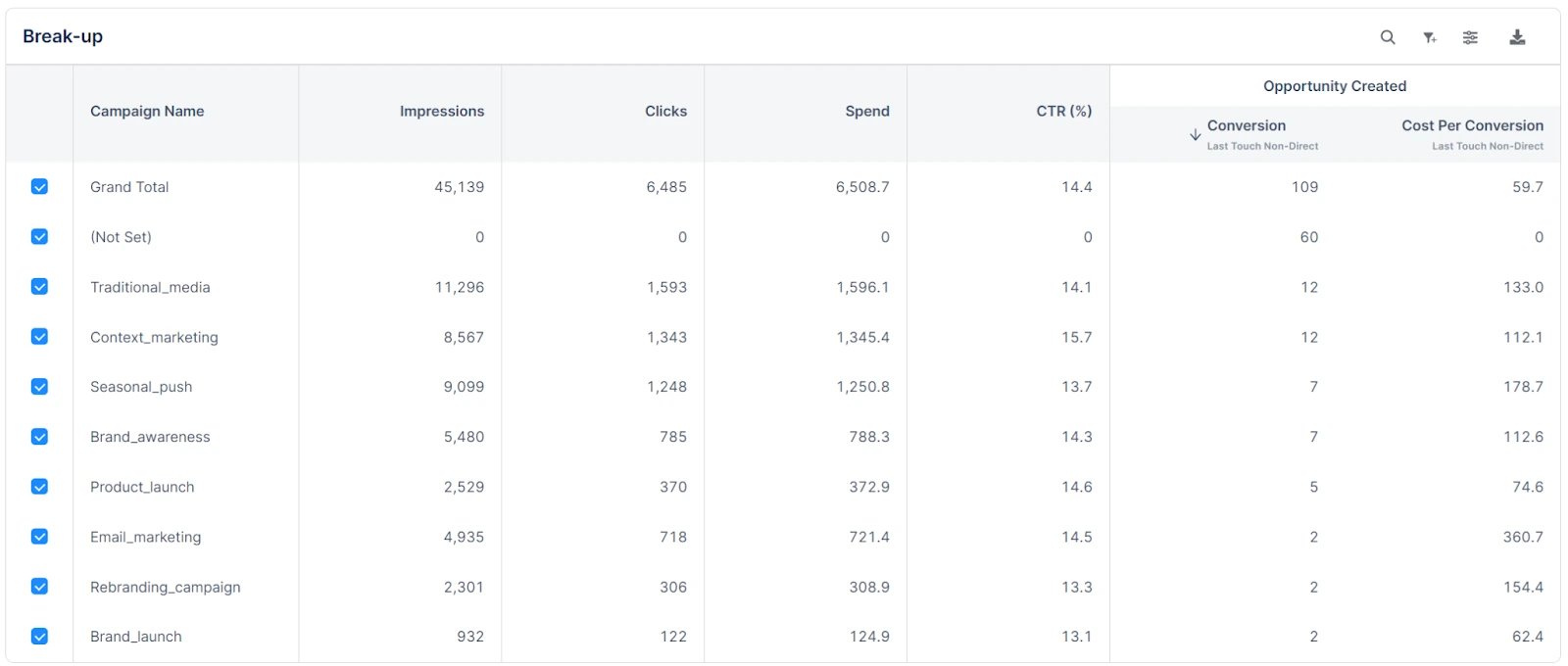
With this, you gain clear insights to optimize your campaigns, processes, and spend for maximum ROI without spending time switching tabs or tools.
Should You Use Demand Gen or Account Based Marketing?
The choice between demand gen and ABM depends on a few key things.
- Business Size: If you're a large company targeting specific high-value accounts, ABM could be a good fit since it's more personalized. Smaller businesses that want broad awareness might prefer demand gen instead.
- Industry: Industries where relationships matter more, like business services, may benefit more from ABM's tailored approach. But industries that need mass outreach could be better off with demand gen.
- Product Complexity: Complex or specialized products that need explaining may also call for ABM's account-specific focus. Products with widespread appeal are likely better suited for demand gen's broad reach.
- Target Audience: It also comes down to knowing your target audience and what will resonate. If you need to cater to particular accounts' unique needs, ABM is probably the way to go. But if you have a more general audience, demand gen can cast a wider net.
You could even use both the strategies together to cover all bases. The key is matching the strategy to your goals and who you're trying to reach so you can create maximum impact with minimal resource wastage.
ABM vs. Demand Generation: Choosing the Right Strategy
Account-Based Marketing (ABM) and Demand Generation serve distinct purposes in B2B marketing, each catering to different business needs.
1. ABM Strategy: Focuses on high-value accounts with personalized campaigns, aligning sales and marketing to engage key decision-makers. Best for enterprises and niche markets where deep relationships drive revenue.
2. Demand Generation Approach: Creates broad awareness and interest using content marketing, SEO, and paid ads to attract and nurture leads. Ideal for businesses targeting a large audience and building a sales pipeline.
3. Key Differences:
- Targeting: ABM is account-specific; Demand Generation casts a wider net.
- Engagement: ABM prioritizes deep, personalized interactions; Demand Generation emphasizes volume and automation.
- Success Metrics: ABM tracks account engagement and revenue; Demand Generation measures lead volume and conversion rates.
Integrating both strategies can maximize reach and conversions, driving sustainable business growth.
When should you use ABM?
ABM is a strong option when:
- A manageable set of companies represents a meaningful growth opportunity.
- Buying decisions involve several people at each company.
- Sales can collaborate on account selection and coordinated follow-up.
- You can tailor useful messages to account needs without creating unnecessary one-off work.
- You can measure engagement and progress at the account and opportunity level.
ABM may be premature if the target list is arbitrary, sales coverage is limited, or account and CRM data are too unreliable to support coordinated work.
When should you use demand generation?
Demand generation is a strong option when:
- You need to build awareness and interest across a market.
- Buyers need education before they know which solution to consider.
- You want to learn which problems, messages, or channels resonate.
- You need a repeatable way to create qualified opportunities across a broader audience.
Demand generation is not just lead capture. Ungated education, events, community, product experiences, and brand activity can all contribute to demand, even when they don't create an immediate form fill.
How can you use ABM and demand generation together?
Start with a clear target market and a shared definition of a qualified opportunity. Run programs that educate and engage the broader audience. Then use account fit and meaningful engagement to decide where sales and marketing should coordinate more focused activity.
For example, a webinar can serve a broad group of finance leaders. If several people at a target account attend, visit relevant product pages, or engage with follow-up content, sales and marketing can plan the next account-level action together. The webinar remains part of demand generation; the coordinated account plan is the ABM layer.
What Strategy Would You Choose?
We've explored the unique strengths of each strategy, compared their differences, and seen how they can precisely target leads or cast a wider net for brand awareness.
So whether you want to create personalized experiences with ABM or prioritize brand awareness with Demand Generation, we hope this guide will help you make the right decisions.
Factors.ai helps you simplify the path to executing successful marketing strategies. You can understand and track demand gen metrics and ABM efforts, aligning them with your unique needs. From segmentation to journey mapping, Factors is your secret weapon to master both strategies and measure campaign performance.
Ready to take your marketing up a level? Check out Factors today and discover how you can leverage ABM and Demand Generation to drive growth and success.
FAQs on ABM vs Demand Generation
Q. What analytics should you track for account-based marketing?
Three metrics matter most:
- Engagement Score: how much your target accounts interact with your content across channels
- Pipeline Contribution: what share of sales opportunities trace back to account-based efforts
- Conversion Rate: what percentage of targeted accounts move to the next stage
Demand gen leans on volume, lead count and the like. ABM doesn't. It's built around how deeply a small, defined set of accounts engages, not how many.
Q. What's the main difference between ABM and demand generation?
ABM goes after a small number of named, high-value accounts with personalized campaigns. Demand generation casts wider, building awareness across a whole market or persona, then nurturing that interest into leads. Neither one is better. It comes down to whether you're optimizing for depth with a few accounts or reach across many.
Q. Can you use ABM and demand generation together?
Yes, and most mature B2B teams do exactly that.
A common setup: demand generation fills the top of the funnel with broad awareness, then ABM takes over once specific accounts start showing real buying signals. Instead of starting from zero, you're applying personalized outreach to accounts that are already showing intent.
Q. Is account-based marketing a type of demand generation, or a separate strategy?
Separate, but complementary. They're not nested inside each other. Demand generation organizes around markets and personas. ABM organizes around specific named accounts. A company can run both at once, just pointed at different segments of the target market.
Q. Which is better for an early-stage startup, ABM or demand generation?
This comes down to deal size and sales cycle more than company stage. A startup selling something lower-priced and broadly applicable usually gets more out of demand gen's wider reach. A startup selling something higher-priced and complex to a handful of enterprise accounts often sees better ROI starting with ABM, even before it scales, since the account list is small enough to personalize from day one.
Q. Which should a CMO prioritize, ABM or demand generation?
Most CMOs don't pick one exclusively. The real question is budget allocation, not exclusive choice. A common starting split is that demand generation gets the bulk of the budget when the company needs pipeline volume and brand awareness, while ABM gets a smaller, dedicated budget aimed at the highest-value accounts where personalized attention actually changes the outcome. The right ratio comes down to average deal size. The larger and more complex the deal, the more ABM tends to pay off relative to broad-reach demand gen.
Q. Is there a real ROI difference between ABM and demand generation?
ABM usually shows a higher ROI per dollar. That's because the spend concentrates on accounts already identified as high-fit; you're not paying to reach people who were never going to convert. Demand generation usually shows a lower ROI per dollar, but far greater total reach, since it's built to fill the top of the funnel broadly rather than convert a small list efficiently. Comparing the two on ROI alone can mislead you if you're not also weighing total pipeline volume, which is exactly what demand gen is built to maximize.
Q. What's the best platform for running both ABM and demand generation together?
Blended ABM means running both strategies against overlapping, but not identical, audiences. That takes a platform built to handle account-level intelligence for ABM and broader campaign and lead analytics for demand generation, together, not two separate tools that don't talk to each other. That's the specific gap Factors.ai is built to close. It supports account-based targeting and demand generation measurement side by side, as one workflow instead of two disconnected ones.
Q. Can I get expert help running ABM and demand generation, not just software?
Yes. Beyond the platform, Factors.ai offers demand generation services with dedicated ABM expertise, for teams that want execution support, not just self-serve tooling. If you're after a partner who actually understands both motions, rather than an agency that only specializes in one, that's exactly what this covers.

See how Factors can 2x your ROI
Boost your LinkedIn ROI in no time using data-driven insights


.avif)

.avif)
See Factors in action.
Schedule a personalized demo or sign up to get started for free
LinkedIn Marketing Partner
GDPR & SOC2 Type II

.svg)



.avif)

