.svg)

.avif)
Factors vs. Triblio (Foundry ABM)
Choosing the appropriate platform is key, whether you're focused on targeting high-value accounts or enhancing multi-channel engagement within your Account-Based Marketing (ABM) strategies. Two notable options in this space are Foundry ABM and Factors—each offering distinct capabilities that cater to different marketing objectives.
Before diving into a comparison of their ABM features, it's essential to understand each platform's core purpose. Foundry ABM (formerly Triblio) is crafted for businesses implementing ABM strategies, offering a comprehensive suite for personalized, multi-channel engagement. In contrast, Factors initially focused on marketing analytics and attribution, equipping businesses with insights to understand campaign performance and make informed adjustments.
This article will explore each platform's key features, strengths, use cases, and pricing structures.
TL;DR
- Foundry ABM (formerly Triblio) is an Account-Based Marketing platform that integrates account-targeted ads, personalized web experiences, and sales insights.
- It’s ideal for mid-to-large B2B companies running complex multi-channel campaigns aimed at engaging high-value accounts, with a strong emphasis on intent data and sales alignment.
- Factors.ai, by contrast, is a marketing analytics and attribution platform focused on multi-touch attribution and customer journey mapping.
- It’s best suited for B2B marketers tracking ROI across channels and gaining AI-driven insights to optimize campaign performance.
- Foundry ABM is designed for ABM execution, while Factors.ai specializes in in-depth marketing performance analysis.
- Your choice hinges on whether your primary goal is campaign orchestration (Foundry ABM) or understanding and enhancing marketing ROI (Factors.ai).
Overview of Foundry ABM

Foundry ABM, previously known as Triblio, is crafted to help companies engage high-value accounts through a unified marketing approach. It integrates account-based advertising, web personalization, and sales activation to deliver personalized experiences, optimizing account engagement across multiple channels.
Core Features:
1. Account-Based Advertising: Foundry ABM enables highly targeted advertising by aligning ads with specific accounts, leveraging intent and behavioral data to identify key decision-makers within targeted accounts, and ensuring only relevant stakeholders see the ads.
2. Web Personalization: Foundry ABM allows for account-specific web experiences by tailoring content based on account-level data, ensuring each target account encounters content relevant to its current stage in the buyer’s journey.
3. Sales Activation: The platform enhances sales and marketing alignment by equipping sales teams with insights into account activity, enabling them to focus on accounts most likely to convert.
4. Campaign Orchestration: Foundry ABM enables marketers to design and execute multi-channel campaigns across advertising, email, web, and other channels, providing a consistent experience for target accounts throughout the buyer journey.
5. Intent Data Integration: The platform leverages intent data from third-party sources, helping marketers prioritize accounts based on buying intent allowing for more precise targeting and efficient resource allocation.

Strengths:
- Comprehensive ABM Capabilities: Foundry ABM is an all-in-one platform that merges advertising, web personalization, and sales activation into a cohesive ABM strategy.
- Robust Integrations: It integrates with major CRMs like Salesforce and marketing automation tools like HubSpot and Marketo, streamlining workflows.
- Data-Driven Targeting: The use of intent data focuses marketing efforts on accounts most likely to convert.
- Multi-Channel Campaign Management: Foundry ABM's ability to orchestrate multi-channel ABM campaigns is ideal for B2B marketers prioritizing high-value accounts.
Weaknesses:
- Complexity: Its extensive features and capabilities may overwhelm smaller teams or those new to ABM.
- Pricing: Foundry ABM's pricing can be high, making it more suited to mid-sized to large enterprises with established marketing and sales teams.


Overview of Factors.ai
Factors.ai is a marketing analytics and attribution platform tailored to provide B2B marketers with deep insights into their campaigns' performance. It aims to help businesses assess the effectiveness of their marketing efforts through tools for multi-touch attribution, customer journey mapping, and behavioral analysis.

Core Features:
- Attribution Modeling: Factors.ai excels in multi-touch attribution, enabling marketers to track the impact of various touchpoints along the customer journey. This helps businesses discern which marketing activities drive conversions and identify channels that deliver the highest ROI.
- Customer Journey Mapping: The platform visually represents the customer journey, allowing marketers to analyze how leads navigate through the funnel and pinpoint the most influential touchpoints for conversions.
- AI-Driven Insights: Utilizing artificial intelligence, Factors.ai automatically identifies underperforming campaigns and highlights opportunities for improvement. This minimizes the manual effort required for data analysis and empowers marketers to make data-driven decisions quickly.
- Predictive Analytics: The platform's capabilities allow marketers to forecast future performance based on historical data, facilitating effective campaign planning and resource allocation.
- Collaboration Features: Factors.ai includes built-in tools that enhance collaboration among marketing teams for data analysis and campaign planning, making it particularly beneficial for larger teams coordinating across different regions or business units.

Strengths:
● Deep Insights into Marketing Performance: Factors.ai delivers detailed insights into how various channels and touchpoints contribute to overall marketing success.
● AI-Driven Automation: The platform's AI capabilities streamline marketing data analysis, enabling marketers to focus on strategy and execution.
● Predictive Capabilities: Factors.ai aids marketers in forecasting future campaign performance, optimizing resource allocation accordingly.
Weaknesses:
● Narrower Focus: While Factors.ai is a robust analytics tool, it lacks the comprehensive account-based marketing capabilities that Foundry ABM offers.
● Complex for Smaller Teams: Similar to Foundry ABM, Factors.ai can be intricate, particularly for teams lacking a dedicated data analyst or marketing operations specialist.

When to Choose Foundry ABM
You should consider Foundry ABM if:
● You require multi-channel campaign orchestration that includes personalized web experiences and targeted ads.
● Your marketing team collaborates closely with sales, and you need tools that activate sales and provide insights into account activity.
● Intent data is critical to your account targeting strategy, and you want to leverage third-party data to prioritize accounts based on buying signals.
Use Cases for Foundry ABM:
● A large B2B enterprise looking to personalize its marketing efforts for high-value accounts.
● A mid-sized business aiming to scale its ABM program and integrate its marketing and sales efforts.
● A marketing team seeking a platform capable of managing complex, multi-channel campaigns across web, ads, and email.
When to Choose Factors.ai
You should choose Factors.ai if:
● Your primary focus is marketing analytics and attribution, and you need to track campaign performance across multiple channels.
● You want to map out the customer journey and gain deep insights into which touchpoints drive conversions.
● Your team needs AI-driven insights to identify underperforming campaigns and optimize future marketing strategies quickly.
● Predictive analytics is important for your marketing planning, and you want a platform that can forecast future performance based on historical data.
Use Cases for Factors.ai:
● Your primary focus is marketing analytics and attribution, and you need to track campaign performance across multiple channels.
● You want to map out the customer journey and gain deep insights into which touchpoints drive conversions.
● Your team needs AI-driven insights to identify underperforming campaigns and optimize future marketing strategies quickly.
● Predictive analytics is important for your marketing planning, and you want a platform that can forecast future performance based on historical data.
In a Nutshell
Foundry ABM (Triblio) and Factors.ai serve different yet complementary roles in the marketing technology stack. Foundry ABM is a powerful ABM platform, ideal for companies focusing on personalized account-based campaigns, while Factors.ai excels in marketing analytics, attribution, and journey mapping.
Foundry ABM is the way to go if your goal is to drive personalized engagement with high-value accounts. Conversely, if your business needs to optimize marketing performance and understand which touchpoints lead to conversions, Factors.ai provides the necessary tools for detailed analysis.
Both platforms cater to B2B marketers, but the choice depends on your team’s needs—ABM execution vs. analytics and attribution.

Top 11 Servicebell Alternatives
Servicebell is a real-time customer engagement tool that allows businesses to interact with website visitors. Whether answering questions or offering assistance, Servicebell helps companies provide exceptional customer service at critical touchpoints. However, as businesses evolve, they might require more tailored tools or a platform that integrates additional features. Luckily, many viable alternatives offer different capabilities to suit varied business needs.
TL;DR
- Servicebell is a real-time customer engagement tool, but businesses may need alternatives with broader capabilities, such as automation, analytics, and sales optimization.
- Among the top alternatives:some text
- Factors.ai is ideal for businesses focused on data-driven marketing. It offers AI-driven analytics, multi-channel attribution, and workflow automation. Its CRM and marketing platform integrations, especially for LinkedIn campaigns, make it a top choice for B2B companies aiming to optimize outreach and sales strategies.
- Apollo.io offers powerful sales automation and lead generation with a large contact database and CRM integration.
- ZoomInfo Sales is a premium option with high-quality B2B data and sales intelligence for optimizing pipelines.
- HubSpot Sales Hub combines CRM, sales automation, and lead nurturing, making it a versatile tool for small businesses.
- Salesforce Marketing Cloud Account Engagement (formerly Pardot) is a robust, high-end marketing automation platform for larger enterprises.
Each platform offers unique strengths, so the best alternative depends on your specific business goals, from live chat engagement to comprehensive analytics and sales optimization. Factors.ai stands out for businesses needing deeper marketing insights and automation.
About Servicebell

Servicebell allows businesses to engage visitors directly through live chat and video calls on their website. It's ideal for companies looking to provide immediate, personalized support and increase conversions through real-time communication.
Key Features:
- Live Chat & Video Calls:
Connect with website visitors instantly, offering assistance or product support as they browse.
- Targeted Engagement:
Customize how and when to engage visitors based on behavior or specific triggers.
- Visitor Insights:
Track visitor behavior, such as time spent on pages, to understand customer needs and improve engagement strategies.
{{INLINE_CTA_A}}
Pros:
- Easy to use for live communication.
- Enables personalized visitor interactions.
- Simple setup for instant website integration.

Cons:
- Limited in terms of automation compared to some competitors.
- Primarily focused on engagement rather than broader marketing and sales tools.
Pricing:
Servicebell has a free plan with limited features, while its paid plans start at around $49 per month, offering more customization and engagement capabilities.
Top Servicebell Alternatives
Let’s explore some alternatives to Servicebell that provide enhanced capabilities for customer engagement, lead generation, and marketing automation.
1. Factors.ai

Factors.ai is a cutting-edge AI-driven marketing analytics platform that helps businesses analyze and optimize their marketing efforts. It uses AI to provide actionable insights into customer behavior, making it a great alternative to Servicebell for companies focused on marketing analytics and customer journey optimization.
Key Features:
- AI-Driven Analytics: Leverage AI to analyze customer interactions and optimize marketing strategies.
- Journey Mapping: Visualize and understand the customer journey in real-time.
- Campaign Performance Tracking: Measure the effectiveness of marketing campaigns across different channels.
- Detect Churn Signals: With Factors, you can detect churn signals such as your existing customers visiting competitors’ G2 pages. With such insights you can also prevent customer ch

Pros:
- Excellent for businesses focused on data-driven decision-making.
- Provides deep insights into customer behavior, which can enhance engagement strategies.
- Intuitive interface with easy-to-understand visualizations.
Cons:
- Not as focused on real-time customer interaction as Servicebell.
- Some features may be complex for businesses with limited technical expertise.
Pricing:
Factors.ai offers custom pricing based on business needs, and it provides a free trial for new users.
{{INLINE_CTA_A}}
2. ZoomInfo Sales

ZoomInfo Sales is a market intelligence platform designed to improve your sales team's prospecting efforts by providing detailed data on potential customers and their buying behaviors.
Key Features:
- B2B Database: Access to rich company and contact data.
- Sales Intelligence: Provides insights into buying signals and intent data.
- Pipeline Management: Helps track and optimize the sales pipeline.

Pros:
- Extensive database with high-quality B2B data.
- Advanced search filters for precise targeting.
- Integrates with popular CRM platforms.
Cons:
- Can be expensive, especially for small businesses.
- Complex data interface, which can be overwhelming for beginners.
Pricing:
ZoomInfo Sales starts at $10,000 annually for its most basic plan.
{{INLINE_CTA_A}}
3. FlashRev

FlashRev is a customer engagement tool that specializes in enabling real-time interaction with website visitors, making it a great alternative to Servicebell for businesses focused on immediate customer support and lead generation.
Key Features:
- Live Interaction: Offers chat, voice, and video communication with website visitors.
- Behavioral Targeting: Engage users based on real-time activity and behavior.
- Analytics: Provides insights into visitor behavior and engagement success.

Pros:
- Easy to use, with quick setup.
- Real-time visitor engagement to boost conversions.
- Affordable for small businesses.
Cons:
- Lacks the depth of automation seen in larger platforms.
- Limited integrations with CRMs.
Pricing:
FlashRev offers competitive pricing starting from $29 per month.
4. HubSpot Sales Hub

HubSpot Sales Hub is a robust platform that combines CRM, sales automation, and lead nurturing tools, making it a versatile solution for businesses looking to streamline both their marketing and sales efforts.
Key Features:
- Free CRM: HubSpot offers a free CRM with basic features for managing customer data.
- Sales Automation: Automate repetitive sales tasks, such as follow-up emails.
- Pipeline Management: Keep track of all stages of the sales process.

Pros:
- User-friendly interface, even for beginners.
- Free CRM and affordable paid plans for small businesses.
- Wide range of integrations, including marketing tools.
Cons:
- Some features, like reporting, are limited in the free version.
- Scaling may require upgrading to more expensive tiers.
Pricing:
HubSpot Sales Hub offers a free plan, with paid plans starting at $50 per month.
{{INLINE_CTA_A}}
5. Adapt

Adapt offers B2B contact data, lead generation, and sales intelligence tools for businesses looking to scale their outreach and prospecting efforts.
Key Features:
- Lead Generation: Access to over 300 million contacts across various industries.
- Data Quality: Adapt’s database is regularly updated to ensure accuracy.
- Email Sequencing: Automate outreach campaigns with tailored email sequences.

Pros:
- Affordable compared to other lead generation tools.
- Good for small businesses and startups.
- Decent contact data for scaling prospecting efforts.
Cons:
- Data quality can sometimes vary.
- Limited CRM integrations compared to competitors.
Pricing:
Adapt has a free version, with paid plans starting at $99 per month.
6. Salesforce Marketing Cloud Account Engagement

Salesforce Marketing Cloud Account Engagement (formerly Pardot) is a marketing automation platform that enables businesses to create personalized customer journeys and drive sales through highly targeted campaigns.
Key Features:
- Marketing Automation: Create personalized email campaigns, nurture leads, and manage prospects.
- CRM Integration: Seamless integration with Salesforce CRM for lead tracking and sales management.
- Lead Scoring: Identify high-quality leads through advanced lead scoring.

Pros:
- Perfect for larger businesses needing comprehensive marketing automation.
- Highly customizable for different marketing and sales needs.
- Seamless Salesforce integration.
Cons:
- Expensive compared to smaller tools.
- Requires more technical expertise to use advanced features.
Pricing:
Salesforce Marketing Cloud Account Engagement plans start at $1,250 per month.
{{INLINE_CTA_A}}
7. Talkdesk

Talkdesk is a cloud-based contact center platform that enables businesses to improve their customer service through AI-driven solutions and multichannel communication.
Key Features:
- Omnichannel Communication: Handle customer queries via phone, email, chat, and more.
- AI-Powered Analytics: Leverage AI for customer insights and service improvements.
- Integrations: Supports integration with various CRMs and sales tools.

Pros:
- Great for scaling customer support operations.
- Offers AI-driven insights for better service.
- Strong multi-channel support.
Cons:
- Can be expensive for smaller companies.
- Requires some technical know-how to set up advanced features.
Pricing:
Talkdesk offers pricing upon request based on company needs.
8. Nice CXone

Nice CXone is an omnichannel cloud contact center solution that enables businesses to offer exceptional customer experiences through AI-driven interactions.
Key Features:
- Omnichannel Contact Center: Manage interactions across phone, chat, email, and social channels.
- AI-Powered Automation: Automate repetitive customer interactions to improve efficiency.
- Workforce Optimization: Tools for managing and optimizing customer service teams.

Pros:
- Comprehensive contact center features for large enterprises.
- AI-driven capabilities for better customer experiences.
- Scales easily with business growth.
Cons:
- Expensive and complex for small businesses.
- Requires in-depth technical knowledge for optimal use.
Pricing:
Nice CXone offers custom pricing based on business needs.
{{INLINE_CTA_A}}
9. Popl - Digital Business Card Platform

Popl is a digital business card platform that allows users to share contact details and information instantly with a simple tap, reducing the need for traditional business cards.
Key Features:
- Digital Business Cards: Share contact info via NFC or QR code.
- Mobile App: Manage and customize your business card through a user-friendly app.
- CRM Integration: Sync contacts with popular CRMs.

Pros:
- Eco-friendly and reduces the need for physical cards.
- Easy to use and customizable.
- Ideal for networking at events and conferences.
Cons:
- Limited features for deeper lead management.
- Primarily useful for individual professionals rather than larger sales teams.
Pricing:
Popl offers a free basic plan, with paid plans starting at $4.99 per month for additional customization and CRM integration features.
10. Keap

Keap (formerly Infusionsoft) is an all-in-one CRM and marketing automation tool for small businesses. It helps teams manage contacts, automate follow-ups, and streamline sales processes.
Key Features:
- Marketing Automation: Automate emails, workflows, and tasks to nurture leads and customers.
- CRM: Manage contacts, segment your audience, and track interactions.
- Appointment Scheduling: Easily schedule appointments with clients and prospects.

Pros:
- Affordable solution for small businesses looking to streamline sales and marketing.
- Excellent customer support and onboarding.
- Simple drag-and-drop email automation builder.
Cons:
- Limited features for larger companies or more complex workflows.
- Some users find the interface slightly dated compared to competitors.
Pricing:
Keap’s pricing starts at $129 per month for its basic plan, and it also offers a free trial.
{{INLINE_CTA_A}}
11. Apollo.io

Apollo.io is an all-in-one sales platform that provides access to a vast database of leads and customers, combined with powerful automation features. It's designed for teams looking to automate prospecting and streamline outreach.
Key Features:
- Lead Generation: Access millions of verified contacts and companies.
- Sales Automation: Automated email sequencing and follow-ups to ensure no leads fall through the cracks.
- CRM Integration: Seamlessly integrates with major CRMs, such as Salesforce and HubSpot.

Pros:
- Comprehensive contact database for effective prospecting.
- Robust sales automation tools.
- Offers analytics to measure campaign performance.
Cons:
- Can be overwhelming for beginners due to its vast features.
- The higher learning curve for new users.
Pricing:
Apollo.io offers a free plan with basic features, while paid plans start at $39 per user per month for more advanced capabilities.
Here’s a quick overview of the top alternatives to Servicebell:
Alternative
Key Features
Starting Price
Apollo.io
Sales automation, lead generation, CRM integration
$39/user/month
ZoomInfo Sales
B2B database, sales intelligence, pipeline management
$10,000/year
FlashRev
Real-time communication, behavioral targeting, analytics
$29/month
HubSpot Sales Hub
CRM, sales automation, pipeline management
Free; $50/month for paid plans
Adapt
Lead generation, email sequencing, data quality
$99/month
Salesforce Marketing Cloud Account Engagement
Marketing automation, lead scoring, Salesforce CRM integration
$1,250/month
Talkdesk
AI-powered customer support, omnichannel communication
Custom pricing
Nice CXone
Omnichannel contact center, AI-driven automation, workforce optimization
Custom pricing
Popl
Digital business cards, mobile app, CRM integration
Free; $4.99/month for paid plans
Keap
CRM, marketing automation, appointment scheduling
$129/month
Factors.ai
AI-driven marketing analytics, customer journey mapping, campaign tracking
Custom pricing
Why Factors.ai is the Best Servicebell Alternative
Factors.ai stands out as an advanced platform designed specifically for revenue-driven teams. It offers a robust suite of features for marketing attribution, analytics, and account intelligence. It is a top contender for those seeking an alternative to Servicebell, especially for businesses that optimize their go-to-market (GTM) strategies.
Key Features and Benefits:
- Marketing Attribution & Analytics:
Factors.ai excels at providing attribution models that help track the performance of multi-channel campaigns. The platform integrates various data points, offering in-depth insights into customer journeys, making it easier to assign ROI accurately to different marketing efforts.
- Automation of Workflows:
One of Factors.ai's standout features is its ability to automate key processes. It allows you to create repeatable playbooks that streamline outreach and engagement, making it a powerful tool for sales and marketing teams.
- Integration Capabilities:
The platform supports seamless integration with CRMs, marketing automation tools (MAPs), and other intent data sources like LinkedIn and G2. This integration allows businesses to have all the necessary insights in one place, simplifying reporting and reducing manual work.
- LinkedIn AdPilot:
Factors.ai provides advanced LinkedIn ad campaign management with features like frequency capping and view-through attribution. This ensures that ad spend is optimized and ROI is maximized, which is crucial for businesses heavily reliant on LinkedIn ads for lead generation.
- Customer Support & User Experience:
Factors.ai has received high ratings for its ease of use and customer support. Its intuitive interface allows teams to set up and begin tracking campaigns quickly, while their support team swiftly addresses any challenges.
While Servicebell focuses more on customer engagement through live interactions, Factors.ai takes a comprehensive approach to help B2B companies engage and convert leads by providing full-funnel analytics. Its automation features make it ideal for teams looking to scale without increasing manual labor, making it a superior choice for businesses looking to streamline marketing and sales processes.
{{INLINE_CTA_A}}
In a Nutshell
Businesses have a wide range of options when looking for alternatives to Servicebell, depending on their specific needs. Whether real-time visitor engagement, AI-powered marketing analytics, or robust sales automation, tools like Apollo.io, Factors.ai, and ZoomInfo Sales offer tailored solutions, even though Servicebell remains an excellent tool for immediate customer interaction, these alternatives can provide more comprehensive features, deeper integrations, and improved scalability for businesses looking to enhance customer engagement and lead-generation efforts.

Lead Generation KPIs: The Metrics That Matter for Optimizing Your Strategy
Lead generation is like the fuel that keeps your business engine running. But here’s the thing - getting leads is just the start. It’s like having all the ingredients for a great dish, but you still need to cook it right! To truly grow your business, you’ve got to keep tweaking and optimizing your strategy.
That’s where Lead Generation KPIs (Key Performance Indicators) come in. Think of them as your marketing GPS - they guide you with data-driven insights, helping you figure out what’s working, what’s not, and where to head next. Without them, you’re flying blind!
Effective lead generation KPIs answer critical questions such as:
- Are your campaigns targeting the right audience?
- How effective is your sales funnel?
- Are you getting a positive return on investment (ROI)?
- Where are the gaps in your lead nurturing efforts?
This blog covers the key metrics that help marketers refine their strategies and drive better results.
TL;DR
- Lead Generation KPIs are vital for evaluating the effectiveness of your marketing strategies and ensuring sustained business growth.
- Key KPIs include Attribution, which tracks touchpoints across the customer journey; Cost Per Lead (CPL), which measures the efficiency of lead generation campaigns; and Customer Acquisition Cost (CAC), which determines the total investment required to convert a lead into a customer.
- Other important metrics like Lead Conversion Rate (LCR), Customer Lifetime Value (CLV), and Time to Conversion help refine strategies and increase ROI.
- Factors offer automation and AI-powered analytics to simplify tracking. They enable businesses to track KPIs with real-time data, improve multi-touch attribution, and gain predictive insights for more effective decision-making.
Why Lead Generation KPIs Matter
Lead generation goes beyond accumulating contacts—it’s about attracting qualified prospects who have the potential to become long-term customers. In today’s competitive market, companies need to track and analyze performance metrics to determine which campaigns are delivering results and which are failing.

Lead Generation KPIs provide critical insights into your marketing activities, helping to:
- Optimize Campaigns in Real Time: With the right data, you can identify what’s working and quickly adjust strategies for better performance.
- Enhance Sales and Marketing Alignment: KPIs like lead quality and conversion rates ensure the marketing team generates leads that the sales team can convert.
- Improve ROI: Tracking KPIs such as cost per lead (CPL) and customer acquisition cost (CAC) ensures that marketing dollars are being spent effectively.
- Forecast Growth: KPIs like average lead value and customer lifetime value help companies predict future revenue based on current lead generation efforts.
Let’s dive deeper into the most critical KPIs that should be on every marketer’s radar.
Top Lead Generation KPIs to Track
1. Cost Per Lead (CPL)
CPL is one of the most fundamental KPIs for assessing the cost-effectiveness of your lead generation campaigns. It is calculated by dividing the total marketing spend by the number of leads generated. A high CPL could indicate that your campaigns are inefficient or do not target the right audience.
For example, if you spend $5,000 on a Google Ads campaign and generate 100 leads, your CPL is $50. Comparing CPL across channels (such as paid search, social media, or organic efforts) helps you identify which marketing channels provide the best ROI.
- Why it matters: A low CPL indicates efficient lead generation, while a high CPL may highlight a need to revisit campaign strategies or targeting efforts.
2. Customer Acquisition Cost (CAC)
CAC goes beyond CPL by calculating the total cost of converting a lead into a customer. It includes all marketing expenses, sales efforts, and customer onboarding costs. This KPI is calculated by dividing your total marketing and sales costs by the number of new customers gained over a specific period.
For example, if your company spent $20,000 and gained 40 new customers, your CAC would be $500.
- Why it matters: CAC allows businesses to assess the efficiency of their sales funnel. A rising CAC may signal inefficiencies in lead nurturing or gaps in the sales process.

3. Lead Conversion Rate (LCR)
The Lead Conversion Rate measures the percentage of leads that convert into customers. To calculate LCR, divide the number of conversions by the total number of leads and multiply by 100. For instance, if you generate 1,000 leads and 50 of them become paying customers, your LCR is 5%.
- Why it matters: LCR is crucial because it indicates the overall efficiency of your lead generation strategy. A low conversion rate could signal a disconnect between marketing and sales or gaps in your lead nurturing process.
4. Average Lead Value (ALV)
ALV helps estimate the potential revenue each lead could generate. This KPI is calculated by dividing your total revenue by the number of leads. For example, if you earned $1,000,000 from 1,000 leads, the ALV would be $1,000.
- Why it matters: ALV provides insight into the financial value of your lead generation efforts and helps align your strategy with revenue goals.
5. Customer Lifetime Value (CLV)
CLV predicts a customer's total revenue over their relationship with your business. It’s calculated by multiplying the average customer lifespan by the average monthly revenue per customer minus the CAC. For instance, if a customer typically spends $200 per month for two years, with a CAC of $500, their CLV would be $4,300.
- Why it matters: Understanding CLV helps businesses forecast revenue and determine how much to invest in acquiring new customers.
6. Time to Conversion
This metric measures the average time it takes for a lead to move through the sales funnel and convert into a paying customer. A shorter time to conversion indicates that your sales process is efficient, while a longer time could indicate bottlenecks in lead nurturing or sales engagement.
For instance, if a lead takes an average of 60 days to convert, you can analyze touchpoints to identify where delays occur.
- Why it matters: A long time to conversion can indicate inefficiencies in your lead nurturing strategy or friction in your sales process.
7. Return on Ad Spend (ROAS)
ROAS measures the revenue generated from your advertising campaigns for every dollar spent. It’s calculated by dividing total revenue generated from ads by the amount spent on those ads. For example, a ROAS of 5:1 means that your business earned $5 in return for every dollar spent on advertising.
- Why it matters: ROAS helps marketers assess the effectiveness of their advertising campaigns, identify high-performing channels, and ensure that ad spend drives meaningful revenue.
8. Monthly Recurring Revenue (MRR)
For companies with subscription-based business models, MRR is an essential KPI that measures the total predictable revenue generated from subscriptions each month. MRR is calculated by multiplying the number of active subscribers by the average subscription price.
- Why it matters: Tracking MRR provides businesses with a clear view of their revenue streams, helping with financial planning and growth forecasting.
9. Web Traffic and Lead Quality
While web traffic is not a direct indicator of lead quality, it’s still an important metric for understanding how your marketing campaigns drive interest. High web traffic with low conversions could mean your targeting or content strategy needs refinement. On the other hand, low traffic with high-quality leads suggests that your messaging is resonating with the right audience.
- Why it matters: High-quality web traffic leads to more meaningful interactions, better leads, and higher conversion rates.
Optimizing Lead Generation with Factors
While tracking KPIs manually can be time-consuming, tools like Factors make the process seamless. Factors automates KPI tracking and provides in-depth analytics on customer journeys, lead attribution, and campaign performance. By utilizing artificial intelligence, the platform helps businesses identify trends, predict future outcomes, and adjust strategies in real-time.
Some key features of Factors include:
- Multi-touch Attribution: Factors tracks every interaction across a lead's journey, allowing you to see which channels and content drive the most conversions.
- Real-time Analytics: The platform provides real-time insights, enabling marketers to make data-driven decisions on the fly.
- Predictive Analytics: Factors uses AI to predict future trends, helping businesses forecast revenue and identify high-value leads.
- Customizable Dashboards: Marketers can create custom dashboards to track the KPIs that matter most to their business.
Businesses can optimize their lead generation strategies by leveraging Factors, ensuring every marketing dollar is spent efficiently and effectively.
Additionally, Factors offers several powerful tools to enhance ABM and lead generation efforts:
- AdPilot: Automates ABM advertising to ensure high-value accounts are targeted with personalized content at the right time.
- Segments: Provides detailed insights into precisely defined customer segments, enabling more accurate targeting and engagement.
- Workflows: Streamlines marketing and sales processes by automating key tasks and optimizing team collaboration for better efficiency and faster results.
Businesses can optimize their lead generation strategies by leveraging Factors, ensuring every marketing dollar is spent efficiently and effectively.
In a Nutshell
Lead generation is the backbone of business growth. It ensures a steady influx of potential customers and drives sales opportunities.
Integrating advanced tools like Factors can significantly simplify the KPI tracking and optimization process. Factors automates the measurement of important KPIs, provides in-depth analytics, and offers AI-driven insights into trends and campaign performance. With its multi-touch attribution and real-time analytics capabilities, businesses can quickly identify which marketing strategies work and make data-driven decisions to improve lead quality and conversion rates.
By leveraging the power of such advanced tools, companies can ensure that every marketing dollar is spent efficiently, resulting in higher returns on investment (ROI). These insights empower businesses to optimize their lead generation strategies continuously, leading to better short-term outcomes, long-term growth, and sustainability.
Proper tracking, optimization, and AI-powered tools like Factors enable businesses to refine their lead generation process, improving lead quality, increasing conversion rates, and ultimately driving sustained business success.

Step-by-Step Guide to SaaS Content Marketing
“The global SaaS market is projected to grow from $273.55 billion in 2023 to $908.21 billion by 2030 at a CAGR of 18.7%.”
With such growth figures, comes great marketing responsibility. And what’s a better tool than SaaS Content Marketing to take your organic marketing efforts to the next level? If you’re a little iffy about creating content for your SaaS company, this blog is written for you!
Without much ado, let’s get right into clarifying the basics before we jump into the step-by-step guide for SaaS content marketing.

But, what is SaaS Content Marketing?
SaaS Content Marketing is the strategic creation and distribution of relevant, valuable, and consistent content to attract, engage, and retain a target audience within the SaaS industry.
Unlike traditional marketing approaches that emphasize direct selling, SaaS Content Marketing centers around providing information and insights, positioning the brand as a trusted advisor. It serves as the bridge between a SaaS company and its audience, fostering a relationship built on trust and authority. SaaS Content Marketing stands apart due to its focus on delivering targeted, highly informative content tailored to the needs of a tech-savvy audience. Effective content marketing positions the brand as an industry leader resonates with the pain points of the target audience, and ultimately drives customer loyalty and advocacy. It focuses on educating users, offering in-depth insights into the product's functionality, and guiding them through the complexities of the software.

Building a Value Proposition and Demonstrating the Brand's Authority
A compelling value proposition is at the core of successful SaaS Content Marketing. Content should articulate not only the features of the SaaS solution but, more importantly, the value it brings to users. Whether through whitepapers, webinars, or interactive demos, SaaS content should communicate how the product addresses specific pain points, enhances efficiency, and delivers tangible benefits. Establishing the brand's authority involves consistently offering valuable insights, staying abreast of industry trends, and showcasing thought leadership through authoritative content.
Step-by-Step Guide To Content Marketing
Since you’ve made it this far into the article, we’d like to think you’re considering SaaS content marketing. So, as promised, here’s the step-by-step guide that will enable you and your teams to create a framework and scale your content marketing efforts.
Step 1
Market Research: Laying the Foundation
The first step in building a formidable SaaS Content Marketing strategy is laying a strong foundation through thorough market research. This step includes identifying market trends, understanding customer pain points, and analyzing competitors. The goal is to unearth insights that will inform content strategies and ensure they align with the dynamic needs of the target audience.
Market research in SaaS Content Marketing should address the following key aspects:
- Audience Persona Development
Define and understand the various personas within the SaaS target audience. Recognizing their challenges, preferences, and decision-making criteria lays the foundation for tailored content.
- Competitor Analysis
Evaluate the content strategies of key competitors. Identify content gaps, assess engagement levels, and discern successful tactics. This analysis informs the creation of content that stands out in a space that may already be cluttered with content.
- Trend Identification
Stay abreast of industry trends and emerging technologies. This not only showcases the brand's commitment to staying current but also provides valuable content ideas that resonate with a tech-savvy audience.
- Content Consumption Patterns
Understand how the target audience consumes content. Whether through blog posts, videos, webinars, or interactive experiences, aligning content formats with audience preferences enhances engagement.
- SEO
Analyze the way SEO works within the SaaS domain. Identify high-performing keywords, assess competitors' keyword strategies, and uncover opportunities to enhance search engine visibility.
Step 2
Keyword Research: Unlocking Visibility
Keyword research is the cornerstone of an effective SaaS Content Marketing strategy. In fact, a survey conducted among startup founders indicated that 90% consider SEO to be a crucial factor in driving brand awareness and generating leads for their businesses.
SEO involves identifying and targeting the specific terms and phrases that potential users will likely use when searching for SaaS solutions.
A robust keyword research process encompasses the following key steps:
- Identifying Core Keywords
Begin by identifying primary keywords that align with the SaaS offering. These should encapsulate the core functionalities and unique selling propositions of the product.
- Long-Tail Keyword Exploration
Explore long-tail keywords that reflect specific user queries and intent. This is mainly because long-tail keywords are less likely to have high competition and can drive traffic that is relevant to the brand’s target audience.
- Competitor Keyword Analysis
Analyze the keyword strategies of competitors. Identify keywords they are ranking for and evaluate the competitiveness of these terms.
- User Intent Understanding
Consider the intent behind user searches.
Are they searching for some information?
Are they seeking solutions to a problem?
Are they set to buy?
Align keywords with the various stages of the customer journey.
- Seasonal and Trend-Related Keywords
Factor in seasonal trends and industry-specific events. Creating content around timely keywords enhances relevance and visibility during peak periods.
- Localization Strategies
If applicable, incorporate localization into keyword research. This is crucial for SaaS providers targeting specific geographic regions.

Step 3
Choosing the Right Formats for SaaS Marketing: Navigating the Sea of Content
Within SaaS content marketing, the choice of content formats is akin to selecting the sails for a seafaring vessel. Each format serves a distinct purpose, resonates with varying audience preferences, and contributes uniquely to the overarching content strategy. Let's embark on a journey to explore the sea of content formats available for SaaS marketing:
- Blog Posts:
Purpose: Inform, Educate, and Build Authority.
Why? Blogs are the workhorses of content marketing. They offer a platform for in-depth exploration of industry trends, product features, and thought leadership. Regular, well-optimized blog posts enhance SEO and keep the audience engaged.
Did you know?
Approximately 36% of sizable SaaS enterprises employ their blog posts to educate readers on various industry topics. - Whitepapers:
Purpose: Thought Leadership and In-Depth Insights.
Why? Whitepapers dive deep into complex topics, providing comprehensive insights, research findings, and expert opinions. They are instrumental in establishing the brand as a thought leader and a go-to source for industry knowledge.
- Webinars:
Purpose: Engagement, Education, and Interactivity.
Why? Webinars bring a dynamic, interactive element to SaaS marketing. They allow real-time engagement with the audience, facilitating product demonstrations, Q&A sessions, and discussions. Webinars forge a more personal connection with potential users.
Did you know?
In the B2B sector, it is strongly believed that webinars contribute to generating nearly 75% of sales leads.
- Video Tutorials:
Purpose: User onboarding and product understanding.
Why? Visual learners rejoice with video tutorials. These concise, visually appealing guides help users navigate software interfaces, understand features, and maximize the value of the SaaS product. Video tutorials enhance user onboarding and reduce the learning curve. - Case Studies:
Purpose: Showcase real-world successes.
Why? Case studies are testimonials on steroids. They delve into real-world scenarios where the SaaS solution has addressed specific challenges and delivered tangible results. Case studies provide social proof, instilling confidence in potential users. - Infographics:
Purpose: Visual representation of information.
Why? Infographics distil complex information into visually appealing, easily digestible graphics. They are perfect for conveying statistics, processes, and key data points. Infographics enhance content shareability on social media platforms. - Ebooks:
Purpose: In-depth guides and resources.
Why? Ebooks offer a comprehensive exploration of a topic, often serving as downloadable resources. They are valuable assets for lead generation, requiring users to provide their information in exchange for in-depth content. - Interactive Content:
Purpose: Engage and entertain.
Why? Interactive content, such as quizzes, assessments, and interactive guides, adds a layer of engagement. It not only captures attention but also provides users with a personalized experience. - Podcasts:
Purpose: Audio-based thought leadership.
Why: Podcasts are a versatile format for conveying industry insights, interviews, and discussions. They cater to audiences who prefer consuming content while on the go.
Did you know?
Podcasts serve as a marketing tool for a minimum of 18% of the leading SaaS app businesses.
Choosing the right mix of content formats depends on various factors, including the target audience, the complexity of the SaaS solution, and the goals of the marketing strategy. The next segment will illuminate the significance of distribution channels and amplify the reach of SaaS content.

Step 4
Creating a Content Outline in SaaS Content Marketing: Crafting the Story
As we embark on the intricate journey of SaaS Content Marketing, the creation of a content piece is akin to sketching the blueprint of a masterpiece. A well-structured outline lays the foundation for an engaging and informative piece that resonates with the audience.
Here's a step-by-step guide on crafting a content outline for your SaaS marketing endeavours:
- Define Your Objective:
Clearly articulate the purpose of your content piece. Whether it's to educate, entertain, or persuade, a well-defined objective guides the entire creation process.
- Know Your Audience:
Know more about your target audience, including their likes, needs preferences, and even their pain points. Tailor your content to address their specific challenges and provide valuable insights.
- Research Thoroughly:
Dive deep into the subject matter. Conduct thorough research to gather relevant data, statistics, and examples. A well-researched piece enhances credibility and authority.
- Choose the Right Format:
Based on your objective and audience preferences, select the most suitable content format. Whether it's a blog post, whitepaper, webinar, or video tutorial, the format should align with your goals.
- Craft a Compelling Title:
The title is the gateway to your content. Craft a compelling and attention-grabbing title that sparks curiosity and conveys the value of your piece. - Develop a Structured Flow:
Organize your content logically. Create a flow that takes the reader or viewer through a journey, from introduction to conclusion. A structured flow enhances comprehension. - Break Down Into Sections:
Divide your content into sections or chapters. This not only makes it more digestible but also allows readers to navigate easily, focusing on specific areas of interest.
- Incorporate Visual Elements:
Integrate visuals strategically. Whether it's images, infographics, or charts, visual elements enhance engagement and break the monotony of text. - Craft Engaging Headlines and Subheadings:
Headlines and subheadings should be captivating and descriptive. They provide a roadmap for readers, guiding them through the main points of your content.
- Incorporate Key Keywords:
Identify and add relevant SEO keywords to all your content pieces. This optimization ensures better visibility on search engines and attracts your target audience.
- Ensure Consistency:
Maintain consistency in tone, style, and formatting throughout your content. Consistency contributes to a seamless reading or viewing experience.
- Add a Compelling Conclusion:
Summarize key takeaways and end your piece with a compelling conclusion. Leave a lasting impression on your audience and give them a clear call to action before they step out.
Creating a content outline is not just a preliminary step; it's the architectural blueprint that shapes the entire content marketing edifice. The next leg of our journey will delve into the crucial aspects of distributing and promoting your meticulously crafted SaaS content.
Step 5
Writing Your SaaS Content Piece: Crafting the Masterpiece
The writing phase is where ideas, research, and creativity converge to create a compelling narrative. Let's delve into the key steps for bringing your content to life:
- Start with a Captivating Introduction:
The opening should grab attention and set the tone for what follows. Intrigue your audience with a compelling hook that encourages them to read on. - Follow the Flow of Your Outline:
Refer to your meticulously crafted outline. It serves as a roadmap, guiding you through the logical flow of ideas. Each section should seamlessly connect to the next. - Infuse Personality and Style:
Let your brand's personality shine through your writing. Whether it's a conversational tone, a touch of humour, or a more formal approach, maintain consistency with your brand voice. - Prioritize Clarity and Simplicity:
Keep your language clear and concise. Avoid unnecessary jargon or complexity. Aim for simplicity without sacrificing depth. - Provide Value Through Insights:
Deliver on the promises made in your outline. Provide valuable insights, backed by research and examples. This is the substance that keeps your audience engaged. - Craft Engaging Headlines and Subheadings:
Headlines and subheadings should not only guide the reader but also pique their interest. Make them compelling and reflective of the content beneath. - Use Visuals Strategically:
If your outline includes visual elements, strategically integrate them into your content. Visuals break the monotony of text and enhance overall engagement. - Optimize for Readability:
Format your content for easy readability. Try adding shorter paragraphs, headings, subheadings, and pointers to break a full wall of content and information. This enhances the user experience, especially in online reading.
- Ensure Originality:
The audience you're targeting via SaaS content marketing campaigns would like to see valuable and original content. Hence, avoiding plagiarism is a must. You should check plagiarism to maintain originality and impress your targeted audience. An advanced plagiarism checker would help you do that without requiring much time and effort.
- Inject a Personal Touch:
Personal anecdotes or real-life examples can add a human touch to your content, in turn building a personal connection with your audience. - Refine and Polish:
Once the initial draft is complete, revisit and refine it. Polish your content for clarity, coherence, and overall effectiveness. - Incorporate SEO Best Practices:
If SEO is a crucial aspect of your strategy (which it should be), ensure that your content incorporates relevant keywords naturally, to up visibility on search engines. - Craft a Compelling Conclusion:
Conclude your piece with a strong and memorable closing. Summarize key points, restate the main message, and provide a clear call to action.
Writing is the heartbeat of your content strategy. It breathes life into your ideas and transforms them into a cohesive narrative.
Step 6
Distributing Your SaaS Content: Ensuring it Reaches the Right Audience
Now, let's ensure that your masterpiece reaches its intended audience. Distribution is a crucial phase in the content marketing journey, and here's your guide to orchestrating it effectively:
- Leverage Social Media Platforms:
Share your content across relevant social media channels. Craft engaging captions and leverage hashtags to increase discoverability. Each platform has its unique audience, so tailor your approach accordingly.
- Email Marketing:
Harness the power of your email list. Send out newsletters or dedicated emails featuring your content. Personalize your messages to make them more compelling. Email marketing is used by 93% of B2B marketers for distributing their content.
- Partner with Influencers:
Identify influencers or thought leaders in your industry. Collaborate with them to share your content and amplify your reach.
- Repurpose for Different Platforms:
Modify your content to suit various platforms. Create snippets for Instagram, shorter versions for LinkedIn, or visually appealing graphics for Pinterest.
- Utilize Paid Promotion:
Boost your content's visibility through paid promotions. Allocate a budget for strategic target-based promotion.
- Engage in Online Communities:
Participate in forums, groups, or communities relevant to your industry. Share your content where appropriate, but ensure it adds value to the conversation.
- Collaborate with Industry Publications:
Reach out to industry publications and offer your content for publication. This can expose your content to a broader audience and establish your brand as an authoritative voice.
- Optimize for SEO:
Ensure your content is optimized for search engines. This includes using relevant keywords, creating a captivating meta description, and having a clean URL structure.
- Monitor and Respond:
Keep an eye on how your content is performing. Monitor social media comments, respond to queries, and engage with your audience. This will help boost traction, and visibility while enabling you to build a community around your content.
- Explore Guest Posting:
Contribute your content to reputable websites in your industry through guest posting. This can enhance your brand's visibility and authority.
- Collaborate with Your Network:
Leverage your professional network. Encourage your team members, colleagues, and industry connections to share the content within their circles.
- Measure and Adjust:
Use analytics tools to measure the performance of your distribution efforts. Track engagement, click-through rates, and other relevant metrics. Based on the data, refine your distribution strategy for future content.
An important point to remember here is that distribution is not a one-size-fits-all endeavour. Tailor your approach based on your target audience, industry dynamics, and the nature of your content.

Kickstart SaaS Content Marketing for your Organization: A Step-by-Step Guide
All geared up to start SaaS content marketing for your brand, but where do you begin? Let's break it down into actionable steps to guide you through the process:
- Define Your Objectives:
Clearly outline your content marketing goals. Whether it's increasing brand awareness, driving leads, or establishing thought leadership, having a clear purpose will shape your strategy. - Identify Your Target Audience:
Understand who your ideal customers are. Create buyer personas that will help shape your content strategy and process. This ensures that your content speaks directly to the needs and interests of your audience. - Craft a Content Calendar:
Plan your content in advance, a content calendar helps you maintain consistency and ensures a diverse mix of topics. Consider seasonality, industry events, and product launches in your scheduling. - Find Skilled Freelance Writers:
Engaging freelance writers can inject fresh perspectives into your content. Look for writers with experience in SaaS or related industries. Platforms like Upwork, Freelancer, or content creation agencies are excellent resources. - Types of Writers You Need:
Keep in mind the content formats you plan on creating. You may need writers skilled in blog writing, whitepapers, case studies, or video scripts. Having a mix ensures your content strategy is comprehensive. - Set Clear Guidelines:
Provide detailed guidelines to your freelance writers. Clearly communicate your brand voice, style preferences, and formatting requirements. A well-defined brief ensures your writers deliver content aligned with your vision. - Manage the Process Efficiently:
Use project management tools to streamline the content creation process. Platforms like Asana or Trello help in assigning tasks, setting deadlines, and maintaining communication with your freelance writers. - When to Bring in In-House Writers?
As your content strategy matures and the volume of content increases, you might consider bringing in-house writers. In-house writers offer dedicated support and align closely with your brand's nuances. However, before you bring in in-house writers, ensure that you have a comprehensive plan and framework in place, to optimise their time and talent. - Establish a Collaborative Workflow:
Foster collaboration between your in-house and freelance writers. Communicate your brand's messaging, goals, and evolving strategies clearly. A unified team ensures consistency in your content output. - Say Hello to Continuous Learning:
Encourage a culture of continuous learning within your content team. Stay updated on industry trends, SEO best practices, and evolving customer preferences. This ensures your content remains relevant and impactful. - Measure Performance:
Implement analytics tools to measure the performance of your content. Track key metrics such as engagement, conversions, and leads generated, and ensure you avoid these five mistakes when measuring content marketing ROI.
That said, the key to successful SaaS content marketing lies in a strategic and flexible approach. Adapt your strategy based on the evolving needs of your audience and the ever-changing SaaS industry.

Emerging Trends in SaaS Content Marketing
- Interactive Content Takes Center Stage
The demand for interactive content experiences is on the rise. Infographics, quizzes, polls, and immersive video content are becoming powerful tools to engage audiences and enhance user experience.
- Personalization Reaches New Heights
Personalized content tailored to individual user preferences is no longer an option but a necessity. AI-driven algorithms and machine learning enable SaaS marketers to deliver highly relevant and targeted content to their audiences.
- Voice Search Optimization
With the growing prevalence of voice-activated devices, optimizing content for voice search is a trend gaining momentum. Tailoring your content to match natural language queries enhances visibility in voice search results. - Long-Form Content for Thought Leadership
In-depth, long-form content is making a comeback. SaaS brands are leveraging comprehensive guides, research papers, and expert insights to establish thought leadership and provide valuable resources for their audience.
Innovations and Technologies Shaping the Future
- Blockchain for Content Security
The decentralized and secure nature of blockchain is finding applications beyond cryptocurrencies. In SaaS content marketing, blockchain can enhance content security, protect intellectual property, and ensure transparent attribution.
- Augmented and Virtual Reality Experiences:
AR and VR technologies are poised to transform content experiences. SaaS marketers can explore immersive product demos, virtual walkthroughs, and interactive AR applications to engage audiences in novel ways. - 5G for Faster Content Delivery
5G technology will revolutionize content delivery, providing faster and more reliable connections. SaaS marketers can leverage this for seamless video streaming, enhanced user experiences, and real-time interactions.
SaaS Content Marketing: A Strategic Approach
SaaS content marketing focuses on creating valuable content to attract, engage, and retain customers by positioning the brand as a trusted advisor.
- Core Strategy: Align content with the buyer’s journey, emphasizing education over direct selling.
- Key Steps: Define objectives, understand the audience, create high-quality content, optimize for SEO, promote effectively, and measure performance.
- Business Impact: Strengthens brand authority, educates users, and builds long-term customer loyalty.
A well-executed SaaS content strategy drives engagement and enhances customer retention.
Through this article, right from the definition and unique characteristics to the strategic nuances of crafting compelling content – one thing’s clear - the world of SaaS Content Marketing is changing constantly. Brands that adapt to these changes and leverage cutting-edge technologies will be well-positioned to capture the attention and loyalty of their target audiences in the future.
The future of SaaS content marketing is teeming with opportunities. From the increasing demand for interactive and personalized content to the transformative potential of emerging technologies, the evolution is both exciting and relentless.
As we come to a close, it’s important to note that the key to success lies in a blend of creativity, strategic insight, and a keen understanding of your audience. Whether you're embracing the power of AI, delving into immersive experiences with AR and VR, or optimizing for the era of voice search, staying at the forefront of innovation is your mantra for success.
SaaS content marketing is not just about conveying messages; it's about creating experiences, forging connections, and establishing lasting relationships with your audience.

ABM vs. Traditional Marketing
Choosing the correct strategy for your business can often feel like picking between two powerful superheroes. On one side, we have Account-Based Marketing (ABM)—the precision marksman, zeroing in on high-value targets with pinpoint accuracy. On the other, there’s Traditional Marketing—the versatile general, casting a wide net to reach as many prospects as possible. Both strategies come with their own set of superpowers and kryptonite, influencing how companies attract clients, use their resources, and hit their goals.
Let’s understand how each approach works, compare their strengths and weaknesses, and help B2B businesses decide which strategy or blend of both might be their ticket to marketing success.
TL;DR
- Account-Based Marketing (ABM) and Traditional Marketing are two different approaches to reaching potential clients.
- ABM focuses on a select number of high-value accounts with highly personalized campaigns, making it ideal for businesses that need to build deep relationships and improve sales efficiency.
- Traditional Marketing, on the other hand, targets a broad audience using mass marketing techniques like SEO, email marketing and paid ads, effectively generating high volumes of leads and increasing brand awareness.
- The choice between ABM and Traditional Marketing depends on your business goals, target audience, and resources.
- A hybrid approach can combine the broad reach of Traditional Marketing with the targeted precision of ABM, maximizing both lead generation and account engagement.
- Factors can enhance both strategies with advanced analytics, personalized campaign support, and improved sales and marketing alignment.
What is Traditional Marketing?
Traditional marketing is a wide-reaching approach that seeks to attract as many leads as possible, regardless of their individual potential value. This strategy often aims to raise brand awareness, generate large volumes of leads, and drive them down a sales funnel that moves them from awareness to consideration to decision-making stages.

Core Components of Traditional Marketing:
- Mass Audience Reach
Traditional marketing uses SEO, email marketing, paid advertising, and content marketing to target a broad audience. The idea is to cast a wide net, capturing leads from various market segments and nurturing them into customers.
- Lead Generation Volume
The number of leads generated often measures success in traditional marketing. Marketers focus on driving high lead volumes, assuming that some leads will eventually convert into paying customers.
- Content Creation for Broad Appeal
Traditional marketing content is designed to appeal to a broad, diverse audience. This can include blog posts, email campaigns, and advertisements to educate and raise awareness about a company’s product or service.
- Linear Sales Funnel
Traditional marketing follows a funnel approach where prospects move through stages like awareness, interest, decision, and purchase. The idea is to gradually push leads down the funnel through various marketing tactics until they convert.
The Advantages of Traditional Marketing
- Broad Audience Reach
Traditional marketing is effective for brand awareness and mass-market reach. It allows businesses to scale quickly by reaching large audiences across multiple channels.
- Established Tactics
Traditional marketing strategies are well-established, making it easy for marketers to implement SEO, content marketing, and email campaigns. These methods are supported by robust tools and technologies allowing high scalability.
- Cost-Effectiveness
Traditional marketing can be a cost-effective way for smaller businesses or those with limited budgets to reach a broad audience. Techniques like organic social media marketing and content creation offer affordable ways to attract prospects.
Challenges with Traditional Marketing
- Low Efficiency
The broad, untargeted nature of traditional marketing means resources can be wasted on leads that don’t fit the company’s ideal customer profile (ICP). This reduces efficiency, as time and effort are spent nurturing leads that may not convert.
- Lower Personalization
Traditional marketing content is often less personalized, as it’s designed to appeal to a wide audience. This lack of customization can make it harder to engage high-value prospects or build deep relationships.
- Misalignment Between Sales and Marketing
Traditional marketing can lead to misalignment between sales and marketing teams. Since marketing is focused on lead generation volume, sales teams may receive leads that aren’t adequately qualified, leading to friction between the two departments.
What is Account-Based Marketing (ABM)?
Account-based marketing flips the traditional marketing model by focusing on specific, high-value accounts. Rather than casting a wide net, ABM aligns sales and marketing efforts to target a select number of key accounts that have the highest potential for long-term value. ABM is not about generating as many leads as possible but about building deep relationships with carefully selected accounts.
Core Components of ABM:
- Highly Targeted Approach
ABM is a laser-focused strategy that involves identifying a set of target accounts and crafting personalized marketing campaigns specifically for those accounts. These are usually high-value accounts that have a strong likelihood of converting into significant revenue for the company.
- Account-Specific Content
ABM content is highly personalized. Rather than creating broad, one-size-fits-all messaging, ABM campaigns are tailored to address each account's specific needs, challenges, and goals.
- Sales and Marketing Alignment
ABM relies on close collaboration between sales and marketing teams. Both departments work together to target the same accounts and share insights on how to engage these accounts at different stages of the buyer's journey.
- Account Lifecycle Focus
Unlike traditional marketing’s funnel approach, ABM operates on an account lifecycle model. The focus isn’t just on converting leads but also on building long-term relationships and driving growth within existing accounts.
The Advantages of ABM

- Higher ROI
ABM often delivers a higher return on investment because resources are concentrated on high-value accounts more likely to convert. The personalized approach means fewer wasted resources and more targeted engagement.
- Stronger Customer Relationships
ABM’s personalized campaigns foster stronger relationships with key accounts. By addressing the specific needs and challenges of each account, businesses can build trust and loyalty over time.
- Increased Sales Efficiency
With ABM, sales and marketing teams target the same accounts, leading to better sales efficiency. This alignment ensures that marketing efforts directly support sales objectives, and leads are more likely to convert.
- Long-Term Account Value
ABM isn’t just about acquiring new customers; it’s also about expanding relationships with existing customers. By nurturing accounts after the initial sale, businesses can drive more revenue through upselling, cross-selling, and long-term retention.
Challenges with ABM
- Resource-Intensive
ABM can be resource-intensive. Personalizing content for specific accounts takes time, effort, and tools. Scaling ABM efforts can be challenging for smaller companies or those with limited resources.
- Data-Driven Requirements
ABM requires sophisticated data management tools to track account engagement and measure success. Without these tools, it can be difficult to know which accounts are progressing through the lifecycle and which need more attention.
ABM vs. Traditional Marketing: A Proper Comparison

ABM vs Traditional Marketing: When to Use Which

The choice between ABM and traditional marketing isn’t necessarily an either/or decision. Both strategies have their place, depending on the business’s goals, target audience, and available resources.
When to Use Traditional Marketing
- Brand Awareness
If your goal is to build brand awareness and establish your company in the market, traditional marketing is an excellent choice. Its wide reach and scalability make it ideal for getting your message out to a large audience.
- Lead Generation at Scale
For companies that need to generate a large volume of leads, traditional marketing is more effective. It allows you to cast a wide net and capture a broad range of prospects.
- Lower Complexity
Traditional marketing is easier to implement and doesn’t require the same level of personalization as ABM. This makes it a good option for companies with limited resources or those looking for a straightforward marketing strategy.
When to Use ABM
- Targeting High-Value Accounts
If your business relies on a few high-value accounts for revenue, ABM is the way to go. Its personalized approach is better suited to engaging and converting these accounts.
- Long-Term Relationship Building
ABM is ideal for companies that want to build long-term relationships with their customers. By nurturing accounts over time, you can drive customer loyalty and lifetime value.
- Sales and Marketing Alignment
If you need closer sales and marketing alignment, ABM is the solution. Its focus on targeting specific accounts requires both teams to work closely together, ensuring a more cohesive customer journey.
The Future: A Hybrid Approach?
For many companies, the future of marketing lies in a hybrid approach that combines the broad reach of traditional marketing with the personalized touch of ABM. This allows businesses to enjoy the benefits of both strategies, targeting a wide audience while also focusing on high-value accounts with personalized campaigns.
How the Hybrid Approach Works
A hybrid approach might involve using traditional marketing tactics to generate a large pool of leads and then segmenting these leads to identify high-value accounts. Once identified, ABM strategies can be applied to nurture these accounts through personalized campaigns, building deeper relationships and increasing the likelihood of conversion.
How Factors.ai Supports ABM
Factors.ai empowers B2B marketers with data-driven insights that are crucial for successful Account-Based Marketing (ABM). ABM is designed to target specific high-value accounts, and Factors.ai helps marketers by offering actionable insights into account-level engagement. This allows for more effective targeting and better collaboration between sales and marketing teams.
Key Features of Factors.ai for ABM:
- Account Engagement Insights
Factors.ai provides visibility into account-level engagement by tracking interactions across channels such as website visits and content consumption. These insights help marketers understand which accounts are showing interest and engagement, making it easier to prioritize accounts and tailor outreach accordingly.
- Scalable Personalization
One of the challenges of ABM is executing personalized campaigns at scale. Factors.ai allows for automated segmentation based on engagement metrics, helping marketers create targeted messaging that is personalized for specific account segments without losing relevance as the number of accounts grows.
- Sales and Marketing Alignment
ABM requires close alignment between sales and marketing teams, and Factors.ai supports this by offering a unified view of account engagement data. Both teams can access the same real-time insights, ensuring that marketing efforts lead smoothly into sales conversations and that both teams are aligned on which accounts to prioritize.
Also Read: Account-based Marketing Vs Demand Generation
ABM vs. Traditional Marketing: Key Differences & Benefits
Choosing the right marketing approach depends on business goals, audience, and resources.
1. Core Approach: ABM targets high-value accounts with personalized campaigns, while Traditional Marketing focuses on broad audience outreach.
2. Key Strategies: ABM leverages tailored messaging, deep account engagement, and sales alignment, whereas Traditional Marketing uses SEO, email, and paid ads for lead generation.
3. Best Use Cases: ABM excels in B2B sales with complex buying cycles, while Traditional Marketing is ideal for brand awareness and high-volume lead acquisition.
A hybrid strategy can combine ABM’s precision with Traditional Marketing’s reach, maximizing both engagement and conversions.
In a nutshell: ABM and Traditional Marketing - Which is Right for Your Business?
The decision to implement either Account-Based Marketing or Traditional Marketing depends mainly on your business objectives, available resources, and the structure of your sales and marketing teams.
- Traditional marketing still offers a viable, scalable solution for businesses looking to build broad awareness or generate a high volume of leads.
- ABM provides a far more personalized and efficient approach for businesses targeting a select group of high-value accounts or focused on building long-term relationships with their customers.
As marketing technologies evolve, a hybrid approach may be the best solution for many companies. Combining the wide reach of traditional marketing with the precise targeting of ABM allows businesses to maximize their lead-generation efforts while nurturing high-value accounts through personalized engagement.
Whatever strategy your business chooses, the key is data-driven insights. Platforms like Factors.ai enable B2B marketers to make informed decisions, optimize campaigns, and measure success in previously impossible ways.
By embracing tools like Factors, companies can harness the full potential of ABM, driving deeper relationships, increased revenue, and long-term growth. In an increasingly competitive marketplace, the ability to target the right accounts with the right message at the right time can make all the difference.
Also Read: Top 10 ABM Tools

Top 7 Common Room Alternatives for Signal Detection & GTM Strategy
For most businesses today, their ability to harness customer signals and implement a robust go-to-market (GTM) strategy can significantly influence success. Common Room is a prominent player in the customer intelligence space, designed to help organizations leverage community-driven insights. However, it might only suit some businesses's unique needs. This blog delves into Common Room, its features, and why you might seek alternatives.
We’ll explore seven noteworthy alternatives and provide detailed insights to help you choose the best tool for your needs.
Here's a Little About Common Room

Overview:
Common Room is a customer intelligence and community engagement platform designed to help businesses consolidate and analyze signals from various sources. Its primary goal is to provide actionable insights from community interactions, social media, and other digital touchpoints, enhancing customer understanding and engagement.
Key Features:

- Unified Dashboard:
Common Room provides a comprehensive view of customer interactions and community data through a user-friendly dashboard. This feature integrates data from multiple sources, making analyzing and acting on customer signals easier.
- Customer Segmentation:
The platform allows businesses to group customers based on various factors such as behavior, engagement levels, and sentiment. This segmentation helps tailor marketing strategies and improve customer interactions.
- Sentiment Analysis:
Utilizing AI, Common Room analyzes customer sentiment to provide insights into how customers feel about your brand or products. This feature helps understand customer perceptions and make data-driven decisions.
- Integrations:
Common Room integrates seamlessly with popular tools like Slack, GitHub, and Twitter, enabling businesses to consolidate their data and streamline operations.
Pros:
- Comprehensive Insights:
This service offers a range of insights into customer behavior and sentiment, helping businesses make informed decisions.
- Ease of Integration:
Integrates well with various tools, making it easier to incorporate into existing workflows.
- AI-Powered Analysis:
Advanced sentiment analysis provides valuable insights into customer attitudes.
Cons:
- Complexity for Small Businesses:
The platform’s extensive features and capabilities may overwhelm small businesses or startups.
- Cost:
Pricing can be high, which might be a barrier for companies with limited budgets.

Pricing:
Common Room offers a range of pricing plans starting from $625/month (billed annually) for the basic tier. The pricing increases with additional features and user counts, making it suitable for growing businesses and larger enterprises.

{{INLINE_CTA_A}}
Here is Why you need Common Room Alternatives
Despite its strengths, Common Room may not be the perfect fit for every organization. Factors such as specific business needs, budget constraints, and the focus of your GTM strategy might necessitate exploring alternatives. Here are a few reasons why you might need an alternative:
- Specialized Needs: If your business requires more specialized functionalities or focuses on different aspects of customer engagement and signal analysis, other tools offer better alignment.
- Budget Constraints: The cost of Common Room might be prohibitive for smaller businesses or startups. Alternatives might provide similar functionalities at a lower price point.
- Feature Set: Depending on your needs, you might require features that are not available in Common Room or that are better supported by other platforms.
Exploring alternatives ensures that you find a tool that perfectly fits your business requirements and offers features that align with your GTM goals and budget.
Things to Keep in Mind While Choosing a Common Room Alternative
When evaluating alternatives to Common Room, consider the following factors to ensure you select the best tool for your needs:
- Signal Collection Capabilities
Assess the platform’s ability to capture and analyze the specific types of signals relevant to your business. This includes customer interactions, intent data, and engagement metrics.
- GTM Alignment
Ensure the tool aligns well with your GTM strategy and provides features that support your sales, marketing, and customer success efforts.
- Ease of Use
The platform should be user-friendly and integrate seamlessly with your existing tools and processes. A steep learning curve can hinder adoption and productivity.
- Scalability
Choose a solution that can grow with your business. The platform should be flexible enough to accommodate increasing data volumes and evolving needs.
- Pricing
Consider the pricing structure to ensure it fits within your budget. Look for tools that meet your feature requirements while offering good value for money.
{{INLINE_CTA_A}}
Here Are 7 Common Room Alternatives
1. Demandbase

Overview:
Demandbase is an account-based marketing (ABM) platform designed to help businesses target high-value accounts and optimize their marketing efforts. It focuses on capturing intent data and signals to enhance marketing and sales strategies.
Key Feature
- ABM Platform: Specializes in account-based marketing, allowing businesses to tailor their marketing efforts to specific high-value accounts.
- Intent Data: Collects and analyzes signals to identify accounts showing buying intent, helping prioritize sales efforts.
- Personalized Marketing: Enables highly personalized marketing campaigns based on account insights and intent data.
- Sales Intelligence: Provides actionable insights to sales teams, enhancing their ability to engage with potential customers effectively.

Pros:
- Focused ABM Capabilities: Ideal for businesses looking to implement account-based marketing strategies.
- Strong Intent Data Analysis: Helps identify and target high-value accounts based on intent signals.
- Integration with CRM Tools: Seamlessly integrates with CRM and marketing automation platforms, streamlining operations.
Cons:
- Primarily B2B Focus: Best suited for B2B businesses, with less relevance for B2C companies.
- High Learning Curve: The platform’s advanced features may require time to master, particularly for users new to ABM.

Pricing:
Demandbase offers custom pricing based on business needs and scale. It typically caters to enterprise-level budgets.
2. Factors.ai

Overview:
Factors is a GTM analytics platform that provides deep insights into customer journeys and marketing performance. It analyzes marketing data and signals to optimize campaigns and drive growth.
Key Features:

- Customer Journey Mapping: Visualizes the entire customer journey across various touchpoints, helping understand customer interactions and behaviors.
- Advanced Analytics: Offers in-depth analysis of marketing performance, enabling data-driven decision-making.
- Signal Detection: Identifies key signals influencing customer behavior, providing actionable insights for marketing strategies.
- AdPilot: Double down on your LinkedIn Ads ROI with Factors’ LinkedIn AdPilot, a platform that offers capabilities such as campaign automation, build audience lists based on intent,view-through attribution, smart reach and Factors’ conversions API integration.
- G2 Intent: Factors integrates G2 intent data to help businesses identify which accounts are actively researching their product category. This feature enables users to prioritize high-intent accounts, allowing for more targeted marketing and sales efforts, ultimately increasing the likelihood of conversion.
- Account Deanonymyzation: Factors offers an account deanonymization feature, which allows companies to identify and gain insights into anonymous website visitors. This includes gathering firmographic details such as company name, industry, and size, empowering businesses to tailor their outreach and optimize their marketing strategies.
- Custom Workflows: Factors provides customizable workflow automation, enabling marketing and sales teams to streamline processes across CRM systems and campaign management platforms. These workflows can be tailored to meet specific business needs, improving operational efficiency and ensuring alignment across go-to-market teams.
Also Read: Set Up Sales Automation Workflows Using Factors
Pros:
- Comprehensive Analytics: Provides detailed insights into marketing performance and customer behavior.
- AI-Driven Optimization: Automates campaign adjustments for improved results.
- User-Friendly Interface: Designed to be intuitive, making it accessible for users with varying levels of expertise.
Cons
- Learning Curve: It may require some time to fully understand and utilize all features.
- Cost: Higher pricing may be a consideration for smaller businesses or startups.

Pricing:
Factors offers customized pricing based on your business's specific needs and scale.
{{INLINE_CTA_A}}
3. Enrich

Overview:
Enrich is a customer data platform that enhances CRM systems with enriched customer profiles. It provides valuable customer signals and data to improve sales and marketing strategies.
Key Features:
- Data Enrichment: Adds valuable context to existing customer data, providing a more comprehensive view of your customers.
- Signal Collection: Captures and analyzes key customer signals to inform sales and marketing efforts.
- CRM Integration: Seamlessly integrates with popular CRM platforms, enhancing your existing systems with enriched data.
- Custom Segmentation: Allows for detailed segmentation based on enriched customer profiles.
Pros:
- Enhanced CRM Data: Improves the quality and depth of customer data within your CRM system.
- Effective Signal Analysis: Provides valuable insights into customer behavior and engagement.
- Easy Integration: Integrates smoothly with existing CRM systems, minimizing disruption.
Cons:
- Limited Scope: Focuses primarily on data enrichment, with less emphasis on broader marketing or GTM features.
- Best for CRM Users: Most effective for businesses with established CRM system.

Pricing:
Enrich offers flexible pricing plans based on usage and features. Details are available upon request.
4. Koala

Overview:
Koala is a customer engagement platform that focuses on gathering customer feedback and signals to improve product and service offerings. It’s particularly useful for SaaS companies looking to enhance customer experience.
Key Features
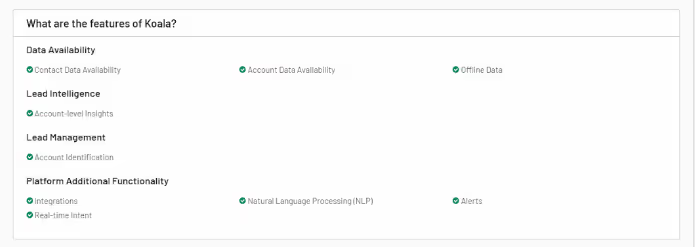
- Feedback Collection: Gathers customer feedback through various channels, including surveys and direct interactions.
- Signal Analysis: Analyzes feedback signals to identify trends, issues, and opportunities for improvement.
- Customer Segmentation: Segments customers based on feedback and behavior to tailor engagement strategies.
- Integration: Integrates with tools like Slack, Intercom, and Zendesk to streamline feedback management.
Pros:
- Focus on Feedback: Excellent for gathering and analyzing customer feedback to improve products and services.
- Integration with Customer Service Tools: Enhances feedback management and customer interactions.
- User-Friendly Interface: Easy to use, even for teams without extensive technical expertise.
Cons:
- Limited to Feedback: Primarily focused on feedback and engagement, with less emphasis on broader marketing or sales features.
- SaaS Focus: Best suited for SaaS companies, with less relevance for other industries.

Pricing:
Koala offers a free tier with basic features, with paid plans starting at $29/month for additional features and higher usage limits.
5. Warmly

Overview:
Warmly is a platform that enhances virtual meetings and customer interactions by providing valuable context and insights. It helps businesses engage more effectively during virtual interactions.
Key Features:
- Meeting Context: Provides detailed information and context about meeting participants, improving the quality of interactions.
- Signal Detection: Analyzes signals from virtual meetings to identify engagement levels and areas for improvement.
- Integration: Works with popular video conferencing tools like Zoom and Microsoft Teams.
- Personalization: Allows for personalized engagement based on participant data and insights.
Pros:
- Enhanced Virtual Interactions: Improves the quality of virtual meetings through detailed participant insights.
- Integration with Video Tools: Seamlessly integrates with major video conferencing platforms.
- User-Friendly: Easy to use and navigate, even for non-technical users.
Cons:
- Limited to Virtual Meetings: Focuses primarily on virtual meeting interactions, with less emphasis on broader marketing or sales features.
- Newer Tool: May have fewer features compared to more established platforms.
Pricing:
Warmly offers a range of pricing plans starting from $10/month per user, with additional features available in higher-tier plans.
{{INLINE_CTA_A}}
6. UnifyGTM

Overview:
UnifyGTM is a GTM platform designed to help businesses streamline their go-to-market strategies through data-driven insights and integrations. It aligns sales, marketing, and product efforts to drive growth.
Key Features:
- GTM Strategy Alignment: Provides tools to align marketing, sales, and product teams with your GTM strategy.
- Data Integration: Integrates with various data sources to provide a unified view of your GTM efforts.
- Performance Tracking: Tracks the performance of your GTM initiatives and provides actionable insights.
- Customizable Dashboards: Customizable dashboards are offered to monitor key metrics and KPIs.
Pros:
- Comprehensive GTM Tools: Provides tools for aligning and optimizing GTM strategies.
- Integration with Data Sources: Offers robust data integration capabilities.
- Customizable Reporting: Allows for detailed reporting and performance tracking.
Cons:
- Complex Setup: Initial setup and configuration may require a learning period.
- Cost: Pricing may be on the higher side for smaller businesses.

Pricing:
UnifyGTM offers custom pricing based on business needs and scale, with details available upon request.
7. HockeyStack

Overview:
HockeyStack is an analytics and attribution platform designed to help businesses understand the impact of their marketing efforts and optimize their strategies. It focuses on collecting and analyzing signals to improve marketing ROI.
Key Features:

- Marketing Attribution: Provides insights into how different marketing channels contribute to conversions and sales.
- Signal Collection: Collects and analyzes signals from various marketing activities to improve strategy.
- Custom Reports: Allows to create custom reports and dashboards to track performance.
- Integration: Integrates with popular marketing and CRM tools to consolidate data.
Pros:
- Strong Attribution Capabilities: Helps understand the impact of marketing efforts across channels.
- Detailed Analytics: Provides in-depth analysis and reporting on marketing performance.
- Integration with Tools: Works well with existing marketing and CRM systems.
Cons:
- Niche Focus: Primarily focused on marketing attribution, with less emphasis on broader customer engagement features.
- Learning Curve: May require some time to understand and utilize the platform fully.

Pricing:
HockeyStack offers a tiered pricing model. Basic features start at $199/month, with higher tiers available for more advanced functionalities.
Here's Why Factors.ai is Your Best Option
Factors stands out as a top choice for businesses seeking a comprehensive GTM solution among the alternatives. Its advanced analytics and AI-driven features make it well-suited for optimizing marketing strategies and improving customer engagement.
Here’s what Factors has in store for you:
- Customer Journey Mapping: Provides a clear view of customer interactions and behaviors, helping businesses tailor their marketing efforts.
- Signal Detection: Identifies key signals influencing customer decisions, enabling targeted marketing strategies.
- AdPilot: Automates campaign optimization, ensuring your marketing messages reach the right audience effectively.
Factors’s blend of detailed analytics, signal detection, and AI-driven optimization makes it a powerful tool for businesses to enhance their GTM strategy and drive growth.
{{INLINE_CTA_A}}
Top Common Room Alternatives
Businesses seeking better signal detection and GTM optimization can explore these powerful alternatives.
1. Leading Alternatives: Factors.ai for advanced intent capture, 6sense for AI-driven revenue insights, Apollo.io for B2B contact management, Highperformr for LinkedIn activity tracking, and Outreach for automated sales execution.
2. Key Features: Cross-channel signal consolidation, workflow automation, predictive analytics, and precision targeting.
3. Decision Factors: Integration capabilities, data accuracy, ease of use, and alignment with GTM objectives.
Choosing the right platform enhances lead detection, streamlines GTM processes, and drives efficient revenue operations.
In a nutshell
Selecting the right tool for signal collection and GTM strategy is crucial for achieving business success. While Common Room offers robust features, exploring alternatives like Demandbase, Factors, Enrich, Koala, Warmly, UnifyGTM, and HockeyStack can provide more tailored solutions. Each tool offers unique capabilities that align with your business needs and goals.
Factors.ai, in particular, offers a compelling combination of advanced analytics, signal detection, and AI-driven insights, making it a standout choice for optimizing your GTM strategy. Evaluate your specific requirements and budget to choose the tool that best supports your business objectives and drives growth.