
10 B2B Lead Generation Tools That Won’t Get You Roasted in Pipeline Reviews
A practical guide to the best B2B lead generation tools in 2026. Learn how top GTM teams spot intent, prioritize accounts, and prove pipeline impact.

Growth Marketer
.avif)
Content Marketer



.svg)


TL;DR
- B2B lead generation isn’t about form fills anymore. It’s about spotting buying intent early, across anonymous visits, multi-stakeholder behavior, and non-linear journeys.
- “More leads” is rarely the problem. The real issue is poor signal quality, misaligned sales and marketing data, and tools that can’t connect activity to pipeline.
- The best B2B lead generation tools focus on account-level visibility, meaningful intent signals, activation across GTM workflows, and revenue attribution, not vanity metrics.
- If your lead gen tools can’t hold up in a pipeline review, they’re not doing their job. Clarity beats volume every time.
If B2B lead generation were easy, as marketers, we’d all be sipping iced coffee while our CRM magically filled itself with perfect, sales-ready accounts.
Instead, most of us are staring at dashboards thinking: “Why do we have 300 leads… and zero pipeline conversations?”
Welcome to lead generation in 2026.
Buyers ghost more than ever.
Sales wants “better leads.”
Marketing wants “credit.”
And leadership wants numbers that don’t require a 20-slide explanation.
Fun times.
Modern lead generation is about spotting intent early, prioritizing the right accounts, and proving real business impact before someone asks the dreaded question:
“So… what’s actually working?”
That’s where the right lead generation tools come in.
In this guide, we’ll walk through the 10 best B2B lead generation tools for 2026. Let’s get into it. Your pipeline review will be… less painful.
What is B2B lead generation?
B2B lead generation is still about identifying and engaging potential buyers who are likely to purchase your product or service.
That part hasn’t changed.
How does it happen? Very different story.
In 2026, lead generation doesn’t start with a form fill. It starts with behavior.
Modern lead gen includes:
- Identifying anonymous website visitors who are clearly “just exploring” (and also very interested)
- Tracking account-level intent, not just individual clicks
- Understanding engagement across multiple stakeholders, all moving at their own pace
- Scoring and prioritizing accounts based on real buying signals, not just lead volume
- Activating those signals across ads, outbound, and sales workflows
- Measuring pipeline and revenue influence, not just form fills or conversion rates
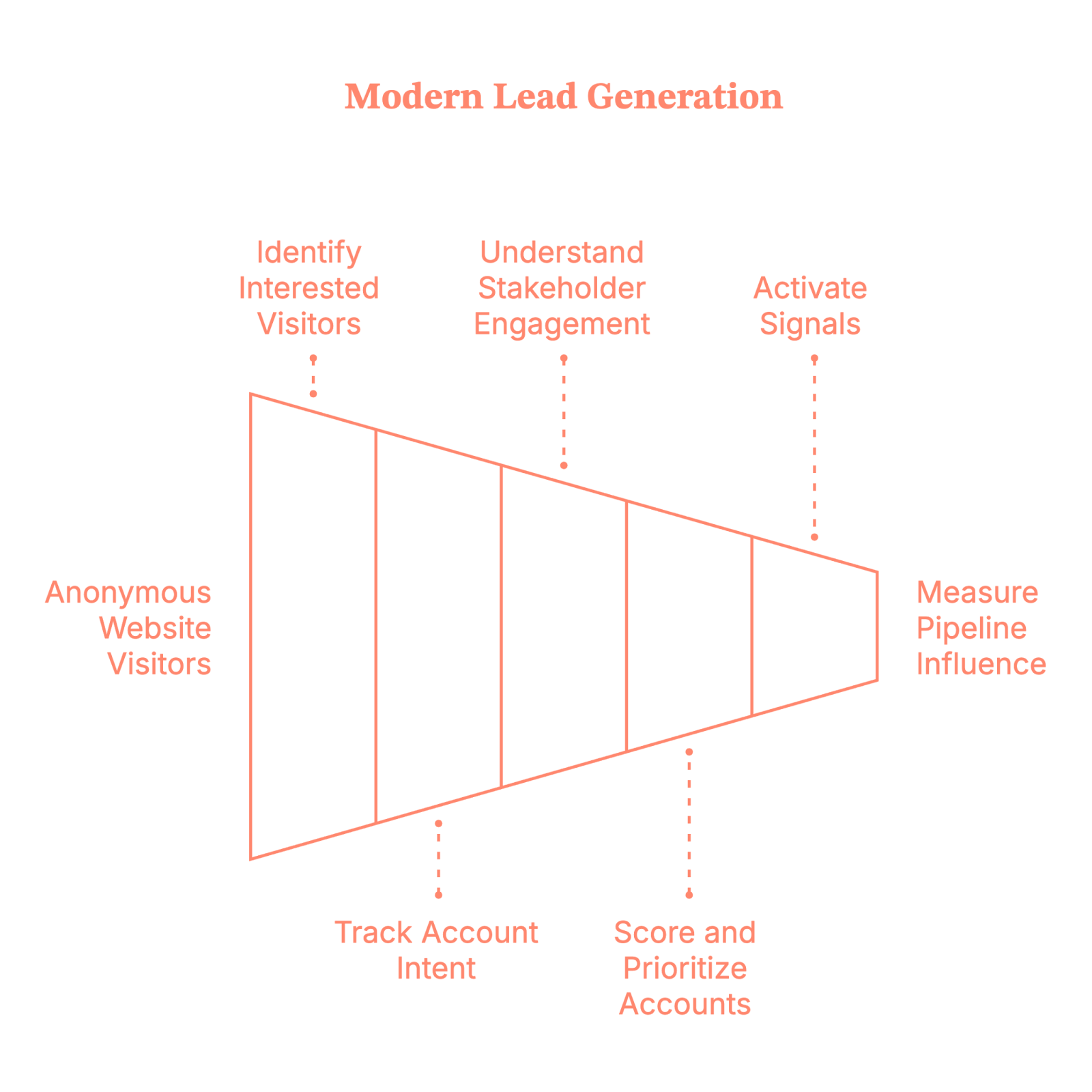
In other words, modern lead generation is less about asking, “Who filled out the form?” And much more about answering, “Which accounts are actively buying… and what should we do before they talk to someone else?”
That shift is what separates lead gen that looks busy from lead gen that actually drives revenue.
Related read: Lead generation KPIs for B2B teams.
Why lead generation tools matter more than ever
Once lead generation shifts from “forms” to signals, the tools you use suddenly matter a lot more. Because you can’t spot quiet demand, track intent, or connect buying behavior to revenue with spreadsheets and good intentions alone.
The right lead generation tools help B2B teams:
- See demand before someone raises their hand
- Focus on high-intent accounts, not low-quality volume
- Align sales and marketing around shared, trusted signals
- Reduce wasted spend and improve CAC
- Defend impact with pipeline and revenue data, not vibes
Without the right tools, teams usually default to:
- Guesswork
- Over-reporting MQLs to feel productive
- And fighting internal attribution debates that solve nothing
And once you’re in that loop, everything feels harder than it needs to be. So let’s look at the tools that actually help.
{{INLINE_BOFU}}
What features should you look for in a lead generation tool?
Not all lead generation tools are created equal. Some help you uncover clear buying signals.
Others help you collect more leads… and more questions in your pipeline review.
If lead generation in 2026 is about accounts, intent, and revenue, your tools should probably understand those things too. Shocking, I know.
Here’s what to look for.
1. Account-level visibility (because B2B doesn’t buy in isolation)
If a tool only tells you who filled out a form, congratulations. You’re already late. You want to know:
- Which companies are on your site
- How often are they showing up
- And what they’re clearly obsessed with
Because deals don’t close just because one person clicked once, they close when an entire account quietly loses sleep over your pricing page.
2. Intent signals that mean something
Every tool claims to show “intent.” Some just call every page view a buying signal and call it a day. So, look for tools that capture intent signals like:
- Website behavior
- Content consumption
- G2 signals
- Ad engagement
- Sales and CRM activity
And, more importantly, help you tell the difference between “Just browsing” and “Please don’t let this go to a competitor.”
If everything looks like intent, nothing is.
3. Multi-stakeholder tracking (aka reality)
Real buying journeys are chaotic. You’ve got:
- One person reading blogs
- Another watching a demo
- Someone from finance lurking in the background
- And a VP who shows up exactly once, right before the deal closes
Good lead generation tools understand this. Bad ones think buying happens in a straight line. (It doesn’t.)
4. Activation across your GTM stack (insight ≠ action)
Dashboards are nice. Revenue is nicer. Your lead gen tool should help you:
- Alert sales when an account heats up
- Trigger outbound workflows or ad workflows
- Sync cleanly with your CRM
- And generally do something useful with the data
If your insights just sit there looking pretty, they’re not insights. They’re decor.
5. Pipeline and revenue attribution (for when leadership asks)
At some point, someone will ask, “So… is this actually working?”
Your tool should be able to answer:
- Which accounts turned into pipeline
- What influenced deal creation
- And what contributed to revenue
If it can’t, get ready for phrases like “vanity metrics” and “budget reallocation.”
6. Clean data and low drama
No one wants a tool that:
- Breaks integrations
- Requires weekly manual cleanup
- Or creates more Slack threads than insights
The best tools quietly do their job without becoming another project.

The 15 best B2B lead generation tools for 2026
Now that we know what actually matters in a lead generation tool, let’s talk about the ones that show up when it counts.
These aren’t “nice-to-have” tools. They’re the ones GTM teams rely on when lead volume looks great… but pipeline tells a different story.
We’re starting with platforms built for account-first lead generation, then moving into data, inbound, and execution tools.
1. Factors.ai
Factors.ai is an ABM-first lead generation platform built for how B2B buying actually works today.
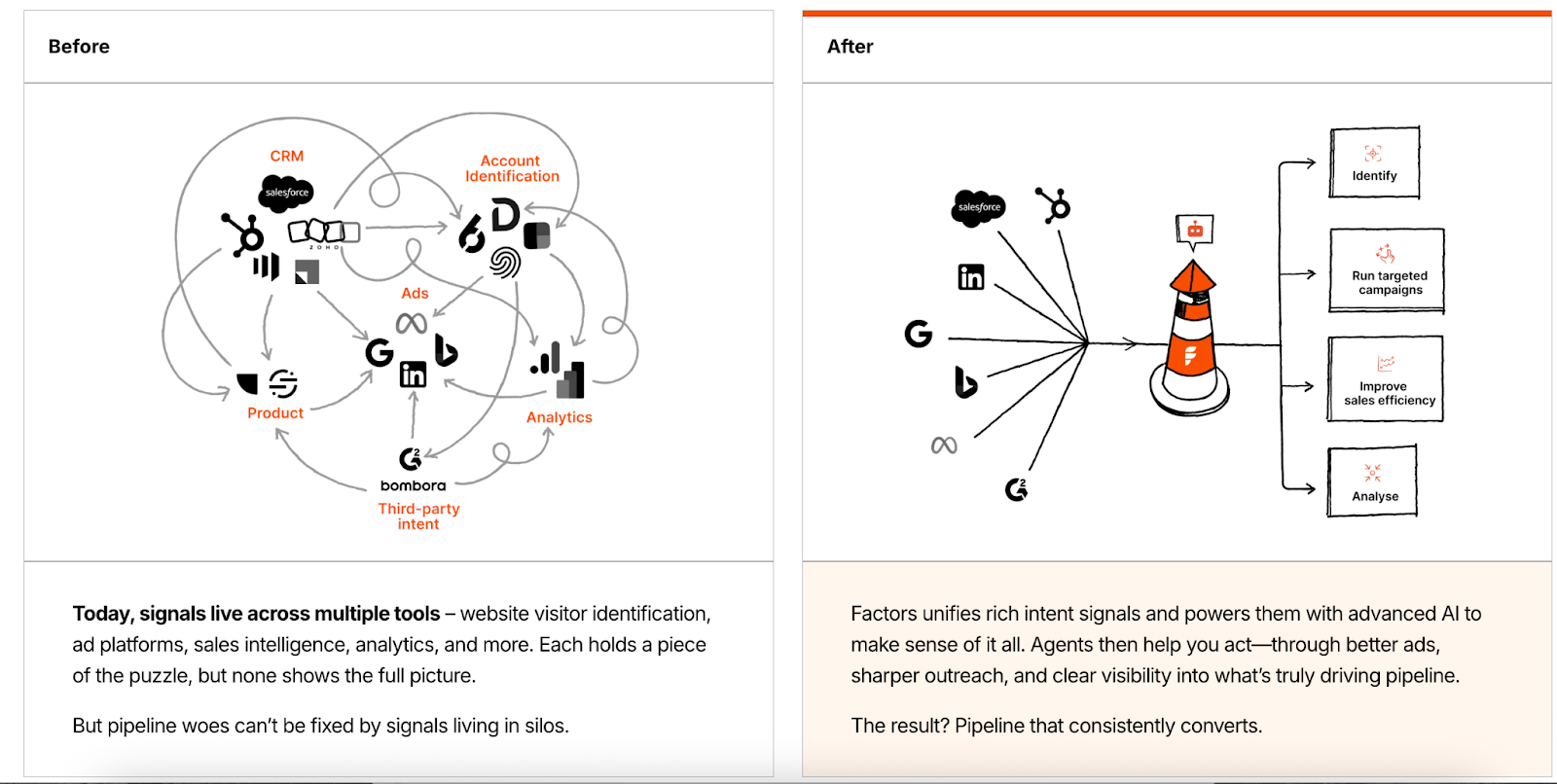
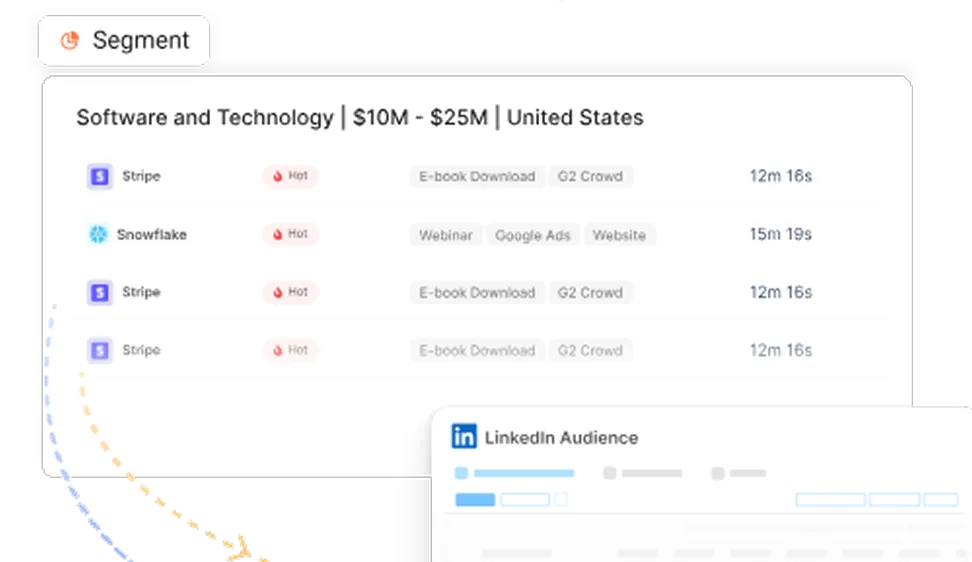
Instead of treating lead gen as a form-filling exercise, it treats it as an account discovery and influence problem. Who’s visiting? Who’s engaging? And which of those accounts are actually worth your time? It also helps you create segments of those audiences and run Google Ads and LinkedIn Ads targeting them.
Key benefits
- Identifies anonymous website visitors at the account level
- Surfaces high-intent accounts by capturing 1st, 2nd and 3rd party intent signals
- Aligns sales and marketing on shared account insights
- Shows which touchpoints influenced the pipeline and revenue
- Helps you optimize ad spends on Google and LinkedIn
Core features
- Waterfall enrichment to achieve >75% Account level website visitor identification
- Intent capture across website, ads, G2, and sales activity
- Run targeted ad campaigns on Google and LinkedIn using our audience sync features
- Workflow automation using GTM engineering services
- Multi-touch attribution and revenue reporting with Lift analysis
- CRM and ad platform integrations
Pricing
Custom pricing
2. Oppora.ai
Oppora.ai is an AI outbound sales agent that automates the entire outbound outreach workflow for teams that want to find leads, personalize outreach, run follow-ups, handle replies, and sync CRM activity from one place.
Instead of juggling separate tools, you can use Oppora AI to create automated workflows like:
“Every day at 9 AM, find SaaS companies hiring marketers, identify decision-makers with verified emails, send personalized emails, send LinkedIn connection requests, and automatically add them to an existing outreach campaign.” And it keeps running automatically every day.
Key benefits
- Helps teams manage lead discovery, enrichment, outreach, follow-ups, replies, and CRM updates in one workflow
- Reduces the need to switch between multiple prospecting, data, and outreach tools
- Supports safer outbound scaling with inbox health, warm-up, provider matching, and smart send controls
- Uses AI to personalize emails, handle replies, qualify leads, and move interested prospects closer to meetings
- Makes recurring outbound workflows easier to run, such as finding new companies every week and launching outreach automatically
Core features
- 1B+ lead database with waterfall data enrichment and pre-validation
- Pull leads from sources like LinkedIn and Google Maps based on your targeting needs
- 20+ buying signals to identify high-intent prospects
- Verified email addresses and phone numbers for accurate outreach, with LinkedIn and Sales Navigator lead import
- AI workflow builder for automated outbound prospecting
- SMTP verification, inbox warm-up, inbox health tracking, and send pattern variation
- AI-powered email personalization and automated follow-ups. AI reply handling, lead qualification, and meeting booking support
- Domain and inbox rotation for scaling outbound campaigns
- CRM sync, campaign reporting, pipeline tracking, and engagement insights
Pricing
Oppora.ai offers a free plan for getting started and flexible paid plans with separate credit pools for different tasks, so you only use credits where needed. The paid plan starts from $34/month.
3. Pintel.ai
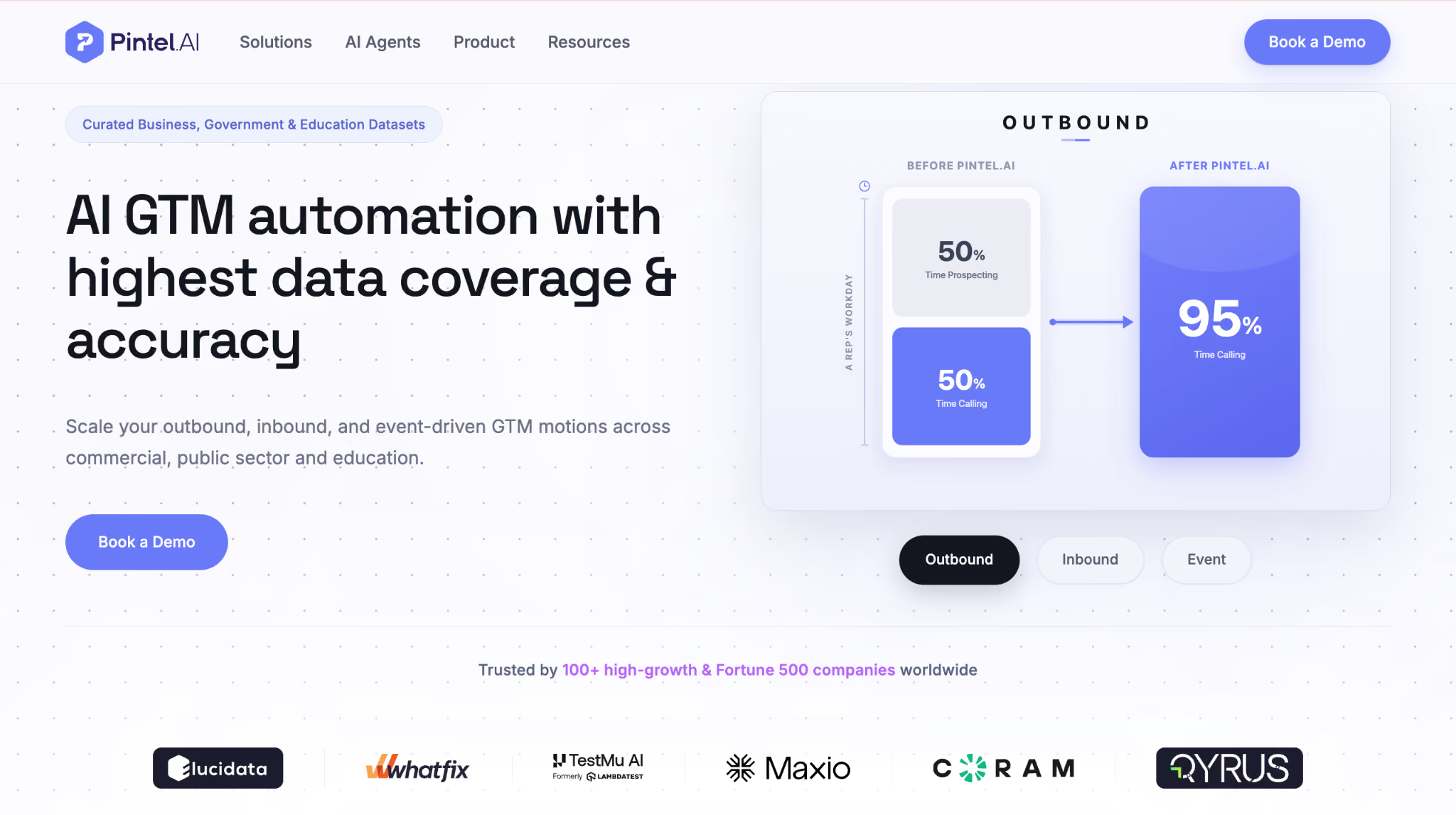
Pintel.ai is an AI-powered B2B sales intelligence platform that helps GTM teams generate quality leads by discovering target companies, finding the right people, and enriching their contact data. It combines ICP-based AI company research, persona-based prospecting, LinkedIn search, and contact enrichment to support lead generation and outbound workflows.
Key benefits
- Generate higher-quality B2B leads by targeting companies and people that match your ICP
- Identify the right decision-makers using detailed LinkedIn profiles and priority-based personas
- Turn LinkedIn post engagement into enriched leads for sales outreach
- Get verified contact details, including email addresses, phone numbers, LinkedIn profiles, and company information
- Improve data coverage with proprietary data, waterfall enrichment, and regional data providers
- Prioritize high-fit companies and people using AI-powered scoring and buying signals
- Move qualified leads directly into your CRM
Core features
- AI-powered company research based on ICP criteria and buying signals
- Priority-based person cohorts for finding people in a defined order of roles
- Full LinkedIn profile search beyond job titles and roles
- LinkedIn post engagement search and contact enrichment
- Waterfall contact enrichment across multiple data sources
- Proprietary data combined with regional data providers across markets
- AI-powered company and person scoring based on custom requirements
- Hyper-personalized LinkedIn and email message generation at scale
- CRM synchronization and workflow automation
Pricing
Pintel.ai offers flexible, credit-based pricing based on usage.
4. ZoomInfo
ZoomInfo is one of the most widely used B2B data and intelligence platforms for outbound lead generation. For many teams, this is where prospecting begins. It’s typically used early in the GTM motion for market mapping, list building, and outbound prospecting, and often feeds data into CRMs, sales engagement tools, and ABM platforms.
Key benefits
- Massive contact and company database
- Strong filters to narrow down ICP-fit accounts
- Useful intent and firmographic layers
Core features
- Contact and company-level data
- Intent signals
- CRM integrations
Pricing
Pricing is not disclosed. Read more about this on the ZoomInfo pricing blog.
Also, if you are browsing for some good alternatives to ZoomInfo, read our blog on ZoomInfo alternatives and competitors.
5. Apollo.io
Apollo combines B2B contact data with outbound execution, which makes it popular with lean GTM teams that want speed without stitching together five tools.

Key benefits
- Prospecting and outreach in one place
- Lower barrier to getting outbound started
- Fast setup for small to mid-sized teams
Core features
- Contact database
- Email sequencing
- CRM sync
Pricing
The basic plan starts at 49$ per month, and the features vary based on the type of plan you choose.
Related read: Apollo.io vs ZoomInfo
6. Cognism
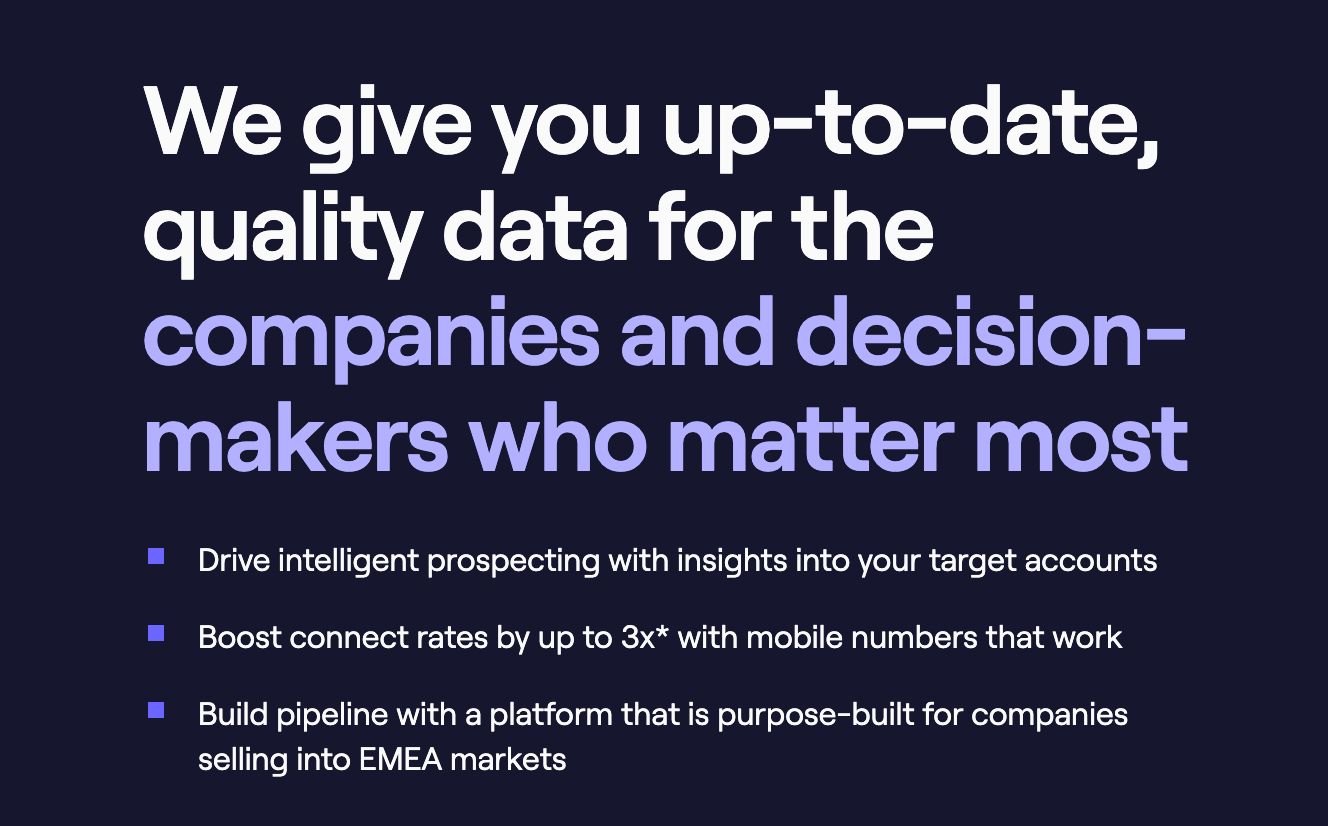
Cognism is known for compliance-focused B2B data, especially for teams selling into EMEA markets where regulations actually matter.
Key benefits
- GDPR-compliant data
- Strong mobile number coverage
- Useful for international outbound
Core features
- Contact and company data
- Intent insights
- CRM integrations
Pricing
Public pricing is unavailable. If you want to read more about pricing, refer to our Cognism pricing blog.
7. HubSpot
HubSpot is an all-in-one CRM and marketing platform widely used for inbound lead generation and lifecycle management.

Key benefits
- Unified CRM and marketing workflows
- Strong inbound and automation tooling
- Widely adopted and well-integrated
Core features
- Forms and landing pages
- Email marketing
- CRM and reporting
Pricing
Public plans available; pricing varies by hub and tier.
8. Clay
Clay acts as a data orchestration layer for GTM teams, pulling together enrichment, intent, and signals from multiple sources.
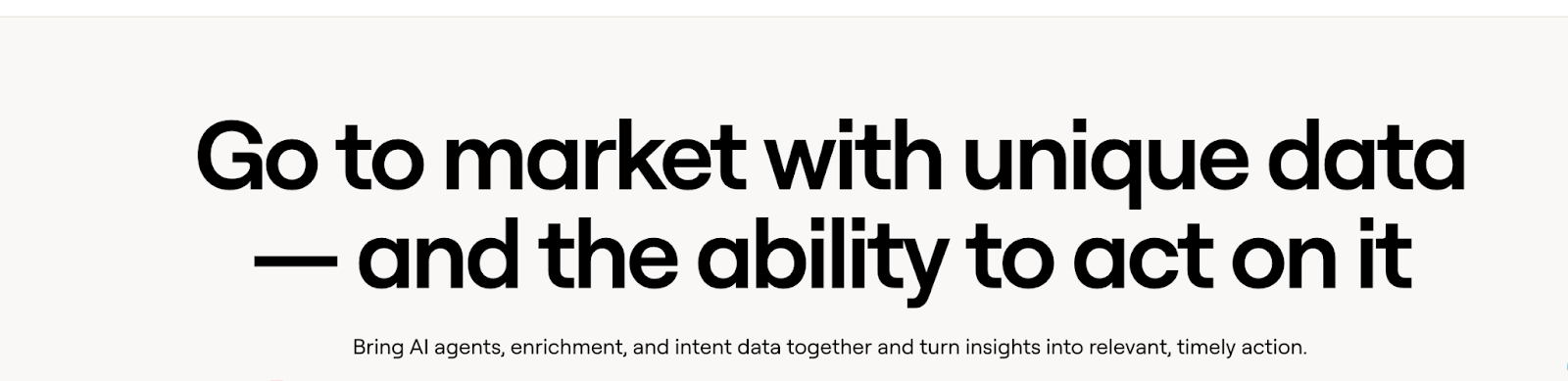
Perfect for teams who like control (and spreadsheets… but better ones).
Key benefits
- Highly flexible enrichment workflows
- Connects multiple tools into one system
- Reduces manual prospecting work
Core features
- Multi-source data enrichment
- Custom workflows
- CRM and outbound tool integrations
Pricing
The basic plan starts at 134$ per month. Custom pricing is available for enterprise companies.
While Clay offers powerful outbound workflows, you may want to compare it against the top Clay alternatives designed for faster, out-of-the-box sales orchestration.
9. UserGems
UserGems focuses on revenue signals tied to people's movement, especially job changes.
It helps teams re-engage buyers when champions move to new companies. (Which happens more than anyone admits.)
Key benefits
- Turns job changes into warm outbound opportunities
- Helps sales reconnect with known buyers
- Adds timing and relevance to outreach
Core features
- Job change tracking
- Account and contact alerts
- CRM integrations
Pricing
Public pricing unavailable
10. Salesloft
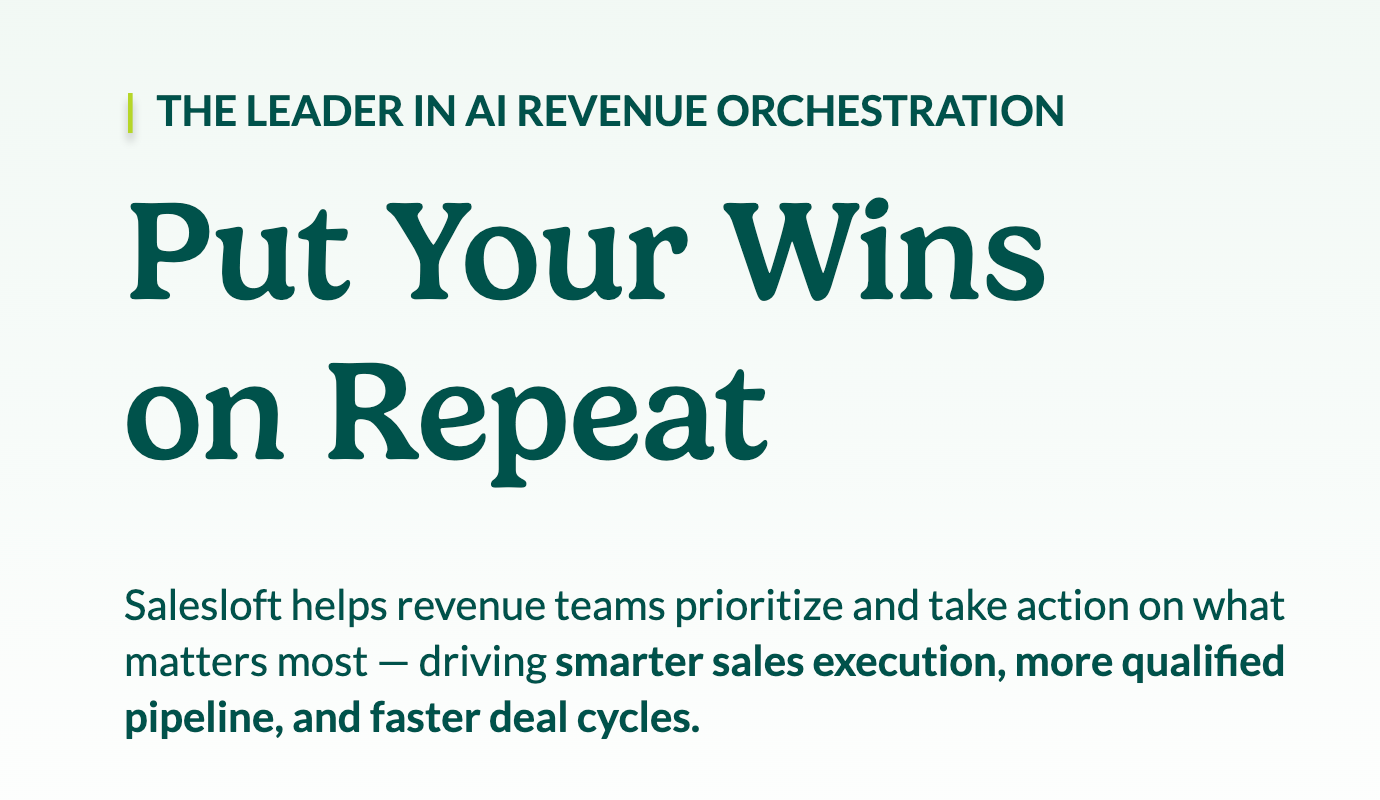
Salesloft focuses on rep productivity and human-centric engagement, with tools that help sales stay organized without feeling robotic.
Key benefits
- Strong rep experience
- Clear engagement insights
- Helps standardize outreach
Core features
- Email and call sequencing
- Sales analytics
Pricing
Public pricing unavailable
11. Drift
Drift enables chat-based lead capture for high-intent website visitors who don’t want to fill out another form.
Key benefits
- Faster response times
- Better qualification at the moment of intent
- Helpful for sales-assisted inbound
Core features
- Website chat
- Lead routing
Pricing
Unavailable
12. Intercom
Intercom blends sales, marketing, and support conversations into one messaging platform.
Key benefits
- Conversational lead capture
- Flexible automation
- Useful across the full funnel
Core features
- Messaging and chat
- Workflow automation
Pricing
Public plans available; advanced pricing unavailable.
How to choose the right B2B lead generation tool (without overthinking it)
Choosing a lead generation tool doesn’t have to feel like a six-week internal project with five comparison spreadsheets and zero decisions.
The trick is to stop asking “Which tool is best?” And start asking, “What problem are we actually trying to solve right now?”
Here’s a simple way to think about it:
- If your problem is not knowing who’s visiting your site, then you need visitor identification and intent-capturing tools
- If your problem is too many low-quality leads, then you need better qualification and prioritization
- If your problem is sales saying ‘these leads are useless’, then you need shared signals and attribution
- If your problem is execution, not insight, then you need engagement and activation tools
Most teams don’t fail because they picked the wrong tool. They fail because they picked a tool for a problem they don’t actually have.
A simple way to choose the right lead generation tool (no spreadsheets needed)
If you’re staring at a list of tools thinking, “Okay… but which one do we actually need?”, then start here.
PS: There is no right or wrong answer here.
1. How mature is your GTM motion right now?
Ask yourself where your team realistically sits:
Early-stage?
You’re still figuring out who to sell to and how to reach them. Data and outbound tools usually help most here.
Scaling?
You have demand coming in, but it’s messy. This is where intent signals and activation tools start to matter.
More mature?
You’re running ABM, working with multiple stakeholders, and leadership wants proof. You’ll need attribution and account-level visibility, not just more leads.
No wrong answer. Just be honest.
2. Where are things actually breaking?
This part is easier than it sounds.
Getting traffic, but no idea who it is? You have a visibility problem.
You know who’s visiting, but nothing happens next? You have an activation problem.
Campaigns are running, deals are closing… but you can’t explain why? You have an attribution problem.
Most teams only have one major leak at a time. Fix that first.
3. Who needs to believe this data?
This matters more than people admit.
If it’s just marketing, lighter inbound tools might be enough.
If sales and marketing both need to act on it, you need shared, account-level signals.
If leadership is involved, pipeline and revenue reporting isn’t optional. It’s table stakes.
If the data can’t hold up in a pipeline review, it’s going to be questioned eventually.
The gut check
Here’s the simplest test of all: If you can’t clearly explain why a tool exists in your stack, what problem it solves, and who it helps, it probably doesn’t need to be there.
And yes, that applies even if it has a really nice dashboard.
FAQs on B2B lead generation tools
Q1. What is the best B2B lead generation tool in 2026?
There’s no single best tool. Some teams need account-level visibility, others need better outbound data, and mature teams need attribution and ABM execution. Tools that connect intent, activation, and revenue tend to outperform standalone lead capture tools.
Q2. Are B2B lead generation tools better than form-based lead gen?
Forms still have a place, but relying on them alone means you’re seeing demand too late. Modern lead generation tools surface anonymous buying intent, multi-stakeholder engagement, and account-level signals long before a form fill happens. Also, read Lead generation vs Demand generation.
Q3. How do B2B companies generate high-quality leads instead of more leads?
High-quality leads come from prioritization, not volume. Teams that focus on:
- Account-level intent
- Buying behavior across multiple people
- Sales and marketing alignment
consistently generate fewer leads, but more pipeline. This is why many teams shift from MQLs to account-based or intent-led lead generation.
Q4. What’s the difference between ABM tools and lead generation tools?
Traditional lead generation tools focus on individual contacts. ABM tools focus on accounts, buying committees, and influence over time.
In practice, modern B2B lead generation often includes ABM capabilities like account identification, intent tracking, activation, and attribution. The line between the two is increasingly blurry.
Q5. How do you know if a B2B lead generation tool is working?
Are you clearly able to explain what influenced pipeline and revenue during a pipeline review? If yes, there it is, your tool is working.
If a tool only reports clicks, form fills, or MQLs, it will eventually be questioned. Tools that tie engagement to opportunities, pipeline creation, and revenue impact tend to survive budget scrutiny.

See how Factors can 2x your ROI
Boost your LinkedIn ROI in no time using data-driven insights


.avif)
See Factors in action.
Schedule a personalized demo or sign up to get started for free
LinkedIn Marketing Partner
GDPR & SOC2 Type II







.svg)



.avif)

