
Factors.ai vs Common Room: Choosing What Works for Your GTM Motion
Explore Factors.ai as a Common Room alternative across features, pricing, analytics, and support to find the right GTM tool for your RevOps or marketing team.
.avif)
Content Marketer

Growth Marketer



.svg)


TL;DR
- Factors.ai connects the full GTM funnel with account-level orchestration, AI automation, and predictive account scoring.
- Common Room excels at person-level visibility, especially in product- and community-led GTM strategies.
- Factors offers stronger support, enterprise security, and deep integrations for complex RevOps.
- Common Room keeps setup lightweight, pricing transparent, and real-time signal tracking central.
If you’ve landed on this page, I want to start by saying hello!
Look, I know you’re probably torn between Factors.ai and Common Room.
Maybe you’ve got five tabs open. Maybe you’ve said the words “signal orchestration” so many times that you deserve an honorary RevOps badge.
We’ve been there (okay, not really, but it sounds nice).
Both platforms promise intent data, AI workflows, and GTM clarity. Both sound smart. Both have cool websites. But when you start unpacking how they actually work, it’s like comparing a telescope to a microscope.
One zooms out: Mapping every account signal, sales motion, ad touch, and funnel stage in one unified view (Heyyyy, Factors).
The other zooms in: Spotting individual conversations and social signals happening across developer and community channels (Hi, CommonRoom).
So the real question is: What kind of GTM are you running?
This guide breaks it down across 7 things that actually matter:
- What do they help you do?
- How much do they cost?
- Can you trust them with data?
- Will your team actually use it?
- Can you prove pipeline or just vibes?
Factors.ai vs Common Room: Features and Functionality
Both Factors.ai and Common Room help GTM teams uncover intent, automate engagement, and guide sales with AI. But their approach to data, identity, and orchestration follows two very distinct philosophies.
Here’s a quick overview before we look deeper.
| Feature | Factors.ai | Common Room |
|---|---|---|
| Account Identification | 75%+ visitor coverage through multi-source enrichment unified in Account 360 | Person360™ for AI-driven identity resolution using signals from product, social, and community data |
| Intent Signals | 1P (website, CRM, product), 2P (ad platforms, G2), 3P (external data, CSV | 1P (website, product), 2P (forums, LinkedIn, GitHub, Slack, Discord), 3P (news, job changes) |
| Customer Journey View | Chronological timeline of buyer actions across web, ads, CRM, and product | Real-time dashboard with signals and identities, but no chronological view |
| Scoring System | AI-enabled predictive accounts scoring, custom scoring based on ICP fit, funnel stage, and engagement intensity | Customizable contextual scoring for both contacts and accounts |
| Analytics | Funnel-stage analytics through Milestones, with drop-off and channel performance reports | Real-time dashboards that show live engagement signals |
| AI Assistants / Agents | GTM Engineering Agents for alerts, research, buying group mapping, and follow-up tracking | RoomieAI™ for signal summarization, research, and personalized snippets |
| Contact Enrichment | AI-driven Contact Insights to surface key decision-makers and personalization cues | Person360™ and Prospector for identity enrichment and new contacts |
Factors.ai Features and Functionality
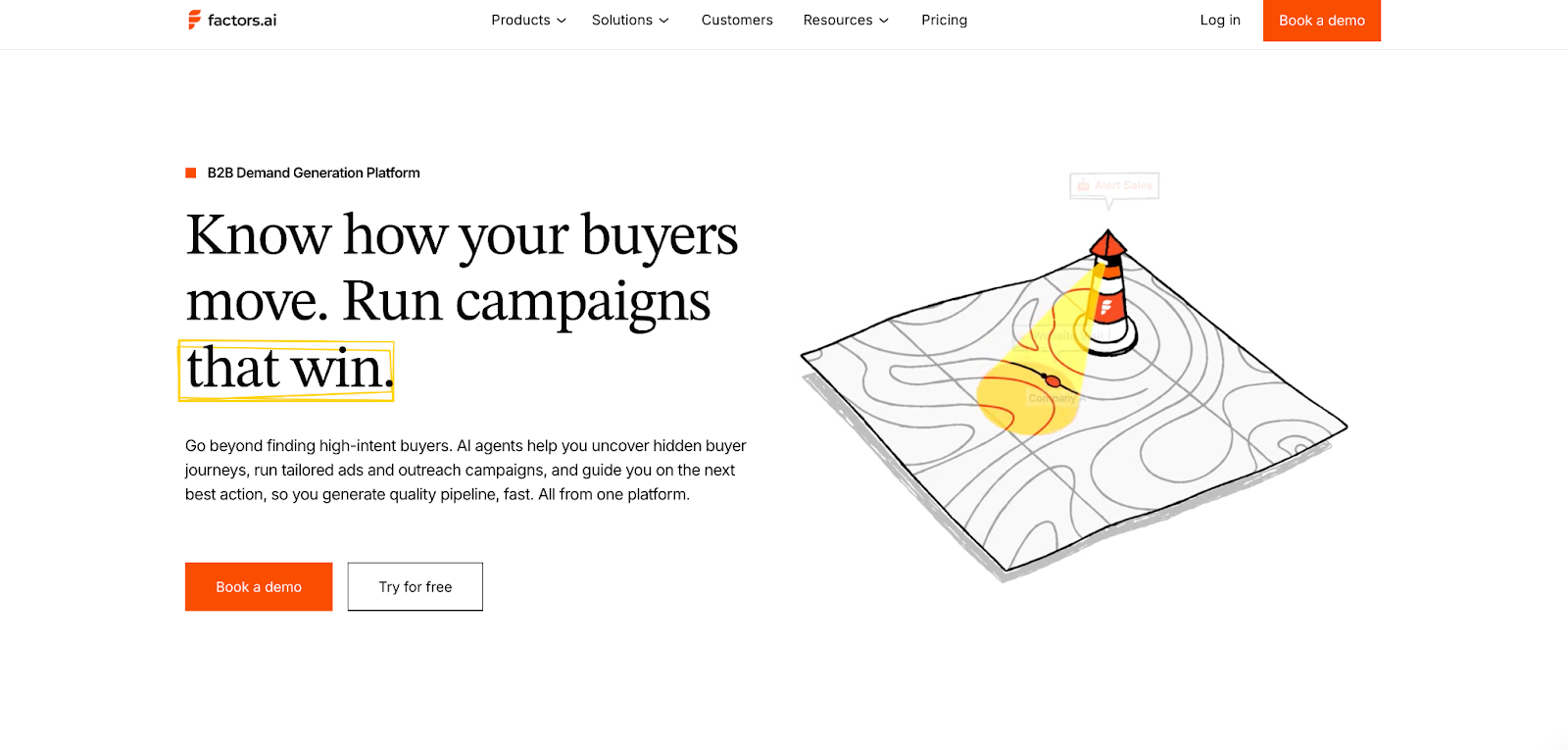
Factors.ai is designed for teams that want a connected GTM workflow from signal to revenue. It collects data from multiple touchpoints, aligns it under a single account view, and uses AI agents to automate what happens next.
Key capabilities include:
- Unified GTM Visibility
Combines signals from the website, ads, CRM, and product activity into Account 360, creating a single source of truth for sales and marketing. - AI-Powered Agents
Support the team through real-time alerts, research automation, buying group identification, and closed-lost reactivation. - Multi-Source Intent Detection
Gathers intent from first-, second-, and third-party data while highlighting milestone actions that move buyers through the funnel. - Journey Tracking
Maps every buyer interaction in chronological order, giving a clear picture of how deals progress. - Smart Enrichment and Scoring
Enriches accounts through trusted data providers and scores them by ICP fit and engagement strength.
The platform gives teams both visibility and activation in one motion. Basically, everything you need to identify, engage, and measure in one place.
Common Room Features and Functionality
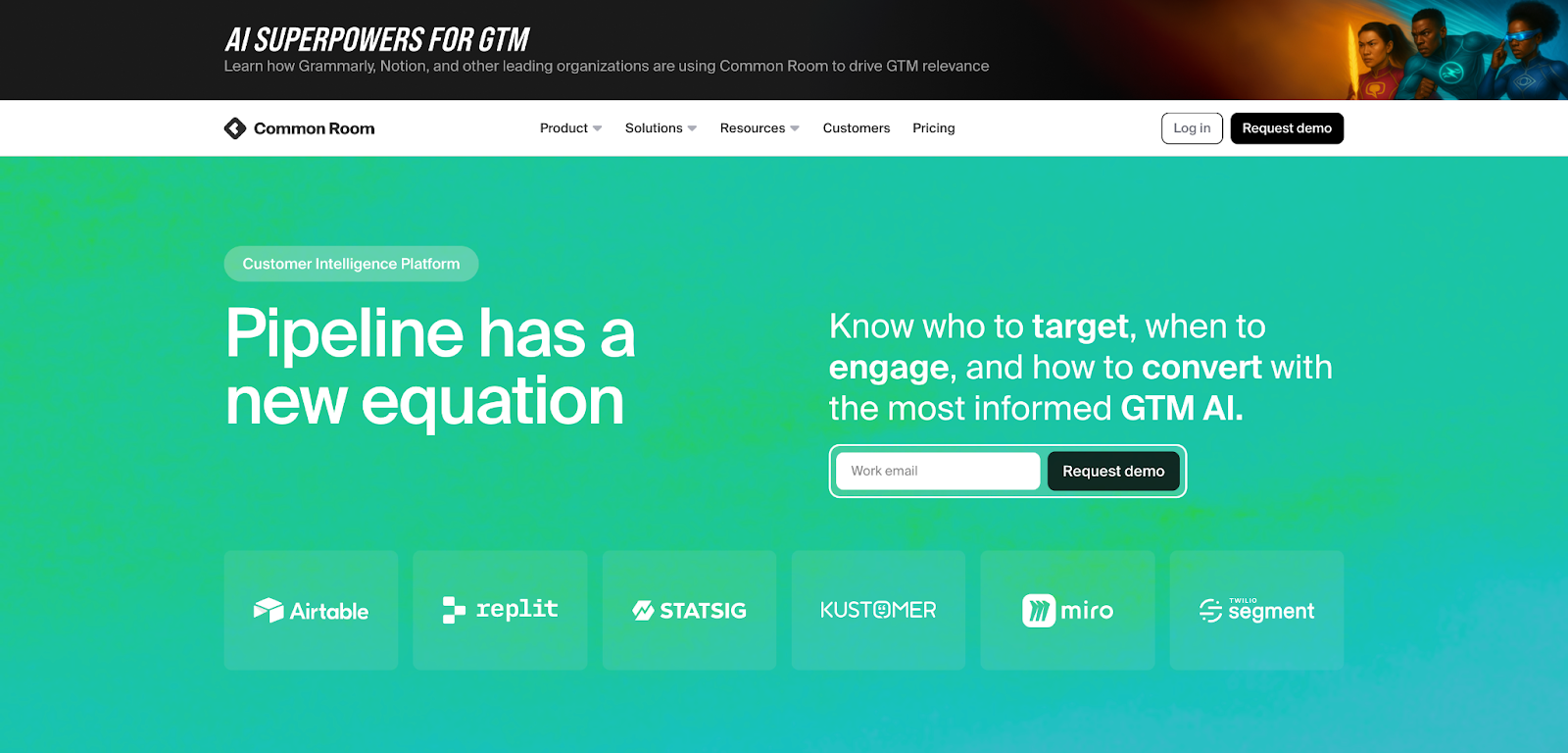
Common Room focuses on person-level insight and community-driven signals. It’s built to help GTM teams connect digital activity from across platforms and turn it into actionable intelligence.
Key capabilities include:
- Person360™ Enrichment
Resolves identities using data from emails, social platforms, product usage, and community forums. - Wide Signal Coverage
Captures first-party data from your website and product, second-party data from platforms like GitHub or Slack, and third-party intent from public sources. - Custom Scoring
Offers transparent, adjustable scoring at both the contact and account levels. - RoomieAI™ Agents
Assist with signal summarization, research, and outbound personalization. - Real-Time Dashboards
Surface active individuals and their engagement context without needing static reports.
This system focuses more on individual behavior and social intent, helping teams see who’s active and what’s happening in real time.
Verdict on Features
Common Room provides strong person-level visibility, especially for teams that track engagement across product and community channels.
Factors.ai delivers a broader, full-funnel approach where every channel, account, and signal connects under one GTM framework. It helps teams move from scattered insights to a single, orchestrated motion.
Factors vs Common Room: Pricing
When GTM teams compare platforms, pricing usually says a lot more than just the number. It shows how each product is built to grow, scale, and fit into your existing motion.
Factors.ai follows a usage-and-seat-based model that expands with your team.
Common Room uses a tiered pricing approach where each plan unlocks a new set of capabilities.
| Plan Details | Factors.ai | Common Room |
|---|---|---|
| Model | Usage + seat-based pricing | Fixed annual tiers |
| Starting Price | Contact for pricing | Starts at $1,000 per month (billed annually) |
| Free Plan | Available with limited features | Not listed |
| Tiers | Free, Basic, Growth, Enterprise | Starter, Team, Enterprise |
| Seats | 3 to 25, depending on plan | Not specified |
| Integrations | Expands with plan (HubSpot, Salesforce, Marketo, G2, Drift) | Core CRM and MAP integrations |
| Support | Dedicated CSM, weekly syncs, Slack collaboration | Guided onboarding and expert assistance |
| Add-on Services | GTM Engineering Services | None mentioned |
Factors Pricing

Factors.ai is designed to fit different stages of GTM maturity.
Each plan adds more automation, analytics, and orchestration tools as your pipeline grows.
Plans include:
- Free Plan
- Identify up to 200 companies per month
- Includes 3 seats
- Basic dashboards and visitor tracking
- Slack and Microsoft Teams integration
- Basic Plan
- Identify 3,000 companies per month
- Includes 5 seats
- Adds LinkedIn intent signals and GTM dashboards
- Connects with HubSpot, Salesforce, and Google Search Console
- Growth Plan
- Identify 8,000 companies per month
- Includes 10 seats
- Adds ABM analytics, account scoring, workflow automation, and a dedicated CSM
- Enterprise Plan
Optional GTM Engineering Services
For teams that don’t have in-house RevOps, Factors.ai provides an add-on service layer for $4,000 setup and $300 per month.
This includes:
- Custom ICP modeling and GTM playbook design.
- Setup of enrichment, alert, and ad activation workflows.
- SDR enablement through post-meeting alerts, closed-lost reactivation, and buying group mapping.
- Ongoing reviews, optimization, and documentation of the GTM process.
GTM engineering services help teams operationalize Factors.ai faster and keep GTM workflows running smoothly without heavy internal effort.
For more details on pricing, visit Factors.ai's pricing page.
Common Room Pricing
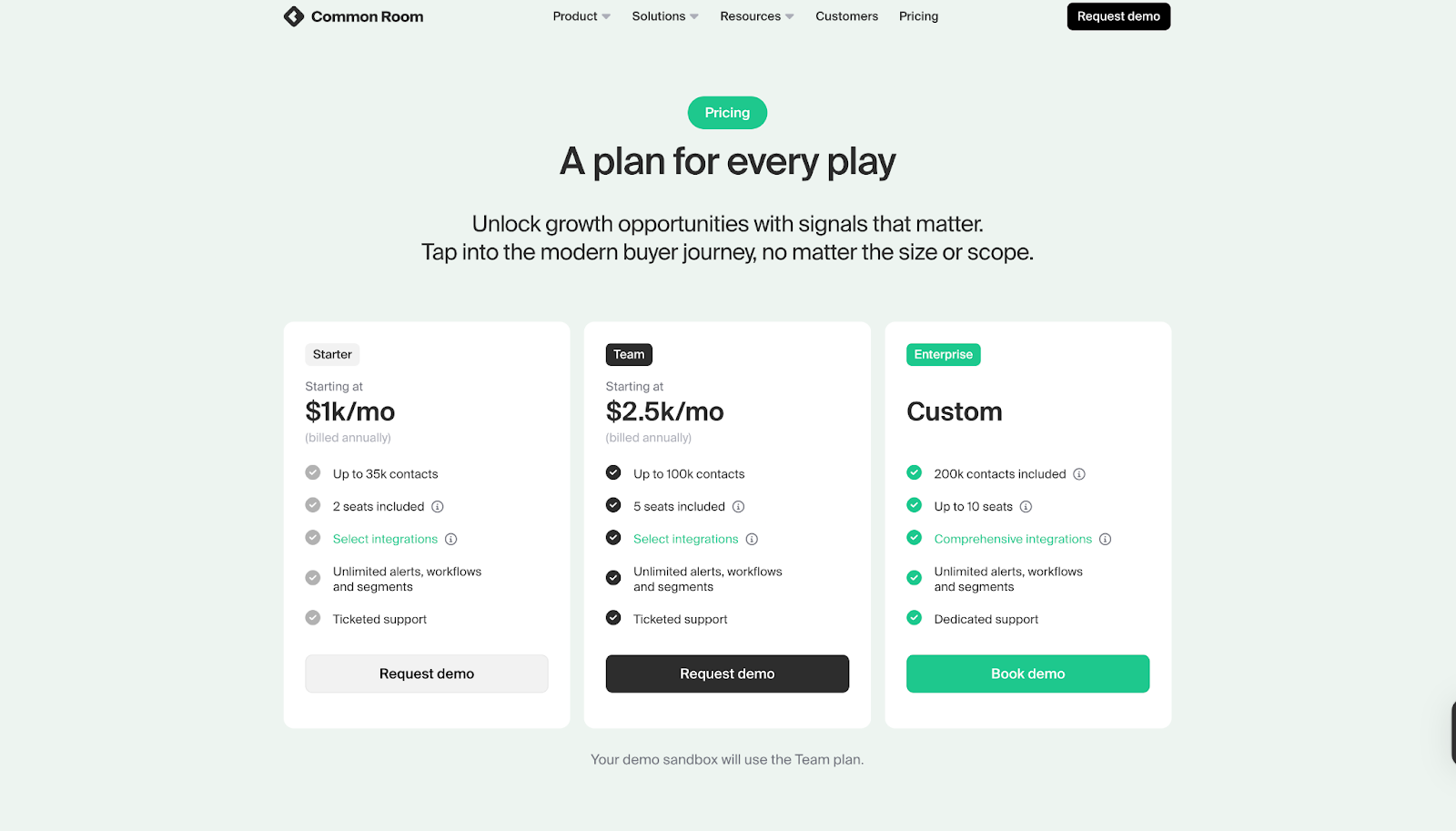
Common Room keeps its pricing simple and upfront. Each plan adds new automation and signal depth as you move up.
Plans include:
- Starter - $1,000 per month (billed annually)
- Person360 enrichment
- Core signal tracking
- CRM integration
- Team - $2,500 per month (billed annually)
- Adds RoomieAI automation
- Expands data sources and integration options
- Enterprise - Custom Pricing
- Built for large teams
- Includes compliance support and advanced customization
The structure makes it easier for smaller teams to forecast budgets and choose the level of data access they need.
The Verdict
Common Room’s pricing keeps things simple, helping teams plan their annual spend with clear tiers.
Factors.ai focuses on scalability, giving teams more flexibility and depth as they grow.
Its optional GTM services make a big difference for companies that want help setting up complete workflows instead of managing them alone.
If you’re comparing pricing models across tools, our breakdowns of ZoomInfo pricing and Cognism pricing can help you understand how leading intent and enrichment platforms price their offerings.
{{INLINE_BOFU}}
Factors vs Common Room: Analytics & Reporting
Analytics tell you how well your GTM system actually works. It’s the difference between seeing activity and understanding what drives results.
Both platforms offer strong visibility, but they look at data in different ways.
| Capability | Factors.ai | Common Room |
|---|---|---|
| Analytics Type | Full-funnel visibility with campaign and channel attribution | Real-time person-level insights and engagement data |
| Funnel Tracking | Tracks stages from MQL to Closed Won | Focuses on live engagement signals |
| Customer Journey | Chronological timelines across web, CRM, ads, and product | Integrated dashboards with active contact signals |
| Attribution | Multi-touch revenue attribution from first click to deal close | Engagement-based tracking without funnel attribution |
| Reporting Tools | Milestones, segment insights, and custom dashboards | Real-time dashboards with individual and signal-level data |
| Drop-off Detection | Visual funnel breakdowns to spot where deals slow down | Not specified |
| AI Insights | AI-supported analytics for deeper GTM questions | AI summarization through RoomieAI |
Factors Analytics and Reporting
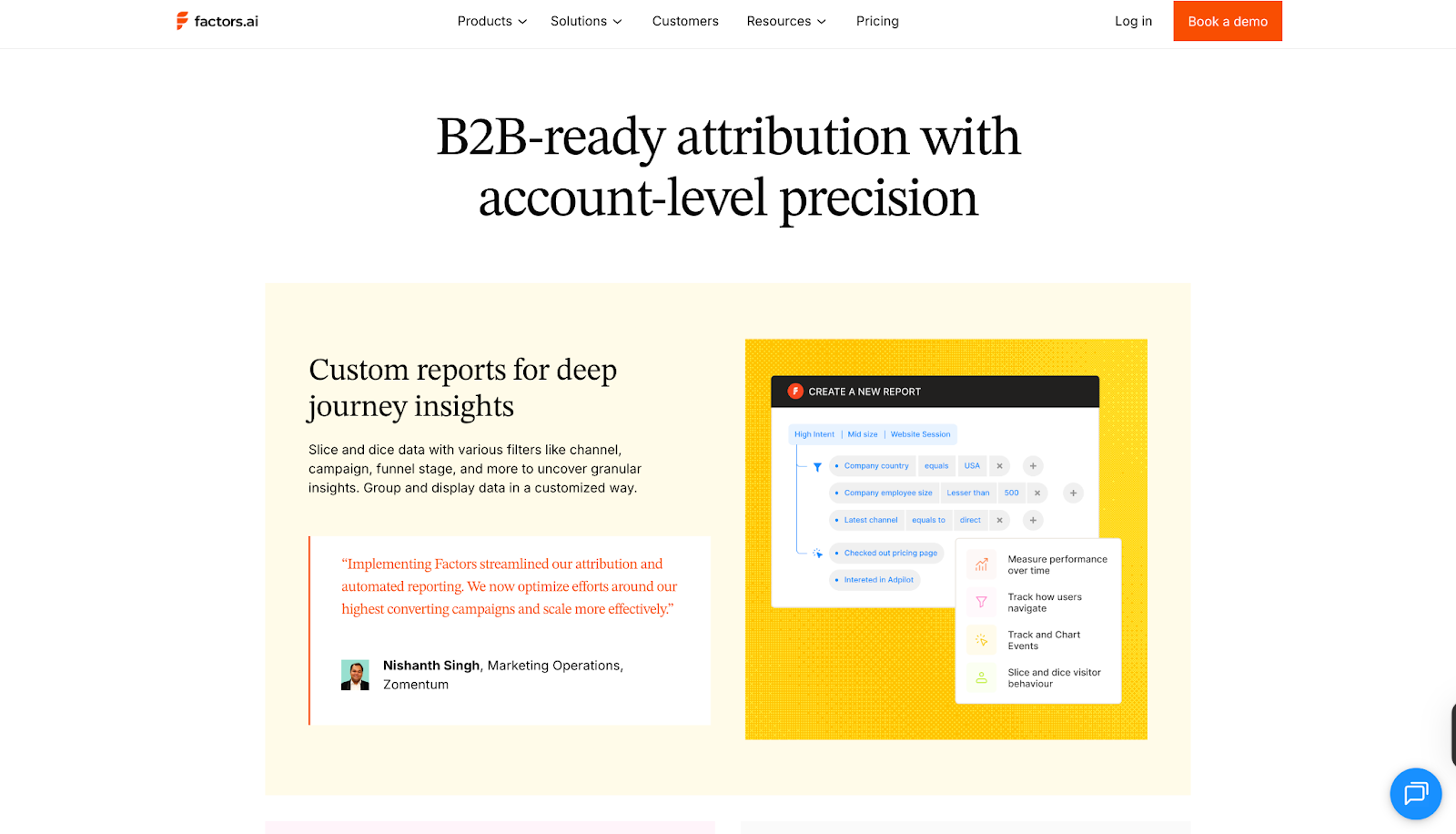
Factors.ai connects marketing and sales activity into one narrative. Instead of tracking replies or traffic alone, it shows which actions actually move deals forward.
Key elements include:
- Multi-touch Attribution
Links every click, ad view, and CRM update to revenue outcomes.
Helps teams understand which campaigns or channels contribute the most. - Funnel Stage Analytics
Monitors each stage from MQL to Closed Won, helping teams spot what accelerates deals and what slows them down. - Customer Journey Timelines
Organizes all touchpoints like website visits, ad engagement, product usage, and CRM activity, in a single chronological view. - Custom Dashboards
Teams can filter by geography, product, or ICP segment and build reports around what matters most. - Drop-off and Bottleneck Insights
Visualizes where leads stop progressing, making it easier to fix weak points in the funnel.
The reporting feels built for RevOps and GTM leaders who need clear cause-and-effect visibility, not just numbers.
To dig deeper into attribution strategies, see our explainer on multi-touch attribution models and how they can reshape B2B measurement.
Common Room Analytics and Reporting
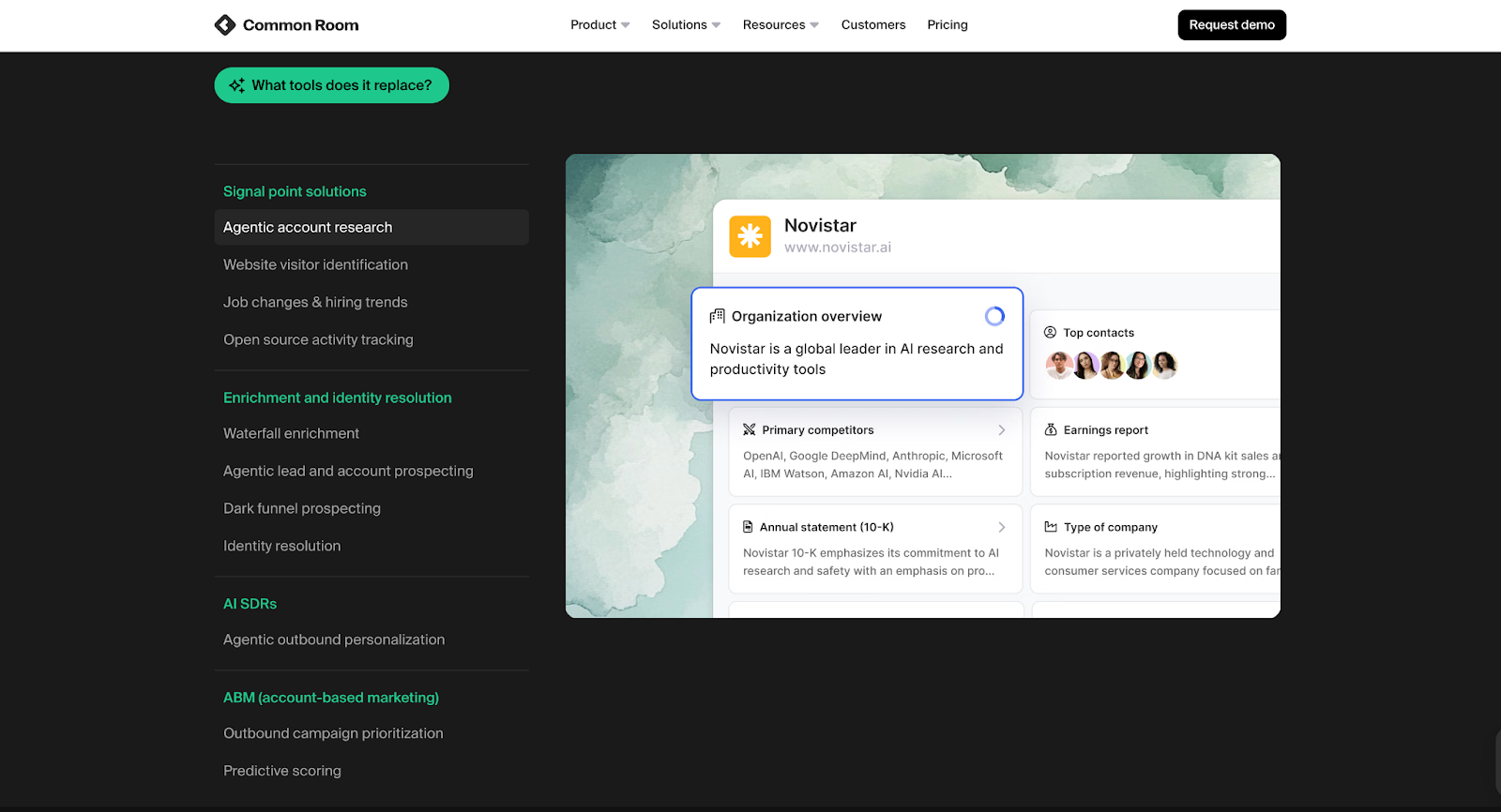
Common Room focuses more on individual and community-level engagement. It helps teams understand who’s active, what they’re doing, and where momentum is building.
Key elements include:
- Real-time Engagement Data
Surfaces live activity from people interacting with your product, website, or community. - Person-Level Insights
Combines identity data and behavioral context to show how specific individuals are engaging. - Dynamic Dashboards
Always up to date and visually centered around active users rather than static reports. - AI Summaries
RoomieAI summarizes large sets of engagement data to highlight trends or opportunities.
Common Room’s analytics are centered on immediacy and depth at the person level, giving sales and marketing a pulse on active engagement.
The Verdict
Common Room gives detailed visibility into human engagement and signal activity. It’s great for understanding who’s showing interest right now and how they interact across channels.
Factors.ai focuses on the full funnel like linking awareness, engagement, and revenue into one continuous picture. It’s more suited to teams that need measurable insights tied directly to pipeline and growth.
Factors vs Common Room: Ad Activation & Integrations
Ad activation decides how quickly GTM teams can turn intent into engagement.
While both tools connect with key marketing platforms, their approach to activation and data flow works differently.
| Feature | Factors.ai | Common Room |
|---|---|---|
| LinkedIn Ads Integration | Official LinkedIn Certified Marketing Partner with native campaign sync and optimization | Connects indirectly through Zapier automation |
| Google Ads Integration | Native connection with Google CAPI and audience sync | Not available |
| Audience Updates | Automated audience refreshes based on ICP fit and funnel stage | Not specified |
| Conversion Feedback | Sends SDR and CRM feedback to ad platforms for smarter targeting | Not listed |
| Ad Retargeting | Uses multi-source signals including web, G2, CRM, and product activity | Focused on engagement data, not ad-based retargeting |
| Integrations | Deep integrations across CRM, CDP, MAP, and Ad platforms (Salesforce, HubSpot, Marketo, G2, Drift) | 50+ integrations across CRMs, MAPs, SE tools, and community platforms |
Factors Ad Activation and Integrations
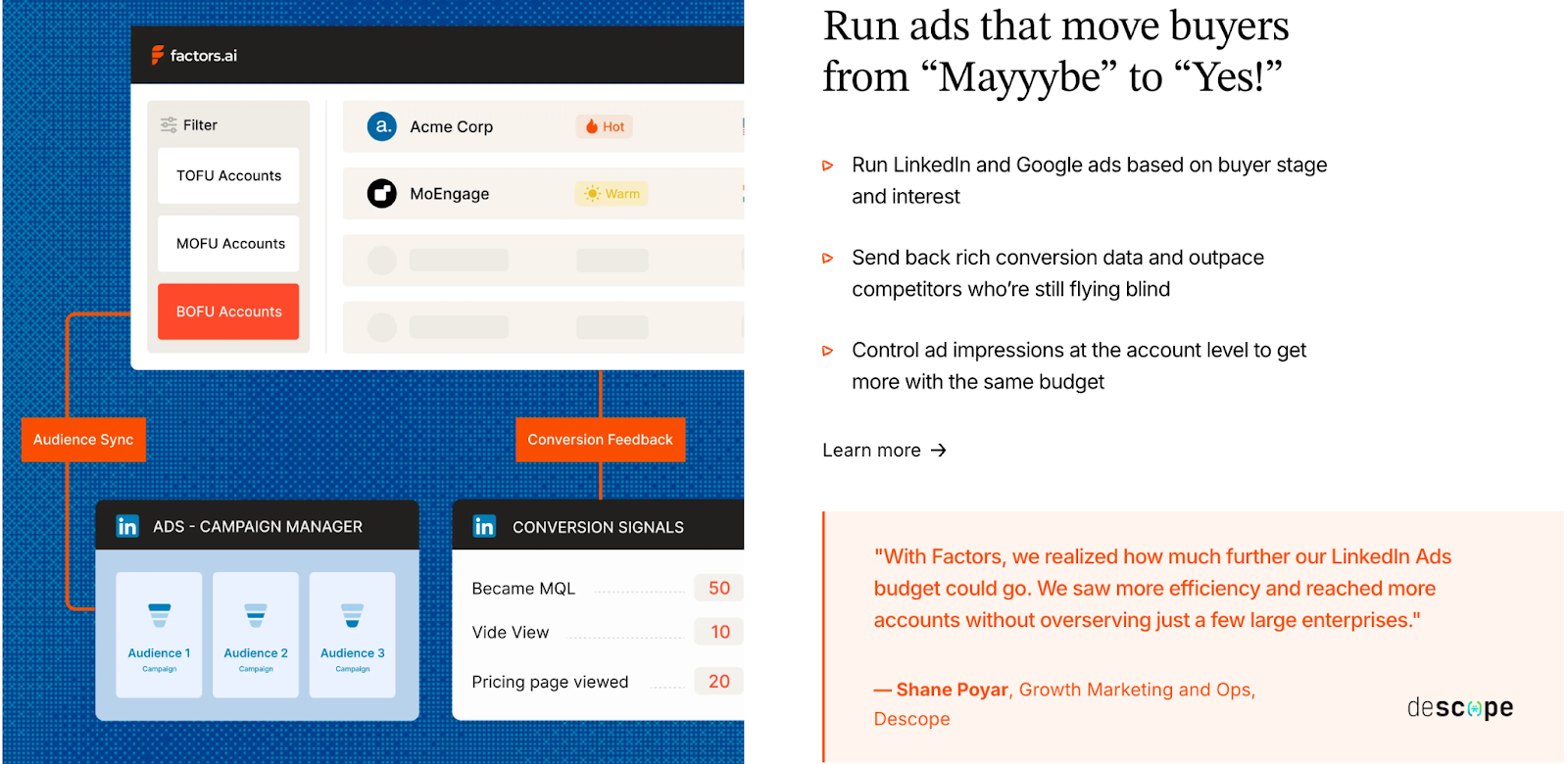
Factors.ai treats ad activation as a natural extension of GTM automation. It connects marketing and sales data to ad platforms so teams can engage the right accounts at the right time.
Key capabilities include:
- LinkedIn and Google Ads Sync
Builds dynamic audiences that refresh automatically based on recent engagement or buying intent. - Conversion Feedback Loops
Sends post-engagement data from CRM and SDR activity back into ad platforms, improving targeting precision. - Multi-Signal Retargeting
Retargets accounts that show activity across G2, CRM, product, or website signals, not just ads. - Google CAPI Integration
Shares conversion data directly with Google Ads for better campaign optimization. - Cross-Platform Integrations
Connects with Salesforce, HubSpot, Marketo, Segment, and G2, keeping all GTM workflows unified.
The Factors.ai integrations make it easier to move from data collection to activation without switching between multiple tools.
Common Room Ad Activation and Integrations
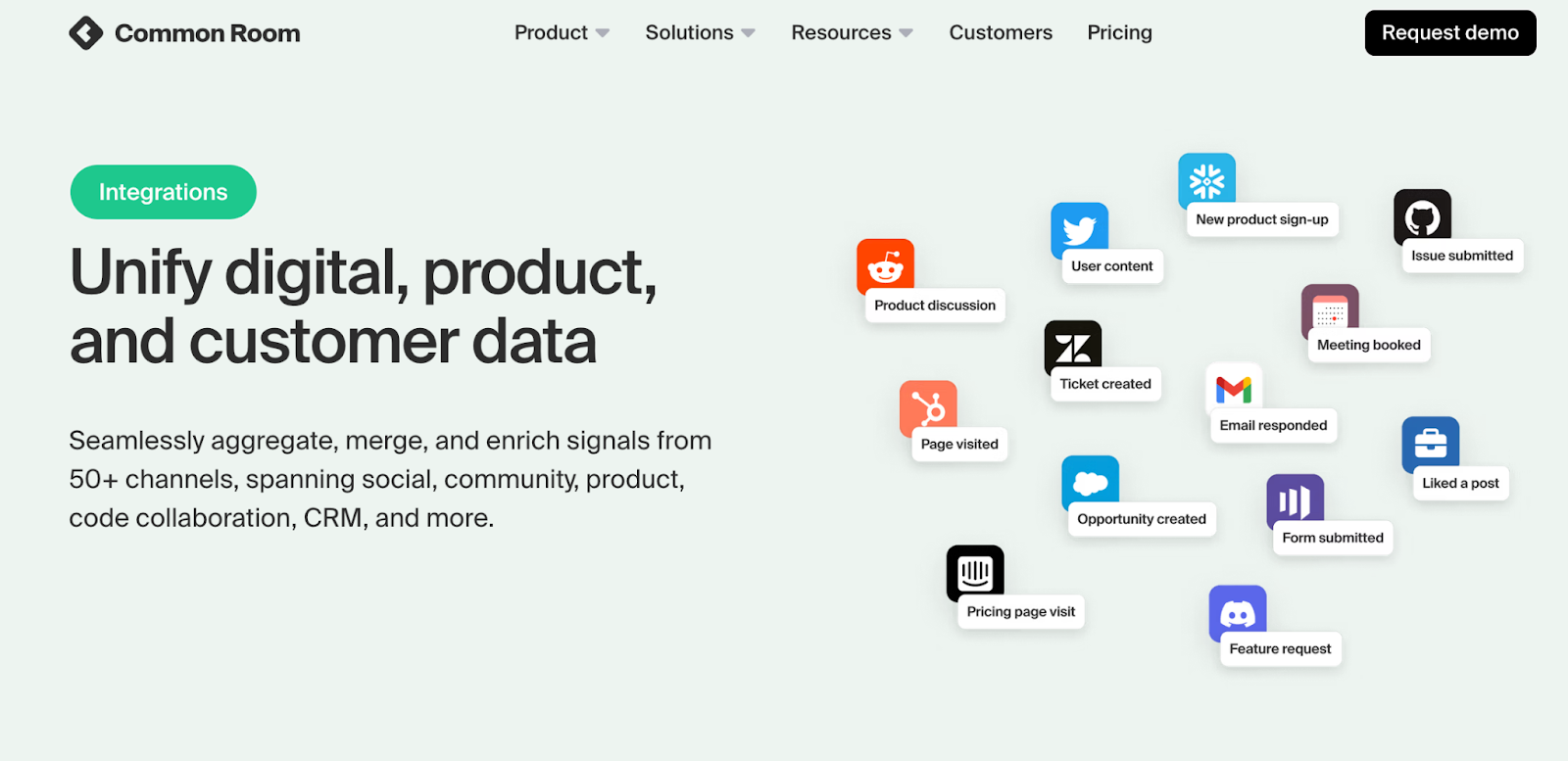
Common Room connects with a wide range of sales, marketing, and communication platforms, but its focus is more on signal and identity management than ad orchestration.
Key capabilities include:
- Platform Integrations
Works with CRMs like Salesforce and HubSpot, MAPs like Marketo and Pardot, and SE tools like Outreach and Apollo. - Community and Social Integrations
Links with Slack, Gong, and community forums to capture real-time intent and engagement. - Ad Automation
Limited to indirect activation through Zapier, primarily for workflows rather than campaign syncs.
This setup gives GTM teams a strong signal network but relies on external tools for paid activation.
The Verdict
Common Room integrates deeply with community, CRM, and communication tools, helping teams capture signals from many sources.
Factors.ai builds on those signals with direct ad integrations, allowing real-time audience targeting and retargeting through LinkedIn and Google Ads. The difference lies in how complete the activation loop is: one gathers the signals, the other turns them into action.
Also, read Improving LinkedIn ads targeting using Audience Builder.
Factors vs Common Room: Onboarding & Support
How well a platform supports your team during onboarding often decides how quickly you start seeing results.
Both Factors.ai and Common Room offer guided experiences, but they focus on different parts of the journey.
| Area | Factors.ai | Common Room |
|---|---|---|
| Onboarding Style | White-glove onboarding designed around ICP and GTM workflows | Guided onboarding with platform demos |
| Dedicated CSM | Included on higher plans | Available on paid tiers |
| Slack Channel | Used for real-time collaboration and daily assistance | Used for updates and support notifications |
| Weekly Reviews | Regular meetings to optimize usage and performance | Not specified |
| Setup Assistance | Includes playbook design, enrichment, and automation setup | Covers standard configuration and user training |
| Additional Services | Optional GTM Engineering Services | None mentioned |
Factors Onboarding and Support
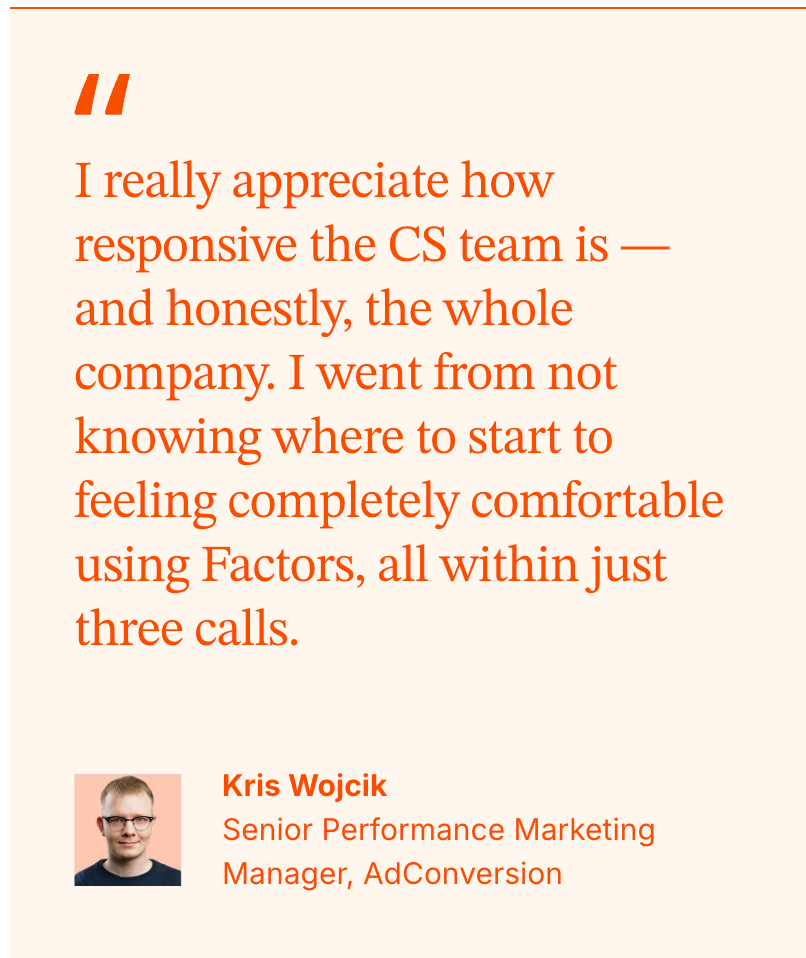
Factors.ai treats onboarding as a partnership. Instead of a generic setup, it aligns each workflow and alert with how the GTM team actually operates.
What it includes:
- Tailored Setup
Onboarding begins with understanding your ICP, funnel stages, and existing workflows. The platform is configured around those details. - Dedicated Slack Channel
Teams get direct access to a success manager and GTM engineers, allowing faster problem-solving and collaboration. - Weekly Review Calls
Regular check-ins help teams fine-tune performance, track adoption, and uncover new ways to use the platform. - Optional GTM Engineering Services
As mentioned earlier in the pricing section, Factors.ai offers a dedicated service layer for teams that need support beyond standard onboarding.
This includes:
- ICP modeling and GTM playbook design
- Setup of enrichment, alerts, and ad workflows
- SDR enablement for post-meeting follow-ups and closed-lost reactivation
- Ongoing review and optimization
The goal is to leave teams with a GTM system that runs smoothly and stays dependable over time.
Common Room Onboarding and Support
Common Room focuses on quick activation and education.
Its onboarding experience is straightforward and built to get teams using the product early.
What it includes:
- Guided Onboarding
Step-by-step walkthroughs help teams set up data sources, connections, and signal tracking. - Platform Demos and Support
Live sessions introduce features like Person360, RoomieAI, and dashboards. - Assisted Setup
Teams receive guidance on configuration and integrations. - Help Center and Resources
Documentation, articles, and community support help users solve smaller issues on their own.
This structure makes onboarding smooth for most teams, though it stays focused on product familiarity rather than long-term GTM optimization.
The Verdict
Common Room keeps onboarding simple, emphasizing product setup and signal tracking.
Factors.ai builds a deeper partnership during onboarding, guiding teams through alignment, automation, and RevOps design.
Both make adoption easy, but Factors.ai extends support further into strategy and ongoing performance improvement.
Factors vs Common Room: Compliance & Security
Data security and privacy are major parts of any GTM platform evaluation.
Most companies today, especially in mid-market and enterprise segments, look closely at how tools handle compliance before they even begin a pilot.
| Area | Factors.ai | Common Room |
|---|---|---|
| GDPR Compliance | Yes | Yes |
| CCPA Compliance | Yes | Yes |
| SOC 2 Certification | Type II | Type 1 and Type 2 |
| ISO 27001 | Certified | Not listed |
| Data Transparency | Clear policies on enrichment and processing | Focused on identity data handling through Person360 |
| Data Processing Agreement (DPA) | Available on request | Not mentioned |
| Security Scope | Covers platform access, storage, and integrations | Covers identity data, enrichment, and workflow automations |
Factors.ai Compliance and Security

Factors.ai maintains enterprise-grade certifications and privacy standards. Its structure and documentation are built for companies that handle sensitive data across multiple regions.
Key measures include:
- Regulatory Compliance
Fully compliant with GDPR and CCPA, meeting both European and US privacy standards. - Certifications
Holds SOC 2 Type II and ISO 27001, covering infrastructure, data management, and operational controls. - Privacy-First Approach
Uses behavioral and firmographic enrichment responsibly, with full transparency in how signals are processed. - Data Agreements
Offers signed DPAs for customers who require formal documentation during vendor assessments.
These measures make Factors.ai suitable for teams that must pass detailed security reviews before implementation.
Common Room Compliance and Security
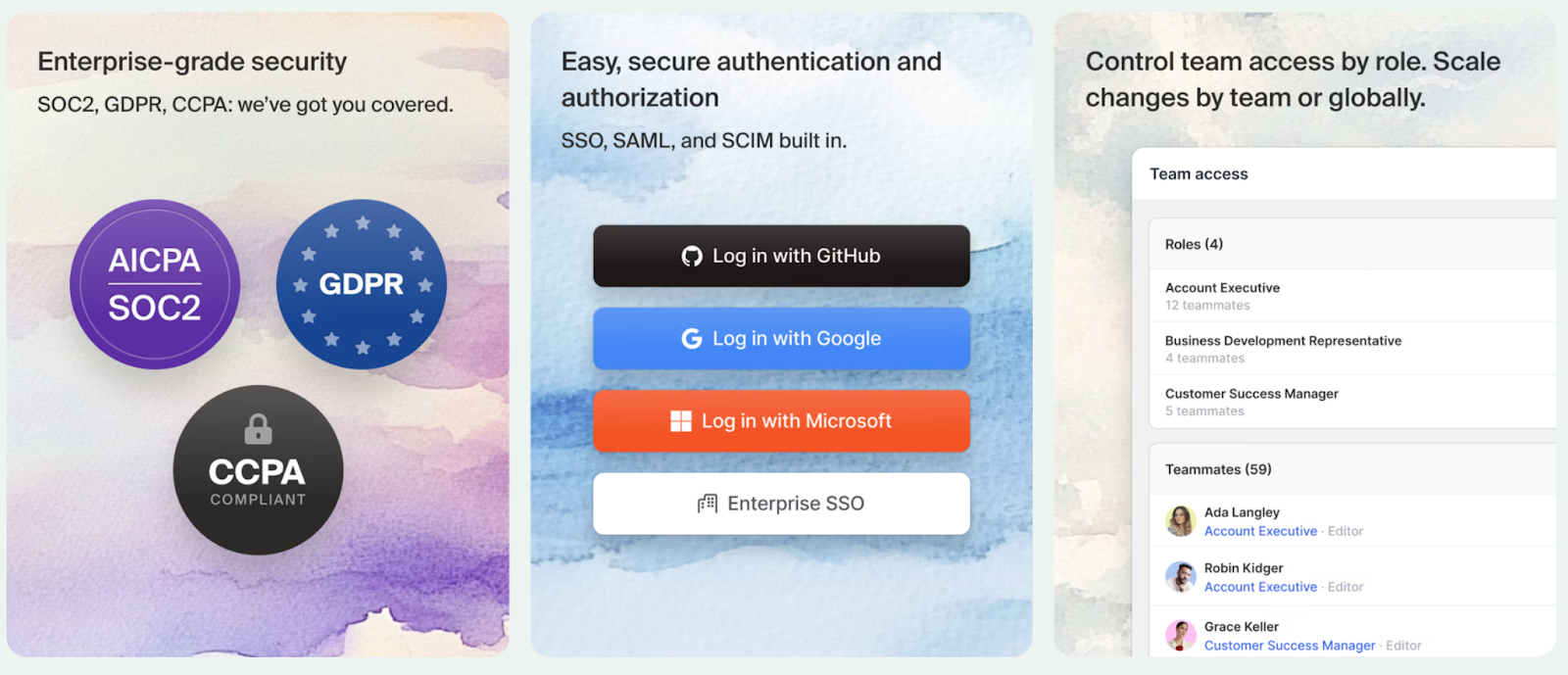
Common Room also maintains strong data governance, especially around person-level identity resolution.
It’s designed for teams that rely on deep enrichment while staying within global compliance frameworks.
Key measures include:
- Compliance Frameworks
Adheres to GDPR and CCPA, ensuring data privacy for both individual and business-level signals. - SOC 2 Certification
Certified for both Type 1 and Type 2 audits. - Identity Data Protection
Focused on keeping Person360 and Prospector enrichment processes secure. - Transparency
Public documentation covers data use, though specific policies around enrichment partnerships are limited.
The setup provides strong compliance for identity-driven operations and aligns with standard SaaS privacy requirements.
Factors vs Common Room: The Verdict
Common Room focuses on keeping person-level data safe and compliant with major regulations.
Factors.ai goes broader, combining full-system security certifications with formal documentation and enterprise-level data transparency.
Both platforms are well covered, but Factors.ai’s added certifications make it easier for larger teams to clear procurement checks.
Factors vs Common Room: Which one to choose when?
If you’ve reached this point, you already know both platforms have strong foundations.
Factors.ai and Common Room help GTM teams understand intent, act faster, and make smarter decisions. But they’re built around two very different ways of thinking.
Throughout this breakdown, we’ve seen where each one shines, from functionality to support.
Now let’s piece it all together to help you make a better decision.
| Area | Factors.ai | Common Room |
|---|---|---|
| Platform Focus | Unified GTM orchestration and analytics across the full funnel | AI-powered person-level GTM intelligence and identity resolution |
| Best Fit For | Teams that need connected visibility from intent to revenue | Teams that rely on product, community, and social signals |
| Pricing Model | Usage and seat-based, scales with GTM maturity | Fixed annual plans based on tier |
| Analytics | Multi-touch attribution and funnel diagnostics | Real-time person-level engagement analytics |
| Ad Activation | Direct integrations with LinkedIn and Google Ads | Ad activation through third-party connectors |
| Support Experience | White-glove onboarding, weekly reviews, and GTM Engineering Services | Guided setup with platform demos and documentation |
| Compliance | ISO 27001, SOC 2 Type II, GDPR, and CCPA certified | SOC 2 Type I & II, GDPR, and CCPA compliant |
When Factors Fits Best
If your GTM motion depends on connecting multiple systems like ads, CRM, product analytics, website behavior, and attribution, Factors.ai gives you that full, account-level picture. It works especially well for teams that run ABM, rely on signal-based GTM, and need a system that unifies intent, activation, and measurement.
It works well for:
- B2B SaaS and enterprise teams running ABM or multi-threaded deal cycles who need to understand which accounts are engaging, where, and why
- RevOps and growth teams that want complete visibility from first touch to closed/won, including account journeys, deal influence, and pipeline lift
- Teams that prioritize accurate intent detection from website, CRM, G2, LinkedIn, Google, and email signals (instead of guessing who’s ‘ready’)
- Companies that need certification-ready security and compliance for procurement (SOC 2 Type II, GDPR, SSO, audit logs, role-based access, and data governance)
- Teams that prefer guided onboarding and hands-on support, including implementation, custom dashboards, ABM workflows, and ongoing account reviews
What makes Factors stand out is the continuity and intelligence of the system. Once it’s set up, it operates as a connected GTM engine where:
- every signal enriches the account profile
- every journey is stitched and attributed
- every spike in intent triggers alerts, audiences, and playbooks
- every team (marketing, sales, RevOps) works from the same source of truth
The result: a GTM motion where ads, content, sales plays, and product insights all talk to each other, while your team focuses on execution instead of manual reporting.
When Common Room Fits Best
Common Room suits teams that live close to their communities, users, and conversations.
It’s ideal for:
- Teams running person-level ABM strategies
- Companies relying heavily on community or social engagement data
- Sales and marketing teams that value real-time identity insights over complex attribution models
- Fast-moving teams that prefer simple onboarding and visual dashboards
It’s focused on people, understanding who’s engaging, where they come from, and what they care about.
In a Nutshell…
After going through every chapter, one thing becomes clear: both platforms solve the same problem in their own way.
What really matters is how your team works and what kind of GTM system you’re trying to build.
Factors feels more like a foundation. It brings everything together, from data to execution, so your GTM motion keeps running without gaps.
Common Room focuses on people and conversations, giving you visibility into who’s active and how they’re engaging.
If your team wants structure, deep analytics, and a connected setup that keeps improving over time, Factors.ai aligns well with that direction.
If your focus is on fast-moving engagement and signal-based outreach, Common Room gives you the visibility to act quickly.
Both can create impact, it simply depends on where your team is today and how you plan to grow next.
If you liked this, you might also like the comparison of top Common Room alternatives to see how others stack up across features and pricing.
FAQs for Factors vs Common Room: Explore Factors as a Common Room Alternative
1. Which GTM teams benefit most from Factors.ai?
B2B SaaS, RevOps, and data-driven marketing teams that need connected systems for attribution, automation, and revenue tracking.
2. What makes Common Room better for community-led GTM?
Its focus on social, community, and product signals, combined with real-time dashboards, makes it ideal for fast-moving, person-focused teams.
3. How do the pricing models differ?
Factors.ai scales with usage and seats, offering flexibility and deeper orchestration tools. Common Room uses fixed tiers, starting at $1,000/month, with simpler forecasting.
4. Do both platforms offer ad campaign integration?
Factors.ai integrates natively with LinkedIn and Google Ads for audience sync and conversion feedback. Common Room supports limited automation via Zapier.
5. Which platform offers stronger onboarding support?
Factors.ai provides white-glove onboarding, GTM playbook setup, and ongoing engineering support. Common Room focuses on product walkthroughs and quick activation.

See how Factors can 2x your ROI
Boost your LinkedIn ROI in no time using data-driven insights


.avif)
See Factors in action.
Schedule a personalized demo or sign up to get started for free
LinkedIn Marketing Partner
GDPR & SOC2 Type II







.svg)



.avif)

