.svg)

Hey there, my name is Shreya. Ever since I can remember, all I've done is read and write.
I'm a writer, and sometimes an editor. I've written about everything from heavy metal to software testing tools to portfolio building (at Authory) to email marketing. I've even spent three years as an archivist of rare historical texts and materials at the School of Cultural Texts and Records, Jadavpur University.
After a long stint as a full-time employee, freelancing... happened to me. Thankfully, quite a few friends came to my rescue. Protim Bhaumik, my ex-and-current manager invited me to write for Authory as a freelancer, and it was a perfect fit. Nirnai Nevrekar, my ex-manager from BrowserStack (where I worked for nearly 3 years) helped me start writing for Sprinklr. And, Sneha Ramesh is the reason I've been able to pursue my love of music journalism at The Score Magazine. You can also find some of my pieces on software testing on the BrowserStack blog and the TestRail blog.
Or, you could just look at my Authory portfolio and see all my pieces on different publications on a single screen!
Of course, these are not my only clients. But I'm ghostwriting for the others so

Obviously, I listen to music half the day and have recently returned to anime. I blame Jujutsu Kaizen. Thanks, Gojo.
Lastly, I've become quite a fan of travel, hiking, and trekking.
(You probably know about Himalayan treks, but have you considered trekking in the Northeastern states of India? You should. Talk to this guy about the David Scott Trail and the Rainbow Waterfall Trek in Nongriat, Meghalaya. You'll never dream of anything else once you see these forests.)
I'm usually reachable via my LinkedIn. In case you sent a message and I haven't replied for a few days, I'm in a place where they have no internet (I try to do this 3-4 times a year).
Apologies. I'll reply as soon as I have bars.

How to Increase Traffic to Your Blog: Practical Ways for Organic Growth
You know when you’ve spent hours writing a blog, hit “publish,” refreshed Google Analytics, and all you got was… crickets for blog traffic?
I know it too. A little too well.
So often, even the best-written blog gets barely any views. As a writer and marketer, it’s frustrating, demotivating, and really dampens your desire to do your best.
The truth is, blogs often don’t get much traffic because it takes more than great content. It takes a strategy.
If you want to increase traffic to your blog, without burning out, here’s what you need:
- Smart SEO (Search)
- Consistent, helpful content (Supply)
- Deliberate distribution (Demand)
No magical hack. No ‘publish 100 posts in a weekend.’
Just a short, realistic playbook with blog traffic tips that work.
Let’s break it down.
TL;DR:
- The three pillars of organic traffic growth: SEO. Consistent helpful content. Deliberate distribution.
- SEO basics for quick initial movement: long-tail keywords, match intent, robust on-page SEO, and strong internal linking.
- Realistically, your fastest move will come if you update and republish existing posts, then add internal links to newer content.
- Don’t wait for Google to pick up. Promote your content in communities, use one relevant social channel, and build an email list early.
- Pick 3–5 tactics and commit for 90 days. Blog traffic is a marathon, not a sprint.
Why Traffic from Existing Blog Posts is Still Low
Before jumping into tactics, how about a quick diagnosis?
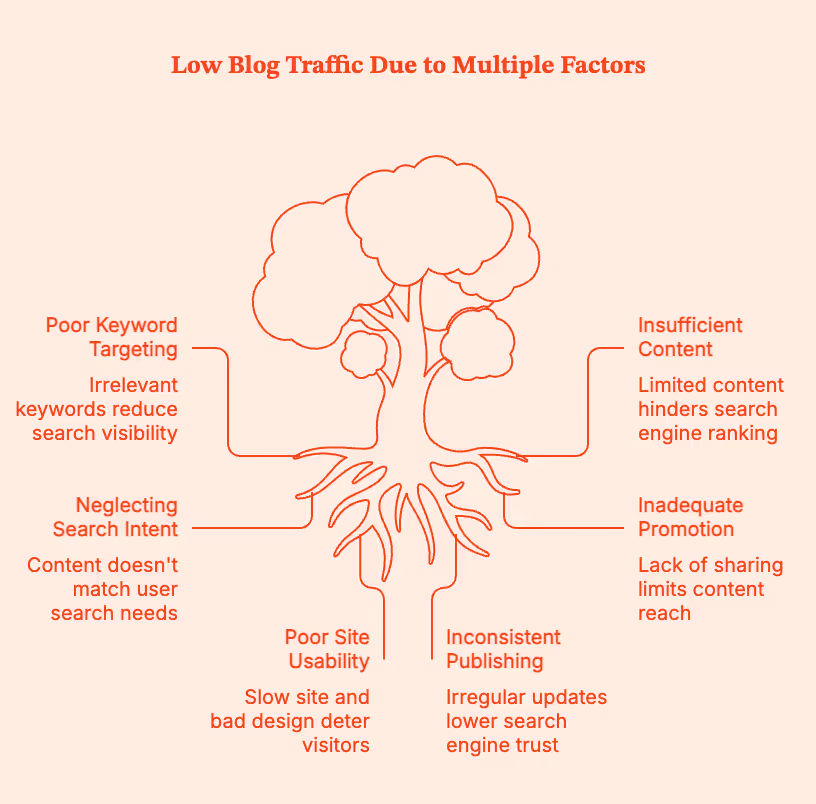
The four main sources of blog traffic
Most of your traffic will come from:
1. Organic / search traffic
This includes visitors coming from Google or other search engines.
If organic traffic is low, it means that:
- you aren't targeting the right keywords (and missing your target audience).
- you don't have enough content for Google to rank posts.
- your keyword research doesn't match what people mean when they type queries.
2. Social traffic
This includes visitors coming from platforms like Instagram, Pinterest, X/Twitter, LinkedIn, or Facebook.
If social traffic is low, it means that:
- no one is resharing your content.
- you're not using the right platforms for your industry/niche.
- you're posting content that isn't getting people's attention.
3. Referral traffic
This includes traffic from third-party websites like guest posts, links in other blogs, Reddit threads, Quora answers, Pinterest pins, directories, and so on.
If referral traffic is low, it means that:
- no other websites are placing links to your content.
- you might not be targeting the right guest posts or collaborations.
4. Direct traffic
This includes views from people who actually type in your URL, click a bookmark, or come from sources GA can’t quite identify (can even email/app traffic).
If direct traffic is low, it means:
- your blog is not a go-to resource.
- your email list is small and infrequently used.
If your traffic is low, the root cause is usually one (or more) of these:
Pro-Tip: Use a combination of Google Analytics + Google Search Console to see where traffic is coming from and what's working. Google Analytics shows where traffic is currently coming from, and Google Search Console tells you what queries you're already showing up for and where you're actually winning.
Pro-Tip II: Don’t fix everything. Fix only the bottleneck. For instance,
- If you have low organic traffic, focus on keyword research + SEO.
- If you have decent impressions but low clicks, focus on titles, meta, and search intent.
- If you have a few posts that do well, update and internally link them as much as possible.
...you get the drift.
How to increase traffic to your blog with valuable blog content (and more)
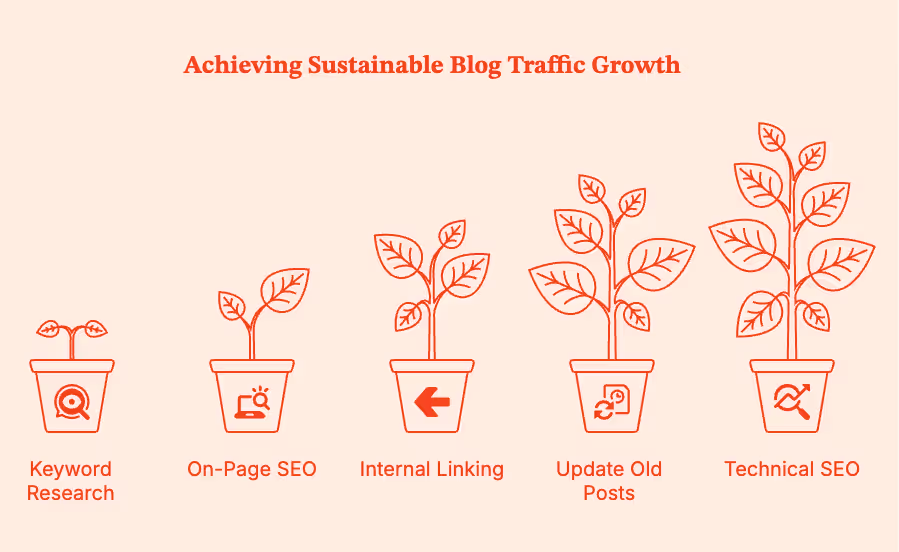
To increase blog traffic, consider mounting your strategy on these three pillars:
Pillar 1: SEO: Get Found in Search
Search engine optimization (SEO), once implemented properly, delivers active, sustainable, month-on-month growth. It takes off the slowest, but consistently gets you more blog traffic once it does.
It's like growing an apple tree: for a few months, nothing is happening. Then one day you have all the apples.
- Do basic keyword research
The secret to good keyword research: look for the overlap between what people search for and what you can actually rank for.
If you're just starting to create high-quality content, don't target keywords that are:
- too competitive (dominated by big players)
- too vague ("my thoughts on...)
Instead, target low-competition, long-tail keywords where small blogs can win. Go on intent-driven searches with:
- clear problems
- defined audiences
- less competition
- higher conversion potential
Example:❌ “How to start a blog”
✅ “How to start a vegan baking blog for beginners"
You can rank much faster for long-tail queries, as readers searching for them know exactly what they are looking for. Also, Google rewards relevant content over vague, "cover everyone you can" targeting.
Tools to help you find these keywords:
Free:
- Google Keyword Planner (broad search volumes)
- Google Suggest/Autocomplete (real-time user queries)
- Google "People Also Ask" (intent goldmine)
- AnswerThePublic (question-based keywords)
Affordable:
- LowFruits (excellent for spotting weak SERPs)
- Keywords Everywhere (cheap, fast insights)
Premium:
- Ahrefs
- Semrush
- Optimize each post for on-page SEO
Fundamentally, your on-page SEO tells Google: “Here’s exactly what this post is about, and here’s why it satisfies the searcher’s intent.”
Use your target keyword naturally in your blogs in the:
- Blog Post Title (H1)
- URL slug
- First 100 to 150 words
- 1 to 2 H2s
- Image alt text
- Meta description
Closely match search intent:
- Internal links & updating old posts
Internally link your web pages and blog posts. Start by asking:
- Which of my posts are getting the most traffic?
- Which new posts need more authority?
Then, link from high-authority posts → to newer or weaker posts.
This will accelerate each page's rank value, help Google understand your site structure, and improve session depth (keep people reading for longer).
Update and republish old posts
Google loves fresh content. So update your older blogs with new data, trends, and user expectations. Here are a few ideas:
- Add recent statistics.
- Replace outdated quotes and screenshots.
- Tighten up intros and conclusions; align them closer with search intent.
- Add newer internal links.
- Improve formatting and readability.
- Address “People Also Ask” questions.
- Technical basics
Make sure your web pages respect the reader's time and sanity. A quick checklist for your website:
- Loads fast (use Google PageSpeed Insights).
- Works on mobile (most people read from mobile devices).
- Has readable fonts (no 12pt elegant script).
- Uses simple navigation.
- Uses optimized images (smaller files, loads faster).
- Doesn’t drown readers in pop-ups (intrusive UX sucks).
Technical SEO is essential housekeeping. Remember that while a clean home doesn’t win the award, a messy one disqualifies you instantly.
This might also help: B2B SEO Checklist: What To Do Before Starting B2B SEO
Pillar 2: Content & consistency
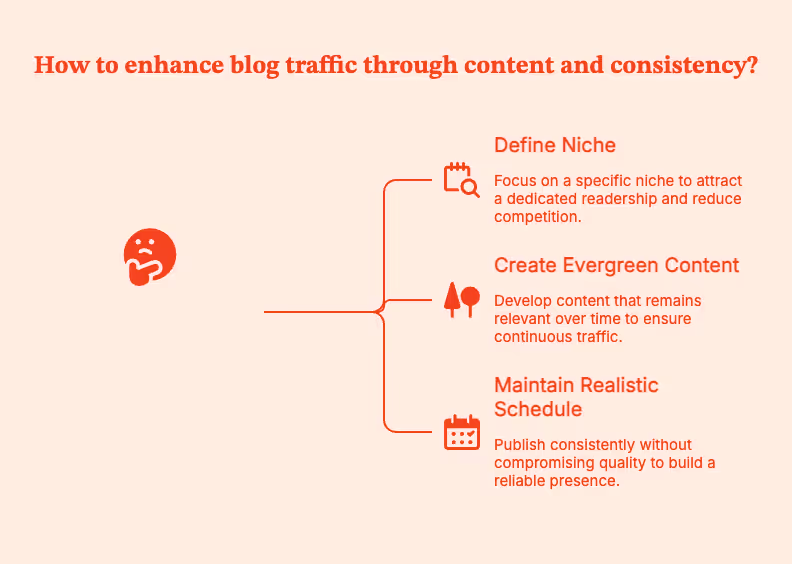
SEO brings people in for the first time. Good content keeps them coming back, and it's the returning users that deliver long-term traffic to your blog. It's cliche but true: content is king.
- Pick a clear niche and readership
Contrary to popular opinion, the best move is not to start writing for everyone. The brand that puts out a recipe this week, a productivity tip the next, and a personal finance piece after that... doesn't get recognized.
When you write for everyone, no one knows it’s for them. These blogs don't make readers think "This is exactly what I’ve been looking for.”
To do so, clearly define your niche and your readership. What do they want to see/read?
Be more specific. Instead of a generic "food blog", try “A dairy-free weeknight cooking blog for busy parents”.
Benefits of writing in a well-defined niche:
- Less competition to rank for keywords.
- Easier to build a distinct brand identity.
- Quicker community building, the right readers know your value.
- Returning users. When people know what you're good at, they'll come back for more of it.
Pro-Tip: Have a look at which keyword themes work best (according to data)
- Publish helpful, evergreen content
This is the kind of content that quietly performs for months or even years after you publish it. People keep coming back, long after you publish it. Often, guides, tutorials, checklists, resource lists, and troubleshooting posts fall under this category.
This is content that readers bookmark because they'll need it again.
Quick tips on creating evergreen content:
- Do deep research. Take one question and answer it completely.
- Be specific to build trust. Use screenshots, examples, and reliable anecdotes.
- Add practical steps that readers can start taking as soon as they finish reading your piece.
- Readers skim first, read second. Go heavy on H2s, short paragraphs, bullets, and visual anchors to help them stay.
- Be realistic about your publishing schedule
You need to publish consistently, but don't put out bad content to meet a calendar.
A sustainable schedule, especially if you're starting out, is
- 2–3 strong posts per week.
- Aim for 30 solid posts in about 3 months.
Pillar 3: Distribution
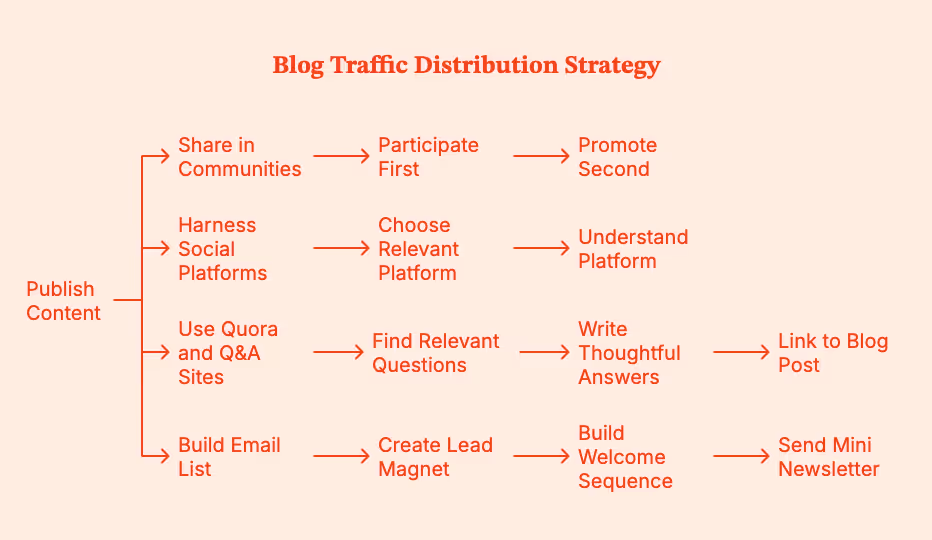
Published your content? You're only half done.
SEO is a long game. Distribution is about getting traffic today.
- Share in the right communities
Communities comprise people already interested in the topic you're writing about. Reddit, niche Facebook groups, industry forums, and Discord groups can get you readers in the hundreds, sometimes even thousands.
But you have to participate first and promote second. Don't just drop your link without context. You'll get ignored or even banned.
Instead, show up consistently to answer questions, contribute insights, and be a real human. That's when people want to read what you post.
- Harness social platforms that suit your niche
Every platform will not work for every niche. So choose ones where your readers spend most of their time.
- Pinterest: Great for visual niches (travel, food, decor, DIY, beauty, parenting).
- Instagram: Great for lifestyle, wellness, travel, and visual storytelling.
- LinkedIn: Ideal for business, marketing, careers, and thought leadership.
- X/Twitter: Works best for tech, entrepreneurship, and innovative ideas.
Pick the most relevant platform and understand everything about establishing visibility, connection, and directing people to your blog.
- Use Quora and Q&A sites for referral traffic
People are literally on Quora to find answers to their questions. Your blogs can be those answers.
Find questions around which you have expertise. Write thoughtful, specific answers, and link to a relevant blog post only if it directly adds value.
If you're lucky, these answers can even rank on Google and push consistent referral traffic for years. Think of this as SEO with fewer gatekeepers.
- Build an email list early
An email list shifts less often than search and social media platforms. So build one.
Quick steps:
- Create one lead magnet, like a checklist, cheat sheet, or mini guide.
- Build a short welcome sequence. This could be 2–3 emails that introduce who you are and how you want to add value.
- Send a mini newsletter with every new published post.
Email lists drive repeat traffic, establish trust amidst readers/users/customers, and ease them into future products and partnerships.
Advanced Traffic Boosters: Optional but Powerful
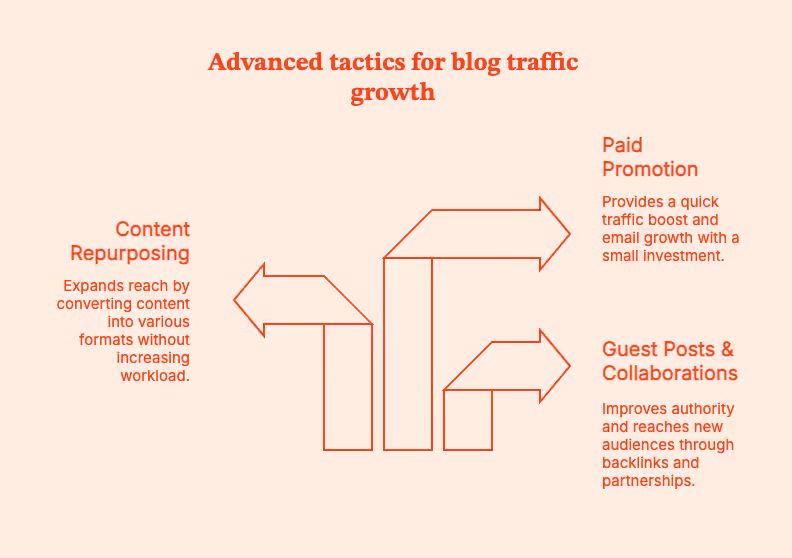
Once you have SEO + strong content + consistent distribution in place, try layering in a couple of more advanced tactics to accelerate growth.
- Guest posts & collaborations
Guest posts will give you backlinks, which improve your authority with Google. They also get your content in front of a whole different audience, build credibility, and start gathering trust.
Target relevant newsletters, third-party blogs, podcasts, and joint webinars.
- Repurpose your content
Repurpose each blog post into a YouTube video, TikTok or Reels snippets, an Instagram carousel, a podcast episode, slides for LinkedIn, and a downloadable resource.
Convert the same idea to different formats and attract wider reach. Multiply your content without multiplying your workload.
- Paid promotion
Nothing big. Put $20–$50 behind a cornerstone post or a lead magnet to kickstart traffic and email growth.
Paid traffic isn't required per se, but it does help remedy the "slow start" problem most new blogs will face.
How Long Does it Take to See Real Traffic?
Don't fall for comforting lies like “30 days to 100K pageviews.”
For most blogs relying on SEO, meaningful traffic usually takes 4–12 months of consistent work.
Only 1.74% of newly published pages rank in the top 10 within a year. 72.9% of pages in Google’s top 10 are more than 3 years old. Source
So it's normal if your blog feels slow to pick up traffic. Don't panic.
A realistic time for your blog traffic:
Instead of obsessing over daily traffic, focus on:
- Consistently adding high-quality, search-focused content to your site.
- Connecting related posts so Google (and humans) can discover more of your content.
- Choosing realistic, long-tail topics your blog can actually rank for.
- Nudging your audience back to your blog when you publish something new.
- Showing up where your readers hang out.
90-day blog traffic plan: A quick, practical playbook
Consider this playbook, you’ll usually see movement within 60–90 days:
At every step, remember to measure the ROI of your B2B content. Factors.ai takes content analytics seriously with extensive breakdowns + filters, custom dimensions + KPIs, and content groups.
You can get granular insight into your assets, such as answers to questions like “What geographies are consuming most of my work?”, “Is my blog being read more frequently on a phone or on a desktop? Should I optimize accordingly?”, “What campaigns, channels, and sources is web traffic originating from? “What about my SEO efforts and organic traffic?”.
How about a demo to see what Factors can really do?
Bottomline: Don't panic. Don't rush. Strategize.
Blog traffic flows from focus rather than frenzy. To keep your trajectory consistent upward, implement closely-aligned SEO (so the right people can find the content), build helpful, well-structured content, and distribute content across the right channels.
In gaining organic traffic, don't count on "overnight" success because it doesn't really exist. Dig into the archives of successful blogs, and you'll find years of steady publishing, updating old posts, and showing up even when traffic was low.
Pick three to five tactics from this guide that fit your time, your skills, and your niche. Commit to them for the next 90 days. Publish consistently. Promote decidedly. Keep updating what is already written.
In blogging as in life, momentum beats miracles.
Summary
If you’re wondering how to increase traffic to your blog in 2025, the answer is three pillars that compound over time: SEO (Search), content consistency (Value), and distribution (Reach).
Start by finding where your blog traffic is coming from by using Google Analytics and Google Search Console. Do not target keywords that are too competitive, publish without matching search intent, neglect internal links, or rely on Google alone without content promotion.
For SEO, key in on low-competition, long-tail keywords. Write blogs that match intent, and master on-page basics: titles, headings, intro, meta description, image alt text. Link every new post to older relevant posts, and update older posts to link forward. Update and republish old content.
For content, pick a clear niche and write posts that solve real problems with examples and clear steps. Aim for a realistic publishing schedule.
For distribution, share your posts in the right communities without spamming. Post on at least one social platform that fits your niche. Answer relevant questions on Quora/Reddit, and start an email list early.
Expect traffic growth over months, not days. Build a 90-day plan to publish optimized content, improve internal links, and promote deliberately on the right channels.
Frequently Asked Questions on How to increase traffic to your blog
Q. How long does it take to start getting traffic to a new blog?
On average, blogs see early traffic in 1 to 3 months, usually from social media platforms, relevant communities, and long-tail queries. Consistent search traffic usually shows up between 6 and 12 months with consistent publishing and optimization.
Pro Tip: Pick one long-tail keyword per post. Aim for 8 solid posts a month for the first 90 days.
Q. What is the fastest way to increase traffic to your blog?
If you want to increase blog traffic quickly:
- Update posts you already have (better title, stronger intro, clearer structure, more internal links).
- Re-promote them after updating.
Pro-Tip: Open Google Search Console, filter for queries where you rank positions 8 to 20. Rewrite the title/meta description to improve clicks.
Q. How many blog posts do I need before I’ll see real traffic?
There is no one number. But generally blogs see initial traction after publishing 20 to 30 high-quality posts, especially if they target low-competition keywords.
Pro-Tip: Create a “cluster” of 1 pillar post + 6 to 10 supporting posts. Then, interlink them. It'll help Google understand your topics and authority.
Q. Is SEO or social media more important for blog traffic?
SEO is best for long-term traffic. Social media platforms are best to ignite short-term interest. Treat social as a distribution for your best posts.
Pro-Tip: Allocate most of your weekly effort into keyword-targeted posts and internal linking. This will keep traffic coming even when you are offline.
Q. Do I need to post every day to grow my blog traffic?
Daily posting is optional and often unsustainable. Target 1 to 3 strong posts per week, and use the rest of the time to update one older post and add 5 to 7 internal links.
Q. How can I increase blog traffic for free (without ads)?
The Holy Trifecta is long-tail SEO + internal linking + community distribution (Reddit/forums/Facebook groups) + email list.
Pro-Tip: For every new post, share in one relevant community, answer one related Quora/Reddit question, and email your list.
Q. Does guest posting still work to get blog traffic in 2025?
Yes, but only if you publish on websites with a relevant audience. You also have to write on topics that naturally lead readers back to your blog.
Pro-Tip: Pitch one specific post idea to the third-party site. In the article to be published, include a link to a relevant resource on your site (a checklist or hub page).
Q. How can I use Pinterest to drive traffic to your blog?
It's best to treat Pinterest like a search engine. Use keyworded pin titles/descriptions + consistent publishing + fresh creative.
Pro-Tip: Craft 3 to 5 pin designs per blog post, schedule them over a few weeks, and link each pin to a post with strong visuals and clear headings.
Best Free AI Tools for Marketing
Remember when "AI in marketing" felt like science fiction?
Cut to now, and how the turn tables...
Now, artificial intelligence and large language models (LLMs) are table stakes for every marketer. AI is taking on everything from research to predicting campaign ROI to even code generation (yes, sometimes we need that too).
A survey found that 82% of respondents using AI tools report using them for marketing. For daily users, the average reported weekly time saved was 14 hours.
If you're a marketer, then you need to get on board with AI, especially free AI tools for marketing.
Not every free tool or free version of a paid tool can create marketing magic. But the ones listed in this article certainly can.
When used well, they allow lean startups to test, iterate, and scale ideas without going broke. You can prototype campaigns, generate visuals, and even run customer insights.
Pro-Tip: Most of these tools work at their best when you connect them to your data, strategy, and tech stack. Solutions like Factors.ai (fantastic free version available) can help do that, and turn scattered AI inputs into actionable insights.
TL;DR
- Free AI tools are essential for marketing workflows across content, design, analytics, and automation.
- Key tool categories: Language/LLMs, Design AI, Social Automation, Analytics, CRM, and Chatbots.
- Top free tool examples include: Copy.ai, Notion AI, Canva Magic Studio, Buffer, Google Trends, Factors.ai, HubSpot Free CRM.
- Best free LLMs for marketers: Mistral 7B, Llama 3, Gemini 1.5 free tier, Hugging Face Spaces.
- What to look for: scalable free tiers, strong data privacy, integrations (APIs, Zapier), and active documentation.
- Common pitfalls: free-tier limitations, data privacy risks, disconnected workflows, and poor AI oversight.
- Best practices: introduce AI one workflow at a time, maintain human editing, ensure clean data, and measure everything.
- Future trends: multimodal free LLMs, autonomous AI agents, open-source innovation, and human-AI co-pilot workflows.
Types of Free AI Tools Marketers Should Know
Not all free AI tools are created equal. Some will change your life. Others will ruin your day (or quarter). To start sifting, it's important to understand the categories of free AI tools.
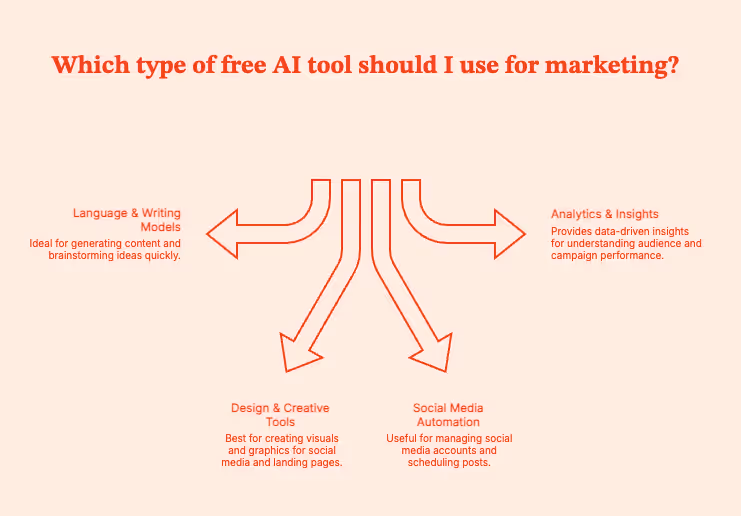
Language & Writing Models
These tools use large language models to help write everything from headlines, landing pages and long-form content (you need a human editor, though). A similarly sized model can even write emails in a specific voice. They can generate human like text, but still need your final sign-off.
If you need content support for multiple languages, filter for tools with multilingual and multimodal capabilities.
Common uses:
- Brainstorming ideas in seconds.
- Turning vague thoughts into structured content.
- Banishing writer’s block with ruthless efficiency.
Top free options:
Copy.ai, Jasper (free tier), Writesonic, Notion AI
Design & Creative Tools
Can't draw a circle in PowerPoint? Proprietary models to the rescue!
These tools can generate visuals like banners, product shots, thumbnails, and ad creatives. You need a human designer to run final edits, but they'll be able to do much more in the same time.
Common uses:
- Social media graphics.
- Product visuals for landing pages.
Top free options:
Canva Magic Studio, Fotor AI, Adobe Firefly Free, Leonardo.ai
Social Media Automation
Social platforms move too fast. And some of us are old. These AI agents can step in (and stay young enough to keep up, unlike the rest of us).
AI tools can generate captions, schedule content, analyze engagement, and replicate a full social team. You will have to edit the captions.
Common uses:
- Consistent posting without burnout.
- Idea generation for captions and hooks.
- Basic analytics.
Top free options:
Buffer AI Assist, Later, Hootsuite Free
Analytics & Insights
These tools highlight what your audience wants, which keywords to target, and if/how/where your marketing efforts are paying off.
You'll get numbers that make sense. Or at least, numbers that explain why last week’s campaign flopped.
Common uses:
- Keyword exploration and trend hunting.
- Understanding customer intent.
- Revenue attribution, performance insights, and campaign ROI.
Top free options:
Google Trends, ChatGPT (free), Factors.ai
Pro-Tip: These tools will have to provide enhanced data security, as they will handle sensitive data (often internal team essentials). Double-check before using.
Pro-Tip II: No matter which tool you use, do not forget to account for the differences between B2B marketing funnels and B2C marketing funnels.
What to Look for in a Free AI Tool (and a Free LLM)
Every day, there’s a new “must-try” AI app promising to revolutionize your marketing, your workflow, and possibly your karma, at this point.
But not every free AI tool deserves space in your stack. A good free AI tool should fit into your marketing world, not disrupt it. The ones that do should meet the following conditions:
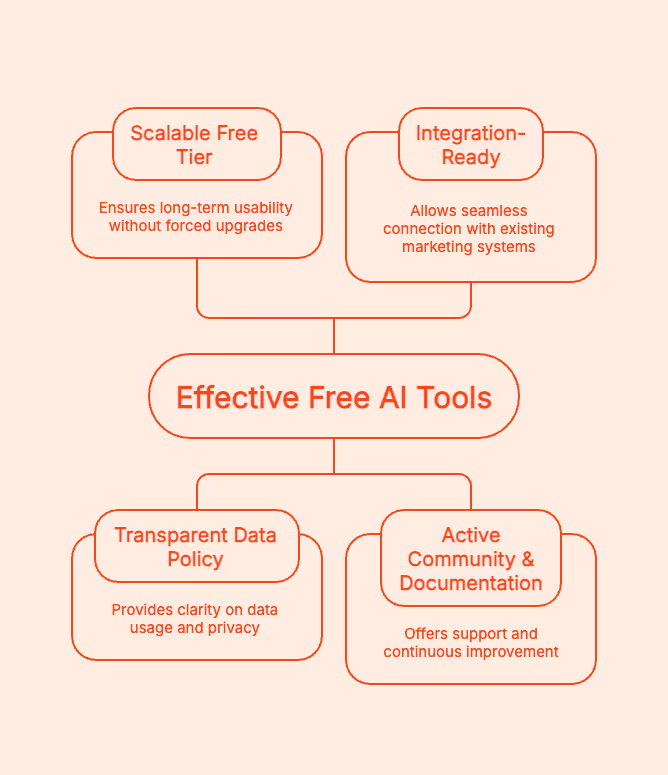
Scalable Free Tier: Does the “free” part last long enough to actually be useful, or does it expire faster than the can of chilli you bought after closing time? The right tools are ones where upgrading is a choice, not a hostage situation.
Transparent Data Policy: Does the tool use your campaign data to train its language models? Read the fine print (READ it). You should know exactly how these commercial models store, share, or reuse your data.
Integration-Ready: The tool should integrate with your CRM, analytics, and ad platforms. Ask for APIs, Zapier connectors, or built-in integrations. For instance, if it plugs into with Factors.ai, you can measure real ROI instead of “vibes.”
Active Community & Documentation: Dating's hard enough. Your tool should not also ghost you. Verify that it has an active user base, regular updates, and clear documentation. The best free tools are constantly improving based on user feedback.
For LLMs
Stay with me; it'll get a little nerdy:
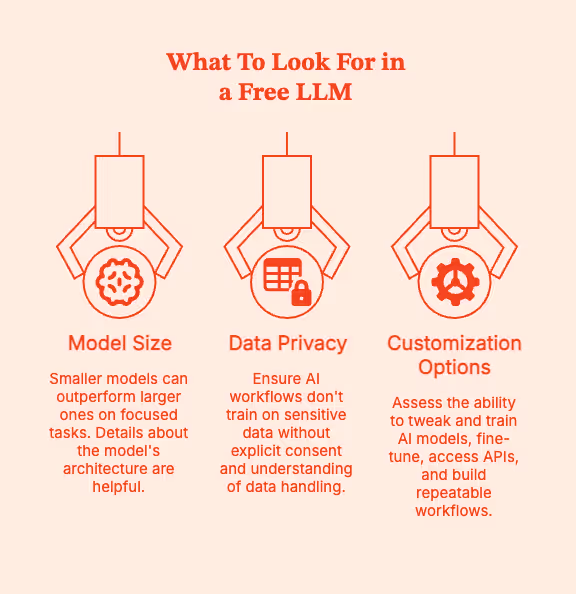
- Model Size vs. Performance Trade-offs
Certain smaller, efficient models, like Mistral 7B, can outperform giants on specific, focused tasks. If you can, get some details about the model's architecture.
- Data Privacy
Your AI workflows should not be trained on your customer list or confidential strategy deck unless you’re 100% sure how that data is handled.
- Customization Options
Can you tweak and train AI models for your brand? Can you fine-tune, gain API access, or use lightweight model hosting? Can you build repeatable workflows or automations?
The Best Free AI Tools for Marketing (Competence + Cost Savings)
Free AI tools will act as your intern, fellow strategist, and design assistant. You need to know which tools are worth your time, and this list can help. Start here.
Pro Tip: Before you peruse this list, have a look at the Complete Guide to Customer Journey Stages for Maximum Retention. Then, map these tools onto different stages of a marketing journey: awareness, engagement, conversion.
Pro Tip II: Be guarded with your data in the open-source LLM space. Everyone is trying to train their models, but your customers’ information is not up for grabs.
Content Generation & Copywriting
These tools will help you create robust outlines and optimize content for SEO value + engagement.
- Copy.ai : This is your brainstorming buddy.. Use it for rapid content ideation: ad hooks, blog outlines, and email subject lines.
- Notion AI: Already using Notion? This is for you. The AI agent summarizes meetings, generates blog drafts, or refines to-do lists right where your work already exists.
- Jasper (Free Trial): Jasper is built for structured, scalable workflows. It also comes with fairly competent templates for ads, landing pages, and SEO blog posts.
- Writesonic: Can produce perfectly usable drafts for blog posts, landing pages, and ads. I also like the integrated “SEO mode” that optimizes the content as you write it.
Pro tip: Use AI to research and build drafts. You still need to write, even if your tool has multilingual capabilities.
Visuals & Design
Photoshop is hard. These tools are easier with their AI wizardry.
- Canva Magic Studio: A wonderland for non-designers. It can draft captions, create custom visuals, and brand everything with your chosen fonts and colors.
- Leonardo.ai : Find the right prompt ("futuristic B2B dashboard mockup with pastel gradients") and it will deliver stunning product visuals and creative concepts.
- Adobe Firefly Free: Ideal for enterprise-grade, copyright-safe image generation. It integrates with Photoshop and Express.
- Fotor AI: Marketers, check this one out for handling background removal, headshots, and social posts.
Reality check: AI visuals can be beautiful, but you're still responsible for its brand consistency.
Social Media & Outreach
For marketers who live in 17 time zones at once. These tools will help make social posting feel less like a chore.
- Buffer AI Assist: This language model drafts captions, suggests hashtags, and auto-schedules content.
- HubSpot Free CRM + AI Writer: You can do a lot with this one: manage leads, generate outreach messages, and see insights in the same dashboard. Great for matching content creation with customer insights
Bonus Read (for extra research): HubSpot Analytics Vs. Factors.ai – Features, Limitations, Integrations & More
- Hootsuite Free: You can use the free plan to schedule, monitor engagement, and even generate post ideas. Again, single dashboard.
Market Research & Insights
You need an AI engine's superhuman analytical capabilities to understand the modern customer. It will help with finding trends, understanding audiences, and identifying what's worth the investment.
- Google Trends: The most well-known free tool out there. See trending topics, shifts with season and location-based demands.
- Factors.ai Free: Use the free version to connect your campaign data with other data banks (ads, web analytics, CRM). Zero in on the efforts that actually drive revenue.
- AnswerThePublic: Find what real people are searching for, and what to really prioritize when building SEO-friendly content.
Pro tip: Ideally, use all 3 together: Google Trends to research trends, AnswerThePublic to find the right questions, and Factors for performance.
Customer Engagement & Chatbots
Customer conversations are now 24/7. No one is waiting until Monday to get their answer. They'll cancel their account or just leave. These AI tools can help brands stay responsive without losing your weekends (or minds).
- ChatGPT (Free): Great for brainstorming, scripting, or building quick responses. Train it well and it can be a chatbot + co-strategist.
- Poe by Quora: Users can switch between different AI models like GPT, Claude, and Llama from one interface. Use it to compare tone, style, and output quality.
- Hugging Face Spaces: Curious marketers, this is your playground of open-source models and experiments. Test out free LLMs before they hit the mainstream.
Free Marketing Tools for Startups
Startups run on caffeine, ambition, and free tools. When you're wearing twelve hats, answering Slack at 2 am, and trying to prove ROI, you don't need another paid tool.
So, consider these tools to automate the busywork, measure what is working, and grow faster + smarter.
CRM & Automation
- HubSpot Free CRM: Manage contacts, deals, and even trigger basic email sequences. You can get a polished customer pipeline without hiring a sales team.
Bonus Read: 9 AI Sales Strategies for Small Business Growth (2025)
- MailerLite: Minimalist. Elegant. Automate emails, landing pages, and newsletters, especially for product launches and community building.
- Brevo (formerly Sendinblue): Use this to set up your marketing command center: email, SMS, and automation workflows. The free plan lets you send 300 emails per day.
Pro tip: Use one AI copy tool to write email sequences. Once they are sent, feed engagement data back into Factors to see which messages convert.
Analytics & Measurement
Your insights need to go far beyond "the number of clicks has increased".
- Google Analytics: A reliable, battle-tested tool for understanding web traffic, user behavior, and conversion funnels. You can see where your audience is coming from and how they interact with your assets.
- Factors Free Tier: Google Analytics tells you what happened, Factors tells you why. It will connect CRM data, ad campaigns, and website activity to find the highest ROI drivers.
Bonus Read: Factors Vs. Google Analytics (GA4)
Social Media Management
Staying on top of social media is hard. Get some help from these tools:
- Buffer (Free Plan): Schedule posts across platforms, study engagement analytics, and get drafts of captions that don't sound bot-generated.
- Later (Free Plan): Highly recommended for Instagram and LinkedIn scheduling. Use the drag-and-drop visual planner to design your grid and plan a visual narrative.
Putting It All Together
Try connecting these free tools through Factors to build a marketing stack from scratch:
- Create content with AI tools (Copy.ai, Canva, Jasper).
- Distribute via Buffer, MailerLite, or HubSpot Free.
- Track engagement with Google Analytics.
- Analyze conversion and ROI inside Factors
Within days, you’ll know which campaigns attract and identify your ideal customers (ICP), which messages convert, and which ones need rework. All for free.
Pro-Tip: Get clear on the difference between the ICP vs. Buyer persona before crafting any marketing strategy.
Understanding Free LLMs (Large Language Models) in Marketing
What exactly is an LLM, and why should marketers care?
The LLM or Large Language Model is an AI engine trained on massive text datasets to understand and generate human-like language (not human language, big difference). These models power ChatGPT, Jasper, and most AI tools that interact with human users in natural language.
For marketers, LLMs can work as a very informed and competent assistant who can write drafts, brainstorm ideas, sum up reports, analyze customer tone and sentiment, personalize outreach/ad copy, and a lot more.
These models do the grunt work and first-layer thinking/research. Humans come in with strategy, creativity, and nuance.
Best Free & Open-Source LLMs
- Mistral 7B : Lightweight, insanely efficient, great for marketing copy or summaries.
- Meta’s Llama 3: Great for creative writing, analysis, and chat-based interaction. Now has better safety filters and multilingual support.
- Google Gemini 1.5 (Free API Tier): Great for experimenting with multimodal inputs (text + image). Use it for campaign ideation, performance summaries, and trend analysis.
- Hugging Face Models & Spaces: Test hundreds of LLMs for everything from summarization, tone adjustment, ad generation, to audience sentiment analysis.
Pros & Cons
Pros:
- You get access to powerful models without paying a dime. Test your workflows or build proof of concepts.
- Most open models can be fine-tuned for brand tone or audience preferences.
- Updates, extensions, and new features often come faster than in closed systems.
Cons:
- Free tiers may throttle response times or limit the complexity of tasks.
- Free LLMs often forget deep context in conversations unless your prompting stays smart.
- Many free APIs or demo store queries should not be exposed to sensitive campaign data.
Real-World Use Case: Build a Smart Feedback Loop
- Use Mistral 7B or Llama 3 to build ad copy variations for your new product launch.
- Run those campaigns across social and search.
- Feed the engagement and conversion data back into Factors.ai.
- Factors immediately highlights which copy works.
- Scale what converts.
- Repeat.
That’s the magic loop: Create → Launch → Measure → Optimize → Repeat.
Common Pitfalls When Using Free Tools
Be warned. Sometimes, free tools can hide more fine print than a SaaS contract written by lawyers on espresso. Here's what to watch out for before letting free tools run amok on your data.
- Free ≠ Limitless
Free tools are usually better for testing rather than running 24x7 operational marketing stacks. You'll hit credit caps, features locked behind paywalls, and data throttling after a certain amount of use.
This is the business model. Free tiers get you hooked, then you are nudged to upgrade.
Use these tools strategically. Test fast, validate workflows, and get out. “Free forever” is rarely scalable.
- Data Privacy Gaps
If you're not paying for a product, it's because you are the product.
Many free AI tools log prompts, store customer data, or use your content to train their models. They're great for brainstorming, but not recommended for uploading documents for client proposals or campaign briefs.
Look closely at the tool's data retention policy. Does it let you opt out of training data collection? Is there any enterprise-level encryption or compliance (GDPR, SOC 2)?
Keep your prompts generic and never enter any sensitive or proprietary data unless the tool assures data privacy.
- Disjointed Workflows
It doesn't matter if you have twenty tools at hand if they do not "talk" to each other.
What often happens is that users create content and long context tasks in one platform, design edits it in another, social posts stay in Buffer, analytics are confined to Google, and no one really knows where your CRM data is.
As a result, you get disconnected data, duplicated work, and infinite copy-paste hell.
Get your tools to communicate, or you cannot pin down which campaigns drive which leads, or how an ad actually performs.
Pro-Tip: You can align your tools with Factors. Use it as a marketing command center to connect CRM, ads, analytics, and AI content into one unified dashboard.
Best Practices for AI-Powered Marketing
AI-powered marketing only works when you play smart, strategic, and most importantly, sane. These best practices will get you there.
- One Workflow at a Time
Don’t “AI-enable” your entire marketing operation overnight.
Pick one bottleneck (blog ideation, ad copy testing, or email generation). Introduce AI here first.
Monitor any changes: Does it save time? Does quality remain consistent?
If you see improvement, expand the tool's function.
Move on to the next workflow. Repeat.
It's like leg day. Consistency counts.
- Human Oversight at Every Stage
AI can mimic creativity, but it will never be the real thing. Your audience will spot soulless automation and scroll right past it. AI can generate drafts, but human editors need to come in to check:
- Tone and emotion
- Context and accuracy
- Brand alignment
- Feed Clean Data
AI is only as smart as the data it is trained on. Feed clean prompts, inputs, and datasets, or outputs will suffer. Clean data = better answers.
Check:
- if CRM fields are consistent
- if tracking tags are applied correctly
- if you're feeding the AI tool real audience insights
Structured inputs ensure that your AI tool can surface patterns and recommendations, providing real-world value.
- Measure Everything
You have to measure results to improve performance. If your AI tools are scattered across platforms, that can be tricky. Again, Factors can help by connecting your ads, CRM, and analytics data in a single UI.
Future Trends in AI & LLM Marketing Tools
AI tools have long moved beyond being a fancier version of a typewriter or Google. It is set to collaborate, anticipate, and adapt to human needs, and you need to use every one of its abilities to your advantage.
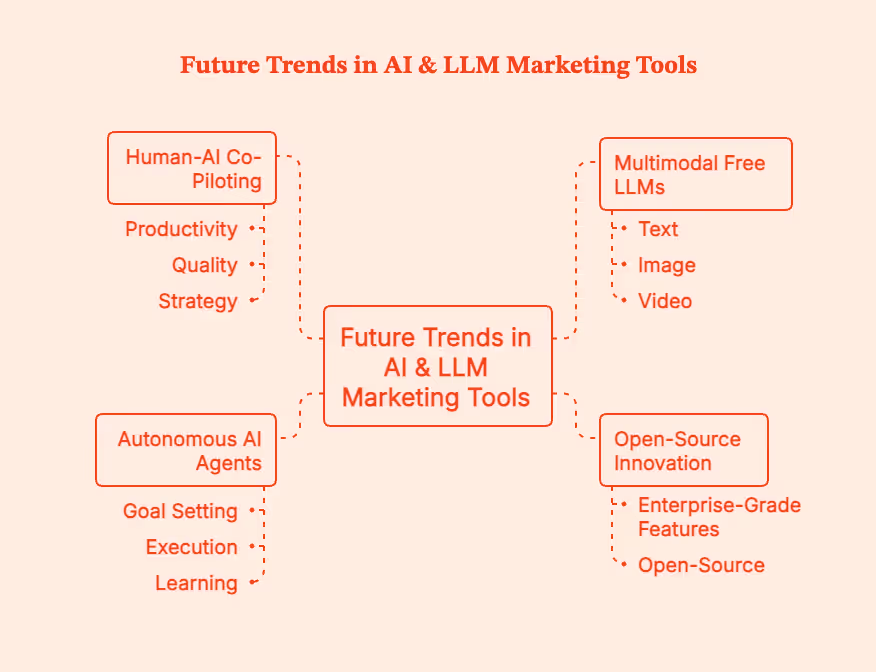
Here's how AI is set to change economic and creative landscapes globally:
Free AI tools for marketing have become one of the most accessible superpowers in any team's toolkit. Generate ad copy, design visuals, analyze customer behaviour, and test campaign ideas while spending zero dollars.
However, do not delude yourself: the brainwork is still all you.
Free AI models will make you faster, sharper, and more creative than ever.
Factors.ai will help you understand which content actually moves revenue.
Together, they will turn marketing chaos into insight and speed into impact.
Ready when you are.
FAQs for Best Free AI Tools for Marketing
Q. What is the difference between free AI tools and paid ones?
Free tools help you experiment; paid tools help you scale. Most free AI tools can get some real work done, like draft content, generate visuals, schedule posts, and analyze trends.
But paid tiers unlock features like higher usage limits, faster processing, advanced integrations, wider collaboration features, and improved privacy.
Q. Can startups rely only on free tools?
Yes, many do.
Early-stage teams can even run entire marketing operations on free CRMs, free AI models, free analytics, and free scheduling tools.
But free tools are mostly useful for testing strategy. Paid tools help execute that strategy at scale.
Q. Are free LLMs effective for content quality?
Yes. Open-source models like Llama 3 and Mistral 7B can help you create blog outlines, short-form copy, summaries, brainstorming, ad variations, and social captions
Q. How can Factors.ai enhance free AI workflows?
Free AI tools help create content, and Factors helps you measure how that content actually performs. Users can, for instance,
- connect their AI-generated content & campaigns to actual conversions.
- monitor which ad variations perform best.
- map revenue back to channels, ads, and creatives.
- track ICP engagement and pipeline impact.
- get unified, AI-powered analytics on their efforts.
Q. When should I upgrade from free to paid?
Upgrade when free starts costing you more than it saves. Make the shift when:
- you’re hitting usage caps every week.
- your team needs collaboration + sharing features.
- you need advanced integrations (CRM, ads, analytics).
- you want to scan paid channels or outbound.
Use AI to Make Yourself Irreplaceable
Free AI tools for marketing have become one of the most accessible superpowers in any team's toolkit. Generate ad copy, design visuals, analyze customer behavior, and test campaign ideas while spending zero dollars.
However, do not delude yourself: the brainwork is still all you.
Free AI models will make you faster, sharper, and more creative than ever.
Factors.ai will help you understand which content actually moves revenue.
Together, they will turn marketing chaos into insight and speed into impact.
Ready when you are.
Summary
Artificial intelligence has become foundational to modern marketing, with free AI tools enabling businesses to create content, design visuals, automate posting, and analyze performance without spending.
Major categories include language and writing models (Copy.ai, Jasper free, Writesonic), design tools (Canva Magic Studio, Adobe Firefly Free), social media automation (Buffer, Hootsuite Free), and analytics platforms (Google Trends, Factors.ai). There are also CRM and automation tools like HubSpot Free CRM, MailerLite, and Brevo.
The best free LLMs for marketing workflows include Mistral 7B, Llama 3, Gemini 1.5, and models available on Hugging Face.
Choosing the right AI tool requires evaluating scalability, data privacy, integrations, and community support. Marketers should avoid pitfalls such as data leakage, free-tier limits, and fragmented workflows.
Best practices include introducing AI to one workflow at a time, maintaining human oversight, feeding clean data, and measuring outcomes consistently. As AI evolves, marketers will benefit from multimodal LLMs, autonomous AI agents, and deeper human-AI collaboration.
Lead-Based Marketing: The B2B Approach to Smarter Demand Generation
B2B marketers, are you swimming in data, tools, dashboards, and traffic, and still being asked, “Why are we not converting more pipeline?”
You’ve got clicks, impressions, and thousands of website visits. But it’s not enough, is it?
That’s because healthy conversion rates come from qualified leads, i.e., the right people, with the right intent, caught at the right time.
Finding these people requires lead-based marketing.
Consider this the next step in the evolution of lead generation strategies. Marketing and sales teams are quickly realizing that even a few sales-qualified leads can deliver more predictable revenue and growth than thousands of clicks that go nowhere.
This article dives into the modern-day lead generation process, and how it helps narrow the target audience, find potential customers, and zero in on high-quality leads.
TLDR:
- Lead-based marketing prioritises high-intent, high-fit leads instead of raw traffic.
- The B2B buyer journey is multi-stakeholder and nonlinear, requiring long-term nurturing and intent tracking across 4 stages: Awareness → Consideration → Decision → Purchase.
- Lead sourcing works when inbound (SEO, content, webinars, LinkedIn) and outbound (events, cold outreach, firmographic/technographic targeting) align with clean data and a clear ICP.
- Lead scoring and qualification (BANT + behaviour-based signals) flag leads as MQLs, SQLs, and PQLs. Only sales-ready leads reach the sales team.
- Demand gen creates interest; lead-based marketing converts it into opportunities with a combination of intent data and automation.
- Conversion rate optimization (CRO) across landing pages, emails, CTAs, and forms can minimize user-end friction and transform MQLs into SQLs and real opportunities.
- Platforms like Factors.ai unify ads, website activity, CRM data, and intent signals into one timeline. This improves lead sourcing, prioritisation, routing, and revenue attribution.
What is Lead-Based Marketing? (Lead Marketing Definition)
Lead marketing (or lead-based marketing) is a structured, data-based process of finding, nurturing, and converting qualified leads. Lead generation efforts chase the leads most likely to yield a sale, instead of just boosting raw traffic or impressions.
In a sales funnel, each marketing qualified lead is scored and segmented into MQL (Marketing Qualified Lead), SQL (Sales Qualified Lead), or PQL (Product Qualified Lead) to indicate their readiness for purchase.
Here’s a simple workflow: Marketing Signals → Lead Scoring → Handoff to Sales → Opportunity
Teams start with finding “leads in marketing” (meets your criteria and is showing positive behaviour) and transition to “lead sales” (passed to sales for outreach).
Marketing efforts create interest, scoring & qualification ensure the right leads move forward, and sales closes the deal.
Understanding the B2B Lead Journey (Qualified Leads + Marketing Campaigns)
The B2B buyer journey is non-linear. You juggle multiple stakeholders, long sales cycles, complex solutions, and regulatory or budget constraints. The buyer journey stretches across weeks or months, and often involves multiple people operating at different stages of the customer journey:
Awareness → Consideration → Decision → Purchase
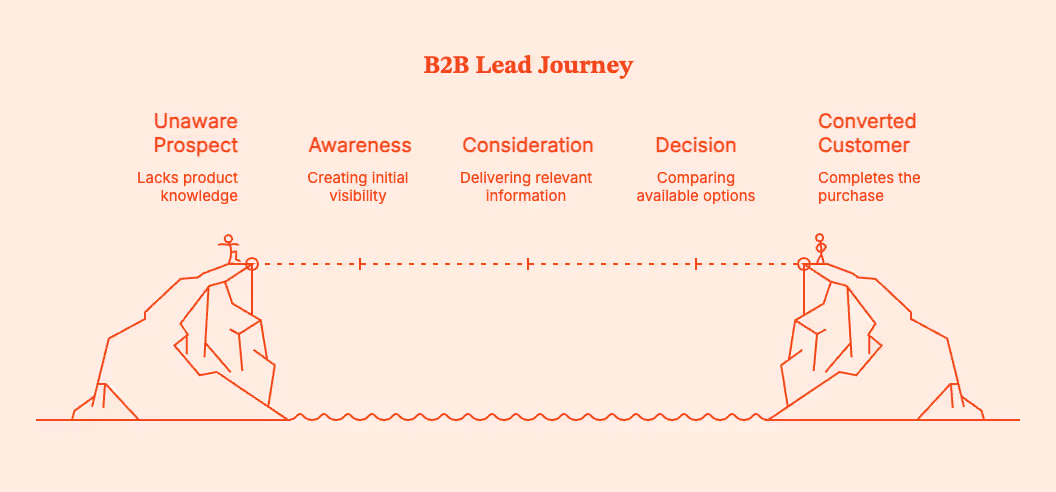
At Awareness, you’re creating visibility.
At Consideration, you're delivering relevant information to a narrowed set of interested parties.
At Decision, the team is comparing options.
At Purchase, you make the sale.
Content, channels, and strategies vary by each stage:
- At Awareness: blog posts, SEO, social proof for buyer trust.
- At Consideration: webinars, case studies, retargeting ads.
- At Decision: demos, personalised offers, negotiation.
It's not easy to keep precise track of all content and operations at each stage, especially if the sale involves multiple modules/buyers. A tool like Factors can help with that. Connect it to your data banks, and it will unify all signals across each touchpoint in the marketing + sales funnel.
Factors keeps you updated on where a lead is in the journey, so you act accordingly to save the sale. Marketing and sales intelligence now carry the same context at all times.
Lead Sourcing: How to Find and Attract Marketing Qualified Leads
Lead sourcing is the process of generating leads for your marketing engine. Without the right leads, marketing teams will fail to sell, no matter how cutting-edge their nurturing, scoring, or sales processes are.
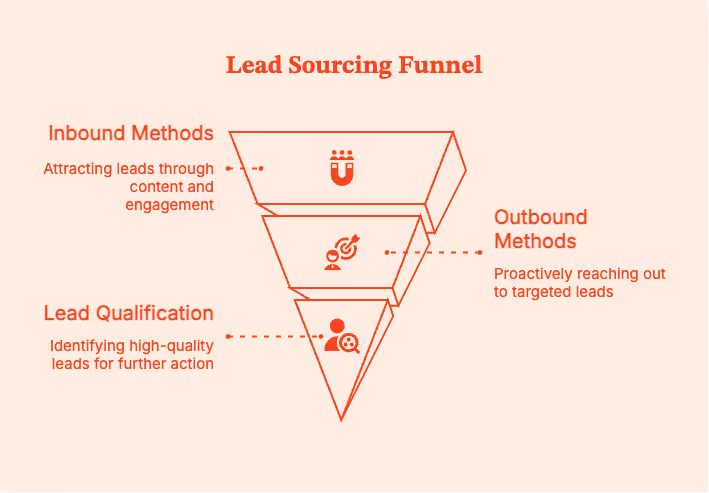
High-quality leads emerge from two buckets, inbound and outbound. For the best results, use both and ensure every decision is data-first.
- Inbound Methods
Inbound methods identify leads who are already looking for solutions like yours. It’s the most efficient tactic, compounds over time, and provides long-term growth.
- SEO and content marketing
Consistent blogging and ranking for the right keywords is great for gathering inbound leads. The idea is to show up with answers when buyers are researching their problem. If someone types “how to get better results from SEO” and finds your guide, it's a match made in heaven.
- Webinars and LinkedIn campaigns
Webinars filter for intent. No one signs up for a webinar on a Thursday afternoon unless they actually care about the problem to be solved. LinkedIn is also great for curating B2B deals. Over half (53%) of B2B marketers use LinkedIn to identify prospects and source contact details.
- Referrals, partnerships, and intent data
Partnerships and referrals produce high-quality leads because trust is implicit. If another brand vouches for you, the lead is more receptive to the deal.
Then there's B2B intent data, that highlights which companies are researching topics related to your product so you can reach out before your competitors do.
If you need some help with learning How To Use Intent Data To Drive Pipeline, we got you.
2. Outbound Methods
Outbound sourcing focuses on proactive discovery. You don't wait for leads to find you, but go out and find them.
But outbound efforts need to maintain a tricky balance. Done badly, it just looks like spam. Done well, it almost guarantees regular pipelines.
- Events, trade shows, and field marketing
The most relevant events will yield high-value B2B leads, especially for mid-market or enterprise firms.
Field marketing offers face-to-face connection, which speeds up brand credibility, trust, and qualification.
- Cold outreach and targeted sequences
Cold outreach only gets results when you've put in solid research and accurate data. Bad data will kill your outreach campaigns and destroy your credibility in the eyes of potential and existing customers.
- Firmographic and technographic targeting
Firmographic targeting is like demographic targeting, but for companies instead of people.
A tool like Factors.ai can help you set filters like industry, company size, revenue, headcount, and technology stack. It will help you find companies and leads matching your Ideal Customer Profile (ICP).
You'll have to invest in an ICP Marketing Strategy, but the payoffs will be worthwhile, because you're talking to people who actually need your product.
For example, if your product integrates with HubSpot, a company already using HubSpot is worth way more than a company that does not.
Checklist for Sourcing Success
Here’s a quick checklist to keep your sourcing efforts intentional:
- Do you have a clear ICP?
- Is your data verified and clean?
- Have you tested and optimized your sourcing channels?
- Are you using a specific tool (like Factors) with intent models, signals, and enrichment layers to help identify which accounts are warm before outreach?
From Leads in Marketing to Lead Sales: Scoring, Qualification, and Handoffs
You’ve got leads. But not all leads are born equal. Which of these actually matter, and will close a deal?
The answer: lead scoring and qualification.
- Lead Qualification
This is the process of determining if a lead is worth a salesperson's time. It works under two broad approaches: BANT Qualification or Behavioural/Intent-based Qualification.
- BANT Qualification looks at:
- Can they afford you?
- Are they the decision maker or can they influence one?
- Are they trying to solve the problem you fix?
- Are they buying now or in six quarters?
- Behavioural/Intent-based Qualification looks at lead behavior:
- Visiting your pricing page twice in one week.
- Rewatching your product demo.
- Attending a webinar on a niche feature.
- Reading your integration documentation.
Actions like these hint that the lead is warming up and may be ready for sales. Tools like Factors.ai specialise in detecting these subtle signals and filtering them.
2. MQLs, SQLs, and PQLs
First time? Here's a quick look at the different types of leads:
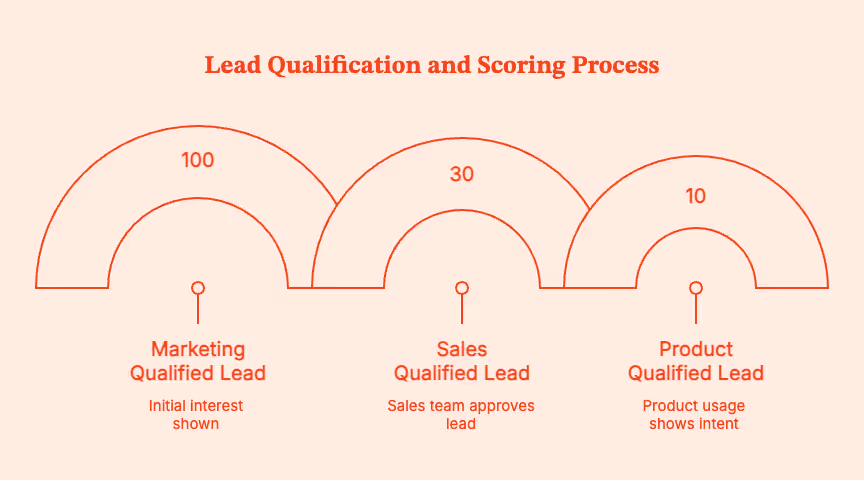
- Marketing Qualified Lead (MQL)
This person fits your ICP and shows some level of interest.
Example:
Someone from a mid-market SaaS company downloads your “2025 B2B Marketing Benchmarks” report and visits your homepage a few days later. Not sales-ready, but can be nurtured.
- Sales Qualified Lead (SQLs)
This is when sales says, “Yes, please" to a lead.
Example:
Someone views your pricing page, fills out a demo form, or clicks a retargeting ad for a comparison guide.
- Product Qualified Lead (PQLs)
Mostly relevant for PLG companies. This is someone who has used your product and shown buying intent.
Example:
A free user who invites three teammates, integrates with Slack, and hits a usage limit.
3. Lead Scoring
Here, marketers assign points to behaviours, attributes and actions to rank leads by likelihood to convert.
Example:
- +10 points for viewing the pricing page
- +8 points for attending a webinar
- +5 points for opening a nurture email
- +3 points for visiting the blog
- +0 points for “downloaded the PDF your CEO insisted on writing”
Again, Factors can automate scoring by pulling data from ads, CRMs, websites, and emails to highlight the right leads at the right time.
4. Sales–Marketing Handoff
If marketing and sales don’t agree on what “qualified” means, you'll end up with complaints like, “Why did you send me this lead?” Marketing can also complain:“We sent you 100 leads. Why haven’t you closed any?”
A clean handoff requires marketing and sales to align on:
- What qualifies as an SQL.
- Which behaviours indicate sales readiness.
- How quickly a lead should be routed.
- Who owns the follow-up and within what timeframe.
Shared dashboards can help reach this alignment. For instance, Factors' Milestones feature offers sales context with data on:
- What led this account to engage.
- Which stakeholders interacted with which assets.
- Which campaigns influenced them.
- What signals indicate rising intent.
- Where they are in the buyer journey.
Integrating Lead-Based Marketing with Demand Generation
Don't treat demand gen and lead-based marketing like distant cousins who only see each other at QBRs. Demand gen creates the interest. Lead-based marketing captures, qualifies, and converts that interest into revenue. Use both, consistently.
Demand Generation vs Lead-Based Marketing
Let’s break it down:
You Need Both
- Only demand generation: Lots of traffic, impressions, and clicks. No clarity on who’s ready to buy.
- Only run lead-based marketing: chasing the same 200 accounts until the end of time.
Use both, and you get a system that grows AND converts.
A Real-World Example
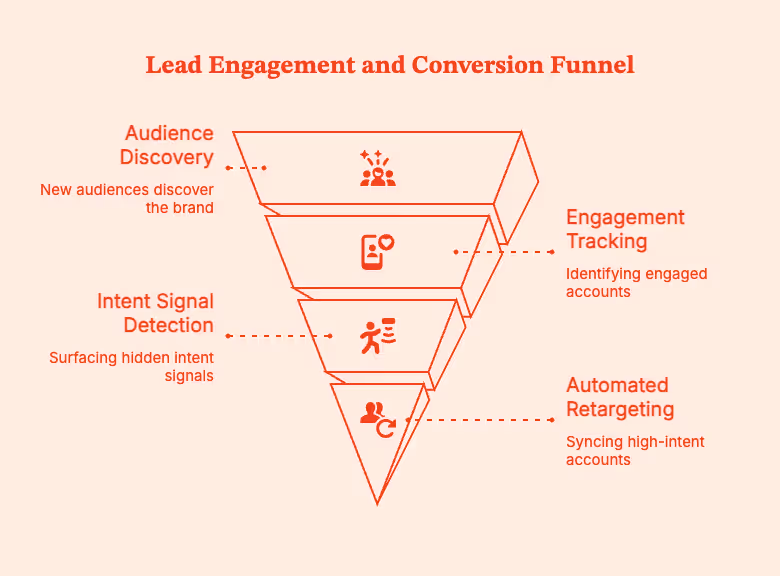
You've launched a LinkedIn awareness campaign promoting a new ebook for B2B marketers. Your impressions go up. New audiences discover your brand. Some accounts click, some visit your page, some watch three seconds of your video.
Next, you run lead-based marketing:
- Factors.ai identifies who actually engaged. You get account-level intel about which companies viewed your posts, who visited your site, especially at odd times (they're really interested).
- High-intent accounts are automatically synced to new campaigns. Factors pushes these accounts into your retargeting audiences or nurture flows: demand-to-lead conversion on autopilot
- Factors surfaces intent signals you probably would not notice yourself. For example, a company didn’t click your LinkedIn ad but had three people from the team reading your blog.
Close the Loop With AI: AdPilot
An AI tool like AdPilot gives you a bit of an unfair advantage. It makes LinkedIn ads work for you by helping to build precise audiences, run intent-driven campaigns, send quality conversion signals, and closely track ROI.
Conversion Optimization: Turning Leads into Opportunities
Generating leads is just step 1.
You convert them to opportunities that can yield revenue, a.k.a you perform conversion rate optimization (CRO). CRO is the continuous process of improving every interaction a lead has with your brand: your landing pages, emails, forms, ads, and follow-up cadence.
Why CRO Matters in B2B
B2B buyers are cautious, risk-averse, and usually not solo decision-makers. You have to navigate long sales cycles, internal approvals, competing priorities, and usually one person who wants to pause everything "for now". To make a sale in this environment, your conversion path needs to remove friction at every possible step.
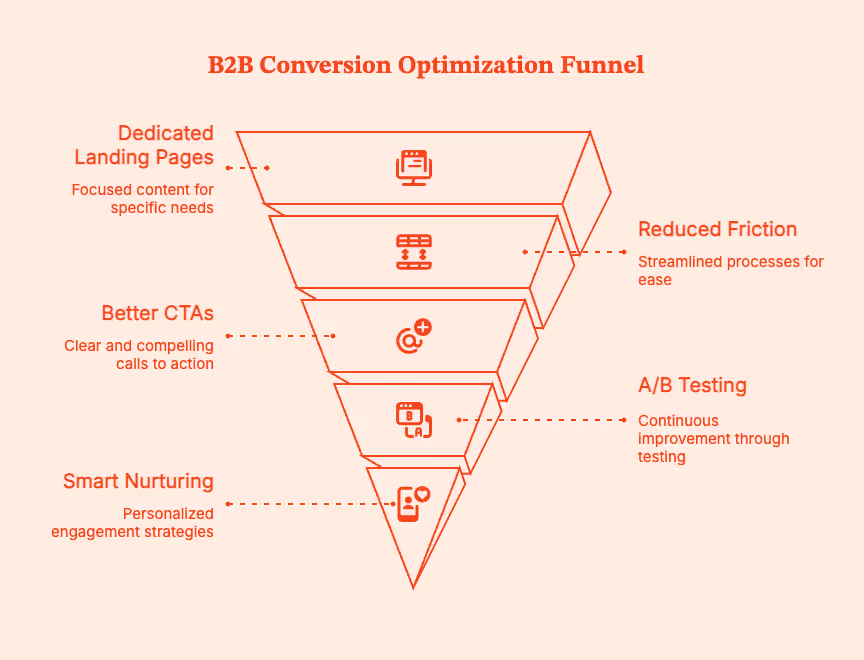
We'll discuss this in detail elsewhere, but here are a few quick best practices to keep CRO effective and profitable:
- Use Dedicated Landing Pages. Your homepage pleases everyone and converts no one. Dedicated landing pages match the visitor's intent, address specific pain points, emphasize one CTA, and build a focused experience.
- Reduce Friction. Every extra form will kill conversions. Remove unnecessary form fields, use progressive forms (like HubSpot), give multiple forms to interact with (demo, trial, PDF, video), and ensure that your CTA IS visible, obvious, and benefits-first.
- Better CTAs. You need clarity more than cleverness. “Get the ROI breakdown” beats “Unlock insights.” Tell the visitor what they get and why it matters.
- A/B Test Everything: headlines, CTAs, colors, form lengths, button placement, social proof, hero images.
- Smart Nurturing Between MQL and SQL. Most leads won’t convert on the first visit. But nurturing will get the lead to convert eventually. Use personalised email sequences, retarget ads based on visited pages, build industry-relevant case studies, and deploy dynamic website content personalised by account.
- Use Factors.ai To Find Drop-Off Points. It will show you where leads abandon forms, find which landing pages perform best, flag pages where intent spikes, sync high-intent accounts back into LinkedIn or Google Ads, and even track drop-offs from ad click to CRM entry.
Tools & Platforms To Power Lead-Based Marketing
Lead-based marketing needs a solid tech stack to support it. Here’s a high-level view (a deeper dive has to wait for a standalone article):
- CRM: Salesforce, HubSpot
- Marketing Automation: Marketo, Pardot
- Analytics / Attribution: Google Analytics
- Enrichment/Data Providers: Clearbit, Apollo
- Intelligence Layer: Factors.ai
In this matrix, Factors.ai is the intelligence layer binding ad data, website activity, and CRM signals into one view. It uses AI agents to surface high-intent leads and also automates routing and follow-up operations. A single platform gives you complete context and actionability.
Key Metrics and ROI Measurement for Lead-Based Marketing
How do you prove that your lead-based marketing is working? You move beyond vanity metrics like impressions or downloads and focus on pipeline-driving, revenue-generating metrics.
Here are the metrics B2B teams actually need to track.
- Cost Per Lead (CPL): Total Spend / Number of Leads Generated.
Pro-Tip: A higher CPL only helps if those leads are higher quality. Cheap leads often cost you more in time, nurturing, and dead-end sales calls. - MQL to SQL Conversion Rate: MQL → SQL Conversion Rate = Percentage of marketing-qualified leads that sales accepts as worthy of outreach.
- SQL to Opportunity Conversion Rate: Once sales accepts a lead, how often does it turn into a true opportunity? If this number is low, your leads might be curious but not committed.
- Pipeline Value Generated: The total dollar amount of opportunities created from your leads. This is also the KPI your CEO actually cares about, no matter how much they talk about engagement rate.
- Pipeline Velocity (Conversion Velocity): How quickly leads move through the funnel.
(Number of Opportunities × Deal Value × Win Rate) / Sales Cycle Length - ROI (Revenue Influenced / Marketing Investment): Revenue Influenced or Attributed / Total Marketing Spend.
From Data to Demand: Building a Connected B2B Growth Engine
Lead-based marketing seems to be gaining ground, but it's more than a flighty trend or a buzzword. It’s the silver bullet for turning your data, tools, and traffic into real revenue.
It boils down to data + alignment + context.
Lead-based marketing helps sales and marketing teams get on the same page about what counts as a "good lead". When these systems talk, you truly understand your buyer's journey. Add a tool like Factors to layer the insights, and now you've eliminated guesswork from your revenue Ops.
Bottomline: B2B buyers expect speed and relevance; being reactive isn’t enough. You need to anticipate, identify, prioritise, and act. Your lead-based engine does exactly that, and turns demand gen into revenue growth.
Summary
Lead-based marketing is a modern B2B strategy that chases quality over quantity by finding, scoring, and nurturing high-intent leads. Instead of chasing website traffic, it focuses on the right people, with the right intent, at the right time.
The B2B buyer journey is rarely linear and often involves multiple stakeholders. Prospects move through Awareness, Consideration, Decision, and Purchase while interacting with content, ads, landing pages, and sales touchpoints.
Companies use tools like Factors.ai to track users and their intent across ads, CRM, email, and website behaviour into a single view.
Inbound channels like SEO, content marketing, webinars, and LinkedIn attract prospects already researching solutions. Outbound channels such as events, cold outreach, and firmographic or technographic targeting help teams proactively find companies fitting the ICP.
Lead qualification separates generic user interest from genuine buying intent. Leads go through MQL, SQL, and PQL stages, supported by a consistent scoring system. Smooth sales–marketing handoff is essential for reducing friction and improving conversion.
Demand gen builds awareness; lead-based marketing converts that interest into opportunities. AI-driven tools like AdPilot activate high-intent accounts in paid campaigns.
Finally, conversion rate optimization improves every touchpoint, from landing pages to CTAs and nurture flows. It helps more leads become opportunities.
Key metrics to track are CPL, MQL-to-SQL rate, pipeline value, velocity, and ROI.
FAQs for Lead-based Marketing: The B2B Approach to Smarter Demand Generation
What is lead-based marketing?
It’s a smarter, more focused approach to B2B marketing where you identify the right leads, nurture them properly, and move them all the way to revenue. Quality over quantity.
How is it different from demand generation?
Demand gen gets people curious and interested. Lead-based marketing identifies who actually cares enough to move toward a real sales conversation. One creates interest, the other converts it to a deal.
What tools do I need?
At a minimum: a CRM, marketing automation, analytics, and data enrichment. To tie everything together, you need an intelligence layer like Factors.ai to connect the dots and flag true buyer intent.
What are the key success metrics?
Lead quality, MQL-to-SQL conversions, SQL-to-opportunity conversions, total pipeline value, how quickly leads move through the funnel, and overall ROI.
When should a company adopt lead-based marketing?
Most companies are drowning in unqualified leads. Sales and marketing often aren’t aligned, or teams can’t clearly see how buyers are moving after interacting with their assets. Lead-based marketing optimizes the user journey and creates a smarter, more predictable pipeline.
.avif)
15 Best B2B demand gen agencies(and how to pick the right one)
Earlier this year, we hired a ‘top-rated’ B2B demand generation agency only to realize, nine months later, that the pipeline chart looks the same. I suppose I should be thankful it didn't get worse.
:-/
You’ve almost certainly heard this before: A SaaS CMO signs a 6-month retainer with an agency that promises ‘100+ MQLs a month.’
Then come the weekly dashboards and Slack pings, lots of traffic, lots of leads.
…and nothing for sales to actually close.
No lies, 61% of B2B marketers say their biggest challenge is converting leads into pipeline. I’m one of them. As experience has taught me (and my peers), it’s not the volume of marketing that counts, it’s the quality.
Most B2B demand generation agencies can’t make that cut.
Here are the 15 that can. If you're looking for a marketing agency, start with these.
TL;DR:
- A B2B demand generation agency builds full funnel programs that create demand, capture it, and turn it into real, sustainable revenue.
- Before you hire anyone, make sure you have the basics: clear ICP and positioning, a CRM that tracks MQL to SQL to opportunity, enough sales capacity, and a budget you can commit to for 6 to 12 months.
- Decide what you truly need help with: inbound heavy, outbound heavy, ABM for big buying groups, or an integrated demand gen setup across content, paid, outbound, and lifecycle.
- This guide lists 15 B2B demand gen agencies by use case. Shortlist only 3 to 5. Judge them on fit, ideas, the people you will actually work with, and how well they think in terms of pipeline and CAC.
- No agency can repair broken product market fit, vague positioning, or bad data. Pair the right model (inbound, full demand gen, or hybrid in-house plus freelancers) with a revenue analytics platform like Factors.ai to see which accounts are in market and which programs really drive closed won deals.
What a B2B demand generation agency actually does
Contrary to popular ideas, demand gen isn't just lead generation. It’s full-fledged growth:
awareness → education → demand creation → demand capture → pipeline → revenue.
Demand gen agency vs digital marketing agency vs lead gen shop
Lead gen collects emails. Demand gen turns prospects into buyers.
Core services to expect from your B2B marketing agency
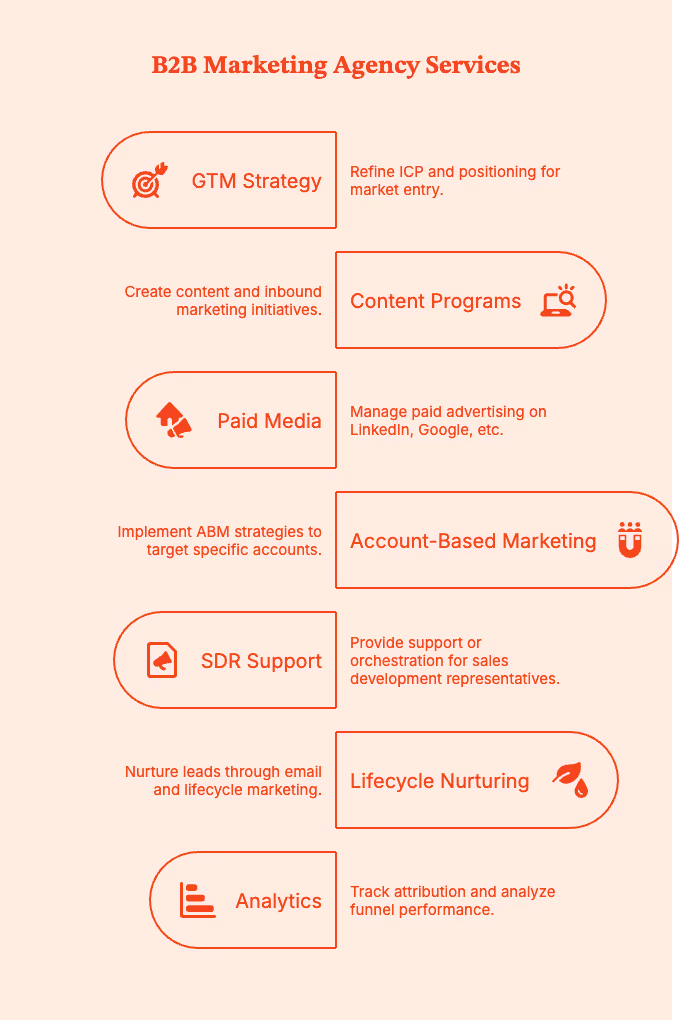
Your chosen marketing agency should provide:
- GTM strategy, ICP refinement, positioning
- Content + inbound programs
- Paid media (LinkedIn, Google, programmatic)
- Account-based marketing (ABM)
- SDR support or orchestration
- Lifecycle + email nurturing
- Attribution & funnel analytics
Where inbound marketing agencies fit
Inbound-first shops (content, SEO, automation) work best for teams where organic and content are the primary growth levers.
Some inbound agencies also handle full-funnel demand gen, so judge based on the KPIs they own.
Where B2B inbound marketing agencies fit
A B2B inbound marketing agency facilitates this engine: content → organic discovery → lead capture → nurture.
Think SEO + blogs + gated assets + webinars + marketing automation
Inbound marketing agencies are your best bet when:
- Your ICP actively searches for what you do.
- You have a solid, unique point of view; a true differentiator.
- You can afford the longer payoff period of organic growth.
- Your sales team has a history of converting educated, self-directed buyers.
- You want sustainable, compounding organic growth.
Are you actually ready to hire a B2B demand generation agency?
Any good agency will tell you this in the first meeting, but in case one doesn't, here's saving you a $30k “we should’ve waited” lesson.
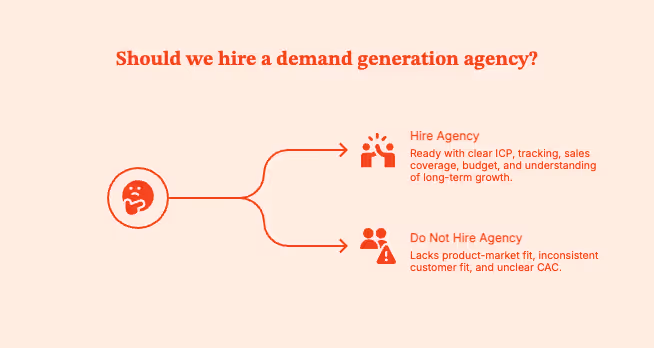
You’re ready to hire an agency and run demand generation campaigns if:
- You have a clear ICP + positioning. Doesn't have to be perfect, but needs to have some clarity.
- You’re already tracking the basics: MQL → SQL → Opportunity → Closed-Won in a CRM.
- You have sales coverage for all promising leads.
- You have $12k–$30k/month (approx) to spare for 6–12 months.
- Your leadership understands that demand gen compounds over quarters, not weeks. It can't be rushed.
When hiring an agency makes more sense than hiring in-house
- Your team is drowning in tasks. They can't add “learn ABM + paid social + attribution” to the plate anytime soon.
- You need to enter a market faster than it takes to hire a full growth team.
- You want ABM + paid + outbound + lifecycle working together instead of trying to sync five different vendors.
- You need speed + cross-channel orchestration, especially for teams stuck in “random acts of marketing.”
When you should not hire an agency yet
- You're not sure about product market fit.
- Customer and stakeholder fit is inconsistent.
- CAC is all over the place, and you don't know why.
- The CEO expects “400 leads in 40 days” instead of sustainable growth in 2–3 quarters.
Agencies aren't a "Hail Mary". They are operational accelerators for teams who already know who they sell to, why they win, and what a qualified opportunity looks like.
How we evaluated these B2B demand generation agencies
I didn't pull from a "top 15" list on Google. Every agency fits a particular type of B2B go-to-market and has proven that they can drive pipeline, not just activity.
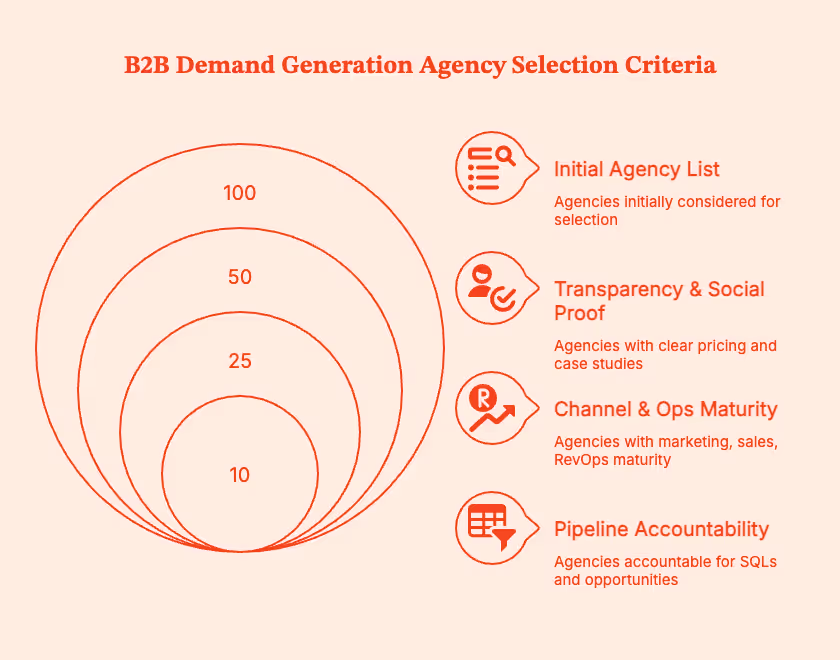
Here’s the criteria for my selection:
- ICP & industry fit: Certain agencies are the perfect fit for mid-market SaaS selling $25k+ ACV. Others work best with IT, cybersecurity, manufacturing, or pro services. I closely looked at whether an agency actually understands the buyer, the sales cycle, and the internal politics of the industry.
- Primary go-to-market motion: Demand generation agencies come in all shapes, sizes, and priorities
- Inbound-heavy = content + SEO + marketing automation
- Outbound-heavy = SDR/BDR orchestration and appointment setting
- ABM = multi-channel engagement across buying committees
- Integrated = paid + ABM + outbound + lifecycle + content
One agency will excel at outbound/SDR execution, while others will lean into content-led demand creation and paid activation. I matched specialization to use case.
- Pipeline accountability: When choosing an agency, I've asked:
Do they talk about SQLs, opportunities, CAC, and payback?
Or do they hide behind CPMs, CTRs, and marketing-influenced revenue?
In other words, can the agency articulate how its work translates to revenue?
- Channel + ops maturity: It's much easier to launch ads than to run attribution, lead scoring, lifecycle email, CRM hygiene, and conversion optimization across channels. I prioritized agencies that can work at the intersection of marketing, sales, and RevOps.
- Transparency and social proof: I won't even look at agencies that don't present real case studies, pricing clarity, and minimum engagement info on their site. In my eyes, anyone who doesn't provide this data doesn't respect the buyer's money. If I have to sit through six discovery calls to learn pricing, I'm out.
Pro-Tip: This ABM Platform Pricing Guide: Compare Costs & Features can help.
The 15 best B2B demand gen agencies
For high-growth B2B SaaS with complex deals
For outbound-heavy pipelines and appointment setting
For inbound-first, content-heavy demand generation
For ABM and enterprise buying groups
For scrappy teams that want a lighter model
B2B demand gen vs B2B inbound marketing agency: which do you actually need?
If you shop around, you’ll see that a lot of agencies that call themselves a “B2B demand generation agency” are actually just doing classic inbound: blogs, ebooks, SEO, a bit of nurture…and leaving it at that.
That’s not the worst, but given your sales movements, is an inbound-only partner enough, or do you need a full-funnel demand gen agency that also handles outbound, ABM, and lifecycle?
First, let’s get clear on the difference between the two:
And then, there are agencies that sit between the two.
The overlap: inbound agencies that grew into demand gen
It’s common for some agencies to start with inbound operations and then evolve into full-funnel demand generation. For instance,
- Ironpaper combines inbound, ABM, and sales enablement. They’ll write blogs and create video content, while also designing ABM plays and sales enablement for sustained buying cycles.
- Similarly, Lean Labs deploys SaaS growth and inbound strategies, using websites and inbound tactics to drive revenue growth (not just blog traffic) over the long term.
These “best of both worlds” agencies are the best fit for teams where:
- Organic + content are the primary levers.
- It’s acceptable to layer outbound or SDR in-house.
- The aim is to achieve compound growth more than immediate volume.
So how do you choose between inbound, demand gen, or a hybrid model?
Checklist: inbound vs demand gen vs hybrid
You want an inbound agency if…
- [ ] Our sales cycles are moderate to long (not one-call closes).
- [ ] Our buyers like to research on their own before talking to sales.
- [ ] Our ACV is mid-range (roughly $5k–$40k).
- [ ] We’re okay with results compounding over quarters, not weeks.
- [ ] We already have some pipeline, but it’s inconsistent or too outbound-heavy.
- [ ] We want a more sustainable baseline of opportunities from content + SEO.
- [ ] We have at least one marketer who can brief content, own a calendar, and work with sales.
- [ ] We don’t have strong in-house SEO/content/marketing automation skills and want a partner to “run the engine.”
You want a demand gen agency if…
- [ ] We have long, complex sales cycles with multiple stakeholders.
- [ ] We’re stuck in “we have leads, not pipeline.”
- [ ] We need coordinated plays across paid, outbound, ABM, events, and nurture.
- [ ] Our ACV is higher (>$20k–$25k), so bigger, multi-touch programs make sense.
- [ ] Our pipeline is lumpy or overly dependent on hero AEs/SDRs.
- [ ] We need a structural fix, not just more demo requests.
- [ ] We want a partner who can design around pipeline coverage, CAC, and revenue targets.
- [ ] Our team is maxed out or too junior to build a full-funnel engine on its own.
- [ ] We’d benefit from a team that brings strategy, ops, creative, and channel specialists under one roof.
You want a Hybrid (in-house + freelancers) shop if…
- [ ] We have (or are hiring) a strong Head/Director of Demand/Growth.
- [ ] That person knows what to do, but needs extra hands more than another “strategy” layer.
- [ ] Our sales velocity is mixed – some quick deals, some long ones.
- [ ] We want to experiment across channels without committing to a big agency retainer.
- [ ] We’re still figuring out ACV and packaging (PLG vs sales-led vs hybrid).
- [ ] We’d rather fund experiments than pay a large, fixed retainer.
- [ ] Our pipeline is early but promising, and we’re testing what actually moves opps.
- [ ] We’re happy to keep strategy in-house and rent execution (content, paid, ops, design).
Common risks & gotchas
The B2B demand gen agency you choose will factor directly into the company’s revenue growth (or fall). Often, agencies aren’t “bad”, they simply are not a good fit for the use-case and buyer's journey at hand.
So be sure to avoid these pitfalls when making your choice:
- Do not expect an agency to fix a broken product or positioning
Your churn is high. Win rates are low. Every deal needs discounts to close. Both the CEO and marketing decide “we just need more qualified leads”. So, you hire a demand gen agency and hope that great campaigns will compensate for weak product-market fit or weak positioning.
Even if the agency launches solid campaigns, builds content, drives traffic, and gets more demos, the close rate doesn’t move, or CAC gets worse.
Demand gen is an accelerant. It won’t get you more sales if your customers don’t love what you’re offering.
- Do not try to see attribution with data and reporting gaps in place
You execute campaigns. Sales is taking calls. But ask basic questions like…
- What’s our MQL → SQL → opportunity conversion by channel?
- Which campaigns are actually generating pipeline, not just leads?
- How many deals last quarter were influenced by paid vs organic, vs outbound?
… and nobody has answers.
B2B agencies simply cannot succeed without clean CRM data, basic funnel tracking, and defined lifecycle stages. With fuzzy data, you get:
- beautiful dashboards… that don’t match reality in Salesforce.
- marketing and sales arguing over whose numbers are “right.”
- agencies optimizing for form-fills because they can’t see revenue.
- Get your incentives in line: MQLs vs SQLs vs revenue
Here’s how many demand gen engagements still work:
- The agency is paid and gets bonuses on MQL volume.
- The client cares about SQLs, opportunities, and revenue.
- SDRs quietly ignore half the leads because they lead nowhere.
If you’re compensating agencies on MQL volume, they’ll naturally optimize for cheap form-fills. They double down on gated content, low-intent ebooks, and giveaway leads, even if none of these push business growth.
Pro-Tip: Consider this checklist to de-risk your B2B demand gen agency engagement
Before you sign, check that:
- [ ] We have a clear ICP, offer, and positioning (or we’re paying the agency to help us define it explicitly).
- [ ] Our CRM stages and lifecycle are defined and actually used by sales.
- [ ] Success is framed around SQLs, opportunities, pipeline, CAC, and payback, not just “leads.”
- [ ] We’ve assigned an internal owner (name, role) who will steward the relationship.
- [ ] The initial scope is focused (one ICP, one core motion) for 90 days before we expand.
During the first 90 days:
- [ ] We’ve agreed on a weekly report (leading metrics) and a monthly review (pipeline metrics).
- [ ] We can see campaign → account → opportunity journeys, not just clicks.
- [ ] We’ve killed at least one thing that isn’t working and doubled down on one that is.
Final Thoughts: How to pick your short list and what to do next
I know, this is a lot of information so far, so here’s a quick list of what to do on Monday.
Forget being "overwhelmed by options". Get "three solid candidates and a clear plan.
Are you really ready?
Before jumping on discovery calls, make sure that:
- you know who you sell to. ICP, segment, rough deal size.
- your CRM can trace a clean path from MQL to SQL to opportunity to revenue.
- you have budget and leadership support for at least 6 to 12 months.
Choose your main motion
Ask:
- Are we mostly inbound right now: Content, SEO, events, webinars, email?
- Are we mostly outbound: SDRs, sequences, cold programs, partner outreach?
- Are we selling into bigger buying groups with long cycles?
- Do we need an integrated partner covering content, paid, outbound, and lifecycle at once?
Shortlist 3 to 5 agencies + 1 or 2 lean alternatives
- Pick 2 or 3 agencies that match exactly what you need: high growth SaaS, outbound heavy, inbound first, or ABM and enterprise.
- Add 1 or 2 boutiques or small collectives that focus on senior attention, speed, or tighter budgets.
Three to five serious candidates. That’s all.
Align your own team before choosing agencies
Talk to your team:
- Agree on the metrics that actually show revenue growth: SQLs, opportunities created, pipeline dollars, CAC, payback period.
- Get clear on what "good" looks like after three or four quarters.
- List your non-negotiables: "must know HubSpot", "must have experience in our industry", "must work well with our SDR team”, etc.
Use a scorecard
Score each agency call on the following:
- Do they really understand our ICP, motion, and deal size?
- Do you trust the agency to work on your account?
- Does the agency prioritize pipeline growth, CAC, and payback, or do they keep talking about clicks and "brand lift”?
A tool like Factors.ai can help you see which companies are actively researching you, which channels they’re touching (paid, organic, events, outbound, partner, etc.), and how those touchpoints progress into real opportunities and pipeline.
Look at the Factors dashboard, you’ll go much farther with answering:
- “Which accounts that our agency targeted actually moved to opportunity or closed-won?”
- “Which campaigns, creatives, or channels consistently show up in the journeys of accounts that end up in late-stage pipeline?”
- “When we pause or change agency activity in a channel, does the pipeline from those accounts slow down, stay flat, or grow?”
In a nutshell
Are you considering a B2B demand generation agency and do not want to waste another six-figure budget on empty MQLs? This piece can help.
It explains what a real B2B demand gen agency does across the full funnel, and contrasts it with a digital marketing agency and a lead generation agency, so you know what to pick.
Check your readiness for hiring an agency by verifying your ICP clarity, CRM tracking, sales coverage, budget, and leadership expectations.
Then, pick from 15 of the best B2B demand gen and inbound agencies listed in the article. Slotted by use case, the list includes SaaS focused demand engines, outbound and SDR providers, inbound heavy content partners, ABM specialists, and founder-led boutiques or hybrid setups.
The piece also compares B2B inbound marketing agencies with full funnel demand gen shops and outlines when a hybrid model makes more sense.
It highlights common errors, like attempting to fix broken product market fit with ads, poor data hygiene, and misaligned incentives tied to MQL volume.
You’ll also know how to pick a short list, align internal stakeholders, test agency fitness, and combine the right agency with analytics tools like Factors.ai, so as to connect spend to pipeline growth and revenue.
Frequently Asked Questions for 15 Best B2B Demand Generation Agencies
Q. What does a B2B demand generation agency do?
A B2B demand generation agency ideates and executes full funnel programs across content, paid media, outbound, and lifecycle campaigns. The intent is to create demand, capture it, and turn it into qualified leads and revenue, with a clear focus on measurable growth.
Q. How is a B2B demand gen agency different from a lead generation agency?
Demand gen agencies build long-term systems to push awareness, inform buyers, and nurture them across channels until they are ready to get a demo/talk to sales. Lead generation agencies generally end with delivering contacts or meetings, generally through outbound or content syndication. They don't own the full journey to opportunity.
Q. When should a B2B company hire a demand generation agency?
B2B companies should hire a demand generation agency if:
- they have a product that fits the market.
- a crystal-clear ICP.
- functional monitoring mechanisms in their CRM.
- they need to scale to go to market faster than they can hire an in-house team.
A great demand gen agency often works as a long-term partner for building a sustainable pipeline rather than a quick fix.
Q. How much do B2B demand generation agencies charge?
Retainers for good agencies can start in the high four-figure to low five-figure range per month. Outbound and SDR-focused programs often begin around nine thousand dollars monthly, and integrated full funnel programs cost more.
Pricing is determined by scope, channel mix, and how much you are paying for: strategy only or a full execution team.
Q. How long does it take to see results from a demand gen agency?
You might see some movement in the first few months, but many specialists will tell you that it realistically takes three to four quarters to deliver efficient, repeatable pipeline growth. This time is needed to put in the work to test plays, refine targeting, and set up brand identity and education in complex B2B cycles.
Q. What KPIs should I use to measure a B2B demand gen agency?
The most important metrics connect clearly to revenue. These are:
- sales qualified leads
- opportunities created
- pipeline value
- customer acquisition cost
- payback period.
Treat clicks and raw lead volume as diagnostic tools rather than success metrics. Depending on your pipeline, some agencies might want to track pipeline velocity and lead to close rates as well.
Q. Can an inbound marketing agency handle B2B demand generation?
Only if they have evolved into full funnel partners that combine content, SEO, marketing automation, ABM or paid media. If an agency is focused mainly on content and organic acquisition, it should have a clear plan for paid, outbound, and lifecycle programs.
Q. Is Google’s Demand Gen campaign type the same as hiring a demand generation agency?
No. Demand Gen in Google Ads is a specific campaign type that runs visual ads across YouTube, Discover, Gmail, and the Display Network.
Demand generation in B2B is a comprehensive strategy across multiple channels and stages. It's best to treat Google Demand Gen as one tactic inside a larger demand gen plan. One is not a replacement for another.

What does the acronym SEO stand for? Explained Simply
I’ve been in digital marketing for a decade. During this tenure, I’ve heard “SEO” being used to describe everything from keyword research to outright witchcraft.
You know, when people say, “Let’s do some SEO and make it rank!” like it’s a magic spell.
So, let’s clear the air.
SEO stands for Search Engine Optimization.
Those three words carry a world of discipline, art, and analytics. It can even occasionally bring you a headache or two.
But SEO is the wall between a business being found or forgotten by the right people.
Let’s talk about that.
TL;DR:
- SEO stands for Search Engine Optimization. It is the process of improving a website’s visibility on major search engines through technical, content, and authority enhancements.
- SEO attracts organic traffic, establishes trust and credibility, and builds long-term ROI. No paying for every click.
- It operates at three levels: Technical (site performance), On-Page (content & keywords), and Off-Page (backlinks & reputation).
- Local SEO helps businesses boost visibility in location-based searches.
- AI & voice search are redefining how users discover brands. It is no longer enough to just optimize for relevant keywords and search engines.
- Tools like Google Analytics, Search Console, and Ahrefs track SEO success. A tool like Factors.ai connects SEO performance directly to revenue.
What Does SEO Stand For?
SEO seems simple enough, but it carries the power to impact every brand’s online visibility.
Before the linguists beat me up…Yes, I know SEO is an initialism, not an acronym.
But in marketing circles, it kinda means the same thing. Please let us live; we have to optimize all day, as it is.
So when people ask, “What does the acronym SEO stand for?” what they really mean is, “What’s behind this mysterious three-letter thing every marketing person keeps mentioning?
In business, the SEO acronym for business or the SEO abbreviation has become shorthand for all the activities that help your brand get discovered online. It covers a wide range of activities, from fine-tuning a website so search engines read it better to creating content that your potential customers actually want to read.
You don’t want to miss knowing about these 5 mistakes to avoid when measuring content marketing ROI.
Imagine your website as a brilliant new restaurant hidden in a quiet street. SEO is the combination of street signs, maps, lighting, and reviews that help hungry customers find it.
Note: It’s more than “SEO = ranking higher on search engine results,”. The real story comes after the search results get you a click.
How do those visitors behave? Which pages do they engage with? Which blogs or landing pages attract the right accounts, not just random page views?
At Factors, SEO is about understanding the buyer’s digital journey and connecting it directly to revenue. We optimize for algorithms as well as outcomes.
Why SEO Matters for Every Business
Most businesses now live online. For them, search engine optimization (SEO) is marketing oxygen.
About 68% of online experiences begin with a search engine.
That means most people who click an ad, follow you on LinkedIn, or read a blog have asked Google a question to get there. If your website isn’t showing up in those results, you’re irrelevant.
I like to think of SEO as ‘digital gravity’ rather than a marketing channel. It pulls the right audience to your brand, whether you're a SaaS company in Bengaluru or a bakery in Belarus.

- Unlike paid ads, SEO keeps driving results in the long term. Every bit of optimization, every blog post, every backlink will keep attracting an audience.
Read: Are Google Ads Worth It? Pros, Cons & Considerations
- End-users also trust organic results more than ads, as the former are not paid for. With SEO, you don’t pay your way up on any search engine results page. You earn your spot. And nothing gathers customer trust like authenticity.
- So, “SEO acronym business” is more than a keyword. At the business level, you can’t pay your way to natural views and engagement. Instead, you help marketing and sales teams actually see how search queries can drive traffic that converts (what we do at Factors) from anonymous visitors to qualified leads.
For practically every user-facing business, SEO is a growth engine. It drives sustained, efficient outcomes and often becomes the smartest investment in the marketing budget.
The Three Words That Built the Web: Search · Engine · Optimization
The term ‘SEO’ expands into three words that really hold up the modern web (especially for businesses) as we know it. Search engine optimization is the invisible infrastructure of the internet.
So let’s break down each word for a closer look.
- Search: This is the whole reason the web exists. Forget algorithms; the foundation of the internet is humans with questions.
Every “how to,” “best software,” or “near me” reveals that a future customer is looking for a solution, an idea, or even reassurance that they’re not alone with their problem.
Good SEO starts with empathy. You have to understand what your buyer is looking for. Once you gauge the intent behind the words, you’ve won half the battle.
You need to understand user intent as closely as possible, and these Top 15 Intent Data Platforms to Boost Your B2B Sales should help.
If you’re looking for even deeper intelligence, consider this piece on Intent Scoring via Website Visitor Identification.
Note: If you can provide someone with an answer in the exact moment they have the question, you’re not selling. You’re helping.
- Engine: The “engine” in SEO is basically a top-tier matchmaking system. Search engines crawl billions of pages daily, index them like an ace librarian, and rank them based on which best answers user intent.
You can’t bribe search engines (unless you’re running ads, but they will declare it as a paid ad), but you can earn their trust by playing by certain rules.
SEO engines actually don’t care if you’re a startup or a Fortune 500 giant. If you provide better value and relevance, you zoom to the top.
- Optimization: This is what separates amateurs from pros. Your storytelling must meet science.
You can’t just sprinkle keywords and compress images to get SEO wins. Along with quality content, web pages must be fast, relevant, secure, and actually useful.
Pro-Tip: It's a good idea to take a course or do some research about how search engines work, under the hood. It gives you a serious edge over competitors when tracking and analyzing search engine rankings and algorithmic shifts.
Optimization means refining every digital molecule. This includes metadata, headings, links, load time, and content tone. The goal is to make the experience feel effortless for both search engines and people.
Here’s how to discover valuable insights about your website traffic with Factors.ai.
How SEO Works: The Three Levels You Need to Know
If you ask me, “How does SEO actually work?”, I usually answer, “like juggling flaming torches while riding a unicycle.”
Jokes aside, SEO generally comprises three operational levels: Technical, On-Page, and Off-Page. These constitute 90% of organic growth. The rest is caffeine, and keeping up with Google’s mood swings.
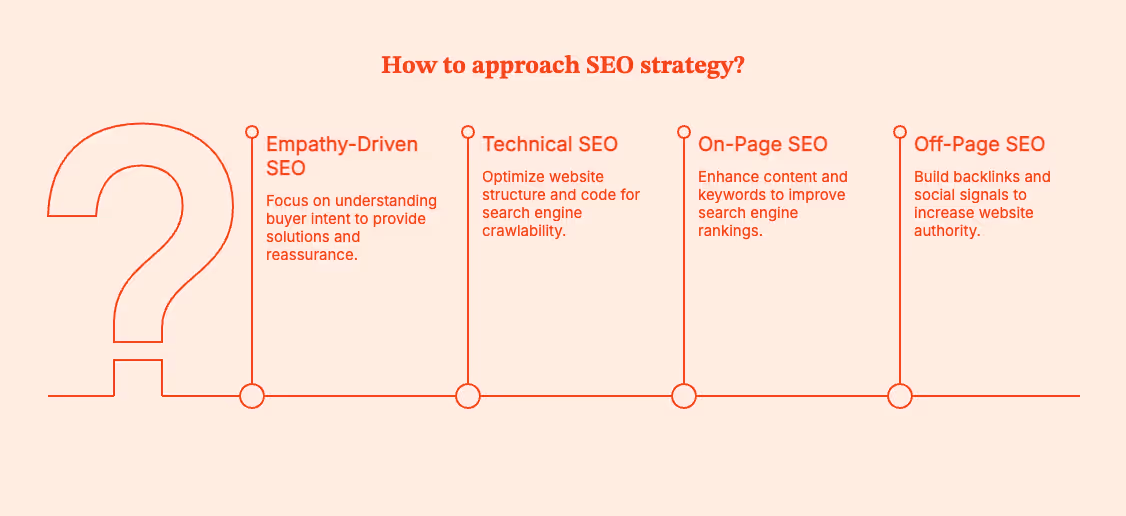
Technical SEO
This is the foundation of your website’s SEO success. The best content won’t work if search engines cannot understand it. That’s where technical SEO comes in.
Here’s what to look for when optimizing technical SEO:
- Crawlability: Can search bots access your pages without hitting dead ends or redirects? Fix broken links, create a sitemap, and keep robots.txt clean to help them do so.
- Mobile-Friendliness: In the second quarter of 2025, mobile devices (excluding tablets) accounted for 62.54% of global website traffic. Your website needs to load fast and work seamlessly on mobile.
- Page Speed: Ideally, your web page should load in 2.5 seconds or less to score well on SEO parameters. Every extra second can cause users to bounce without a second glance.
- Schema Markup: The markup tells the search engine what a piece of content means. It is a standardized vocabulary of code you can add to a website's HTML so search engines really understand what they’re reading.
On-Page SEO
On-page SEO covers content quality, structure, and intent alignment.
- Write for humans, not algorithms. Your content must teach, entertain, or solve a problem.
- Keywords are not scorecards. They are meant to help search engines understand context. Prioritize clarity.
- Treat title tags and meta descriptions like billboards advertising a business on the digital highway. They should be click-worthy without being misleading.
- Use the right hyperlinks to interconnect your web pages with each other. It lets visitors find more relevant content, reduces bounce rates, and increases engagement. Google crawlers also use these links to find related pages, rank them by priority, and gauge link equity.
Off-Page SEO
These are all the actions taken outside the business website to improve its visibility, authority, and credibility in search results. Think of it as your digital reputation.
Largely, it covers:
- Quality backlinks. Don’t chase quantity. A single mention for a respected website matters more than a hundred random directory links from 2010.
- Online references. If folks online are talking about your brand organically, Google realizes that it is more credible.
- Seek (within reason and ethics) social proof in the form of reviews and positive engagement. Users trust brands that other users trust.
To stand any chance at success in the gladiatorial matches (sorry, I meant digital marketing), you have to measure SEO metrics across its three levels…and tie optimization back to ROI.
At Factors.ai, we connect the dots between SEO and business outcomes by highlighting:
- technical fixes that improved organic conversions.
- content pages that delivered qualified leads.
- backlinks that generated new opportunities in the pipeline.
B2B Teams, just starting out on SEO? Here’s a B2B SEO checklist to help you set up and hit the ground running.
Local SEO: Winning Where It Matters Most
Local SEO covers the operations you undertake so that your business shows up for customers in a specific area. For instance, does your website appear in search results when someone types “best coffee near me,” or “B2B analytics firm in Chicago” or similar search intent?

If not, you need more local SEO for your search engine marketing. Here are the basics:
- Google Business Profile (GBP): This is your digital storefront. It shows up in Google Maps, the web, and search engines to describe your business. Users will also see reviews, photos, and directions. Be sure to keep the profile updated.
- NAP citations: This includes details on your Name, Address, and Phone. These should be consistent anytime they show up online. If Google finds three different versions of your address, it will get confused and eventually de-rank your profiles or pages.
- Local content: Create blogs, landing pages, and case studies that mention your region, landmarks, or local client stories.
Local SEO works particularly well for brick-and-mortar stores, service providers, and regional B2B companies that want to capture demand close to their physical location.
At Factors.ai, we map local SEO traffic to account-level signals, so you can see which companies in which regions are engaging. With this insight, you can turn region-based visibility into sales activation.
SEO vs. SEM: How does it impact search results?
A few years ago, whenever I heard someone say, “We’ll do some SEO ads,” I wanted to correct them…with a coffee mug… to their head.
I’m calmer now. Tea helps.
SEO and SEM are related, but not the same thing.
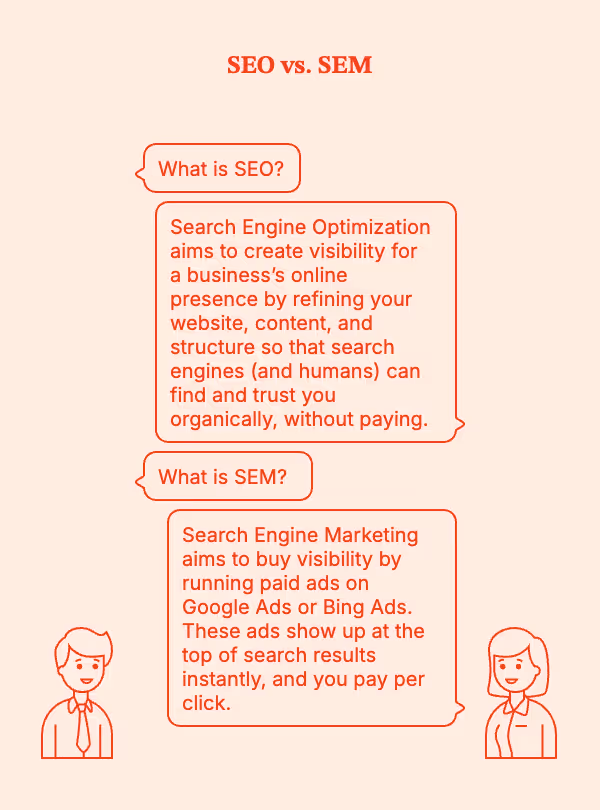
- SEO (Search Engine Optimization) aims to create visibility for a business’s online presence. You refine your website, content, and structure so that search engines (and humans) can find and trust you. And you do this organically, without paying. It’s the very definition of playing the long game.
- SEM (Search Engine Marketing) aims to buy visibility. It involves running paid ads on Google Ads or Bing Ads. These ads show up at the top of search results instantly. You pay per click.
Both are useful tactics, best combined together. SEO builds trust and long-term visibility. SEM drives quick wins and tests which ad copy converts.
Your first time with SEM? You might like our Dummies Guide to Google Ads Management.
With Factors, you can track both organic (SEO) and paid (SEM) touchpoints for a unified funnel view. You can see, for instance, how someone might first discover your brand via a blog post, click a retargeting ad later, and finally convert after an email.
Tools & Metrics: How to Measure SEO Success
You can’t manage what you don’t measure. The right tools and metrics will take SEO from a guessing game to a growth engine.

Your toolkit should have:
- Google Analytics: It tells you who’s visiting, where they came from, and what they did next. Link it with goals or events to track conversions from organic sessions.
- Google Search Console: It shows which keywords triggered impressions, what your CTR looks like, and whether technical issues might be blocking Google from indexing any pages.
- Ahrefs / SEMrush / Moz: These tools analyze backlinks, track keyword rankings, monitor domain authority, and study what’s working for competitors.
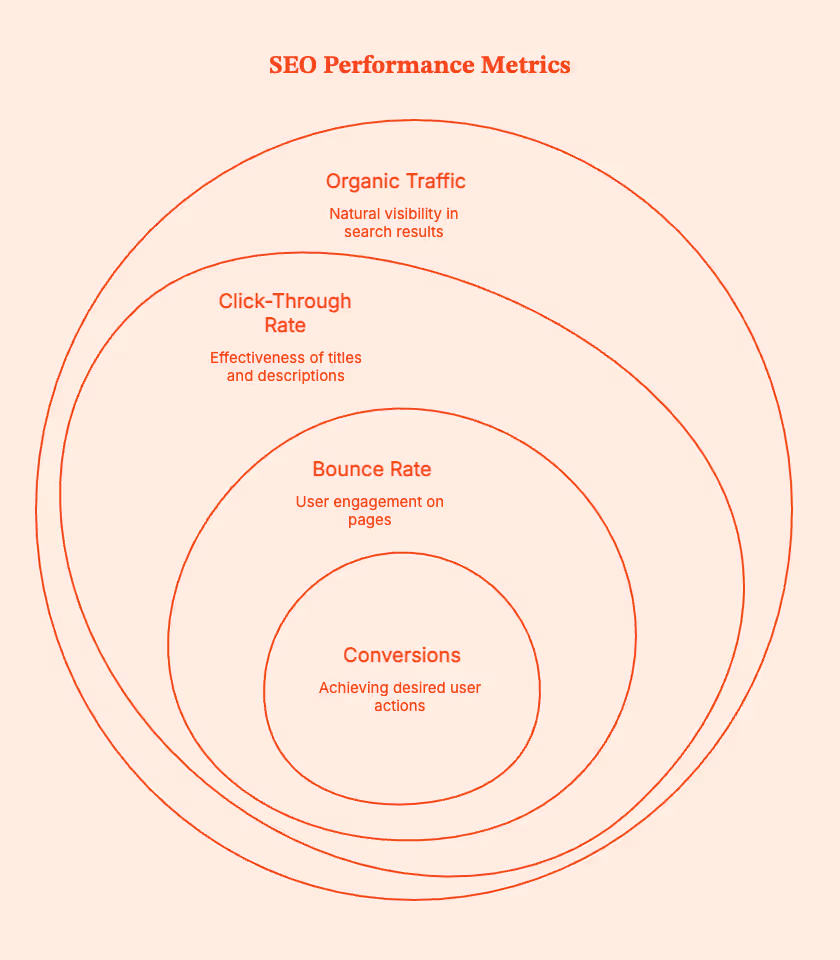
KPIs that actually matter:
- Organic traffic: Are more people finding you online naturally?
- Click-Through Rate (CTR): Are your titles and descriptions getting enough people to click on them?
- Bounce rate: Are visitors spending some time on your page, or bouncing off within seconds?
- Conversions: Are your organic visitors taking desired actions (sign up, get demo, buy)?
Factors.ai will map organic sessions to account-level data and pipeline outcomes. It will show which keywords and landing pages actually drive qualified leads. Now, instead of just saying, “SEO is working”, you can say, “SEO is directly generating $50K in pipeline this month.”
The Future of SEO: From Algorithms to AI (What It Means for Marketers)
SEO was tricky when all you had to manage was Google shuffling rankings based on keywords and backlinks. Now, search engine guidelines have gone full sci-fi (X-Files theme plays).
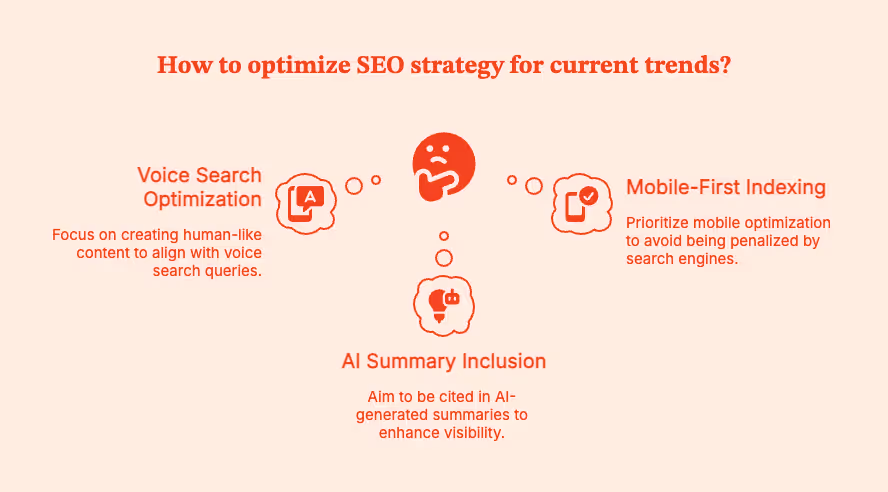
Now, we have to manage AI-driven search, voice assistants, and zero-click results. You have to expect that your audience might expect an answer before they reach your website.
Now, you’ll have to optimize for:
- Voice Search: Increasingly, people ask their AI assistants (I like Siri, but Google Home isn’t bad) questions like “What’s the best CRM for B2B marketing?” . Your content needs to sound human, not robotic. You need to write in the same way people talk.
- AI-Generated Summaries: Google’s AI Overviews now surface synthesized answers to questions on the results page. As a result, ranking logic has changed. You must aim to be cited or featured in AI summaries.
- Mobile-First Indexing: This isn’t new, but many brands still treat mobile optimization as an afterthought. Big mistake.
AI SEO is redefining what optimization means. Search engines aren’t just matching text. They can now interpret intent and context. To meet these standards, content and web page optimization have to be clearer and more structured than ever before.
More AI content also means that readers will have more trust issues around the authenticity of results. You have to work harder to establish the credibility needed for organic search traffic.
The Takeaway
Great SEO still comes down to this: create something genuinely useful, make sure people can find it, and measure the results obsessively.
SEO powers visibility, trust, and quantifiable ROI. It can help startups outshine industry giants, and local businesses dominate their competitors. When done right, SEO can be the most compounding investment in digital marketing. Each optimized page, backlink, and piece of content builds on the last.
At Factors, we focus on turning SEO into a revenue engine. We connect organic performance to pipeline, qualified accounts, and closed revenue.
In a nutshell… what does the acronym SEO stand for?
SEO stands for Search Engine Optimization. It covers all activities undertaken to improve a website’s visibility on popular search engines (Google, Bing).
These refinements help the right audiences find your brand/business naturally without paying for attention or clicks.
At its core, SEO focuses on three levels:
- Technical SEO: Checking that your site is fast, secure, mobile-friendly, and easy for search engines to crawl.
- On-Page SEO: Structuring content, meta tags, headings, and keywords to match user intent.
- Off-Page SEO: Generating trust and authority through backlinks, brand mentions, and social signals.
SEO drives organic traffic, improves brand credibility, and reduces customer acquisition cost (CAC). It delivers compounding returns. Every optimized page will continue to draw in qualified visitors long after it’s published.
Marketers must also account for Local SEO for geographic searches. They also have to optimize for AI-driven SEO, where voice queries, zero-click results, and LLM-powered search engines help people discover information.
It is essential to optimize for both humans and algorithms.
Measuring SEO success must cover the following metrics: organic traffic, CTR, engagement, and conversions. Factors.ai lets marketers connect SEO-driven sessions directly to revenue, closely measuring business impact.
SEO is a strategic growth lever. It helps your business show up when it matters most, build trust over time, and turn discovery into demand.
FAQs for what does Search Engine Optimization stand for
Q. What does SEO stand for in marketing?
SEO stands for Search Engine Optimization. It refers to the process of improving a website’s visibility in search engines. SEO techniques cover technical, on-page, and content improvements…with the intent to help your brand show up when potential customers are looking for answers.
Q. Is SEO an abbreviation or an acronym?
Technically, SEO is an initialism (each letter is pronounced separately). But in business and marketing circles, most people call it an acronym. Grammar purists, just breathe through the pain.
Q. What are the different levels of SEO?
There are three primary levels:
- Technical SEO: The foundation. Covers site speed, crawlability, and structure.
- On-Page SEO: What’s on your site. Includes content, keywords, and meta tags.
- Off-Page SEO: What’s off your site? Covers backlinks, authority, and reputation.
Q. How does SEO impact business growth?
SEO drives organic visibility, which brings in qualified traffic. It reduces Customer Acquisition Cost (CAC), and creates long-term brand equity.
Q. Can SEO be measured in revenue terms?
100% yes.
Platforms like Factors.ai will link SEO-driven traffic and content engagement to pipeline and conversions. Marketers can now use real numbers to prove measurable business impact.

Best Keyword Tracker Tools (Free & Paid)
If you’ve spent any time doing keyword research, you know that ‘SEO position’ is a phrase everyone always throws around (and sometimes panics about). A web page’s ‘SEO position’ indicates how valuable it is for search engines, i.e., the rank it page holds in search results for relevant keywords.
SEO rankings dictate your page's visibility to search engines and readers.
So let’s say someone Googles ‘best marketing tools’ and your article on the topic appears third on Google, your SEO position for that keyword is #3. As the article moves up and down keyword positions, you'll see thousands of clicks gained or lost…and this can be the linchpin for your entire marketing strategy.
TL;DR
- Keyword tracking is the backbone of modern SEO. It measures a webpage’s true visibility and reveals rank volatility across devices and regions.
- Keyword rankings also help set performance benchmarks against competitors.
- Free tools like Google Search Console show basic positions, but pro suites such as SEMrush, AccuRanker, and SE Ranking offer deeper insights.
- Track keywords weekly for stability, daily for volatility, and regionally.
- Keyword tracking improves decision-making by showing what’s working and what’s declining.
- You can link SEO to content strategy to find new opportunities for engagement and conversions.
- Industry best SEO practices will define clear metrics for clients or leadership on organic growth, support algorithm-resilient SEO, and build accountability on ROI.
Why a Keyword Research Tool is Key to SEO Position Tracking
Spend two weeks in an SEO-first role, and you'll see that keyword rankings are as volatile as it gets. SEO positions and associated search volume can fluctuate because of:
- Discrepancy between mobile and desktop results,
- Missing location-specific keywords,
- Non-optimization of SERP features like maps, featured snippets, videos, and “People Also Ask” boxes,
- Inadequate personalization, which means Google will not showcase the article to many users based on their history, preferences, and behavior.
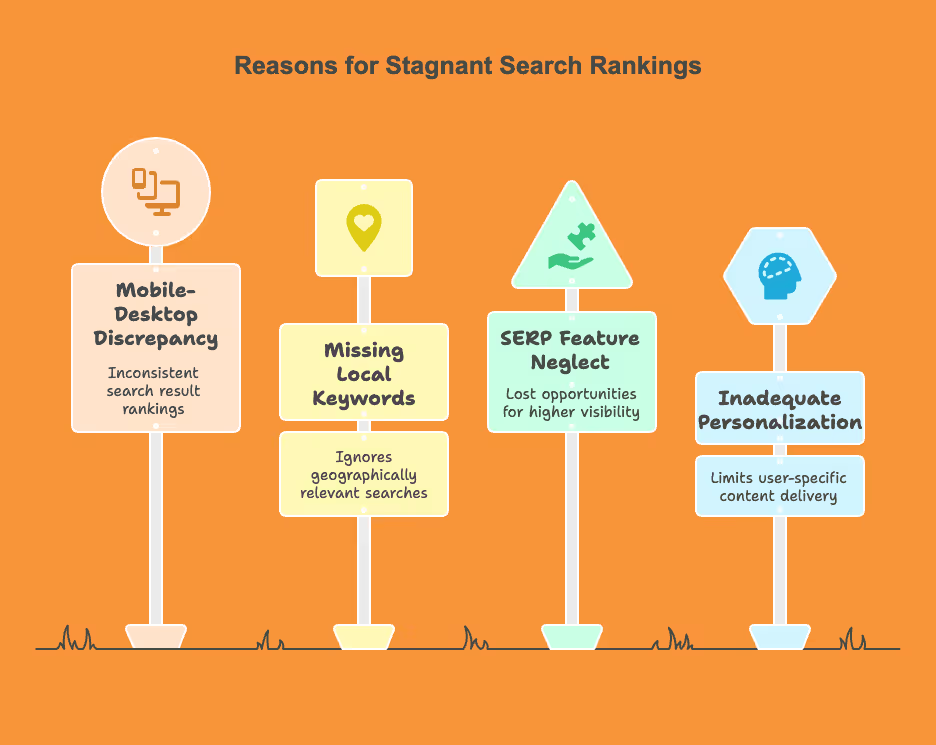
As a page climbs up and down the ranks for a given keyword, its visibility and click-through rate are directly affected. You’ll have to track target keywords' performance on major search engines consistently for any chance at continued success (yes, we know, you already have a lot on your plate).
No matter what anyone told you, sporadic, ad-hoc checks are not enough. There are no shortcuts to success, and believe me, we looked.
Whatever the industry, you’ll need long-term keyword data and search volume data to find trends, opportunities, and first-person advantages in a cutthroat business ecosystem.
How to Check Organic Rankings and Related Keywords
When choosing a keyword ranking tool, your choices lie between a free keyword rank checker and its paid counterparts… though honestly it’s not much of a choice in the long term.
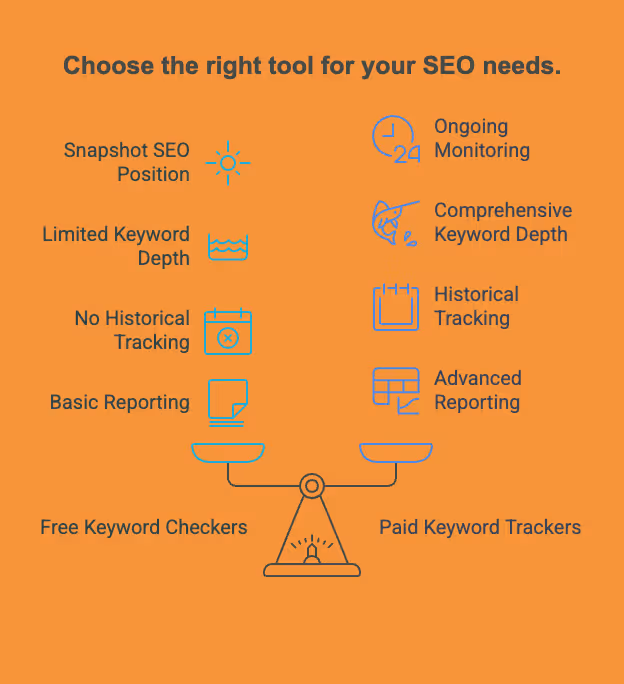
Free, one-off checks:
For a quick check on a webpage's current SEO position and rank, completely free tools like
Google’s incognito search or free rank checkers work fine. You can also use https://usearchfrom.com/
They offer a snapshot of the page's current SEO position, but can be bogged down by daily query caps, limited keyword depth, and often lack historical tracking.
Ongoing monitoring:
You won’t be able to put in the required SEO efforts without keyword tracking software that automatically monitors keyword rankings over time. You’ll get daily or weekly updates, competitive benchmarking, alerts for volatility, and trend visualizations.
Pro-Tip: Use free checks for spot audits, and paid trackers for reporting, multi-location, and collaboration.
Read More: B2B Marketing Solutions: A Complete Guide to Strategy & Implementation
Feature Checklist to Choose Keyword Tracking Software
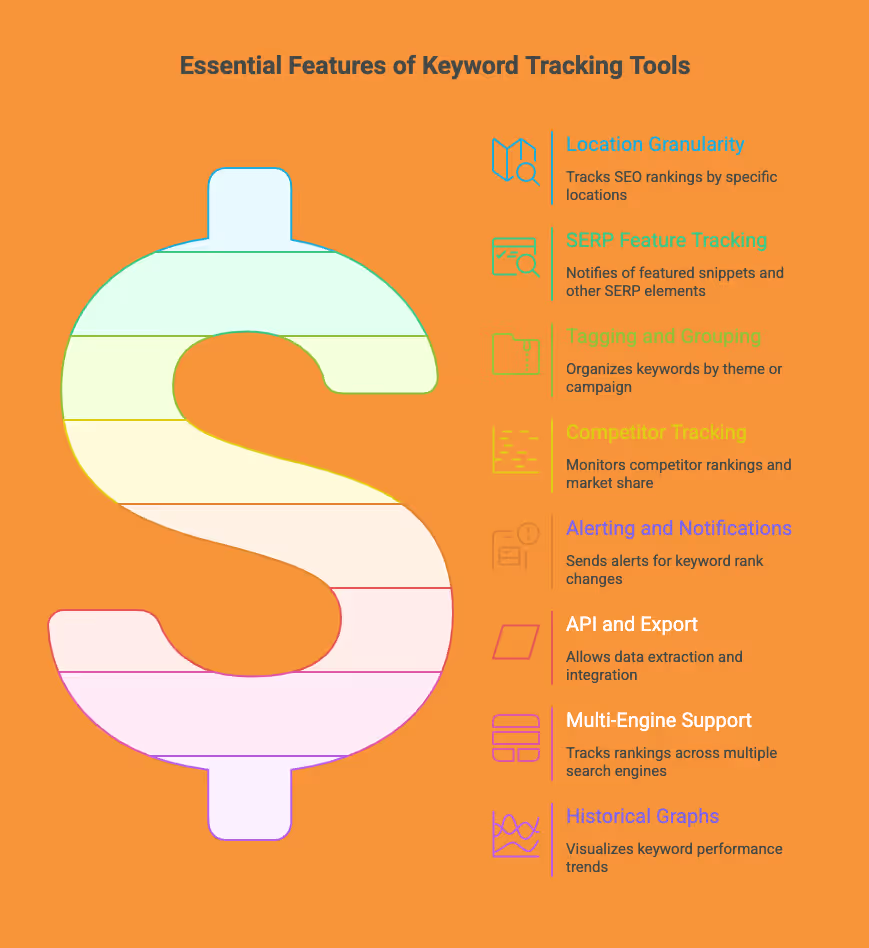
Every keyword tracking tool worth the investment (money and/or effort) must offer the following features:
- Location / Device Granularity: The tool should be able to track SEO rankings by location: country, city, ZIP code, etc. It should also be able to filter results by mobile and desktop (SERPs and rankings depend on device).
- SERP Feature Tracking: Can the tool notify teams when keywords trigger featured snippets, People Also Ask, videos, or local packs?
- Tagging / Folders / Keyword Grouping: Teams should be able to see keywords by theme, funnel stage, campaign, or product. This includes analysis of topic clusters or content silos.
- Competitor Tracking: How are other domains ranking for your keywords? Can you see rising competitors, market share shifts, SERP volatility? Can you use it for benchmarking and spotlighting strategy gaps?
- Alerting / Notifications: Will it send alerts if a keyword drops or rises in rank? Can it help predict keyword volatility?
- API / Export Capabilities: Can it extract data from your existing dashboards, spreadsheets, or intelligence tools? Does it support CSV, Excel, or JSON exports?
- Multi-Engine Support: Does the tool track keyword rankings across multiple search engines, like Yahoo and Bing? Or even region-specific search engines used in specific countries?
- Historical Graphs / Trend Analysis: Does the platform store historical data for every keyword? Can it visualize performance shifts, algorithm changes, and campaign effects?
Best Keyword Ranking Tools
1. SEMrush
Ideal for: SEO team requiring 360-degree coverage.
Stands out for: Offers comprehensive daily updates. Known for robust SERP feature detection, competitor comparisons, and location-based segmentation.
Caveat: For small teams, this tool can become expensive, especially as operations expand.
2. AccuRanker
Ideal for: Agencies, teams, or individuals who require quick yet precise rank data with clear client reporting.
Stands out for: Delivers real-time updates, keyword and SERP filtering, white-label reporting, as well as API access.
Caveat: Users of this tool will have to pay premium prices and also ensure a steep learning curve if they intend to use all features.
3. SE Ranking
Ideal for: Teams, agencies, and consultants that need to balance tool capabilities with cost.
Stands out for: Delivering comprehensive white-label reports, detailed client dashboards, and expansive competitor analysis and tracking.
Caveat: Necessary to pay more to unlock some advanced features.
4. ProRankTracker
Ideal for: Individual SEO professionals, early-stage startup teams, and/or marketing projects running on lean budgets.
Stands out for: Robust SEO rank tracking across multiple devices (desktop and mobile) across locations at an affordable price.
Caveat: Features to analyze UI and content optimization capabilities are basic, compared to enterprise solutions.
5. Google Search Console (GSC)
Ideal for: Anyone starting out with SEO. Use it to set foundational truths about a site's SEO value.
Stands out for: Being a relatively comprehensive tool at no cost, it delivers solid data on average position, impressions, clicks, and CTR per query/page.
Caveat: Doesn't go too in-depth on competitor data or deep SERP-feature context.
Our Recommendations:
- Best overall “organic rank tracker”: SEMRush
- Best for agencies/reporting: Factors.ai
- Best budget: ProRankTracker
- Best local/regional: SE Ranking
- Best free keyword ranking tool: Google Search Console
Read More: Top 9 Intent-Based Marketing Tools for B2B Companies
How Factors.ai helps connect SEO and Intent Data
Ideal for: Marketing and SEO teams seeking unified visibility across intent, content, and SEO performance in real time.
Stands out for: Blending account-level intent signals with SEO tracking and content analytics. For instance, users of Google Analytics can transition to Factors to surface deeper insights into metrics they now only view at the surface level.
Caveat: Factors is not a dedicated rank tracker (it offers a plethora of associate features that enrich marketing reports). Rather, it works together with multiple SEO tools to help you derive better insights about performance and spot opportunities early. Teams looking for granular depth when studying SERP features may need to supplement this tool with another.
Track Keywords Regionally & for Local SEO
The SEO expert’s work is never really over, as they also have to keep regional priorities in mind.
Keywords don't rank the same across all locations on the globe. After extensive efforts, you might find that your page ranks #1 for one keyword in Sydney but is completely absent from search results in Philadelphia. On top of that, results on mobile devices differ widely from those on desktops.
To ensure that said efforts don’t go in vain, you need SEO insight at a city, ZIP code, and device-level specificity. Pick modern keyword tracking tools that can simulate searches from specific locations to see what users are really looking for. You’ll also see how high competitors rank in local SERPs, and find missed opportunities for engagement.
Ideally, keyword tracking suites should focus on:
- City- or ZIP-level targeting to pinpoint performance in individual markets.
- Mobile vs. desktop tracking to get accurate usage patterns of SERPs and click behavior across devices.
- SERP feature flags to notify if a page appears or drops off Map Packs, snippets, or “People Also Ask” boxes.
- Scheduling controls to automate periodic checks for consistent local trend data.
Once you have these in place, you have what you need to get a real-world picture of keyword visibility where it matters most: the exact cities, devices, and search experiences your customers are actually using.
Nice (not necessary) to Have Features
You can certainly do without these features, but if a tool within your budget offers one or more of these, give it a second look.
- Visibility Index / Score: Does the tool showcase overall keyword visibility or “share of SERP" for your keywords? This is needed for executive dashboards and top-line reporting.
- Shareable Links / Public Dashboards: Reports and dashboards (read-only links) should be shareable, but with access guarded by role-based logins.
- Annotations / Notes: Can you mark specific dates, like content launches or updates to Google's ranking policies? Can it derive insight from raw data for easy reporting?
- White-Label Reporting: Will the platform remove its branding from reports? Can it add visual refinement to deliverables?
- Unlimited Users / Team Access: Does it cost per user per seat? That's a cost sink. Are features built to encourage collaboration and role-based visibility?
Quick Setup: From Zero to Your First 100 Tracked Keywords
Note: It’s possible that your B2B marketing strategy might need a complete solution overhaul. Here’s how you know.
If you're just starting out, consider this simple process to track your first 100 keywords.
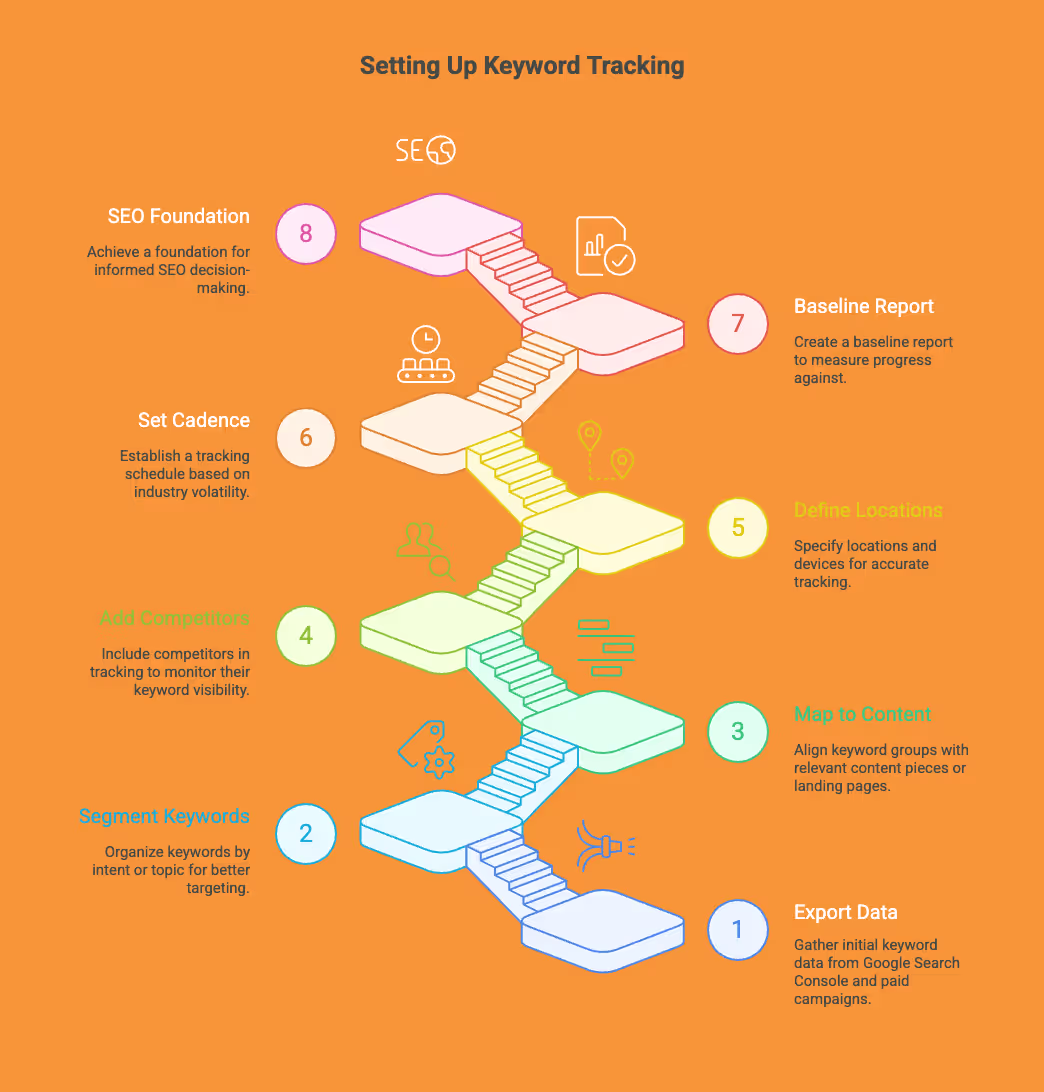
- Start with data you already own. Export the top queries from Google Search Console, as well as high-converting keywords from all your paid search campaigns. This is your "seed set,"i.e., keywords already driving impressions or conversions.
- Segment these keywords by intent or topic. For example, informational searches asking "how to?" are different from transactional searches looking for "pricing" or "demo".
- Map each keyword group to a content piece (like a blog post) or a landing page that addresses the search term as precisely as possible.
- Add key competitors to your tracking tool. It will monitor keyword visibility over time and let you know who is gaining better traction on which keyword.
- Don't forget to define locations and devices for each keyword group. Track results from desktop and mobile search, at the city and ZIP-level, if possible.
- Set up a daily cadence for active campaigns or volatile industries. Weekly ones will do for steady-state monitoring.
- Generate an initial baseline report to define your “starting line” on record. Configure alerts to highlight any significant rise or fall in rankings.
All done? Give it a week and you should be able to see should take a week to see trend lines, competitive context, and a foundation for meaningful SEO decision-making emerge from raw datasets.
Free Workflow: Check Google Ranking of a Website Today
Use Google Search Console (GSC) to find queries and average positions
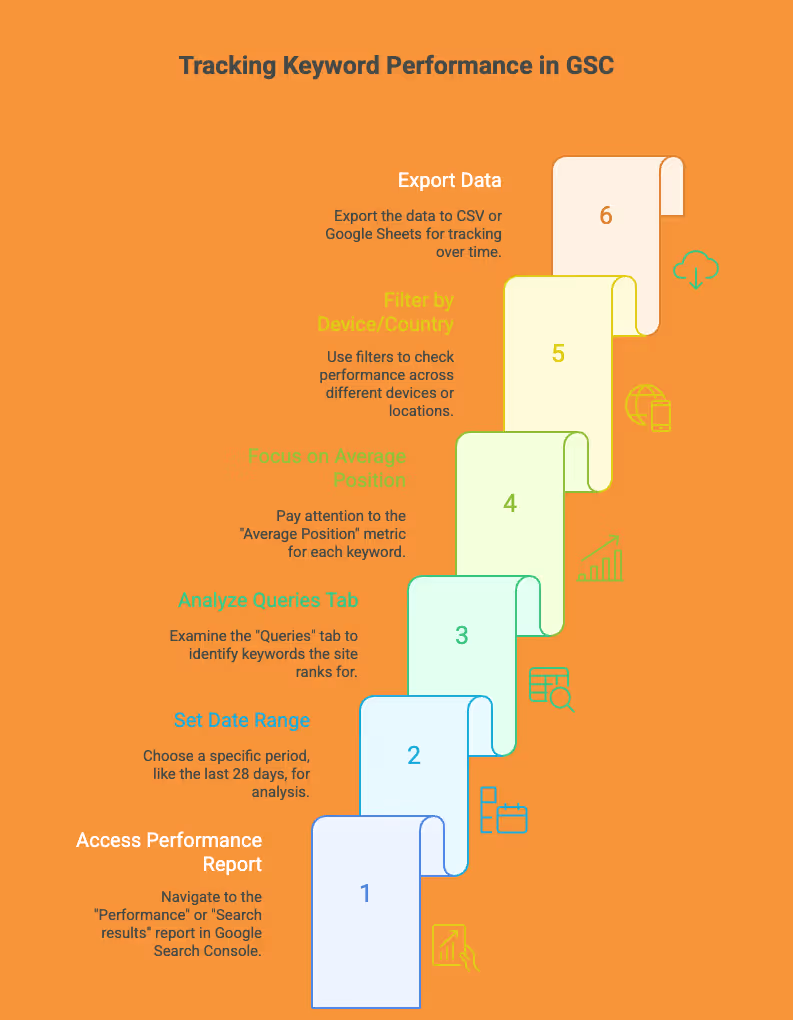
Step 1: In GSC, go to the “Performance” (or “Search results”) report to view how a site currently ranks in Google Search.
Step 2: Set a date range (e.g., last 28 days).
Step 3: Look at the Queries tab to see the keywords the site is ranking for.
Step 4: Focus on the “Average Position” metric for each query: a web page’s mean rank for a specific keyword.
Step 5: Filter by “Device” or “Country” to check site performance across mobile/desktop or in different locations.
Step 6: Export the data (CSV or Google Sheets) to log these baseline values and track over time.
Run a free rank check for a neutral, location-specific snapshot

- Use a free online rank checker tool (like usearchfrom or Ahrefs Free Rank Checker) to see how a specific keyword ranks right now, from a neutral IP/location.
- When running the check, set the keyword, target domain (your site), and specify location (country/city) if the tool supports it.
- Record the result for a live, real-world snapshot of the ranking position at that moment.
Note: Free checkers typically don’t handle historical data or multiple keywords at scale.
Log the baseline + decide whether you need advanced tools
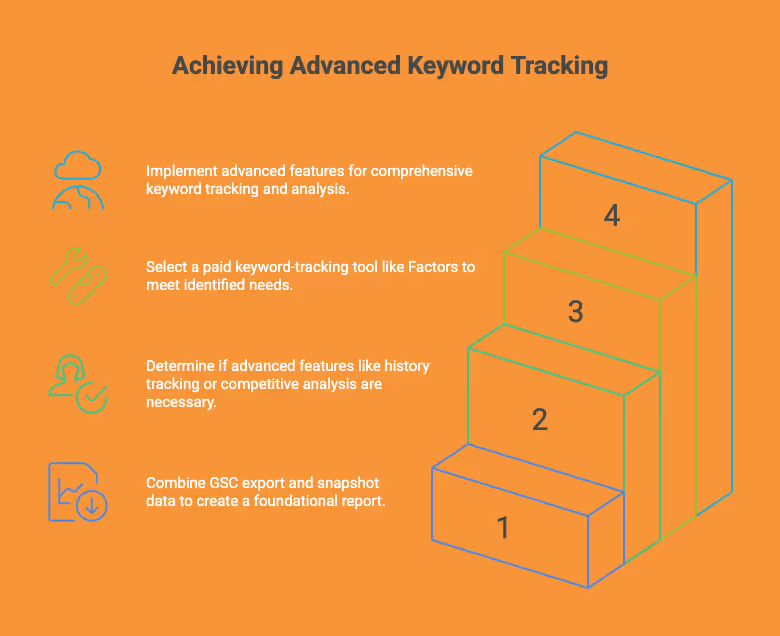
- Combine the GSC export from Step 1 and the snapshot from Step 2 into a baseline report (e.g., date, keyword, average position, live rank check).
- If you need history tracking, daily alerts, geo/device splits, competitive tracking, or SERP-feature monitoring, that’s the moment to graduate to a paid keyword-tracking tool like Factors. It will map intent signals, highlight touchpoints in the buyer journey and generate comprehensive reports.
- This forms the baseline, off which marketers can spot trends, rise and fall in keyword ranks and changes by device/location.
In a nutshell…
Keyword tracking reveals how your site performs across Google’s ever-changing search landscape. Your SEO position (the rank your page holds for a given keyword) can vary by device, location, and SERP features like snippets or maps. Regular monitoring connects visibility to traffic and helps identify early ranking changes before they impact results.
Start with free checks in Google Search Console for average position data. For trend lines, competitor insights, and multi-location reporting, upgrade to professional trackers. Weekly tracking balances clarity and efficiency. In competitive or news-sensitive niches, use daily monitoring for timely reactions.
Tools with city/ZIP simulation and mobile/desktop splits show how your visibility changes across local markets.The ideal tools will offer, as features,location/device granularity, SERP feature tracking, competitor benchmarking, alerts/API, and white-label reporting.
FAQs on the Best Keyword Tracker
Q. What is ‘SEO position meaning’?
SEO position means the rank a web page holds in results for search engines like Google, Yahoo or Bing, when users type in specific keywords. For example, if your blog appears third on Google for “best running shoes,” your SEO position for that keyword is #3.
The higher a page ranks, the more likely it is to get higher visibility and more clicks.
Q. How often should I check organic rankings?
Ideally, you should check rankings weekly to keep up with trends and get accurate reports. In case you're tracking competitive keywords, fresh pages, or campaign launches, it's important to check ranking daily.
Following this routine keeps keyword volatility at a minimum. It also helps SEO teams respond to any drop in ranking progress before it impacts traffic too closely.
Q. Can I track keywords regionally?
Yes, it is entirely possible to track keywords regionally as long as you choose tools offering city or ZIP code-level granularity. Such tools also tend to show keyword rankings as they are coming in from different devices.
Regional tracking is especially important for local SEO or service-area businesses where search intent depends on proximity (e.g., “dentist near me” in Chicago vs. Dallas).
Q. What’s the best free way to check rankings?
Work with Google Search Console (GSC) + a free live rank checker.
GSC will show any verified site’s average positions, clicks, and impressions. Combine that with Ahrefs’ free checker, and you'll see approximate public search results. But don't forget that these free tools do have query limits and no historical data. At best, they work for spot checks rather than long term monitoring.
Q. Rank tracking vs keyword research, what’s the difference?
Tracking monitors performance; research discovers opportunities.
Rank tracking observes how existing keywords are performing over time. Keyword research surfaces new keywords the audience might be searching for, which opens up new opportunities for engagement and conversion.
Q. Do I need daily tracking?
Daily keyword tracking is most required when keyword rankings change quickly. For instance, in competitive industries like certain eCommerce niches, daily tracking is essential to map the impact of content and campaigns.
It's best to track keyword rankings daily when:
- You’re optimizing new pages or product launches.
- You work in volatile niches (e.g., finance, health, tech) where keyword rankings shift with every update.
- You need to respond quickly to algorithm changes or competitor pushes.