.svg)


Step-by-Step Guide to SaaS Content Marketing
“The global SaaS market is projected to grow from $273.55 billion in 2023 to $908.21 billion by 2030 at a CAGR of 18.7%.”
With such growth figures, comes great marketing responsibility. And what’s a better tool than SaaS Content Marketing to take your organic marketing efforts to the next level? If you’re a little iffy about creating content for your SaaS company, this blog is written for you!
Without much ado, let’s get right into clarifying the basics before we jump into the step-by-step guide for SaaS content marketing.

But, what is SaaS Content Marketing?
SaaS Content Marketing is the strategic creation and distribution of relevant, valuable, and consistent content to attract, engage, and retain a target audience within the SaaS industry.
Unlike traditional marketing approaches that emphasize direct selling, SaaS Content Marketing centers around providing information and insights, positioning the brand as a trusted advisor. It serves as the bridge between a SaaS company and its audience, fostering a relationship built on trust and authority. SaaS Content Marketing stands apart due to its focus on delivering targeted, highly informative content tailored to the needs of a tech-savvy audience. Effective content marketing positions the brand as an industry leader resonates with the pain points of the target audience, and ultimately drives customer loyalty and advocacy. It focuses on educating users, offering in-depth insights into the product's functionality, and guiding them through the complexities of the software.

Building a Value Proposition and Demonstrating the Brand's Authority
A compelling value proposition is at the core of successful SaaS Content Marketing. Content should articulate not only the features of the SaaS solution but, more importantly, the value it brings to users. Whether through whitepapers, webinars, or interactive demos, SaaS content should communicate how the product addresses specific pain points, enhances efficiency, and delivers tangible benefits. Establishing the brand's authority involves consistently offering valuable insights, staying abreast of industry trends, and showcasing thought leadership through authoritative content.
Step-by-Step Guide To Content Marketing
Since you’ve made it this far into the article, we’d like to think you’re considering SaaS content marketing. So, as promised, here’s the step-by-step guide that will enable you and your teams to create a framework and scale your content marketing efforts.
Step 1
Market Research: Laying the Foundation
The first step in building a formidable SaaS Content Marketing strategy is laying a strong foundation through thorough market research. This step includes identifying market trends, understanding customer pain points, and analyzing competitors. The goal is to unearth insights that will inform content strategies and ensure they align with the dynamic needs of the target audience.
Market research in SaaS Content Marketing should address the following key aspects:
- Audience Persona Development
Define and understand the various personas within the SaaS target audience. Recognizing their challenges, preferences, and decision-making criteria lays the foundation for tailored content.
- Competitor Analysis
Evaluate the content strategies of key competitors. Identify content gaps, assess engagement levels, and discern successful tactics. This analysis informs the creation of content that stands out in a space that may already be cluttered with content.
- Trend Identification
Stay abreast of industry trends and emerging technologies. This not only showcases the brand's commitment to staying current but also provides valuable content ideas that resonate with a tech-savvy audience.
- Content Consumption Patterns
Understand how the target audience consumes content. Whether through blog posts, videos, webinars, or interactive experiences, aligning content formats with audience preferences enhances engagement.
- SEO
Analyze the way SEO works within the SaaS domain. Identify high-performing keywords, assess competitors' keyword strategies, and uncover opportunities to enhance search engine visibility.
Step 2
Keyword Research: Unlocking Visibility
Keyword research is the cornerstone of an effective SaaS Content Marketing strategy. In fact, a survey conducted among startup founders indicated that 90% consider SEO to be a crucial factor in driving brand awareness and generating leads for their businesses.
SEO involves identifying and targeting the specific terms and phrases that potential users will likely use when searching for SaaS solutions.
A robust keyword research process encompasses the following key steps:
- Identifying Core Keywords
Begin by identifying primary keywords that align with the SaaS offering. These should encapsulate the core functionalities and unique selling propositions of the product.
- Long-Tail Keyword Exploration
Explore long-tail keywords that reflect specific user queries and intent. This is mainly because long-tail keywords are less likely to have high competition and can drive traffic that is relevant to the brand’s target audience.
- Competitor Keyword Analysis
Analyze the keyword strategies of competitors. Identify keywords they are ranking for and evaluate the competitiveness of these terms.
- User Intent Understanding
Consider the intent behind user searches.
Are they searching for some information?
Are they seeking solutions to a problem?
Are they set to buy?
Align keywords with the various stages of the customer journey.
- Seasonal and Trend-Related Keywords
Factor in seasonal trends and industry-specific events. Creating content around timely keywords enhances relevance and visibility during peak periods.
- Localization Strategies
If applicable, incorporate localization into keyword research. This is crucial for SaaS providers targeting specific geographic regions.

Step 3
Choosing the Right Formats for SaaS Marketing: Navigating the Sea of Content
Within SaaS content marketing, the choice of content formats is akin to selecting the sails for a seafaring vessel. Each format serves a distinct purpose, resonates with varying audience preferences, and contributes uniquely to the overarching content strategy. Let's embark on a journey to explore the sea of content formats available for SaaS marketing:
- Blog Posts:
Purpose: Inform, Educate, and Build Authority.
Why? Blogs are the workhorses of content marketing. They offer a platform for in-depth exploration of industry trends, product features, and thought leadership. Regular, well-optimized blog posts enhance SEO and keep the audience engaged.
Did you know?
Approximately 36% of sizable SaaS enterprises employ their blog posts to educate readers on various industry topics. - Whitepapers:
Purpose: Thought Leadership and In-Depth Insights.
Why? Whitepapers dive deep into complex topics, providing comprehensive insights, research findings, and expert opinions. They are instrumental in establishing the brand as a thought leader and a go-to source for industry knowledge.
- Webinars:
Purpose: Engagement, Education, and Interactivity.
Why? Webinars bring a dynamic, interactive element to SaaS marketing. They allow real-time engagement with the audience, facilitating product demonstrations, Q&A sessions, and discussions. Webinars forge a more personal connection with potential users.
Did you know?
In the B2B sector, it is strongly believed that webinars contribute to generating nearly 75% of sales leads.
- Video Tutorials:
Purpose: User onboarding and product understanding.
Why? Visual learners rejoice with video tutorials. These concise, visually appealing guides help users navigate software interfaces, understand features, and maximize the value of the SaaS product. Video tutorials enhance user onboarding and reduce the learning curve. - Case Studies:
Purpose: Showcase real-world successes.
Why? Case studies are testimonials on steroids. They delve into real-world scenarios where the SaaS solution has addressed specific challenges and delivered tangible results. Case studies provide social proof, instilling confidence in potential users. - Infographics:
Purpose: Visual representation of information.
Why? Infographics distil complex information into visually appealing, easily digestible graphics. They are perfect for conveying statistics, processes, and key data points. Infographics enhance content shareability on social media platforms. - Ebooks:
Purpose: In-depth guides and resources.
Why? Ebooks offer a comprehensive exploration of a topic, often serving as downloadable resources. They are valuable assets for lead generation, requiring users to provide their information in exchange for in-depth content. - Interactive Content:
Purpose: Engage and entertain.
Why? Interactive content, such as quizzes, assessments, and interactive guides, adds a layer of engagement. It not only captures attention but also provides users with a personalized experience. - Podcasts:
Purpose: Audio-based thought leadership.
Why: Podcasts are a versatile format for conveying industry insights, interviews, and discussions. They cater to audiences who prefer consuming content while on the go.
Did you know?
Podcasts serve as a marketing tool for a minimum of 18% of the leading SaaS app businesses.
Choosing the right mix of content formats depends on various factors, including the target audience, the complexity of the SaaS solution, and the goals of the marketing strategy. The next segment will illuminate the significance of distribution channels and amplify the reach of SaaS content.

Step 4
Creating a Content Outline in SaaS Content Marketing: Crafting the Story
As we embark on the intricate journey of SaaS Content Marketing, the creation of a content piece is akin to sketching the blueprint of a masterpiece. A well-structured outline lays the foundation for an engaging and informative piece that resonates with the audience.
Here's a step-by-step guide on crafting a content outline for your SaaS marketing endeavours:
- Define Your Objective:
Clearly articulate the purpose of your content piece. Whether it's to educate, entertain, or persuade, a well-defined objective guides the entire creation process.
- Know Your Audience:
Know more about your target audience, including their likes, needs preferences, and even their pain points. Tailor your content to address their specific challenges and provide valuable insights.
- Research Thoroughly:
Dive deep into the subject matter. Conduct thorough research to gather relevant data, statistics, and examples. A well-researched piece enhances credibility and authority.
- Choose the Right Format:
Based on your objective and audience preferences, select the most suitable content format. Whether it's a blog post, whitepaper, webinar, or video tutorial, the format should align with your goals.
- Craft a Compelling Title:
The title is the gateway to your content. Craft a compelling and attention-grabbing title that sparks curiosity and conveys the value of your piece. - Develop a Structured Flow:
Organize your content logically. Create a flow that takes the reader or viewer through a journey, from introduction to conclusion. A structured flow enhances comprehension. - Break Down Into Sections:
Divide your content into sections or chapters. This not only makes it more digestible but also allows readers to navigate easily, focusing on specific areas of interest.
- Incorporate Visual Elements:
Integrate visuals strategically. Whether it's images, infographics, or charts, visual elements enhance engagement and break the monotony of text. - Craft Engaging Headlines and Subheadings:
Headlines and subheadings should be captivating and descriptive. They provide a roadmap for readers, guiding them through the main points of your content.
- Incorporate Key Keywords:
Identify and add relevant SEO keywords to all your content pieces. This optimization ensures better visibility on search engines and attracts your target audience.
- Ensure Consistency:
Maintain consistency in tone, style, and formatting throughout your content. Consistency contributes to a seamless reading or viewing experience.
- Add a Compelling Conclusion:
Summarize key takeaways and end your piece with a compelling conclusion. Leave a lasting impression on your audience and give them a clear call to action before they step out.
Creating a content outline is not just a preliminary step; it's the architectural blueprint that shapes the entire content marketing edifice. The next leg of our journey will delve into the crucial aspects of distributing and promoting your meticulously crafted SaaS content.
Step 5
Writing Your SaaS Content Piece: Crafting the Masterpiece
The writing phase is where ideas, research, and creativity converge to create a compelling narrative. Let's delve into the key steps for bringing your content to life:
- Start with a Captivating Introduction:
The opening should grab attention and set the tone for what follows. Intrigue your audience with a compelling hook that encourages them to read on. - Follow the Flow of Your Outline:
Refer to your meticulously crafted outline. It serves as a roadmap, guiding you through the logical flow of ideas. Each section should seamlessly connect to the next. - Infuse Personality and Style:
Let your brand's personality shine through your writing. Whether it's a conversational tone, a touch of humour, or a more formal approach, maintain consistency with your brand voice. - Prioritize Clarity and Simplicity:
Keep your language clear and concise. Avoid unnecessary jargon or complexity. Aim for simplicity without sacrificing depth. - Provide Value Through Insights:
Deliver on the promises made in your outline. Provide valuable insights, backed by research and examples. This is the substance that keeps your audience engaged. - Craft Engaging Headlines and Subheadings:
Headlines and subheadings should not only guide the reader but also pique their interest. Make them compelling and reflective of the content beneath. - Use Visuals Strategically:
If your outline includes visual elements, strategically integrate them into your content. Visuals break the monotony of text and enhance overall engagement. - Optimize for Readability:
Format your content for easy readability. Try adding shorter paragraphs, headings, subheadings, and pointers to break a full wall of content and information. This enhances the user experience, especially in online reading.
- Ensure Originality:
The audience you're targeting via SaaS content marketing campaigns would like to see valuable and original content. Hence, avoiding plagiarism is a must. You should check plagiarism to maintain originality and impress your targeted audience. An advanced plagiarism checker would help you do that without requiring much time and effort.
- Inject a Personal Touch:
Personal anecdotes or real-life examples can add a human touch to your content, in turn building a personal connection with your audience. - Refine and Polish:
Once the initial draft is complete, revisit and refine it. Polish your content for clarity, coherence, and overall effectiveness. - Incorporate SEO Best Practices:
If SEO is a crucial aspect of your strategy (which it should be), ensure that your content incorporates relevant keywords naturally, to up visibility on search engines. - Craft a Compelling Conclusion:
Conclude your piece with a strong and memorable closing. Summarize key points, restate the main message, and provide a clear call to action.
Writing is the heartbeat of your content strategy. It breathes life into your ideas and transforms them into a cohesive narrative.
Step 6
Distributing Your SaaS Content: Ensuring it Reaches the Right Audience
Now, let's ensure that your masterpiece reaches its intended audience. Distribution is a crucial phase in the content marketing journey, and here's your guide to orchestrating it effectively:
- Leverage Social Media Platforms:
Share your content across relevant social media channels. Craft engaging captions and leverage hashtags to increase discoverability. Each platform has its unique audience, so tailor your approach accordingly.
- Email Marketing:
Harness the power of your email list. Send out newsletters or dedicated emails featuring your content. Personalize your messages to make them more compelling. Email marketing is used by 93% of B2B marketers for distributing their content.
- Partner with Influencers:
Identify influencers or thought leaders in your industry. Collaborate with them to share your content and amplify your reach.
- Repurpose for Different Platforms:
Modify your content to suit various platforms. Create snippets for Instagram, shorter versions for LinkedIn, or visually appealing graphics for Pinterest.
- Utilize Paid Promotion:
Boost your content's visibility through paid promotions. Allocate a budget for strategic target-based promotion.
- Engage in Online Communities:
Participate in forums, groups, or communities relevant to your industry. Share your content where appropriate, but ensure it adds value to the conversation.
- Collaborate with Industry Publications:
Reach out to industry publications and offer your content for publication. This can expose your content to a broader audience and establish your brand as an authoritative voice.
- Optimize for SEO:
Ensure your content is optimized for search engines. This includes using relevant keywords, creating a captivating meta description, and having a clean URL structure.
- Monitor and Respond:
Keep an eye on how your content is performing. Monitor social media comments, respond to queries, and engage with your audience. This will help boost traction, and visibility while enabling you to build a community around your content.
- Explore Guest Posting:
Contribute your content to reputable websites in your industry through guest posting. This can enhance your brand's visibility and authority.
- Collaborate with Your Network:
Leverage your professional network. Encourage your team members, colleagues, and industry connections to share the content within their circles.
- Measure and Adjust:
Use analytics tools to measure the performance of your distribution efforts. Track engagement, click-through rates, and other relevant metrics. Based on the data, refine your distribution strategy for future content.
An important point to remember here is that distribution is not a one-size-fits-all endeavour. Tailor your approach based on your target audience, industry dynamics, and the nature of your content.

Kickstart SaaS Content Marketing for your Organization: A Step-by-Step Guide
All geared up to start SaaS content marketing for your brand, but where do you begin? Let's break it down into actionable steps to guide you through the process:
- Define Your Objectives:
Clearly outline your content marketing goals. Whether it's increasing brand awareness, driving leads, or establishing thought leadership, having a clear purpose will shape your strategy. - Identify Your Target Audience:
Understand who your ideal customers are. Create buyer personas that will help shape your content strategy and process. This ensures that your content speaks directly to the needs and interests of your audience. - Craft a Content Calendar:
Plan your content in advance, a content calendar helps you maintain consistency and ensures a diverse mix of topics. Consider seasonality, industry events, and product launches in your scheduling. - Find Skilled Freelance Writers:
Engaging freelance writers can inject fresh perspectives into your content. Look for writers with experience in SaaS or related industries. Platforms like Upwork, Freelancer, or content creation agencies are excellent resources. - Types of Writers You Need:
Keep in mind the content formats you plan on creating. You may need writers skilled in blog writing, whitepapers, case studies, or video scripts. Having a mix ensures your content strategy is comprehensive. - Set Clear Guidelines:
Provide detailed guidelines to your freelance writers. Clearly communicate your brand voice, style preferences, and formatting requirements. A well-defined brief ensures your writers deliver content aligned with your vision. - Manage the Process Efficiently:
Use project management tools to streamline the content creation process. Platforms like Asana or Trello help in assigning tasks, setting deadlines, and maintaining communication with your freelance writers. - When to Bring in In-House Writers?
As your content strategy matures and the volume of content increases, you might consider bringing in-house writers. In-house writers offer dedicated support and align closely with your brand's nuances. However, before you bring in in-house writers, ensure that you have a comprehensive plan and framework in place, to optimise their time and talent. - Establish a Collaborative Workflow:
Foster collaboration between your in-house and freelance writers. Communicate your brand's messaging, goals, and evolving strategies clearly. A unified team ensures consistency in your content output. - Say Hello to Continuous Learning:
Encourage a culture of continuous learning within your content team. Stay updated on industry trends, SEO best practices, and evolving customer preferences. This ensures your content remains relevant and impactful. - Measure Performance:
Implement analytics tools to measure the performance of your content. Track key metrics such as engagement, conversions, and leads generated, and ensure you avoid these five mistakes when measuring content marketing ROI.
That said, the key to successful SaaS content marketing lies in a strategic and flexible approach. Adapt your strategy based on the evolving needs of your audience and the ever-changing SaaS industry.

Emerging Trends in SaaS Content Marketing
- Interactive Content Takes Center Stage
The demand for interactive content experiences is on the rise. Infographics, quizzes, polls, and immersive video content are becoming powerful tools to engage audiences and enhance user experience.
- Personalization Reaches New Heights
Personalized content tailored to individual user preferences is no longer an option but a necessity. AI-driven algorithms and machine learning enable SaaS marketers to deliver highly relevant and targeted content to their audiences.
- Voice Search Optimization
With the growing prevalence of voice-activated devices, optimizing content for voice search is a trend gaining momentum. Tailoring your content to match natural language queries enhances visibility in voice search results. - Long-Form Content for Thought Leadership
In-depth, long-form content is making a comeback. SaaS brands are leveraging comprehensive guides, research papers, and expert insights to establish thought leadership and provide valuable resources for their audience.
Innovations and Technologies Shaping the Future
- Blockchain for Content Security
The decentralized and secure nature of blockchain is finding applications beyond cryptocurrencies. In SaaS content marketing, blockchain can enhance content security, protect intellectual property, and ensure transparent attribution.
- Augmented and Virtual Reality Experiences:
AR and VR technologies are poised to transform content experiences. SaaS marketers can explore immersive product demos, virtual walkthroughs, and interactive AR applications to engage audiences in novel ways. - 5G for Faster Content Delivery
5G technology will revolutionize content delivery, providing faster and more reliable connections. SaaS marketers can leverage this for seamless video streaming, enhanced user experiences, and real-time interactions.
SaaS Content Marketing: A Strategic Approach
SaaS content marketing focuses on creating valuable content to attract, engage, and retain customers by positioning the brand as a trusted advisor.
- Core Strategy: Align content with the buyer’s journey, emphasizing education over direct selling.
- Key Steps: Define objectives, understand the audience, create high-quality content, optimize for SEO, promote effectively, and measure performance.
- Business Impact: Strengthens brand authority, educates users, and builds long-term customer loyalty.
A well-executed SaaS content strategy drives engagement and enhances customer retention.
Through this article, right from the definition and unique characteristics to the strategic nuances of crafting compelling content – one thing’s clear - the world of SaaS Content Marketing is changing constantly. Brands that adapt to these changes and leverage cutting-edge technologies will be well-positioned to capture the attention and loyalty of their target audiences in the future.
The future of SaaS content marketing is teeming with opportunities. From the increasing demand for interactive and personalized content to the transformative potential of emerging technologies, the evolution is both exciting and relentless.
As we come to a close, it’s important to note that the key to success lies in a blend of creativity, strategic insight, and a keen understanding of your audience. Whether you're embracing the power of AI, delving into immersive experiences with AR and VR, or optimizing for the era of voice search, staying at the forefront of innovation is your mantra for success.
SaaS content marketing is not just about conveying messages; it's about creating experiences, forging connections, and establishing lasting relationships with your audience.

ABM vs. Traditional Marketing
Choosing the correct strategy for your business can often feel like picking between two powerful superheroes. On one side, we have Account-Based Marketing (ABM)—the precision marksman, zeroing in on high-value targets with pinpoint accuracy. On the other, there’s Traditional Marketing—the versatile general, casting a wide net to reach as many prospects as possible. Both strategies come with their own set of superpowers and kryptonite, influencing how companies attract clients, use their resources, and hit their goals.
Let’s understand how each approach works, compare their strengths and weaknesses, and help B2B businesses decide which strategy or blend of both might be their ticket to marketing success.
TL;DR
- Account-Based Marketing (ABM) and Traditional Marketing are two different approaches to reaching potential clients.
- ABM focuses on a select number of high-value accounts with highly personalized campaigns, making it ideal for businesses that need to build deep relationships and improve sales efficiency.
- Traditional Marketing, on the other hand, targets a broad audience using mass marketing techniques like SEO, email marketing and paid ads, effectively generating high volumes of leads and increasing brand awareness.
- The choice between ABM and Traditional Marketing depends on your business goals, target audience, and resources.
- A hybrid approach can combine the broad reach of Traditional Marketing with the targeted precision of ABM, maximizing both lead generation and account engagement.
- Factors can enhance both strategies with advanced analytics, personalized campaign support, and improved sales and marketing alignment.
What is Traditional Marketing?
Traditional marketing is a wide-reaching approach that seeks to attract as many leads as possible, regardless of their individual potential value. This strategy often aims to raise brand awareness, generate large volumes of leads, and drive them down a sales funnel that moves them from awareness to consideration to decision-making stages.

Core Components of Traditional Marketing:
- Mass Audience Reach
Traditional marketing uses SEO, email marketing, paid advertising, and content marketing to target a broad audience. The idea is to cast a wide net, capturing leads from various market segments and nurturing them into customers.
- Lead Generation Volume
The number of leads generated often measures success in traditional marketing. Marketers focus on driving high lead volumes, assuming that some leads will eventually convert into paying customers.
- Content Creation for Broad Appeal
Traditional marketing content is designed to appeal to a broad, diverse audience. This can include blog posts, email campaigns, and advertisements to educate and raise awareness about a company’s product or service.
- Linear Sales Funnel
Traditional marketing follows a funnel approach where prospects move through stages like awareness, interest, decision, and purchase. The idea is to gradually push leads down the funnel through various marketing tactics until they convert.
The Advantages of Traditional Marketing
- Broad Audience Reach
Traditional marketing is effective for brand awareness and mass-market reach. It allows businesses to scale quickly by reaching large audiences across multiple channels.
- Established Tactics
Traditional marketing strategies are well-established, making it easy for marketers to implement SEO, content marketing, and email campaigns. These methods are supported by robust tools and technologies allowing high scalability.
- Cost-Effectiveness
Traditional marketing can be a cost-effective way for smaller businesses or those with limited budgets to reach a broad audience. Techniques like organic social media marketing and content creation offer affordable ways to attract prospects.
Challenges with Traditional Marketing
- Low Efficiency
The broad, untargeted nature of traditional marketing means resources can be wasted on leads that don’t fit the company’s ideal customer profile (ICP). This reduces efficiency, as time and effort are spent nurturing leads that may not convert.
- Lower Personalization
Traditional marketing content is often less personalized, as it’s designed to appeal to a wide audience. This lack of customization can make it harder to engage high-value prospects or build deep relationships.
- Misalignment Between Sales and Marketing
Traditional marketing can lead to misalignment between sales and marketing teams. Since marketing is focused on lead generation volume, sales teams may receive leads that aren’t adequately qualified, leading to friction between the two departments.
What is Account-Based Marketing (ABM)?
Account-based marketing flips the traditional marketing model by focusing on specific, high-value accounts. Rather than casting a wide net, ABM aligns sales and marketing efforts to target a select number of key accounts that have the highest potential for long-term value. ABM is not about generating as many leads as possible but about building deep relationships with carefully selected accounts.
Core Components of ABM:
- Highly Targeted Approach
ABM is a laser-focused strategy that involves identifying a set of target accounts and crafting personalized marketing campaigns specifically for those accounts. These are usually high-value accounts that have a strong likelihood of converting into significant revenue for the company.
- Account-Specific Content
ABM content is highly personalized. Rather than creating broad, one-size-fits-all messaging, ABM campaigns are tailored to address each account's specific needs, challenges, and goals.
- Sales and Marketing Alignment
ABM relies on close collaboration between sales and marketing teams. Both departments work together to target the same accounts and share insights on how to engage these accounts at different stages of the buyer's journey.
- Account Lifecycle Focus
Unlike traditional marketing’s funnel approach, ABM operates on an account lifecycle model. The focus isn’t just on converting leads but also on building long-term relationships and driving growth within existing accounts.
The Advantages of ABM

- Higher ROI
ABM often delivers a higher return on investment because resources are concentrated on high-value accounts more likely to convert. The personalized approach means fewer wasted resources and more targeted engagement.
- Stronger Customer Relationships
ABM’s personalized campaigns foster stronger relationships with key accounts. By addressing the specific needs and challenges of each account, businesses can build trust and loyalty over time.
- Increased Sales Efficiency
With ABM, sales and marketing teams target the same accounts, leading to better sales efficiency. This alignment ensures that marketing efforts directly support sales objectives, and leads are more likely to convert.
- Long-Term Account Value
ABM isn’t just about acquiring new customers; it’s also about expanding relationships with existing customers. By nurturing accounts after the initial sale, businesses can drive more revenue through upselling, cross-selling, and long-term retention.
Challenges with ABM
- Resource-Intensive
ABM can be resource-intensive. Personalizing content for specific accounts takes time, effort, and tools. Scaling ABM efforts can be challenging for smaller companies or those with limited resources.
- Data-Driven Requirements
ABM requires sophisticated data management tools to track account engagement and measure success. Without these tools, it can be difficult to know which accounts are progressing through the lifecycle and which need more attention.
ABM vs. Traditional Marketing: A Proper Comparison

ABM vs Traditional Marketing: When to Use Which

The choice between ABM and traditional marketing isn’t necessarily an either/or decision. Both strategies have their place, depending on the business’s goals, target audience, and available resources.
When to Use Traditional Marketing
- Brand Awareness
If your goal is to build brand awareness and establish your company in the market, traditional marketing is an excellent choice. Its wide reach and scalability make it ideal for getting your message out to a large audience.
- Lead Generation at Scale
For companies that need to generate a large volume of leads, traditional marketing is more effective. It allows you to cast a wide net and capture a broad range of prospects.
- Lower Complexity
Traditional marketing is easier to implement and doesn’t require the same level of personalization as ABM. This makes it a good option for companies with limited resources or those looking for a straightforward marketing strategy.
When to Use ABM
- Targeting High-Value Accounts
If your business relies on a few high-value accounts for revenue, ABM is the way to go. Its personalized approach is better suited to engaging and converting these accounts.
- Long-Term Relationship Building
ABM is ideal for companies that want to build long-term relationships with their customers. By nurturing accounts over time, you can drive customer loyalty and lifetime value.
- Sales and Marketing Alignment
If you need closer sales and marketing alignment, ABM is the solution. Its focus on targeting specific accounts requires both teams to work closely together, ensuring a more cohesive customer journey.
The Future: A Hybrid Approach?
For many companies, the future of marketing lies in a hybrid approach that combines the broad reach of traditional marketing with the personalized touch of ABM. This allows businesses to enjoy the benefits of both strategies, targeting a wide audience while also focusing on high-value accounts with personalized campaigns.
How the Hybrid Approach Works
A hybrid approach might involve using traditional marketing tactics to generate a large pool of leads and then segmenting these leads to identify high-value accounts. Once identified, ABM strategies can be applied to nurture these accounts through personalized campaigns, building deeper relationships and increasing the likelihood of conversion.
How Factors.ai Supports ABM
Factors.ai empowers B2B marketers with data-driven insights that are crucial for successful Account-Based Marketing (ABM). ABM is designed to target specific high-value accounts, and Factors.ai helps marketers by offering actionable insights into account-level engagement. This allows for more effective targeting and better collaboration between sales and marketing teams.
Key Features of Factors.ai for ABM:
- Account Engagement Insights
Factors.ai provides visibility into account-level engagement by tracking interactions across channels such as website visits and content consumption. These insights help marketers understand which accounts are showing interest and engagement, making it easier to prioritize accounts and tailor outreach accordingly.
- Scalable Personalization
One of the challenges of ABM is executing personalized campaigns at scale. Factors.ai allows for automated segmentation based on engagement metrics, helping marketers create targeted messaging that is personalized for specific account segments without losing relevance as the number of accounts grows.
- Sales and Marketing Alignment
ABM requires close alignment between sales and marketing teams, and Factors.ai supports this by offering a unified view of account engagement data. Both teams can access the same real-time insights, ensuring that marketing efforts lead smoothly into sales conversations and that both teams are aligned on which accounts to prioritize.
Also Read: Account-based Marketing Vs Demand Generation
ABM vs. Traditional Marketing: Key Differences & Benefits
Choosing the right marketing approach depends on business goals, audience, and resources.
1. Core Approach: ABM targets high-value accounts with personalized campaigns, while Traditional Marketing focuses on broad audience outreach.
2. Key Strategies: ABM leverages tailored messaging, deep account engagement, and sales alignment, whereas Traditional Marketing uses SEO, email, and paid ads for lead generation.
3. Best Use Cases: ABM excels in B2B sales with complex buying cycles, while Traditional Marketing is ideal for brand awareness and high-volume lead acquisition.
A hybrid strategy can combine ABM’s precision with Traditional Marketing’s reach, maximizing both engagement and conversions.
In a nutshell: ABM and Traditional Marketing - Which is Right for Your Business?
The decision to implement either Account-Based Marketing or Traditional Marketing depends mainly on your business objectives, available resources, and the structure of your sales and marketing teams.
- Traditional marketing still offers a viable, scalable solution for businesses looking to build broad awareness or generate a high volume of leads.
- ABM provides a far more personalized and efficient approach for businesses targeting a select group of high-value accounts or focused on building long-term relationships with their customers.
As marketing technologies evolve, a hybrid approach may be the best solution for many companies. Combining the wide reach of traditional marketing with the precise targeting of ABM allows businesses to maximize their lead-generation efforts while nurturing high-value accounts through personalized engagement.
Whatever strategy your business chooses, the key is data-driven insights. Platforms like Factors.ai enable B2B marketers to make informed decisions, optimize campaigns, and measure success in previously impossible ways.
By embracing tools like Factors, companies can harness the full potential of ABM, driving deeper relationships, increased revenue, and long-term growth. In an increasingly competitive marketplace, the ability to target the right accounts with the right message at the right time can make all the difference.
Also Read: Top 10 ABM Tools

Top 7 Common Room Alternatives for Signal Detection & GTM Strategy
For most businesses today, their ability to harness customer signals and implement a robust go-to-market (GTM) strategy can significantly influence success. Common Room is a prominent player in the customer intelligence space, designed to help organizations leverage community-driven insights. However, it might only suit some businesses's unique needs. This blog delves into Common Room, its features, and why you might seek alternatives.
We’ll explore seven noteworthy alternatives and provide detailed insights to help you choose the best tool for your needs.
Here's a Little About Common Room

Overview:
Common Room is a customer intelligence and community engagement platform designed to help businesses consolidate and analyze signals from various sources. Its primary goal is to provide actionable insights from community interactions, social media, and other digital touchpoints, enhancing customer understanding and engagement.
Key Features:

- Unified Dashboard:
Common Room provides a comprehensive view of customer interactions and community data through a user-friendly dashboard. This feature integrates data from multiple sources, making analyzing and acting on customer signals easier.
- Customer Segmentation:
The platform allows businesses to group customers based on various factors such as behavior, engagement levels, and sentiment. This segmentation helps tailor marketing strategies and improve customer interactions.
- Sentiment Analysis:
Utilizing AI, Common Room analyzes customer sentiment to provide insights into how customers feel about your brand or products. This feature helps understand customer perceptions and make data-driven decisions.
- Integrations:
Common Room integrates seamlessly with popular tools like Slack, GitHub, and Twitter, enabling businesses to consolidate their data and streamline operations.
Pros:
- Comprehensive Insights:
This service offers a range of insights into customer behavior and sentiment, helping businesses make informed decisions.
- Ease of Integration:
Integrates well with various tools, making it easier to incorporate into existing workflows.
- AI-Powered Analysis:
Advanced sentiment analysis provides valuable insights into customer attitudes.
Cons:
- Complexity for Small Businesses:
The platform’s extensive features and capabilities may overwhelm small businesses or startups.
- Cost:
Pricing can be high, which might be a barrier for companies with limited budgets.

Pricing:
Common Room offers a range of pricing plans starting from $625/month (billed annually) for the basic tier. The pricing increases with additional features and user counts, making it suitable for growing businesses and larger enterprises.

{{INLINE_CTA_A}}
Here is Why you need Common Room Alternatives
Despite its strengths, Common Room may not be the perfect fit for every organization. Factors such as specific business needs, budget constraints, and the focus of your GTM strategy might necessitate exploring alternatives. Here are a few reasons why you might need an alternative:
- Specialized Needs: If your business requires more specialized functionalities or focuses on different aspects of customer engagement and signal analysis, other tools offer better alignment.
- Budget Constraints: The cost of Common Room might be prohibitive for smaller businesses or startups. Alternatives might provide similar functionalities at a lower price point.
- Feature Set: Depending on your needs, you might require features that are not available in Common Room or that are better supported by other platforms.
Exploring alternatives ensures that you find a tool that perfectly fits your business requirements and offers features that align with your GTM goals and budget.
Things to Keep in Mind While Choosing a Common Room Alternative
When evaluating alternatives to Common Room, consider the following factors to ensure you select the best tool for your needs:
- Signal Collection Capabilities
Assess the platform’s ability to capture and analyze the specific types of signals relevant to your business. This includes customer interactions, intent data, and engagement metrics.
- GTM Alignment
Ensure the tool aligns well with your GTM strategy and provides features that support your sales, marketing, and customer success efforts.
- Ease of Use
The platform should be user-friendly and integrate seamlessly with your existing tools and processes. A steep learning curve can hinder adoption and productivity.
- Scalability
Choose a solution that can grow with your business. The platform should be flexible enough to accommodate increasing data volumes and evolving needs.
- Pricing
Consider the pricing structure to ensure it fits within your budget. Look for tools that meet your feature requirements while offering good value for money.
{{INLINE_CTA_A}}
Here Are 7 Common Room Alternatives
1. Demandbase

Overview:
Demandbase is an account-based marketing (ABM) platform designed to help businesses target high-value accounts and optimize their marketing efforts. It focuses on capturing intent data and signals to enhance marketing and sales strategies.
Key Feature
- ABM Platform: Specializes in account-based marketing, allowing businesses to tailor their marketing efforts to specific high-value accounts.
- Intent Data: Collects and analyzes signals to identify accounts showing buying intent, helping prioritize sales efforts.
- Personalized Marketing: Enables highly personalized marketing campaigns based on account insights and intent data.
- Sales Intelligence: Provides actionable insights to sales teams, enhancing their ability to engage with potential customers effectively.

Pros:
- Focused ABM Capabilities: Ideal for businesses looking to implement account-based marketing strategies.
- Strong Intent Data Analysis: Helps identify and target high-value accounts based on intent signals.
- Integration with CRM Tools: Seamlessly integrates with CRM and marketing automation platforms, streamlining operations.
Cons:
- Primarily B2B Focus: Best suited for B2B businesses, with less relevance for B2C companies.
- High Learning Curve: The platform’s advanced features may require time to master, particularly for users new to ABM.

Pricing:
Demandbase offers custom pricing based on business needs and scale. It typically caters to enterprise-level budgets.
2. Factors.ai

Overview:
Factors is a GTM analytics platform that provides deep insights into customer journeys and marketing performance. It analyzes marketing data and signals to optimize campaigns and drive growth.
Key Features:

- Customer Journey Mapping: Visualizes the entire customer journey across various touchpoints, helping understand customer interactions and behaviors.
- Advanced Analytics: Offers in-depth analysis of marketing performance, enabling data-driven decision-making.
- Signal Detection: Identifies key signals influencing customer behavior, providing actionable insights for marketing strategies.
- AdPilot: Double down on your LinkedIn Ads ROI with Factors’ LinkedIn AdPilot, a platform that offers capabilities such as campaign automation, build audience lists based on intent,view-through attribution, smart reach and Factors’ conversions API integration.
- G2 Intent: Factors integrates G2 intent data to help businesses identify which accounts are actively researching their product category. This feature enables users to prioritize high-intent accounts, allowing for more targeted marketing and sales efforts, ultimately increasing the likelihood of conversion.
- Account Deanonymyzation: Factors offers an account deanonymization feature, which allows companies to identify and gain insights into anonymous website visitors. This includes gathering firmographic details such as company name, industry, and size, empowering businesses to tailor their outreach and optimize their marketing strategies.
- Custom Workflows: Factors provides customizable workflow automation, enabling marketing and sales teams to streamline processes across CRM systems and campaign management platforms. These workflows can be tailored to meet specific business needs, improving operational efficiency and ensuring alignment across go-to-market teams.
Also Read: Set Up Sales Automation Workflows Using Factors
Pros:
- Comprehensive Analytics: Provides detailed insights into marketing performance and customer behavior.
- AI-Driven Optimization: Automates campaign adjustments for improved results.
- User-Friendly Interface: Designed to be intuitive, making it accessible for users with varying levels of expertise.
Cons
- Learning Curve: It may require some time to fully understand and utilize all features.
- Cost: Higher pricing may be a consideration for smaller businesses or startups.

Pricing:
Factors offers customized pricing based on your business's specific needs and scale.
{{INLINE_CTA_A}}
3. Enrich

Overview:
Enrich is a customer data platform that enhances CRM systems with enriched customer profiles. It provides valuable customer signals and data to improve sales and marketing strategies.
Key Features:
- Data Enrichment: Adds valuable context to existing customer data, providing a more comprehensive view of your customers.
- Signal Collection: Captures and analyzes key customer signals to inform sales and marketing efforts.
- CRM Integration: Seamlessly integrates with popular CRM platforms, enhancing your existing systems with enriched data.
- Custom Segmentation: Allows for detailed segmentation based on enriched customer profiles.
Pros:
- Enhanced CRM Data: Improves the quality and depth of customer data within your CRM system.
- Effective Signal Analysis: Provides valuable insights into customer behavior and engagement.
- Easy Integration: Integrates smoothly with existing CRM systems, minimizing disruption.
Cons:
- Limited Scope: Focuses primarily on data enrichment, with less emphasis on broader marketing or GTM features.
- Best for CRM Users: Most effective for businesses with established CRM system.

Pricing:
Enrich offers flexible pricing plans based on usage and features. Details are available upon request.
4. Koala

Overview:
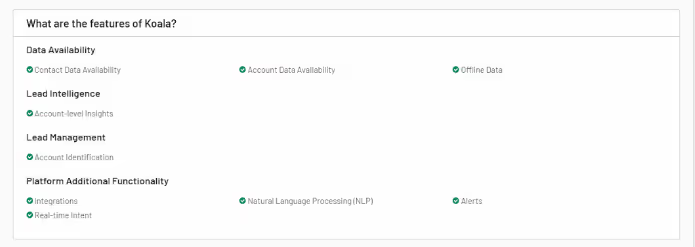
Koala is a customer engagement platform that focuses on gathering customer feedback and signals to improve product and service offerings. It’s particularly useful for SaaS companies looking to enhance customer experience.
Key Features
- Feedback Collection: Gathers customer feedback through various channels, including surveys and direct interactions.
- Signal Analysis: Analyzes feedback signals to identify trends, issues, and opportunities for improvement.
- Customer Segmentation: Segments customers based on feedback and behavior to tailor engagement strategies.
- Integration: Integrates with tools like Slack, Intercom, and Zendesk to streamline feedback management.
Pros:
- Focus on Feedback: Excellent for gathering and analyzing customer feedback to improve products and services.
- Integration with Customer Service Tools: Enhances feedback management and customer interactions.
- User-Friendly Interface: Easy to use, even for teams without extensive technical expertise.
Cons:
- Limited to Feedback: Primarily focused on feedback and engagement, with less emphasis on broader marketing or sales features.
- SaaS Focus: Best suited for SaaS companies, with less relevance for other industries.

Pricing:
Koala offers a free tier with basic features, with paid plans starting at $29/month for additional features and higher usage limits.
5. Warmly

Overview:
Warmly is a platform that enhances virtual meetings and customer interactions by providing valuable context and insights. It helps businesses engage more effectively during virtual interactions.
Key Features:
- Meeting Context: Provides detailed information and context about meeting participants, improving the quality of interactions.
- Signal Detection: Analyzes signals from virtual meetings to identify engagement levels and areas for improvement.
- Integration: Works with popular video conferencing tools like Zoom and Microsoft Teams.
- Personalization: Allows for personalized engagement based on participant data and insights.
Pros:
- Enhanced Virtual Interactions: Improves the quality of virtual meetings through detailed participant insights.
- Integration with Video Tools: Seamlessly integrates with major video conferencing platforms.
- User-Friendly: Easy to use and navigate, even for non-technical users.
Cons:
- Limited to Virtual Meetings: Focuses primarily on virtual meeting interactions, with less emphasis on broader marketing or sales features.
- Newer Tool: May have fewer features compared to more established platforms.
Pricing:
Warmly offers a range of pricing plans starting from $10/month per user, with additional features available in higher-tier plans.
{{INLINE_CTA_A}}
6. UnifyGTM

Overview:
UnifyGTM is a GTM platform designed to help businesses streamline their go-to-market strategies through data-driven insights and integrations. It aligns sales, marketing, and product efforts to drive growth.
Key Features:
- GTM Strategy Alignment: Provides tools to align marketing, sales, and product teams with your GTM strategy.
- Data Integration: Integrates with various data sources to provide a unified view of your GTM efforts.
- Performance Tracking: Tracks the performance of your GTM initiatives and provides actionable insights.
- Customizable Dashboards: Customizable dashboards are offered to monitor key metrics and KPIs.
Pros:
- Comprehensive GTM Tools: Provides tools for aligning and optimizing GTM strategies.
- Integration with Data Sources: Offers robust data integration capabilities.
- Customizable Reporting: Allows for detailed reporting and performance tracking.
Cons:
- Complex Setup: Initial setup and configuration may require a learning period.
- Cost: Pricing may be on the higher side for smaller businesses.

Pricing:
UnifyGTM offers custom pricing based on business needs and scale, with details available upon request.
7. HockeyStack

Overview:
HockeyStack is an analytics and attribution platform designed to help businesses understand the impact of their marketing efforts and optimize their strategies. It focuses on collecting and analyzing signals to improve marketing ROI.
Key Features:

- Marketing Attribution: Provides insights into how different marketing channels contribute to conversions and sales.
- Signal Collection: Collects and analyzes signals from various marketing activities to improve strategy.
- Custom Reports: Allows to create custom reports and dashboards to track performance.
- Integration: Integrates with popular marketing and CRM tools to consolidate data.
Pros:
- Strong Attribution Capabilities: Helps understand the impact of marketing efforts across channels.
- Detailed Analytics: Provides in-depth analysis and reporting on marketing performance.
- Integration with Tools: Works well with existing marketing and CRM systems.
Cons:
- Niche Focus: Primarily focused on marketing attribution, with less emphasis on broader customer engagement features.
- Learning Curve: May require some time to understand and utilize the platform fully.

Pricing:
HockeyStack offers a tiered pricing model. Basic features start at $199/month, with higher tiers available for more advanced functionalities.
Here's Why Factors.ai is Your Best Option
Factors stands out as a top choice for businesses seeking a comprehensive GTM solution among the alternatives. Its advanced analytics and AI-driven features make it well-suited for optimizing marketing strategies and improving customer engagement.
Here’s what Factors has in store for you:
- Customer Journey Mapping: Provides a clear view of customer interactions and behaviors, helping businesses tailor their marketing efforts.
- Signal Detection: Identifies key signals influencing customer decisions, enabling targeted marketing strategies.
- AdPilot: Automates campaign optimization, ensuring your marketing messages reach the right audience effectively.
Factors’s blend of detailed analytics, signal detection, and AI-driven optimization makes it a powerful tool for businesses to enhance their GTM strategy and drive growth.
{{INLINE_CTA_A}}
Top Common Room Alternatives
Businesses seeking better signal detection and GTM optimization can explore these powerful alternatives.
1. Leading Alternatives: Factors.ai for advanced intent capture, 6sense for AI-driven revenue insights, Apollo.io for B2B contact management, Highperformr for LinkedIn activity tracking, and Outreach for automated sales execution.
2. Key Features: Cross-channel signal consolidation, workflow automation, predictive analytics, and precision targeting.
3. Decision Factors: Integration capabilities, data accuracy, ease of use, and alignment with GTM objectives.
Choosing the right platform enhances lead detection, streamlines GTM processes, and drives efficient revenue operations.
In a nutshell
Selecting the right tool for signal collection and GTM strategy is crucial for achieving business success. While Common Room offers robust features, exploring alternatives like Demandbase, Factors, Enrich, Koala, Warmly, UnifyGTM, and HockeyStack can provide more tailored solutions. Each tool offers unique capabilities that align with your business needs and goals.
Factors.ai, in particular, offers a compelling combination of advanced analytics, signal detection, and AI-driven insights, making it a standout choice for optimizing your GTM strategy. Evaluate your specific requirements and budget to choose the tool that best supports your business objectives and drives growth.

Top 22 Account Based Marketing (ABM) Tools For 2025
Account-Based Marketing has become a must-have strategy for companies wanting to connect with their top accounts. Unlike traditional marketing, which tries to reach everyone, ABM lets businesses focus their energy on the accounts that could bring the most value. It’s like having a VIP list for your marketing efforts!
Study shows that implementing an ABM strategy can increase revenue by up to 208%. However, running an ABM strategy at scale requires the right technology. That’s where ABM platforms come in. These tools help businesses identify high-intent accounts, engage them across multiple channels, and measure success with precise analytics.
With the right ABM tool, this approach can be improved even further. These tools help sales and marketing teams work together seamlessly, providing useful data insights and taking care of repetitive tasks that can slow you down.
As ABM continues to grow and change, plenty of tools are out there to help marketers get the most out of their strategies. In this guide, we’ll break down everything you need to know about ABM platforms—what they are, why they matter, key features to look for, and a comparison of the top 20 ABM platforms for 2025. Whether you're just starting with ABM or looking to optimize your existing strategy, this guide will help you make an informed decision.
TL;DR
- Account-Based Marketing (ABM) aligns marketing and sales to focus on high-value accounts.
- ABM tools help personalize and optimize marketing efforts for target accounts.
- Key features to look for in an ABM tool include; AI-driven insights for better decision-making, CRM integration for seamless data flow, multi-channel engagement to reach accounts across platforms, personalization to tailor campaigns for specific accounts, real-time reporting and analytics for performance tracking, account-based advertising capabilities for targeted ads, Intent data to identify accounts ready to buy, collaboration tools for sales and marketing alignment, campaign automation to streamline outreach, scalability to grow with your business.
- ABM tools enable more efficient, focused marketing, driving better ROI and growth.
What is Account Based Marketing Software?
Account Based Marketing (ABM) software is a tool developed to help B2B companies run highly targeted marketing campaigns focused on specific high-value accounts. Unlike traditional marketing, this software allows you to personalize outreach and engagement for each target account, streamlining sales, and marketing efforts to drive higher conversion rates.
Why Do You Need ABM Platforms?
Here are the perks you can enjoy by investing in a good account based marketing platform:
- Identify and prioritize high-value accounts with data-driven insights.
- Deliver personalized content and messaging across multiple touchpoints.
- Bridge the gap between the marketing and sales teams by providing shared data, unified account insights, and outreach strategies.
- Leverage intent data to identify accounts searching for solutions.
- Orchestrate campaigns across email, ads, social media, and direct mail from a single platform.
- Automate sales reps based on predefined rules and improve response times.
- Access real-time analytics and reporting to measure the efficiencies of ABM campaigns.
Key Features to Look for in ABM Platform
The best ABM platform must equip you with features to target, engage, and convert high-value accounts more effectively. Here’s what to look for in an ABM Platform:
1. Account Identification & Selection
- A good ABM platform should help you identify and prioritize high-value accounts using AI-driven intent data and firmographics.
- This ensures your marketing and sales teams are always focused on prospects most likely to convert.
2. Intent Data & Predictive Analytics
- Intent tracking helps you detect buying signals from website visits, content consumption, and competitor research.
- This will help you engage prospects before your competitors do.
3. Cross-Channel Orchestration
- An ABM platform that automates multi-channel campaigns ensures your messaging stays consistent across every touchpoint like LinkedIn, emails, display ads, and webinars.
- This increases engagement and conversion rates.
4. Personalization & Customization
- Platforms with advanced personalization help you tailor content, emails, ads, and website experiences to each account
- This makes each interaction more meaningful and boosts response rates.
5. CRM & Marketing Automation Integration
- An ABM platform that integrates with Salesforce, HubSpot, Marketo, or Pardot keeps your sales and marketing teams on the same page.
- This ensures no opportunity slips through the cracks and that engagement data flows seamlessly between teams.
6. Account-Based Advertising
- The ABM platform should allow you to run hyper-targeted LinkedIn, Google, and programmatic ad campaigns to reach key decision-makers within those accounts.
- Retargeting and lookalike audiences also help extend your reach.
7. Sales & Marketing Alignment Tools
- The right ABM platform ensures both teams have access to real-time engagement insights.
- This allows sales reps to reach out at the perfect moment with the right messaging.
8. Analytics & Reporting
- A strong ABM platform should offer account-level analytics, deal velocity tracking, and revenue attribution,
- This helps you support and optimize your ROI with clear, data-driven insights.
9. Engagement & Lead Nurturing
- ABM platforms with automated email sequences, AI-driven chatbots, and personalized nurture campaigns.
- This keeps accounts engaged throughout their buying journey, increasing the likelihood of closing deals.
10. Scalability & Usability
- As your ABM tactics expand, your platform should scale with you.
- Look for easy-to-use automation, role-based access, and customizable dashboards that help you manage large-scale campaigns efficiently, even with limited resources.
Bottom Line: The right ABM platform should make your marketing more targeted, more personalized, and more measurable—helping you drive higher engagement, shorter sales cycles, and stronger revenue growth.
List of the Top 22 Account-Based Marketing (ABM) Tools
Let’s explore the top ABM tools available in 2024 that can help businesses refine their ABM strategies and increase ROI.
1. Factors.ai

Overview:
Factors is an AI-powered ABM platform that helps marketers monitor campaign performance and extract actionable insights. Its AI-driven technology optimizes marketing strategies by analyzing data patterns to maximize engagement and ROI. Factors is designed for businesses seeking data-driven decisions. Its real-time insights provide marketers with a solid understanding of account behavior and campaign success.
Key Features:
- Intent Capture: Identify up to 64% of website traffic using advanced IP lookup, consolidating intent signals from your website, CRM, marketing automation platforms, LinkedIn, and G2.
- Workflow Automation: Automates tasks across CRM and marketing automation platforms, allowing teams to focus on strategic initiatives.
- Account Intelligence: Offers robust account segmentation and scoring based on firmographics and engagement data, enabling prioritization of high-intent accounts.
- LinkedIn AdPilot: Enhances LinkedIn advertising ROI through features like frequency capping, view-through attribution, and Conversion API (CAPI) integration.

Pros:
- User-friendly interface, great for both beginners and experienced marketers
- Predictive analytics to foresee account engagement trends
- Excellent customer support
Cons:
- Factors doesn't offer user level data unless integrated with a third party data enrichment platform
Pricing:
- It has a free version with essential features.
- Basic plan starts at $399/month, billed annually.
- The growth plan starts at $999/month, billed annually.

2. Recotap

Overview:
Recotap is an ABM platform designed to create hyper-personalized marketing journeys for high-value accounts. By leveraging intent data, Recotap allows businesses to tailor their content and messaging to specific needs and behaviors. Recotap’s focus on personalization and intent data makes it a precious tool for companies looking to nurture high-value accounts with targeted content.
Key Features:
- Intent-based targeting
- Programmatic ad management
- Personalized content journeys

Pros:
- Superior account personalization
- Real-time reporting with deep insights into account behavior
- Strong integration with CRM tools

Cons:
- The steep learning curve for beginners
- Limited integrations with some third-party tools
Pricing:
Custom pricing is available.
3. LeadPost

Overview:
LeadPost is an affordable solution for identifying anonymous website visitors and turning them into actionable leads. Its simple interface and effective visitor tracking make it a great tool for businesses looking to expand their sales pipeline. LeadPost is perfect for small and medium-sized businesses looking for an easy-to-use, affordable solution to convert anonymous visitors into leads.
Key Features:
- Identifies anonymous website visitors
- CRM integration for streamlined lead generation
- Retargeting tools
Pros:
- Affordable pricing, accessible for small businesses
- Simple to use, ideal for teams with limited ABM experience
- Great for website visitor tracking
Cons:
- Lacks advanced ABM features
- Limited integrations with complex marketing ecosystems
Pricing:
Starts at $99/month.
4. Demandbase

Overview:
Demandbase is a full-featured ABM platform renowned for its advanced targeting capabilities. It leverages AI and machine learning to provide comprehensive insights, helping businesses effectively target and engage high-value accounts. Demandbase is ideal for large enterprises with bigger budgets looking for in-depth insights and personalized campaigns to engage high-value accounts.
Key Features:
- AI-powered insights
- Audience segmentation based on real-time data
- Personalized account-based ad campaigns

Pros:
- Highly advanced targeting and segmentation tools
- Real-time data analytics ensure precision targeting
- Strong account engagement features

Cons:
- Higher pricing, makes it less suitable for smaller businesses
- The platform can feel complex and overwhelming for new users
Pricing:
Custom pricing is available.
5. Terminus

Overview:
Terminus is a powerful ABM platform designed to engage target accounts through multichannel marketing campaigns. By integrating ads, email, and web into a unified platform, Terminus enables B2B companies to precisely target their ideal customer profiles. Terminus is perfect for businesses looking to scale their ABM campaigns and effectively engage with their target accounts across different channels.
Key Features:
- Multichannel marketing engagement
- Advanced account-based advertising tools
- Integrated analytics and reporting
Pros:
- Great for large-scale campaigns across multiple channels
- Strong ad targeting features
- Excellent integration with CRM and marketing automation tools

Cons:
- High learning curve, especially for beginners
- Requires significant setup and onboarding
Pricing:
Custom pricing is available.
6. 6sense

Overview:
6sense offers an AI-powered ABM platform that delivers predictive analytics to help businesses identify and engage accounts most likely to convert. With intent data and advanced insights, it helps marketers focus their efforts on high-priority accounts. 6sense excels at assisting businesses to focus on the accounts that matter most with a powerful set of predictive analytics tools.
Key Features:
- AI-driven predictive analytics
- Real-time intent data
- Advanced segmentation and targeting

Pros:
- Exceptional predictive analytics
- Highly effective for sales and marketing alignment
- Real-time insights to prioritize account engagement

Cons:
- The interface can be complex for smaller teams
- Higher learning curve
Pricing:
Custom pricing is available.
7. RollWorks

Overview:
RollWorks is a well-regarded ABM platform that helps businesses engage and nurture high-value accounts through targeted advertising and multi-channel marketing campaigns. Its lead-scoring capabilities are particularly helpful for account prioritization. RollWorks is an excellent choice for businesses looking to boost their ABM strategies with targeted advertising and account-based lead nurturing.
Key Features:
- Targeted ad campaigns
- Lead scoring for account prioritization
- Advanced segmentation and account tracking
Pros:
- User-friendly interface
- Great for lead targeting and retargeting
- Effective ad campaign management

Cons:
- Higher pricing compared to alternatives
- Limited features for content personalization
Pricing:
Starts at $975/month.
8. Bamboobox

Overview:
Bamboobox is a newer ABM platform that focuses on automating personalized ad campaigns. Its AI-driven platform helps businesses engage target accounts with real-time data and personalized content across various channels. Bamboobox is perfect for businesses looking to automate their ABM efforts, delivering personalized ad campaigns with minimal manual input.
Key Features:
- AI-driven ad campaign automation
- Real-time account tracking
- Personalized ad targeting

Pros:
- Intuitive interface
- Great for automation and personalization
- Excellent real-time tracking capabilities

Cons:
- Limited advanced features compared to more established platforms
- Still growing its ecosystem of integrations
Pricing:
Custom pricing is available.
9. Foundry

Overview:
Foundry offers a robust suite of ABM tools designed to help marketers generate leads, track customer journeys, and improve sales alignment. It’s ideal for businesses focused on optimizing their entire ABM lifecycle, from lead generation to conversion. Foundry is ideal for enterprises looking for a comprehensive ABM solution that tracks the customer journey from initial lead generation through to final conversion.
Key Features:
- Lead generation and nurturing
- Advanced customer journey tracking
- AI-powered data insights

Pros:
- Comprehensive data analysis and reporting tools
- Strong sales and marketing alignment features
- Detailed customer journey insights

Cons:
- Can be difficult to learn for first-time users
- Higher pricing structure
Pricing:
Custom pricing is available.
10. Albacross

Overview:
Alba is an ABM tool that helps businesses identify and convert website visitors into actionable leads. Albacross enables companies to target anonymous visitors more effectively by tracking website activity and delivering real-time data. Albacross is a solid choice for businesses looking to convert anonymous website visitors into qualified leads, especially for companies on a budgcrosset.
Key Features:
- Website visitor tracking
- CRM and marketing automation integrations
- Lead generation tools

Pros:
- Easy to use, intuitive interface
- Affordable compared to larger competitors
- Effective for B2B lead generation

Cons:
- Lacks more advanced ABM functionalities
- Limited third-party integrations
Pricing:
Starts at $199/month.
Also Read: Top 10 Albacross Alternatives
11. ZoomInfo
ZoomInfo is a robust account-based marketing (ABM) platform that provides comprehensive tools for lead generation, data enrichment, and workflow automation. You get access to an extensive database of contacts and companies that let you identify and engage with high-value prospects effectively.

- Lead Generation: Access a vast repository of B2B contacts to identify and connect with potential leads.
- Workflow Automation: Integrate seamlessly with popular CRM systems to streamline data flow and enhance sales productivity.
- Advanced Search Filters: Utilize enhanced search capabilities to pinpoint ideal prospects based on specific criteria.
Pricing:
Public pricing is unavailable.
12. HubSpot
HubSpot is a comprehensive account-based marketing (ABM) platform tailored to enhance your marketing, sales, and customer service operations. It offers tools to attract, engage, and delight customers throughout their journey.

Key Features:
- Marketing Hub: Provides tools for social media marketing, content management, web analytics, landing pages, customer support, and search engine optimization.
- Sales Hub: Offers sales software to help businesses generate leads, build a pipeline, and close deals.
- Service Hub: Enhances customer service operations with features like help desks, customer feedback tools, and knowledge bases.
- Content Hub: Assists in creating, managing, and optimizing content strategies to engage audiences effectively.
Pricing:
It’s available for free with basic functionalities. The paid plan starts at $15/month.
13. Salesforce Marketing Cloud
Salesforce Marketing Cloud is a comprehensive digital marketing platform to automate and optimize marketing efforts across various channels, including email, mobile, social media, and web. Integrating data-driven insights with personalized customer engagement strategies, this software lets you deliver targeted campaigns that enhance customer relationships.

Alt-text: Salesforce Marketing Cloud
Key Features:
- Social Studio: Monitor and manage social media interactions, schedule posts, and analyze performance across various platforms.
- Journey Builder: Design and automate customer journeys, ensuring consistent and personalized experiences across all touchpoints.
- Advertising Studio: Align your advertising efforts with CRM data to deliver targeted ads and improve ROI.
Pricing:
Pricing starts at $1,250/month.

14. Marketo Engage
Marketo Engage, part of Adobe Experience Cloud, enables marketing and sales teams to collaborate effectively in creating, managing, and executing personalized customer engagements at scale. It facilitates measurable interactions across various touchpoints by integrating customer data, content, automation, and analytics.

Key Features:
- Lead Management: Capture, store, and manage leads while tracking their engagement and behavior to nurture prospects effectively.
- Marketing Automation: Streamline processes such as lead nurturing and email marketing to enhance efficiency and campaign effectiveness.
- Lead Scoring: Prioritize leads based on their engagement and behavior, ensuring that sales teams focus on high-potential prospects.
Pricing:
Public pricing is not available.
15. Drift
Drift is a leading conversational marketing and sales platform that enables businesses to engage with website visitors in real-time, facilitating personalized interactions that drive lead generation and accelerate the sales cycle. With this software, you can qualify leads instantly, schedule meetings, and provide tailored experiences to prospects and customers.

Key Features
- Live Chat: Facilitates instant communication with website visitors, allowing businesses to address inquiries promptly and enhance user engagement.
- AI-Powered Chatbots: Engages buyers in meaningful, brand-aligned conversations 24/7, instantly qualifying leads and routing them to live chats or appropriate resources.
- Email Playbooks: Automates follow-up emails related to chat interactions, enhancing lead nurturing and ensuring consistent communication.
Pricing:
The pricing plan is publicly not disclosed.
16. PathFactory
PathFactory is a content intelligence platform that gives you a clear picture of how buyers consume content. It facilitates real-time content journeys, reducing friction and thereby improving win rates.

Key Features:
- Content Tracking: Provides insights into buyer engagement by revealing which assets are clicked and in what order, allowing marketers to understand the content journey that leads to conversions.
- Content Recommendations: Utilizes AI to automatically curate content playlists, delivering the right content to each individual, similar to Netflix recommendations for B2B buyers.
- Landing Pages: Creates dynamic landing pages that serve the next-best content recommendations for every visitor, enhancing engagement and reducing bounce rates.
Pricing:
Pubic pricing isn’t available.
17. Bombora
Bombora is a leading provider of B2B intent data, enabling you to identify and engage with organizations actively researching relevant topics. By analyzing content consumption across a network of over 5,000 premium B2B websites, this software helps companies prioritize prospects showing increased interest, thereby enhancing marketing and sales strategies.

Key Features:
- Company Surge: Identifies organizations exhibiting a surge in research activity on specific topics, signaling potential buying intent.
- Intent Data Integration: Seamlessly integrates with major CRM and marketing automation platforms, allowing for the incorporation of intent data into existing workflows.
- Customizable Intent Topics: Offers a comprehensive taxonomy of intent topics, enabling businesses to select and monitor subjects most relevant to their products or services.
Pricing:
Public pricing is not available.
18. Clearbit
Clearbit is a marketing data engine designed to enhance customer interactions and empower businesses to become truly data-driven. It offers a deep understanding of customers, aiding in identifying future prospects and personalizing every marketing and sales interaction accordingly.

Key Features:
- Data Enrichment: Allows you to gather information about leads, including contact details.
- Prospector: Enables you to find and connect with potential customers by providing accurate and up-to-date email addresses, enhancing lead generation efforts.
- Reveal: Identifies anonymous website visitors, providing insights into which companies are visiting your site, thereby enabling more targeted marketing strategies.
Pricing:
It has a free version. Public cost isn’t available.
19. Madison Logic
Madison Logic helps B2B organizations identify, engage, and convert high-value target accounts. By leveraging proprietary intent data and multi-channel media activation, it lets you deliver personalized content and boost your ROI.

Key Features:
- Intent Data for Precise Targeting: Utilizes proprietary data to identify high-value accounts, allowing you to focus on the right accounts.
- Multi-Channel ABM Campaigns: Supports campaigns across various platforms, including email, social media, and LinkedIn advertising, enabling businesses to engage their audience effectively.
Pricing:
Public pricing is not available.
20. Influ2
Influ2 is a person-based marketing platform that enables businesses to engage specific individuals within target accounts, enhancing the precision and effectiveness of B2B marketing campaigns. By focusing on individual decision-makers, Influ2 allows companies to tailor their marketing efforts, resulting in more relevant and impactful interactions.

Key Features:
- Person-Based Targeting: Enables advertisers to focus on specific individuals within target accounts, delivering personalized content that resonates with key decision-makers.
- Real-Time Engagement Tracking: The platform tracks and measures the engagement of specific individuals, providing insights into who is interacting with ads, how often, and in what ways.
- CRM Integration: Seamlessly integrates with major CRM and marketing automation tools.
Pricing:
Public pricing isn’t published.
21. DemandScience
DemandScience simplifies marketing and sales by enabling organizations to quickly identify the right prospects and target in-market buyers. Leveraging a global data ecosystem of over 200 million B2B contacts, it provides data-driven account intelligence to enhance campaign planning and strategic targeting.

Key Features:
- Account Intelligence: Offers precise target account identification tools, allowing businesses to pinpoint accounts most likely to convert.
- Lead Generation: Provides tailored B2B demand generation solutions designed to seamlessly integrate into business frameworks, ensuring leads align with Ideal Customer Profiles.
- Data Services: Offers data services that accelerate the technology sales process by identifying intent among technology buyers.
Pricing:
Its public pricing is not available.
22. Uberflip
Uberflip is a content experience platform that helps B2B companies centralize, organize, and personalize content at scale, enhancing engagement throughout the buyer's journey.

Key Features:
- Content Centralization: Consolidates various content types such as blogs, videos, and PDFs into a unified hub, streamlining management and ensuring consistency across marketing channels.
- Personalized Experiences: Utilizes AI-driven recommendations to deliver tailored content, increasing relevance and engagement for each visitor.
- Integration Capabilities: Seamlessly integrates with marketing automation platforms, CRM systems, and other tools, enhancing content discoverability and aligning with existing workflows.
Pricing:
Public pricing isn’t available.
Here’s Why Factors is the Best ABM Tool for Your Business
Among the many ABM tools available, Factors stands out as a comprehensive platform that helps businesses extract actionable insights and enhance account-based marketing strategies. Here’s why Factors is an ideal choice for companies looking to boost their ABM efforts:
1. AI-Driven Insights
Factors utilizes advanced AI technology to deliver real-time insights into campaign performance and account behavior. The platform helps businesses identify patterns and trends in their data through predictive analytics, allowing for data-driven decisions. The predictive modeling can indeed forecast which accounts are likely to engage, helping marketers prioritize high-value targets effectively.
2. AdPilot: Automated Campaign Execution
Factors’ AdPilot feature automates ad campaigns, particularly on platforms like LinkedIn. It helps businesses run personalized campaigns with minimal manual intervention. However, AdPilot specifically focuses on streamlining LinkedIn ads management, optimizing ad placement based on intent-driven targeting and automated budget adjustments. This reduces wasted impressions and ensures more efficient ad spending, increasing ROI for ABM campaigns.
3. Customizable Reports and Dashboards
The platform offers customizable and interactive dashboards that allow businesses to track the performance of their campaigns in real-time. These flexible tools can be tailored to meet the specific goals of data-driven marketers who need detailed insights into account engagement and overall marketing efforts.
4. User-Friendly Interface
Factors is known for its intuitive, user-friendly interface, simplifying the onboarding process. This accessibility makes it easy for seasoned marketers and those new to ABM to adopt the platform and use it effectively, reducing the learning curve.
5. Seamless Integration with Existing Tools
The platform integrates seamlessly with popular CRM systems and marketing automation platforms like Salesforce, HubSpot, and Marketo. This integration ensures businesses can enhance their ABM efforts without needing extensive reconfiguration of their existing tech stacks.
6. Excellent Customer Support
Factors offers comprehensive customer support to assist businesses with onboarding, troubleshooting, and strategy optimization. Their support team helps users get the most out of the platform, ensuring smooth operations and continual improvement of ABM outcomes.
Top 10 ABM Tools
Account-Based Marketing (ABM) tools help align sales and marketing for high-value accounts, enhancing efficiency and ROI.
1. Top ABM Platforms: Factors, Demandbase, and 6sense.
2. Key Features: AI-driven insights, CRM integration, multi-channel engagement, personalization, and real-time analytics.
3. Strategic Benefits: Utilize intent data, automate campaigns, and scale outreach effectively.
Implementing ABM tools optimizes targeting, improves conversions, and supports long-term business growth.
In a Nutshell
Businesses looking to boost their ABM strategies will have various tools, each catering to different needs and budgets. The key to selecting the right ABM platform is understanding your business’s specific goals, budget, and technical requirements. Using the right tool can enhance customer targeting, drive account engagement, and, ultimately, increase your marketing ROI.
Unlike many ABM platforms, Factors combines AI-powered insights, automation through AdPilot, and customizable reporting to offer a comprehensive solution for businesses of all sizes. The platform’s focus on actionable data and ease of use makes it especially appealing to companies looking to optimize their marketing strategies without getting bogged down by overly complex tools.
Whether you’re a small business or a large enterprise, Factors’ combination of AI, automation, and user-friendly features provides the tools you need to elevate your ABM efforts and drive meaningful results.

Factors vs. LeadMagic: Which Tool is Right for Your Business?
Most businesses today need robust strategies for lead generation and customer engagement. With an increasing emphasis on data-driven marketing, selecting the right tools can significantly impact a company's success. Two prominent platforms, Factors.ai and LeadMagic, have emerged to cater to this demand, offering unique features and capabilities tailored to different marketing needs. This blog will explore their functionalities, strengths, weaknesses, and pricing to help you determine which solution aligns best with your business goals.
TL;DR
- Factors.ai is an account-based marketing tool ideal for larger enterprises focused on comprehensive analytics and customer engagement.
- It offers advanced account identification, multi-touch attribution, and path analysis, making it suitable for businesses with established CRM systems.
- In contrast, LeadMagic is a lead identification and data enrichment platform best suited for startups and small to medium-sized businesses.
- It provides real-time data on website visitors, has a user-friendly interface, and operates on a pay-as-you-go pricing model, allowing cost-effective lead generation without significant upfront investment.
- The choice between Factors and LeadMagic depends on your business size, marketing goals, and budget.
Overview of Factors.ai

Factors.ai focuses primarily on account-based marketing. It aims to provide businesses with a comprehensive understanding of customer behavior and enhance the effectiveness of marketing strategies. The platform integrates seamlessly with various customer relationship management (CRM) systems, allowing businesses to gather insights essential for nurturing leads and driving conversions.
Key Features of Factors.ai

- Advanced Account Identification: Factors.ai leverages enterprise-level IP data integration to identify anonymous visitors to your website. This means that the platform can often determine the company it represents even if users do not fill out a form or provide their information. By offering insights on up to 64% of these anonymous visitors, Factors.ai equips marketing teams with valuable data that helps refine targeting strategies.
- Multi-Touch Attribution: Understanding how different marketing channels contribute to conversions is crucial for any marketing team. Factors.ai excels in multi-touch attribution, providing detailed insights into the various touchpoints along the customer journey. This feature enables businesses to evaluate the most effective marketing efforts and adjust their strategies accordingly.
- Account & Engagement Scoring: This feature gives marketers a comprehensive view of account activity and engagement. By combining firmographic and technographic data with real-time engagement signals such as content downloads, email opens, and webinar attendance, businesses can effectively prioritize high-value accounts. Engagement scoring tracks interactions over time, allowing marketers to identify critical moments like leadership changes or funding announcements that influence decision-making, enabling timely and tailored outreach efforts.
- LinkedIn AdPilot: AdPilot helps marketers enhance ROI on their LinkedIn campaigns, aiming to increase ROI by 2X. It provides a cost-effective and efficient solution for audience targeting and campaign management.
- Comprehensive Analytics: The platform aggregates data from multiple sources, including CRMs and ad networks, to present a unified view of account performance. This feature allows for better alignment between sales and marketing teams, leading to more effective collaboration.
- Segments: Segment Insights offers an advanced approach to analyzing customer data. By breaking down interactions within precisely defined customer groups, marketers gain actionable insights to tailor campaigns. This segmentation empowers businesses to refine messaging and enhance conversion rates effectively.
- Workflows: Factors.ai’s Workflow Automations streamline routine tasks like data collection and lead nurturing. This feature allows teams to focus on strategic initiatives by automating repetitive processes, boosting operational efficiency, and enabling faster decision-making.

Limitations of Factors.ai
Despite its powerful features, Factors.ai has some limitations. It doesn't offer contact-level data, only account-level data. However, it's possible to integrate it with contact databases like Apollo.
{{INLINE_CTA_A}}
Overview of LeadMagic

LeadMagic, focuses on lead identification and data enrichment. It is particularly suited for small to medium-sized businesses looking to enhance their lead generation efforts without incurring high costs. LeadMagic is recognized for its pay-as-you-go model, making it a flexible option for companies with varying outreach needs.
Key Features of LeadMagic
- Real-Time Data Enrichment: LeadMagic provides real-time data on website visitors, ensuring businesses can access accurate contact information, including email addresses and phone numbers. This capability is vital for sales teams reaching out quickly to potential leads.
- User-Friendly Interface: One of LeadMagic's standout features is its user-friendly onboarding process. Many users appreciate the straightforward setup, which allows them to start generating leads and enriching data without extensive training or support.
- Flexible Pricing Model: The pay-as-you-go pricing model allows businesses to pay only for the data they need. This flexibility appeals to companies that want to control costs while ensuring they have access to high-quality leads. It helps businesses avoid the financial commitment that often comes with monthly subscriptions.
- Company Finder Tool: LeadMagic's company finder tool enables users to identify target companies based on specific criteria, such as industry and company size. This feature helps streamline the prospecting process, allowing sales teams to focus on high-potential leads.

Limitations of LeadMagic
While LeadMagic excels in many areas, it is not without its challenges. Some users have reported difficulties distinguishing between valuable leads and bot traffic, affecting the quality of outreach efforts. Additionally, while it offers robust data enrichment capabilities, it may not provide the same level of in-depth analytics or attribution that Factors.ai does.

Feature Comparison: Factors.ai vs. LeadMagic
1. Account-Based Marketing (ABM) Capabilities
Factors.ai is tailored for companies that prioritize account-based marketing strategies. It offers advanced analytics and insights into account engagement, making it ideal for organizations that need to track the effectiveness of their marketing campaigns over time. The multi-touch attribution feature enables marketers to evaluate the impact of various touchpoints on conversions, allowing for better resource allocation.
In contrast, LeadMagic focuses more on lead identification and data enrichment[3] . While it provides valuable insights, it needs the comprehensive ABM features that Factors.ai offers. LeadMagic is best suited for businesses that need to identify and engage leads quickly but may not require extensive tracking of account engagement.
2. Ease of Use
LeadMagic is often praised for its ease of use. Users appreciate the intuitive interface and quick setup process, which makes it accessible even for those without extensive technical expertise. This user-friendly design allows businesses to focus on generating leads without getting bogged down in complicated processes.
Factors.ai, while powerful, has a more complex interface that may require additional training for new users. The platform's extensive feature set can be overwhelming at first, making it less ideal for businesses looking for a straightforward solution.
3. Data Accuracy and Enrichment
LeadMagic is recognized for its high-quality data and real-time enrichment capabilities. Users frequently commend the platform for its accuracy in delivering contact information and ensuring that leads are current. This quality is crucial for businesses that rely on timely outreach to convert leads into customers.
Factors.ai also provides robust data capabilities through enterprise-level IP data integration. However, its strengths lie more in account-level insights and analytics than individual lead enrichment. While it offers high-quality data, its primary focus is understanding account engagement rather than just identifying leads.
4. Pricing
Factors.ai starts at $149 per month, which provides access to its full suite of features, including advanced analytics and ABM capabilities. This pricing structure is ideal for larger organizations leveraging the extensive features for their marketing strategies.

LeadMagic's pay-as-you-go model is particularly appealing for small to medium-sized businesses. This flexibility allows companies to manage their expenses more effectively, especially if their outreach needs fluctuate. Businesses can pay for specific services like lead identification and data enrichment, making it a cost-effective solution.

{{INLINE_CTA_A}}
Use Cases: When to Choose Factors.ai or LeadMagic
Factors.ai Use Cases
- Large Enterprises with Complex ABM Needs: Companies with extensive marketing and sales teams that rely heavily on account-based strategies will benefit from Factors.ai's comprehensive analytics and multi-touch attribution. This capability allows them to optimize their marketing efforts effectively.
- Businesses Seeking In-Depth Customer Insights: For organizations prioritizing understanding customer behavior and engagement over time, Factors.ai provides valuable insights that inform future marketing strategies. Its account timelines and path analysis features can help businesses tailor their messaging to meet customer needs.
- Organizations with Established CRM Systems: Businesses that have already implemented CRM systems can seamlessly integrate Factors.ai, leveraging existing data to enhance their marketing efforts further.
LeadMagic Use Cases
- Startups and Small Businesses: Startups and small businesses that require affordable lead generation solutions will find LeadMagic's pay-as-you-go model attractive. This flexibility allows them to scale their outreach efforts without incurring high costs.
- Sales Teams Needing Quick Data: Sales teams that require rapid access to accurate contact information will benefit from LeadMagic's real-time data enrichment capabilities. The user-friendly interface allows them to identify and reach out to leads quickly.
- Companies Focused on Lead Identification: Organizations looking for a straightforward lead identification and enrichment solution will find LeadMagic's features aligned with their needs. Its company finder tool can assist in targeting specific industries or company sizes.
In a Nutshell
When choosing Factors.ai and LeadMagic, the decision ultimately hinges on your business needs. Factors.ai is a robust tool designed for organizations prioritizing account-based marketing and requiring in-depth analytics to drive their strategies. Its advanced features cater well to larger enterprises with complex marketing structures.
On the other hand, LeadMagic provides a flexible, cost-effective solution that is ideal for startups and small businesses. Its user-friendly interface and real-time data enrichment capabilities make it a solid choice for sales teams focused on lead generation.
Both platforms have unique strengths and limitations, and evaluating your organization's marketing goals, budget, and team capabilities will help you make the right choice. By understanding the nuances of each tool, you can enhance your lead-generation strategies and drive greater success in your marketing efforts.
Also read, Factors vs Zoominfo: Pros and Cons.
{{INLINE_CTA_A}}

Top 10 PearlDiver Alternatives
Pearl Diver is a sophisticated web analytics solution, strategically designed to empower businesses in the identification and engagement of website visitors. The platform converts anonymous traffic into high-quality leads, elevates conversion rates, and rejuvenates email marketing strategies.
It also enables businesses to optimize their sales strategy through various functionalities, including in-depth visitor insights, targeted engagement with frequent visitors, segmentation of identified visitors using a diverse range of filters, email marketing optimization based on key performance metrics, and the reconnection with past customers or leads expressing renewed interest.
So, why look for a PearlDiver Alternative?
- Geographic Expansion:
Scenario: Businesses expanding globally may need a solution with broader geographic coverage.
Consideration: Exploring alternatives ensures that the chosen tool aligns with the business's expansion plans and provides comprehensive data coverage across diverse regions.
- Automation and Integration Preferences:
Scenario:
Businesses looking for automated processes and smoother integrations.
Consideration:
Users desiring more automation and integration capabilities may explore alternatives that offer advanced features, ensuring a more efficient workflow and better alignment with existing tools.
- Enhanced User Experience:
Scenario:
Concerns about user interface intuitiveness and ease of onboarding.
Consideration:
Businesses prioritizing a positive user experience may seek alternatives that address interface and onboarding challenges, enhancing overall user satisfaction and adoption.
- Comprehensive Data Sources:
Scenario: Businesses requiring a more extensive range of data sources.
Consideration: Companies seeking a deeper understanding of their B2B target market may explore alternatives providing a broader array of data sources, ensuring a more holistic approach to lead generation and market analysis.
{{INLINE_CTA_A}}
Factors to consider in the alternative
- Geographic Coverage:
Assess the alternative's coverage to ensure it aligns with your business's geographic focus. If you operate globally or in regions outside the primary coverage of Pearl Diver, choose an alternative with a broader geographic reach.
- Data Export and Integration Options:
Evaluate the data export capabilities and integration options of alternatives. If your business relies on integration with existing tools or requires more automated data export processes, prioritize alternatives that offer comprehensive and user-friendly integration features.
- Onboarding and User Experience:
Consider the onboarding process and overall user experience of the alternative. Opt for a solution with an intuitive interface and a smooth onboarding experience to enhance user satisfaction and expedite the adoption of the new tool within your team.
- Automation and Workflow Efficiency:
Assess the automation capabilities and workflow efficiency of potential alternatives. If your business seeks more automated processes and streamlined workflows, choose a solution that offers advanced automation features to optimize your lead generation and marketing activities.
- Scalability and Advanced Features:
Consider the scalability of the alternative and whether it provides advanced features to accommodate your business's growth. Opt for a solution that meets your current needs and offers scalability and additional functionalities to support evolving business requirements.
- Data Privacy and Compliance:
Scrutinize how well each alternative aligns with data privacy regulations. If your business operates in regions with stringent data protection requirements, prioritize alternatives that prioritize and adhere to these standards, ensuring a secure and compliant operation.
- Cost-Effectiveness:
Evaluate the pricing structure and plans of potential alternatives. Choose a solution that offers a cost-effective pricing model aligned with your budget constraints. Ensure the alternative provides good value for money while meeting your business requirements.
- Customer Support and Feedback:
Explore customer support and gather feedback from existing users using potential alternatives. Opt for a solution with responsive customer support and positive testimonials, indicating a reliable and supportive vendor that values customer satisfaction.
Today, we’ll be comparing
- Warmly
- Leadinfo
- Factors.AI
- KickFire - A Foundry Company
- LeadMagic
- LeadRebel
- Snitcher
- Sales Intel
- User.com
- Happierleads
Before we start, here’s a little about PearlDiver

Pearl Diver Features
- Anonymous Website Account Identification:
Pearl Diver excels in identifying anonymous website traffic, offering deep insights into company details, industry, location, and online behavior for a holistic understanding.
- Opportunity Generation and Audience Segmentation:
Facilitating opportunity generation and audience segmentation, Pearl Diver becomes a catalyst for refining targeting strategies and empowering precise sales and marketing approaches.
- Direct Integration:
Integration is achieved through direct compatibility with various marketing and sales platforms via Zapier. This feature ensures efficient audience management, enhancing overall sales cycle efficacy.
- Automated Workflow:
Integrating audiences into marketing and sales services is streamlined through Zapier or by exporting them to email as CSV files. This automation boosts marketing activities, providing a robust workflow.
- Opportunity Management and Real-Time Notifications:
Pearl Diver offers unparalleled visibility, expediting deal tracking, identifying buying signals promptly, and notifying users in real time when existing customers re-enter the market. Advanced tracking capabilities contribute to proactive opportunity management.

Pearl Diver Pricing
Pearl Diver’s Launch plan starts at $387 per month. Currently, they do not have a free trial plan.

Pearl Diver Limitations
- Limited Geographic Coverage:
Pearl Diver currently operates exclusively in the United States, restricting data capture for businesses predominantly functioning in Australia and other countries.

- Manual Data Download Process:
Daily manual data downloads to Excel are a requirement, potentially causing inconvenience. Nevertheless, ongoing efforts hint at the introduction of an API setup to streamline this process.

- Onboarding Process Challenges:
Users have reported challenges with the onboarding process, citing a lack of cleanliness. This could pose hurdles for users during the initial stages of adopting the platform.

{{INLINE_CTA_A}}
1. Warmly

Warmly Features
- All-in-One Access:
Access top-tier enrichment and intent data for streamlined automation.
- Unified Buyer Experience and Automation:
Merge intent insights with immediate action, capturing buyer interest promptly. Consolidate tools, workflows, and actions for instant engagement with decision-makers.
- Autonomous Sales Orchestration:
Bridge the gap between intent signals and outreach, ensuring a competitive edge.
- Integration:
Effortlessly integrate with existing tools, automatically converting high-intent website visitors.
- Reveal & Enrich:
Build real-time comprehensive profiles of site visitors, linking them to opportunities and target accounts.
- Orchestrated Workflows:
Trigger automated prospecting campaigns based on site activity, including emails and social connections.
- Intent-Driven Playbooks:
Enables businesses to Integrate insights to prioritize accounts and orchestrate effective next steps.
- Convert Prospects:
Utilize AI chat for engagement, involving sales when visitors signal readiness for a conversation.
- Attribution & ROI:
Gain real-time visibility into driving ideal customer profile (ICP) traffic, and understanding conversion rates.
- Unified Revenue Team:
Automate handover to sales, enhance pipeline creation efficiency and align sales-marketing efforts.
Warmly Pricing
Warmly offers a free account with access to 500 leads per month. The Business plan, starting at $805 per month, provides users with access to 25,000 leads monthly, offering scalability for growing business needs.

Warmly Limitations
- Bot Traffic and Noise:
Recognizes the challenge of distinguishing valuable leads from bots or short-duration visitors, suggesting a need for enhanced filtering.

- Limited Account Identification:
Some users have pointed out limitations in identifying every user. They have also proposed solutions such as code additions to marketing emails for improved identification.

- Filter Challenges:
Users report occasional difficulty in filters, sometimes displaying existing customers as leads, particularly in intent data.

- Reporting Features Development:
While users acknowledge ongoing development in reporting features, they also anticipate improved data integration into the CRM for more informed decision-making.

2. Leadinfo

Leadinfo Features
- Lead Capture Forms:
Leadinfo facilitates the creation of personalized lead generation forms, leveraging visitor information to increase positive responses and enhance lead conversions.
- Track Browsing Activity:
By tracking visitors' journeys on the website, Leadinfo allows sales and marketing teams to decipher visitor intent, qualifying them as potential leads.
- Intuitive Layout:
Leadinfo adopts an inbox-style layout, akin to email viewing, providing an intuitive overview of each website visitor. This design simplifies the tool, easing teams into its functionality.
- Integrations:
Leadinfo connects with 60+ platforms, including Asana, Discord, Freshworks, Insightly, HubSpot, Zoho, and Slack, among others.
Leadinfo Pricing
The pricing model for Leadinfo is contingent on the total number of monthly unique visitors to your website. Users can input their data into the pricing page to ascertain the corresponding cost.

Leadinfo Limitations
- Integration Development:
Enhancements in integration development could amplify functionality, especially in implementing marketing automation. This refinement would streamline the execution of marketing strategies for optimal results.

- Pricing:
While the free demo period offers access to all features, certain functionalities are disabled upon account creation, necessitating a substantial increase in payment. The perceived costliness of Leadinfo is a consideration for potential users.

- Incomplete Prospect Coverage:
Leadinfo may not capture all smaller prospects or clients, potentially limiting its coverage and effectiveness for businesses engaging with a diverse range of prospects.

3. Factors.AI
Factors.AI Features
- Account Identification:
Factors.AI, in collaboration with 6sense, utilizes enterprise-grade IP data to identify up to 64% of anonymous companies. Real-time Slack alerts inform teams of high-intent visitors, configurable based on firmographic features and website behavior.
- Account Timelines:
Integration with campaigns, websites, and CRM data enables Factors.AI to provide end-to-end account-level timelines across the customer journey, offering insights into touchpoints influencing accounts from visitors to paying customers.
- Advanced Analytics:
Beyond account identification, Factors.AI provides advanced analytics features, including ABM analytics for unified reporting across platforms, path analysis for viewing aggregate user behavior, and multi-touch attribution connecting initiatives to the pipeline.
Factors.AI Pricing
Available at $0 per month with no credit card required, the Free plan offers features like identification of up to 100 accounts per month and tracking up to 5,000 monthly visitors, including website intent, account enrichment, B2B website analytics, account journey timelines, custom filters and segments, and real-time intent alerts.
The basic plan is priced at $149 per month (billed annually).

Factors.AI Limitations
- Contact-level Limitations:
For users seeking detailed contact information of individual visitors, Factors.AI falls short due to privacy compliance. Alternative tools with contact-level enrichment may be more suitable for such requirements.
- Limited Documentation and Tutorials:
As per reviews, while the current resources are available, would greatly benefit from being more comprehensive and detailed. Clear and instructive guides would empower users to fully leverage the platform's advanced features, maximizing its potential. Addressing this aspect would contribute to a more user-friendly environment, facilitating a more thorough understanding and utilization of Factors.AI's capabilities.

- User Interface and Experience Enhancement
As per users, an area of consideration is the user interface in Factors.AI, which could benefit from increased intuitiveness, clearer navigation, and visual cues. Improving the overall user experience is crucial for ensuring that new users can swiftly comprehend and effectively utilize the platform's features. Addressing these aspects would contribute to a more user-friendly interface, facilitating a smoother onboarding process and enhancing overall user satisfaction.

- Limited Integration Options
A disadvantage with Factors’ lies in the lower level of integration offered by our platform. Instead of native integrations, we currently rely on webhooks, specifically through Zapier, to push data back into tools that do not have direct integration. While webhooks provide a workaround, the absence of native integrations may pose limitations for users seeking seamless connectivity with a broader array of tools.
{{INLINE_CTA_A}}
4. KickFire - A Foundry Company

KickFire Features
- Intent Data:
Foundry Intent amalgamates website visitor intent from various sources, providing valuable buyer behavior insights. Business teams use this data to confidently create prospecting and outreach campaigns.
- Lead Nurturing:
Foundry's suite facilitates the identification, nurturing, and qualification of sales-ready leads.
- Early Insight:
Sales teams identify purchase intent early, enabling focused efforts on high-potential users and accounts.
- Account-Based Marketing (ABM):
Scale ABM capabilities with Triblio, identifying high-intent accounts based on monthly interactions. This proprietary platform aids in the identification of accounts displaying significant monthly interaction.
- Intent-Driven Identification:
Leverage intent data to identify website visitors displaying buying interest.
- Active Research Recognition:
Identify actively researching buyers for your company.
- Segmentation and Prioritization:
Prioritize the most engaged visitors through effective segmentation.
- Content Discovery Assistance:
Discover resonating content for your audience.
- Data Enrichment:
Enrich various aspects of your technology stack for a comprehensive view.
- Data Normalization:
Normalize data consistently across sales and marketing platforms.
- Free API Key:
Provides a free API key to kickstart the journey of uncovering and prioritizing engaged visitors.
- Integrations:
KickFire offers HubSpot, Salesforce, ConnectWise, and MS Dynamics integrations.
KickFire Pricing
Contact Foundry for a personalized quote as they do not have an open pricing policy.
KickFire Limitations
- Insufficient Filtering for Accuracy:
KickFire lacks robust filtering mechanisms for de-anonymized website visit results. Unlike other solutions that carefully check each visit against multiple indexes and deliver de-anonymized data only when reaching a confidence threshold, KickFire opts for less filtering. This approach increases the likelihood of false positives, where companies may be misidentified, leading to potential inaccuracies in the data provided.
- Dynamic IP Challenges:
Public IP indexes, a key component of KickFire's identification process, face challenges due to the dynamic nature of company IPs. As companies frequently change their IPs, relying solely on public IP indexes may result in discrepancies. Other solutions mitigate this by cross-referencing multiple indexes, ensuring more accurate identification. In KickFire's case, this dynamic environment can lead to misleading data, requiring users to handle additional verification tasks.
- Risk of False Positives:
The limited filtering approach employed by KickFire poses a risk of false positives. In practical scenarios, this may manifest as companies seemingly visiting a website frequently and extensively. However, as illustrated by the example of an ISP/VPN provider, the visits might originate from various entities using the VPN. The burden of discerning accurate visitor details falls on the client, introducing additional workload and potential misinterpretations.
- Manual Handling and Verification Burden:
KickFire's strategy of reduced filtering transfers the responsibility for data accuracy to the client. While this approach allows for capturing a broader range of website activity, it places an increased burden on users to manually handle and verify the identified companies. This manual verification process, as highlighted by the VPN provider instance, demands extra effort and diligence from users to ensure the accuracy of the insights derived from the platform.

5. LeadMagic

LeadMagic Features
- Account Identification:
LeadMagic helps in identifying high-value accounts visiting a website and ensuring timely updates to sales and marketing teams through Slack messages.
- Lead Scoring and Prioritization:
Based on engagement levels, LeadMagic intelligently scores and prioritizes leads, ensuring a focused approach to the most valuable prospects.
- Lead Nurturing and Automated Workflows:
Automate lead nurturing campaigns with LeadMagic to foster relationships with prospects.
- Lead Generation Services:
LeadMagic offers tailored lead generation strategies, lead nurturing and qualification, along with targeted outreach and follow-up.
- Digital Marketing Solutions:
It also offers comprehensive digital marketing solutions. They cover search engine optimization (SEO), social media marketing, and pay-per-click (PPC) advertising, ensuring optimal visibility and engagement for your brand.
- Customer Engagement Programs:
Enables businesses to forge connections with audiences through LeadMagic's customer engagement programs. This service includes personalized email marketing, customer relationship management (CRM) integration, and feedback collection and analysis.
- Strategic Consulting:
LeadMagic specializes in marketing strategy development, data analytics, and insights, along with campaign performance measurement, facilitating informed decision-making for your business.
- Technology Integration:
LeadMagic helps marketing effectiveness through technology integration. From marketing automation implementation to integration with customer data platforms, their solutions leverage innovative technology to streamline marketing efforts.
LeadMagic Pricing
LeadMagic offers pricing based on the number of companies identified monthly, filtering out ISPs and low-quality traffic. Starting at $139 annually upfront, the pricing is tailored to your business size and web traffic.
Pricing for Account Identification with LeadMagic:


LeadMagic Limitations
- Currency Limitation:
Currently, LeadMagic accepts payment in USD, with potential future considerations for billing in AUD.

- Interface Improvement:
The interface has room for enhancement, and developers are actively incorporating customer feedback.

{{INLINE_CTA_A}}
6. Lead Rebel

Lead Rebel Features
- Website Visitor Recognition:
LeadRebel empowers businesses to identify website visitors, offering comprehensive insights into visiting companies. It provides detailed company information, contact details, and key personnel details.
- Integration Process:
The integration process is fairly simple. Adding a small script initiates the tracking process, effortlessly deanonymizing web traffic and providing valuable insights.
- GDPR Compliance:
Respecting GDPR standards, LeadRebel identifies only commercial visitors at the organizational level. Data is sourced from open channels, ensuring 100% GDPR compatibility.
- Tracking and Analysis:
Enable tracking and analysis of visitor behavior, gaining insights into their intentions and interactions with the website, facilitating informed decision-making.
- Detailed Company Information:
LeadRebel furnishes comprehensive information about visiting companies, encompassing name, industry, geography, size, description, and contact data. It aids in identifying ideal contact persons within each company.
- Lead Export and CRM Integration:
Export leads in various formats and integrate with CRM and email campaign software like Hubspot, Salesforce, Zoho, and ActiveCampaigns through APIs.
- Video recording of Website Visits:
The video recording feature allows businesses to observe visitor interactions with their website, providing insights for optimization.
- API and Zapier Integration:
LeadRebel offers API and Zapier integration for third-party software integration, catering to specific business requirements.

Lead Rebel Pricing
LeadRebel offers its software for just 49 Euros/Month, with a 14-day free premium version trial.

Lead Rebel Limitations
- Location Accuracy:
As per users, some location information may need to be more accurate.

- Limited Integration:
LeadRebel currently supports only DACH, with a limited number of integrations.

7. Snitcher

Snitcher Features
- Real-time Account Identification and Tracking:
Snitcher employs cutting-edge identification technology for the real-time tracking of anonymous website visitors. These insights enable effective engagement with potential leads.
- Lead Discovery, Qualification, and Prioritization for Sales Teams:
Sales teams benefit from Snitcher's capability to discover, qualify, and prioritize high-intent target leads. Real-time notifications keep teams ahead of the competition, efficiently filling the sales pipeline.
- Account-Focused Marketing Insights:
Focusing on accounts, Snitcher provides marketing teams insights into engaging their target audience. This enhances website personalization, improving re-targeting efforts and driving more conversions.
- White-Label Solution for Agencies:
Agencies leverage Snitcher's white-label solution for early insights, additional revenue streams, and qualified leads. This enhances client ROI and elevates the agency's value proposition.
- Integration with Over 5,000 Apps:
Snitcher integrates with over 5,000 apps, enhancing campaigns and sales pipelines. This helps streamline processes and workflows.
- Real-time Identification API - Spotter:
Spotter, Snitcher's real-time identification API, offers users full control. It empowers users to utilize identification data flexibly and customize its application.
- Customer Support:
Snitcher offers good data quality, responsive customer support, and frequent feature updates.
- Drive More Revenue from Existing Budgets:
Snitcher equips B2B sales and marketing teams worldwide with insights to optimize campaigns and enhance revenue generation efforts.

Snitcher Pricing
Snitcher offers pricing that is tailored to your needs, starting at USD 39 per month. The platform offers an estimate based on your business size and web traffic. Users can also use the 14-day free trial before getting started.

Snitcher Limitations
- Pricing Concerns
The pricing may seem a bit high for smaller organizations. Allowing subscriptions to lower plans with performance visibility would address this concern.

- Unpredictable Costs
Paying per identified visitor, with no upper limits, could lead to concerns about potentially large bills with a surge in web traffic in a given month.

- Categorization Challenges
Snitcher sometimes faces challenges categorizing businesses accurately, resulting in businesses from one industry appearing in multiple categories.

- URL and Industry Details
Under company details, sometimes the URL doesn't work due to HTTP/HTTPS issues. Improvements in this aspect, along with visible industries in company details, would enhance user experience.

{{INLINE_CTA_A}}
8. SalesIntel

SalesIntel Features
- Verified Contact Data:
SalesIntel provides verified and accurate contact data for key decision-makers, facilitating effective outreach to targeted prospects.
- Company Data Enrichment:
Comprehensive company data enrichment services offer insights into target companies, including firmographic information and key contacts.
- Intent Data:
SalesIntel's intent data provides insights into the online behavior of potential prospects, enhancing their understanding of their interests and needs.
- Technographic Data:
By offering technographic data, SalesIntel helps identify the technology stack and tools used by target companies, enabling tailored sales and marketing strategies.
- Data Hygiene and Compliance:
SalesIntel ensures data hygiene and compliance with data protection regulations, providing peace of mind regarding the quality and legal aspects of the data used.
- API Integration:
API integration allows access to SalesIntel's data directly within CRM and marketing automation platforms, enhancing the efficiency of sales and marketing processes.
Sales Intel Pricing
Sales Intel offers a free 14-day trial to explore its features. Under the individual plan, priced at $69/month, users can find prospects, build lists, and enhance deal closures.

Sales Intel Limitations
- Slow Website and Navigation:
While easy, the website and search process is slow and cumbersome, attributed to the vast information. This can make gathering and exporting contacts time-consuming.
- Limitations on Requesting Additional Information:
There is no way to request additional information for contacts that are already "human-verified," limiting flexibility, especially when direct numbers are lacking

- LinkedIn Integration:
Integration with LinkedIn for verified contacts could be improved to streamline the process, reducing the need for manual data entry into Salesforce.

- Selection Limitation and Download Process:
With a download limit of 100,000, selecting contacts for download can be challenging. The process of managing credits for downloads could be more user-friendly.
9. User.com

User.com Features
- Omnichannel Communication Experience:
User.com offers a comprehensive platform for delivering personalized messages through various channels, optimizing engagement for sales and customer support.
- Easy Team Collaboration:
Facilitating team collaboration, User.com invites members with diverse permission levels to work together on campaigns, automation, and audience lists.
- Hundreds of Integrations:
Empowering teams with dynamic data, User.com integrates with hundreds of apps, enabling access to favorite tools and enhancing workflow efficiency.
- Security and Privacy:
GDPR and CCPA-compliant, User.com prioritizes security, with SSL certification, SOC 2 Type 2 certification, and regular penetration testing, ensuring privacy for user and customer data.
- Customer Success Support:
User.com provides one-on-one coaching, and daily and weekly support, assisting teams in achieving goals through expert guidance on marketing, sales, and product.
- Engaging Multi-Channel Campaigns:
Enabling the planning of customer journey emails and multiple paths based on user engagement, User.com triggers specified actions instantly.
- Automation and Intelligent Automation Workspace:
The drag-and-drop builder and automation capabilities allow businesses to efficiently handle repetitive tasks and create custom triggers, actions, and conditions.
- Better Data Insights:
User.com offers enhanced user insights through behavior tracking, custom events, and engaging timelines, resulting in a more responsive audience.
- Targeted Campaigns:
With a powerful filter engine, User.com enables targeting based on various data parameters, facilitating highly effective and targeted campaigns.

User.com Pricing
Pricing details for User.com are not available at the time of writing this article.
User.com Limitations
- Live Chat Issues:
Some clients reported bugs in the Live Chat widget, leading to the decision to use an alternative platform for live chat support.

- Workflow Impact:
Various post and ad processing slightly impact workflow and processing time, suggesting regular updates address this.

- UX Challenges:
Users find the user experience (UX) challenging, making navigation difficult, especially compared to platforms like Intercom and Zendesk.
- Complex Processes:
The platform tends to complicate simple processes, requiring extra effort to overcome challenges and limiting the focus on customer support.
- Feature Limitations:
Although User.com provides many features, they are perceived as basic or limited, often requiring workarounds for missing functionalities.
- Hidden Charges:
Users mention hidden charges for attached files in letters/chats, not disclosed on the pricing page, raising concerns about transparency.
- Billing Concerns:
Complaints about inflexibility in billing, such as being charged for the entire month despite discontinuing use on the first day of the month.
{{INLINE_CTA_A}}
10. Happierleads

Happierleads Features
- Prospector:
HappierLeads' Prospector identifies prospects based on Ideal Customer Profile (ICP) criteria, offering comprehensive details like direct-dial phone numbers, updated business emails, job titles, and more for over 60 million businesses.
- Segment & Qualify:
Empowering sales and marketing teams, HappierLeads allows the segmentation of accounts and leads based on ICP, utilizing behavioral and demographic filters. The platform assigns scores based on website activity, simplifying the identification of high-fit, high-intent accounts.
- Email Outreach:
Facilitating internal email campaigns and outreach, HappierLeads provides a dedicated tool for prospecting and outreach, eliminating the need for data export to external platforms.
- Integrations:
HappierLeads integrates with popular platforms like Zapier, HubSpot, and Fullstory, enhancing its functionality and compatibility.

Happierleads Pricing
The free trial starts at $0 for a 7-day trial period, while the basic plan starts at $120 per month, billed annually.

Happierleads Limitations
- Identification Limitation:
While HappierLeads excels in identifying companies, it lacks the ability to pinpoint the individual accessing information. This limitation may pose challenges in reaching the right person within large organizations.

- Journey Visibility:
The platform offers limited visibility into potential customers' journeys, and the navigation through a set of cards for activity details may be less intuitive. Export options, while extensive, might risk losing crucial information like visit time and page details.

- Engagement Analytics:
HappierLeads has room to improve in engagement analytics, with users expressing a desire for more detailed information on specific site interactions, such as clicked CTAs, time spent on pages, and scrolling behavior.

Top Pearl Diver Alternatives
Businesses looking to enhance website visitor identification and lead conversion can explore these alternatives.
1. Leading Alternatives: HubSpot Sales Hub for sales analytics, ZoomInfo Sales for B2B data, Lead Forensics for anonymous visitor tracking, Apollo.io for prospecting, and SalesIntel for human-verified contact data.
2. Key Features: Lead management, data enrichment, CRM integration, and real-time visitor insights.
3. Decision Factors: Geographic coverage, data accuracy, integration capabilities, and user experience.
Choosing the right platform ensures better lead generation, improved targeting, and higher conversion rates.
Choosing the Right Fit
The selection among these alternatives ultimately depends on the specific needs, priorities, and goals of each business. Organizations should conduct thorough evaluations, considering factors such as geographic coverage, integration capabilities, user experience, scalability, compliance, cost-effectiveness, and customer support. By aligning the choice with these considerations, businesses can make informed decisions and leverage a web analytics solution that best suits their requirements in 2024.
{{INLINE_CTA_A}}