.svg)

What is a Lead in Marketing?
Picture this.
Someone reads your blog, downloads your checklist, signs up for your webinar, and finally gives you their email.
You, meanwhile, do a polite corporate twerk because your pipeline just moved from “send help” to “okay, maybe it’s not thaaat bad, we’re fine.”
Now… the person who caused this little wiggle is a ‘lead’.
Come… let’s get into it.
Sooo, what really is a lead in marketing?
A lead in marketing is a person or organization that has shown interest in your product or service by interacting with your marketing efforts and, crucially, providing contact information.
Basically, leads are just strangers who’ve inched close enough to say, “Okay, fiiiine, tell me more,” which in B2B is basically a love confession. And since 45% of marketers are still wrestling with lead gen like it's an HIIT workout from Chloe Ting, getting this right matters (A LOT).
Here's what makes someone a lead:
- They've moved beyond being anonymous website traffic
- They've engaged with your brand in some meaningful way
- You have a way to reach them (email, phone number, LinkedIn profile)
- They're not yet an active sales opportunity
Think of leads as the bridge between awareness and conversion. They know you exist, they've shown interest, but they haven't committed to buying yet.
A few quick examples:
- Someone downloads your ebook after filling out a form
- A visitor signs up for your weekly newsletter
- A potential customer requests a product demo
- Someone attends your webinar and leaves their email
- A prospect fills out a ‘contact us’ form asking for more information
The key difference between a lead and random website traffic is the level of intentionality and identifiability (is that a word?!).
When someone becomes a lead, they've deliberately chosen to engage with you and share their information, and I think that’s beautiful.
Why do leads matter?
To make it more obvious than it is… marketing exists to turn attention into revenue. Leads enable that transformation.
According to recent research, 85% of marketers say lead generation was their top measure in 2024, and for good reason. Without a steady flow of qualified leads, your sales team has nothing to work with. Your CRM sits empty. Your revenue forecasts become guesswork.
Here's where leads fit in a basic funnel:
Visitor -> Lead -> MQL -> SQL -> Opportunity -> Customer
- Visitor: Someone browsing your website, reading your blog, or seeing your ad. Anonymous.
- Lead: They've shown interest and given you their contact info. Identified.
- Marketing Qualified Lead (MQL): Marketing has vetted them as a good fit worth nurturing.
- Sales Qualified Lead (SQL): Sales has confirmed they're ready for a direct conversation.
- Opportunity: An active deal in your pipeline with a potential revenue value.
- Customer: They've signed the contract and made a purchase.
Different CRMs and organizations might label these stages differently. HubSpot calls them lifecycle stages. Salesforce uses lead status fields. But the concept remains consistent: leads are the top of your revenue engine, and everything downstream depends on the quality and volume of leads flowing through.
Not every lead will become a customer, and that's fine. Understanding how leads fit into your customer journey helps you set realistic expectations. The goal is to generate enough high-quality leads that your sales team can focus their time where it counts.
Types of leads
Not all leads are the same… some are barely interested, while others are sitting with signed blank cheques (okay, that’s a bit much, but you get it). But knowing the difference between the two helps you prioritize your time and resources effectively.
- Cold or unqualified leads
These are leads with very minimal demonstrated intent. Maybe they downloaded a top-of-funnel resource, subscribed to your blog, or were added to your database through a list purchase. They know your name, but they're not actively looking to buy.
Cold leads need education and nurturing before they're ready for sales outreach. Pushing them too hard too soon can backfire.
- Information-qualified or engaged leads
These people have interacted with your brand multiple times. They've opened several emails, visited key pages on your website, maybe even attended a webinar or two. They're showing interest but haven't crossed the threshold into serious buying intent yet.
This is where your nurture campaigns come in. Keep them warm with valuable content, case studies, and social proof until they're ready to take the next step.
- Marketing Qualified Leads (MQLs)
An MQL is a lead that marketing has identified as having enough interest and fit to potentially become a customer. They've met certain criteria based on their behavior and profile, things like pages visited, content downloaded, company size, industry, and job title.
Lead generation is the third most important metric used when measuring the effectiveness of content marketing strategies, and MQLs represent the output of those efforts.
For example, your MQL criteria might be:
- Works at a company with 50+ employees
- Downloaded two or more resources
- Visited your pricing page
- Opened at least three nurture emails in the past month
Again, the specific definition will vary by company, but the goal is the same: separate leads who are worth sales' time from those who aren't ready yet.
If you want to understand the full distinction between MQLs and SQLs, check out our detailed guide on MQL vs SQL.
- Sales Qualified Leads (SQLs)
An SQL is a lead that sales has vetted and confirmed as ready for direct outreach. They've shown strong purchase intent through actions like requesting a demo, asking for pricing, or directly reaching out to your sales team.
SQLs are hot. They're actively evaluating solutions, comparing vendors, and making buying decisions. This is when your sales team needs to move fast, because your competitors are probably in their inbox too.
Other lead types worth knowing
- Product Qualified Leads (PQLs): Common in SaaS, these are leads whose behavior in a free trial or freemium product indicates they're likely to convert to paid. For example, someone using key features regularly or hitting usage limits.
- Service Qualified Leads: Leads who've indicated to your customer service team that they're interested in becoming a paying customer, perhaps during a support interaction or consultation.
Basically… you can call the stages whatever you want, just ensure everyone knows what they actually mean and when a lead should go to the next one.
Marketing Leads vs Sales Leads vs Prospects vs Contacts (so, everything vs everything)
Here's where things get confusing. Teams use these terms interchangeably, but they actually mean different things, and mixing them up leads to miscommunication and missed opportunities.
Let's clarify:
- Contact: Any person in your database. They might be a lead, a customer, a partner, or just someone who signed up for your newsletter three years ago and never engaged again. Contact is the broadest category.
- Lead (marketing lead): A contact who has shown some level of interest in your product or service. They've engaged with your marketing, given you their information, and are being tracked as a potential customer.
- Prospect: A lead that fits your ideal customer profile and is being actively worked by sales. They're qualified enough that someone is spending time trying to move them toward a deal. Not all leads become prospects.
- Sales lead / SQL: A lead that sales has qualified as ready for direct sales engagement. They've shown strong intent and meet the criteria for a sales conversation.
The progression typically looks like this:
Contact → Lead → Prospect → Sales Lead / SQL → Opportunity → Customer
Different organizations define these stages differently. Some use ‘prospect’ and ‘sales lead’ interchangeably. Others have entirely different naming conventions. But what matters most is that your marketing and sales teams agree on the definitions and use them consistently.
Segmented email campaigns drive 30% more opens and 50% higher click rates than non-targeted batches, which is why proper lead categorization matters so much for effective nurturing and outreach.
How marketing generates leads (and what 'lead marketing' means)
Lead generation, sometimes called lead marketing, is the set of strategies and tactics used to attract and capture leads. The basic exchange is simple: you offer something valuable (content, tools, insights), and in return, people give you their contact information and permission to follow up.
Here are the most common ways marketing teams generate leads:
- Content & SEO: Publishing blogs, guides, whitepapers, and case studies that attract organic traffic. When visitors find value in your content, they're more likely to subscribe or download gated resources.
- Paid ads and landing pages: Running targeted ads on Google, LinkedIn, Facebook, or other platforms that drive traffic to dedicated landing pages with clear calls-to-action.
- Social media & webinars: Building an audience through social content and hosting events where attendees register with their contact information. Multi-channel marketing campaigns achieve a 31% lower average cost per lead than single-channel outreach.
- Email marketing & nurturing flows: Once someone becomes a lead, email sequences help keep them engaged and move them toward a purchase decision.
- Lead magnets: Downloadable resources, like ebooks, templates, checklists, or tools, that require an email address to access.
The quality of leads matters more than ‘raw’ volume. You can generate thousands of leads through aggressive tactics, but if they're the wrong fit or have low intent, your sales team will waste time chasing people who'll never buy.
Read more on building targeted strategies in our guide on how to build your ideal customer profile.
This is where lead scoring comes in.
Lead quality, lead scoring, and the handoff to sales
Not all leads are worth the same amount of effort. Lead scoring helps you prioritize by assigning points based on fit (do they match your ICP?) and behavior (are they showing buying intent?).
A basic lead scoring model might look like this:
Fit criteria (who they are):
- Company size matches ICP: +20 points
- Job title is decision-maker: +15 points
- Industry matches target: +10 points
Behavior criteria (what they've done):
- Visited pricing page: +20 points
- Downloaded case study: +10 points
- Attended webinar: +15 points
- Opened 3+ emails: +5 points
When a lead hits a certain threshold, say 60 points, they become an MQL and enter a nurturing track. If they cross 80 points, they become an SQL and get routed directly to sales.
Marketing and sales need to agree on:
- What qualifies as an MQL
- What qualifies as an SQL
- When and how the handoff happens
- SLAs around follow-up time (e.g., sales must contact SQLs within 24 hours)
Without clear definitions and processes, leads fall through the cracks. Marketing thinks they're sending quality leads, sales thinks they're getting garbage, and nobody's happy. If your teams need better alignment, our post on B2B sales and marketing alignment can help.
This is why internal documentation matters. Write down your lead stages, scoring criteria, and handoff processes. Share them with everyone. Update them regularly based on what's working.
'The lead market': Buying and selling leads (yes, that’s a thing)
When people talk about ‘the lead market,’ they're usually referring to the industry built around generating, buying, and selling leads.
Here's how it works: specialized companies generate large volumes of leads through content, ads, or other tactics, then sell those leads to businesses. You might pay per lead, per qualified lead, or through a subscription model.
The appeal is obvious: instant access to a list of potential customers without doing the work yourself.
But there are big downsides to that:
- Lower quality: Purchased leads often have weak intent or poor fit
- Consent issues: Many leads don't remember signing up or didn't agree to hear from your company specifically
- Competition: The same lead might be sold to multiple companies simultaneously
- Wasted budget: Low conversion rates mean expensive cost-per-acquisition
Most of us prefer permission-based, inbound lead generation. When someone comes to you organically, learns about your solution, and voluntarily gives you their information, they're much more likely to convert than someone whose email address was scraped from a list.
But but but… there are exceptions.
I’ll take the liberty of taking a non-B2B example here. In some industries (insurance, home services, financial services), lead buying is still common and can work if you have a strong follow-up process. But for most B2B SaaS and professional services companies, building your own lead generation engine delivers better long-term results.
Common misconceptions (straight from real marketers like you and me)
If you've ever scrolled through marketing forums or Slack communities, you'll see the same confusions pop up again (and again.)
- Myth: Any email address = a lead
Reality: An email address alone doesn't make someone a lead. If they haven't shown interest in your specific product or given you permission to contact them about it, you're just spamming. A real lead has context, they know who you are and why you're reaching out.
- Myth: Marketing leads and sales leads are the same thing everywhere
Reality: Every company defines these stages differently. What HubSpot calls an MQL might be what Salesforce calls a qualified lead. What matters is that your organization has clear, documented definitions that everyone uses consistently.
- Myth: Buying a list is the same as generating leads
Reality: Purchasing a list gives you contacts, not leads. Without prior engagement or expressed interest, those people haven't raised their hand for your specific solution. Conversion rates from purchased lists are typically far lower than from organically generated leads.
In a nutshell
A lead in marketing is someone who has shown interest in your product or service and provided contact information. They're not customers yet, but they're not strangers either. They sit at the critical inflection point where marketing hands off to sales, where awareness transforms into action.
Understanding the different types of leads (cold, warm, MQL, SQL) helps you prioritize resources and personalize your approach. Building a clear lead qualification process, complete with scoring criteria and agreed-upon definitions, ensures marketing and sales work together instead of against each other.
Only 18% of marketers felt that their outbound lead generation efforts provided valuable leads, which means the future belongs to teams who can attract, qualify, and convert leads through inbound strategies, not interruptive tactics.
Your next step? Write down your team's definition of a lead, MQL, and SQL. Share it with marketing and sales. Make sure everyone's speaking the same language. Because when your teams are aligned on what a lead actually is, everything else, nurturing, scoring, handoffs, revenue gets a whole lot easier.
For more on turning your lead generation process into a predictable revenue engine, explore our content on lead scoring models and how Factors helps identify website visitors.
PS: 'Marketing Lead' (person) vs 'Marketing Lead' (job title)
Quick note on terminology: when people search for ‘marketing lead,’ they might mean two completely different things.
- Marketing lead (person): A potential customer who has shown interest in your product. This is what we've been talking about throughout this article.
- Marketing Lead (job title): A manager or senior role that oversees marketing campaigns and teams responsible for generating and converting leads. Think Marketing Lead, Product Marketing Lead, or Demand Generation Lead.
Throughout this article, when we say ‘marketing lead,’ we're talking about the potential customer, not the job title. Just wanted to clear that up before anyone gets confused.
FAQs for what is a lead in marketing?
Q. What is a lead in marketing?
A lead in marketing is a person or organisation that has shown interest in your product or service, usually by interacting with your marketing and providing some contact information (for example, filling out a form or signing up for a newsletter).
Q. What is a marketing lead vs a sales lead?
A marketing lead is someone who has engaged with marketing activities and is being nurtured, while a sales lead (or SQL) has shown stronger intent and has been qualified by sales as ready for a direct sales conversation.
Q. What is a marketing qualified lead (MQL)?
A marketing qualified lead is a lead that meets agreed criteria (fit + behaviour) suggesting they're more likely than others to become a customer, so marketing passes them to sales for follow-up.
Q. What is the difference between a lead, contact, prospect, and opportunity?
A contact is anyone in your database; a lead is a contact who has shown interest; a prospect is a lead that fits your ideal customer profile and is being actively worked on; an opportunity is a qualified deal in progress with potential revenue.
Q. How do marketers generate leads?
Common lead generation tactics include content and SEO, paid ads to landing pages, webinars, events, email campaigns, and lead magnets (like ebooks or templates) offered in exchange for contact details.
Q. When does a lead become a customer?
A lead becomes a customer when they've agreed to purchase, and a transaction is completed; in many CRMs, this is when an opportunity is marked 'closed-won,' and the contact moves into a customer lifecycle stage.
Q. What is 'the lead market'?
'The lead market' usually refers to the ecosystem of companies and platforms that specialise in generating, buying, and selling leads (e.g., lead-gen agencies or affiliate networks), rather than the leads themselves.

ZoomInfo vs 6Sense: Which platform fits your GTM Strategy?
Let’s be honest for a hot minute (because GTM teams definitely aren’t when they argue about tools.)
Every team has that internal debate.

One person swears by ‘better data.’
Another insists ‘timing is everything.’
Meanwhile, you’re just trying to generate pipeline without losing your will to live. (and they all look like different versions of the kid in the above picture).
And sitting riiiight in the center of this GTM tug-of-war are two giants: ZoomInfo and 6sense.
Both are popular and powerful. And both will absolutely show up in your procurement deck, whether you ask for them or not.
But… they’re built for completely different things in your GTM journey.
ZoomInfo is your “I need people to talk to today” friend… the one with a never-ending docket, creepy-good memory, and a habit of delivering verified information, AKA contacts.
6sense is your “I know what they’re thinking before they think it” friend… a little psychic, a little scary, and very serious about buyer journeys and timing every move for you.
One tells you who to talk to… the other tells you when to act (and sometimes, how loudly).
I know that’s not enough information, so I’ll walk through how these two actually stack up across data, intent, audience activation, analytics, and real GTM movement… the stuff that makes or breaks pipeline.
Alright… grab your coffee (or water… cause hydration!).
And let’s get into it, or as our dear GenZ friends would say, “LFG”.
ZoomInfo vs 6Sense: Functionality & Core Capabilities
B2B teams need clarity as much as they need their double espresso. Whether you’re chasing better data or smarter execution, the platform you choose can shape how efficiently your go-to-market motion runs. ZoomInfo and 6sense both claim market leadership, but they’ve built their “intelligence” on different philosophies.
Before you decide which one works for your team, this section breaks down what each platform does at its core and how each delivers value.
ZoomInfo Functionalities and Core Capabilities
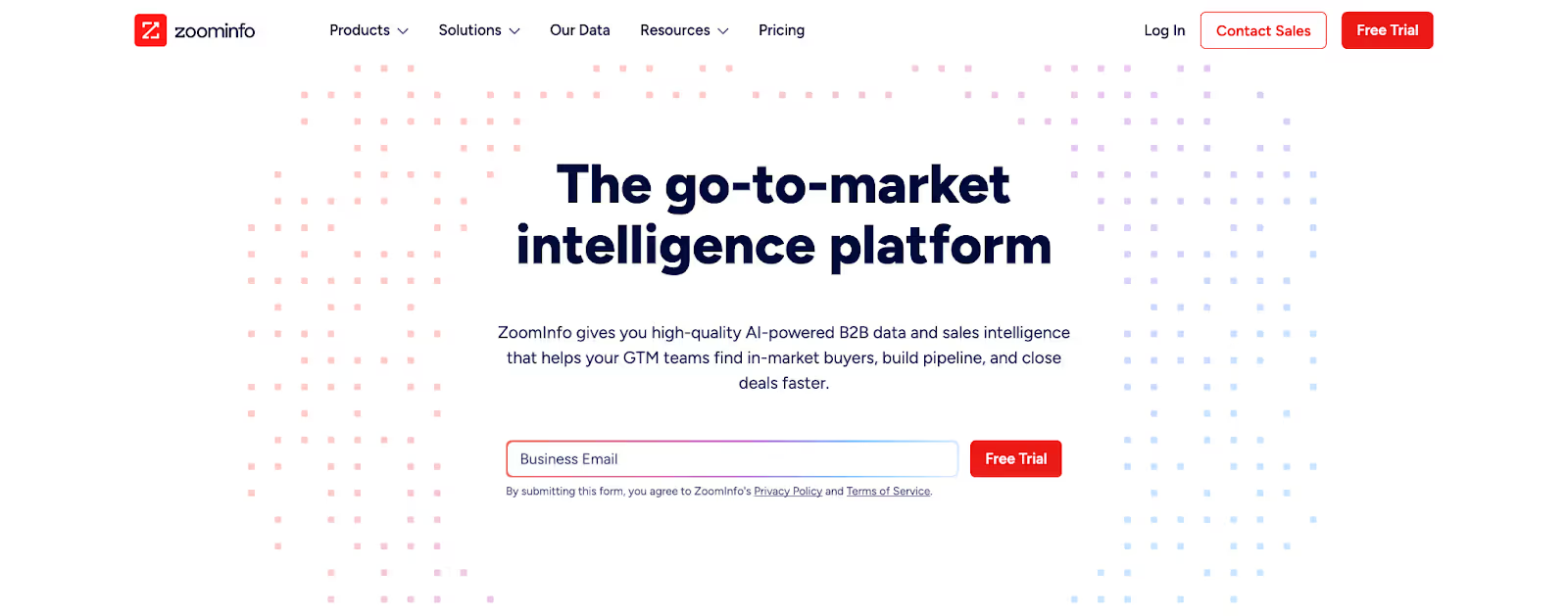
ZoomInfo positions itself as the spine of B2B data and a treasure trove of accurate contact, firmographic, technographic, and intent insight. Most go-to-market teams start here when they need:
- A steady source of verified leads and accounts
- Contact enrichment that keeps CRM records up to date
- Firmographic filtering, technographic signals, and job-change alerts
- Integrations that move intelligence smoothly into Salesforce, HubSpot, or Outreach
- Workflow accelerators that let reps spend less time researching and more time selling
ZoomInfo’s strength lies in its breadth and depth of data. For teams who know who they want to reach and just need that information in one place, ZoomInfo delivers.
6sense Functionalities and Core Capabilities
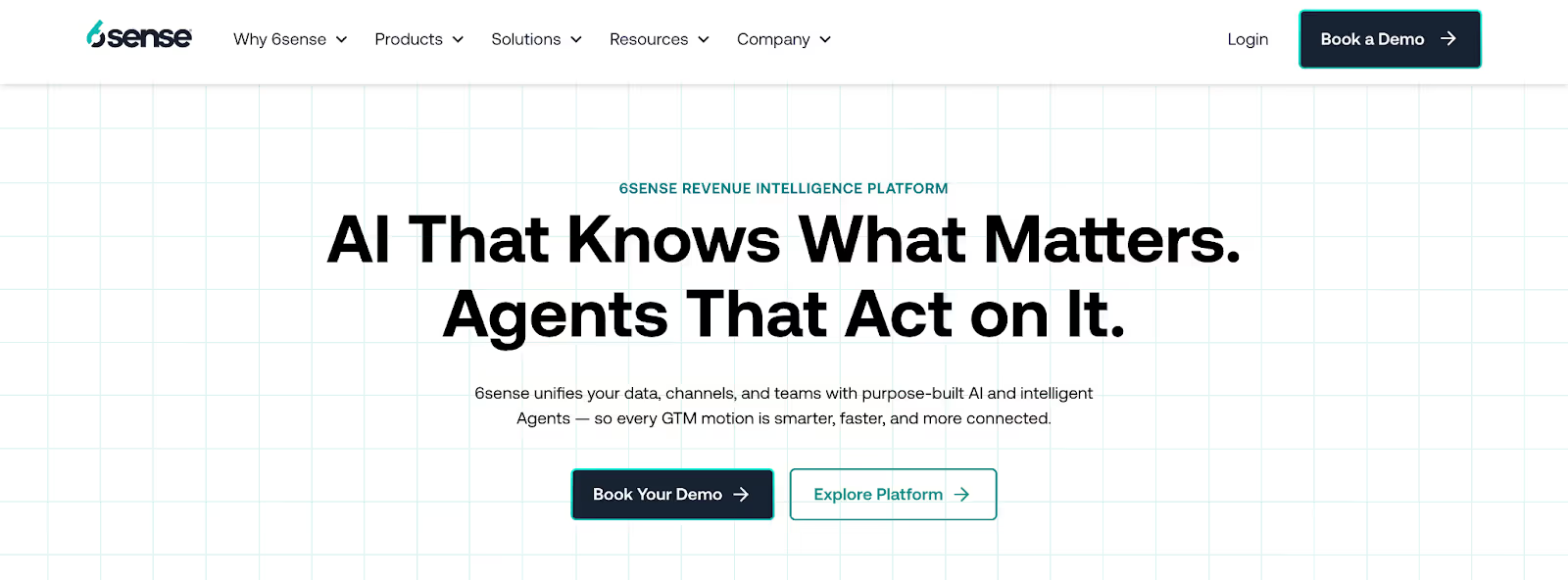
Instead of just gathering signals, 6sense brings structure to how teams act:
- AI-powered predictions tell you which accounts are ready and when
- Buying group insights highlight who’s involved in the decision
- Audiences adjust automatically across ads, emails, and events based on behavior
- Revenue intelligence shows what’s moving pipeline and where the gaps are
- Orchestration layers help teams create, launch, and optimize their outreach
For teams trying to align marketing and sales around high-intent, multi-threaded accounts, 6sense finally makes that alignment practical and measurable. It’s like going to a spa to ‘align your chakras’ and actually walking out ✨aligned✨.
ZoomInfo vs 6Sense: Core capabilities in a snapshot
ZoomInfo is the foundation that helps teams gain clarity on who they’re targeting and gives sales the data to personalize their approach.
6sense focuses on flow, from identification to engagement to conversion. For teams that want their outreach and activation to move with the buyer, it pulls the moving pieces together.
Both platforms are great in their capabilities. But your choice depends on what feels more urgent today:
Do you need better data, OR better movement across your revenue engine?
If you’re thinking “I want both data and orchestration,” you might like our take on Factors vs ZoomInfo, it shows when to pick a data-first tool vs a full GTM system.
ZoomInfo vs 6Sense: Data Coverage & Intent Signals
Data is the backbone of every modern GTM motion. Whether you’re trying to find the right companies to target or understand what they care about, the platform you choose should do more than just store records. It should help you act on them.
Let's look at how ZoomInfo and 6sense build, manage, and activate intent signals.
ZoomInfo Data Coverage and Intent Signals
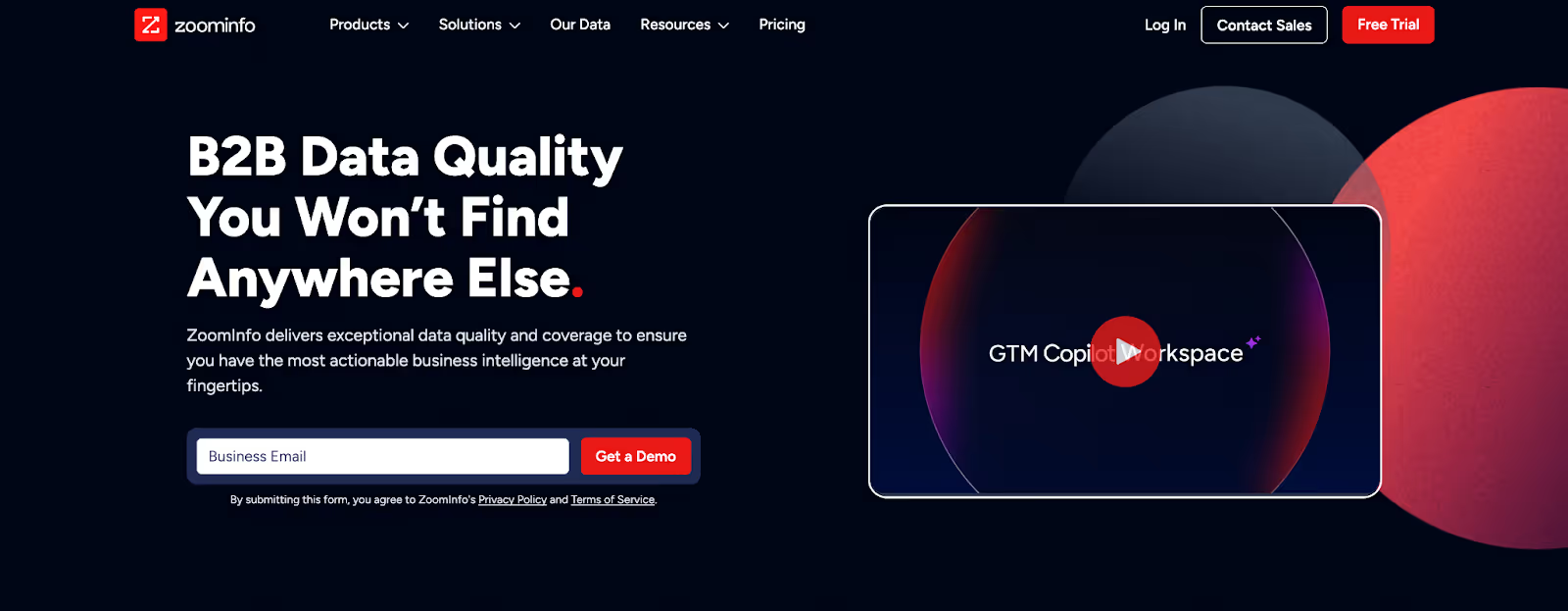
ZoomInfo gives companies what they’ve always needed: clear, reliable data (the latter being the KEY-word).
- Strong database of verified contacts and companies
- Firmographic filters and industry-level insights
- Basic intent signals that point toward which companies are showing interest
- Enrichment that updates your CRM automatically so reps don’t have to chase missing information
It’s a solid fit for teams that rely on outbound prospecting and want a trustworthy, updated list to work from.
6sense Data Coverage and Intent Signals
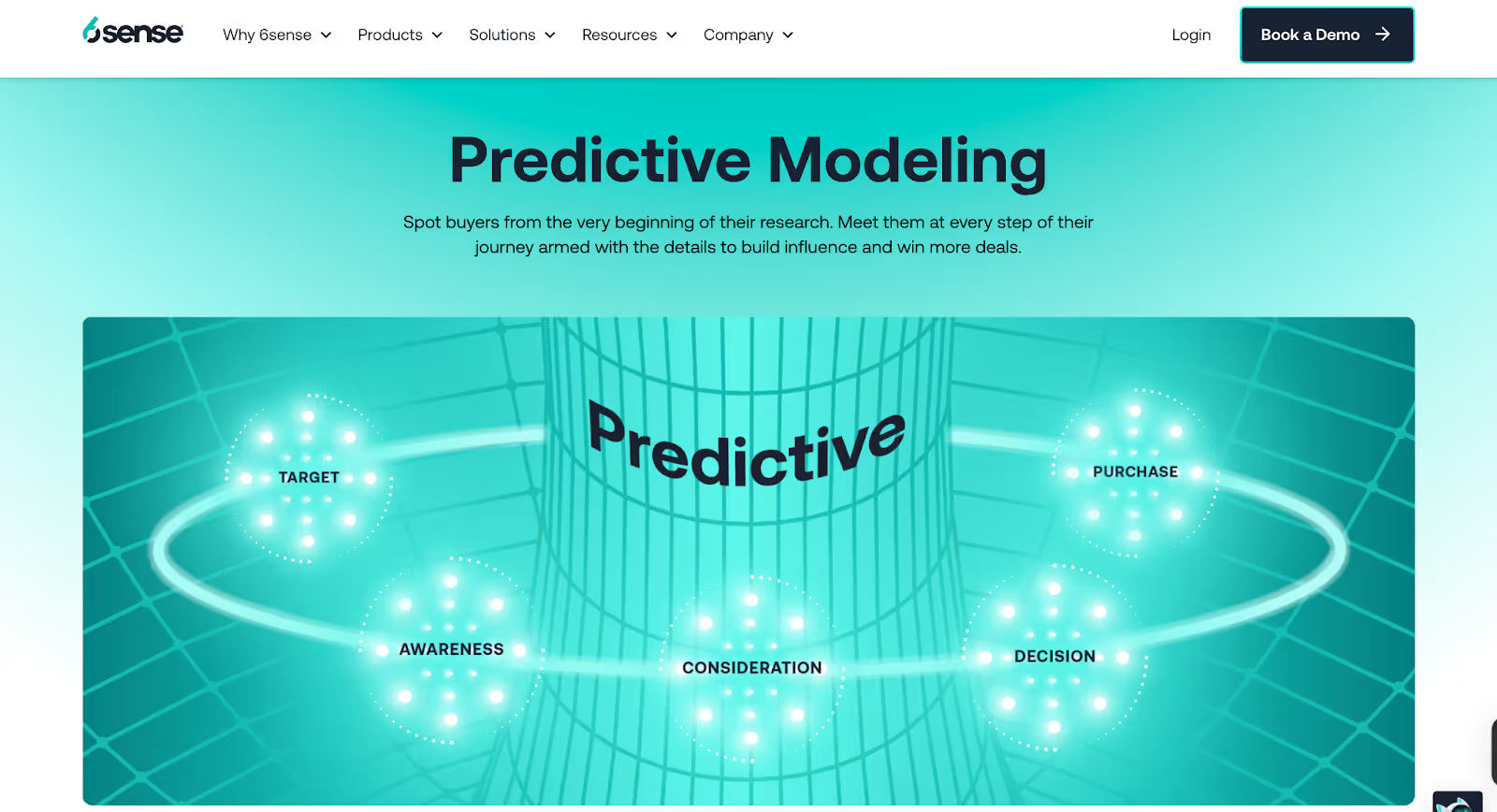
6sense focuses more on interpreting where buyers are, rather than just showing who they are. It combines behavioral signals, account history, and predictive scoring to show:
- Which accounts are researching your solutions
- What stage of the buying process are they in
- How likely they are to move toward pipeline
- Patterns that help sales and marketing work in sync
This approach benefits teams that want data AND correct timing.
ZoomInfo vs 6Sense: Data Coverage and Intent Signals in a snapshot
ZoomInfo matches your target companies with verified contacts, ensuring your outreach is grounded in real, reachable people.
6sense gives teams context, while showing who’s active, why they matter now, and how far along they are in the buying process.
Again, both have a place. The better choice depends on whether your team needs clear records to support selling, or real-time intent signals to guide multi-channel GTM plays.
Curious about how intent sources compare? This short guide on Top Intent Data Platforms gives a handy market view.
ZoomInfo vs 6Sense: Account & Buying Group Intelligence
Account intelligence is no longer just about identifying a company… GTM teams now need to understand who is involved, what each person cares about, and how their behavior connects to the buying process. (long sentence… but that’s really all the things they need)
Here’s how ZoomInfo and 6sense compare when it comes to identifying accounts and understanding buying groups:
ZoomInfo Account & Buying Group Intelligence
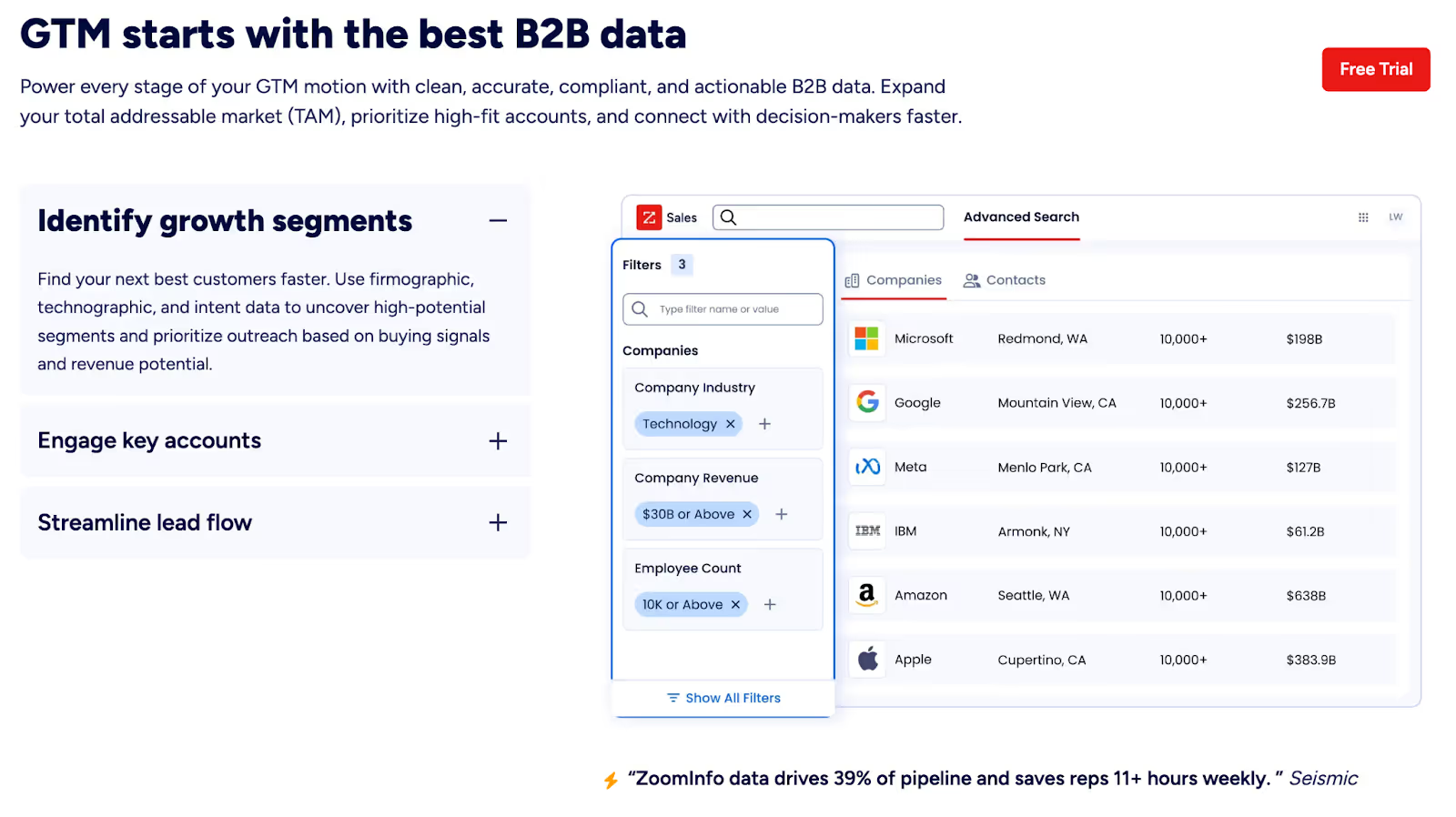
ZoomInfo gives teams a clear view of who to talk to. Its intelligence points you toward the right contacts by job role, industry, and profile. It helps sales teams find the decision-maker faster and personalize outreach with verified details.
Here’s what it delivers well:
- Lists of stakeholders connected to the company
- Job role and seniority filters for narrowing outreach
- Quick ways to add and enrich contacts in your CRM
- Easy exporting and syncing for sales engagement tools
(And yes, fewer moments where you want to pull your hair out)
This works well when your primary goal is to book meetings and identify the right decision-makers within each account.
6sense Account & Buying Group Intelligence
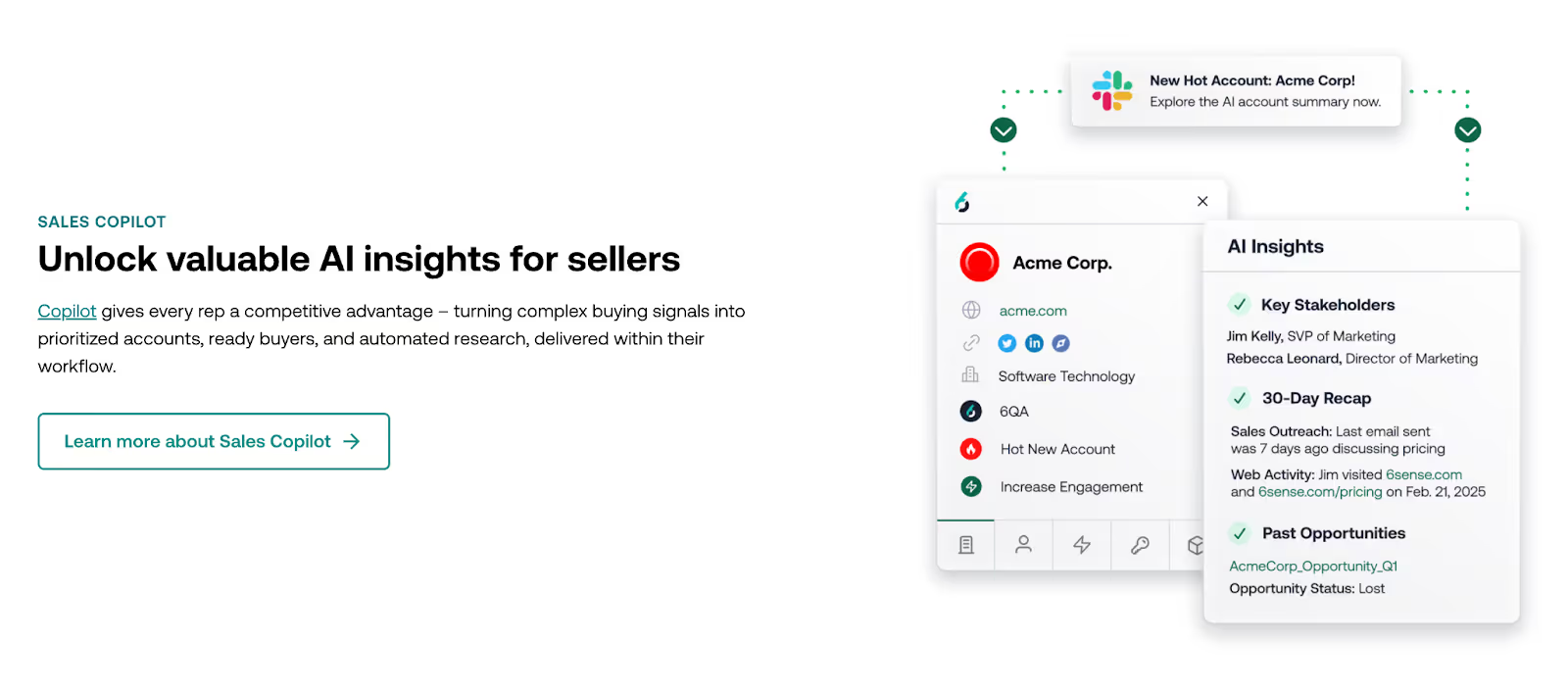
6sense goes deeper into what’s happening inside the account. Instead of just telling you who the decision-maker is. It shows how different stakeholders interact with your brand and content over time. This makes it easier to understand patterns of influence and track progress.
It does this by:
- Tracking behavior from multiple decision-makers together
- Seeing where each stakeholder fits into the buying process
- Predicting when an account is close to becoming an opportunity
- Highlighting individual and account-level actions that signal readiness
This is helpful for teams investing in account-based motions where engagement across the buying group matters more than a single contact click.
ZoomInfo vs 6Sense: Account & Buying Group Intelligence
ZoomInfo helps you quickly access the right people. You know who the decision-makers are and can act on the information directly.
6sense supports you with context and collaboration. You can see which accounts are moving, why they’re moving, and how to tailor your outreach based on where they are in the journey.
But now… the difference is whether your team is focused on direct outreach to known contacts or broader alignment between marketing and sales against a moving buying unit.
ZoomInfo vs 6Sense: Workflow Automation & Activation
Good data becomes great only when teams can act on it.
Automation and activation are where platforms show how well they serve real-world GTM needs, whether that’s running campaigns, organizing outreach, or helping revenue teams work together.
Both ZoomInfo and 6sense offer automation features, but they’re designed keeping different priorities in mind.
ZoomInfo: Workflow Automation & Activation
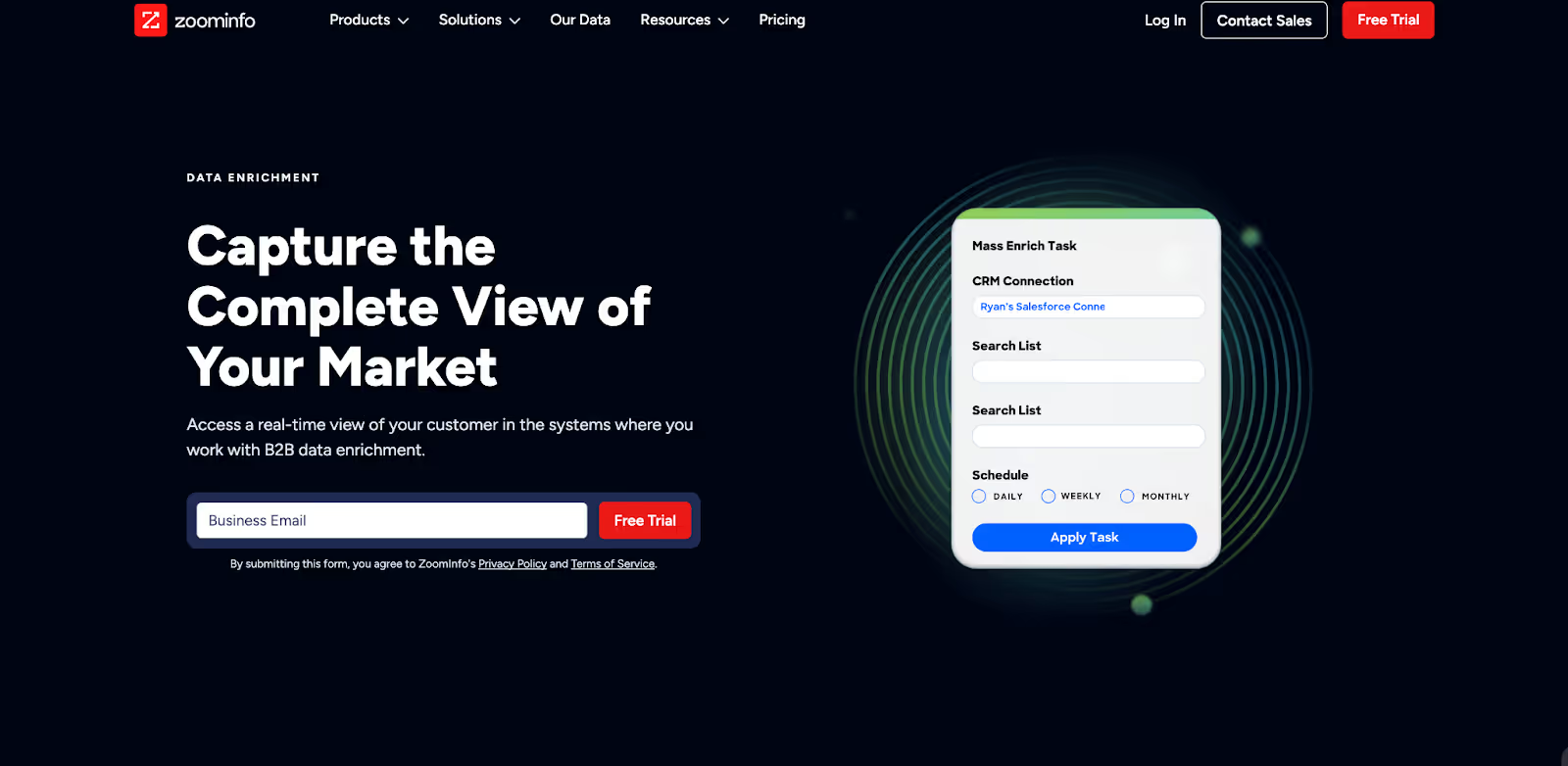
ZoomInfo 🌟 shines🌟 where structured sales flow requires reliable data.
It lets you:
- Clean and enrich CRM records automatically
- Build segmented lists based on filters like intent keywords, technologies, and job roles
- Push those lists into sequences or campaigns via integrations with CRMs and outreach tools
- Reduce manual work for sales teams by automating research and data entry
(Become your sales teams’ favourite person, and that’s really THE thing btw)
This fits outbound workflows very well. Teams using outreach platforms like Salesloft or Outreach.io can plug in ZoomInfo and make their plays more precise with less effort.
6sense: Workflow Automation & Activation
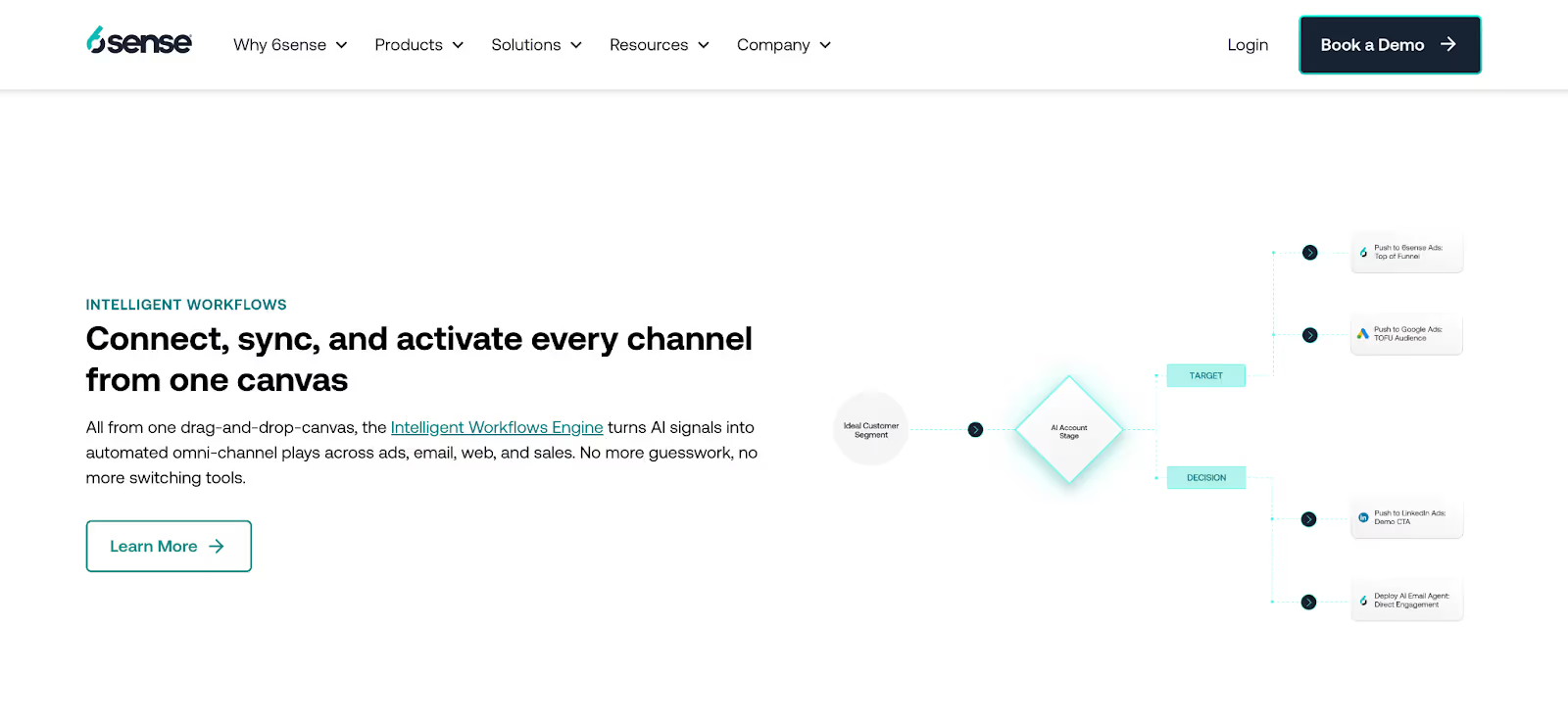
6sense is built to guide entire GTM motions. It connects what the platform knows to what marketing and sales should do next.
Some of what it enables:
- Automated campaigns based on buying stage
- Cross-channel activation (ads, email, chat) based on intent signals
- Internal workflows that notify sales when accounts enter the “ready” stage
- Unified scoring and journey progression that help teams time their effort
- Shared visibility between marketing and sales on what messages are working
Where ZoomInfo supports data-backed action, 6sense offers signal-backed automation across channels.
ZoomInfo vs 6Sense: Workflow Automation & Activation
ZoomInfo helps sellers move faster by giving accurate data and syncing that data into the tools they already use.
6sense helps teams coordinate how they engage accounts at every stage, from anonymous awareness to opportunity creation.
Think of ZoomInfo as the engine that supports outbound… while 6sense as the engine that supports multi-channel GTM journeys.
If automation is your team’s jam (not the strawberry jam you put on bread), here’s a practical resource: CRM Workflow Automation to Boost Efficiency.
ZoomInfo vs 6Sense: Analytics & GTM Measurement
It’s one thing to activate outreach and campaigns. It’s another to understand what’s working and where to improve.
This section looks at how both platforms support reporting and funnel measurement, and what each offers to GTM teams, aiming to move the revenue needle with confidence.
ZoomInfo: Analytics & GTM Measurement
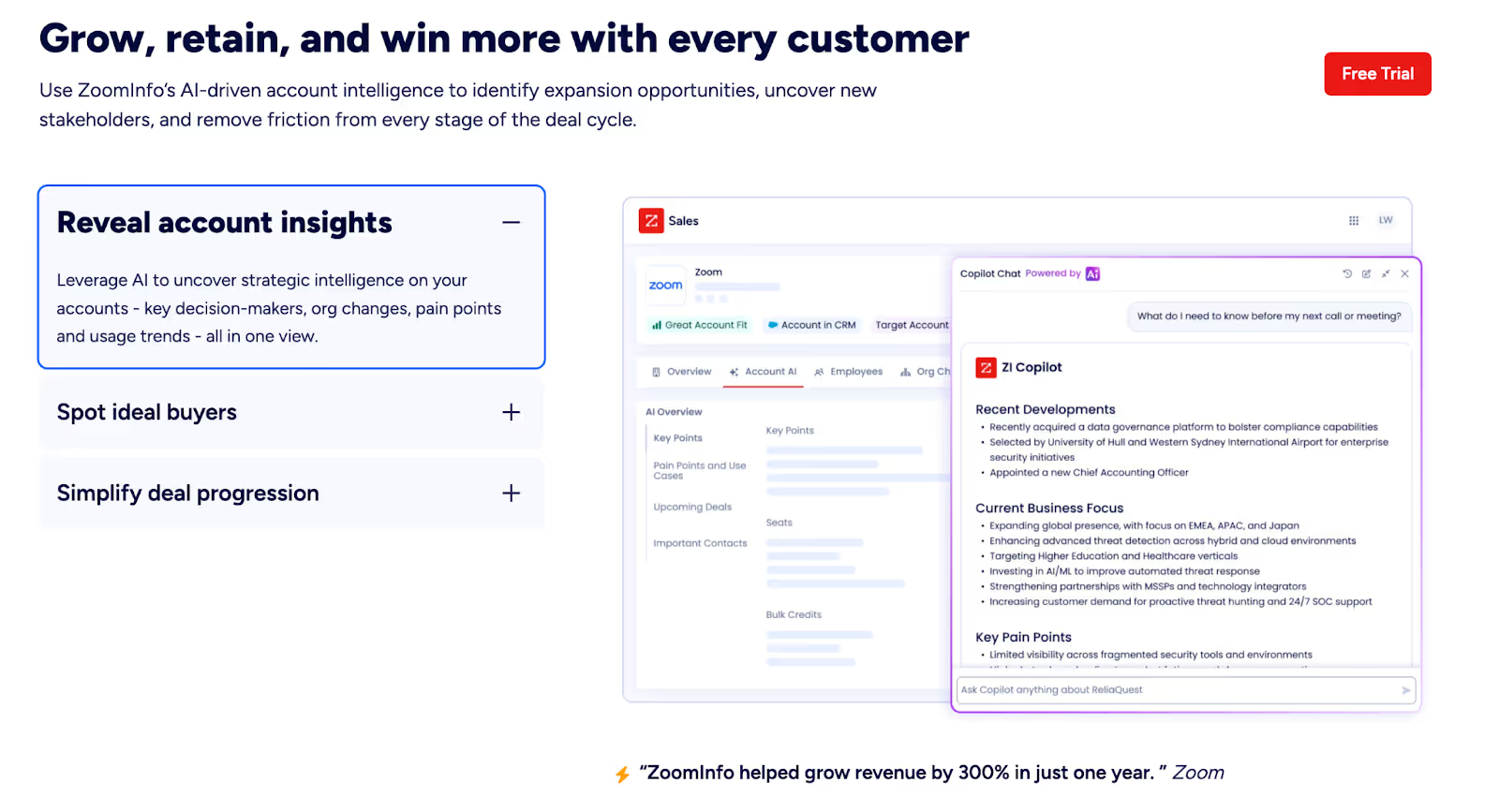
ZoomInfo also helps organizations make better decisions by improving the foundation of their reporting. With cleaner data and enriched profiles, analytics become more reliable and actionable.
It’s especially useful for:
- Tracking changes in contact and account data over time
- Visualizing how enriched outreach drives opportunities
- Measuring outreach performance by intent level or persona match
- Saving time on manual data cleanup to boost sales productivity
ZoomInfo enables teams to keep their dashboards relevant and accurate without getting overwhelmed by complexity.
6sense: Analytics & GTM Measurement
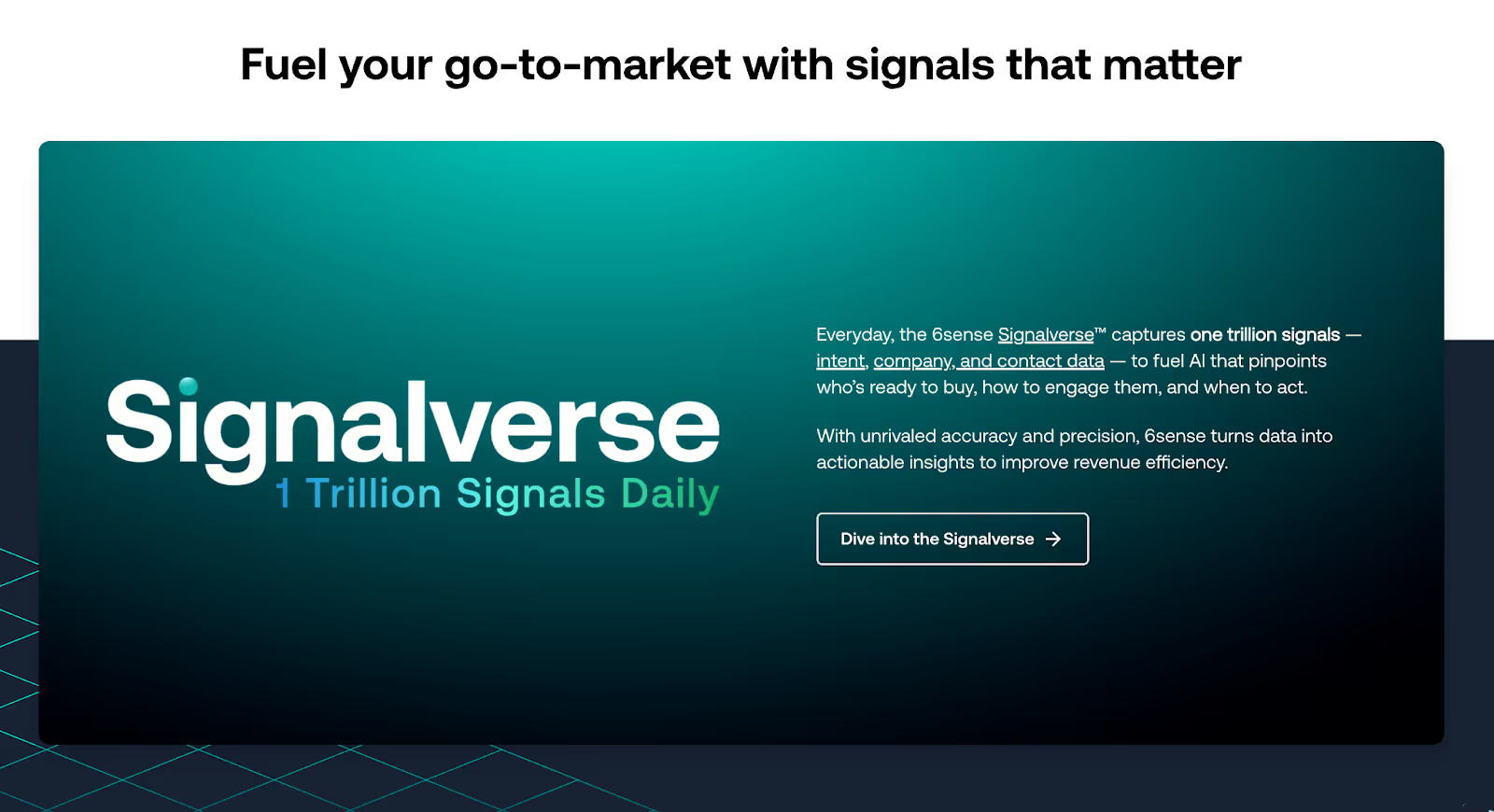
6sense takes a broader view of insights. The platform shows whether a campaign worked and how buyer behavior is likely to move over time, what channel influenced that movement, and what actions should follow.
Some highlights include:
- Journey stage views across all active and target accounts
- Funnel tracking that ties outreach to revenue movements
- Predictive models that show which accounts will move next
- Deep analytics that connect marketing activity to pipeline progression
This is especially helpful for teams running account-based marketing and wanting proof that their campaigns are shifting buying behaviors.
ZoomInfo vs 6Sense: Analytics & GTM Measurement
ZoomInfo strengthens analytics by ensuring that CRM data and targeting parameters are clean and up-to-date. This gives sales and marketing teams a better place to build reports and act with confidence.
6sense helps teams go beyond reporting. It puts behavior and revenue movement in one frame, giving strategy a more predictive support.
For teams looking to measure top of funnel efforts and outbound performance, ZoomInfo does the job well. For teams driving sophisticated cross-channel GTM motions, 6sense gives a clearer narrative of what’s working and why.
ZoomInfo vs 6Sense: Support, Pricing, and Market Presence
Both ZoomInfo and 6sense power thousands of GTM teams worldwide (random and unrelated, but ‘worldwide’ only reminds me of Pitbull #IYKYK).
But how they support customers, price their platforms, and show up in the market gives more context on who they’re really built for, and which use case benefits more from which platform.
ZoomInfo: Support, Pricing, and Market Presence
ZoomInfo has been a staple for sales and growth teams alike. Its data and intelligence offerings have made it a popular choice for organizations that want to move into a data-rich rhythm without complex setup.
Some key observations:
- Strong reputation across B2B sales intelligence categories
- Long list of integrations for sales, marketing, and ops workflows
- Support and onboarding tailored to data enrichment and outreach use cases
- Known for helping teams simplify dirty data and close gaps in CRM
The platform fits well into stack setups where outbound remains a dominant channel and accuracy matters most.
6sense: Support, Pricing, and Market Presence
6sense caters to teams ready to invest in alignment and orchestration. It is popular among enterprises and fast-scaling SaaS companies because of:
- Full buying-journey visibility and orchestration support
- Focused onboarding and success enablement for ABM motions
- Multi-threading and sales-marketing alignment guidance included
- Hands-on help with intelligent workflows, predictive plays, and measurement
You see 6sense in stacks where marketing runs multi-channel plays and GTM leaders want transparency across funnel movements.
ZoomInfo vs 6Sense: Support, Pricing, and Market Fit
ZoomInfo gives teams scalable access to reliable data and intent enrichment, and it’s structured to accommodate budget-conscious teams as well as large enterprises.
6sense goes beyond data availability, offering deeper support for strategy teams running ABM plays and intelligently synced outreach. But it comes at a premium with consultative pricing and onboarding.
Both platforms have earned their place in the market. ZoomInfo is a strong ‘data first’ partner. 6sense is a strong ‘orchestration first’ partner.
The difference comes down to what level of GTM maturity you’re currently supporting, and what you are preparing your team to work toward.
ZoomInfo vs 6Sense: Ad & Audience Activation
Most teams don’t struggle with intent data… they struggle with what comes after
The difference between these platforms is not whether you can activate audiences, but how much manual effort is required to keep those audiences updated and relevant.
Here is a structured breakdown of how both platforms handle activation in practice:
ZoomInfo: Ad & Audience Activation
ZoomInfo gives teams what they need to build reliable audiences, but the work of running campaigns still sits outside the product.
Teams typically:
- Build filtered account or contact lists inside ZoomInfo
- Export or sync them to LinkedIn, Google, Meta or MAPs
- Manage targeting logic, suppression and refresh cadence manually
This works well if teams already have a marketing ops function and want to improve segmentation without changing their entire workflow.
ZoomInfo supports activation, BUT does not automate it.
6sense: Ad & Audience Activation
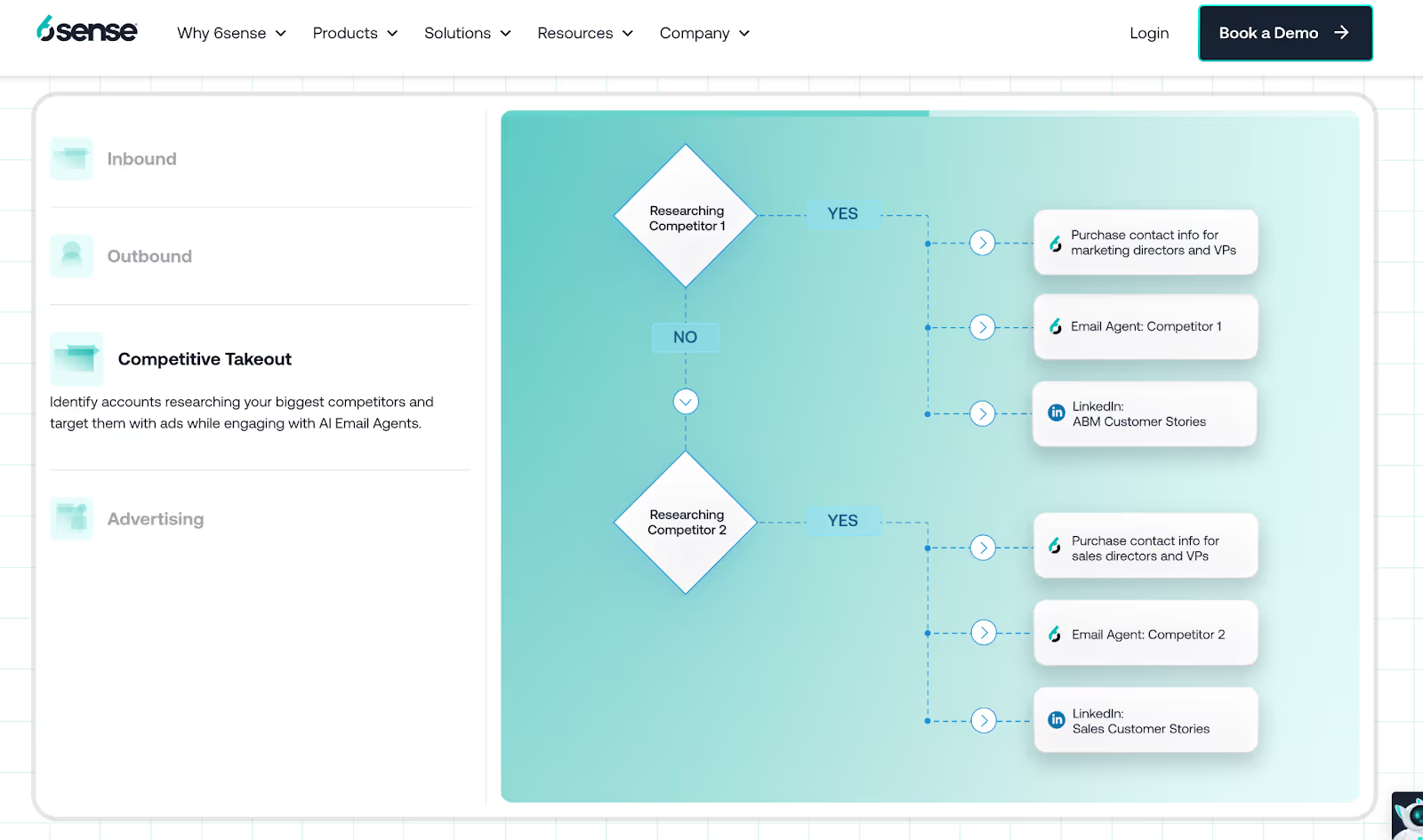
6sense treats activation as an integral part of the buyer journey. Once the platform detects movement, segments and audiences adjust automatically.
Teams can:
- Run multi-channel account campaigns without exporting lists
- Serve different messaging based on buying stage
- Stop wasting impressions on accounts that have gone cold
- Trigger plays across ads, email, SDR outreach, and chat from the same signal source
This removes a major operational burden from marketing teams and helps keep targeting relevant throughout the buying cycle.
ZoomInfo vs 6Sense: Ad & Audience Activation in a snapshot
ZoomInfo gives you accurate audiences to target, and 6sense gives you moving audiences that keep themselves active.
My point is… one improves your execution, while the other removes a large part of the execution workload entirely.
ZoomInfo vs 6Sense: Analytics, Funnel Insights & GTM Orchestration
Analytics is the difference between believing and actually knowing whether the GTM engine is actually working.
A platform may collect intelligence, but if it cannot convert that intelligence into clear movement patterns and investment decisions, its impact stays limited.
Here is how the platforms differ in what they help teams see and act on:
ZoomInfo: Analytics, Funnel Insights & GTM Orchestration
ZoomInfo’s analytics layer supports operational decisions. It helps teams understand:
- Which segments convert better
- How intent-based outreach influences meeting booking
- How much manual data cleanup has been eliminated
- Whether rep activity correlates with opportunity creation
These insights help revenue teams manage efficiency. It gives structure to outbound and supports cleaner pipeline reporting.
6sense:Analytics, Funnel Insights & GTM Orchestration
6sense positions analytics around forward motion.
The platform shows:
- Which accounts are heating up
- What triggered the movement
- Which messages and channels played a role
- Where deals slow down and why
All of this gives teams a way to connect their work to revenue rather than activity volume.
ZoomInfo vs 6Sense: Analytics, Funnel Insights & GTM Orchestration in a snapshot
ZoomInfo improves execution by making activity measurable and clean, but 6sense improves strategy by revealing which actions actually changed the pipeline.
ZoomInfo vs 6Sense: What to choose when?
If your immediate priority is:
- Finding the right people to target
- Keeping CRM records clean
- Improving outbound performance
- Giving sales a reliable data engine
Then ZoomInfo fits that need well. It gives teams verified data, contact enrichment, and enough intent signals to help prospecting run with less guesswork. Companies that are still pipeline-first rather than journey-first tend to see value quickly.
If your priorities include:
- Running coordinated ABM programs
- Aligning sales and marketing around account movement
- Activating intent signals without manual list work
- Understanding why accounts progress or stall
Then 6sense is the stronger fit. It turns intent and behavioral data into timing, activation, and pipeline insight. Teams that want to operationalize buying-group journeys and measure full-funnel performance will use more of what 6sense offers.
The choice depends on how your GTM engine runs today.
ZoomInfo is a data foundation. 6sense is a revenue operating layer.
Neither is ‘better’ in isolation. The better platform is the one that matches how your teams build pipeline today and how you plan to scale it tomorrow.
Looking for the capabilities of ZoomInfo and 6Sense in one platform?
Some teams want the precision of ZoomInfo and the orchestration power of 6sense, without managing two systems or stitching workflows together.
That’s where Factors.ai fits in *cue to the Superman theme song*
It combines:
- Account identification
- AI-powered intent signals
- Buying group insights
- Dynamic audience activation for LinkedIn and Google
- Real-time sales alerts
- Funnel analytics and revenue reporting
- GTM engineering services to set everything up
Instead of choosing between better data or smarter motion, you get both in one stack.
If that sounds like what your team needs, now is the right time to take a look.
📑Also Read: Apollo vs ZoomInfo
In a Nutshell…
ZoomInfo and 6sense both serve high-performing revenue teams, but they solve different problems across the pipeline. ZoomInfo is built for data-first execution: verified contacts, firmographic depth, and CRM-ready enrichment that fuels efficient outbound workflows. If your team relies on precision outreach and structured sales processes, ZoomInfo provides the tools to streamline prospecting and boost productivity.
On the other hand, 6sense operates as a revenue orchestration layer. It doesn’t just surface data; it interprets behavior across buying groups, triggering cross-channel plays, refining targeting automatically, and highlighting signals that help teams act with timing and intent. For organizations invested in full-funnel ABM, coordinated GTM motions, and marketing-sales alignment, 6sense helps turn complex journeys into scalable systems.
This detailed comparison breaks down how each platform performs across data coverage, activation, analytics, automation, and more, helping you align your technology choice with how your team actually drives revenue today and where you’re aiming next. Whether your priority is pipeline creation or pipeline velocity, the right choice hinges on where your GTM motion is strongest, and where it needs support.
FAQs for ZoomInfo vs 6Sense
Q. What is the main difference between ZoomInfo and 6sense?
ZoomInfo focuses on B2B data intelligence, contact enrichment, and sales efficiency, while 6sense is built for revenue orchestration, predictive engagement, and account-based strategy.
Q. Which platform is better for account-based marketing (ABM)?
6sense is better suited for ABM, offering automated audience updates, buying group insights, and cross-channel activation aligned with the buyer’s journey.
Q. Is ZoomInfo or 6sense better for sales prospecting?
ZoomInfo is a stronger fit for prospecting, providing verified contacts, CRM sync, and outreach-ready segmentation to support outbound sales teams.
Q. Can these platforms be used together?
Yes, many teams use ZoomInfo for data enrichment and 6sense for orchestration. However, managing both requires integration planning and workflow alignment.
Q. Is there an alternative that combines both ZoomInfo and 6sense capabilities?
Yes. Platforms like Factors.ai offer both contact-level intelligence and journey-based orchestration, providing a unified GTM experience without managing separate tools.

AI in Marketing and Sales: Marketing Automation Examples
Ever looked at your old marketing tools and wished they would just grow a brain?
Good news... they did. And then they grew a personality, a memory, and an oddly accurate sense of buyer intent.
What used to be simple ‘send email at 9am’ automation has turned into systems that pull in signals from everywhere, personalize every touchpoint, and basically run half your GTM motion while you’re still opening your laptop.
And obviously, it’s all because of AI. It helps teams think ahead and ties awareness, engagement, and revenue together into one continuous story. And it finally gives us marketers something we rarely get ✨clarity✨.
Okay, enough talk, now let’s get into how automation actually works, what AI is enabling, and where platforms like Factors.ai fit into this whole glow-up.
TL;DR
- AI now predicts intent, personalizes outreach, and adapts to campaigns in real time.
- It connects every stage of the buyer journey, so no one falls into the abyss between MQL and SQL.
- Platforms like Factors.ai, HubSpot, Marketo, Salesforce, and ActiveCampaign unify data and intelligence.
- Predictive analytics and cross-channel visibility will shape the next wave.
- Teams using AI-powered automation move faster, waste less, and convert more.
How is AI reshaping modern marketing strategies?
AI has flipped automation from reactive to proactive.
It’s the difference between ‘someone downloaded an ebook, send email 2’ and ‘someone’s showing intent across paid, organic, and your website, here’s the next best action.’
Think Netflix recommending a show you didn’t even know you wanted to binge. Same vibe, just with B2B buyers who aren’t as cute as baby Yoda but behave just as predictably.
Some of the biggest shifts:
- Hyper-personalization: AI analyzes browsing behavior, content engagement, firmographic context, and even historical CRM activity. The result: outreach that feels human, not mass-produced.
- Intent-based engagement: Instead of guessing, marketers respond to clear signals. If an account is researching pain points that map to your product, AI helps push the right content at the right moment.
- Predictive recommendations: AI identifies the next best step, whether it’s an ad, an email, a conversation, or nothing. Yess… sometimes the best action is ‘calm down, they’re not ready.’
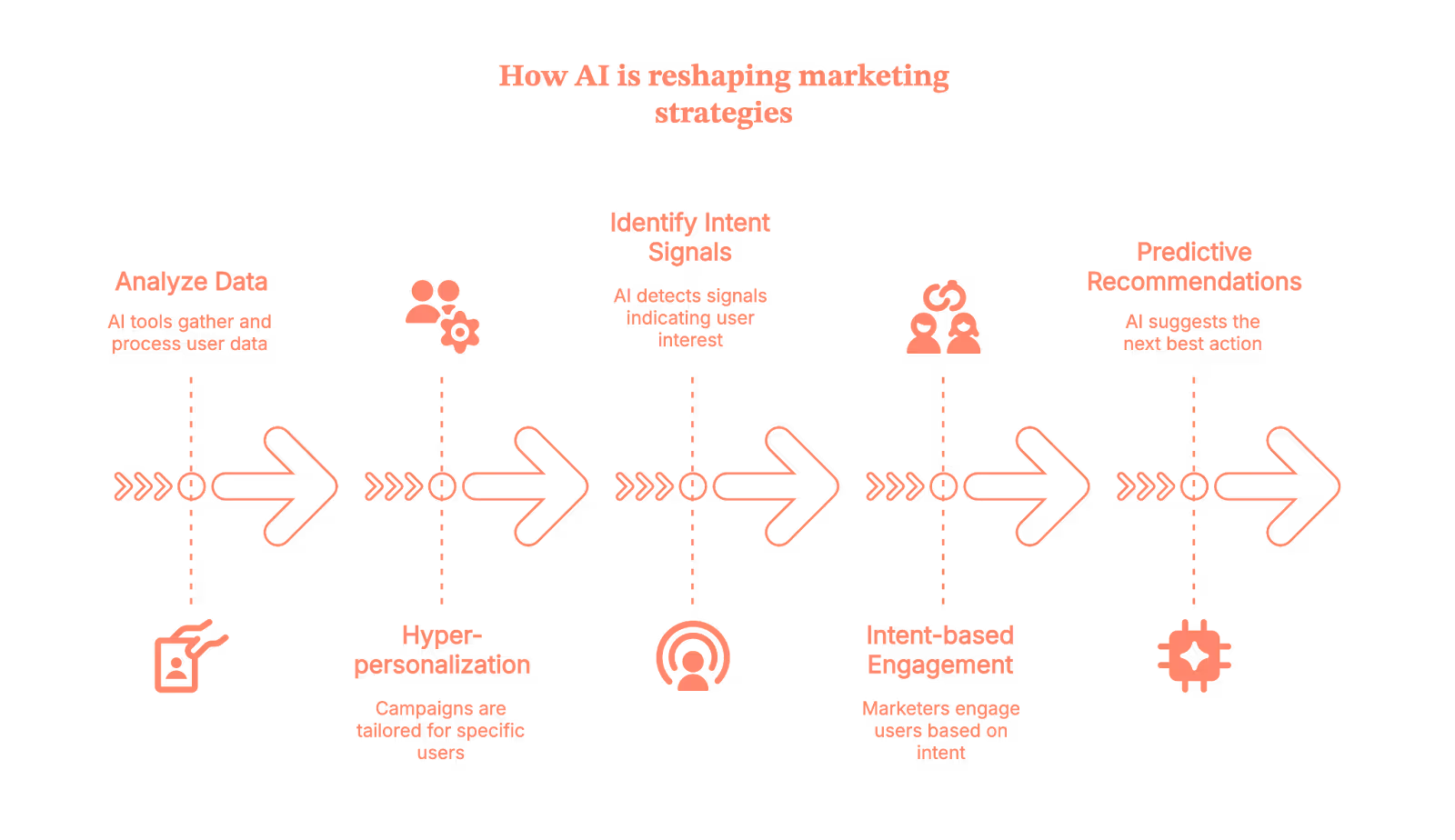
Platforms like Factors.ai help here by combining website behavior, CRM activity, and ad interactions into a unified view of account intent. When teams can see who is active and why, targeting becomes intentional instead of accidental.
Key trends shaping the future of automation
Here’s what every senior marketer should keep an eye on:
- Predictive analytics: AI-powered forecasting helps teams identify which campaigns, audiences, and channels are most likely to convert. This shifts planning from random guesswork to evidence-backed prioritization, so budgets move toward impact instead of noise.
- Full-funnel visibility: Modern tools now connect data across every stage of the journey, showing how accounts progress from awareness to decision. This eliminates blind spots and helps teams understand which touchpoints actually influence revenue.
- Cross-functional automation: Marketing and sales get to operate from the same set of insights. Outreach, follow-ups, and content delivery stay aligned because all teams are responding to the same buyer signals in real time.
- Autonomous campaign execution: AI agents will increasingly adjust budgets, optimize content variations, and trigger outreach based on performance and buyer behavior. This reduces manual intervention and keeps campaigns evolving as conditions change.
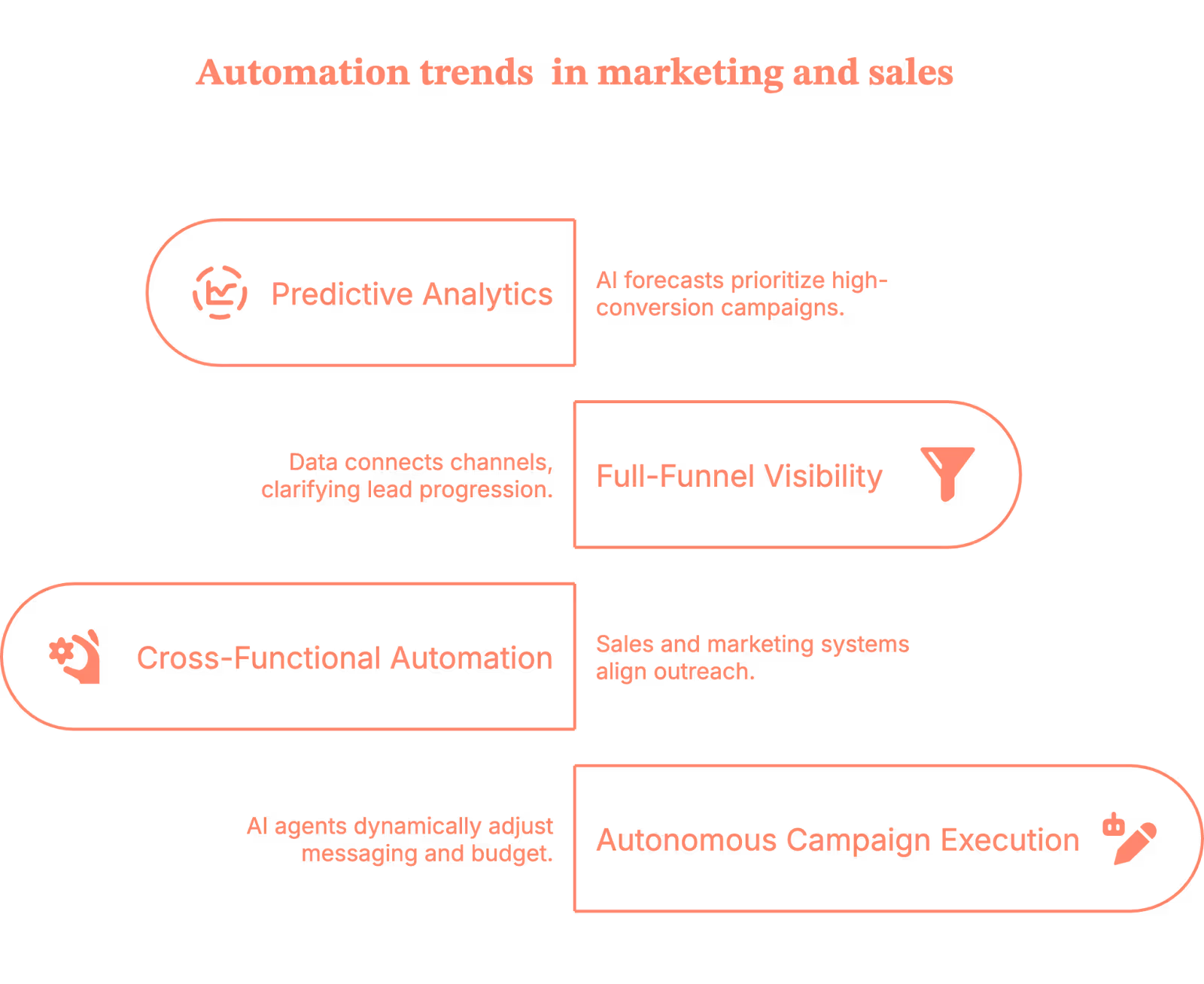
Together, these trends move automation from static rule-based workflows to a dynamic GTM system that continually learns, adapts, and improves results.
Related read: Guide to retention in customer journey
Benefits of marketing automation
Marketing automation is all about precision, scale, and making your GTM engine less topsy-turvy.
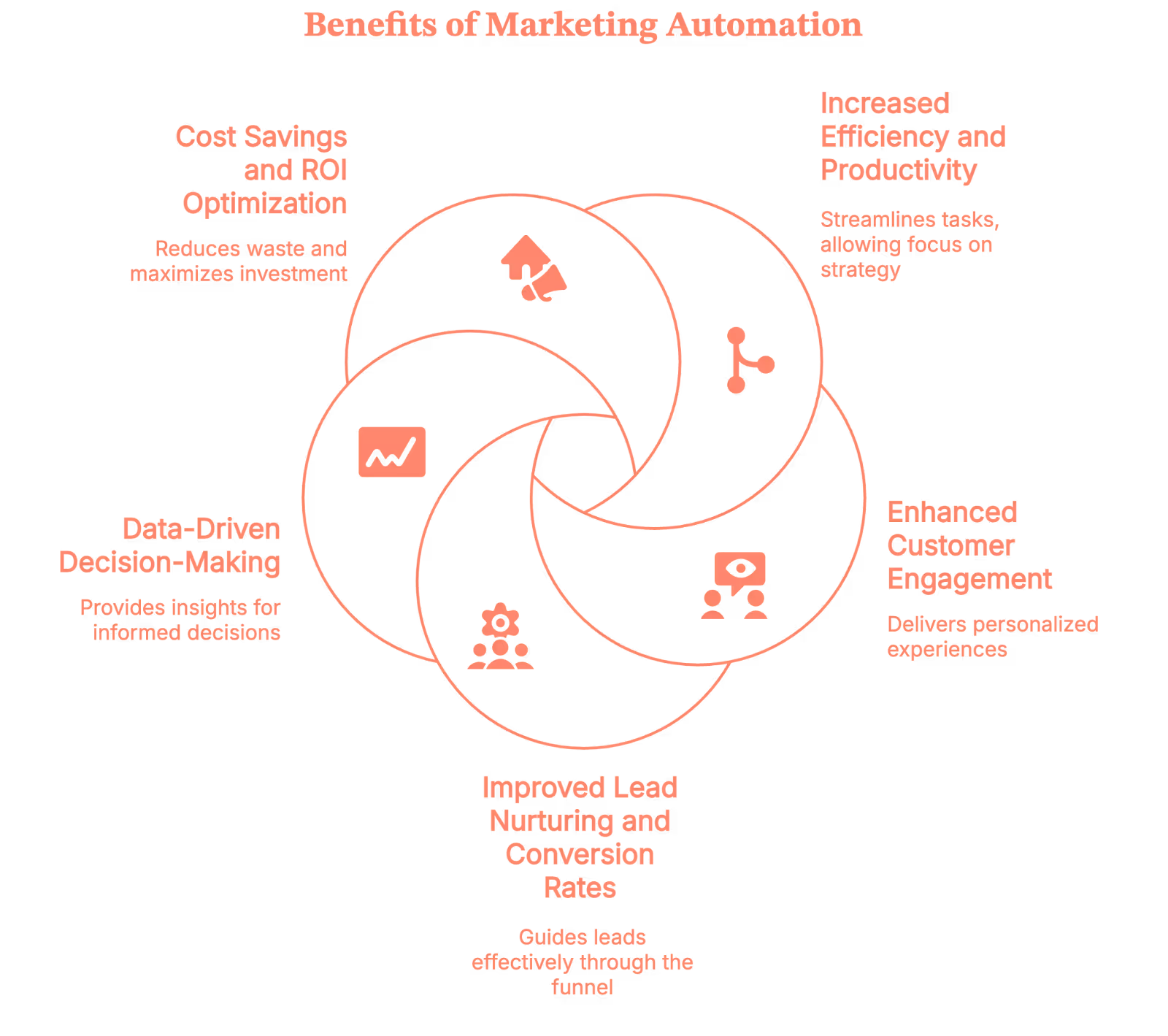
1. Efficiency that actually frees up humans
Repetitive tasks disappear so marketing can finally focus on creativity, messaging, and strategy. Workflows fire automatically in response to triggers, data updates, or buyer behavior. (So no more anxiety driven by thoughts like “did the sequence go out?”)
2. Personalization that doesn’t feel robotic
AI uses real interaction patterns to shape email content, ads, website experiences, and nurture flows. With that, prospects get experiences that feel relevant to their buyer journey, which is great because no one wants to feel like Contact #34298.
3. Decisions powered by real data
Modern tools analyze cross-channel signals at a scale humans humanly can’t. Real-time dashboards and AI recommendations show what’s working, what’s not, and where to double down. Factors.ai goes deeper with attribution, journey mapping, and account-level intent.
4. Lead nurturing that converts
Behavior-based automation pushes the right content at the right moment, guiding buyers through the funnel without manual effort. This tightens sales cycles and reduces the need to ask, “where did this lead even come from?”
5. Cost savings and ROI you can defend
When you target high-intent audiences and personalize at scale, wasted spend drops quickly. And your ROI obviously climbs because your budget finally follows the data rather than wishful thinking.
Examples of Automation (that are actually working right now)
Note: This is where the ‘grow a brain’ part comes in.
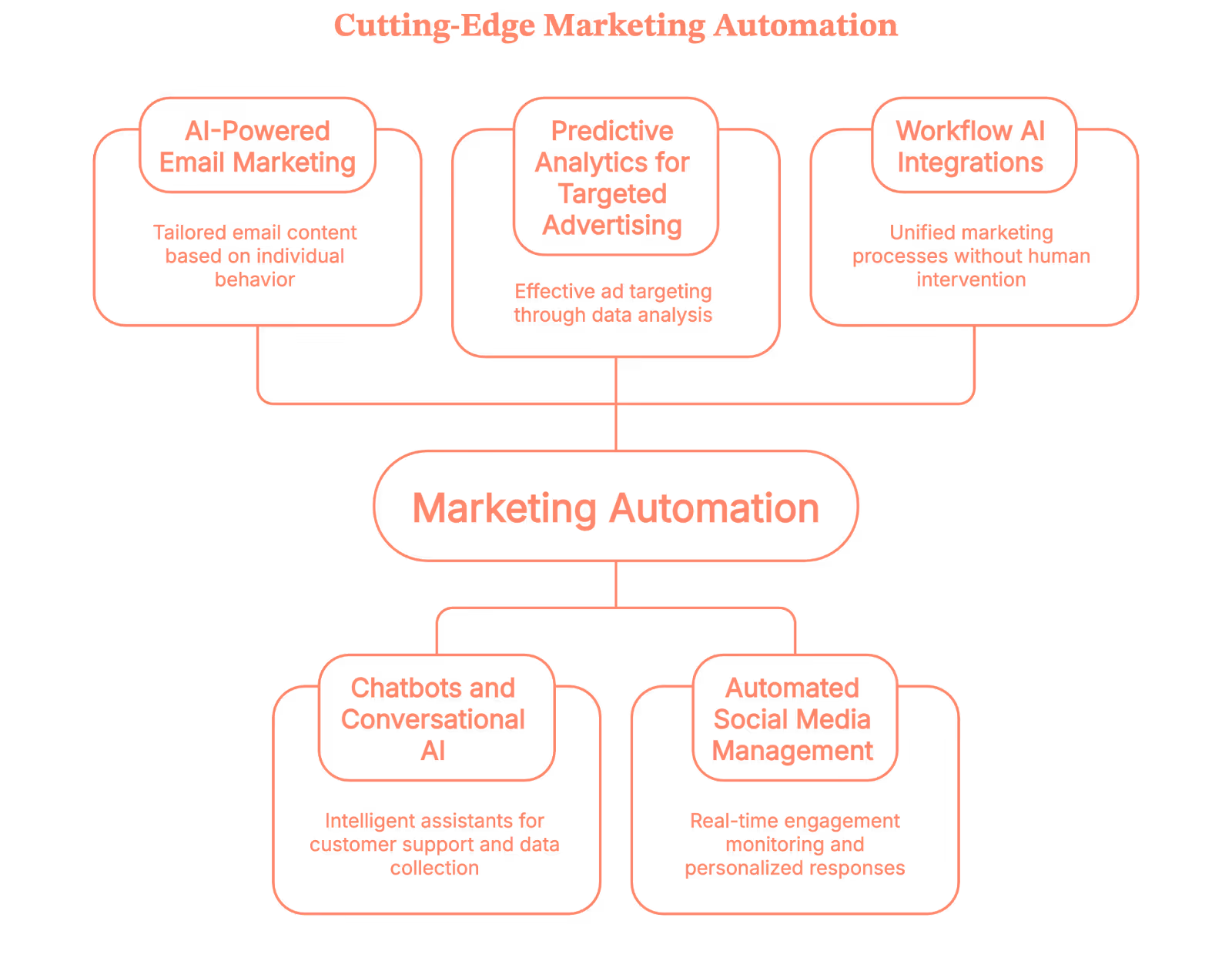
1. AI-powered email sequences
Emails now adapt based on buyer behavior.
- Subject lines adjust in real time
- Content blocks shift based on interest
- Send time optimizes per individual
For example, if someone downloads a pricing guide, they’ll get pointed to a relevant webinar, case study, or product comparison.
2. Chatbots and conversational AI
Chatbots aren’t FAQ parrots anymore (thank the Lord). They qualify leads, offer recommendations, and collect data that refines future campaigns.
Also, they work 24/7, no PTO, and 30-minute smoke breaks.
3. Predictive analytics for ads
Predictive targeting helps ads land in front of high-potential accounts instead of low-intent audiences. AI models evaluate firmographics, engagement patterns, and intent signals to map out who’s most likely to convert.
Factors.ai builds on this with account scoring powered by website behavior, campaign activity, and third-party intent, giving teams a clear path for targeted spend.
4. Automated social media management
Tools optimize posting times, monitor engagement, and even recommend responses in real time. Some can also detect trending topics before they take off, so your brand doesn’t look like it's late to the party.
5. Workflow AI for seamless GTM
This is where it gets fun.
Let me give you an example:
An account shows high intent on your website.
Automation triggers a warm LinkedIn sequence, emails, and alerts the right rep.
All synced across CRM, ad platforms, and analytics.
With Factors.ai’s GTM engineering workflows, teams can unify visitor data, intent signals, and outreach so everything moves in sync instead of feeling like a disjointed group project.
Top Marketing Automation Platforms (and what they do)
There are lots of tools in martech, but a few players consistently show up in B2B stacks, here they are:
- Factors.ai (obviously!)
Built for B2B teams that need ABM, intent capture, attribution, and targeted advertising with LinkedIn AdPilotg and Google AdPilot, powered by unified account-level insights. - HubSpot
Great for inbound. HubSpot offers user-friendly automation, CRM, and reporting tools that help growing teams manage campaigns without complexity. - Marketo Engage
A favorite among enterprise power users. Marketo excels in segmentation, lead scoring, and large-scale cross-channel orchestration. - Salesforce Marketing Cloud
Strongest for teams deeply tied to the Salesforce ecosystem. It delivers robust automation across email, mobile, and CRM-integrated journeys. - ActiveCampaign
Ideal for SMBs that want advanced automation without enterprise overhead. ActiveCampaign stands out for journey mapping and email intelligence at a friendly price point.
Key capabilities these tools usually offer
How to optimize sales workflows with AI?
Sales teams live under SO much pressure, almost like they’re inside a pressure cooker… getting ready to get cooked (Get it? Get it?). So, they’d obviously kill for shorter cycles, more deals, and less time to achieve ALL of this. *cue to Paradise by Coldplay*.
Now, this is where automation becomes a bridge to the said paradise.
- Designing efficient workflows
AI handles the grunt work:- Lead routing
- Task scheduling
- Stage updates
- Meeting reminders
Everything stays timely and consistent.
- Smart lead scoring
AI looks beyond job titles or company size. It studies behavior, intent, and engagement patterns to decide who’s worth a rep’s time.
- Automating follow-ups
Triggers fire automatically when a lead shows interest.- Viewed pricing page?
- Downloaded a case study?
- Watched 50% of a webinar?
The system knows what to do next.
Oh and Factors.ai helps identify which accounts actually deserve this level of energy so reps stop chasing leads that aren’t ready.
- Better revenue outcomes
Teams that combine automation and AI typically see:- Shorter sales cycles
- Higher conversions
- Better forecasting
- Less time wasted
- Better sleep
I mean… it’s literally the definition of working smarter.
Workflows: The superglue that sticks the GTM motion together
Workflow AI is the connective tissue that ties marketing and sales activities together.
It ensures:
- Tools talk to each other
- Data flows correctly
- Actions fire at the right time
- Teams stay aligned
Where workflow apps shine (bright like diamonds)
Factors.ai pulls several of these pieces into one system by unifying intent data, outreach triggers, and revenue analytics.
In A Nutshell
AI has fundamentally redefined marketing and sales automation, from static workflows to intelligent, responsive systems that fuel pipeline progression. Today, tools observe, interpret, and act. Platforms like Factors.ai integrate CRM activity, web behavior, and ad signals to offer precision targeting and real-time personalization that mirrors buyer behavior with uncanny accuracy.
Rather than reacting to form fills, AI-enabled platforms anticipate needs, recommend actions, and sync marketing and sales with shared intelligence. Campaigns adapt on their own, creative shifts in-flight, and intent signals guide next steps across the entire funnel. Predictive analytics shape budgets and messaging, while workflow automation eliminates lag between buyer action and team response.
And brands that lean into automation:
- Engage smarter
- Convert faster
- Waste less budget
- Understand their buyer journeys clearly
Sales teams gain clarity on who to pursue and when, while marketers can scale relevance without feeling robotic. Tools like HubSpot, Salesforce Marketing Cloud, and ActiveCampaign bring this automation to teams of all sizes, while Factors.ai anchors deeper use cases with unified account intelligence.
The future isn’t AI replacing marketers… it’s AI doing the repetitive tasks so humans can do what they were always meant to do… strategic thinking.
FAQs for AI in marketing and sales: Marketing automation examples
Q1. How does AI in marketing and sales improve collaboration between teams?
AI bridges the gap between marketing and sales by providing shared insights into buyer intent, engagement, and readiness. Instead of working from separate data sets, both teams operate from a unified view of the customer journey. This alignment helps marketing hand off better-qualified leads and enables sales to prioritize accounts more effectively.
Q2. What’s the difference between traditional automation and AI-powered automation?
Traditional automation executes predefined rules, like sending an email when someone fills out a form. AI-powered automation, on the other hand, learns from behavior and context. It predicts what action should happen next, adapts in real time, and continuously optimizes results based on new data.
Q3. Can small and mid-sized businesses benefit from AI-driven marketing automation?
Absolutely. AI in marketing and sales isn’t just for enterprises anymore. Modern tools are scalable and easy to integrate, helping smaller teams personalize outreach, score leads, and manage campaigns more efficiently. Even a few well-implemented automations can save hours of manual effort and lead to measurable growth.
Q4. How does AI ensure better customer experiences through automation?
AI makes automation more human by using data to understand what customers actually care about. It tailors content, timing, and communication channels to each user’s preferences, so interactions feel relevant instead of repetitive. This creates smoother experiences that build trust and brand loyalty over time.
Q5. What kind of data fuels AI in marketing and sales automation?
AI relies on a mix of behavioral, demographic, and firmographic data, things like website visits, ad interactions, purchase history, and CRM records. The richer and cleaner the data, the smarter the automation becomes. That’s why modern platforms emphasize unified data pipelines that connect marketing, sales, and analytics.
Q6. Are there any challenges in adopting AI for marketing and sales automation?
Yes, while the benefits are significant, challenges include data silos, integration complexity, and the learning curve for teams new to AI tools. Success depends on aligning strategy with technology, ensuring clean data, and training teams to interpret and act on AI insights effectively.

Best AI Prompts for Google Ads to Boost Campaign ROI
Running a good Google Ads campaign has always felt like directing a Christopher Nolan movie… half science, half chaos, and a whole lot of fine-tuning. You’re balancing creativity with data, instinct with structure, art with algorithm.
And lately, that balance feels trickier than ever. Competition’s up, search behavior changes faster than TikTok trends, and manually keeping up? Exhausting, with a side of hair-pulling.
That’s where AI tools like ChatGPT and Gemini step in. Think of them as your behind-the-scenes strategist, the one who handles the boring bits so you can focus on the bigger creative swings. From brainstorming ad copy and spotting keyword gaps to testing headlines and tweaking landing pages, AI helps you move from “what should I even test next?” to “oohhh, that worked” in record time.
When used right, AI doesn’t replace intuition; it sharpens it. It brings structure to the madness, clarity to decisions, and speed to execution.
In this guide, I’ll walk you through how to use AI (especially ChatGPT) to make your Google Ads smarter, faster, and a little more human. Plus, there’s a ready-to-use set of AI prompt ideas at the end that you can plug directly into your campaigns.
ChatGPT Prompts For Keyword Research and Effective Keywords
Every great Google Ads campaign begins with keywords, the bridge between your brand and your buyer’s intent. But keyword research can be messy, repetitive, and easy to get wrong. AI helps turn that chaos into clarity.
By using ChatGPT, you can go beyond simple keyword lists. You can ask AI to analyze intent, cluster keywords by themes, identify long-tail opportunities, or even compare your keyword strategy with competitors.
For example, instead of manually brainstorming every possible keyword combination, you can simply ask:
“Generate a list of high-intent keywords for a Google Ads campaign promoting [product/service]. Focus on users ready to buy.”
AI can also help you uncover what your competitors might be missing:
“Analyze the keyword strategy of [competitor name] and identify untapped opportunities for [your brand].”
By running multiple such prompts, you’ll start to see patterns, and more importantly, gaps you can capitalize on. The goal is to find better, more relevant keywords that align perfectly with your audience and campaign goals.
AI Prompts for Ad Copy and Creative Concepts
Ad copy is often where campaigns succeed or fail. It’s the first impression, the hook, the reason someone decides to click, or scroll past. AI can make this process faster and sharper.
Using ChatGPT, you can generate dozens of headline and description variations in seconds. You can specify tone, target audience, or even platform context. The trick lies in how you prompt it.
For example:
“Write 5 Google Ads headlines under 30 characters for [product] targeting [audience]. Focus on urgency and benefit.”
Or, if you want to explore emotional triggers:
“Write 3 Google Ads descriptions that create curiosity and emphasize [unique value proposition].”
AI can also help polish existing ads:
“Rewrite this Google Ad to sound more persuasive and action-driven: [paste ad].”
By running a few variations, you can quickly shortlist options that best match your campaign tone. This not only saves time but also gives you data-backed creative flexibility to test and learn what resonates with your audience.
Prompts For Ad Creatives and A/B Testing
Even the best copy falls flat without engaging visuals. Ad creatives, whether static images, responsive display banners, or short videos, often make or break click-through rates. Here too, AI can play a supporting role.
With prompts, you can ask ChatGPT to generate visual concepts, storyboard ideas, or test hypotheses for different ad creatives.
For instance:
“Suggest 3 ad creative ideas for a Google Display Ad promoting [product]. Include headline, visual theme, and CTA.”
You can also use AI to design your A/B testing plan:
“Plan an A/B test comparing two Google Ads for [product]. Suggest what to test (headlines, CTAs, visuals) and metrics to track.”
You can uncover which messages and visuals perform best before spending significant ad dollars by integrating AI-driven testing into your workflow. Over time, this leads to higher CTRs, lower CPCs, and stronger conversion rates.
ChatGPT Prompts For Landing Page Optimization and Conversion Rate
A great ad only gets you halfway there. The real conversion happens on the landing page, and that’s where many campaigns lose momentum.
Landing page optimization with AI goes far beyond changing button colors or CTA placement. With tools like ChatGPT, you can analyze tone, clarity, and persuasion across your page. You can also generate alternate headlines, rework CTAs, or refine messaging for different audiences.
Example prompts:
“Review this landing page copy and suggest ways to improve clarity and conversion: [paste copy].”
“Write 3 alternate headlines that emphasize urgency for this landing page: [paste headline].”
“Suggest improvements to this landing page for users coming from a Google Ad about [topic].”
When your ad and landing page messaging align perfectly, your Quality Score improves, leading to lower CPCs and better overall ROI.
The Ultimate AI Prompt Pack for Google Ads
Here’s where theory meets practice. Here’s a detailed set of ready-to-use AI prompts designed for every stage of your Google Ads process, from keyword research to landing page optimization.
You can use these prompts directly in ChatGPT or adapt them for other AI tools.
Keyword Research and Effective Keywords
Keyword research is the backbone of every Google Ads campaign. It determines how visible your ads are and how efficiently you spend your budget. But manually searching for the right keywords can be time-consuming.
That’s where AI helps. With carefully written prompts, you can instantly get keyword lists, ad group ideas, competitor gaps, and intent-based suggestions.
Use these detailed prompts:
Prompt 1: Comprehensive keyword generation
“Generate a list of 30 Google Ads keywords for a campaign promoting [product/service]. Include a mix of short-tail, long-tail, and high-intent keywords. For each, mention the search intent (informational, transactional, navigational), estimated competition level (low/medium/high), and a short note on why it’s relevant for my campaign.”
Prompt 2: Competitor gap analysis
“Compare [Your Brand] and [Competitor]’s keyword strategies. Suggest 10 high-value keywords that my brand is not targeting but should. Include the rationale for each and categorize them by search intent.”
Prompt 3: Negative keyword identification
“List 15 potential negative keywords for a Google Ads campaign promoting [product/service]. Avoid irrelevant search intents that could waste ad spend, and explain why each keyword should be excluded.”
Prompt 4: Ad group clustering
“Take this list of keywords [paste keywords] and group them into logical ad groups based on user intent and topic relevance. For each group, suggest an ideal ad headline focus.”
Prompt 5: Trend and seasonal keyword discovery
“Suggest trending or seasonal keywords for [industry/product] for the upcoming quarter. Include examples of rising search topics and how they might impact Google Ads campaigns.”
These prompts help you go from “a list of random terms” to a structured, insight-driven keyword strategy in minutes.
Ad Copy and Creative Concepts
Ad copy is where attention meets conversion. The challenge is writing something concise, compelling, and relevant, repeatedly. AI can help you craft message variations, test different tones, and match your copy with user intent.
Use these detailed prompts:
Prompt 1: High-converting headlines
“Write 10 Google Ads headlines under 30 characters for [product/service]. Each headline should highlight a unique benefit or emotional trigger. Label them under categories like urgency-based, curiosity-based, or value-based.”
Prompt 2: Description variations by audience
“Write 5 variations of Google Ads descriptions (90 characters each) for [product/service]. Use different tones for each: one professional, one friendly, one witty, one urgent, and one luxury-oriented.”
Prompt 3: USP-driven messaging
“Generate ad copy that emphasizes [key differentiator]. Include a primary headline, description, and CTA. Focus on conveying credibility and tangible benefits.”
Prompt 4: Pain-point to solution framing
“Write Google Ads copy targeting users who struggle with [pain point]. Start by acknowledging the problem in the headline and resolve it in the description. Suggest 3 strong CTAs.”
Prompt 5: Copy analysis and improvement
“Analyze this Google Ads copy: [paste copy]. Suggest 3 rewritten versions with better clarity, stronger verbs, and improved CTR potential. Explain what changed and why.”
These prompts make ChatGPT your ad copy assistant, helping you brainstorm ideas, refine tone, and continuously test what converts.
Ad Creatives and A/B Testing
Your ad visuals often decide whether a user stops scrolling or keeps going. Testing them efficiently can mean the difference between average and exceptional ROI. AI can help you brainstorm creative ideas, plan your A/B tests, and interpret results more intelligently.
Use these detailed prompts:
Prompt 1: Visual concept generation
“Suggest 5 ad creative ideas for a Google Display or Performance Max campaign promoting [product/service]. For each, describe the visual theme, headline text overlay, and a matching CTA that complements the ad message.”
Prompt 2: Script ideas for video ads
“Write a short, 10-second video ad script for [product/service]. Include voiceover lines, visual cues, and an ending CTA. The goal is to grab attention in the first 3 seconds and drive action.”
Prompt 3: Structured A/B test plan
“Create an A/B testing plan for my Google Ads campaign. Include which elements to test (headlines, images, CTAs), the minimum sample size required, KPIs to track (CTR, CPC, conversions), and the recommended testing duration.”
Prompt 4: Ad performance review
“Analyze this ad’s performance data: CTR = 1.2%, Conversion Rate = 0.8%, CPC = $2.5. Suggest potential causes of underperformance and 3 testable changes to improve results.”
Prompt 5: Repurposing top creatives
“Suggest ways to repurpose high-performing ad creatives for Google Display, YouTube, and Discovery campaigns. Include how to adjust visuals and messaging for each format.”
With these prompts, your AI assistant can act as a creative strategist and analyst in one, ensuring every ad asset works harder and smarter.
Landing Page Optimization and Conversion Rate
A click means nothing if the landing page doesn’t convert. Whether you’re optimizing form design, copy alignment, or overall experience, AI can help you identify what’s broken and how to fix it.
Use these detailed prompts:
Prompt 1: Landing page critique and rewrite
“Review the following landing page copy for clarity and conversion potential: [paste copy]. Suggest specific changes in headline, structure, CTA placement, and tone. Provide an improved version optimized for a Google Ads audience.”
Prompt 2: Benefit-first headline creation
“Generate 5 benefit-driven headlines for a landing page promoting [product/service]. Each should focus on outcomes rather than features and stay under 10 words.”
Prompt 3: Message alignment prompt
“Here’s my Google Ad: [paste ad copy]. Here’s my landing page: [paste landing page copy]. Identify inconsistencies between the two and suggest how to make the tone, promise, and CTA align perfectly.”
Prompt 4: Conversion element testing
“List 5 A/B test ideas to improve landing page conversion rates for [product/service]. For each test, specify the hypothesis, change to be made, and the KPI to track.”
Prompt 5: Persuasive content generation
“Write persuasive landing page content for [offer]. Include a strong headline, subheadline, 3 bullet benefits, social proof, and a single, clear CTA.”
When used regularly, these prompts can help marketers streamline testing cycles, improve ad-to-landing-page consistency, and ultimately boost conversion rates.
So basically…
AI prompts (when used well) can be great creative accelerators. You can generate ideas, test variations, and analyze results far more efficiently than ever before, by pairing your expertise with well-crafted prompts
But the key lies in iteration. The more you refine your prompts based on real campaign data, the more powerful your results become.
So your next steps are simple:
- Try these prompts in your next Google Ads campaign.
- Track which outputs improve CTR, CPC, and conversions.
- Keep updating your prompt list as your audience and market evolve.
Look, we all know that AI won’t replace great marketing, no matter what everyone tells you. But it will make great marketers unstoppable (Alexa, play ‘Unstoppable’ by Sia).
With the right mix of creativity, curiosity, and prompt engineering, you can unleash the full potential of Google Ads, and finally make your campaigns work smarter, not harder.
.avif)
MQL vs SQL: The Key Difference Driving Sales & Marketing Alignment
Every successful revenue engine depends on one thing: the ability to separate interested prospects from real buyers. No matter how much traffic your website attracts or how many campaigns you run, growth only happens when you can identify which leads deserve immediate sales attention and which ones need nurturing. The primary difference between a Marketing Qualified Lead (MQL) and a Sales Qualified Lead (SQL) is the lead's purchase intent and the specific marketing or sales approach required for each.
Think of it like dating; not everyone who shows interest is ready for a relationship. Some are only demonstrating initial interest and just want to know more, while others are ready to commit. Your job is to figure out who’s who. That’s where lead qualification (this blog) comes in.
Also, read lead generation 101.
TL;DR
- MQLs are leads showing early engagement and curiosity, not ready to buy but open to nurturing.
- SQLs show strong intent with actions like demo requests, pricing inquiries, or product comparisons, ready for direct sales outreach.
- Clear qualification turns a messy funnel into a predictable revenue engine.
- Sales and marketing alignment ensures smooth handoffs and faster conversions.
- Shared lead scoring models and automated workflows keep teams focused on the right leads.
- Tools like Factors track signals, trigger actions, and surface opportunities in real time.
- Avoid common pitfalls like pushing leads too early, waiting too long, or misjudging intent.
- AI-driven predictive lead scoring, real-time intent data, and deeper attribution are shaping the future of lead qualification.
- Nailing the MQL-to-SQL transition means more pipeline, higher win rates, and scalable growth.
What is sales funnel and lead management
Think of the sales funnel as a filtering system. At the top, you have a broad mix of visitors, blog readers, ad clickers, webinar attendees, and curious trial users. But like I said above, not everyone at the top is ready to buy. Some are just exploring, some are gathering information, and only a fraction have genuine purchase intent.
Lead management is the process of sorting through this noise, qualifying leads based on data and signals, and ensuring that the right contacts move from one funnel stage to the next. When done correctly, this process eliminates wasted sales effort, aligns marketing with revenue goals, and drives higher win rates.
Importance of effective lead qualification in business growth
A poorly qualified funnel is like running ads with no targeting: expensive and inefficient. You might get lots of clicks, but if none of them turn into customers, what’s the point? It’s like throwing darts in the dark; you’re bound to miss most of the time. And those misses hurt your metrics, drain time, energy, and resources across the team.
Often, sales reps waste hours chasing leads who were never going to buy, while high-intent prospects slip through the cracks. Flip that equation with proper lead qualification, and the difference is dramatic:
- Higher conversion rates - because sales only talks to leads that match your ICP and show intent.
- Shorter sales cycles - because SQLs (Sales Qualified Leads) are contacted at the right buying moment.
- Better marketing ROI - because budgets are focused on campaigns that generate quality leads, not vanity metrics.
The difference between a scalable revenue engine and a stalled pipeline often comes down to how clearly a company defines and manages MQLs and SQLs.
What are MQLs and SQLs
Marketers and sales teams often throw these acronyms around, but definitions vary widely across companies. Because if you’ve ever been in a marketing meeting, you’ve probably heard these terms tossed around like confetti.
Let’s see:
- MQL (Marketing Qualified Lead): A lead that has engaged with your marketing (downloaded an eBook, signed up for a newsletter, attended a webinar) and fits your ICP. They’ve shown interest but aren't ready to buy yet.
- SQL (Sales Qualified Lead): A lead that has crossed the intent threshold. They’ve either requested a demo, asked for pricing, or engaged in behavior that indicates they’re evaluating solutions seriously. Sales can confidently prioritize them.
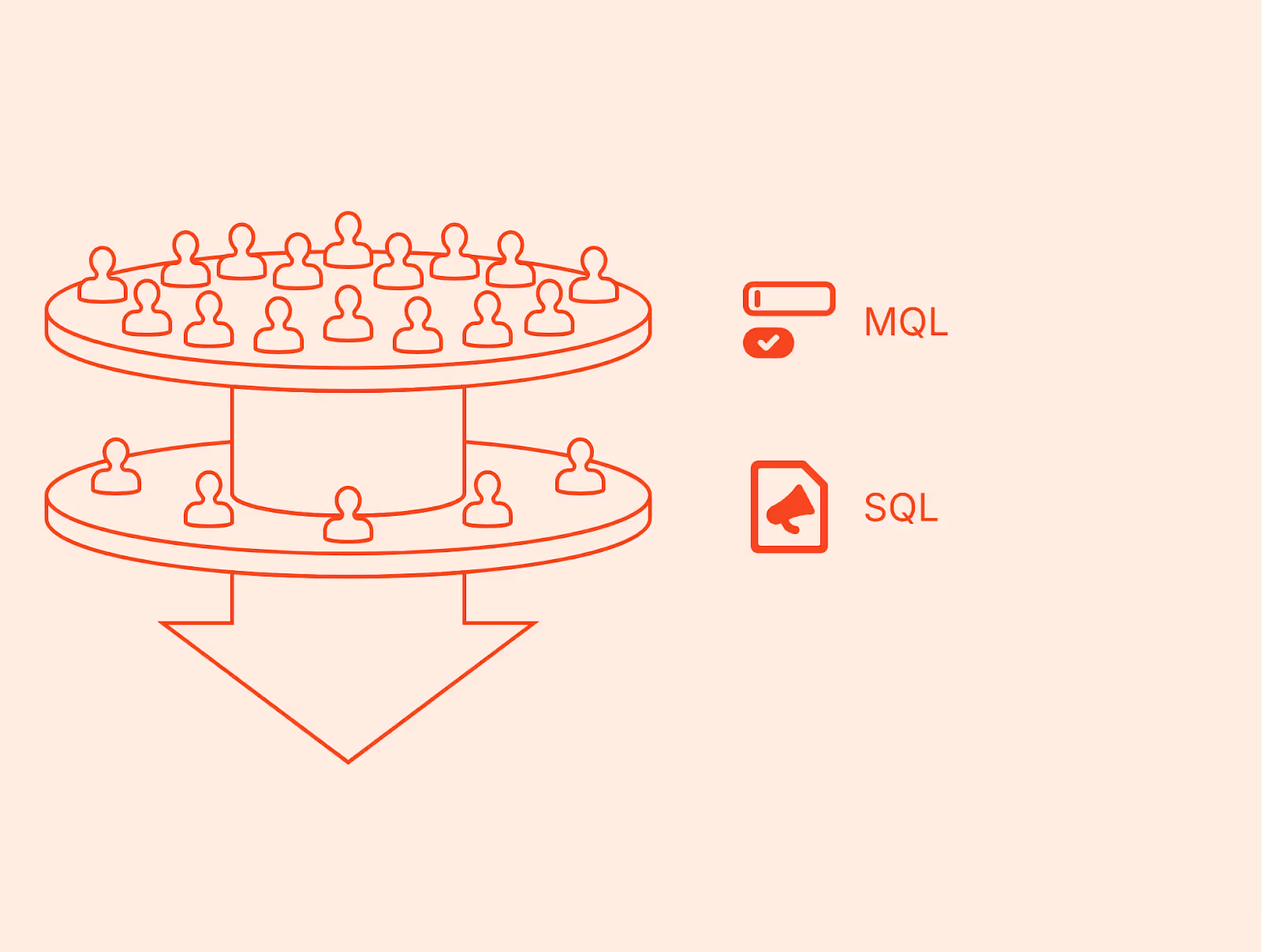
This is where the MQL vs SQL distinction matters most. MQLs are nurtured until they’re ready, while SQLs are handed off immediately to sales for follow-up. Confusing the two wastes resources and leads to frustration on both sides.
How MQLs and SQLs fit into the overall sales and marketing strategy
Think of MQLs and SQLs as two gears in the same machine. Marketing creates awareness and nurtures prospects into MQLs. Once the lead shows clear buying intent, it becomes an SQL and enters the sales pipeline.
When marketing and sales align on what qualifies as an MQL vs SQL, the handoff becomes seamless. Marketers can measure success in terms of how many MQLs convert into SQLs, while sales can focus their energy on leads that are truly ready to buy. This shared framework strengthens collaboration, reduces missed opportunities, and ultimately drives more predictable revenue growth.
What is the main difference between MQL and SQL
In sales and marketing, the line between interest and intent is razor-thin. Misjudge it, and you either push leads too soon (risking churn) or wait too long (missing the buying window). That’s why the distinction between MQL and SQL is critical. Let’s break down the key differences.
Also read https://www.factors.ai/blog/post-sale-customer-journey-framework
What is an MQL? And what are its characteristics?
A Marketing Qualified Lead (MQL) is a prospect who has interacted with your brand in meaningful ways but is not yet ready for a direct sales pitch.
- Definition: A lead that meets baseline ICP criteria and has shown early buying interest through marketing channels.
- Signals: Downloaded an eBook, attended a webinar, engaged with multiple emails, or browsed your product pages.
- Stage: Middle of the funnel, aware of their problem, exploring potential solutions.
- Action required: Nurturing through content, ads, and automated workflows.
In short, an MQL is a potential buyer who says, “I’m interested, but not just yet.”
What is an SQL? And what are its characteristics?
A Sales Qualified Lead (SQL), on the other hand, is ready for direct engagement.
- Definition: A lead that has demonstrated clear buying intent and meets sales-readiness criteria.
- Signals: Requested a demo, visited the pricing page multiple times, asked for a product comparison, or directly contacted your team.
- Stage: Bottom of the funnel, actively evaluating vendors or making purchase decisions.
- Action required: Timely outreach from SDRs or AEs, qualification calls, and opportunity creation.
An SQL essentially says, “I’m evaluating solutions. Convince me why yours is the right fit.”
Criteria used to identify MQLs vs SQLs
The SQL meaning marketing teams use often varies, but successful organizations define clear, measurable criteria. In other words, guessing isn’t an option here; the clearer your criteria, the less time your team wastes chasing the wrong people.
Here’s what typical MQL criteria often include:
- MQL criteria:
- Fits ICP (industry, size, persona)
- 3+ high-intent web visits in 30 days
- Consumed gated content (eBook, case study, whitepaper)
- Opened multiple nurture emails
- SQL criteria:
- Completed demo or trial sign-up
- Multiple visits to pricing or product comparison pages
- Responded positively to sales outreach
- Scoring threshold surpassed (e.g., >80 points)
(For more on scoring models, read Unlocking the Secrets of Lead Scoring Models)
The Role MQLs and SQLs play in the customer journey
- MQLs: Fuel the middle of the funnel. They show interest, need education, and are not yet ready to be approached by sales.
- SQLs: Fuel the bottom of the funnel. They are closer to a purchase decision, ready for sales engagement, and need tailored conversations.
Without MQLs, the funnel dries up. Without SQLs, the funnel never converts. Together, MQL and SQL form the backbone of a healthy pipeline.
Also read https://www.factors.ai/blog/stages-of-the-customer-journey
Common indicators and signals for qualification
- Behavioral: Content downloads, repeat visits, webinar registrations → MQL. Demo requests, trial usage, pricing page visits → SQL.
- Firmographic: Company size, industry, revenue → filters for both MQL and SQL qualification.
- Technographic: Tools currently in use → helps decide sales relevance.
- Intent signals: Ads engagement, G2 research, product activity.
At a glance: Here’s how MQLs and SQLs differ
Here’s why the distinction matters
When teams blur SQL vs MQL definitions, the entire revenue process breaks. It’s a bit like passing the baton in a relay race. If one team doesn’t know when to hand it over, the whole thing slows down (or worse, collapses).
And that’s exactly what happens in many organizations: marketing floods sales with unready leads (hurting SDR efficiency), or sales misses high-intent leads because they weren’t flagged in time. Clear separation ensures:
- Marketing measures success by MQL→SQL conversion.
- Sales measures success by SQL→Opportunity conversion.
- Leadership sees predictable pipeline progression across the funnel.
To understand how sales and marketing can collaborate better at this stage, explore our 6 Tips to Align Sales and Marketing Teams.
Challenges and pitfalls: Common traps when defining MQLs vs SQLs
Even experienced teams encounter difficulties when drawing the MQL/SQL line. Common pitfalls include:
- Overqualification: Labeling too many leads as SQLs before they’re ready. This leads to wasted outreach and sales fatigue.
- Underqualification: Holding onto MQLs for too long, which delays engagement and causes competitors to swoop in first.
- Siloed systems: Marketing automation platforms and CRMs that don’t sync create inconsistent lead statuses, confusing SDRs.
- Lack of feedback loops: Without sales feedback, marketing doesn’t know which MQL behaviors actually predict SQL conversion.

Avoiding these pitfalls requires both technology (CRM + automation) and process discipline (weekly feedback loops, clear scoring rules, documented SLAs).
Why the MQL–SQL Distinction Matters for Growth
At the end of the day, the MQL vs SQL distinction is about more than labels. It’s about ensuring your revenue engine runs efficiently:
- Marketing focuses on quality, not just volume.
- Sales focuses on timing, not just effort.
- Leadership gains predictability across the funnel.
Get it right, and your funnel becomes a growth multiplier. Get it wrong, and it becomes a costly bottleneck.
Here’s how defining MQLs and SQLs impacts business growth
The distinction between MQLs and SQLs isn’t just a matter of terminology; it has direct, measurable consequences on how efficiently a business grows. Companies that clearly define and operationalize MQL vs SQL are able to build predictable revenue systems. Companies that blur the line struggle with wasted effort, lost deals, and misaligned teams.
- Impact of lead qualification on sales pipeline efficiency and conversion rates
One of the strongest outcomes of proper qualification is improved pipeline efficiency.
- Higher-quality SQLs mean higher conversion rates. If sales is handed leads who are already showing intent signals, win rates increase naturally.
- Shorter cycle times. When SQL sales teams receive qualified prospects at the right moment, they can engage quickly before interest decays.
- Cleaner pipeline visibility. Leadership can forecast accurately because MQL→SQL→Opportunity conversion ratios are reliable.
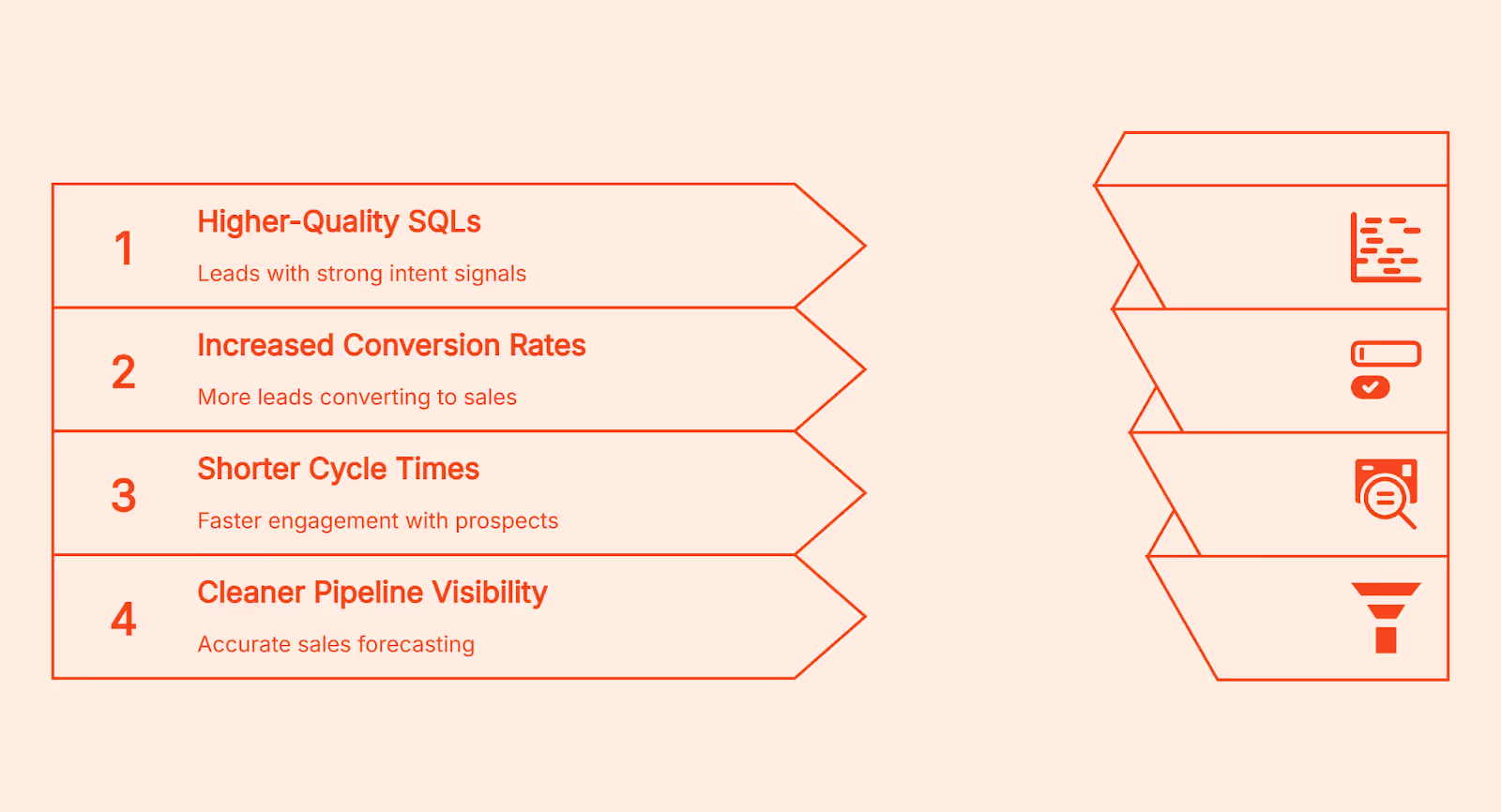
A mismanaged funnel has the opposite effect: bloated pipelines filled with weak opportunities, wasted SDR time, and frustrated marketers.
Common pitfalls to watch out for
- Pushing leads to sales before they show real buying intent.
- Setting criteria so strict that promising leads never make it through.
- Working in silos without feedback or shared context.
- Ignoring sales feedback when refining qualification models.
- Relying on a static scoring model instead of adapting over time.
Here’s how proper qualification improves marketing ROI
Marketing budgets are finite. If a team optimizes campaigns purely for lead volume without considering quality, ROI plummets.
By distinguishing SQL vs MQL, marketing can:
- Identify which campaigns generate leads that actually convert into SQLs.
- Shift spend toward high-quality channels (for example, G2 or high-intent search) instead of vanity metrics (e.g., low-cost leads from broad awareness ads).
- Prove contribution to pipeline in terms of SQL creation, not just MQL volume.
This closes the loop on SQL marketing impact: marketing doesn’t just generate interest. Having clear thresholds avoids the guesswork it directly fuels revenue by creating SQLs.
And when it comes to measuring which channels actually contribute to that growth, accurate attribution becomes essential. The Factors B2B Marketing Attribution Guide highlights the biggest challenges companies face and how multi-touch attribution connects every click to revenue.
Aligning marketing and sales for a seamless handoff
A classic failure point in many organizations is the ‘throw it over the wall’ mentality: marketing generates leads, hands them to sales, and hopes for the best.
Even the most sophisticated lead qualification process can fall apart if marketing and sales aren’t on the same page. It’s not enough to define MQLs and SQLs, both teams need to collaborate continuously to ensure every handoff is timely, relevant, and acted on.
How to strengthen marketing and sales collaboration
- Evolve shared definitions: Go beyond just agreeing on MQL and SQL criteria once revisit and refine them regularly as buyer behavior and ICP insights evolve.
- Turn communication into a system: Don’t limit alignment to monthly syncs. Set up recurring lead review sessions where both teams analyze what’s working, what’s not, and how scoring can improve.
- Recycle rejected leads effectively: Not every SQL will convert immediately. Instead of dropping them, feed them back into marketing workflows for continued nurturing.
- Build joint dashboards and KPIs: Move past vanity metrics. Create shared views of conversion rates, velocity, and pipeline impact so both teams measure success on the same terms.
Strategic recommendations for aligning marketing and sales efforts
- Define thresholds clearly. Document exactly what makes a lead an MQL vs SQL.
- Automate handoffs. Use CRM workflows and real-time alerts so no SQL falls through the cracks.
- Enforce SLAs. Sales must act on SQLs quickly; marketing must deliver only leads that meet criteria.
- Measure success across stages. Track MQL→SQL conversion rates, SQL→Opportunity rates, and ROI from each campaign.
- Create a feedback loop. Sales shares qualitative input on SQL quality; marketing refines scoring models based on that data.
Look, marketing and sales alignment isn’t a one-time fix; it’s a discipline. But with the right frameworks and the right platform, it becomes easier, faster, and far more scalable.
Best practices for managing MQLs and SQLs effectively
Knowing the difference between MQL vs SQL is only half the battle.
The real growth comes from how you manage these leads, how you define them, nurture them, transition them, and continuously refine the process.
Let’s break down the best practices that top-performing teams use to maximize lead conversion.
- Develop clear qualification criteria and scoring models
The foundation of effective lead qualification is a transparent, points-based scoring model.
- Fit (Firmographic/ICP criteria): Industry, company size, geography, tech stack.
- Intent (Behavioral criteria): Page visits, webinar attendance, content downloads, product trial activity.
- Recency: How recently those actions occurred (a demo request last week is stronger than one six months ago).
For example:
- A prospect from your ICP who attended a webinar (+20), downloaded an eBook (+10), and visited the pricing page twice (+30) might hit the 60-point threshold for MQL.
- Once they request a demo (+30) or actively engage with a rep (+20), they cross the 80-point threshold into SQL.
Having clear thresholds avoids the guesswork. Sales knows why a lead was passed over, and marketing knows what behaviors to prioritize.
Factors helps you visualize this transition through its Milestones feature, which offers funnel analytics that pinpoint what actions drive movement from MQL → SQL, so you can double down on what works.
- Implement lead-nurturing strategies for MQLs
MQLs and SQLs require different engagement strategies. An MQL should never be treated like an SQL; doing so risks scaring them away before they’re ready.
For MQLs:
- Content drip campaigns: Educational content → case studies → product comparisons.
- Retargeting ads: Serve content to high-fit accounts browsing your site but not converting.
- Personalized nurture: Use marketing automation to send emails aligned with their activity (e.g., “Since you downloaded our product guide, here’s a webinar you might like”).
The goal is to warm them until intent signals show they’re ready to progress.
- Transition leads from MQL to SQL: timing and communication
The handoff moment is where most companies lose momentum. Without speed and clarity, hot leads go cold.
Best practices include:
- Service Level Agreements (SLAs): Documented rules, e.g., Sales must engage an SQL within 24 hours.
- Automated alerts: Slack/MS Teams messages triggered when a lead reaches SQL status.
- CRM workflows: Automatically assign SQLs to the correct SDR, create tasks, and log activity.
Example: If a prospect hits the SQL threshold at 10 a.m. after browsing the pricing page, an SDR alert should fire instantly. Waiting until the weekly sync to act wastes the signal.
- Use CRM and marketing automation tools for seamless handoffs
Technology ensures consistency. Modern GTM stacks make SQL sales handoffs smooth and measurable.
- CRM systems (Salesforce, HubSpot): Track lead status changes from MQL → SQL → Opportunity.
- Marketing automation (Marketo, Pardot, HubSpot): Score and nurture MQLs until they’re ready.
- ABM/ad platforms: Sync high-intent MQL segments into LinkedIn or Google Ads for precision retargeting.
This integration ensures marketing and sales are never blind to each other’s activities. For example, SQL marketing teams can see which campaigns sourced SQLs, while sales can give feedback on which MQL signals actually led to opportunities.
- Continuously monitor and refine qualification processes
Lead qualification is not a “set it and forget it” system. Buyer behavior changes, markets shift, and what worked last quarter may not hold next year.
Best practices include:
- Weekly or bi-weekly MQL→SQL reviews: Marketing and sales analyze which signals worked and which didn’t.
- Adjust scoring weights: If trial usage proves more predictive than eBook downloads, increase its point value.
- Feedback loops: Sales shares qualitative feedback on why certain SQLs closed or stalled, informing marketing.
- KPI tracking: MQL→SQL conversion rate, SQL→Opportunity rate, average time-to-SQL, win rate by source.
Also read: KPIs Explained: Conversion Rates
Continuous refinement turns the MQL and SQL framework into a living system that evolves with your business.
Putting it together: Steps for predictable growth
Here’s what a streamlined MQL-to-SQL qualification process looks like from start to finish:
- Define MQL and SQL thresholds (with scoring tied to ICP + intent).
- Nurture MQLs with targeted content, ads, and automation.
- Trigger handoff automatically when SQL criteria are met.
- Enforce SLAs so sales acts quickly on SQLs.
- Review and refine scoring and signals every week.
The result? Sales spends time on the right accounts, marketing proves ROI beyond vanity metrics, and leadership gets a clean, predictable pipeline.
How Factors helps
Most teams struggle with the MQL→SQL handoff because marketing and sales speak different languages. Marketing tracks engagement; sales tracks intent. Somewhere in between, leads get lost. That’s where Factors brings everyone back on the same page.
Factors simplifies alignment by giving both teams a shared source of truth. Features like Milestones visually map the journey from MQL to SQL, showing exactly which actions or content drive progression between stages. With these funnel analytics, you can finally diagnose drop-offs, validate GTM experiments, and double down on what’s working.
Meanwhile, real-time AI Alerts notify sales reps the moment a lead crosses an intent threshold, like revisiting the pricing page or engaging with multiple assets. These alerts don’t just say who to reach out to, but why and how, surfacing rich account context for hyper-personalized follow-ups. It means your reps never miss a ready buyer, and marketing gets immediate feedback on what’s driving sales conversations.
To take it a step further, GTM Engineering combines AI Agents and execution services that turn intent into revenue. Agents automatically:
- Alert reps in real time when an account is ready to talk
- Pull detailed account research
- Identify and multi-thread buying groups
- Revive closed-lost deals
- Track post-meeting engagement to guide next steps
This automation ensures every follow-up is timely, relevant, and backed by context.
Now, all this intelligence feeds into Factors’ Account 360, a unified view of every touchpoint, from ads and content engagement to sales outreach. It gives your GTM teams complete visibility into the buyer journey, so marketing knows which campaigns are driving SQLs, and sales knows exactly what the account has seen, done, and responded to.
And with Dynamic Ad Activation, you can sync audiences to LinkedIn and Google Ads in real time, ensuring every campaign stays in sync with funnel progression. Run buyer-stage–specific campaigns, retarget high-intent accounts, and suppress low-quality leads, automatically.
Together, these features transform lead qualification from a guessing game into a repeatable, data-backed process. Forget disjointed dashboards or manual CSV uploads, and those alignment meetings that go in circles. (I can hear you breathe a sigh of relief!)
With Factors, alignment stops being a recurring pain point and becomes a revenue-driving habit, powered by shared visibility, smart automation, and AI that connects intent to action.
Future trends in lead qualification and sales enablement
Lead qualification is evolving quickly. The truth is, the way we qualify leads today might look completely different in just a couple of years and that’s not a bad thing. Here’s a glimpse of what that future is starting to look like:
- AI-driven scoring: Machine learning models now combine behavioral, firmographic, and product usage fdata to predict intent with far greater accuracy.
- Real-time intent data: Integration of external signals like review site activity, funding data, or hiring patterns into lead scoring.
- Deeper ad platform integrations: Expect SQL marketing workflows that sync high-intent accounts into ad campaigns in near real time.
- AI assistants in sales: SDRs increasingly rely on AI agents that not only identify high-intent accounts but also surface the right contacts and generate personalized outreach insights.
In a nutshell…
The MQL vs SQL debate determines how effectively your revenue engine runs. MQLs represent early interest and the potential for future opportunities. SQLs, on the other hand, represent immediate buying intent and the chance to close deals quickly.
MQLs and SQLs are not interchangeable. Confusing them leads to wasted resources, missed opportunities, and frustrated teams. Clear definitions and scoring rules ensure that marketing fuels pipeline with quality leads and sales engages only when prospects are ready. The SQL meaning marketing teams rely on must tie directly to measurable business outcomes like conversion rates, pipeline growth, and ROI.
Both are essential, but they require different playbooks, timelines, and ownership.
FAQs for MQL vs SQL
Q1: What is the main difference between MQL and SQL?
A: An MQL is a lead who has shown interest through marketing activity but isn’t ready for sales yet. An SQL has demonstrated clear buying intent and is ready for direct sales engagement.
Q2: Why is it important to distinguish between MQLs and SQLs?
A: Mixing the two wastes time and resources. The distinction ensures that marketing focuses on nurturing and sales focuses on closing, improving overall pipeline efficiency.
Q3: What does SQL mean in marketing?
A: In marketing, an SQL is a lead that has passed qualification criteria, showing intent signals like demo requests or pricing inquiries, and is ready for sales outreach.
Q4: How do you convert MQLs into SQLs?
A: Through lead nurturing, emails, ads, content, and retargeting, until the lead crosses defined scoring thresholds (e.g., demo requests, pricing page visits).
Q5: What KPIs should businesses track for MQLs and SQLs?
A: MQL→SQL conversion rate, SQL→Opportunity conversion rate, average time-to-SQL, pipeline sourced by SQLs, and win rate by origin channel.
Q6: Can a lead skip MQL and go directly to SQL?
A: Yes. If a prospect shows strong buying intent from the start like requesting a demo or contacting sales they can skip the MQL stage and become an SQL immediately.
Q7: How many MQLs convert to SQLs?
A: There isn’t a universal benchmark as it varies by product, ICP, lead source, and how you define each stage. The most useful benchmark is your own: track MQL→SQL by channel/segment over a consistent window (e.g., last 90 days) and improve it by tuning fit criteria, scoring, SLAs, and nurture..
Q8: What SQL means in marketing?
A: It refers to a lead that’s shown clear buying intent and is ready for direct sales engagement, usually after taking actions like requesting pricing or booking a demo.
Q9: What’s the difference between “SQL sales” and “SQL marketing”?
A: “SQL marketing” is how marketing identifies a lead as sales-ready. “SQL sales” is how the sales team qualifies and engages that lead to move it into an opportunity.
Q10: Do all SQLs become customers?
A: No. Some SQLs don’t convert due to factors like timing, budget, or competition, but strong qualification increases the chances they will.
Related Reads from Factors
If you’re looking to improve how your team defines, qualifies, and moves leads from MQL to SQL, these reads can help you sharpen the foundation:
- How To Build Your Ideal Customer Profile In 15 Steps – A practical guide to defining your ICP so your MQLs and SQLs are more targeted, qualified, and conversion-ready.
- How To Leverage Signals For Account Scoring – Learn how to use intent and engagement signals to fine-tune lead scoring models that bridge the MQL→SQL gap.
- An Introduction To B2B Account Scoring - Understand the basics of account-level scoring to ensure sales teams focus on the highest-potential opportunities first.
Factors vs BambooBox: Which alternative is best for B2B teams?
ABM platforms can look the same from the outside, kind of like shampoo bottles in the supermarket. The label says ‘strengthens and smooths,’ but one leaves you shiny, the other leaves you tangled.
And look, if you’re here, you already know what ABM should look like: less guesswork, more qualified pipeline, and campaigns that reach the right accounts before the RFP goes live.
What’s harder is deciding which platform can take you there without duct-taping tools, chasing down sales reps for follow-ups, or losing budget visibility once ads go live. Basically, what will leave you with strong and shiny results.
This guide breaks down Factors vs BambooBox across the parameters that matter.
Each chapter compares the platforms, from identification and orchestration to ad activation and attribution, so your decision isn’t based on “who says what on LinkedIn” but on what moves your revenue motion forward, right now.
If you’re evaluating ABM tools with real budget and bandwidth on the line, you’ll want the full view. Let’s get into it.
Factors vs BambooBox: Features and Functionality
Choose the platform that helps your team
(a) See more of the right accounts,
(b) Move from signal to action without spreadsheet gymnastics, and (c) arm sellers with the context to start better conversations.
Below is a clear, parameter-by-parameter view of how Factors and BambooBox handle identification, intent, orchestration, seller enablement, analytics, and ads.
Factors Features and Functionality
- Identification & Intent
- Visitor Identification: Identify up to 75% of anonymous visitors with sequential enrichment across 6sense, Clearbit, and Demandbase (plus additional providers when available). Once an account is identified, user geo-location and job title triangulation can likely pinpoint more than 30% of the individual visitors.
- Custom Intent Models: Blend website activity, CRM stages, product usage, ad clicks, and G2 intent to create precise buying-intent models that refresh continuously.
- Orchestration & Workflows
- Automated Workflows: Push qualified signals straight to Slack/MS Teams, your CRM, ad audiences, and outreach tools—no manual list building.
- AI Aler ts: Real-time, high-context notifications for events like form-fill drop-offs, demo/pricing page revisits, and post-meeting browsing.
- Seller Intelligence & GTM Services
- AI Agents: Find the best contacts, score them, and auto-generate sales-ready talking points and next steps.
- GTM Engineering (optional): Get hands-on help setting up agents and workflows that turn buyer signals into meetings, think real-time routing, closed-lost reactivation, and post-meeting engagement tracking.
- Scoring, Buying Groups & Multi-threading
- Account & Contact Scoring: Prioritize by ICP fit, funnel stage, and intent intensity.
- Multi-threading & Buying Group Identification: Spotlight decision-makers and influencers to reduce single-threaded risk.
- Journeys, Analytics & Milestones
- Customer Journey Timelines: A chronological log of every action across web, ads, product, and CRM to plan smarter, data-backed outreach.
- Milestones: Funnel-stage analytics that reveal which content, actions, and campaigns move accounts from MQL → SQL → opportunity.
- Unified Views & Collaboration
- Account 360: One sortable view of every touch—ad impressions, content engagement, sales outreach, product signals—so reps and marketers work from the same reality.
- Slack/MS Teams Alerts: Instant notifications to the right owner when high-intent activity happens.
Ad Activation & Feedback Loops
- LinkedIn AdPilot
LinkedIn AdPilot helps B2B marketers skip the guesswork and run efficient, high-converting ads, built on real buyer intent. It connects your CRM, website, and ad data to help you target smarter, spend wiser, and prove real ROI.
Key features:
- Audience Sync: Build and auto-update LinkedIn audiences using ICP-fit and intent data. Say goodbye to manual CSV uploads.
- Smart Reach: Prevent ad budget skew by controlling impressions per account, reach more of your target list without overserving a few big names.
- True ROI: Go beyond clicks to measure how LinkedIn ads actually influence pipeline, demos, and deal closures.
- LinkedIn CAPI: Sync online and offline conversions directly to LinkedIn to train its algorithm with richer, privacy-safe data.
- Company Intelligence: See which accounts viewed or engaged with your ads, and how that engagement impacted other channels.
- Google AdPilot
Google AdPilot helps B2B marketers cut wasted spend and make Google Ads work like a revenue engine. It syncs ICP-fit audiences, feeds smarter conversion signals back to Google, and ties every click to pipeline impact — turning guesswork into measurable ROI.
Key features:
- Audience Sync: Auto-refreshes ICP-fit and intent-based audiences for precise targeting and smarter remarketing.
- Conversion Feedback: Sends weighted conversion values through Google CAPI so the algorithm learns what high-value leads look like.
- Multi-Touch Tracking: Captures every GCLID across decision-makers for 3× better optimization feedback.
- Analytics: See which accounts engage, what they search for, and how ads influence pipeline, all in one dashboard.
Net effect: Factors moves your GTM motion from reactive to orchestrated, turning an unknown visit into a qualified meeting with fewer handoffs and no “who owns this?” confusion.
BambooBox Features and Functionality
- Identification & Intent
- Account Identification: Bamboobox enables the identification of visiting companies.
- Signal Coverage: Pulls first, second, and third-party data from website/CRM and major ad platforms.
- Orchestration & Sales Support
- Real-time Alerts: Slack/MS Teams alerting is not highlighted in public materials.
- Real-time Alerts: Slack/MS Teams alerting is not highlighted in public materials.
- Scoring, Buying Groups & Journeys
- Engagement Views: Account engagement and buyer-journey reporting.
- Buying Groups: Detailed buying-group mapping and contact tiering are not described.
- Ad Activation
- LinkedIn: Signal-based audience building with ad-view attribution to connect exposure to accounts.
- Google Ads: Targeted ABM features are slated to be released soon.
Integrations & Data
- Ecosystem: Connectors for HubSpot, Salesforce, Zoho, Salesloft, Marketo; media integrations for LinkedIn and Google.
- Unified View: A single, sortable account timeline across web, ads, product, and CRM is not specified.
Factors vs BambooBox: Pricing
Pricing should be easy to forecast, scale with your usage and seats, and map cleanly to value, identified companies, activated audiences, and seller coverage. Here’s how both platforms approach it.
Factors Pricing
Free
- 200 companies identified/month
- Up to 3 seats
- Includes: company identification, customer journey timelines, starter dashboards, up to 5 segments, 20 custom reports, 1 month data retention
- Integrations: Slack, Microsoft Teams, website tracking
Basic
- 3,000 companies identified/month
- Up to 5 seats
- Includes Free, plus LinkedIn intent signals, CSV imports, advanced GTM dashboards, up to 10 segments, 50 custom reports, GTM workflows, email/helpdesk support
- Integrations: Ad platforms (Google, LinkedIn, Facebook, Bing), Google Search Console, HubSpot (contacts + deals), Salesforce (accounts + opportunities)
Growth (most popular)
- 8,000 companies identified/month
- Up to 10 seats
- Adds: ABM analytics, account scoring, LinkedIn attribution, G2 intent signals, workflow automations, 100 custom reports, dedicated CSM
- Integrations expand to: HubSpot (full), Salesforce (full), Marketo, G2, Drift
Enterprise
- Unlimited companies identified/month
- Up to 25 seats
- Adds: up to 50 segments, predictive account scoring, Google AdPilot (coming soon), LinkedIn AdPilot, journey milestones, white-glove onboarding, up to 300 custom reports
- Integrations expand to: Segment, RudderStack, and custom integrations
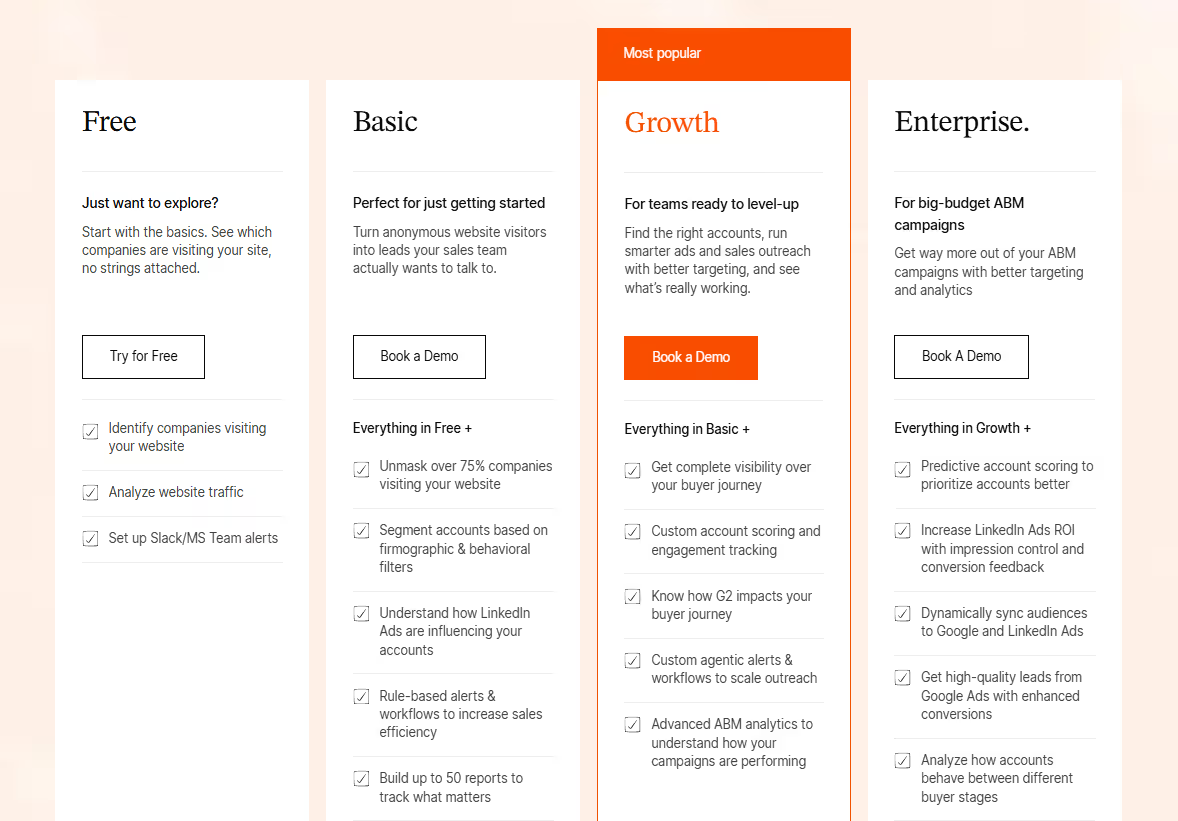
BambooBox Pricing
- Model: Quote-based pricing.
- Packaging: Aligned to ABM orchestration; specific caps (identified companies, seats, reports, segments) are not publicly listed.
- Budgeting note: Forecasting total cost typically requires a scoping call. Expect price to vary by traffic volume, users, integrations, and support level.

Factors vs BambooBox: Compliance & Security
You’re evaluating more than just features when you invest in platforms like Factors or BambooBox. You’re trusting a system with customer and go-to-market data. Look for proven audits and laws covered, transparent data handling, and admin controls that keep the right people in and everything else out.
Factors Compliance and Security
- Certifications, audits, and laws
- ISO 27001 certified information security program
- SOC 2 Type II attestation
- Alignment with GDPR and CCPA requirements, including a standard Data Processing Addendum on request
- Access and administration
- Role-based access control (RBAC) for marketing, sales, and admin roles
- Single Sign-On (SSO) options for enterprise teams
- Audit trails across key actions (segment changes, workflow edits, exports)
- Least-privilege defaults and periodic access reviews
BambooBox Compliance and Security
Certifications, audits, and laws
- Public materials indicate GDPR alignment
- References to AICPA standards (typically the umbrella for SOC reports)
Data handling and governance
- Encryption expected in transit and at rest
- Data retention, subprocessor disclosures, and minimization settings are not publicly detailed
Access and administration
- RBAC and SSO are not publicly detailed
- Admin logs/audit trails are not specified in public materials
Customer commitments
- GDPR-aligned practices are indicated; scope and process specifics are not publicly detailed
If you need to pass a vendor risk review quickly, Factors publishes more of the controls buyers ask for, audits, privacy coverage, admin guardrails, and documentation your security team can evaluate without guesswork.
Factors vs BambooBox: Onboarding and Support
You want fast lift without burning your RevOps time. Look for (a) who sets up the stack, (b) how your sellers get trained, and (c) what rhythm of check-ins keeps the system improving.
Factors Onboarding and Support
Onboarding program
- Data connections: guided setup for CRM/MAP (HubSpot, Salesforce, Marketo, etc.), ad platforms (LinkedIn, Google, Bing, Meta), G2 (if used), and data pipes (Segment/RudderStack on Enterprise).
- Tracking & enrichment: help installing website tracking and configuring multi-provider enrichment for higher match rates.
- Segmentation & scoring: ICP rules, buyer-stage segments, account/contact scoring, and buying-group settings.
- Workflows & alerts: Slack/MS Teams alerts for pricing page, form drop-offs, post-demo activity, geo-routing, and closed-lost reactivation.
- Ad activation: LinkedIn and Google audience syncs, stage-aware retargeting, frequency control, and suppression.
- Dashboards & milestones: ABM analytics, journey milestones, and “Account 360” timelines tailored to your funnel.
- Enablement: role-based training for SDRs/AEs/Marketing; office hours and recorded playbooks.
Support & success cadence
- Channels: shared Slack + email/helpdesk.
- People: a dedicated CSM from Growth tier upward, with weekly or bi-weekly reviews by plan.
- What gets reviewed: alert → meeting conversion, audience reach vs. impression skew, segment health, and pipeline attribution.
Optional GTM Engineering
- For teams that want hands-on lift, Factors can build and maintain agents, alerts, and playbooks (e.g., post-meeting tracking, no-show revival, geo-based owner routing), and tune ad activation. Useful when bandwidth is tight or you want Day-1 best practices.
BambooBox Onboarding and Support
Onboarding program
- Scope: connects CRM/MAP and ad platforms, sets up Bombora-based visitor ID, and enables buyer-journey views.
- Segmentation & scoring: engagement and journey reporting available; buying-group setup and contact tiering are not described in public materials.
- Ad activation: LinkedIn audience creation and ad-view attribution.
- Enablement: standard training and documentation are expected; public details are limited.
Support & success cadence
- Channels: their website mentions standard support; support tiers, CSM assignment, and review cadence aren’t publicly specified.
- Ongoing guidance: without published details, planning a recurring optimization rhythm typically requires scoping the program with their team.
Factors vs BambooBox: Analytics and Attribution
You need more than just good-looking graphs, right? Your analytics layer should answer three things:
- Which accounts are moving and why,
- Which channels and campaigns deserve more budget, and
- How activity turns into meetings, opportunities, and revenue.
Factors Analytics and Attribution
Funnel and stage analysis
- Milestones: Track movement from visitor → MQL → SQL → opportunity → closed, and see which pages, assets, and campaigns push accounts over each line.
- Stage conversion and velocity: Compare conversion rates and time-to-next-stage by segment (industry, company size, geo, tier).
Account-based attribution
- Account-level view: Roll up all people and touches for an account to show true impact on pipeline.
- Ad exposure + engagement: Tie LinkedIn ad views, clicks, and on-site behavior to the account’s journey; see pre-meeting influence, not just last-clicks.
- Assists and lift: Break out assisted impact so content and channels that warm accounts get credit.
Channel and campaign ROI
- Budget reallocation cues: Spot over-delivery to a handful of accounts and shift impressions or bids to under-reached yet high-fit segments.
- Segmented performance: Compare ROI by buying stage, industry, and intent level to decide where to double down.
- Report library: Build tailored views (lead source hygiene, stage-by-stage drop-off, paid social influence, search-to-social retargeting), with generous custom report limits by tier.
Journey timelines and diagnostics
- Customer Journey Timelines: A chronological view of ads, web, product, and sales touches, useful for win reviews and coaching.
- Drill-downs without exports: Click from a spike in a dashboard straight into the segment, accounts, and sessions behind it.
- Pathing: See typical sequences that lead to meetings or deals, then replicate those paths with audiences and alerts.

BambooBox Analytics and Attribution
Journey and engagement
- Buyer-journey reporting: View account engagement over time and track how audiences respond to programs.
- Ad connection: LinkedIn ad-view attribution links exposure to accounts to show whether target companies were reached.
Channel and attribution
- High-level reporting: Campaign and audience insights are available; detailed lift and assisted impact are not publicly documented.
Practical notes
- Teams often pair BambooBox journey reporting with separate BI or analytics tools to unpack assisted value, segment-level lift, and budget reallocation decisions.
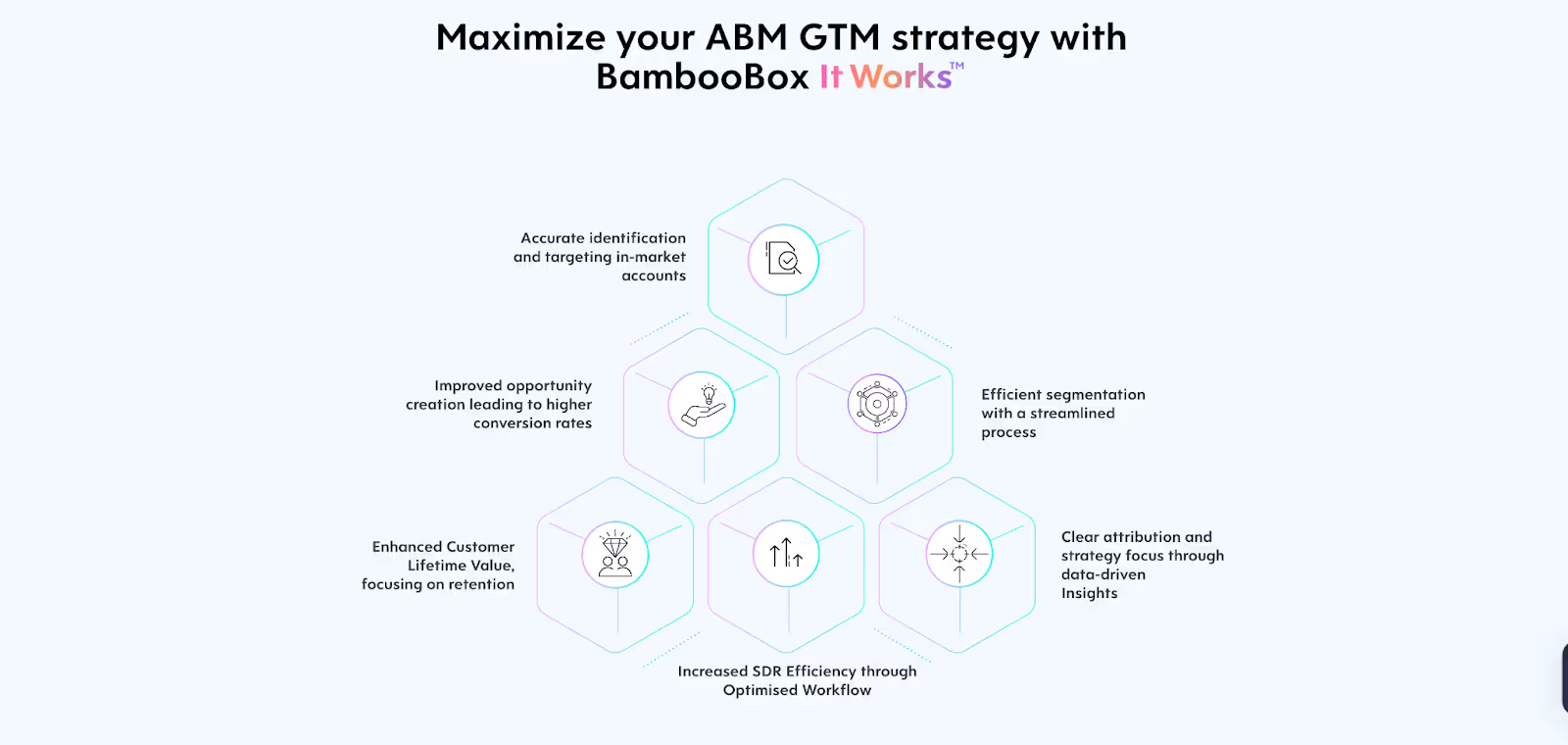
Factors vs BambooBox: Ad Activation and Retargeting
This is where signal turns into reach. You want audiences that refresh themselves, controls that stop waste, and feedback loops that teach the ad platforms who to find next. Below is how each product handles audience building, optimization, and measurement.
Factors Ad Activation and Retargeting
- Audience building & sync
- Dynamic Ad Activation: Build and auto-sync audiences to LinkedIn and Google Ads in real time based on ICP fit, intent intensity, buyer stage, recent pages viewed, campaign engagement, and CRM milestones.
- Google Audience Sync: Retarget high-fit accounts, suppress low-fit or active pipeline, and run stage-specific programs (e.g., post-demo nurture) with automated updates.
- Cross-channel retargeting: Create audiences on LinkedIn from search intent (keywords, pages, UTM patterns) captured on your site to follow up paid-search interest with targeted social.
- Optimization controls
- Frequency & impression pacing: Reduce skew by capping exposure per account and redistributing impressions to under-reached but qualified segments.
- Granular filters: Layer firmographics, geo, tech stack, intent score, and recency windows to keep budgets tight.
- Automatic suppression: Exclude current customers, open opps, and closed-lost with rules that update daily.
- Measurement & feedback loops
- LinkedIn attribution: See which accounts viewed, clicked, and later converted, then compare reach and cost by segment and stage.
- Google CAPI (server-side signals): Send richer conversion events back to Google, click-level details blended with firmographics and engagement scoring, to improve bidding and lower CPA over time.
- Journey lift: Tie ad exposure to milestone movement (e.g., MQL → SQL) so budget follows what actually progresses deals.
- Playbook examples
- Warm-up before SDR: If an account crosses a scoring threshold, add it to a low-frequency LinkedIn sequence for 7 days before sales touches.
- Post-meeting nurture: Auto-sync attendees + colleagues to a short, content-led sequence; suppress if they book a follow-up.
- Closed-lost revival: Re-add accounts when fresh intent reappears; cap frequency and stop as soon as sales re-engages.
- Search-to-social bridge: Anyone who hit solution pages from branded/non-branded search joins a LinkedIn audience mapped to that keyword theme.
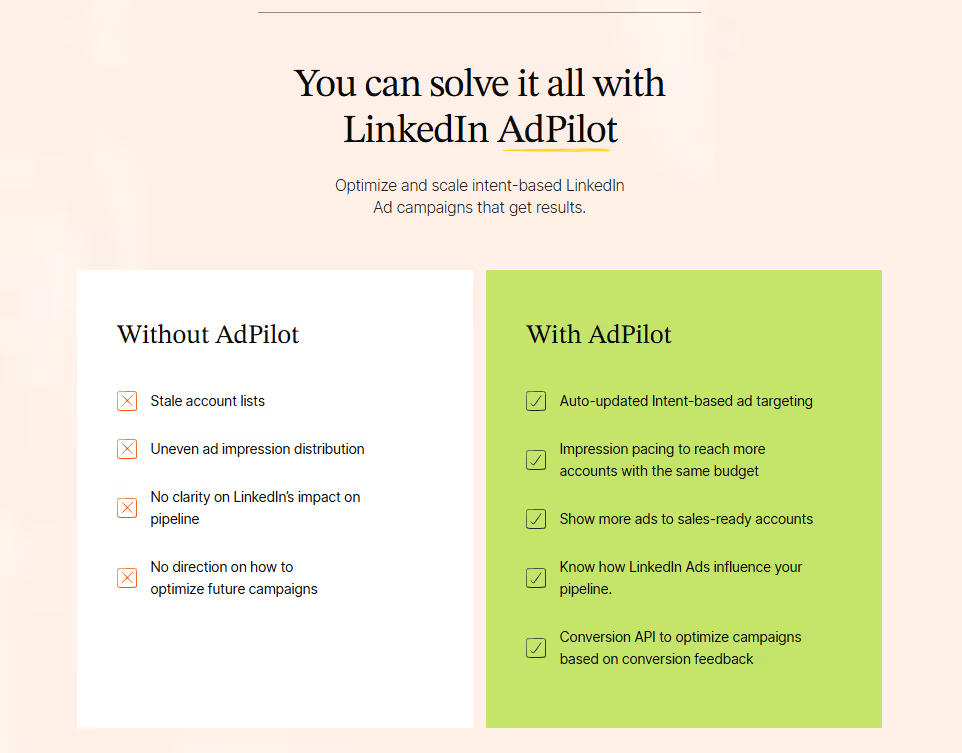
BambooBox Ad Activation and Retargeting
- Audience building & sync
- LinkedIn audiences: Build audiences based on account signals and target lists; the product supports ad-view attribution to confirm exposure among target companies.
- Optimization controls
- Suppression/frequency: Not widely detailed in public information.
- Measurement & feedback loops
- Ad-view attribution (LinkedIn): Connects account exposure to down-funnel engagement in the platform’s journey views.
- Search feedback loops: Not publicly detailed; Google-side optimization features are pending.
- Playbook examples
- Account list activation: Launch LinkedIn campaigns against strategic account lists and monitor exposure via ad-view attribution.
- Content follow-up: Use engagement signals to refresh audiences; deeper stage-based automations may require additional tooling.
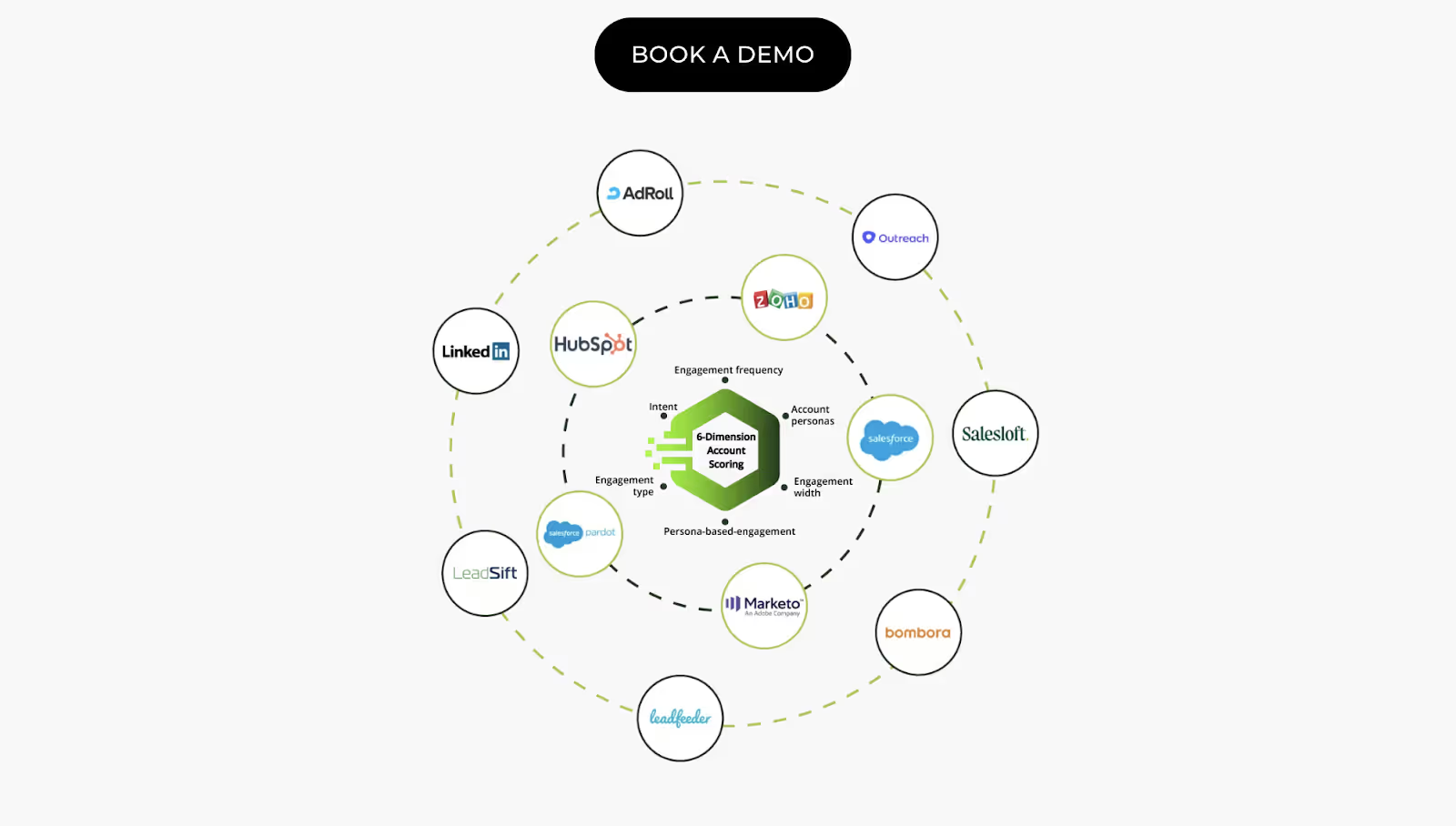
Factors vs BambooBox: Which visitor tracking and GTM platform should you choose?
Both tools aim to turn buying signals into meetings and measurable revenue. Your pick should match how mature your GTM motion is today, and how quickly you want to scale identification, orchestration, and proof.
BambooBox
Pick BambooBox if you want a lighter ABM start with Bombora-based identification, G2 hooks, and LinkedIn audience building with ad-view attribution. It offers engagement and buyer-journey views and native AI email copy for personalization. Pricing is quote-based, and Google Ads ABM is marked as coming soon in public materials. If your team is early in ABM and primarily focused on LinkedIn activation, this can be a fit while you validate your motion.
What this feels like day-to-day: clear account lists to target on LinkedIn and high-level journey reporting; deeper sales alerting, buying-group mapping, and frequency controls may require extra tools or services.
Factors as a BambooBox Alternative
Choose Factors if you want one motion from coverage → activation → proof. It lifts account match rates with sequential enrichment, scores and routes accounts in real time, and gives sellers context through AI Agents and Account 360 timelines. Dynamic audience syncs to LinkedIn and Google keep budgets focused, while Milestones show which pages, ads, and touches push deals forward. Add GTM Engineering if you need hands-on setup and ongoing playbook tuning. The tiered, transparent pricing makes it easier to model payback against traffic and team size.
What this feels like day to day: fewer manual lists, faster hand-offs to the right rep, tighter ad targeting with less skew, and cleaner attribution when budget questions come up.
Ready to see how Factors turns signals into meetings?
If your team is juggling spreadsheets, stale audiences, or one-size-fits-all outreach, let’s fix that. Book a demo with Factors to see how you can:
- Identify up to 75% of high-fit visitors
- Sync real-time audiences to LinkedIn and Google
- Arm sellers with AI-powered contact picks and talking points
- Prove what’s actually moving deals, ad clicks, G2 views, or pricing page visits
Ditch the guesswork and endless list fatigue. And get faster handoffs and a cleaner pipeline.
FAQs for Factors vs Bamboobox
1. What’s the main difference between Factors and Bamboobox?
The key difference lies in depth and automation.
- Factors combines visitor identification, multi-source intent, CRM orchestration, ad activation, and analytics in one platform. It automates workflows and gives full-funnel visibility from first touch to closed deal.
- Bamboobox, on the other hand, focuses on early-stage ABM orchestration with Bombora-powered intent data and basic LinkedIn audience targeting.
If you’re running pilot ABM campaigns, Bamboobox is a good start. If you’re scaling pipeline and need precision, analytics, and automation, Factors fits better.
2. Which platform offers better visitor identification accuracy?
Factors identifies up to 75% of visiting accounts and can map 30% of person-level contacts through sequential enrichment using providers like 6sense, Clearbit, and Demandbase.
Bamboobox relies on Bombora for company-level identification, which is effective but less comprehensive for multi-source coverage and real-time enrichment.
3. How do Factors and Bamboobox handle ad activation and retargeting?
- Factors integrates directly with LinkedIn and Google Ads, syncing intent-based audiences in real time. It includes frequency control, suppression rules, and conversion feedback via Google CAPI and LinkedIn CAPI, helping teams optimize spend and track ROI at the account level.
- Bamboobox supports LinkedIn audience creation and ad-view attribution but does not yet offer Google Ads activation or advanced pacing controls.
4. Which tool offers stronger analytics and attribution capabilities?
Factors leads here with multi-touch attribution, funnel-stage analytics, and lift measurement. It connects ads, web, product, and CRM data to show how each touchpoint moves accounts toward revenue.
Bamboobox provides buyer-journey reporting and high-level campaign insights but doesn’t yet include assisted-impact analysis or stage-based ROI comparisons.
5. How do Factors and Bamboobox compare on pricing?
- Factors has transparent pricing starting at $399/month, with clear tiers (Free, Basic, Growth, Enterprise) and a 14-day trial. Each tier scales with identified accounts, users, and integrations.
- Bamboobox uses quote-based pricing, customized per client, with details not publicly available. Teams typically need a scoping call to estimate total cost.
6. Are Factors and Bamboobox compliant with data privacy and security standards?
Yes, both platforms follow major global standards, but the depth differs:
- Factors is SOC 2 Type II, ISO 27001, GDPR, and CCPA compliant, offering role-based access control, SSO, and detailed audit trails.
- Bamboobox lists ISO 27001 and GDPR alignment, but specifics on access control and audit reporting aren’t publicly documented.
7. How is onboarding and customer support different between the two?
- Factors offers white-glove onboarding, a dedicated CSM, shared Slack access, and ongoing reviews to optimize signals, audiences, and campaigns.
- Bamboobox provides standard onboarding, but details on support cadence, success reviews, or technical assistance aren’t publicly specified.
8. Which platform is better suited for scaling ABM programs?
If your goal is to scale ABM beyond pilot campaigns, Factors is the stronger choice. It unifies data across systems, automates sales and marketing handoffs, and provides actionable analytics for optimization.
Bamboobox works well for teams just starting out with LinkedIn-based ABM and looking for a simple orchestration layer.
9. Is Factors a good alternative to Bamboobox for enterprise teams?
Yes. Factors offers broader coverage, richer analytics, and deeper integrations across CRM, G2, LinkedIn, and Google Ads. It’s designed for mid-market and enterprise GTM teams that need predictable pricing, proven compliance, and measurable ROI.