
AI marketing automation for small business: a lean-team playbook
Take a look at AI marketing automation for small B2B teams: what to automate first, what it costs, and where lean teams actually win.
.avif)
Content Marketer



.svg)


TL;DR
● I don't think AI marketing automation is about doing more. It's about a three-person team stopping the busywork that was never supposed to take three people in the first place.
● Small B2B teams are picking this up faster than enterprises right now, and it's not because they're braver. It's because they have fewer approvals to get through and every hour saved shows up in pipeline the same week.
● The teams getting real value aren't the ones using AI to write blog posts faster. They're the ones using it to decide where the next rupee of ad spend goes.
● You don't need a six-figure martech budget to start. You need clean tracking, one well-automated workflow, and the discipline to fix visibility before you fix anything else.
● I'll be honest, most of the AI tooling conversation skips the boring part. Data hygiene, attribution, and account visibility aren't exciting, but they decide whether everything you automate afterward actually works.
● Nobody's competitive edge in 18 months will be "we have AI." Everyone will. The edge will be whoever built the better workflow around it.
Small marketing teams have always had one unfair advantage… they can't afford to waste time.
A ten-person team can survive a few inefficient processes for a while. A three-person team can't. If someone spends half a day pulling reports or manually qualifying leads, something important simply doesn't get done.
That's why I think AI has landed differently for lean B2B teams. It isn't about replacing marketers. It's about finally removing the work nobody enjoyed doing in the first place.
What does AI marketing automation actually mean, once you strip the buzzword away?
Most explanations of this topic open with a tidy definition that means nothing by the third sentence. I'd rather start with the distinction that actually matters: there's a real difference between automation that follows rules and automation that makes judgment calls, and conflating the two is why so many small teams end up disappointed with their first AI tool.
Traditional marketing automation runs on rules you set yourself. A lead downloads a whitepaper; you send email A. They visit your pricing page, you move them into sequence B. It's useful, and most small teams already have some version of this running through their CRM. But it only ever does what you told it to, nothing more.
AI-assisted marketing adds a layer of judgment on top of that. Instead of waiting for you to define every trigger, it studies your data, finds patterns you wouldn't have spotted manually, and recommends or takes action based on them. Agentic AI systems are autonomous software entities designed to focus on automation, reasoning, and adaptation, capable of gathering data, planning, and acting with high levels of autonomy.
I think the most useful mental model is a ladder. Manual marketing is a human doing every task from scratch. Marketing automation adds rules for the repetitive stuff. AI-assisted marketing studies your performance and tells you what to change. Agentic marketing, the frontier most small teams haven't reached yet, plans and runs entire workflows with very little oversight.
Here's the part that trips people up: a ChatGPT subscription isn't AI marketing automation. It's a single tool solving a single problem, usually drafting. The version that actually changes how a small team operates connects your analytics, your decision-making, and your execution into one system that learns as it goes. It tells you where to spend the next dollar, which accounts deserve a follow-up call today, and which campaign to kill before it burns another week of budget. That's the version worth building toward.
Why I think small teams are moving faster on this than big ones
Here's something that genuinely surprised me when I first looked into it. The instinct is to assume enterprises benefit most from AI, because they have the budgets, the RevOps headcount, and oceans of data to train on. The data says otherwise. By mid-2025, the Federal Reserve found that small businesses were adopting AI faster than large firms, a reversal that hadn't happened before in the monitoring data, while enterprise adoption had plateaued.
I don't think this is complicated to explain once you've actually worked inside a small team. When you're doing content, demand gen, analytics, and reporting with three people, every hour you claw back goes straight into something that moves pipeline. In a 200-person marketing org, that same saved hour quietly disappears into a Slack thread about brand guidelines. AI adoption is especially strong among companies with 10 to 100 employees, where usage jumped year-over-year from 47% to 68%. That's not a gentle trend line. That's a structural shift in how lean teams choose to operate.
I've seen versions of this play out across a handful of companies I've worked with or advised. A two-person SaaS marketing team using AI to research keywords, draft content briefs, and auto-generate weekly reports, freeing up roughly two working days a week for an entirely new campaign. A boutique B2B agency that stopped chasing dead-end leads once AI started scoring inbound by actual buying signal instead of gut feel. An IT services company that turned its customer success function from reactive to proactive by forecasting renewal risk instead of finding out the week the contract lapses.
The biggest misconception I run into is that AI is built for companies with dedicated RevOps teams. In reality, smaller teams often get more out of it precisely because there's less bureaucracy and fewer legacy systems fighting each other. Tools that used to require an engineering team now run on a $20-a-month subscription, and for owners who were already stretched thin, that single shift changed the math entirely.
The bottlenecks I'd actually point AI at first
Most small marketing teams don't need AI to generate more work. They need it to stop doing the work nobody should still be doing by hand in 2026. I find it easiest to walk through this bottleneck, one by one.
- Content production eats more time than it should
Before AI tools matured, a single blog post meant hours of research, drafting, editing, then another half-day turning it into social posts and ad copy. With AI handling the first pass, your team can pull together a research-backed draft in minutes, repurpose one blog into five LinkedIn posts and a couple of email variants, and test multiple ad copy angles without hiring an agency for any of it.
I'll say this plainly: content is the easiest place to apply AI, which is exactly why it's the most crowded conversation. Everyone's already doing it. The bottlenecks that actually move the needle are the quieter ones nobody talks about at conferences.
- Lead qualification used to be a guessing exercise
Spotting high-intent accounts meant someone manually cross-referencing website analytics, CRM activity, and engagement data across separate tools, then making a judgment call that was really just a gut feeling wearing a spreadsheet. AI changes the shape of that work. It scores accounts on behavioral signals, routes the hottest prospects to sales the same day, and flags accounts researching your competitors before your SDR has any idea they exist.
- Reporting quietly drains a full day every week
Pulling numbers from GA4, your CRM, LinkedIn, and Google Ads, then formatting all of it into something your CEO will actually open, eats four to six hours on most small teams I've worked with. Automated dashboards collapse that into minutes, which means your team spends that time acting on what the data says instead of just assembling it.
- Campaign optimization rewards constant attention nobody has
Budget allocation, audience tuning, and creative testing all benefit from continuous monitoring, and a human checking in once a week simply can't compete with a system watching in real time.
What ties all four of these together is that AI isn't replacing strategic thinking anywhere in this list. It's clearing out the manual work that was eating the hours your team needed to do the strategic thinking at all.
Where the actual ROI shows up (and it's not where you'd guess)
The best AI marketing automation platforms run on clean, unified data, yet S&P Global Market Intelligence reports that 42% of companies completely abandoned or scrapped their primary AI initiatives. Compounding this, Gartner's institutional tracking warns that throughout 2026, organizations will abandon 60% of AI projects specifically because they skipped building an "AI-ready" data foundation.
Match your platform architecture to your company size, go-to-market (GTM) motion, and team capacity today, not the scale of the company you hope to become in three years. Measure platform success strictly on pipeline metrics and tangible revenue contribution, not superficial lead volume or feature utilization. Finally, build your go-to-market stack in distinct, deliberate layers (data, intelligence, activation, and measurement) rather than expecting a single, monolithic tool to handle everything.
The highest-return applications cluster into three buckets, and content generation, notably, isn't one of them on its own.
| ROI category | What AI does | Typical impact |
|---|---|---|
| Analytics | Surfaces trends, flags anomalies, forecasts performance | Faster reporting, fewer blind spots, better forecasts |
| Decision making | Recommends budget allocation, channel mix, campaign priority | Smarter spend, higher conversion, less wasted budget |
| Operational efficiency | Automates workflows and reporting | 10-20 hours a week back per team member |
On analytics, the value shows up in three concrete ways. AI catches trends in your data that a human skimming spreadsheets would walk right past. It flags anomalies early, like a sudden conversion drop that might mean a broken landing page or a competitor outbidding you on keywords. And it forecasts performance accurately enough that quarterly planning stops feeling like a guessing game dressed up in a spreadsheet.
On decision-making, the impact is more direct than people expect. Instead of debating where the next $5,000 in ad spend should go, AI tools can study historical channel performance and recommend the allocation most likely to generate pipeline. That's pattern recognition applied to a decision small teams usually make on intuition and hope, because nobody had three spare hours to build the model themselves.
Also read: AI automation tools: The B2B marketer's guide
On operational efficiency, the math is straightforward. If a three-person team spends 20 hours a week on manual reporting, scoring, and campaign upkeep, and AI cuts that by 60%, you've just freed up 12 hours of strategic capacity every single week. Over a year, that's the rough equivalent of adding a part-time hire, minus the salary, the onboarding, and the awkward Slack introduction.
Run the numbers on a typical small B2B team: a $500-a-month AI stack that saves 50 hours a month, valued conservatively at $50 an hour, returns $2,500 in recovered capacity against $500 in tool spend. That's a 5x return before you even count the pipeline impact of sharper targeting and faster follow-up.
Where AI actually touches each stage of your funnel
Most of what I read on this topic stays parked at the top of the funnel, talking about content. I'd rather walk through the whole thing, because your board doesn't care how much content you shipped. They care what it generated.
- At the top of funnel, AI-powered research identifies which companies and personas are actually searching for something like what you sell. Content planning maps keywords to buyer intent instead of just traffic volume. SEO tools optimize pages against real competitive gaps. Social scheduling learns when your specific audience is actually online and adjusts timing on its own.
- The middle of the funnel is where this gets genuinely interesting for B2B teams specifically. Machine-learning lead scoring goes beyond a basic point system, weighting the behaviors that actually correlate with closed deals in your pipeline, not someone's best guess from two years ago. Account prioritization surfaces the accounts most likely to buy, so your team spends its limited hours on the 20% of accounts driving most of the revenue. Nurture sequences adapt to each prospect's actual engagement instead of sending the same five emails to everyone who ever filled out a form.
- The bottom of the funnel is where revenue impact becomes obvious fast. AI catches intent signals, repeated pricing page visits, competitor comparison searches, and alerts sales in real time instead of next Monday. It maps the buying committee, since most B2B deals involve more than one decision-maker, so your outreach actually reaches the people in the room. And it triggers sales alerts off account behavior, so a warm opportunity doesn't go cold because someone forgot to refresh a dashboard.
After the deal closes, AI keeps working. Upsell models flag customers likely to expand based on product usage. Health scoring catches accounts at churn risk before they go quiet on you. Renewal signals make sure your team reaches out at the moment that actually matters, not two weeks after the contract's already up for renewal review somewhere else.
The pattern I keep coming back to: AI becomes valuable the moment it touches pipeline. Everything before that is just productivity software with good marketing of its own.
Where does Factors fit into this, and why I'm including it
I want to be upfront about this section, because I know how product mentions read in articles like this. Factors isn't shoehorned in here for the sake of a pitch. I'm including it because how it works happens to illustrate exactly the principle this whole playbook is built on: find the signal, connect it to a decision, automate the response.
Most marketers I talk to don't have a data shortage anymore. They have a "what actually matters" shortage. That's the specific problem Factors was built to solve. Factors.ai is an AI-enabled GTM system that unifies buying signals at the account level and helps teams act on them.
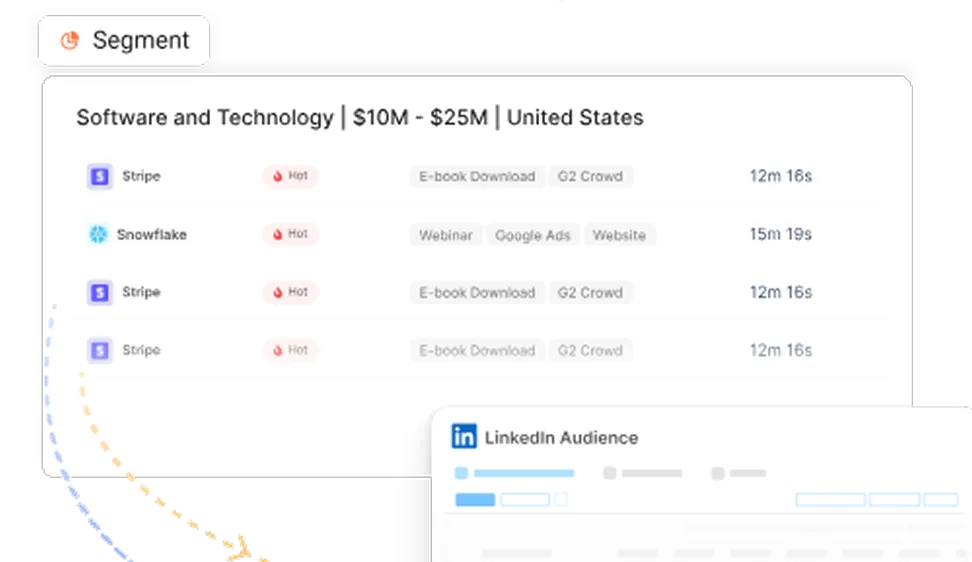
It starts with anonymous buying signals. Most of your website visitors never fill out a form, full stop. Factors identifies which companies are on your site, what they're looking at, and how that activity compares to accounts that eventually converted, while also pulling in intent activity from sources like G2 and LinkedIn.
From there, it turns that data into something your team can act on the same day. Account scoring prioritizes the companies most likely to become pipeline. Real-time alerts notify your team the moment a high-value account shows buying behavior. Prioritization workflows keep your reps focused on the right accounts first, instead of working a list in chronological order.
Factors also helps you see what actually moved buyers through the funnel, which channels genuinely drove pipeline, and which campaigns deserve to be cut so you can double down on what's working. Campaign insights show which touchpoints influenced revenue, so budget conversations get grounded in evidence instead of whoever argued loudest in the last planning meeting.
On the automation side, it pushes high-intent accounts straight to your ad platforms, adjusts targeting based on engagement, and suggests next-best actions for your team to take. And because it tracks first touch, last touch, and influenced attribution, every campaign gets credit for what it actually contributed, not what it happened to be sitting closest to in the dashboard. For a small team, that clarity alone is often the difference between burning 40% of ad spend on guesswork and doubling down on the channel that's quietly carrying everything else.
Putting together a stack that doesn't need a finance committee
The question I hear most from small B2B teams isn't whether AI is worth it anymore. It's where to actually start, and how much it's reasonably going to cost.
I'll keep this section brief, because I've gone deep on the pricing breakdown elsewhere. The short version is that a functional AI stack for a small business starts around $200 to $500 a month, and it's something you assemble in pieces rather than buy all at once. If I were starting from zero with a tight budget and a team of three, I'd get visibility and a CRM sorted first, then layer everything else on top once I could actually see what was happening in the funnel. The mistake I see most often is small teams buying an impressive AI tool before they can even tell which campaigns are generating pipeline. You can't optimize what you've never measured in the first place.
Also read: [AI marketing automation pricing comparison](https://www.factors.ai/blog/ai-marketing-automation-pricing-comparison)
A 90-day path that doesn't skip steps
I've watched enough small teams try to automate their way out of chaos to know it never works in that order. Fix the process, then automate it. Reverse that sequence and you just get faster chaos.
- Month one is about seeing clearly, not automating anything
Before you touch automation, you need an honest picture of what's actually happening on your site and in your pipeline.
- Install website tracking and account identification so you know which companies are actually visiting.
- Set up multi-touch attribution so you understand which channels and campaigns are influencing pipeline, not just driving traffic.
- Build two or three core dashboards, not forty-seven of them, that answer the exact questions your team gets asked in pipeline reviews.
- Audit your existing data. Clean your CRM, tag campaigns consistently, and confirm your analytics are measuring what you think they're measuring.
None of this is glamorous, and nobody gets promoted for fixing data hygiene. But every AI tool you bring in afterward will be built on whatever foundation you lay down here.
- Month two is where you remove the manual grind
With visibility in place, this is where you start eliminating the work that's been quietly eating your team's week.
- Automate weekly reporting so dashboards update themselves and a summary lands in Slack without anyone manually pulling numbers.
- Set up content workflows where AI handles first drafts, repurposing, and social scheduling.
- Build lead routing rules based on actual engagement signals, not just geography or company size.
- Create alerts for high-intent account activity so your team never misses a warm opportunity sitting in a dashboard nobody checked.
- Month three is where intelligence comes in
With clean data and automated workflows already running, you're ready to layer in prediction.
- Turn on predictive lead scoring that weighs behavioral data, not just firmographics.
- Add third-party intent signals so you can spot accounts researching your category before they ever land on your site.
- Start budget optimization workflows where AI recommends, or directly adjusts, ad spend based on what's actually converting.
- Review your first 60 days of AI-driven data and recalibrate. The models get sharper with feedback, and this step matters far more than most teams give it credit for.
Visibility feeds automation. Automation feeds intelligence. Intelligence feeds revenue. Skip a step and the whole chain gets noticeably weaker.
The mistakes I keep seeing small teams make
I've sat through enough of these conversations to know where the recurring traps are. These five come up again and again.
- Buying tools before naming the problem. The AI tool market is genuinely overwhelming, and it's tempting to start with a slick demo instead of a clear problem statement. Tools bought to solve an undefined problem turn into shelfware within 90 days. Write down your three biggest bottlenecks first, then go shopping.
- Using AI only for content. Content is the easy entry point, quick to adopt, fast to show off. But if it's the only thing your AI stack is doing, you're leaving most of the value on the table. Analytics, decision-making, and operational efficiency are where the compounding returns actually live.
- Ignoring your own first-party data. Your website visitors, CRM records, and engagement signals are the most valuable data you have, and AI tools are only as sharp as what you feed them. Only 31% of organizations have the data infrastructure required to support autonomous decision-making. If your CRM is a mess, your AI recommendations will be too.
- Automating a broken workflow. If your lead routing is already broken, wrapping AI around it just makes it break faster and with more confidence. Fix the process manually, confirm it works, and only then automate it.
- Tracking activity instead of revenue. Emails sent and content published always trend upward, which is exactly why they're tempting to report on. Pipeline created and revenue influenced are the numbers that actually matter. If your AI dashboards don't trace back to either, you're paying for an expensive screensaver.
| Mistake | What it looks like | How to fix it |
|---|---|---|
| Buying tools first | Five subscriptions, no clear workflow | Name the problem before evaluating tools |
| AI for content only | Fast output, flat pipeline | Push AI into analytics and decisions too |
| Ignoring first-party data | Recommendations that feel off | Audit and clean your CRM and tracking |
| Automating broken workflows | Faster mistakes, not faster results | Fix it manually first, automate second |
| Measuring activity | Reports look good, revenue doesn't move | Tie every AI metric back to pipeline |
What's coming next, and why does it matter for a team your size?
I'll skip the part where I tell you AI is going to change everything, because you already know that. What's more useful is what's actually shifting right now and where it's heading over the next year or so.
Agentic AI spending is expected to reach $201.9 billion in 2026, and Gartner forecasts that 40% of enterprise applications will embed AI agents by the end of 2026, up from less than 5% in 2025. For a small marketing team, that translates into research agents that monitor your competitive landscape and summarize what changed each week, reporting agents that interpret dashboards instead of just building them, and campaign agents that adjust spend and targeting based on what's actually happening in real time.
Marketing automation is also moving away from fixed, scheduled workflows toward what's being described as self-optimizing systems that plan, execute, and adjust campaigns across channels in real time. For a lean team, that's a genuinely different way of working. Instead of someone manually tweaking LinkedIn audiences every Friday, the workflow adjusts targeting continuously based on which accounts are showing intent right now.
Predictive revenue operations are heading in the same direction. Revenue forecasting and pipeline prediction are moving out of enterprise-only tooling and into budgets small teams can actually afford. When your stack can flag which deals are likely to close and which pipeline is genuinely at risk, marketing and sales both operate with a level of confidence that used to require a much bigger analytics team.
The organizations that get the most out of agentic AI build a solid data foundation, think in terms of workflows rather than individual tools, and keep a human reviewing the output. Agentic AI doesn't replace marketers. It expands what a small team is actually capable of pulling off.
I don't think the next competitive edge will be access to AI. Everyone's going to have access to roughly the same models and the same platforms within a year. The edge will belong to whoever builds the tightest feedback loop between data and action, and treats AI as infrastructure for growth rather than a stack of disconnected point solutions.
Here’s where I'd actually start, if I were you
AI marketing automation for small business isn't a trend worth watching from the sidelines anymore. It's already widening the gap between B2B companies that are growing and ones that are stuck producing more activity without more pipeline to show for it.
If I had to compress this entire playbook into a handful of moves, here's what I'd tell a friend starting from scratch. Fix visibility before automating anything. Clean data and proper attribution aren't optional extras, they're the foundation everything else sits on. Push your AI use beyond content into analytics and decision-making, because that's where the real compounding happens. Build your stack one piece at a time, starting with whatever's actually broken, not whatever looks impressive in a demo. Follow a sequence: visibility first, then automation, then intelligence, because skipping ahead just means rebuilding later. And measure revenue, not activity, because activity metrics will always make you feel better than the actual number does.
The small teams that get this right over the next year won't be the ones with the biggest budgets. They'll be the ones who were honest about their actual bottleneck, built a system around their own data instead of someone else's case study, and resisted the urge to automate everything before they understood any of it.
FAQs for AI marketing automation for small business
Q1. What is AI marketing automation for small businesses?
It's the combination of artificial intelligence and marketing workflows that automates tasks like lead scoring, campaign optimization, content creation, and reporting. Unlike traditional rule-based automation that only follows fixed triggers, AI-powered systems learn from your data and adapt over time, which lets a lean team produce more pipeline without adding headcount.
Q2. Is AI marketing automation actually worth it for small B2B companies?
For most small B2B companies, yes, with one caveat I'd add. It's worth it when you adopt AI to solve a specific bottleneck rather than buying tools because they're trending. Teams that start with clean data and a clearly defined workflow see returns fastest. Teams that buy five tools before naming one problem usually end up with expensive shelfware instead.
Q3. What's the ROI of AI marketing automation for small businesses?
ROI varies by use case, but the numbers I've seen are compelling. Research shows an average return of $3.70 per dollar invested in AI for SMBs, alongside meaningful productivity gains. The strongest ROI typically comes from analytics and decision-making applications rather than content generation alone, since those directly shape where budget goes and which accounts get attention.
Q4. How much does AI marketing automation cost for a small business?
A functional stack starts around $200 to $500 a month, covering essentials like an AI writing assistant, a CRM, basic automation, web analytics, and account intelligence. More advanced setups with intent data, predictive analytics, and ad automation run between $1,500 and $5,000 a month. The right number depends on your team size and which bottlenecks you're solving first.
Q5. What tools should a small business start with for AI marketing?
A solid starting stack includes a CRM like HubSpot Starter, an AI assistant like ChatGPT or Claude, a connector like Zapier, GA4 for analytics, and an account intelligence platform like Factors.ai. As budget grows, tools like Clay for enrichment, Apollo for outreach, and LinkedIn Ads round out a competitive setup without a major price jump.
Q6. Will AI replace marketers at small businesses?
I don't think it will, but marketers who use AI well will clearly outperform those who don't. AI handles the repetitive operational work, reporting, lead scoring, content repurposing. People still provide the strategic judgment, brand voice, and relationship building that AI can't replicate. The winning setup is a small team amplified by AI, not one replaced by it.
Q7. How can a small business use AI for marketing analytics specifically?
AI-powered analytics tools help small teams surface trends, catch anomalies, and forecast performance without needing a dedicated data analyst on payroll. Common applications include automated campaign reporting, pipeline forecasting, channel attribution, and anomaly detection that flags issues like a sudden conversion drop before it becomes a quarter-long problem.
Q8. How does AI actually improve marketing decision-making?
It processes far more data than any small team could manually review. It recommends budget allocation based on real channel performance history, prioritizes accounts by behavioral signal instead of gut feel, and identifies which campaigns are genuinely influencing revenue versus just generating activity. For a lean team, that turns resource allocation from a debate into something grounded in evidence.
Q9. What's the actual difference between marketing automation and AI marketing automation?
Traditional marketing automation executes rules you define upfront. If a lead does X, the system does Y, every time, no exceptions. AI marketing automation adds a learning layer that adapts based on outcomes, adjusting send times based on engagement, reallocating spend based on real-time performance, and scoring leads on signals that evolve as your data does. One follows instructions. The other learns from results.
Flags for manual review before publishing:
● Stats and figures (Fed adoption data, Gartner agentic AI forecast, SMB ROI numbers, 31% data infrastructure stat) need source verification and citation links.
● Meme placement spot: after the "content is the easiest place to apply AI" paragraph in the bottlenecks section could take a relatable image (tired marketer at desk type). Flagging for you to source and drop in.
● Internal CMS link slugs for the two "Also read" links need confirming against live URLs.
● No image URLs included, please add as needed.

See how Factors can 2x your ROI
Boost your LinkedIn ROI in no time using data-driven insights


.avif)

See Factors in action.
Schedule a personalized demo or sign up to get started for free
LinkedIn Marketing Partner
GDPR & SOC2 Type II

.svg)



.avif)

