
AI marketing campaigns: a practical guide for modern B2B marketers
See how to build AI marketing campaigns that drive pipeline, personalization, and ROI. Includes examples, frameworks, tools, and mistakes to avoid.
.avif)
Content Marketer



.svg)


TL;DR
- An AI marketing campaign isn’t “AI-powered” because someone used ChatGPT for subject lines. It’s AI-powered when AI is shaping the targeting, timing, personalization, and measurement, not just spitting out the assets.
- Most AI marketing campaigns fail before they start, because teams pick the tool before they’ve figured out the strategy. Efficiency in service of a bad plan is just faster failure.
- The brands actually seeing results aren’t winning on better prompts. They’re winning because they automated the decisions, not just the deliverables.
- First-party data quality is the thing nobody wants to talk about, and it’s also the thing that determines whether your personalization feels relevant or creepy.
- The future isn’t fully autonomous marketing. It’s marketers managing systems that make thousands of micro-decisions on their behalf, and the companies with better signal infrastructure will simply outrun the ones still doing things manually.
Spend five minutes on LinkedIn Jobs, and you'll notice something funny.
Every other marketing role now wants an "AI-first marketer."
Keep reading and you'll find they're hiring for... exactly the same job they were hiring for two years ago: run paid campaigns, write content, manage webinars, and report on pipeline.
The only difference is that somewhere between "HubSpot experience" and "strong communication skills," they've squeezed in "must be proficient with AI." All in all, they’re all saying something like this:
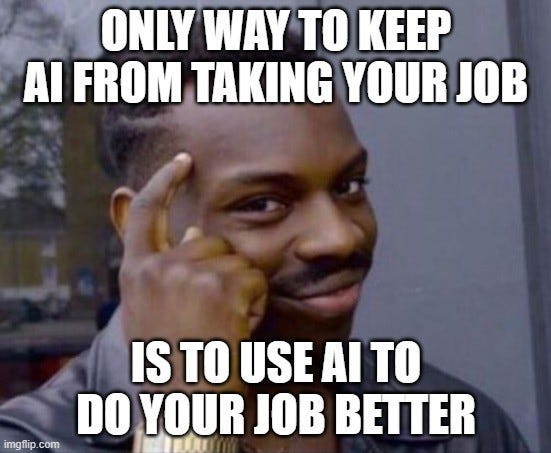
That's been the story of AI in B2B marketing so far. We've changed the vocabulary much faster than we've changed the work. Most teams are still running the same campaigns, following the same playbooks, and measuring the same metrics. They're just producing assets faster.
The interesting opportunity isn't creating more campaigns. It's building campaigns that make smarter decisions on their own. That's the shift this article is about.
What are AI marketing campaigns, really?
The cleanest definition: an AI marketing campaign is one where artificial intelligence plays a meaningful role in how the campaign is planned, targeted, executed, or measured. But “meaningful” is doing a lot of heavy lifting in that sentence, so let me break it into three levels that actually help you figure out where your team sits.
Level one is AI-assisted. This is where most teams are today. Using AI for copy generation, creative production, and content repurposing. Useful, absolutely. But it’s also the least interesting use case, because while the productivity gain is real, the strategic advantage is close to zero. Everyone’s doing it.
Level two is AI-optimized. This is where AI handles targeting, bidding, audience segmentation, and real-time personalization. AI-powered ad spend is projected to grow 63% in 2026, as brands move away from manual campaign management and let AI run and optimize advertising end-to-end. The ROI compounds here in ways it doesn’t at level one.
Level three is AI-orchestrated. This is the one worth paying close attention to. AI agents coordinating execution across channels, adjusting budgets, rotating creative, triggering actions based on real-time signals. AI-driven decision-making has evolved from isolated tools like bid optimization and subject line testing to end-to-end campaign orchestration, where AI systems autonomously handle audience discovery, creative testing, channel deployment, real-time measurement, and budget reallocation. Not every team needs to be here yet. But every team should understand it’s coming.
The thing I’d want every marketer to hold onto: a campaign isn’t AI-powered because the assets were made by AI. It’s AI-powered when AI influences the decisions behind targeting, messaging, timing, and measurement. That distinction is the one most teams miss, and it’s also the one that separates campaigns that feel exciting from campaigns that actually perform.
Why most AI marketing campaigns fail
Here’s the uncomfortable part: 96% of marketers report using AI in their roles, with nearly half ranking it as the number one trend they’re excited about. And yet only 41% of marketers say they can demonstrate AI ROI in 2026, down from nearly 50% the year before. Enthusiasm is up, evidence is declining. That gap should make everyone nervous.
I’ve watched this play out enough times to have a pretty reliable list of what goes wrong.
- No clear objective. Teams adopt AI tools before defining what outcome they’re optimizing for. Spoiler: “use more AI” is not a campaign objective (duh).
- AI layered onto broken processes. If your ICP definition is vague and your targeting is off, AI will simply automate bad decisions at scale. Faster. More expensively.
- No first-party data foundation. Companies that raced to adopt new tools in 2025 ran into a hard wall: siloed AI features can’t survive fragmented data. You either streamline your data for competitive advantage in personalization, or you concede and rely on third-party data that your competitors have access to too.
- No human review loop. AI in B2B marketing brings real risks, including biased or inaccurate outputs and overreliance on AI-generated content. Overreliance happens when teams use AI as a substitute for human judgment rather than a tool to support it. The outputs need eyes on them.
- No measurement framework. If you can’t connect campaign activity to pipeline, you’re measuring inputs and calling it success.
- Chasing productivity instead of outcomes. 45% of respondents cite AI’s main benefit as helping their teams work more efficiently. Efficiency is great. But efficient execution of the wrong strategy is still the wrong strategy.
The best AI marketing campaigns I’ve seen start with the buyer journey, not the tool. AI should be the engine. Not the map.
The evolution of AI marketing campaigns: from automation to agents…
Five years ago, when people said “AI in marketing,” they mostly meant rule-based email workflows and basic lead scoring. Those tools were genuinely exciting at the time. Now they feel like the marketing equivalent of a fax machine that can also text.
The progression looks something like this. Stage one was rule-based automation: “if lead downloads whitepaper, send email sequence.” Straightforward, useful, limited. Stage two was machine learning optimization: platforms like Google and Meta adjusting bids and targeting dynamically, getting better the more data they consumed. Stage three, where we’re landing now, is agentic AI, where systems don’t just optimize individual tasks but coordinate across them. They can analyze context, make strategic decisions, and adapt without someone manually updating a rule.
The biggest misconception in marketing right now is that AI is primarily a content tool. Content generation is the visible layer. The more valuable layer is orchestration: audience analysis, creative recommendations, budget allocation, campaign monitoring, and optimization all happening in concert, continuously. The teams that win won’t publish more. They’ll make better campaign decisions, faster, on better data.
This AI marketing campaign framework IS worth using
Most frameworks I see for AI in marketing are either too theoretical to implement or too specific to one tool. Here’s one built around how campaigns actually get assembled in B2B, from signal to revenue.
Layer 1: Signals
This is your foundation, and it’s the layer that determines whether everything else works. Signals include website activity, intent data from third-party providers, CRM activity, product usage data, and ad engagement. The quality of everything downstream depends entirely on what you capture here.
Layer 2: Intelligence
Raw signals don’t mean anything without interpretation. This layer covers AI-powered lead and account scoring, ICP matching, and opportunity prioritization. It’s where you go from “someone visited the website” to “a VP of Marketing at a target account viewed the pricing page four times this week.” That distinction is worth everything in B2B.
Layer 3: Activation
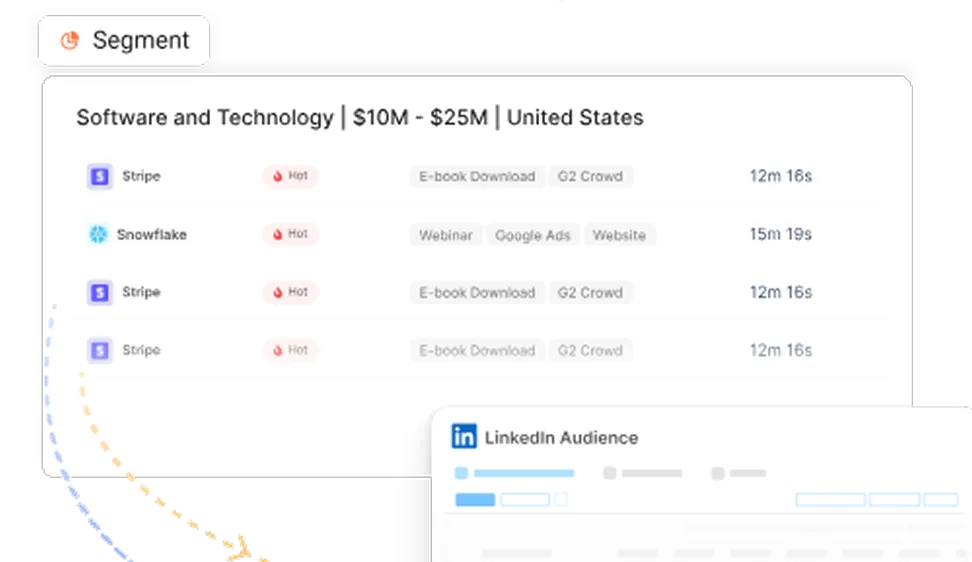
Intelligence without action is just a very expensive dashboard. Activation means pushing scored audiences into LinkedIn, Google, email, and website personalization. The best stacks sync audiences automatically. Every manual CSV export is a gap where signal gets stale before it reaches a channel.
Layer 4: Optimization
Once campaigns are live, AI shifts budgets based on performance signals, rotates creative variants, and refines audience segments. Marketing teams using AI-assisted decisioning report 25% faster campaign execution and 40% improvement in output quality compared to teams relying solely on manual analysis. That’s the compounding return on building the layer correctly.
Layer 5: Measurement
Pipeline attribution, revenue attribution, opportunity influence. If you can’t connect campaign activity to pipeline and closed-won revenue, you are, with respect, guessing.
The strongest campaigns don’t start with creative. They start with signal quality. Bad signals produce bad personalization, and bad personalization produces campaigns that feel irrelevant, regardless of how sharp the copy is.
Patterns that high-performing B2B AI campaigns actually have in common
I've spent a lot of time studying what separates AI marketing campaigns that generate pipeline from the ones that generate Slack messages like "the results were directionally positive." The difference is rarely the tool. It's almost always the decision that got automated, and how cleanly signal flows through the stack. Here are the patterns I keep seeing, pulled from real B2B SaaS campaigns, without the brand-name window dressing.
Pattern 1: They started with the buying signal, not the content calendar
The campaigns that consistently outperform start by asking "who is showing buying intent right now?" rather than "what should we post this month?" Teams using intent data to identify in-market accounts before building campaign audiences report shorter sales cycles meaningfully, because they're reaching accounts that are already in the consideration phase, not educating cold prospects who clicked a boosted post.
The practical version of this looks like monitoring pricing page visits, third-party intent surges on relevant categories, and G2 review page activity. When an account clusters multiple signals in a short window, that's not a coincidence. That's a buying committee starting to move.
Pattern 2: Personalization that went deeper than job title
The B2B campaigns I've seen generate the highest engagement rates weren't personalizing by persona. They were personalizing by behavior. There's a meaningful difference between "this ad is for VPs of Marketing" and "this ad is for VPs of Marketing who have visited our integration docs three times in two weeks and also compared us on a review site." The second one converts differently, because the creative and CTA can acknowledge where that person actually is in the decision process.
AI makes this tractable at scale. Manually building those audience segments would take a team of analysts and be out of date before it launched. Automated signal scoring gets you there in real time.
Pattern 3: Sales and marketing were reading from the same signals
One of the cleanest operational differences I've noticed in high-performing B2B AI campaigns: sales got alerted with context, not just leads. The marketing team wasn't throwing accounts over the wall with a "these are hot, go call them." Sales received a notification that said something like "Acme Corp visited pricing three times this week, downloaded the security whitepaper, and one contact was active on LinkedIn ads for the competitor comparison ad." That context changes the conversation a sales rep opens with, and it shortens the path to a meaningful qualification call considerably.
Pattern 4: The feedback loop was measured in days, not quarters
Campaigns that relied on end-of-quarter attribution reviews couldn't adjust fast enough to matter. The ones that worked had measurement baked in from day one: which accounts engaged, which crossed thresholds, which converted to pipeline, and how long that took. When you can see that a specific audience segment is generating opportunities in two weeks versus six, you can shift budget toward it while the campaign is still running, not in the retrospective.
AI-assisted decisioning is what makes this possible at scale. Marketing teams using it report 25% faster campaign execution and 40% improvement in output quality compared to fully manual analysis, and the compounding effect shows up in pipeline velocity, not just ad performance metrics.
Pattern 5: They treated ‘content’ as the last decision, not the first
This one is the most counterintuitive, and also the most consistently true. The highest-performing B2B AI campaigns I've observed were built backwards: identify the account, understand the stage, determine the message, then create the asset. Most campaigns do the opposite. They create content, then figure out who to send it to, then wonder why CTR is low.
When creative is built to serve a specific signal, from an account that's in a defined buying stage, in an industry with a known pain point, the relevance gap between "AI-generated content" and "great human content" shrinks dramatically. The AI isn't doing less work. It's working on a better brief.
The thing they all have in common
The campaigns that outperform automated the decision, not just the deliverable. The question worth asking when you audit your own AI campaign program isn't "are we using AI?" It's "which decision used to require a human, and how fast is AI making that call now?"
Where AI actually adds the most value across the campaign lifecycle
If you mapped every campaign stage against AI impact, most marketers would be surprised by what’s at the top. The biggest ROI isn’t coming from content creation, even though that’s where most teams are spending their energy.
| Campaign stage | AI impact level | What AI does here |
|---|---|---|
| Audience research and segmentation | Very high | ICP matching, lookalike modeling, intent signal analysis |
| Targeting and prioritization | Very high | Account scoring, buying stage detection, signal aggregation |
| Creative production | Medium | Copy generation, image creation, variant production |
| Channel activation | Medium-high | Automated audience syncing, bid optimization, send-time optimization |
| Testing and optimization | High | Creative rotation, budget reallocation, multivariate testing |
| Measurement and attribution | Very high | Pipeline attribution, revenue influence, multi-touch modeling |
Companies using predictive models for lead scoring, segmentation, or journey orchestration achieve 20-30% higher conversion rates. That improvement comes from the intelligence and measurement layers, not the content layer.
The content layer gets the LinkedIn posts. The intelligence and measurement layers get the revenue. Keep that in mind the next time someone wants to spend the whole sprint on prompt engineering.
How to build personalized marketing campaigns with AI
The future of personalization isn’t “Hello [First Name].” It’s understanding intent before the buyer fills out a form, or even before they know they’re in a buying cycle. Building personalized AI marketing campaigns requires thinking in layers, not segments.
- Behavioral personalization serves different experiences based on what someone does: pages visited, content consumed, features explored. This is table stakes now.
- Industry personalization adjusts messaging to speak to vertical-specific pain points, so a fintech VP and a healthcare CMO aren’t reading the same generic copy.
- Account-level personalization treats the buying committee as a unit, not a list of individuals, coordinating touches across multiple stakeholders at the same company.
- Buyer-stage personalization matches creative and CTAs to where the account actually sits in the journey: awareness, consideration, or decision. Sending a product demo invitation to someone who’s never heard of you is just noise.
- Dynamic creative personalization generates ad variants on the fly, combining account, industry, and stage signals. This is where AI goes from “helpful” to genuinely powerful.
Here’s what that looks like in practice. A target account visits your pricing page. AI identifies the buying stage based on visit frequency and depth. The account gets synced to a high-intent audience in LinkedIn. A customized ad creative is served, matched to their industry and stage. Sales gets alerted with context on recent activity. A follow-up email triggers automatically, referencing content relevant to that specific account.
AI marketing campaign tools and what each layer actually needs
The best AI marketing stack isn’t the biggest one. It’s the one where data flows cleanly between tools without someone manually exporting CSVs at 11 PM. Disconnected AI creates disconnected campaigns, and I’ve watched this play out enough times to say it plainly: a stack is only as good as its integrations.
- Campaign intelligence: Factors.ai, 6sense, Demandbase. These tools identify accounts, detect intent signals, and score opportunities. They’re the signal layer, and everything else depends on them.
- Generative AI: ChatGPT, Claude, Gemini. Useful for content production, brainstorming, and first-draft creation. They’re the visible layer of AI, and also the layer most teams over-invest in relative to its actual contribution to pipeline.
- Creative AI: Adobe Firefly, Midjourney, Runway. Great for visual asset production and creative variant testing. Creative without targeting is still just art, though (because marketers never overclaim on ROI attribution, right?).
- Activation platforms: LinkedIn Ads, Google Ads, Meta Ads. What matters most here isn’t the platform itself. It’s how tightly it integrates with your intelligence layer. A beautiful creative served to the wrong audience at the wrong time is wasted spend.
- Analytics: Factors.ai, GA4, HubSpot. Measurement needs to connect ad engagement to pipeline and revenue, not just clicks and impressions. If your analytics stack can’t answer “what campaign influenced this closed-won deal,” you’re flying blind on budget decisions.
AI marketing campaign management best practices
AI scales mistakes just as efficiently as it scales success, and honestly more efficiently, because it doesn’t get tired or second-guess itself. Governance isn’t bureaucracy. It’s how you avoid publishing something unfortunate at scale.
- Human approval loops. Every AI-generated asset, whether it’s copy, creative, or an audience segment, should pass through human review before going live. AI excels at pattern recognition within its training data. It fails at reasoning about unstructured context like cultural events, regulatory shifts, and situations that require ethical judgment. Those gaps are where things go sideways.
- Brand guidelines in writing. Document your tone, terminology, visual standards, and messaging guardrails in a format that both humans and AI tools can actually reference. Without this, every AI output is a roulette spin on whether it sounds like you.
- Prompt libraries. Build a shared repository of tested prompts for recurring campaign tasks: ad copy, email sequences, landing page headlines, social posts. Stop letting every sprint start from scratch.
Experimentation frameworks. Define how you test AI-generated variants against human-created ones. Set clear success metrics before launch. Attribution without a framework is just a group project where everyone claims credit for the win and nobody owns the miss. - Compliance checks. Especially in regulated industries, AI outputs need legal review. Automated content generation doesn’t mean automated compliance, and “the AI wrote it” has never been a successful defense.
The most successful AI programs build repeatable workflows and governance rather than relying on ad hoc generation. That’s how you use AI in marketing campaigns at scale without a crisis every quarter.
How do you measure the success of AI marketing campaigns?
One of the more frustrating patterns I see: teams measure AI success by how fast they launched a campaign. The board doesn’t care if you launched three days faster. They care whether it generated pipeline.
Here’s a measurement framework organized by layer.
| Layer | Metrics |
|---|---|
| Efficiency (operational) | Campaign launch speed, content production time per asset, testing velocity |
| Marketing (performance) | Engagement rate by channel, qualified pipeline generated, opportunity creation volume and velocity |
| Revenue (business impact) | Revenue influenced by campaign, win rate on AI-targeted accounts, customer acquisition cost, return on ad spend |
The hierarchy matters more than the individual metrics. Efficiency metrics are useful for internal optimization, not for a board deck. Marketing metrics tell you whether campaigns are working. Revenue metrics tell you whether they’re worth it.
No attribution model answers every question perfectly, and anyone who tells you otherwise is probably selling one.
Common mistakes companies make with AI marketing campaigns
I’ve watched enough AI marketing campaigns underperform to have assembled a reliable set of warning signs. If any of these sound familiar, you’re not alone, but you should address them before you scale.
- Automating poor strategy. If your targeting is wrong, AI will just deliver wrong at higher frequency. Fix the strategy first.
- Over-personalizing. There’s a line between “this feels relevant” and “how do they know that.” B2B buyers appreciate relevance. They don’t appreciate feeling tracked.
- Publishing generic AI content. People want to know who’s behind the content they consume, whether it’s a brand, a subject-matter expert, or a human with a point of view. The concern around “AI slop” is real, and it’s making human creativity more valuable, not less. Ironic, given the context.
- No first-party data foundation. You can’t build personalized marketing campaigns with AI if your data is fragmented across six tools that don’t talk to each other. Signal quality comes before everything else.
- Too many tools, not enough integration. I’ve genuinely seen teams running five AI tools that don’t share data. That’s not a stack. That’s a collection of subscriptions with a coordination problem.
- No attribution connecting campaigns to revenue. If you can’t measure pipeline influence, you can’t defend budget, and you definitely can’t prove that the AI investment is paying off.
- Treating AI as a replacement for marketers. AI handles routine tasks and surfaces intelligence. Marketers still build relationships, manage complexity, and make judgment calls that no model has the context for.
The fastest way to spot a weak AI strategy: the team talks endlessly about prompts and almost never about customers.
The future of AI marketing campaigns
Based on what I’m seeing across the industry and inside the B2B SaaS companies I work with, here’s where things are heading.
- AI agents managing full campaign cycles. Not just optimizing individual channels, but coordinating across them. The convergence of agentic AI, intent-based data, and hyper-personalized buyer experiences is already happening.
- Autonomous optimization with human guardrails. Budget allocation, creative rotation, and audience refinement happening continuously without manual intervention, guided by strategic constraints set by humans. The humans become the strategists. The agents become the executors.
- Hyper-personalization at the buying committee level. Account-level personalization that adjusts content, timing, channel, and message based on the collective behavior of everyone involved in the purchase decision, not just the one person who clicked an ad.
- Predictive budget allocation. AI modeling that tells you where to shift spend before performance degrades, rather than after. Proactive, not reactive.
- Real-time creative adaptation. Ads that adjust messaging based on what the viewer’s company has been researching, what stage they’re in, and what they’ve already seen from you. Context-aware at a level that batch campaigns simply can’t achieve.
The companies with the best signal infrastructure will have a structural speed advantage over everyone else. They’ll know sooner, act faster, and measure more precisely. The rest will be running good campaigns at the wrong moment… to the wrong accounts.
In a nutshell
AI marketing campaigns aren’t defined by whether AI produced the creative. They’re defined by whether AI improved the targeting, timing, personalization, and measurement. The framework that works in B2B runs from Signals to Intelligence to Activation to Optimization to Measurement. Skip the signal layer and everything downstream suffers.
The brands seeing real results have automated the decisions, not just the deliverables.
Build governance before you scale. Measure pipeline before you measure productivity. Invest in signal quality before you invest in generative tools. And maybe, just maybe, ask what decision you’re automating before you ask what prompt you should write.
FAQs for AI marketing campaigns
Q1. What are AI marketing campaigns?
AI marketing campaigns are campaigns where artificial intelligence plays a substantive role in planning, targeting, execution, or measurement. They range from AI-assisted campaigns using generative tools for content production, to AI-optimized campaigns where machine learning handles bidding and segmentation, to AI-orchestrated campaigns where agents coordinate multi-channel execution in real time. A campaign isn’t AI-powered just because AI made the assets. It’s AI-powered when AI influences the decisions behind the campaign.
Q2. How do AI marketing campaigns actually work?
AI marketing campaigns work by ingesting signals from multiple data sources, including website behavior, CRM data, intent data, and ad engagement, then using machine learning to identify patterns and make recommendations. At the optimization level, AI adjusts targeting, bidding, and creative dynamically. At the orchestration level, AI agents coordinate across channels, shifting budgets and triggering actions based on real-time performance data. The underlying principle is using data-driven intelligence to make faster, more accurate campaign decisions than any human team can manage manually.
Q3. What are some successful AI-driven marketing campaign examples in B2B?
The most effective B2B AI marketing campaigns share a few operational traits. They start with buying signal detection, identifying accounts showing in-market behavior before building audience segments. They use behavioral personalization, not demographic segmentation, so creative and CTAs reflect where an account actually is in the buying journey. And they close the loop between marketing and sales with real-time alerts that include context, not just a list of "hot leads." Signal-driven account-based campaigns that layer intent data, account scoring, and automated audience syncing into LinkedIn and Google consistently outperform batch-and-blast approaches on pipeline metrics.
Q4. How can B2B companies use AI for marketing campaigns?
B2B companies can use AI across the entire campaign lifecycle: identifying in-market accounts with intent data, scoring and prioritizing leads, personalizing ad creative and email outreach by account and buying stage, optimizing channel spend in real time, and attributing campaign activity to pipeline and revenue. The most impactful starting point is almost always the intelligence layer, using AI to identify which accounts to target rather than defaulting to broad demographic segments that include most of your non-buyers.
Q5. What tools are used for AI marketing campaign management?
AI marketing campaign management spans several tool categories. Campaign intelligence platforms like Factors.ai, 6sense, and Demandbase handle account identification and intent signals. Generative AI tools like ChatGPT, Claude, and Gemini support content creation. Creative tools like Adobe Firefly and Midjourney produce visual assets. Activation happens through LinkedIn, Google, and Meta. Analytics platforms like Factors.ai, GA4, and HubSpot connect activity to outcomes. The key isn’t which tools you pick. It’s whether they share data cleanly with each other.
Q6. Can AI create personalized marketing campaigns?
AI can build deeply personalized marketing campaigns across behavioral, industry, account, and buyer-stage dimensions. 23% of marketers are already using AI to hone messaging and develop campaigns that meet buyers where they are. In practice, AI personalization means serving different ad creative to accounts based on their browsing behavior, adjusting email sequences based on engagement signals, and dynamically matching landing page content to a visitor’s company and stage. The campaigns improve the longer they run, because the model learns what works.
Q7. How do AI agents improve marketing campaigns?
AI agents improve marketing campaigns by handling decisions that previously required manual analysis and intervention. They can monitor performance across channels, shift budget toward high-performing segments, trigger sales alerts when accounts cross engagement thresholds, and adjust creative variants based on real-time feedback. Teams using AI-assisted decisioning report 25% faster campaign execution and 40% improvement in output quality compared to teams relying solely on manual analysis. The real value is in compressing the time between insight and action, which matters a lot in B2B where buying windows can close quickly.
Q8. What metrics should marketers track for AI campaigns?
Track metrics across three layers. Efficiency metrics include campaign launch speed, content production time, and testing velocity. Performance metrics include engagement rate, qualified pipeline, and opportunity creation. Revenue metrics include revenue influenced, win rate on AI-targeted accounts, customer acquisition cost, and return on ad spend. The most important shift is moving away from measuring AI success by productivity and toward measuring it by pipeline contribution and revenue impact. Boards don’t fund faster content pipelines. They fund pipeline.
Q9. What are the risks of AI-generated marketing campaigns?
The primary risks include publishing generic or brand-inconsistent content at scale, automating flawed strategy faster than you can catch it, over-personalizing in ways that feel intrusive, and failing to connect campaign activity to revenue. One instructive case: a global brand’s AI scheduled a campaign on a national day of mourning because the cultural event wasn’t in the behavioral data. Technically optimal timing. Contextually disastrous. AI excels at pattern recognition and fails at reasoning about the kind of context that isn’t captured in a data field. Human oversight, brand governance, and clear measurement frameworks are the only mitigation.

See how Factors can 2x your ROI
Boost your LinkedIn ROI in no time using data-driven insights


.avif)

See Factors in action.
Schedule a personalized demo or sign up to get started for free
LinkedIn Marketing Partner
GDPR & SOC2 Type II

.svg)



.avif)

