
AI pipeline management: how B2B teams turn signals into revenue
See how AI pipeline management helps B2B teams identify buying signals, forecast revenue, prioritize accounts, and drive predictable growth.
.avif)
Content Marketer



.svg)


TL;DR
- AI pipeline management is a system that connects buying signals across channels, scores accounts against real intent, and tells your revenue team exactly where to focus next.
- Traditional pipeline management breaks at scale because it relies on rep subjectivity, decaying CRM data, and spreadsheets that show you what happened instead of what's likely to happen.
- The companies seeing the biggest pipeline gains are those with the fewest disconnected systems because they designed workflows first.
- Most organizations nail signal capture and scoring, but never reach the "act" stage, which is where revenue impact actually lives.
- AI is shifting from recommendation to execution; the next generation of revenue teams will not debate which accounts to prioritize, because their systems will already know.
- Fix your data before buying AI tools; models are only as good as their inputs, and garbage-in-garbage-out applies here with terrifying speed.
- Measure AI by revenue impact: pipeline created, accelerated, and protected. Not by hours saved or tasks automated.
There's a spreadsheet I think about sometimes. A former colleague shared it with me as a "pipeline tracker" he'd built over two years. Forty-seven tabs. Color-coded by quarter. Conditional formatting that changed cell colors based on deal stage, close date proximity, and something he called the "gut score" column, which was literally just a number between one and ten representing how he felt about each deal. He was proud of it.
Then his team grew to twelve reps. The spreadsheet became a document of… collective fiction. Deals sat in "Proposal Sent" for three months because nobody updated them. The gut scores reflected whoever had the loudest voice in the last pipeline call. And the actual buying signals, website revisits, LinkedIn ad clicks, and a second contact from the same account snooping around the integrations page lived in six different platforms that nobody had time to cross-reference.
I'm not telling this story to make anyone feel bad about their spreadsheets (keep your spreadsheets; they're fine for some things). I'm telling this story because that gap (the one between the signals that exist and the decisions those signals should inform) is exactly the problem AI pipeline management is built to close. And most revenue teams are still living in that gap, even when they think they've moved past it.
What does AI pipeline management mean (and what it doesn't)?
For most B2B companies, pipeline reviews are still status meetings with better slide decks. People debate whether a deal is "warm" while hundreds of buying signals sit uncorrelated across LinkedIn impressions, website visits, CRM activities, ad engagement, and product usage data. The fundamental pipeline problem is not a shortage of data. It's the inability to connect those signals to revenue decisions fast enough to act on them.
AI pipeline management is the practice of using machine learning and predictive models to continuously analyze account behavior, engagement patterns, intent signals, attribution data, and opportunity health, then surfacing recommendations that help revenue teams prioritize, forecast, and act. In less dense language: instead of your team manually deciding which deals look promising based on vibes and hope, an AI system ingests every available signal and gives you a ranked list of where to spend your energy.
This is categorically different from CRM reporting, and the distinction matters. Your CRM tracks what's happened. It logs activities, stores contact records, and shows you pipeline by stage. AI revenue management goes further by predicting what's likely to happen next and recommending what to do about it. CRM reporting is the rearview mirror. AI pipeline optimization is the windshield. You can't drive using only one of them.
It's also different from basic sales automation. Automation handles tasks like email sequences and meeting scheduling. AI pipeline analytics does the thinking layer, figuring out which accounts deserve those sequences, which opportunities are at risk, and which deals are more likely to close this quarter versus next. One executes. The other decides.
Why does traditional pipeline management fall apart at scale?
When you've got thirty opportunities in a pipeline, a skilled rep can keep most of the context in their head. They know which champion went quiet, which deal is stalling on procurement, which prospect just had a leadership change. At three hundred opportunities across a team of fifteen reps, that mental model collapses completely. The tools most teams rely on were not designed to compensate for that collapse.
Here's where the cracks typically appear. CRM data decays fast, with contact information going stale, deal stages lingering without updates, and close dates being pushed indefinitely without anyone adjusting the forecast. Rep subjectivity creeps into every pipeline call, because "I feel good about this one" is not a forecasting methodology, even though we all treat it like one sometimes. Manual account prioritization means your best reps spend time on deals that feel important rather than ones that are important based on actual engagement data.
The sales and marketing misalignment makes everything worse. Marketing generates leads based on campaign performance metrics. Sales works opportunities based on gut feel and relationship signals. Neither team has a shared, data-driven view of which accounts are genuinely in-market. Revenue leakage lives in the space between those two perspectives, and it's usually significant.
The dashboard illusion most teams don't recognize
Most companies think they have AI pipeline visibility because they have dashboards. There's a Salesforce report showing pipeline by stage. There's a marketing dashboard showing MQLs by channel. There might even be a fancy revenue analytics tool with charts that update in real time. It looks like visibility, but it's a well-organized archive of the recent past.
Dashboards tell you what happened. AI tells you what's likely to happen next, and that's the distinction where millions in pipeline get won or lost. When your pipeline review is powered by historical snapshots, you're always reacting. When it's powered by predictive models that score opportunity health, detect buying committee expansion, and flag deals trending toward stall, you're making decisions before problems fully materialize. That shift from reactive to predictive is the core value proposition of AI sales pipeline management. (Yes, it sounds obvious when I put it that way. But then why are 80% of pipeline reviews still just a status update?)
The maturity curve from CRM to AI-powered revenue systems
Stage 1: The CRM era. Store data. Salesforce and HubSpot gave us a system of record: a place to log contacts, deals, and activities. The focus was on data capture. Pipeline management meant keeping the CRM updated, which, let's be clear, is still an ongoing struggle at most companies.
Stage 2: The revenue intelligence era. Analyze data. Tools like Gong and Clari layered analytics on top of the CRM. Teams could suddenly see patterns in call recordings, email engagement, and deal progression. The focus shifted from storing information to extracting insight from it.
Stage 3: The AI pipeline era. Recommend actions. This is where AI revenue intelligence platforms started scoring accounts, predicting close probabilities, and surfacing the next best action for reps. The system does not just show you data; it interprets and suggests.
Stage 4: The agentic revenue era. Execute actions. This is the frontier. AI agents that don't just recommend "re-engage this account" but actually trigger the re-engagement workflow, update the CRM, adjust the forecast, and notify the right rep. We're early here, but the trajectory is clear.
The shift across these stages is fundamental. CRM gave us memory. Analytics gave us hindsight. Revenue intelligence gave us foresight. AI pipeline management gives us agency. And honestly, most revenue teams don't need another dashboard at this point. They need fewer decisions that require human judgment at the moment of execution.
How does AI pipeline management actually work?
Most AI discussions start with models and algorithms. Pipeline transformation starts with data quality, because bad data creates faster bad decisions (faaaar faster, actually). Here's how AI pipeline management software operates across four functional layers.
1. Data collection layer
This is the foundation. AI systems pull from your CRM records, website visitor data, ad platform engagement, third-party intent data, product usage signals, and customer interaction logs. The richer and more connected your data sources, the better the models perform. Garbage in, garbage out is a cliche because it's painfully, repeatedly true.
2. Intelligence layer
This is where pattern recognition, opportunity scoring, intent modeling, and revenue prediction happen. The system identifies which combinations of signals historically correlate with closed-won deals, expanding buying committees, or at-risk opportunities. It builds models that get sharper over time as more data flows through.
3. Recommendation layer
Based on the intelligence layer's output, the system generates next-best-action suggestions. It ranks deals by likelihood to close, flags accounts showing sudden engagement spikes, and prioritizes outbound targets based on fit and intent scores. This is the AI deal prioritization layer that most revenue teams care about most, and for good reason.
4. Execution layer
The final layer triggers action: automated lead routing, audience syncs to LinkedIn or Google ad platforms, follow-up task creation, real-time alerts to account owners. AI pipeline automation lives here, and it's where a "recommendation" becomes a "result." The teams that see the biggest impact are the ones that invest heavily in layers one and two before rushing to layer four. You can't automate your way out of a data quality problem.
The 7 core components of an AI-powered revenue system
- AI lead and account scoring
Traditional lead scoring assigns points based on form fills, job titles, and company size. AI account scoring goes deeper by analyzing behavioral patterns across channels, weighting recency and frequency of engagement, and comparing current accounts against historical closed-won profiles. The inputs include website activity, ad interactions, content consumption, email engagement, and CRM data. The output is a prioritized list of accounts ranked by likelihood to convert, which gives sales teams a clearer sense of where to spend time rather than where to feel busy.
- Opportunity health monitoring
Deals don't go dark overnight. They show warning signs weeks before they stall: decreasing email response rates, missed meetings, champion disengagement, a sudden halt in multi-threading. AI-powered opportunity health monitoring tracks these micro-signals across every open deal and surfaces a health score that updates in real time. When a deal that was trending positive suddenly shows declining engagement, the system flags it before the rep notices the silence.
- Revenue forecasting
AI revenue forecasting replaces gut-feel predictions with statistical models trained on your historical deal data. These models account for variables like deal velocity, stage duration, engagement intensity, and seasonal patterns that human forecasters consistently misjudge. The result is a forecast that's probabilistic rather than aspirational, which is a meaningful upgrade when your CFO is making headcount decisions based on pipeline projections. (And yes, "aspirational forecast" is a polite way of saying "number we wished were true.")
- Buying signal detection
B2B buying journeys involve multiple stakeholders engaging across multiple channels over weeks or months. AI buying signal detection aggregates these fragmented interactions into a unified account-level view. When three people from the same company visit your pricing page, download a whitepaper, and engage with a LinkedIn ad within the same week, the system recognizes that cluster as a buying signal rather than three unrelated data points. This is the aggregation humans literally cannot do manually at scale.
- Deal risk identification
This component works closely with opportunity health monitoring but focuses specifically on predicting which deals are most likely to slip, stall, or be lost. It analyzes patterns from historical lost deals and maps them against current opportunities. If a deal matches the profile of past losses (single-threaded, long gaps between activities, competitor mentions in call transcripts), the system raises the alarm early enough to actually intervene.
- Pipeline prioritization
Not all pipeline is created equal, and acting like it is might be the most expensive mistake in B2B revenue. AI pipeline prioritization ranks opportunities by a combination of deal size, close probability, strategic fit, and engagement intensity. This helps revenue leaders allocate resources to deals and accounts with the highest expected value rather than spreading effort evenly across everything in the funnel. It's the difference between working your pipeline and optimizing it.
- Automated revenue workflows
Once AI identifies a signal, scores an account, or flags a risk, the final step is triggering an action automatically. That might mean enrolling a high-intent account in an ABM sequence, alerting a rep to re-engage a stalling deal, syncing a new audience segment to your ad platform, or updating a deal's forecast probability. These AI revenue workflows close the gap between insight and action, which is where most manual processes quietly fall apart.
AI pipeline management across the entire revenue funnel
One of the most persistent mistakes in RevOps is treating pipeline as a sales-only metric. Pipeline starts long before opportunity creation. Marketing creates pipeline. Sales converts it. Customer success protects it. AI should connect all three, and when it does, AI revenue operations becomes a company-wide capability rather than something the sales team owns.
Here's how AI pipeline management applies across the revenue funnel:
| Funnel stage | Team | AI application | Example |
|---|---|---|---|
| Awareness / ToFu | Marketing | Intent detection, ICP scoring | Identifying anonymous companies showing research behavior |
| Consideration / MoFu | Marketing + Sales | Account prioritization, signal aggregation | Surfacing accounts engaging across ads, content, and website |
| Decision / BoFu | Sales | Deal scoring, risk identification, forecast modeling | Flagging opportunities likely to slip and recommending next steps |
| Post-sale | Customer Success | Expansion signals, churn prediction | Detecting usage drops or upsell indicators in product data |
An AI-powered sales pipeline doesn't start when a rep creates an opportunity. It starts when an account first raises its hand, often through anonymous website visits or third-party intent spikes that happen weeks before any form fill. Teams that only apply AI to the sales stage are optimizing a fraction of their pipeline and ignoring the upstream signals that could have surfaced better opportunities much earlier.
The metrics that actually matter for AI pipeline management
- Pipeline metrics that still matter: pipeline coverage ratio (do you have enough pipeline relative to your target?), pipeline velocity (how fast are deals moving through stages?), stage conversion rates, and opportunity aging. These are your baseline.
- Revenue metrics worth watching closely: revenue efficiency (how much revenue per dollar of pipeline investment?), CAC payback period, revenue per account, and forecast accuracy. These connect pipeline activity to business outcomes rather than activity counts.
- AI-specific metrics that most teams don't track yet but absolutely should: signal-to-opportunity rate (how many detected buying signals become real opportunities?), AI prediction accuracy (are the models actually getting it right?), AI-influenced pipeline (how much pipeline was created or accelerated by AI recommendations?), and revenue attributed to AI-generated insights.
⚠️PLEASE stop using AI like it’s a productivity tool
Many companies measure their AI investments by hours saved and tasks automated. Those aren't terrible metrics, but they miss the point entirely. The better question is: how much pipeline did AI create, accelerate, or protect? If your AI system saved your team ten hours a week but didn't move the needle on pipeline quality or forecast accuracy, you've built a very expensive efficiency tool. The whole purpose of AI revenue growth strategies is revenue impact, not time savings. Measure accordingly, and then have that conversation with your CFO when they ask why the tool costs what it does.
Common AI pipeline management use cases
- Predicting which opportunities will close. AI models trained on your historical deal data can score open opportunities by their probability of closing within a given timeframe. This isn't magic; it's pattern matching at scale across variables like deal velocity, engagement frequency, and buying committee size.
- Identifying pipeline risk early. When a deal shows declining engagement or matches the profile of historically lost opportunities, AI flags it weeks before a human would. That early warning is often the difference between saving a deal and losing it quietly, with nobody quite sure what happened.
- Detecting high-intent accounts before they fill out a form. Third-party intent data combined with first-party website behavior lets AI surface accounts actively researching your category. This is where AI account prioritization gets particularly powerful for outbound teams, because you're reaching buyers before your competitors even know they're looking.
- Improving revenue forecasting accuracy. AI sales forecasting models reduce the variance between predicted and actual revenue by removing human optimism bias from the equation. (Your board will appreciate forecasts built on data patterns rather than rep confidence levels, even if your reps won't.)
- Accelerating ABM programs. AI can dynamically adjust which accounts are in your ABM target list based on real-time engagement and intent signals. Instead of running static account lists that go stale after a quarter, you get an ABM program that adapts as buying behavior changes.
- Reducing pipeline leakage. Deals slip through cracks when engagement drops and nobody notices. AI monitors every open opportunity for disengagement patterns and triggers re-engagement workflows automatically, before the silence becomes permanent.
- Identifying expansion opportunities. For existing customers, AI can detect product usage patterns that correlate with upsell readiness, like increased seat usage, feature adoption spikes, or new stakeholder logins appearing in the account.
How to build an AI pipeline management framework that actually works?
Implementation is where most AI ambitions quietly die. The technology gets purchased before a workflow gets designed, which is why most AI projects fail for exactly the same reason most martech projects fail. Here's a six-step framework that puts workflow before tooling.
1. Audit your data sources
Map every system that contains revenue-relevant data: CRM, marketing automation, website analytics, ad platforms, product analytics, intent data providers, and call recording tools. Identify gaps in coverage and quality issues. You genuinely cannot build reliable AI on top of data you don't trust.
2. Define your revenue signals
Not every data point is a signal. Work with sales, marketing, and customer success to define which behaviors actually indicate buying intent, deal risk, or expansion readiness in your specific business. A pricing page visit might be a strong signal for one company and noise for another. This is a conversation worth having before anything else.
3. Connect your systems
Break down the data silos. Your AI layer needs a unified data model that stitches together account-level behavior across every source. This is often the most technically demanding step and the one teams most consistently underestimate, both in time and organizational will.
4. Create account scoring models
Build scoring models that weight your defined signals based on historical correlation with revenue outcomes. Start simple with rules-based scoring, then layer in machine learning as you accumulate enough data to train predictive models. Don't skip the simple phase. You'll learn more from rules-based scoring than you expect.
5. Build AI workflows
Design the automated actions that trigger when specific signal thresholds are met. A high-intent account gets routed to the right rep. A stalling deal triggers an alert. A surging account gets added to an ABM campaign. This step converts insight into revenue, which is the whole point.
6. Measure business outcomes
Track the AI-specific metrics we discussed earlier. Continuously refine your models based on what's working and what isn't. AI pipeline forecasting improves with feedback loops, so build those loops into your process from day one rather than retrofitting them later.
The Signal ▶️ Score ▶️ Surface ▶️ Act framework
I think about this implementation journey as a four-stage loop. Signal: capture the behavior. Score: prioritize by impact. Surface: deliver the insight to the right person at the right time. Act: trigger the action that moves the deal forward.
Most organizations get the first two stages right and do a decent job at the third. But the vast majority stop before reaching Act, which is exactly where revenue impact lives. If your AI system surfaces a beautiful insight that nobody acts on, you've built an expensive notification system. Results happen at stage four, and getting there requires deliberate workflow design, not just better dashboards.
The AI pipeline management tech stack
The winning stack isn't the one with the most AI features. It's the one with the fewest disconnected systems. Here are the core categories and what they're actually for:
| Category | Purpose | Example tools |
|---|---|---|
| CRM | System of record | Salesforce, HubSpot |
| Marketing automation | Campaign execution and nurturing | HubSpot, Marketo |
| Attribution | Connecting marketing activity to revenue | Factors.ai, Bizible |
| Intent data | Third-party buying signals | Bombora, G2 |
| Revenue intelligence | Deal analytics and forecasting | Gong, Clari |
| ABM platforms | Account-based targeting and orchestration | 6sense, Demandbase |
| AI orchestration | Workflow automation and signal routing | Factors.ai, LeanData |
The common trap is buying one tool from every category and ending up with eight platforms that don't share data with each other. Before adding any new tool, ask whether it integrates natively with your existing systems and whether it actually contributes to the Signal to Score to Surface to Act loop. If it only adds another dashboard, you probably don't need it.
Mistakes companies make when implementing AI pipeline management
- Buying AI before fixing data. If your CRM data is 40% stale and your marketing automation platform has duplicate records everywhere, no AI model will save you. Clean your data first, or accept that your AI will confidently recommend bad decisions at high speed.
- Optimizing for MQLs instead of revenue. AI systems optimized for lead volume will happily generate more leads that don't convert. The metric that matters is pipeline and revenue. Align your models to the outcome your business actually cares about, not the one that looks good in a marketing report.
- Ignoring attribution. Without solid attribution, you can't tell your AI which marketing activities actually contributed to pipeline creation. The model needs feedback on what worked, and attribution provides that feedback loop. Skipping it is like training a model without labels and being surprised when the outputs are random.
- Not involving RevOps from the start. AI pipeline management is not a marketing project or a sales project. It's a revenue operations project that requires cross-functional input on data models, workflows, and measurement. Teams that treat it as a single-department initiative usually end up with a tool that serves one team and creates friction for everyone else.
- Chasing automation before orchestration. Automating a broken process just makes it break faster. Design the workflow first. Agree on handoffs, signal definitions, and escalation criteria. Then automate the workflow you've designed. The sequence matters wayyy more than most teams realize.
- Measuring activity instead of outcomes. Counting how many alerts AI sent or how many leads it scored doesn't tell you whether it moved the revenue needle. Measure pipeline created, deals accelerated, forecast accuracy improved, and revenue influenced. Everything else is a signal of activity, not impact.
The future of AI revenue management
The trajectory here is clear. AI is moving from recommendation to execution, and that shift will reshape how revenue teams operate over the next three to five years.
- Predictive revenue systems will replace static forecasts entirely. Instead of quarterly forecast calls where leaders debate numbers, AI will maintain a continuously updated probability-weighted revenue projection that adjusts in real time as deal signals change.
- Autonomous revenue workflows will handle routine pipeline actions without human intervention. Re-engagement sequences for stalling deals, audience updates for ABM campaigns, and lead routing based on real-time intent scores will all run automatically. The rep's job shifts from doing the work to overseeing the system.
- Agentic RevOps is the frontier. AI agents that don't just recommend actions but execute them, update systems, and learn from outcomes will become standard infrastructure. Early versions exist today in tools like Gong and Clari. What's coming next is more comprehensive.
- Real-time revenue forecasting will make weekly forecast updates feel as outdated as quarterly board decks felt before revenue intelligence existed. When every deal signal feeds a live model, the forecast becomes a document that reflects reality at any given moment rather than an optimistic snapshot from last Tuesday.
The next generation of revenue teams won't spend time asking "which accounts should we focus on?" Their systems will already know. The competitive advantage will shift from having data to operationalizing it faster than everyone else, and the organizations building this muscle now, while the technology is still maturing, will have a structural speed advantage that's genuinely difficult to replicate later.
How does Factors.ai help revenue teams build AI-powered pipeline?
Most AI pipeline management tools start with opportunities. Factors starts earlier, when an account first raises its hand, often before a form fill, demo request, or opportunity exists in any CRM. That's where the biggest pipeline advantage lives (duh), because by the time a deal hits your pipeline, you've already missed weeks of buying signals that could have shaped your entire approach to that account.
Factors.ai identifies anonymous companies visiting your website, even when no one fills out a form. It surfaces buying signals across website behavior, ad engagement, and content consumption, giving your team visibility into account-level interest that would otherwise be completely invisible.
The platform scores accounts against your ideal customer profile. It measures full account journeys across marketing and sales touchpoints. It connects marketing activity directly to pipeline creation, giving you the attribution data your AI models need to actually improve over time rather than drift into irrelevance.
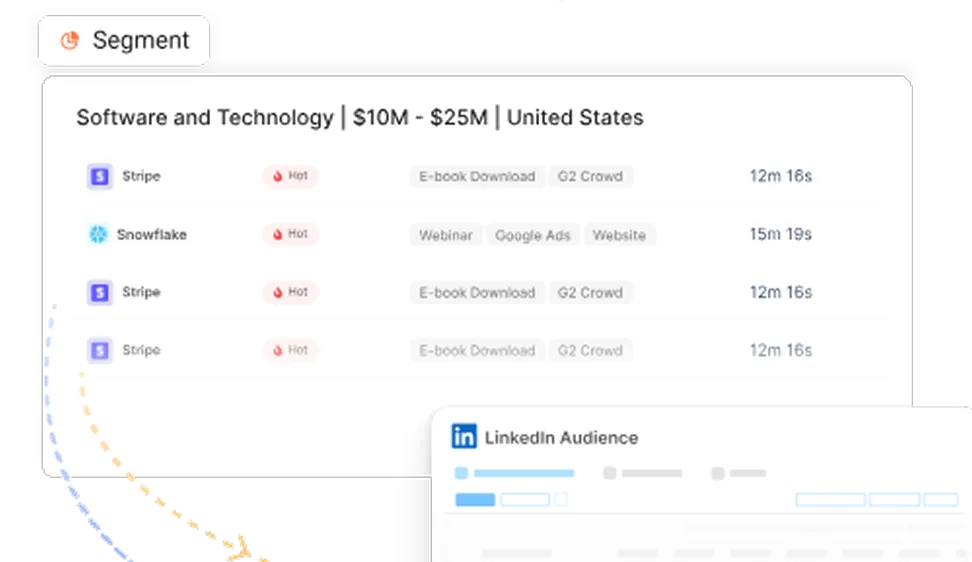
Factors also builds dynamic audiences based on real-time engagement and intent data. Those audiences sync directly to LinkedIn and Google ad platforms, so your paid campaigns target accounts showing actual buying behavior rather than static lists that were accurate three months ago. The result is an AI-powered revenue management workflow that connects signal detection to campaign execution without the manual handoffs that slow everything down.
For teams building toward the Signal to Score to Surface to Act framework, Factors.ai covers the full loop. It captures signals, scores accounts, surfaces insights in your existing workflow, and activates audiences across the channels where your buyers spend time. That's a meaningful difference from tools that generate reports you have to manually decide what to do with.
In a nutshell
AI pipeline management is a system-level change in how B2B revenue teams identify, prioritize, and convert pipeline. It connects signals from marketing, sales, and customer success into a unified intelligence layer that recommends and increasingly executes the right actions at the right time.
The practical takeaways are specific. Fix your data before buying AI tools, because models are only as good as their inputs. Design workflows before automating them, so you're not accelerating broken processes. Measure AI by revenue impact, specifically pipeline created, accelerated, and protected, not by hours saved. Apply AI across the entire revenue funnel, not just at the sales stage, because pipeline starts long before an opportunity gets created. And build toward the Signal to Score to Surface to Act framework, then make sure you actually reach the Act stage because that's where revenue results live.
The companies that win the next era of B2B won't be the ones with the most AI features in their tech stack. They'll be the ones who designed their revenue workflows first and then deployed AI to make those workflows faster, more consistent, and more accurate than any human team could manage alone. The spreadsheet optimizers will look back at this period and wonder when exactly they fell behind.
FAQs for AI pipeline management
Q1. What is AI pipeline management?
AI pipeline management is the practice of using artificial intelligence and machine learning to analyze buying signals, score account intent, forecast revenue, and recommend actions across the entire B2B sales and marketing pipeline. Unlike traditional CRM-based pipeline tracking, which logs historical data and requires manual interpretation, AI pipeline management continuously processes behavioral, engagement, and intent data to predict outcomes and prioritize where revenue teams should focus. The fundamental shift is from reactive to predictive.
Q2. How does AI improve revenue forecasting?
AI improves revenue forecasting by replacing subjective rep confidence levels with statistical models trained on historical deal data. These models analyze variables like deal velocity, engagement patterns, buying committee activity, and stage duration to generate probability-weighted predictions. The result is a forecast grounded in data patterns rather than human optimism, which significantly reduces the variance between predicted and actual revenue. Your CFO will notice the difference.
Q3. What is the difference between AI pipeline management and CRM software?
CRM software is a system of record that stores contact information, deal stages, and activity logs. It tells you what's in your pipeline and what happened. AI pipeline management layers intelligence on top of that data by analyzing patterns, scoring opportunities, predicting outcomes, and recommending actions. Think of CRM as your pipeline's memory and AI as the system that decides what to do with what's remembered.
Q4. Can AI identify pipeline risk before deals stall?
Yes, and this is one of the highest-value applications. AI models trained on historical lost and stalled deals can recognize early warning patterns in active opportunities: declining email response rates, single-threaded deals, extended gaps between activities, or champion disengagement. When a current deal matches those risk patterns, the system flags it weeks before a human would typically notice, giving reps actual time to intervene rather than react.
Q5. How does AI help B2B marketing teams generate more pipeline?
AI helps marketing teams generate pipeline by identifying high-intent accounts earlier in the buying journey, often before any form fill or direct engagement. By analyzing website visitor behavior, third-party intent data, and ad engagement at the account level, AI surfaces companies actively researching your category. Marketing teams can then target those accounts with relevant campaigns, improving both the volume and quality of pipeline created upstream.
Q6. What metrics should companies track for AI pipeline management?
Track three categories. Baseline pipeline metrics like coverage ratio, velocity, and stage conversion rates. Revenue outcome metrics like forecast accuracy, revenue per account, and CAC payback. And AI-specific metrics like signal-to-opportunity rate, AI prediction accuracy, AI-influenced pipeline, and revenue attributed to AI-generated recommendations. The mistake most teams make is measuring AI by efficiency gains instead of revenue impact, which makes it impossible to justify the investment correctly.
Q7. How do AI agents fit into revenue operations?
AI agents represent the next evolution of AI revenue operations, moving from systems that recommend actions to systems that execute them. An AI agent might automatically route a high-intent lead to the right rep, trigger a re-engagement sequence for a stalling deal, update a forecast based on new signals, and sync a target account list to your ad platform, all without human intervention. We're still early in this transition, but the direction is settled.
Q8. What are the best AI pipeline management tools for B2B SaaS companies?
The best stack depends on your maturity and existing infrastructure, but key categories include CRM (Salesforce, HubSpot), revenue intelligence (Gong, Clari), ABM platforms (6sense, Demandbase), attribution and signal detection (Factors.ai), and intent data providers (Bombora, G2). The most important consideration is not which individual tools you choose, but whether they integrate cleanly enough to share data and power unified workflows across your entire revenue team.
Q9. How does AI improve account-based marketing programs?
AI transforms ABM from a static account list strategy into a dynamic, signal-driven program. Instead of manually selecting target accounts once per quarter, AI continuously evaluates which accounts are showing buying intent based on website visits, content engagement, ad interactions, and third-party research signals. It adjusts your target account list in real time, ensuring your ABM spend goes toward accounts that are actually in-market rather than ones that seemed relevant three months ago when someone built the list.

See how Factors can 2x your ROI
Boost your LinkedIn ROI in no time using data-driven insights


.avif)


See Factors in action.
Schedule a personalized demo or sign up to get started for free
LinkedIn Marketing Partner
GDPR & SOC2 Type II

.svg)



.avif)

